
World War II turned the fighter plane from a fragile biplane successor into a weapon that decided battles. American, British, German, Japanese and Soviet designers raced to build faster, tougher and better-armed machines. Here are eighteen World War II fighters that battled for the skies, from rugged carrier planes to the first operational jet.
Read next on Morning Overview: Two Kentucky residents died when a small plane crashed at Missouri’s Lake of the Ozarks, and the NTSB is investigating
1. P-51 Mustang: Built in 149 Days

North American Aviation designed the Mustang in 1940 to satisfy a British order, and its prototype flew just 149 days after the contract was signed. The Military Aviation Museum calls it arguably the most iconic American fighter of the war.
More than 15,500 Mustangs were built. The museum’s own P-51D, built in 1945, went straight to England to join the Eighth Air Force in the final months of the war.
2. P-47 Thunderbolt: America’s Most-Built Fighter
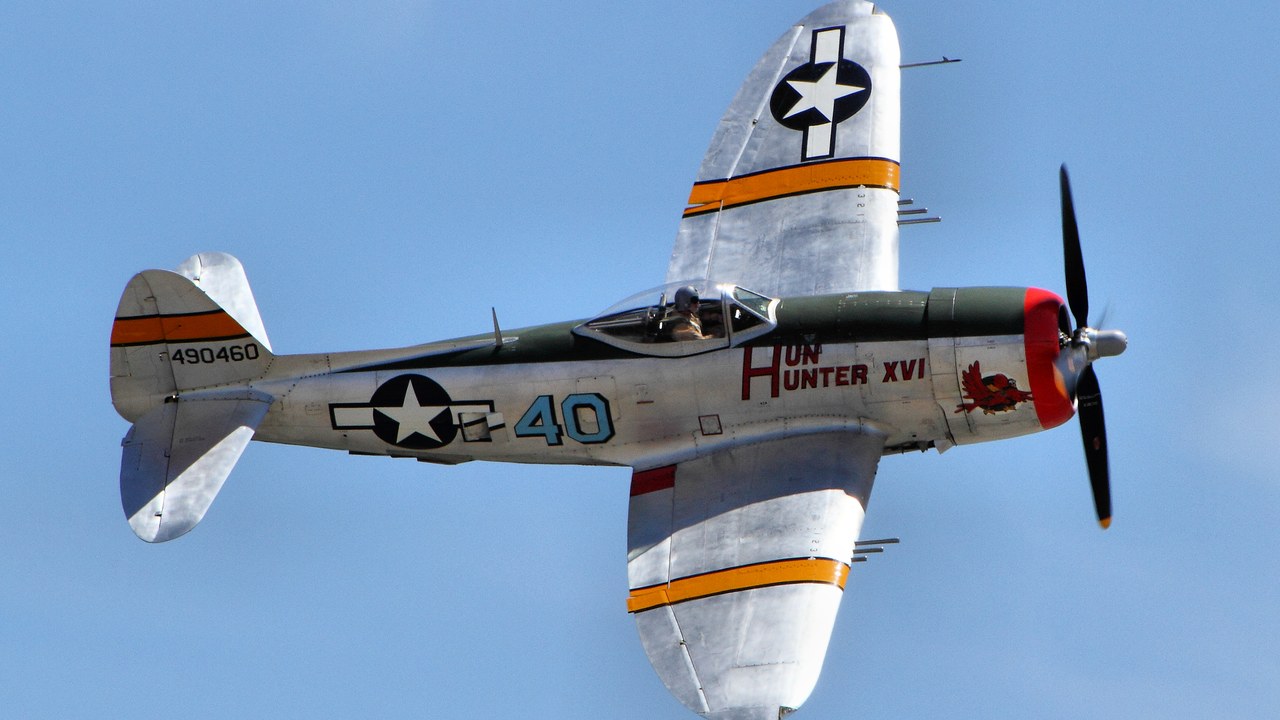
The United States built more P-47 Thunderbolts than any other fighter airplane. According to the Smithsonian’s National Air and Space Museum, Army Air Forces commanders considered it one of the three premier American fighters, alongside the P-51 and P-38.
The museum’s example was restored by Republic Aviation itself and displayed to celebrate the 20th anniversary of the first P-47 flight, a sign of how proud the company was of the big, rugged fighter.
3. P-38 Lightning: The Twin-Engine Ace Maker
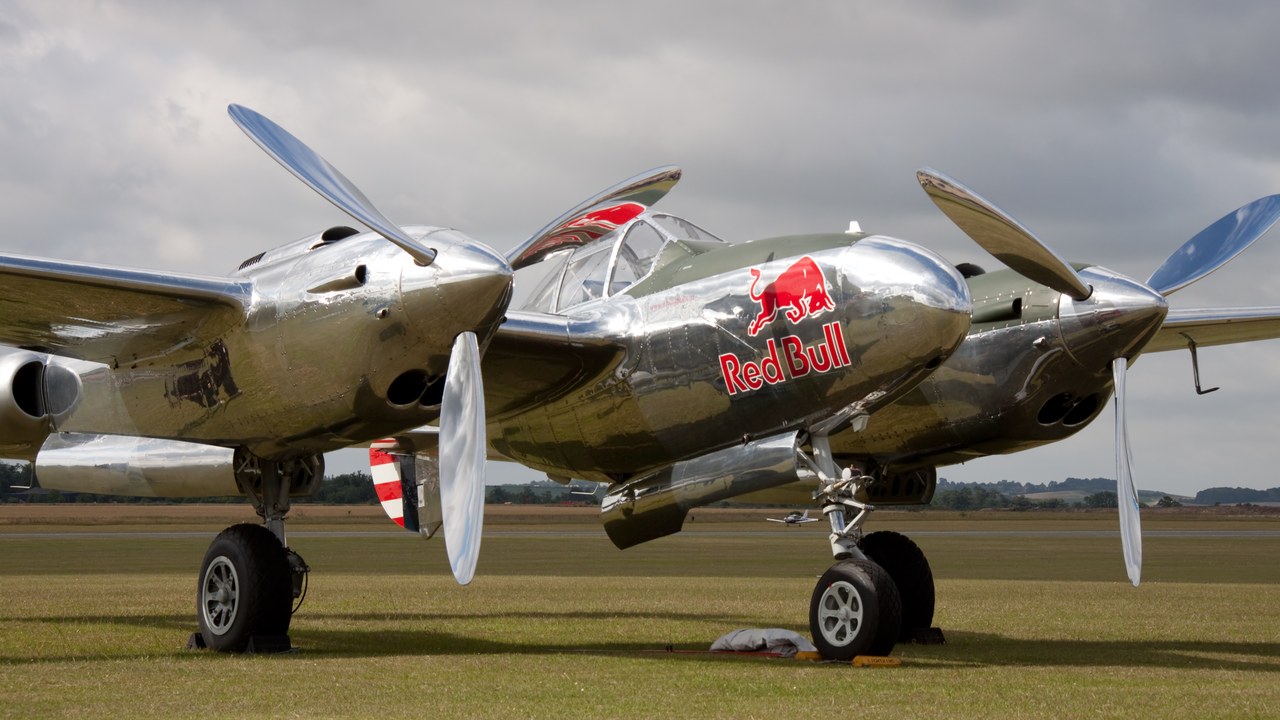
Measured by success in combat, the Lockheed team led by Clarence Kelly Johnson created the most successful twin-engine fighter ever flown by any nation. Johnson’s team conceived the single-pilot P-38 in 1936, and the Army authorized it in June 1937.
Richard Bong, America’s leading fighter ace, flew the Smithsonian’s P-38J on April 16, 1945, at Wright Field, Ohio, testing an experimental way to link the throttle and propeller controls.
4. P-40 Warhawk: The Shark-Mouthed Workhorse
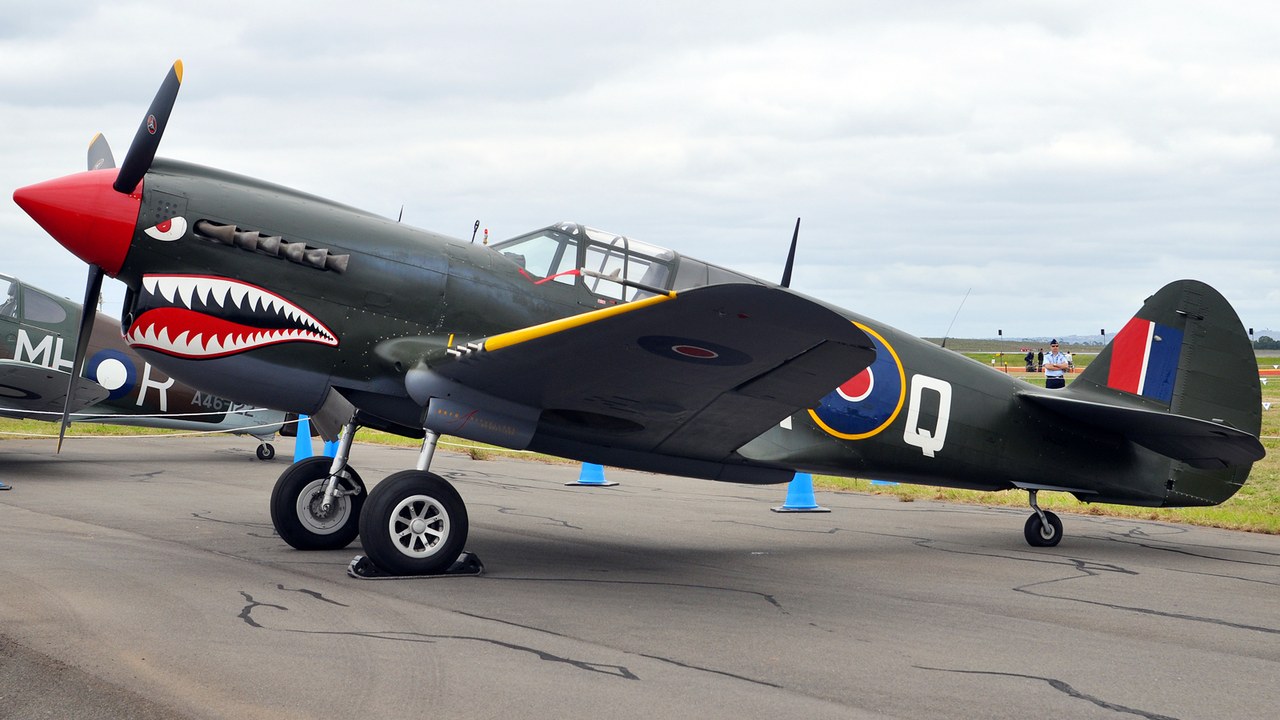
The P-40 Warhawk was a single-seat, all-metal fighter-bomber that first flew in 1938. It was the third most-produced American fighter of the war, after the P-51 and P-47, and 13,738 had been built when production ended in November 1944.
The design was a modification of the earlier Curtiss P-36 Hawk, which sped its entry into service. It was used by most Allied powers, and the American Volunteer Group, the Flying Tigers, flew it over China.
5. P-39 Airacobra: Engine Behind the Pilot
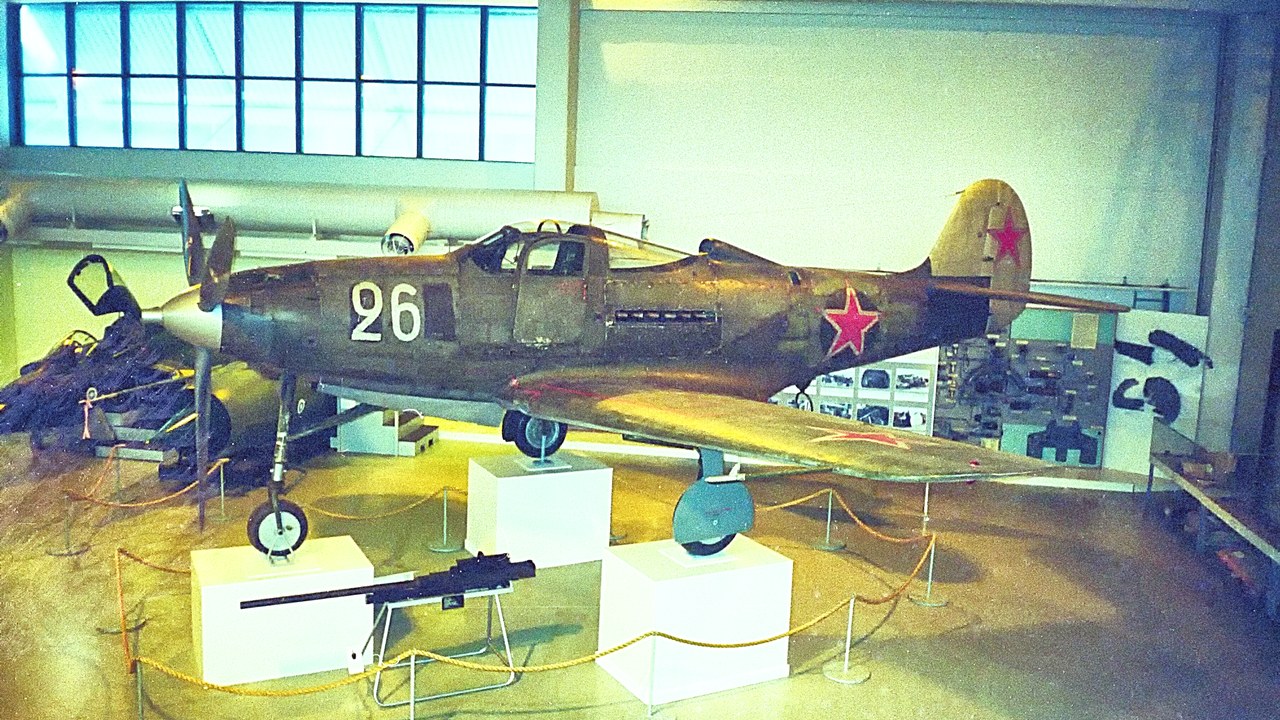
The P-39 Airacobra had an unusual layout, with its engine mounted in the center fuselage behind the pilot, turning a propeller in the nose through a long shaft. It was one of the principal American fighters in service when the U.S. entered the war.
Many thousands were shipped to the Soviet Union for the fight against Germany. Its original specification called for heavy armament including a cannon and a level speed of at least 360 mph.
6. F4F Wildcat: The Navy’s First Line
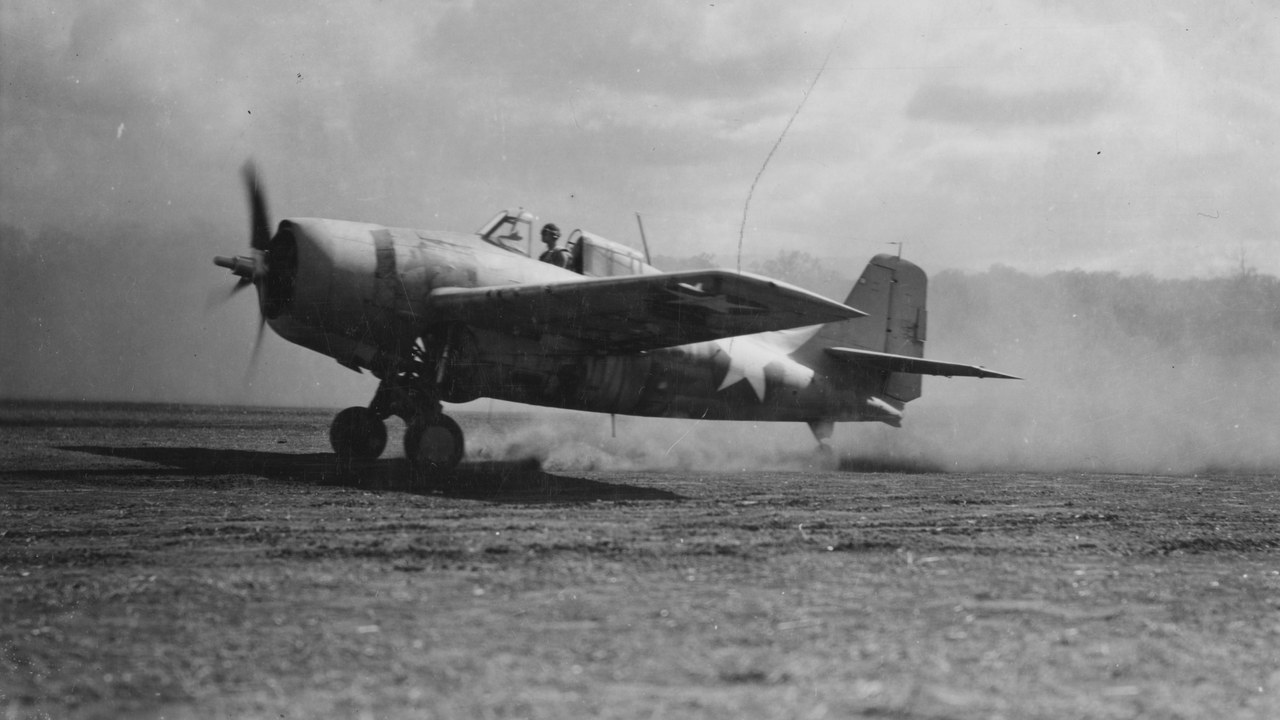
After war erupted in the Pacific, the Grumman F4F Wildcat was the primary fighter of the U.S. Navy and Marine Corps, and by 1942 every Navy fighter squadron flew it, according to the Smithsonian.
The Japanese Zero could outmaneuver the Wildcat. But the Grumman’s heavy armament and solid construction gave it an advantage when skilled pilots flew it, The Smithsonian’s example is an FM-1, a Wildcat built by the Eastern Aircraft Division.
7. F6F Hellcat: The Wildcat’s Replacement
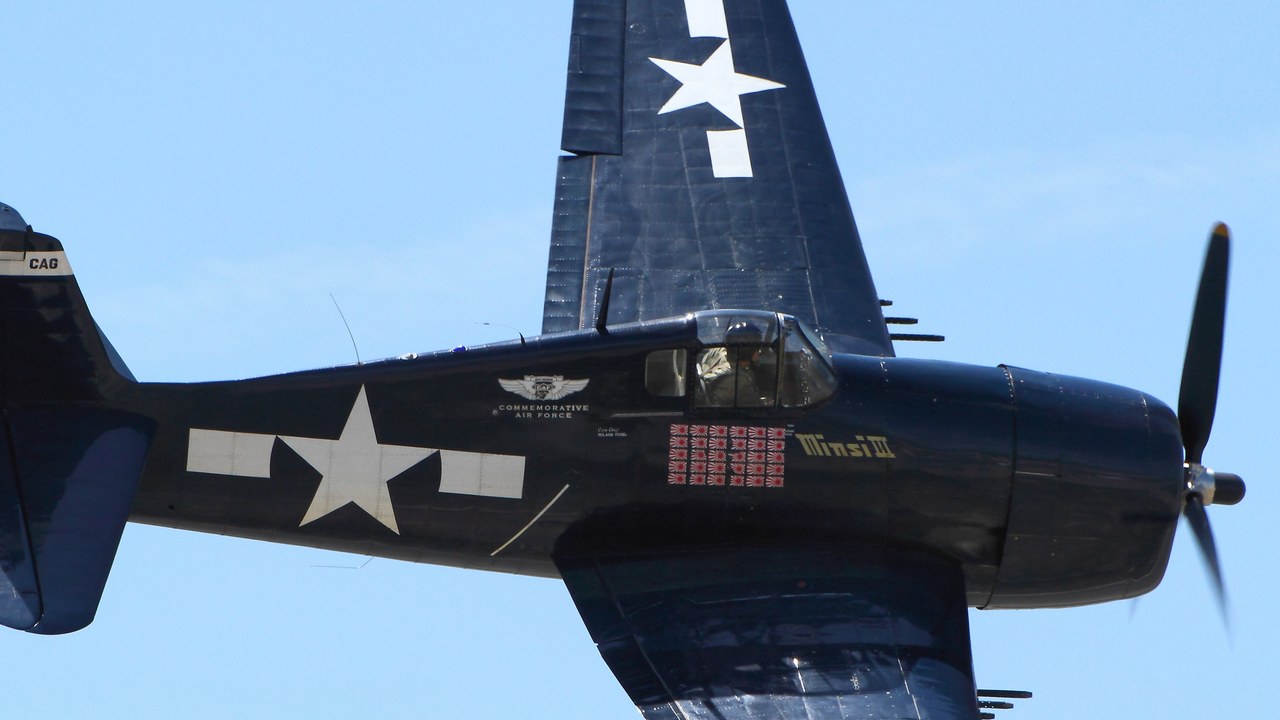
Grumman’s Hellcat was built to replace the Navy’s front-line Wildcat while the Vought Corsair’s development was slowed by problems, including a prototype crash. The Smithsonian’s Hellcat was built at Grumman’s Bethpage, New York, factory in February 1944.
That airplane was assigned to Fighter Squadron 15 aboard the carrier USS Hornet as it headed for Hawaii. It was produced under Navy contract NOA(S)-846.
8. F4U Corsair: The Biggest Engine Afloat

The Corsair’s Pratt & Whitney R-2800 radial engine and Hydromatic propeller were the largest and one of the most powerful combinations ever flown on a fighter. The Smithsonian notes the Navy refused to clear it for carrier operations until late 1944.
That was more than seven years after the project started. The museum’s Corsair wears the markings of Sun Setter, a Marine close-support fighter assigned to squadron VMF-113 in July 1944.
9. Supermarine Spitfire: Britain’s Icon
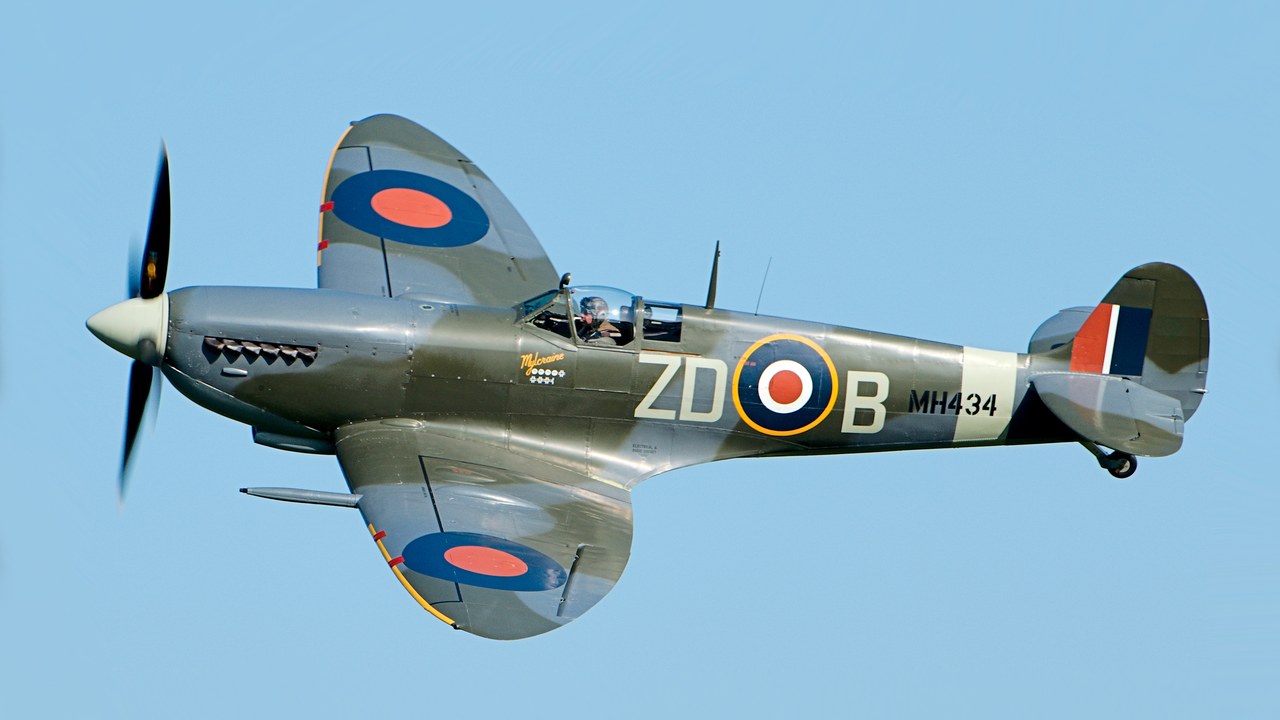
The Spitfire was a British single-seat fighter used by the Royal Air Force and other Allies before, during and after the war. It was the only British fighter produced continuously throughout the conflict.
Designed as a short-range, high-performance interceptor, it went through many versions. More Mk Vs were built than any other type, 6,487, followed by 5,656 Mk IXs Early wartime production ramped from 10 Mk IIs in June 1940 to 56 that September.
10. Hawker Hurricane: The Unsung Battle of Britain Hero
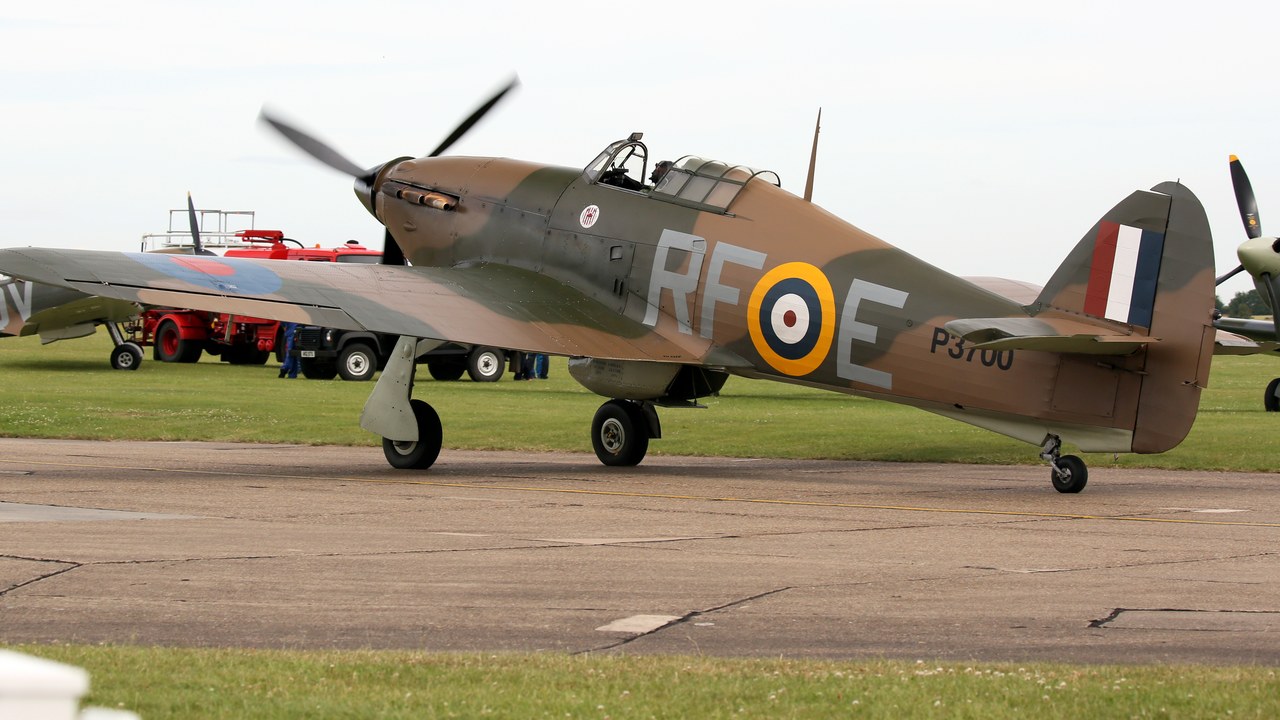
The Hurricane was overshadowed in the public mind by the Spitfire during the Battle of Britain in 1940. Yet it inflicted 60 percent of the losses the Luftwaffe suffered in that campaign and fought in every major theater of the war.
Designed and largely built by Hawker for the Royal Air Force, it first flew on November 6, 1935. By the end of production in July 1944, 14,487 had been completed in Britain and Canada.
11. Messerschmitt Bf 109: The Most-Produced Fighter Ever
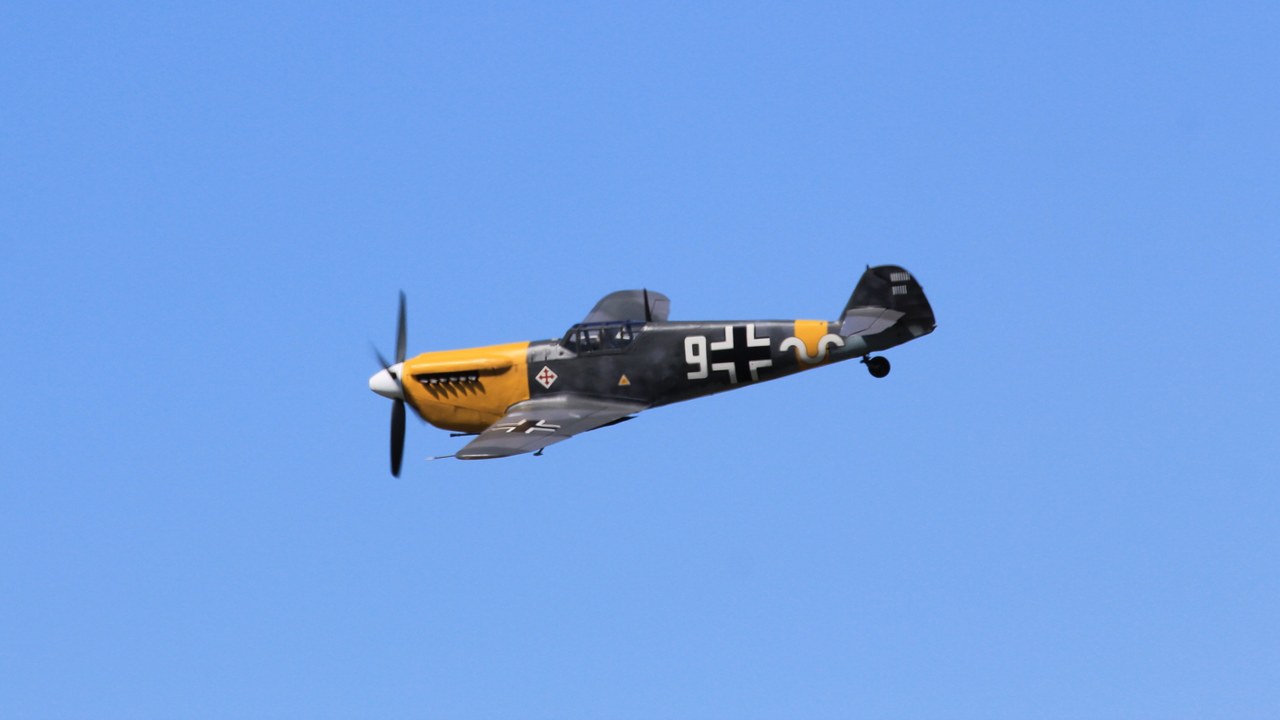
The Messerschmitt Bf 109 is the most produced fighter aircraft in history. A total of 34,248 airframes were built between 1936 and April 1945.
Together with the Focke-Wulf Fw 190, it formed the backbone of the Luftwaffe’s fighter force throughout the war. Allied aircrews commonly called it the Me 109. It was designed by Bayerische Flugzeugwerke, with Willy Messerschmitt and Robert Lusser among its designers, and first flew on May 29, 1935.
12. Focke-Wulf Fw 190: Germany’s Finest Piston Fighter
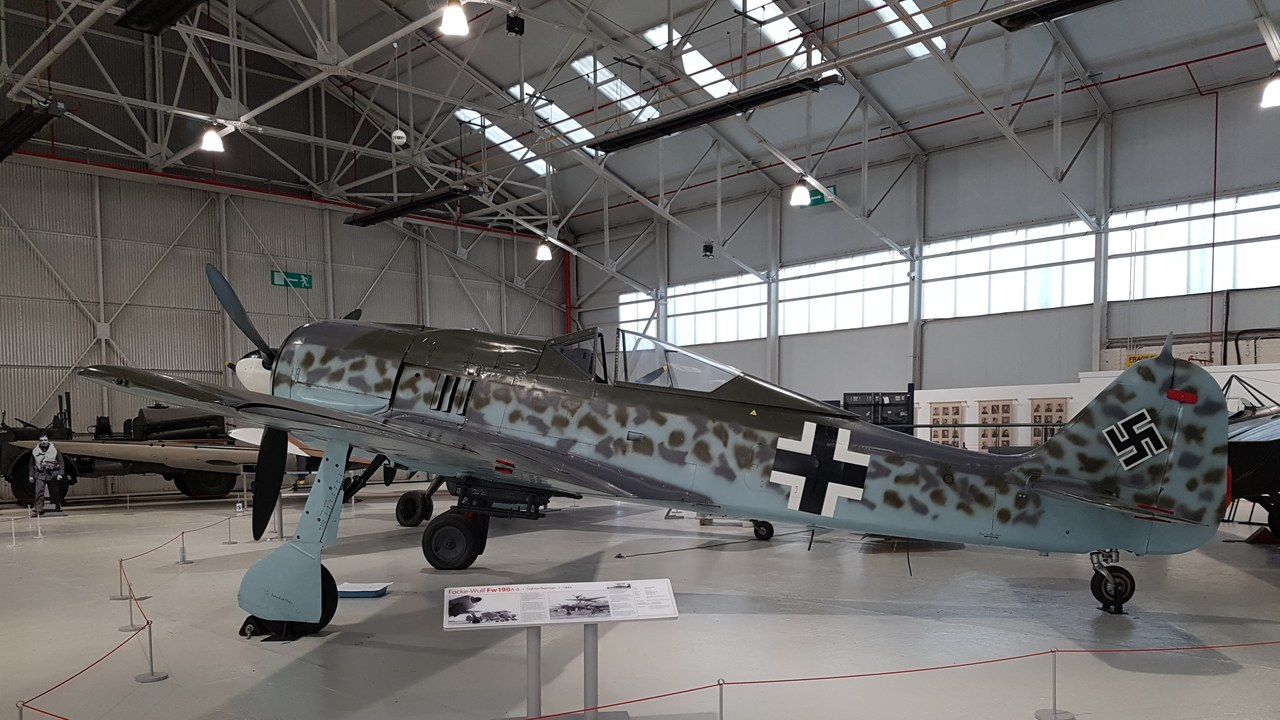
The Fw 190 went into combat as the widely used Fw 190A, followed by reengined and reengineered models. According to the Smithsonian, many German pilots considered the Fw 190D the finest piston-engined fighter in Luftwaffe service.
The museum holds both an Fw 190 F and a D, representing the second generation of the design that followed the Fw 190A into combat late in the war.
13. Messerschmitt Me 262: The First Jet Fighter

The Messerschmitt Me 262 was the world’s first operational jet-powered fighter and one of only two jet types to see air-to-air combat in World War II, the other being the Heinkel He 162.
It made its first successful flight entirely on jet power on July 18, 1942. A lack of alloys able to withstand the engines’ high temperatures was a problem that had not been fully solved by the end of the war.
14. Mitsubishi A6M Zero: The Feared Zero
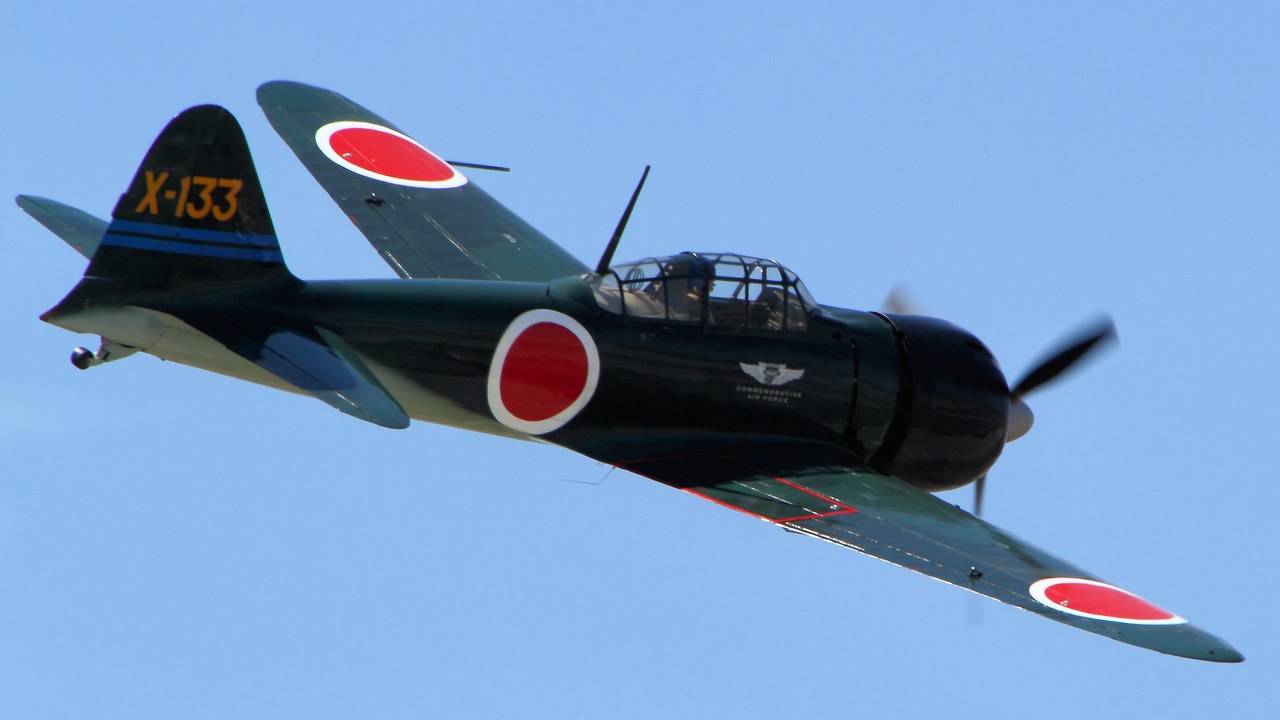
Mitsubishi designed the A6M Zero but co-produced it with Nakajima, and the two companies built more than 10,000 Zeros between March 1939 and August 1945, according to the Smithsonian.
Design work began in 1937, when the Japanese Navy asked both firms to propose a replacement for the Mitsubishi A5M carrier fighter. The Allies gave the Model 52 the code name Zeke.
15. Nakajima Ki-43: The Army Zero
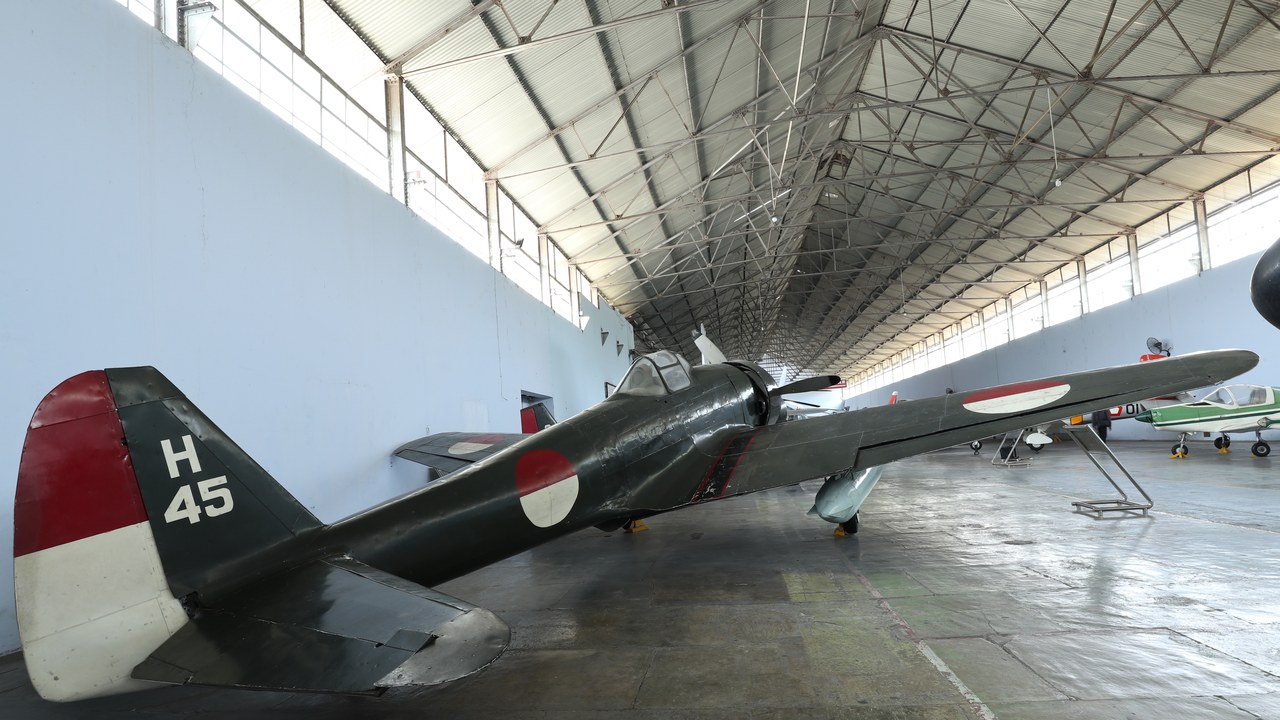
The Nakajima Ki-43 was a single-engine, land-based fighter whose Allied reporting name was Oscar. American pilots often called it the Army Zero because it resembled the Navy’s Mitsubishi A6M.
The Ki-43 could reportedly outmaneuver any opponent, but it initially lacked armor and self-sealing fuel tanks, and its armament was relatively weak until its final version, built as late as 1945.
16. Kawanishi N1K: Violet Lightning
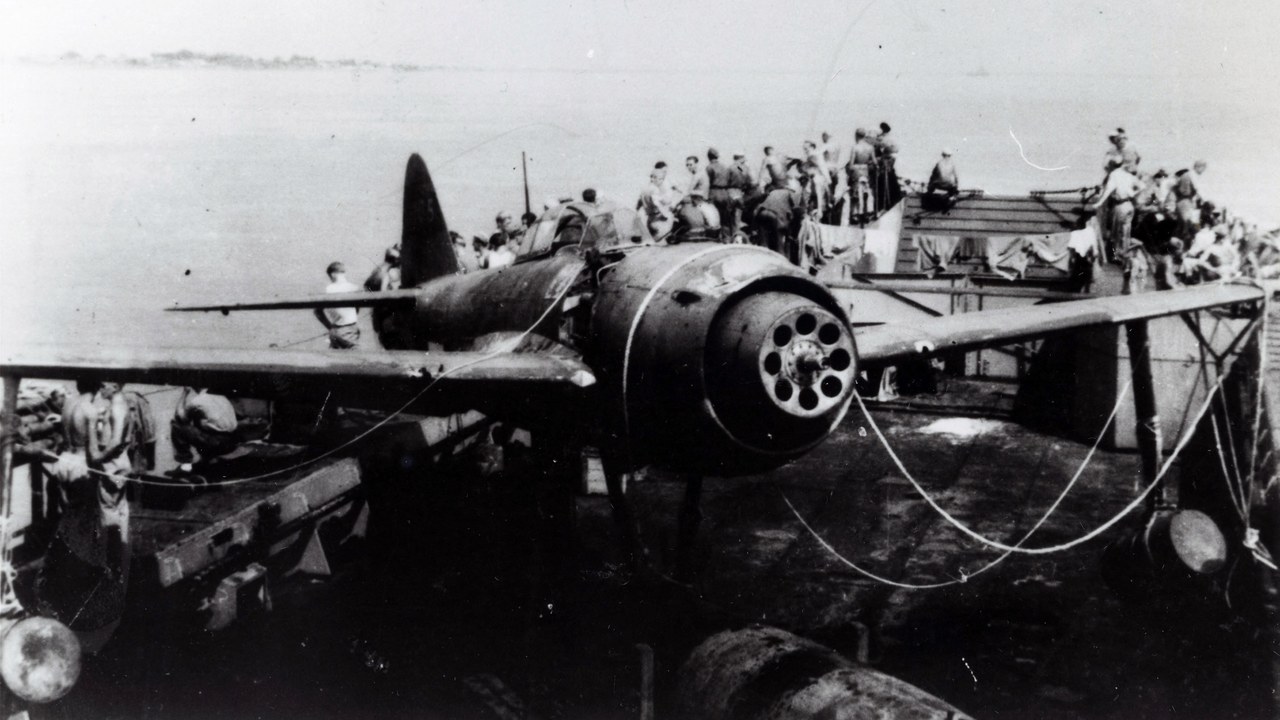
The Kawanishi N1K began as a floatplane fighter, designed to support forward operations without relying on airstrips. The Imperial Japanese Navy later flew a land-based version, the N1K-J Shiden, whose name means Violet Lightning.
The floatplane version carried the Allied reporting name Rex. Development of the N1K can be traced back to a 1940 instruction for Kawanishi to design a dedicated floatplane fighter.
17. Yakovlev Yak-3: Small, Light and Deadly
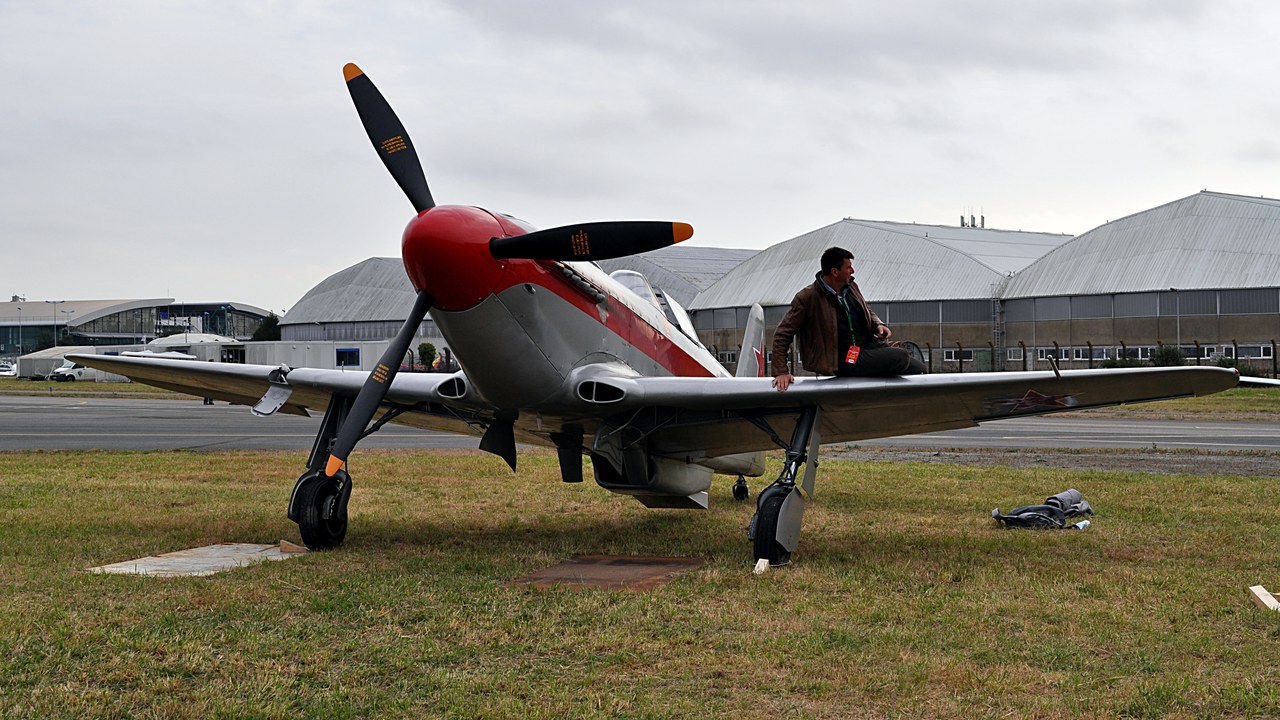
The Yak-3 was a single-engine Soviet fighter that was robust, easy to maintain and liked by pilots and ground crews. It was one of the smallest and lightest combat fighters of the war, and its high power-to-weight ratio made it a formidable dogfighter.
The Luftwaffe reportedly ordered its pilots to avoid combat below 5,000 meters with Yakovlev fighters lacking an oil cooler intake under the nose. In all, 4,848 Yak-3s were built.
18. Hawker Tempest: The V-1 Hunter
![Hawker Tempest — Image Credit: [[User:Ad Meskens|Ad Meskens - CC BY-SA 4.0/Wiki Commons](https://morningoverview.com/wp-content/uploads/2026/11/18-world-war-ii-fighters-that-battled-for-the-skies-18.jpg)
The Hawker Tempest was a significantly improved derivative of the Typhoon, originally known as the Typhoon II. Entering service in 1944, it flew low-level interceptions, particularly against the V-1 flying bomb.
It also flew ground attack missions supporting major operations such as Operation Market Garden. The Royal Air Force used it mainly in its Mk.V form in the later stages of the war.
More from Morning Overview
- Shaq spent $1.3 million on three Rolls-Royce Phantoms to prove a point to a salesman
- The Justice Department asked courts to undo approvals for three offshore wind farms, one already making power
- Over 20 trillion gallons of rain fell on the Four Corners states and Nevada in two weeks
- 11 engines built to run well past 200,000 miles
