
America’s Air Force is building a new kind of wingman, one with no pilot in the cockpit. Uncrewed jets designed to fly alongside fighters are moving from demonstrations toward real squadrons, drawing on decades of drone experiments. These pictures show the aircraft, the fighters they will fly with and the companies teaching machines to fight.
Read next on Morning Overview: The Justice Department asked courts to undo approvals for three offshore wind farms, one already making power
Collaborative Combat Aircraft: Fighters With Robot Partners
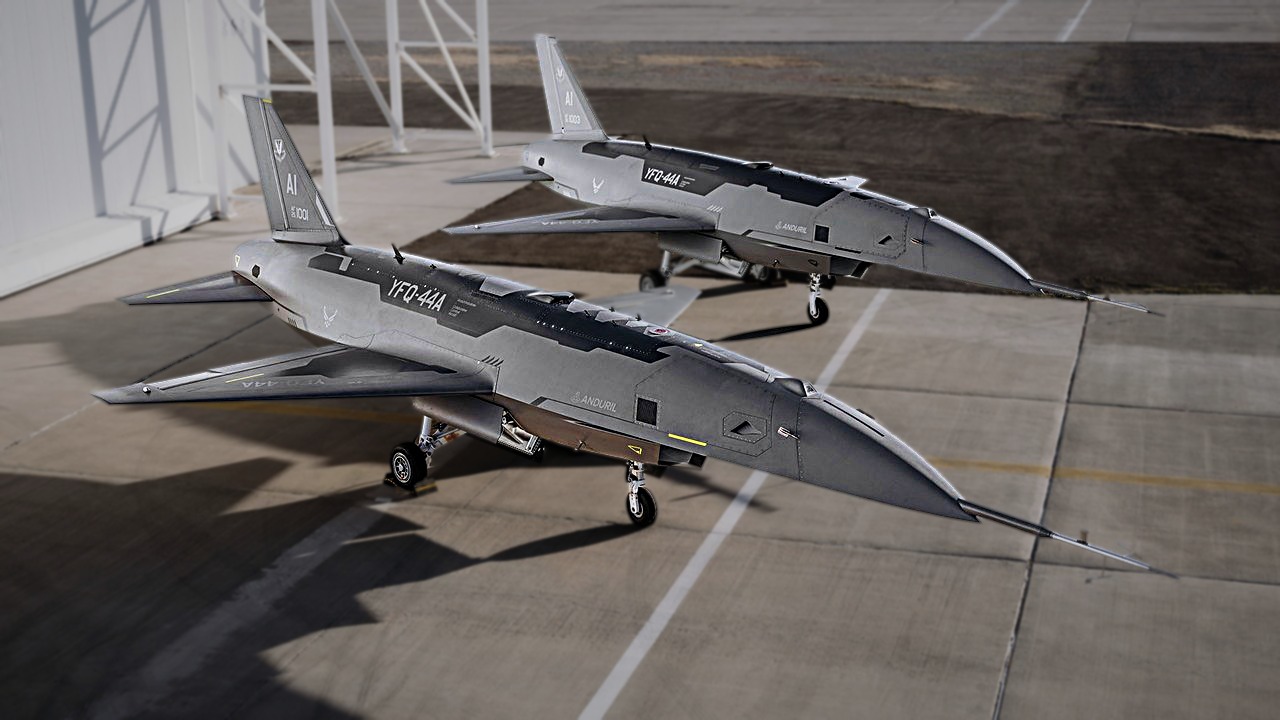
Collaborative Combat Aircraft are uncrewed jets meant to team with piloted fighters, a concept known as manned-unmanned teaming. As its Wikipedia entry explains, a pilot controls, coordinates or supervises one or more autonomous or semi-autonomous drones to improve situational awareness and reduce risk.
The idea is that cheaper uncrewed aircraft can take on dangerous jobs, such as scouting ahead or carrying extra weapons, while the human pilot stays further from threats. In the long run, the approach could also reduce how many crewed aircraft a mission needs.
General Atomics YFQ-42: One of the First Two Winners
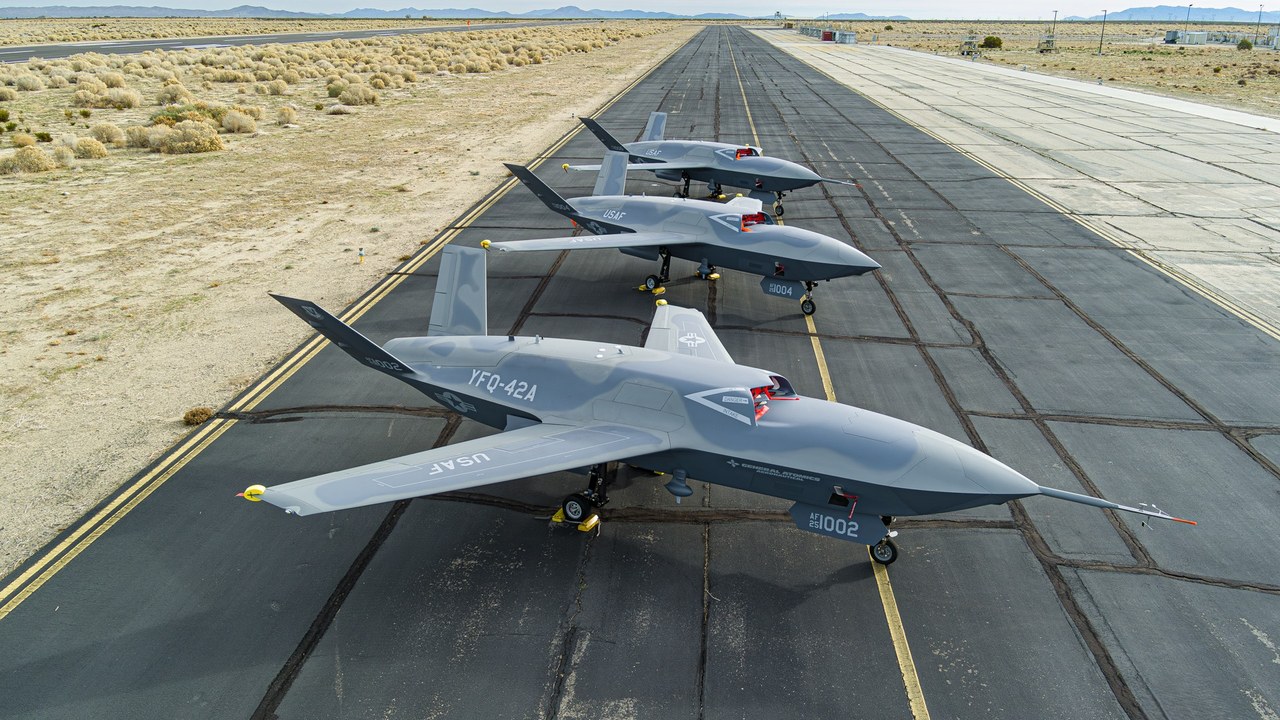
The General Atomics YFQ-42 is one of the two winning designs for the first increment of the Air Force’s Collaborative Combat Aircraft program, according to its Wikipedia entry. It is meant to fly with crewed fighters such as the F-22, the F-35 and the planned F-47 on air-to-air missions.
It belongs to General Atomics’ “Gambit” family and is derived from the XQ-67A demonstrator built for the Air Force Research Laboratory. It was selected alongside Anduril’s Fury design, designated YFQ-44. A mockup was shown at a September 2024 Air Force conference.
Kratos XQ-58 Valkyrie: The Low-Cost Stealth Drone
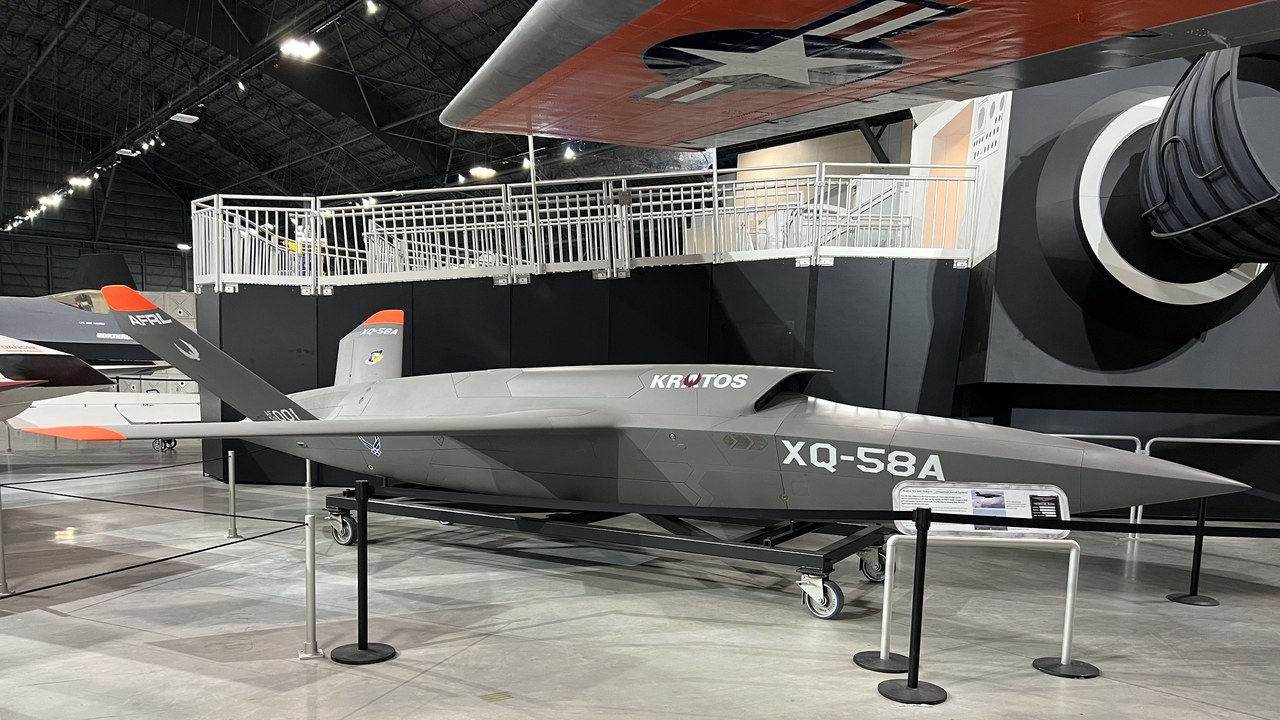
The Kratos XQ-58 Valkyrie is an experimental stealth uncrewed combat aircraft built for an Air Force program to develop low-cost, attritable strike aircraft, according to its Wikipedia entry. It was initially designated the XQ-222, and it falls under the Air Force Research Laboratory’s low-cost attritable aircraft portfolio.
The Valkyrie first flew on March 5, 2019, at Yuma Proving Ground in Arizona. The program aimed to design and build combat drones faster and more cheaply, and the U.S. Marine Corps later picked the Valkyrie for development as a loyal wingman with Northrop Grumman.
Boeing MQ-28 Ghost Bat: Australia’s Ghost Bat
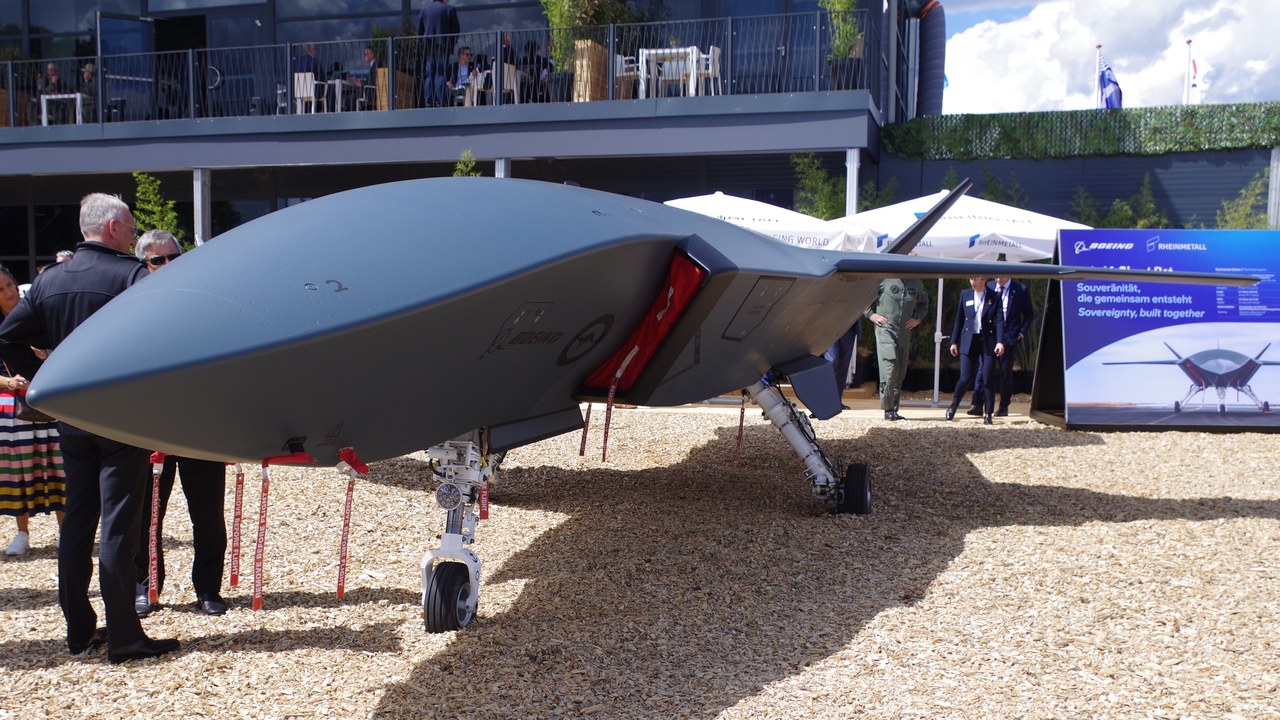
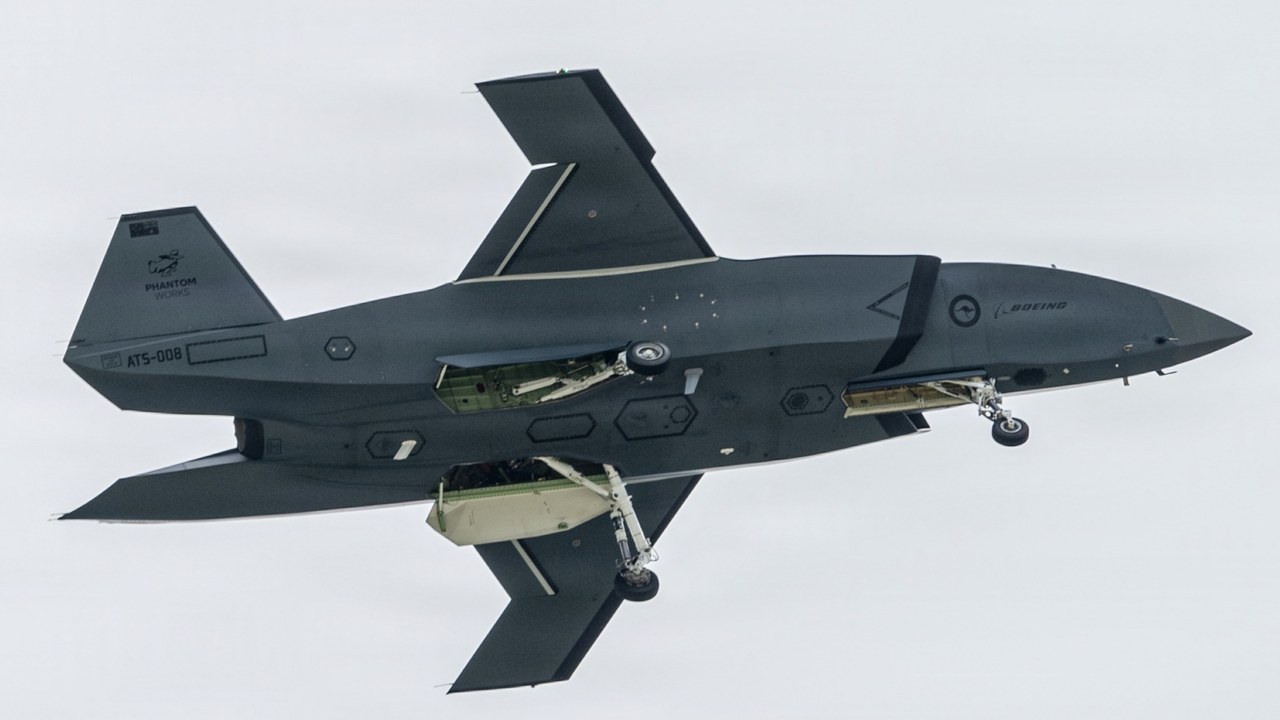
The Boeing MQ-28 Ghost Bat is a stealthy, multirole uncrewed combat aircraft designed to fly alongside crewed aircraft and to perform autonomous missions using artificial intelligence, as its Wikipedia entry describes. It was previously known as the Boeing Airpower Teaming System.
As of October 2024, eight Block 1 aircraft had been built with more than 100 hours of flight testing, much of it at Australia’s Woomera range. It has also been controlled from an airborne E-7 Wedgetail, a key step toward teaming with crewed aircraft in flight.
Lockheed Martin F-35 Lightning II: The Fighter at the Center
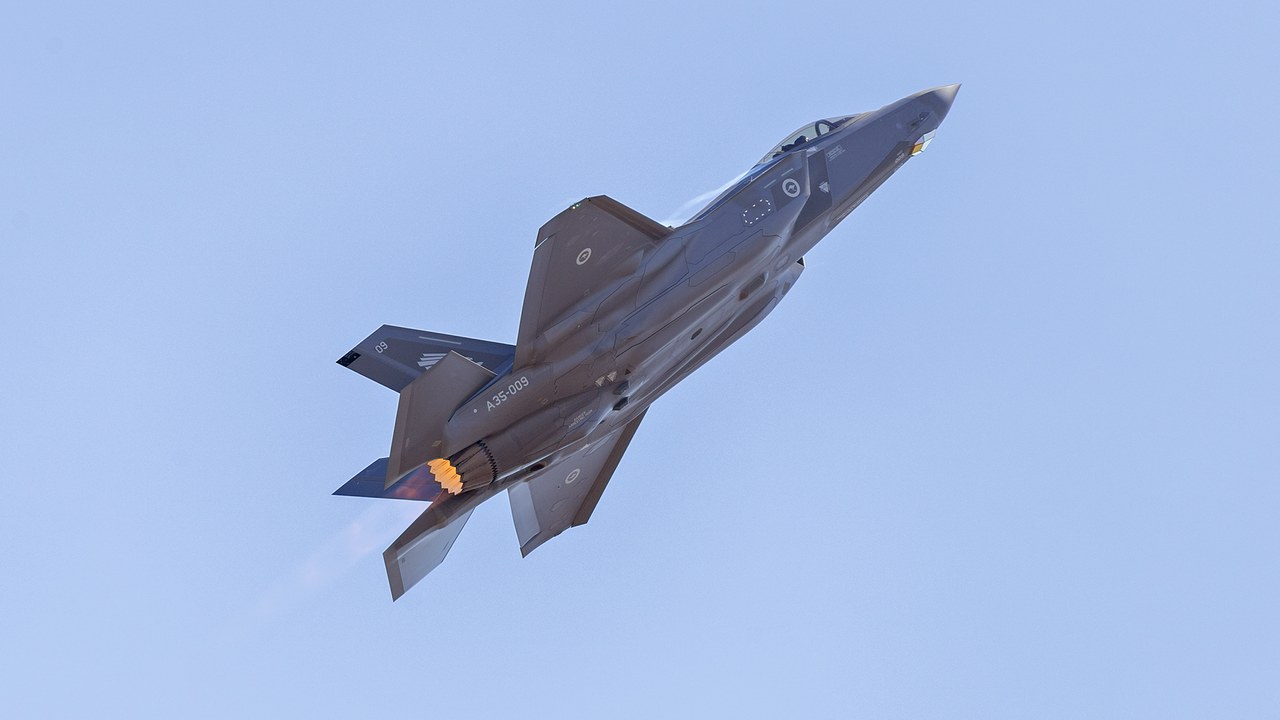
The F-35 Lightning II is a family of single-seat, single-engine stealth strike fighters designed for air superiority and strike missions, with electronic warfare and reconnaissance abilities, according to its Wikipedia entry. Lockheed Martin is the prime contractor, with partners Northrop Grumman and BAE Systems.
With 883 aircraft in service as of 2025, it is the world’s most numerous stealth aircraft. Its sensors and data links make it a natural quarterback for uncrewed wingmen, and the Collaborative Combat Aircraft are meant to augment fighters like it.
General Atomics MQ-9 Reaper: The Drone That Came Before
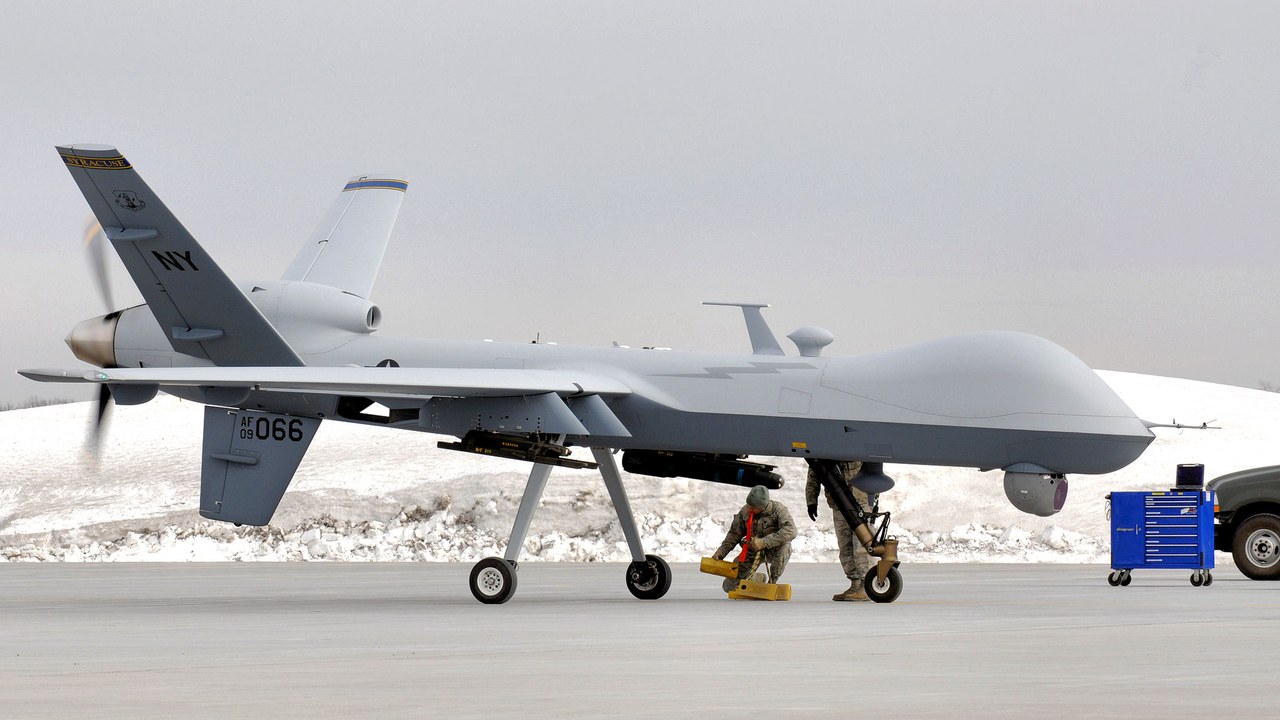
The MQ-9 Reaper is a larger, heavier and more capable drone than the earlier MQ-1 Predator, according to its Wikipedia entry. Its 950-shaft-horsepower turboprop lets it carry 15 times more ordnance and cruise at about three times the Predator’s speed.
The Air Force calls such aircraft remotely piloted, because crews in a ground control station fly them and control their weapons. The final aircraft cost about $16 million each when bought in a batch of four. That human-in-the-loop model is the starting point the new autonomous wingmen are moving beyond.
Northrop Grumman X-47B: The Drone That Landed on a Carrier
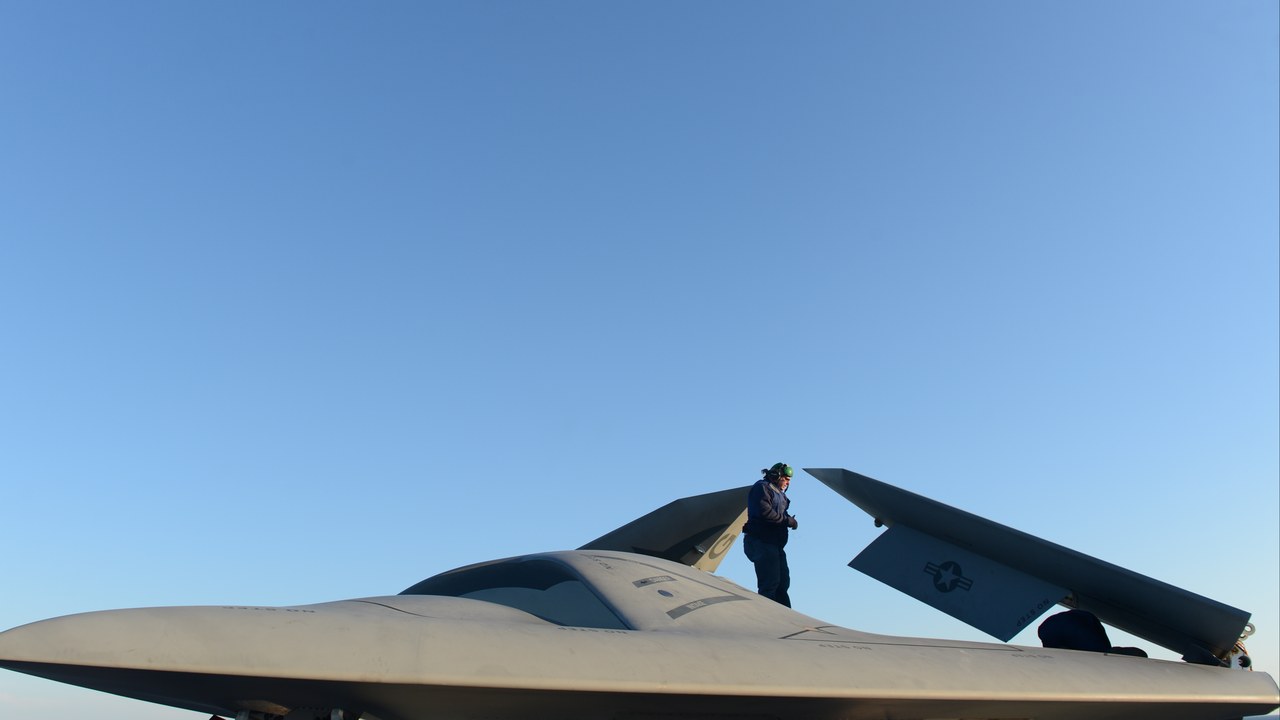
The Northrop Grumman X-47B is a tailless, jet-powered blended-wing aircraft capable of semi-autonomous operation and aerial refueling, as its Wikipedia entry explains, with a design aimed at carrier operations. The project began under DARPA and became part of a U.S. Navy demonstration program.
It first flew in 2011, and its two demonstrators performed land and carrier-based tests, including operations alongside manned aircraft. By May 2015 the primary test program was declared complete, and the demonstrators were slated to become museum exhibits.
Shield AI: Teaching Software to Fly
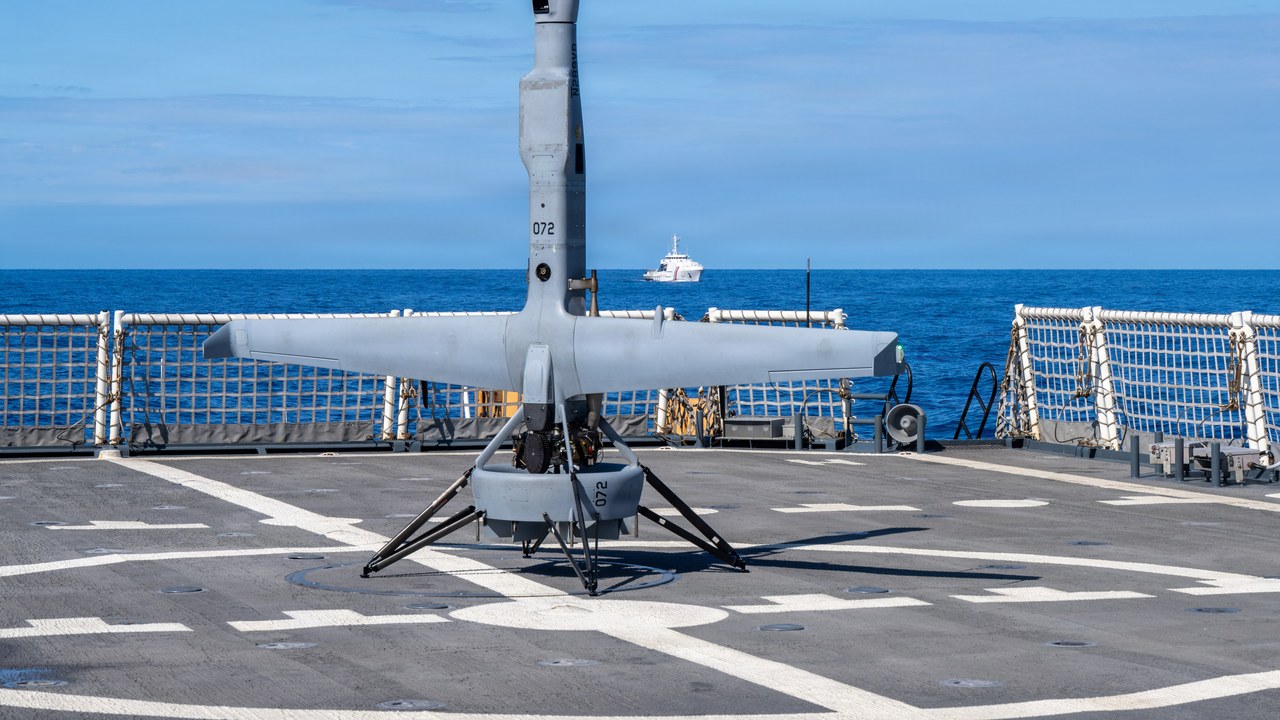
Shield AI is a defense technology company that develops artificial-intelligence-powered pilots, drones and related technology, according to its Wikipedia entry. Its clients include U.S. Special Operations Command, the Air Force, the Marine Corps and the Navy.
Founded in 2015 in San Diego by former Navy SEAL officer Brandon Tseng, his brother Ryan Tseng and Andrew Reiter, the company says its small Nova drone was the first AI-powered drone deployed for defense purposes in U.S. military history. The founding team started with a seed fund of $100,000.
Beale Air Force Base: A Base Chosen for the Mission
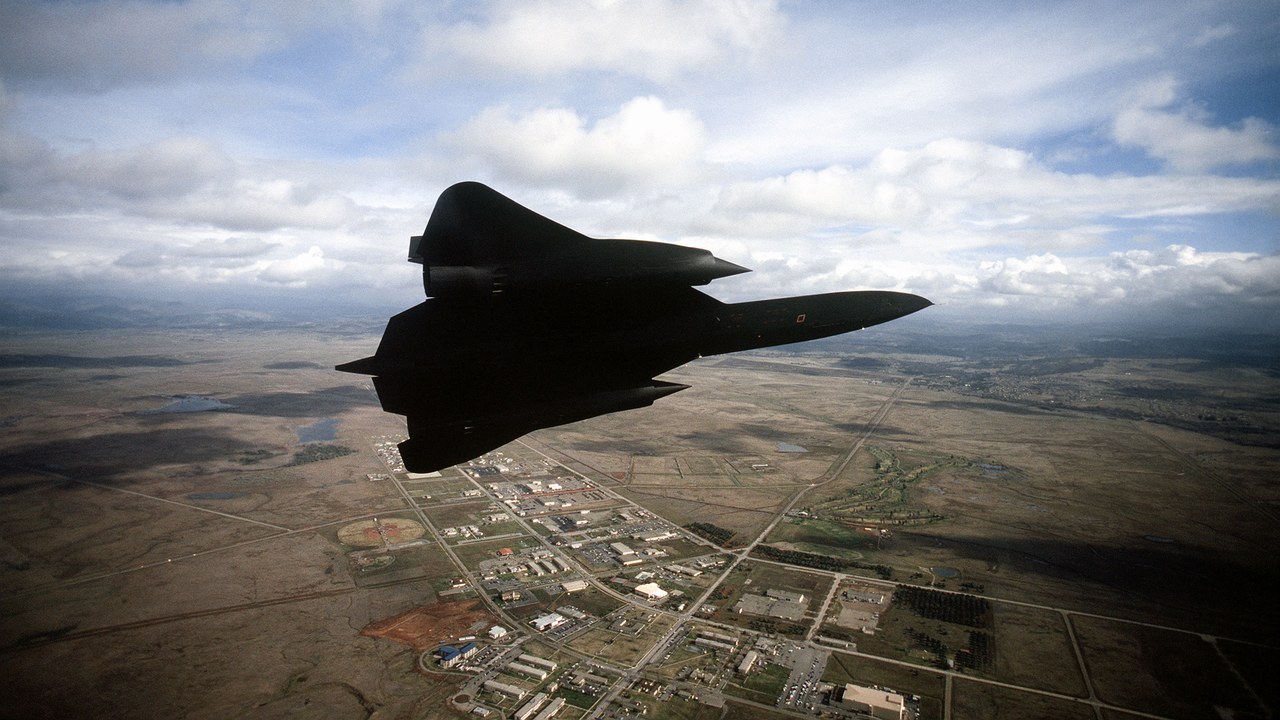
Beale Air Force Base sits in Yuba County, California, about 40 miles north of Sacramento, as its Wikipedia entry notes. Its host unit is the 9th Reconnaissance Wing, which flies the Air Force’s fleet of U-2 “Dragon Lady” spy planes.
The wing collects intelligence for national security decisions and maintains a high state of readiness for deployment. The base lies outside Linda, about 10 miles east of the towns of Marysville and Yuba City, and its wing also maintains combat support forces ready to deploy.
Lockheed Martin F-22 Raptor: The Raptor’s Future Wingmen
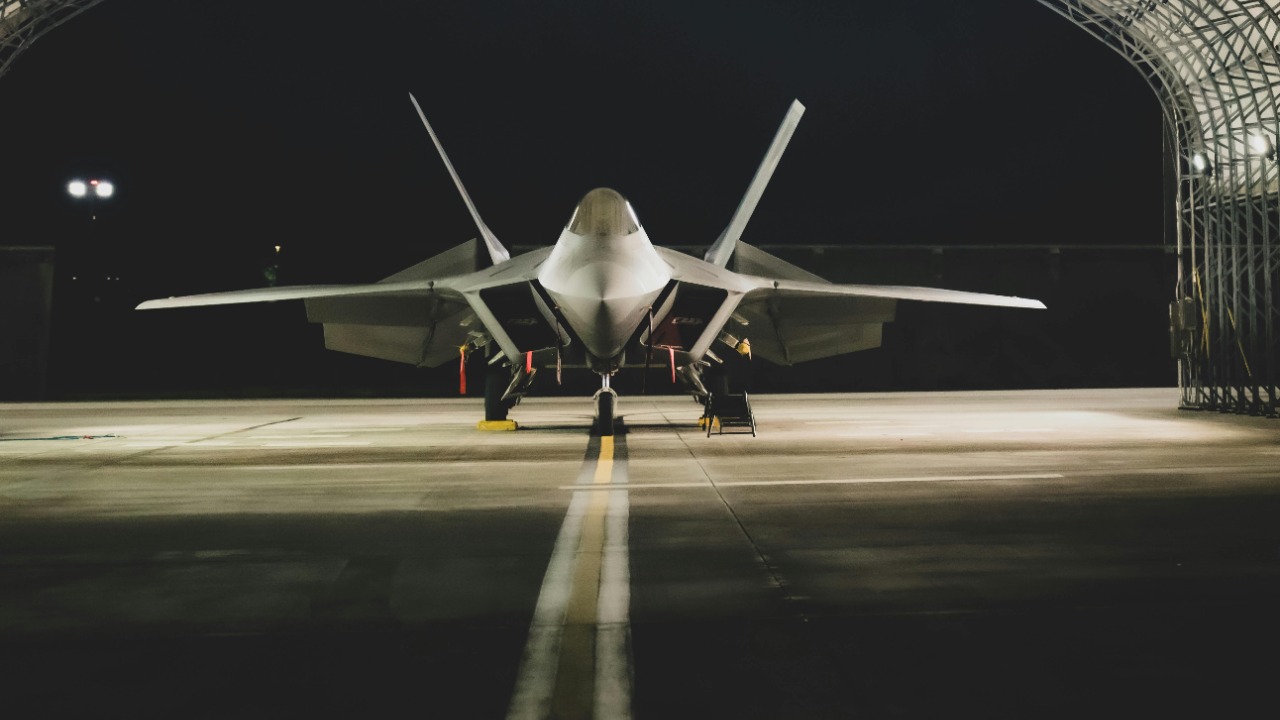
The F-22 Raptor was designed as an air superiority fighter under the Air Force’s Advanced Tactical Fighter program and entered service in December 2005, according to its Wikipedia entry. Lockheed Martin was the prime contractor, with Boeing as a major partner.
The Air Force originally planned to buy 750, but the program was cut to 195 aircraft, 187 of them operational. That small fleet is one reason the Air Force wants uncrewed wingmen that can add numbers alongside its most capable fighters.
Loyal wingman: The Loyal Wingman Idea
The phrase “loyal wingman” describes an uncrewed aircraft that flies with and supports a crewed one, and its Wikipedia entry traces the concept through programs around the world. A 2024 photo shows Turkey’s Anka-3 flying alongside crewed Hürjet and Hürkuş aircraft.
The U.S. Marine Corps picked the XQ-58A Valkyrie for development in that role. The concept aims to improve awareness, lower risk to pilots and help forces operate in complex environments, which is why air forces from the United States to Australia are testing it.
More from Morning Overview
- Neanderthals in Spain carved a wooden object that matches nothing archaeologists have ever found
- The FAA wants $2.39 million from a flight school it says flew a Cessna about 280 times with an unapproved part
- A $1 billion gas plant planned for Superior, Wisconsin, has been abandoned
- Shaq spent $1.3 million on three Rolls-Royce Phantoms to prove a point to a salesman
