
Motorcycle engines mostly top out under a liter, built to keep weight and cost down. A handful of manufacturers ignore that ceiling entirely, wedging automotive-scale V8s, oversized triples and even a straight six into two-wheeled frames built to handle the extra torque. Here are nine motorcycles with engines big enough to rival a car’s.
1. Boss Hoss BHC-3 LS3: A Chevy V8 Between Two Wheels
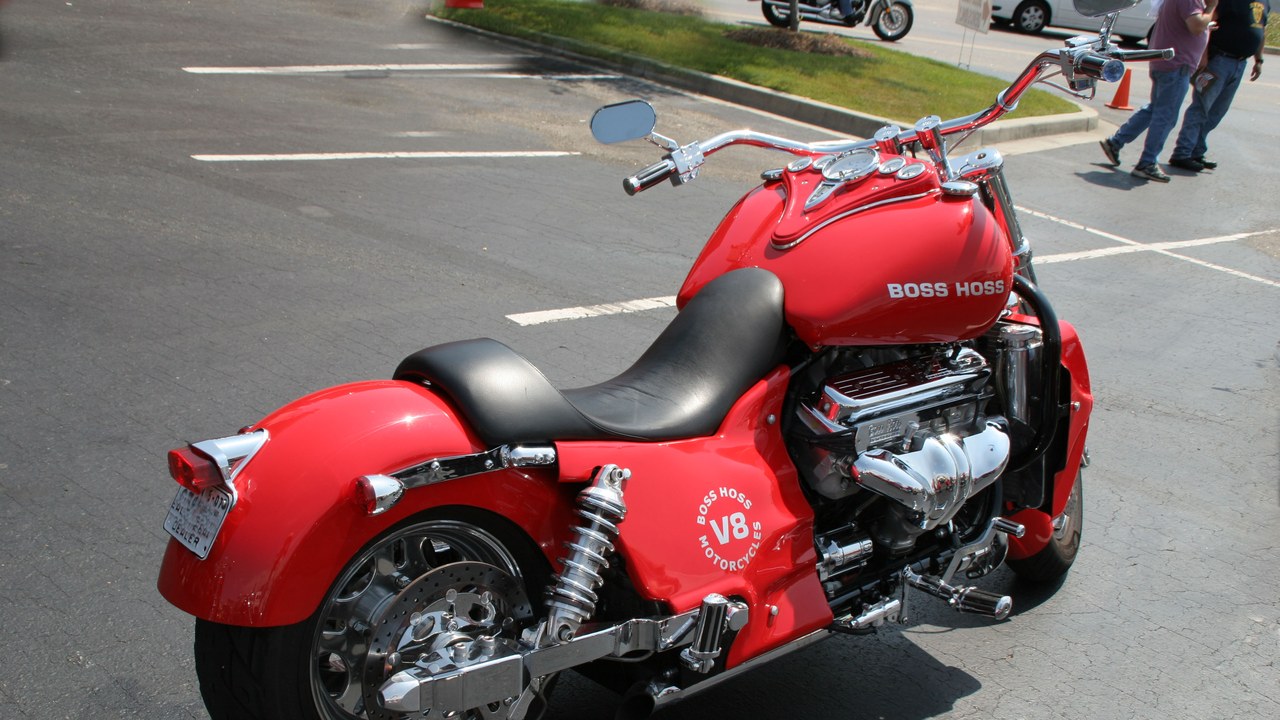
Boss Hoss, a small builder based in Dyersburg, Tennessee, skips motorcycle engines entirely and drops in a genuine Chevrolet small-block V8, offered from 376 up to 496 cubic inches, or 6,160 to 8,130cc, dwarfing every other engine on this list several times over.
A car-style radiator sits up front to cool the block, something no air-cooled V-twin needs, and a semi-automatic transmission sends that torque through a wide rear tire built to handle it. The frame stretches long and low to carry the extra weight, trading tight cornering for straight-line pull and a soundtrack closer to a muscle car than a motorcycle.
2. Triumph Rocket 3 Storm R: The Biggest Production Triple
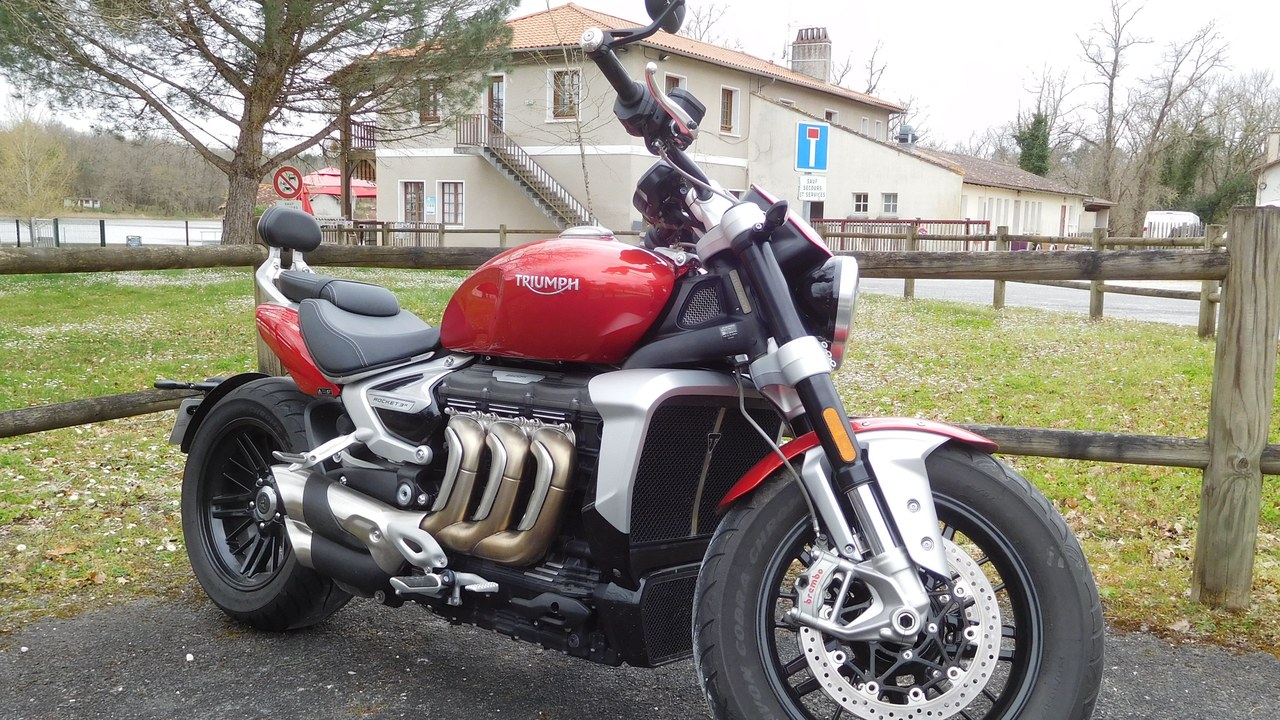
The Rocket 3 Storm R carries a 2,458cc triple, the largest engine on any production motorcycle sold outside Boss Hoss’s car-derived builds, rated at 179.5 horsepower at 7,000rpm and 166 pound-feet of torque delivered as low as 4,000rpm.
That torque arrives early in the rev range, so the big triple pulls hard from a stop without needing to be wound out, a trait that shapes the bike’s low, drag-style stance and its oversized 240-section rear tire. Triumph builds the Storm R as the most aggressive trim in the Rocket 3 lineup, with matte paint and minimal chrome.
3. Harley-Davidson CVO Street Glide: Harley’s Biggest Factory V-Twin
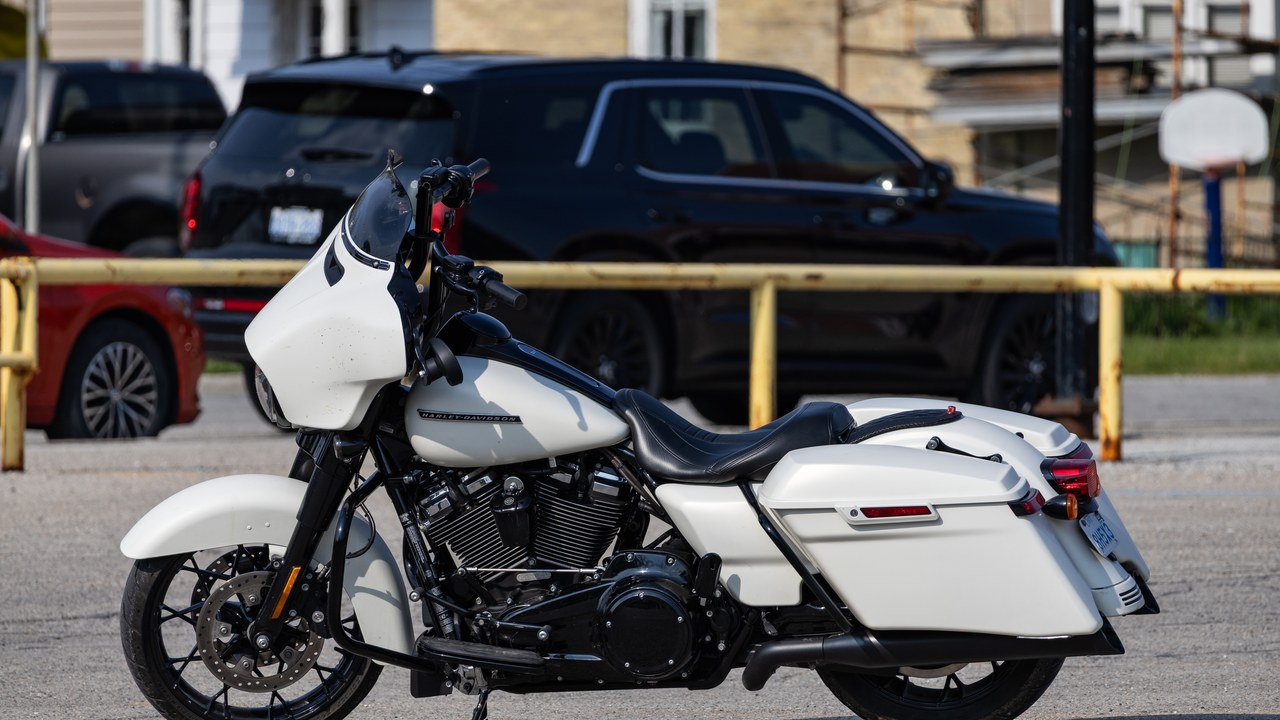
Harley-Davidson’s CVO Street Glide runs the Milwaukee-Eight VVT 121, a factory V-twin that displaces 121 cubic inches and produces 115 horsepower alongside 139 pound-feet of torque, the largest engine Harley builds into any of its touring baggers.
Variable valve timing helps the big twin meet emissions rules without giving up the low-end pull touring riders lean on for passing power. The extra displacement over the standard Milwaukee-Eight lineup is reserved for Harley’s Custom Vehicle Operations models, which also carry unique paint, wheels and audio hardware not offered on the base Street Glide.
4. Harley-Davidson Road Glide: A Shark-Nose Bagger’s Standard Engine
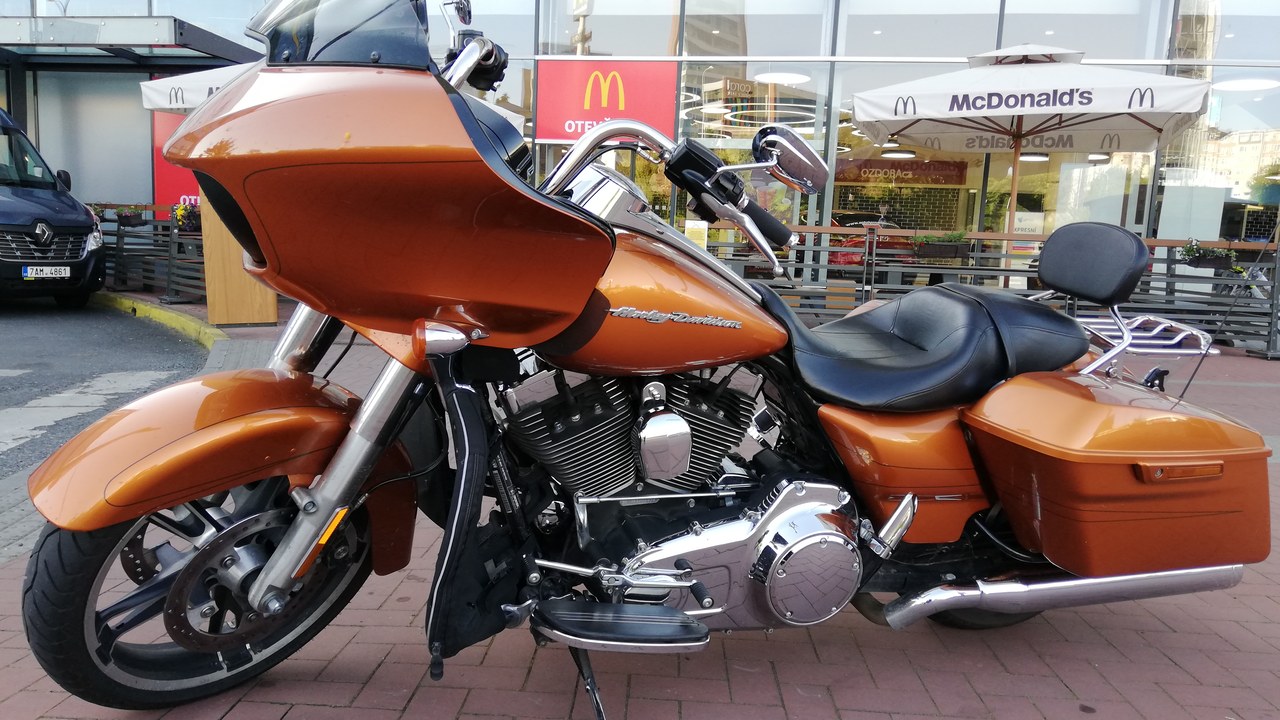
The 2026 Road Glide pairs its shark-nose, frame-mounted fairing with a liquid-cooled Milwaukee-Eight 117, a 117-cubic-inch V-twin that makes 105 horsepower and represents the standard powerplant across Harley’s current touring lineup.
Liquid-cooled heads keep the rear cylinder from overheating in slow traffic, a persistent complaint on earlier air-cooled Harley twins, and the extra cooling capacity lets the engine run tighter tolerances for steadier output on long highway runs. The frame-mounted fairing, rather than one mounted to the forks, is what sets the Road Glide apart from the Street Glide and Road King.
5. Indian Roadmaster: Indian’s Full-Dress Flagship Engine
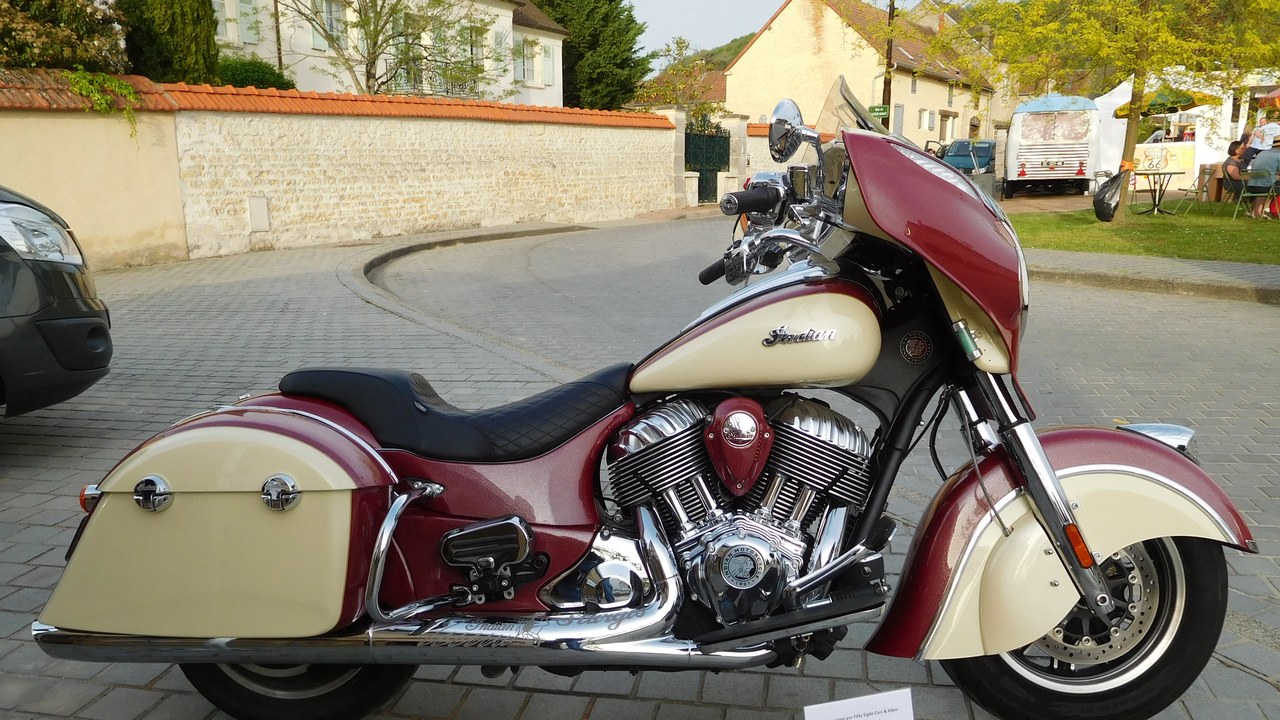
Indian’s Roadmaster carries the air-cooled Thunderstroke 116, a 1,890cc V-twin that delivers 126 pound-feet of torque, enough to haul a fully loaded touring bike with a passenger, saddlebags, a top trunk and a full tank of fuel.
The engine leans on cubic inches rather than high revs for its output, a philosophy shared across Indian’s entire touring lineup, and it drives through a six-speed gearbox built to handle sustained highway loads without excess vibration. As the brand’s flagship, the Roadmaster also adds a passenger backrest and extra chrome over the Chieftain and Springfield it shares its platform with.
6. Indian Challenger Limited 112: Indian’s Liquid-Cooled Answer to Harley
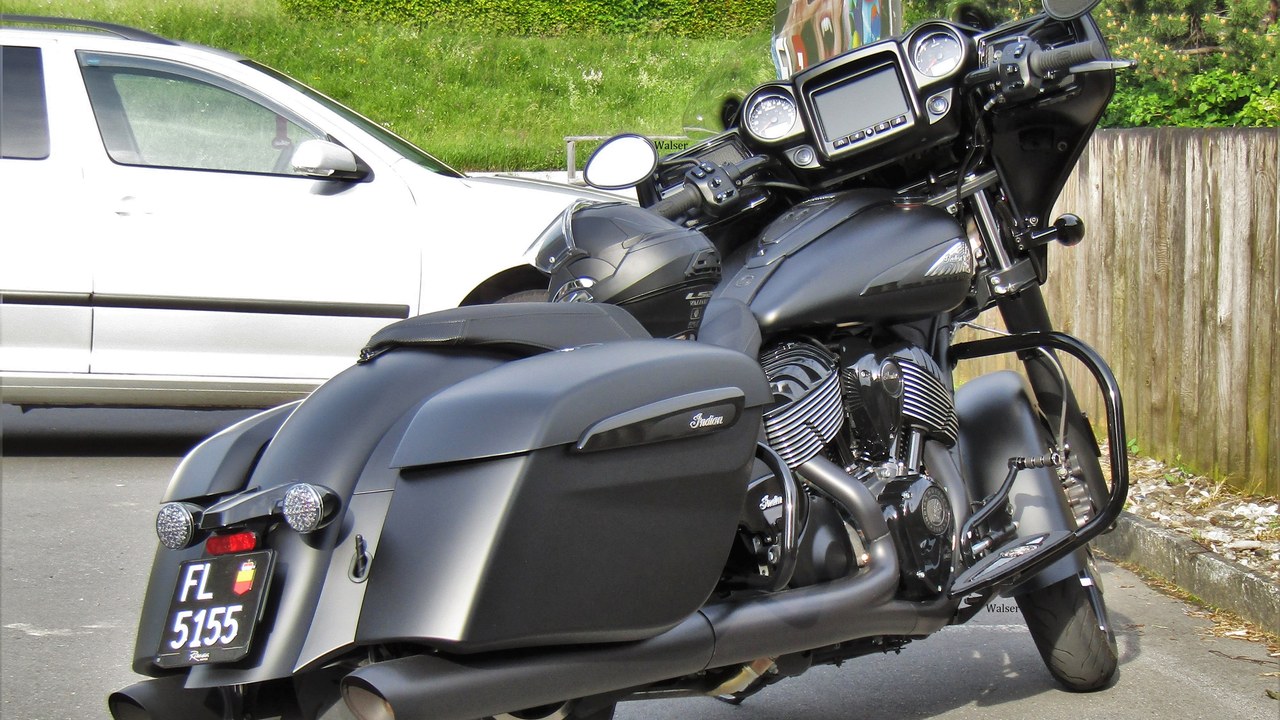
The Challenger Limited 112 runs Indian’s liquid-cooled PowerPlus 112, a 1,834cc V-twin rated at 126 horsepower and 133 pound-feet of torque, output figures that top the air-cooled Thunderstroke used across the rest of the Indian touring range.
Liquid cooling lets the PowerPlus run higher compression than Indian’s traditional air-cooled twins, closing the performance gap with rival baggers built for highway passing power. The frame-mounted fairing also sets the Challenger apart visually from the fork-mounted fairings on the Roadmaster and Chieftain, giving it a lower, more aggressive stance.
7. Honda Gold Wing Tour: A Flat-Six Built for Smoothness
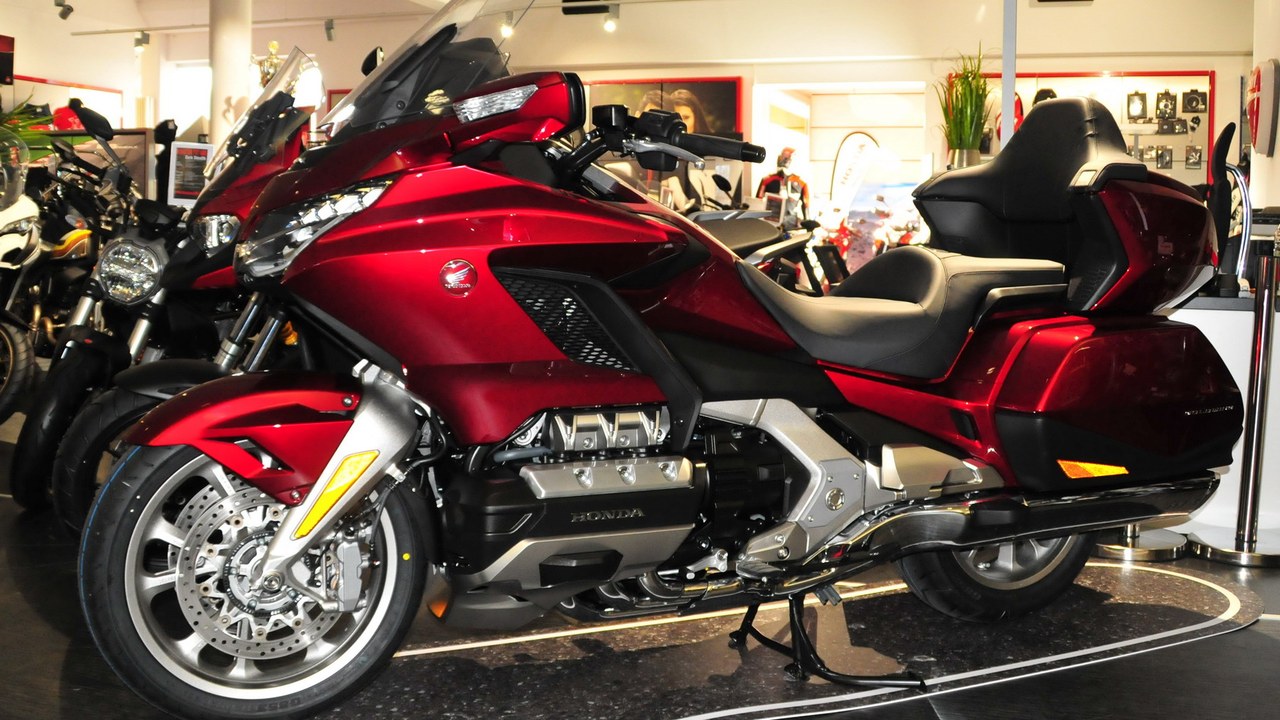
The Gold Wing Tour’s flat six uses a square bore and stroke, both measuring 73.0mm, for a total displacement of 1,833cc spread across six cylinders rather than concentrated in a single large V-twin.
That layout keeps the engine low and balanced inside the frame, since opposed cylinders cancel much of the vibration a twin or triple produces. A seven-speed dual-clutch transmission on the Tour model shifts without a clutch lever, a feature paired with reverse gear and airbag-equipped models, all aimed squarely at long-distance touring comfort over two-up trips.
8. Harley-Davidson Fat Boy: The Fat Boy’s Massive Milwaukee-Eight
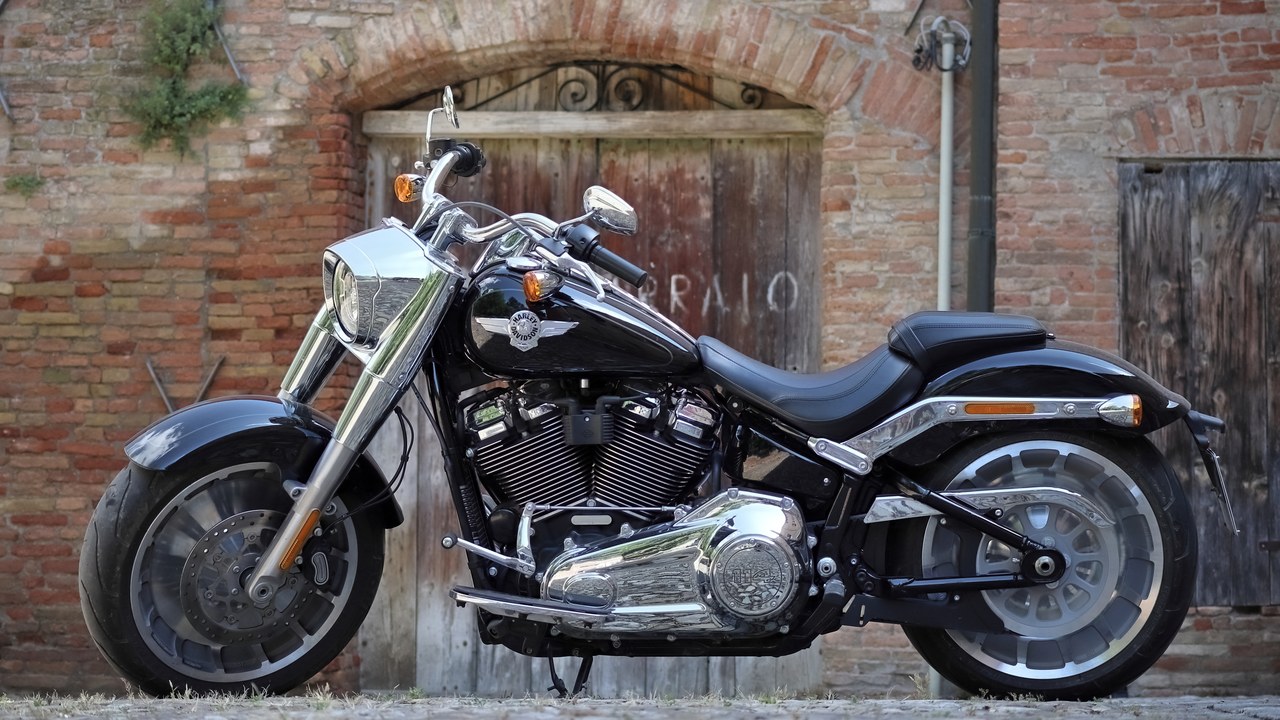
The Fat Boy is Harley-Davidson’s flagship Softail cruiser, built around the company’s Milwaukee-Eight 114, an air-cooled V-twin that displaces 1,868cc, among the largest engines sold in a new production motorcycle and one Harley also fits across several other Softail and touring trims tuned for lower-end cruiser pull rather than top-end revs.
Its solid disc wheels, front and rear, are the model’s signature feature, a design carried over from the original 1990 Fat Boy and instantly recognizable across Harley’s lineup. The Softail frame hides the rear shock beneath the transmission, giving the bike the rigid-look silhouette its cruiser styling depends on.
9. BMW K 1600 GTL: A Transverse Six for Touring
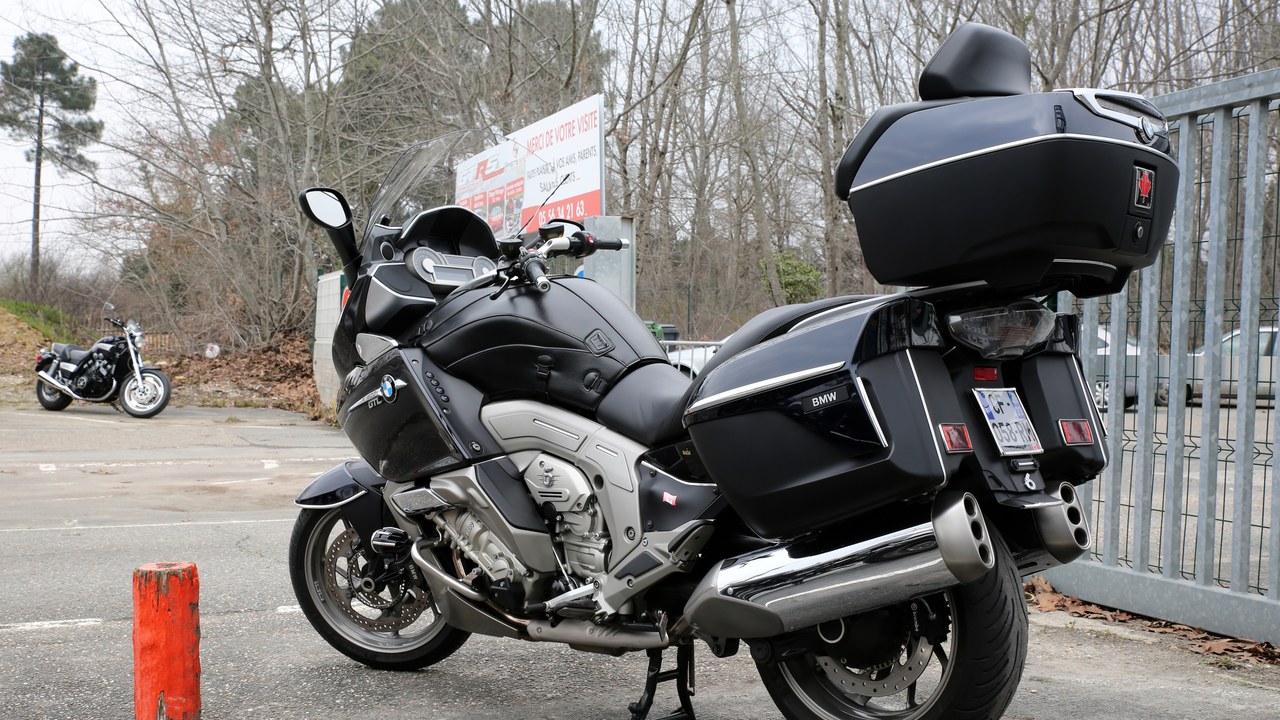
The K 1600 GTL fits a 1,649cc straight six transversely across the frame, with its cylinders angled 55 degrees forward to lower the engine’s center of gravity and narrow the overall package.
Six cylinders spread the power delivery more smoothly than a twin or a triple, and the compact transverse layout leaves room for the GTL’s full fairing, top box and passenger accommodations expected of a flagship tourer. BMW positions the K 1600 GTL as its most luxury-oriented touring model, built to carry two riders in comfort over long highway distances.
More from Morning Overview
- The FTC is warning about a scam quietly draining thousands from victims
- The NSA is again telling phone owners to switch off one location setting
- A handful of car transmissions are so tough mechanics say they almost never fail
- A handful of SUVs keep hitting 300,000 miles, and they share one engine trait
