
Sinkholes rarely announce themselves. Groundwater dissolves limestone for thousands of years beneath ground that looks perfectly solid, and the roof holds until the day it does not. Here are eight of the most dramatic collapses and karst voids on the planet, from a flooded reef crater off Belize to a Florida bowl with a boardwalk running down into it.
1. Great Blue Hole: The Reef’s Perfect Circle
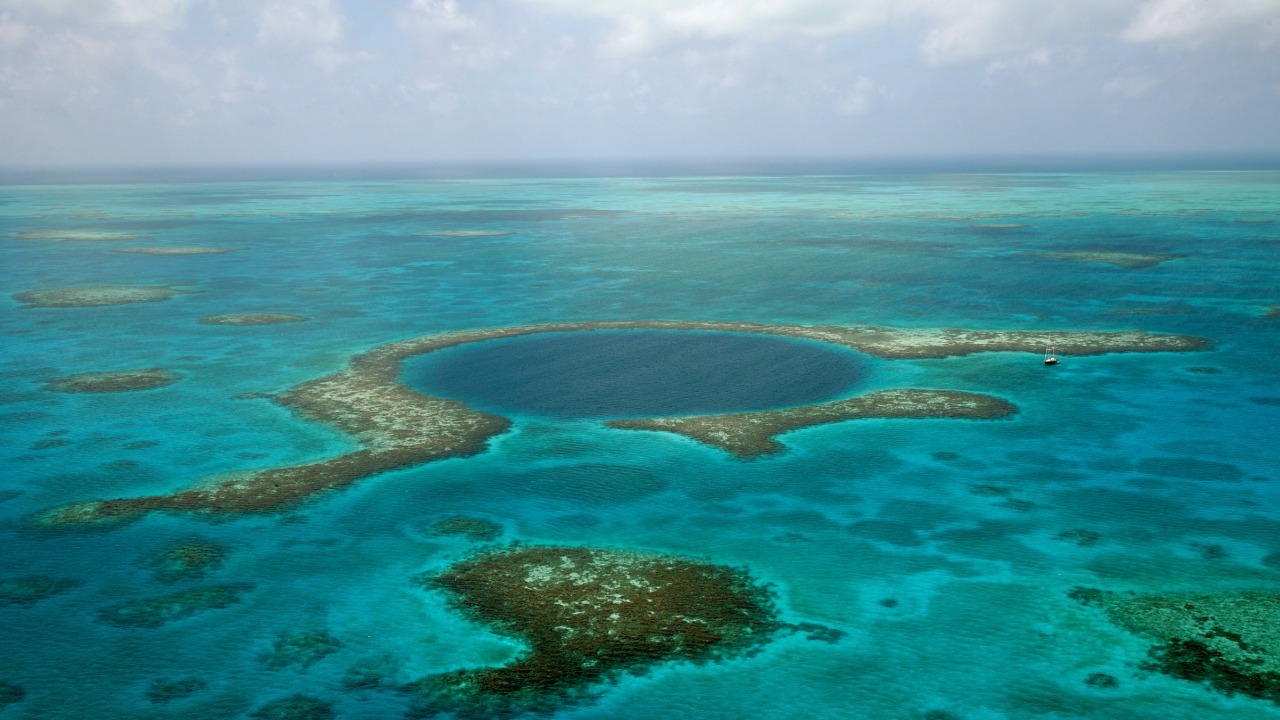
Roughly 43 miles off the coast of Belize, the Great Blue Hole punches an almost perfect circle about 1,000 feet wide into a shallow reef, its navy water dropping more than 400 feet while the lagoon around it stays bright. The shaft began as a dry limestone cave during Pleistocene ice ages, when sea level sat far lower, and stalactites still hang inside. It lies inside the Belize Barrier Reef Reserve System, a World Heritage site since 1996.
The circle records a collapse, not slow erosion. As rising seas flooded the cavern, the roof failed and the ocean poured in, leaving a shaft ringed by living coral. Divers reach the stalactite ledges at around 130 feet; below that the water is largely oxygen-starved and lifeless.
2. Red Lake: Europe’s Sheer-Walled Shaft
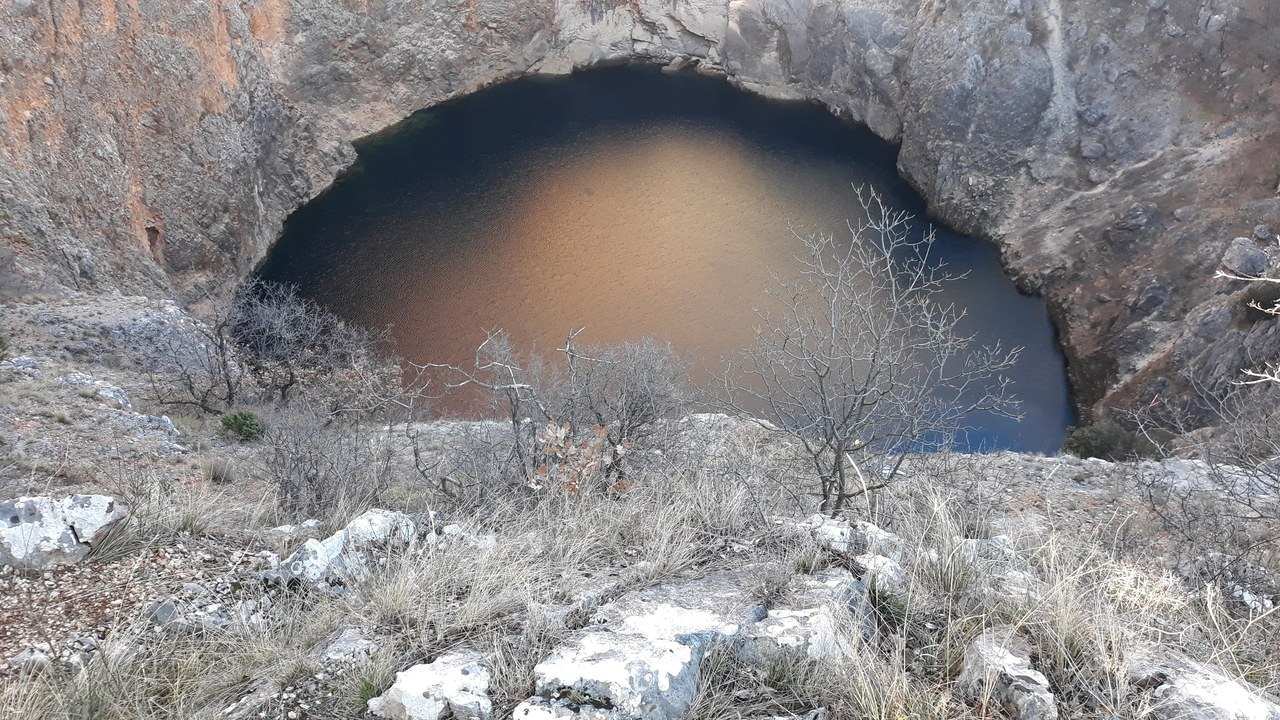
Beside the town of Imotski in southern Croatia, a walled karst pit drops roughly 1,600 feet from rim to floor, ranking among the deepest collapse sinkholes in Europe. Near-vertical cliffs several hundred feet high enclose it on every side, and the reddish-brown iron staining across that rock gives the site its name.
The shaft is a collapse doline rather than a dissolved basin: groundwater hollowed out a cavern in the limestone until the roof above it failed and dropped inward. Sheer walls make the floor almost unreachable without technical gear, and the water standing at the bottom rises and falls with the regional groundwater table.
3. Dean’s Blue Hole: The Free-Diver’s Abyss
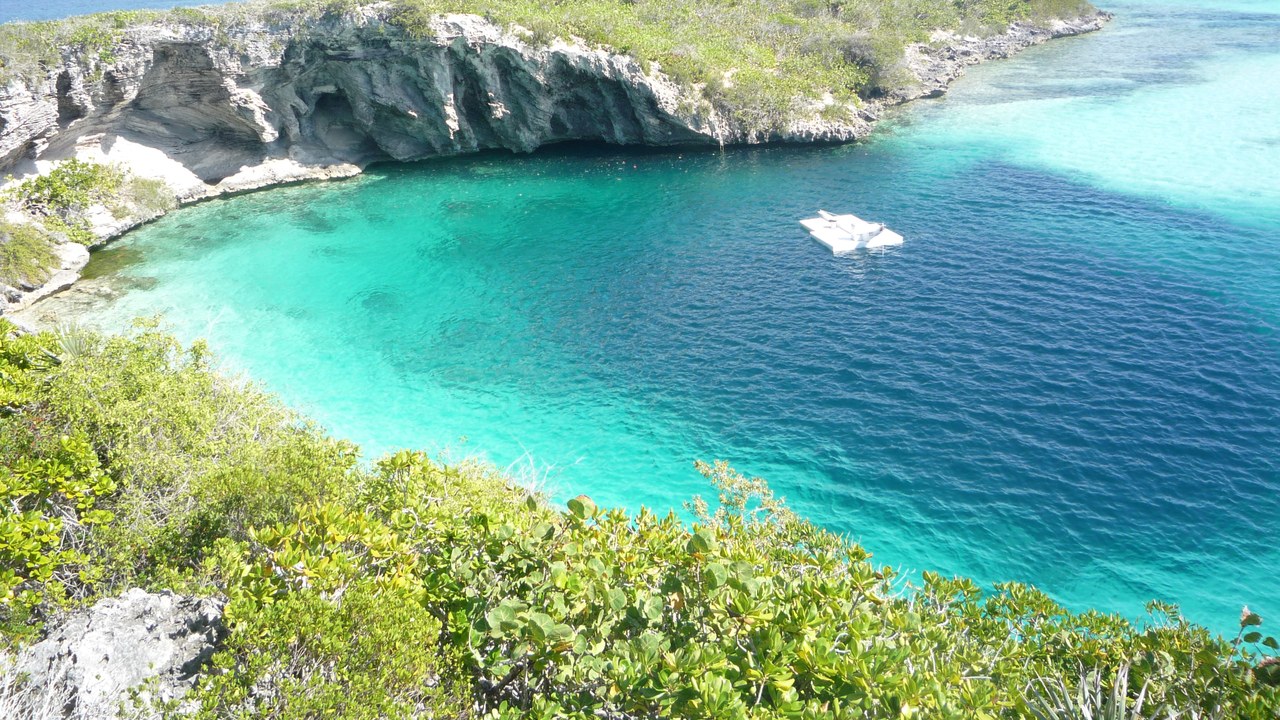
Tucked into a bay on Long Island in the Bahamas, this Bahamian blue hole plunges about 663 feet, opening from a narrow mouth in the sand into a bell-shaped cavern far wider than the entrance. Swimmers can wade to the rim from the beach, which is precisely what makes it unnerving: the seabed simply stops. For years it was regarded as the deepest known blue hole anywhere until deeper examples were reported elsewhere.
That geometry made it a home of competitive free-diving. Vertical Blue, the discipline’s best-known invitational, is staged there because the shaft is sheltered, vertical and effectively bottomless for a diver on one breath. The walls that shelter athletes also trap stagnant water at depth, where oxygen thins and little survives.
4. Cave of Swallows: A Free Fall Past The Birds
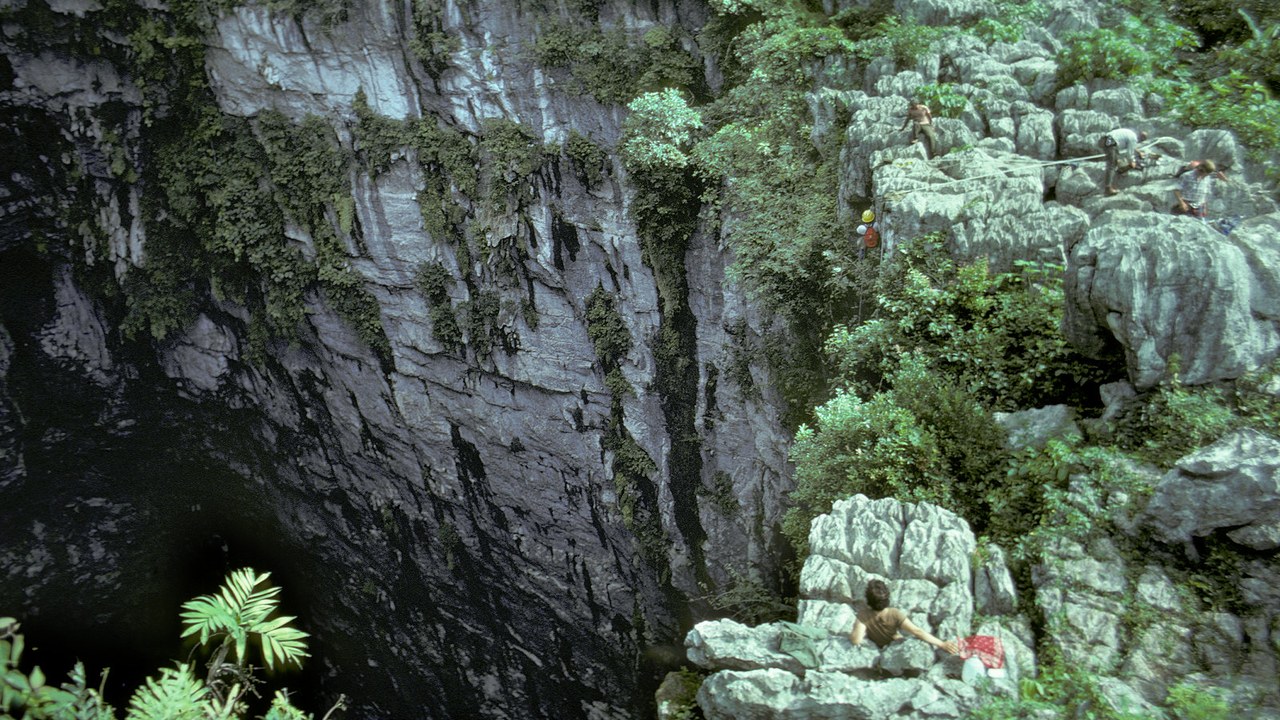
Near Aquismon in San Luis Potosi, Mexico, a limestone pit cave opens in the forest floor and drops roughly 1,200 feet from its low side to the debris slope at the bottom, deep enough to hold most skyscrapers ever built. The mouth is a modest oval a few dozen metres across, so the scale only registers once a rappelling line disappears into the dark without reaching anything.
The shaft is also an aviary. Thousands of white-collared swifts and green parakeets nest in the walls and spiral out in a rising column at dawn, returning at dusk in a steep dive. Rappelling to the floor takes minutes; climbing back out on ascenders can take well over an hour, which is why access is regulated.
5. Bimmah Sinkhole: Oman’s Turquoise Collapse
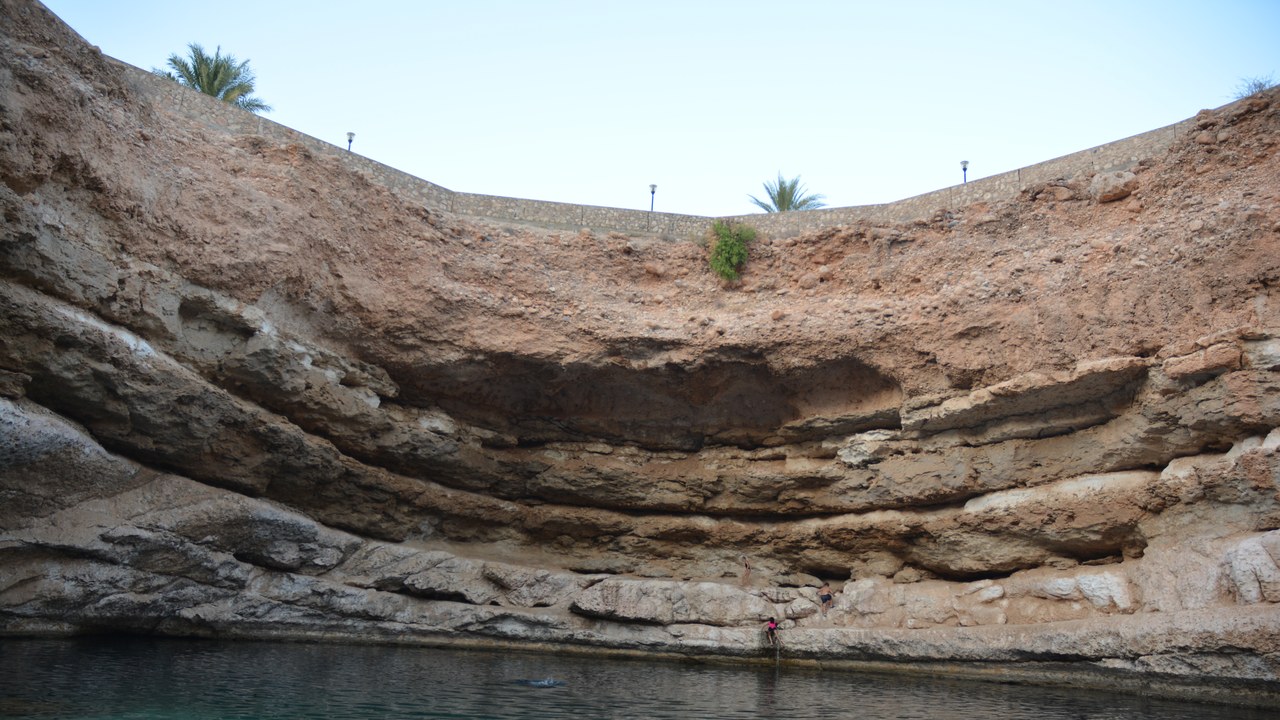
On the coast road between Muscat and Sur, a limestone depression in Oman’s Hawiyat Najm Park holds a pool of startling blue-green water roughly 60 feet below the desert surface. The basin measures about 130 feet by 65 feet, and its colour comes from a brackish mix of fresh groundwater and seawater seeping in from the coast a short distance away.
The Arabic name translates roughly as the falling star, reflecting a local tradition that a meteorite carved the hole. Geologists attribute it instead to a limestone roof collapsing over a dissolved cavity. Concrete steps now lead down to the water and the site is a free public park, one of the few sinkholes on this list an ordinary visitor can swim in.
6. Devil’s Sinkhole: The Texas Bat Chimney
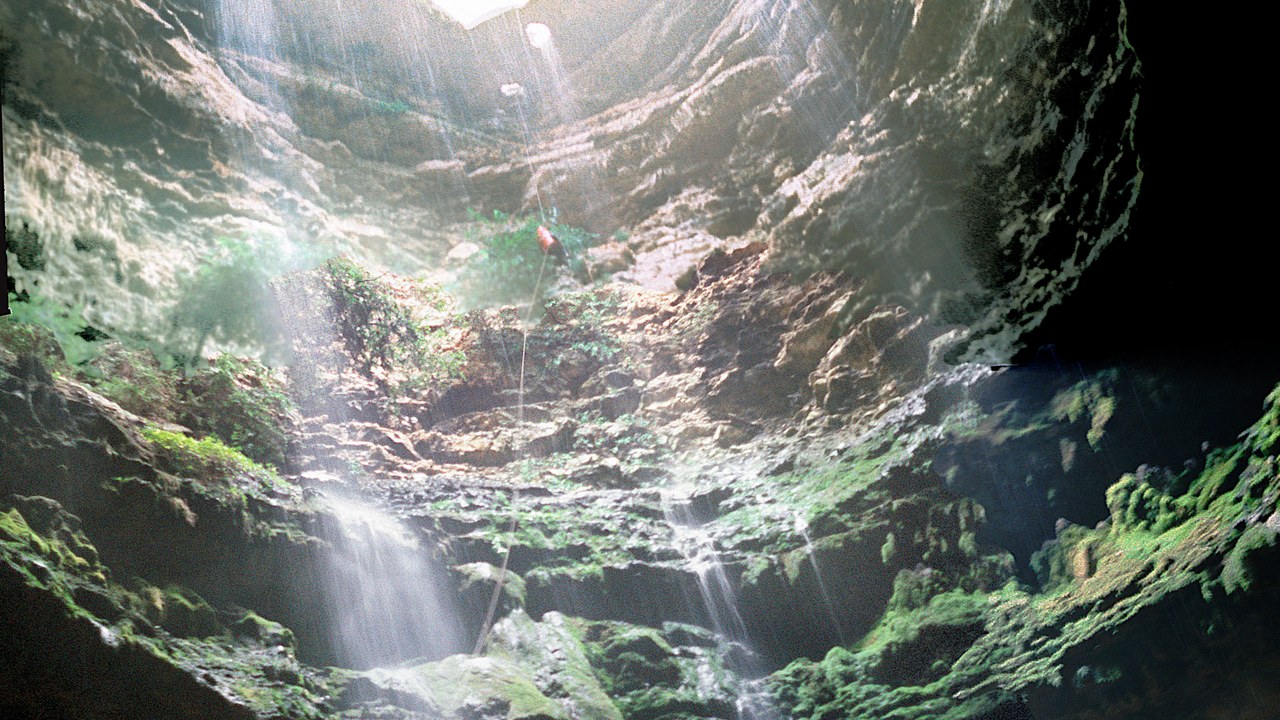
Outside Rocksprings in Edwards County, a vertical Texas cavern opens in flat ranchland as a hole roughly 40 by 60 feet wide, then falls about 140 feet in open air before flaring into a chamber that reaches some 350 feet down. Nothing on the surface hints at the void; the limestone plateau looks unremarkable until the ground stops.
Millions of Mexican free-tailed bats roost inside through the warm months and pour out at dusk in a column visible from the rim, which is the reason the state manages the site by guided tour only. The opening is unfenced country otherwise, and the drop is sheer from the first step, with no ledge to catch anything that goes over.
7. Qattara Depression: A Sink The Size Of A Country
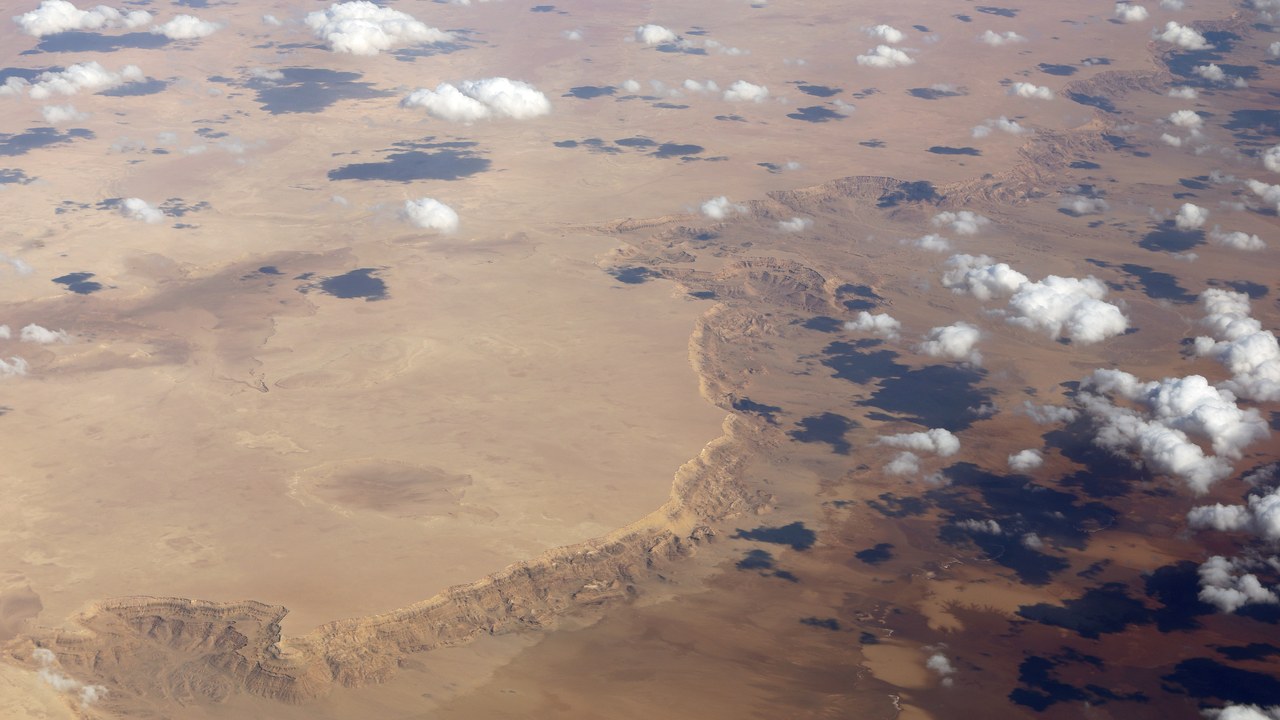
Western Egypt holds a sink on a scale no single collapse can match: a vast desert basin covering roughly 7,500 square miles whose floor bottoms out about 436 feet below sea level, among the lowest points in Africa. Salt marshes, quicksand and crusted sabkha cover much of it, and steep escarpments hundreds of feet high mark the northern edge where the ground drops away.
Salt weathering hollowed the rock from beneath, and wind stripped away the loosened debris over long stretches of geological time. The basin has repeatedly attracted engineering proposals to channel Mediterranean seawater into it for hydroelectric power, none of which has been built. During the Second World War its terrain anchored the Allied line at El Alamein.
8. Devil’s Millhopper: Florida’s Walkable Bowl
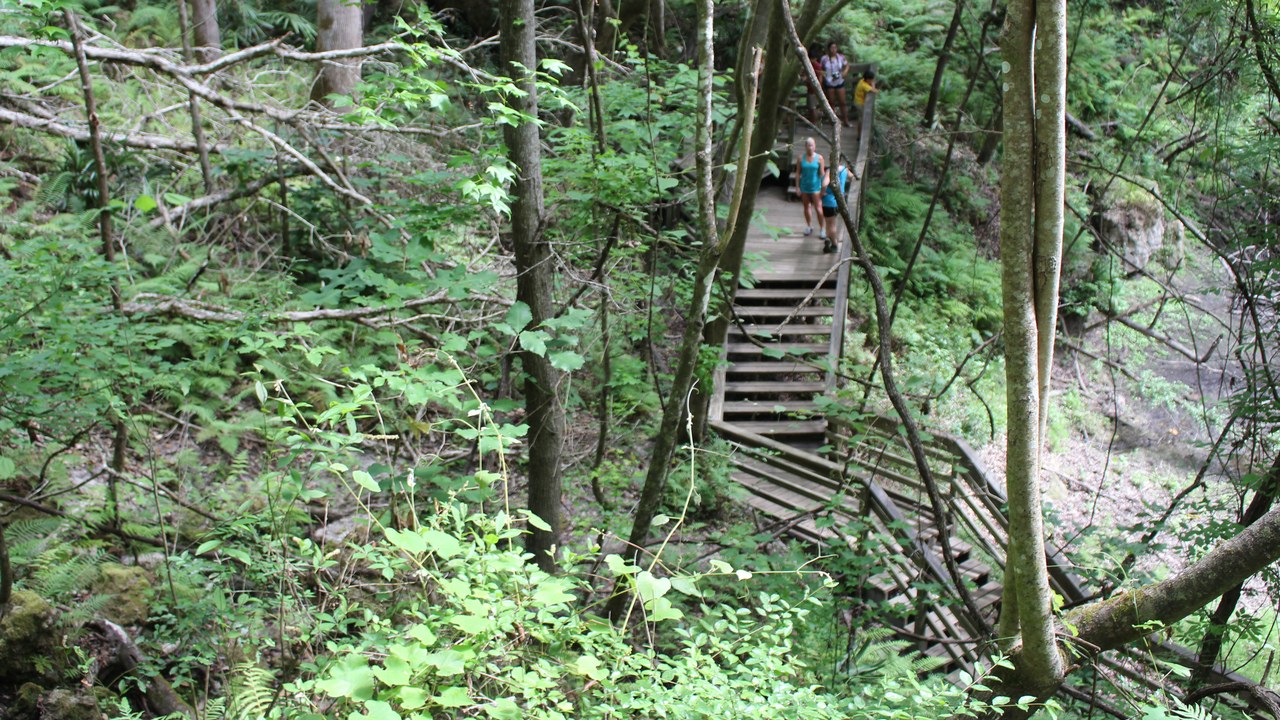
Inside the Gainesville city limits in north-central Florida, a bowl-shaped limestone sink drops roughly 120 feet below the surrounding pine flatwoods and spreads about 500 feet across at the rim. The collapse happened when the roof over a cavity in the underlying limestone gave way, leaving a funnel rather than a shaft, and small streams still trickle down the sides toward the floor.
The exposed walls are the attraction. Layers of limestone and fossil material sit visible in the slope, which is why the site is protected as a state park. A boardwalk stairway descends most of the way to the bottom, making it one of the few collapses on this list that can be walked into rather than dived or rappelled.
More from Morning Overview
