
Jupiter is the biggest planet in the solar system, but it turns out to be a little less big than textbooks said. Radio measurements from NASA’s Juno spacecraft trimmed its width, while telescopes have watched its most famous storm shrink for decades. These eight pictures show how scientists have been resizing the giant planet and the storm on its face.
Read next on Morning Overview: A handful of car transmissions are so tough that mechanics say they almost never die
Great Red Spot: A Storm Bigger Than Earth, Getting Smaller
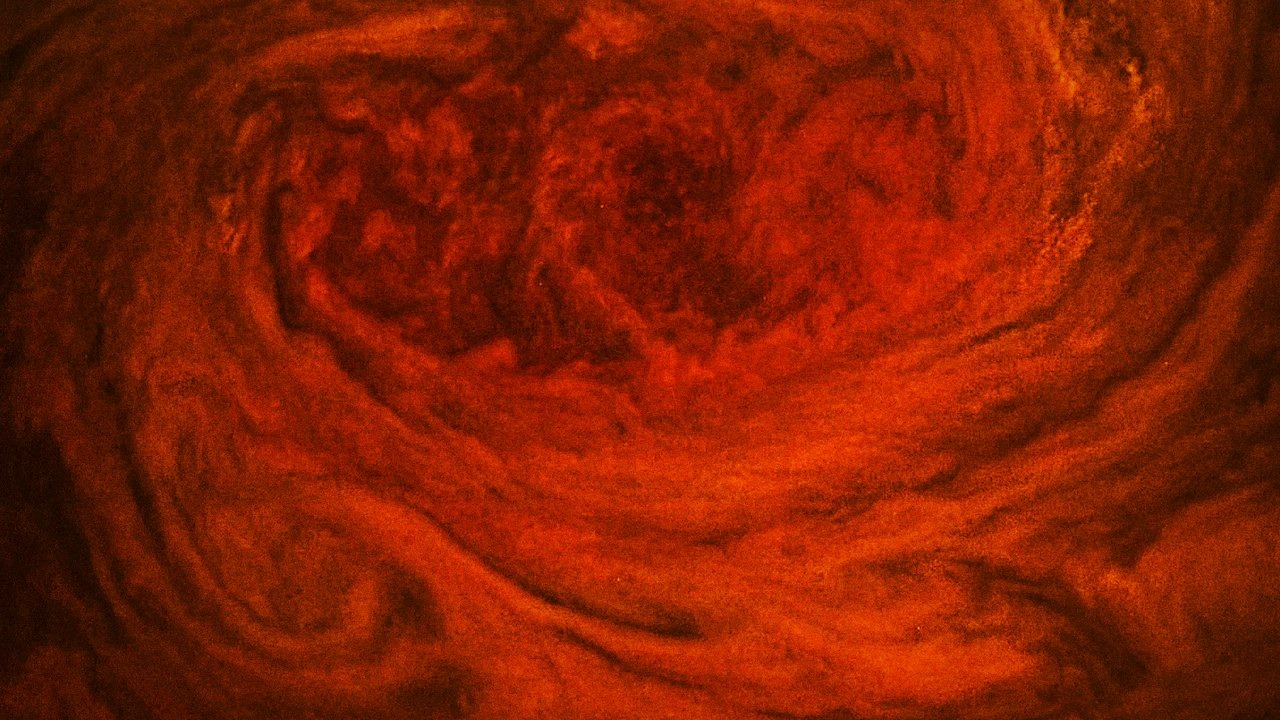
The Great Red Spot is a swirling storm larger than Earth, and astronomers have tracked it shrinking since the 1930s. In 2014, NASA said Hubble observations confirmed it was about 10,250 miles across, the smallest size ever measured at that time.
Amateur observations beginning in 2012 showed the shrinking had sped up, to about 580 miles a year, turning the storm’s shape from an oval toward a circle. Amy Simon of NASA’s Goddard Space Flight Center said very small eddies appeared to be feeding into the storm and might be changing its internal dynamics, a cause her team set out to study.
Jupiter: Five Miles Narrower Than We Thought
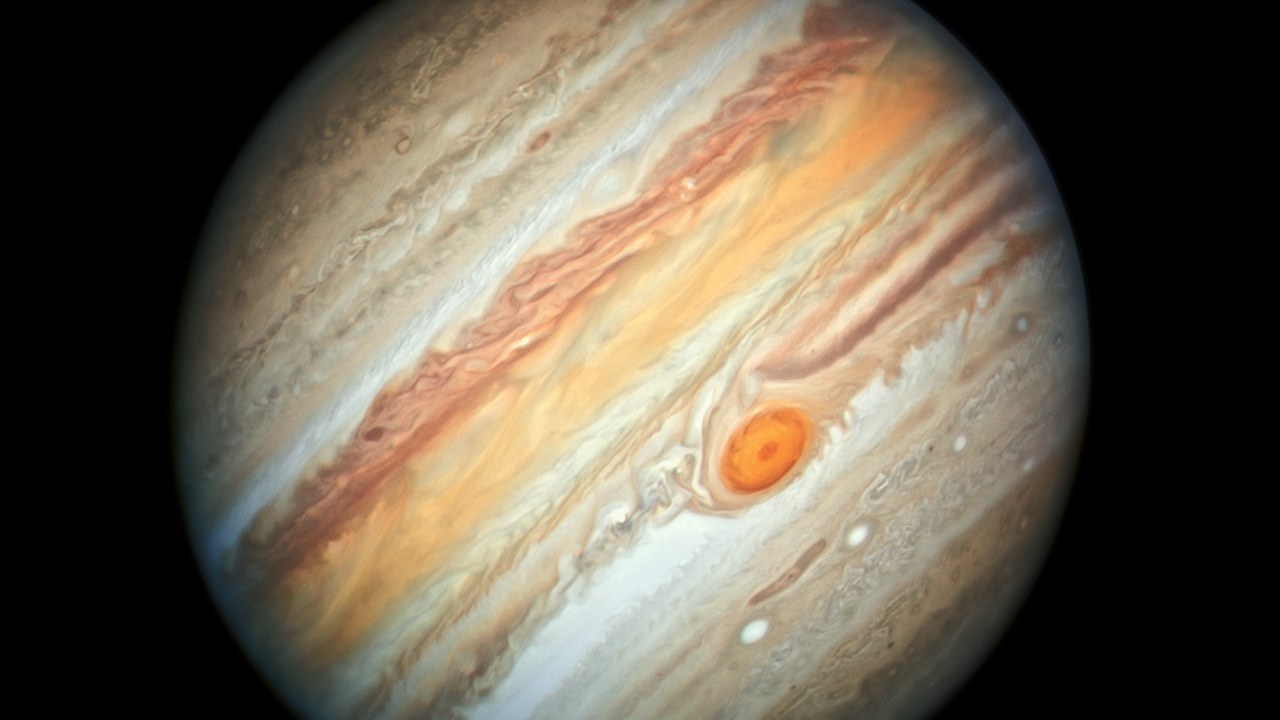
Jupiter itself has been resized. By analyzing radio occultation data from 13 Juno flybys and accounting for the planet’s zonal winds, mission scientists found Jupiter is about 5 miles narrower at the equator and 15 miles flatter at the poles than previously estimated.
The earlier figures rested on just six radio occultation experiments made by the Pioneer and Voyager missions in the 1970s. The new results were published in the February 2, 2026, issue of Nature Astronomy. Jupiter’s exact radius matters well beyond our solar system, since astronomers use it as a calibration standard when modeling giant planets around other stars.
Juno: Measuring a Planet With Radio Waves
Juno’s measurement worked by looking through Jupiter’s opaque clouds rather than at them. During a radio occultation experiment, the spacecraft beams radio signals back to NASA’s Deep Space Network on Earth, and the signals pass through the ionosphere, the charged upper layer of Jupiter’s atmosphere.
Gases there bend and delay the signals. By measuring the change in frequency caused by that bending, scientists can calculate the temperature, pressure and electron density of the atmosphere at different depths. Data from 13 such flybys produced the new size and shape. NASA says a more accurate shape will help astronomers interpret planets spotted passing in front of distant stars.
Io: A Moon With Magma Under Its Skin
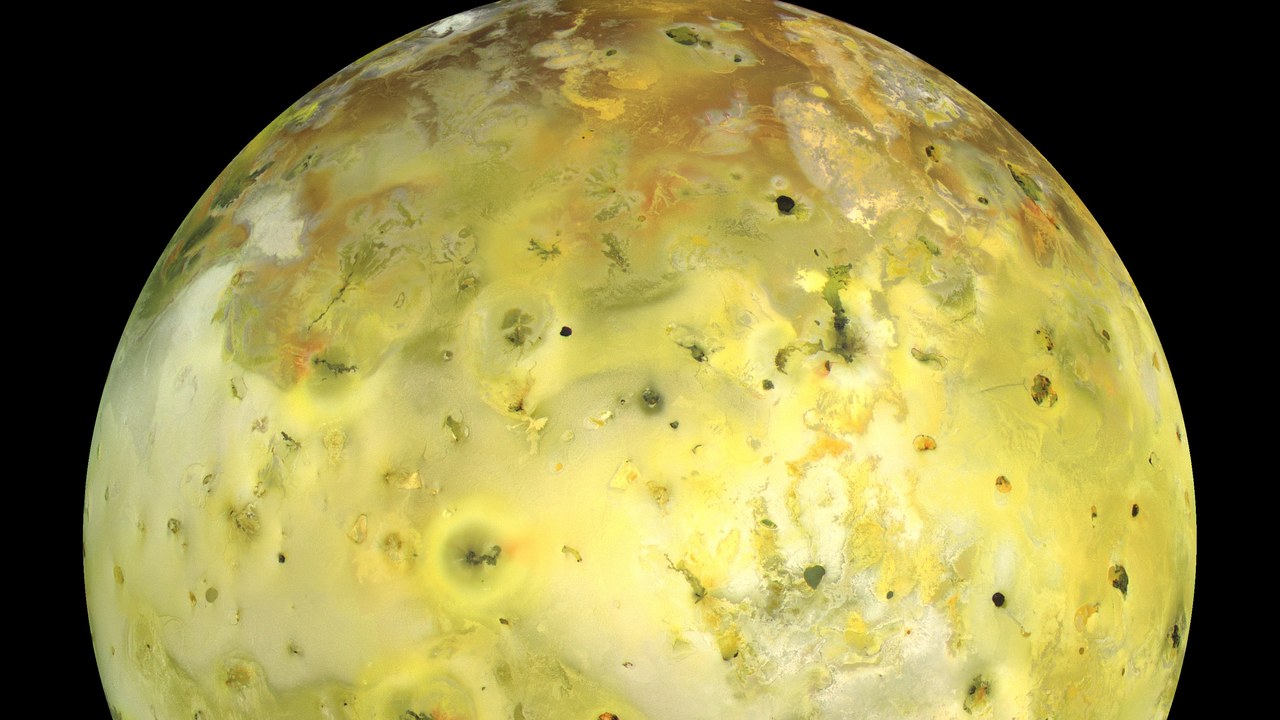
Juno has also studied Io, the most volcanic body in the solar system. Combining microwave and infrared data, the team found evidence of still-warm magma that has not yet solidified below Io’s cooled crust, with cooling lava flows at every latitude and longitude.
About 10 percent of the moon’s surface appears to have these slowly cooling remnants just below it. JPL scientist Shannon Brown compared Io’s volcanoes and lava flows to a car radiator that moves heat from the interior to the surface. In April 2025, the team said the most energetic eruption in Io’s recorded history, first seen in December 2024, was still spewing lava and ash that March.
Hubble Space Telescope: Hubble’s Decades of Snapshots
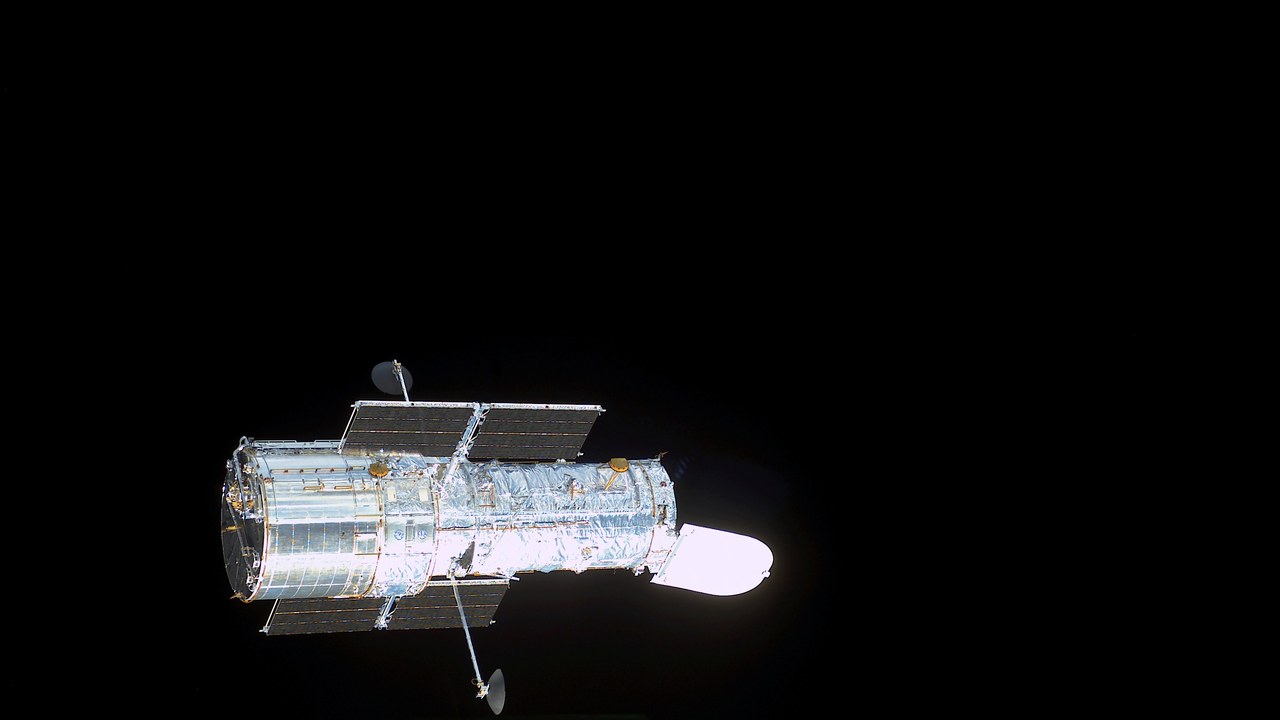
Much of what is known about the Great Red Spot’s decline comes from NASA’s Hubble Space Telescope. In 1995, Hubble’s Wide Field and Planetary Camera 2 estimated the storm’s long axis at 13,020 miles. In a 2009 image, taken after that camera had been replaced by Wide Field Camera 3, it measured 11,130 miles.
The 1995 camera has its own place in the story. It was built by NASA’s Jet Propulsion Laboratory and corrected the telescope’s initial blurry vision. Hubble is a project of international cooperation between NASA and the European Space Agency, with operations run from Goddard and the Space Telescope Science Institute in Baltimore.
Voyager Spacecraft: The 1979 Flybys That Set a Benchmark
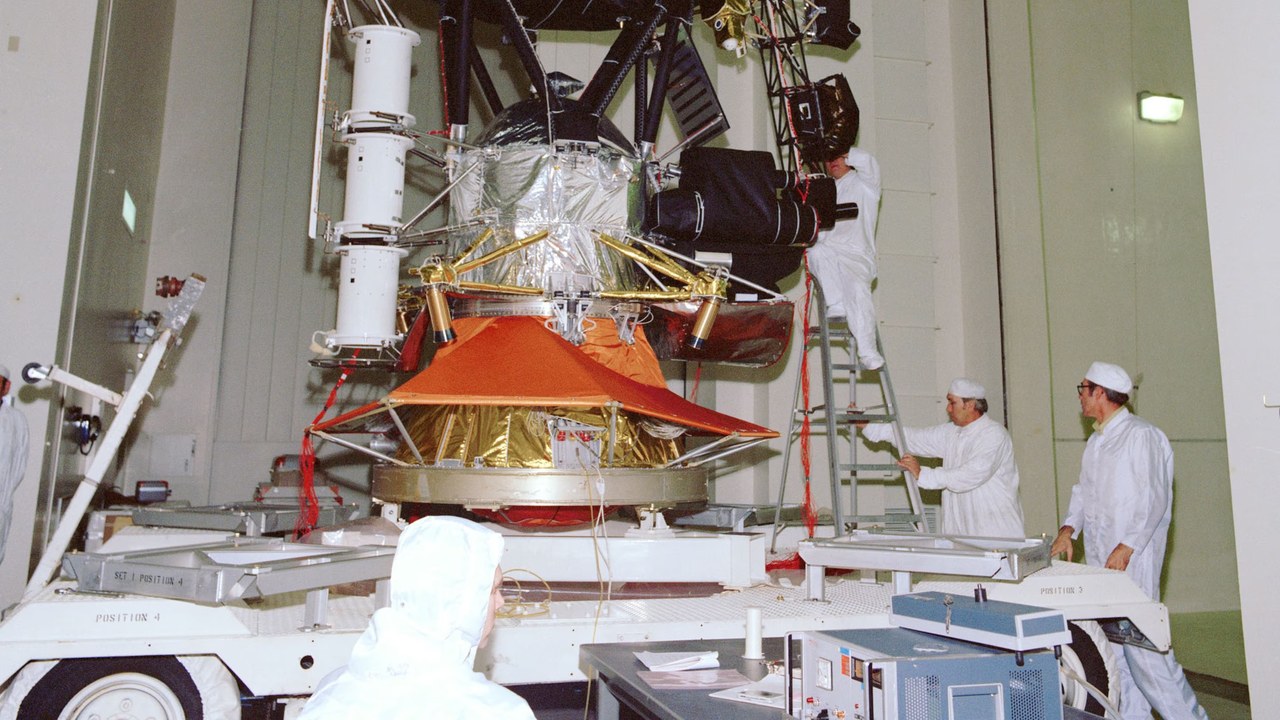
NASA’s twin Voyager spacecraft gave the storm one of its key measurements. During their flybys of Jupiter in 1979, Voyager 1 and Voyager 2 measured the Great Red Spot at 14,500 miles across. Historic observations from as far back as the late 1800s had put it as large as 25,500 miles on its long axis.
Set side by side, those numbers show a storm that lost more than half its length between the 1800s and 2014. The Voyagers were built by NASA’s Jet Propulsion Laboratory, which was still operating them when the 2014 measurement was announced.
Jupiter’s polar cyclones: Cyclones That Bounce Like Springs
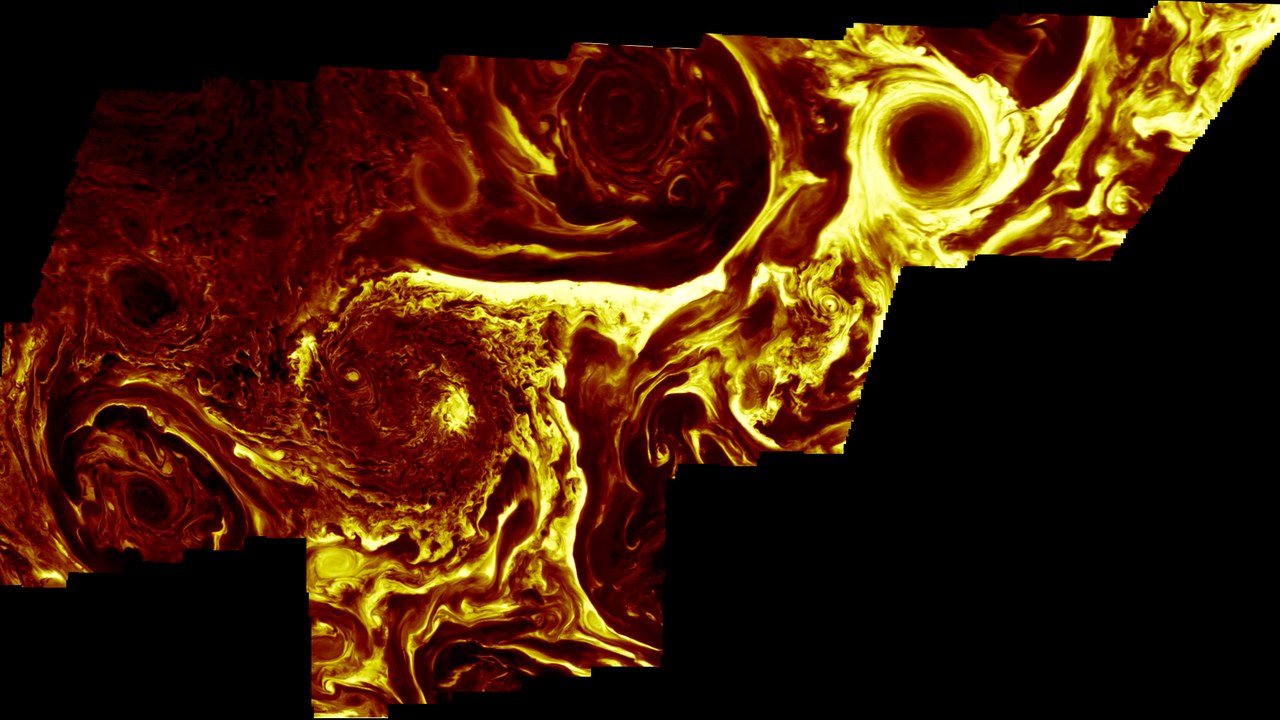
Jupiter’s north pole hosts a central cyclone ringed by eight more, and Juno data indicate these storms are enduring features. Unlike hurricanes on Earth, which usually form in isolation at lower latitudes, Jupiter’s cyclones are confined to the polar region.
Tracking them across orbits, scientists saw each storm drift slowly toward the pole, then slow as it met its neighbors. Juno co-investigator Yohai Kaspi said the cyclones bounce off one another like springs in a machine, which stabilizes the pattern. Juno’s radio soundings also found the north polar stratospheric cap about 11 degrees Celsius cooler than its surroundings, ringed by winds over 100 mph.
Jet Propulsion Laboratory: The Lab Behind the Mission
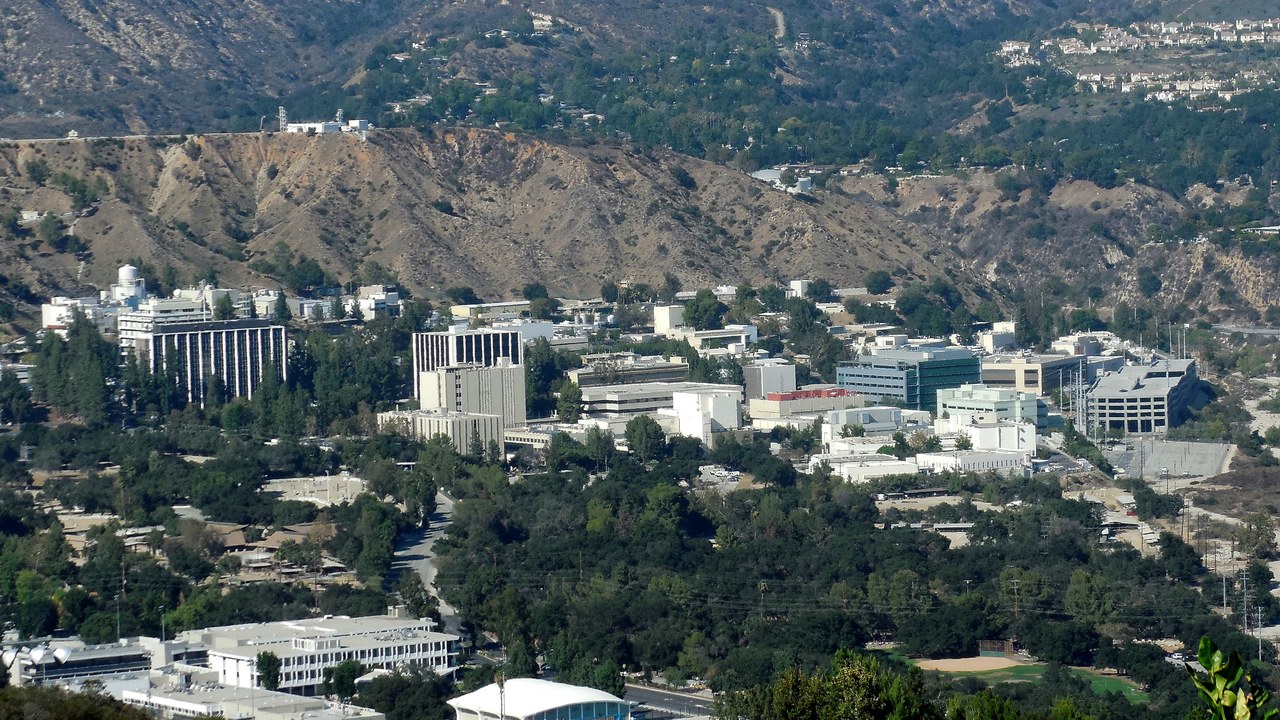
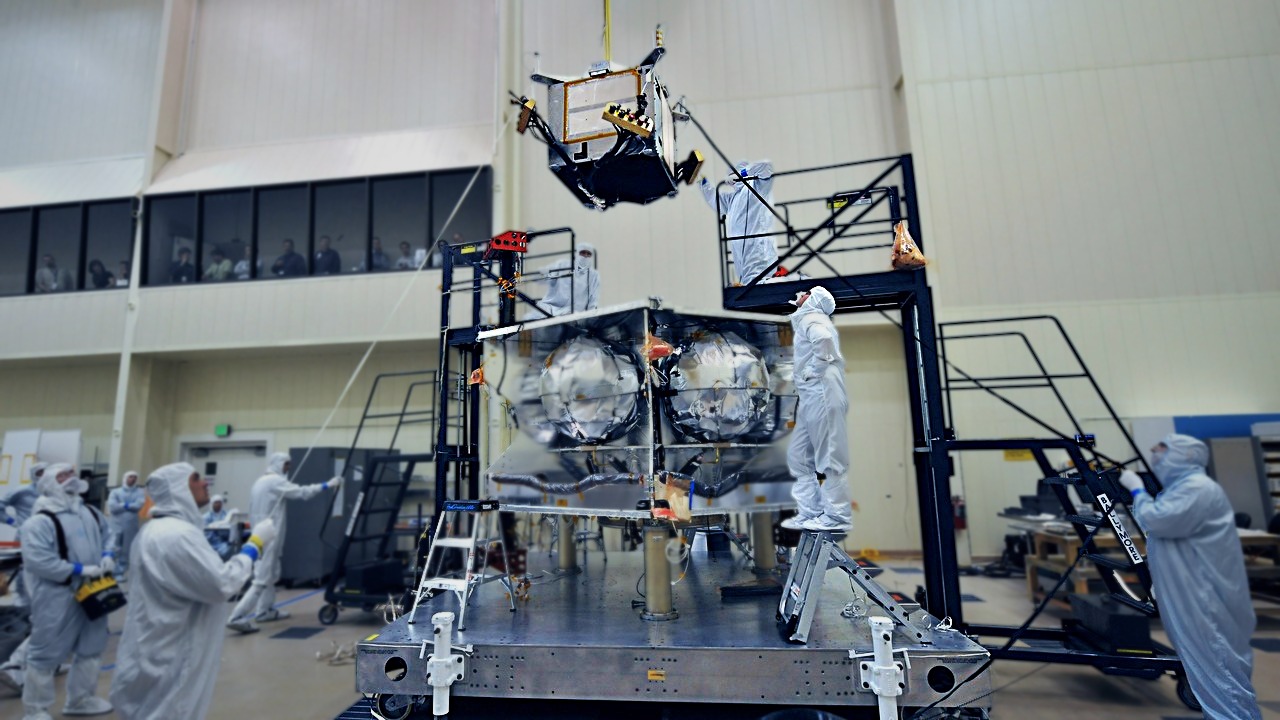
NASA’s Jet Propulsion Laboratory, a division of Caltech in Pasadena, California, manages the Juno mission for its principal investigator, Scott Bolton of the Southwest Research Institute in San Antonio. Lockheed Martin Space in Denver built and operates the spacecraft, and the Italian Space Agency funded its infrared mapper.
Juno is part of NASA’s New Frontiers program. Bolton said in 2025 that the extended mission was taking the spacecraft into the strongest planetary radiation belts in the solar system. “It’s a little scary,” he said, “but we’ve built Juno like a tank and are learning more about this intense environment each time we go through it.”
More from Morning Overview
- The Justice Department asked courts to undo approvals for three offshore wind farms, one already making power
- Over 20 trillion gallons of rain fell on the Four Corners states and Nevada in two weeks
- 11 engines built to run well past 200,000 miles
- Two Kentucky residents died when a small plane crashed at Missouri’s Lake of the Ozarks, and the NTSB is investigating
