
Beneath mountains, islands and rain forests lie caverns so large and strange that they feel like another world. Some hold underground rivers and jungles, others glow blue or freeze solid all year. Here are fifteen colossal caves hiding wonders far underground, from the longest cave system on Earth to the largest cave passage ever found.
Read next on Morning Overview: Melting permafrost is setting off a newly identified kind of catastrophic landslide, scientists say
1. Mammoth Cave: The Longest Cave on Earth
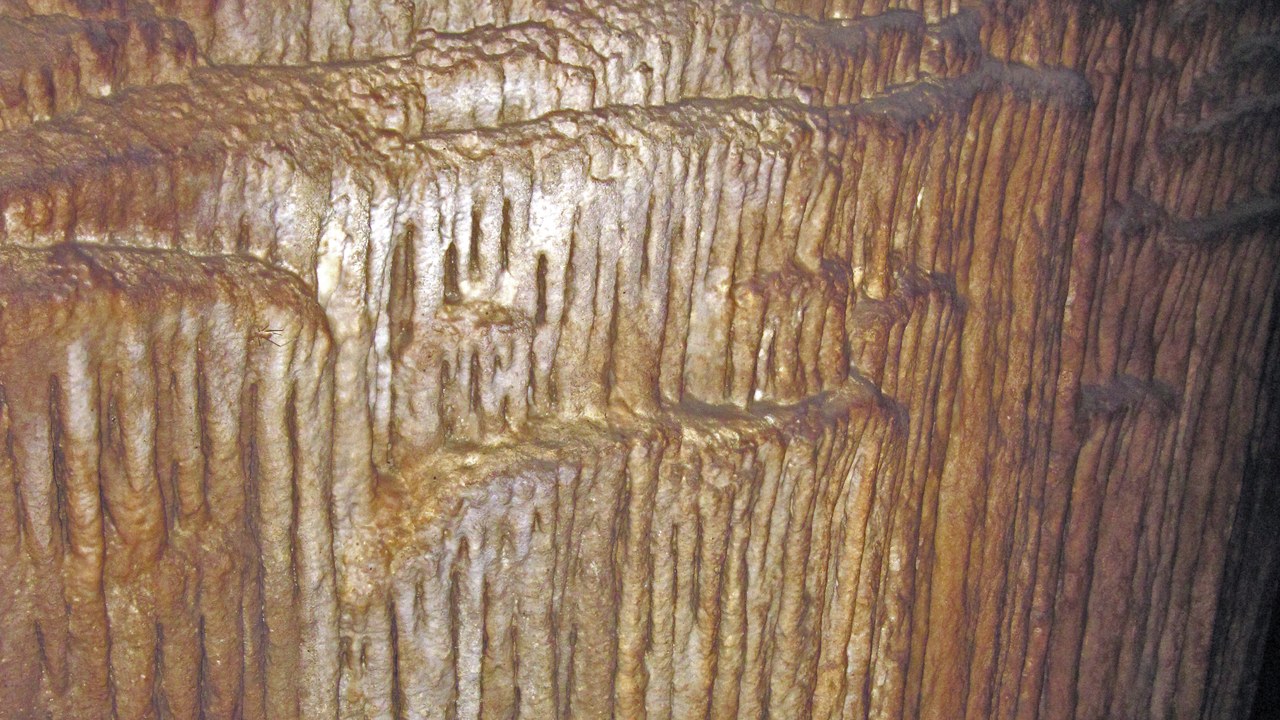
Kentucky’s Mammoth Cave is the longest cave system in the world, with around 420 miles of surveyed passageways, according to History Hit. People were active in the cave for thousands of years before Europeans arrived in North America.
Its scale and beauty have made it one of Kentucky’s most popular attractions. The passages wind through limestone layers beneath the hills, and surveyors keep adding to the mapped total as new connections are found.
2. Carlsbad Caverns: A Park With More Than 100 Caves
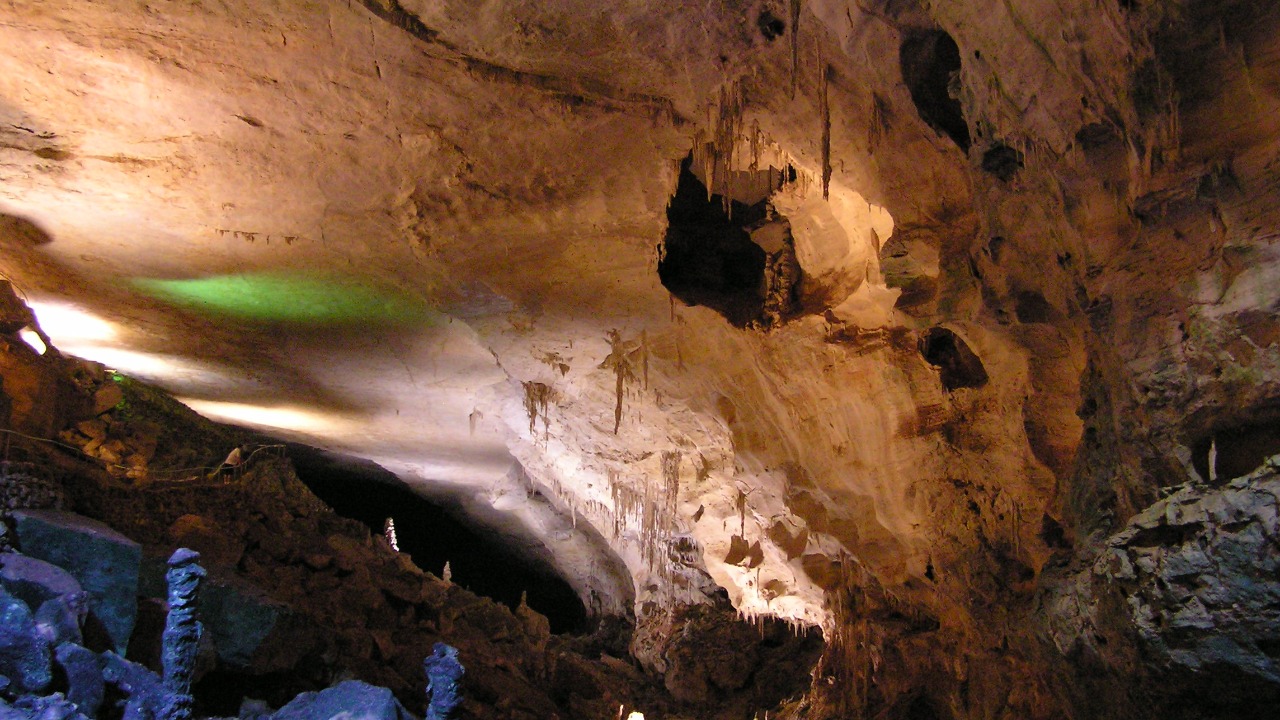
New Mexico’s Carlsbad Caverns National Park is home to more than 100 caves, according to TravelTriangle. Visitors can join ranger-guided tours or follow the Big Room Trail or the steep Natural Entrance Trail past formations such as the Devil’s Spring and Iceberg Rock.
The park also contains Lechuguilla Cave, known for its rare formations and unusual geology. Together, the caves make the park one of the most celebrated underground landscapes in the United States.
3. Škocjan Caves: A River Canyon Underground
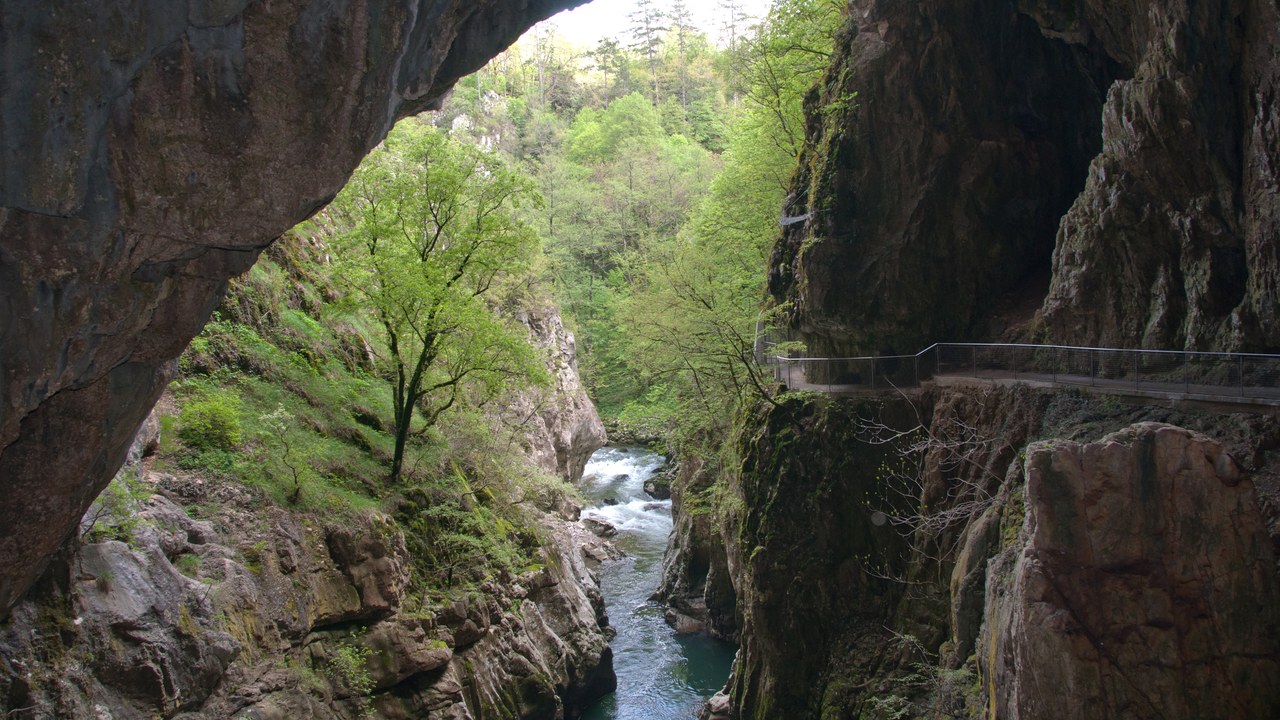
In the Karst heartland of Slovenia, the stalactite and stalagmite formations of the Škocjan Caves have earned them UNESCO World Heritage status, according to TravelTriangle. Guided tours lead through vast chambers carved by an underground river.
The route passes waterfalls and a river running deep inside the rock. Visitors can return to the surface by funicular or by a walking trail, ending a trip through one of Europe’s most dramatic cave systems.
4. Reed Flute Cave: The Palace of Natural Arts
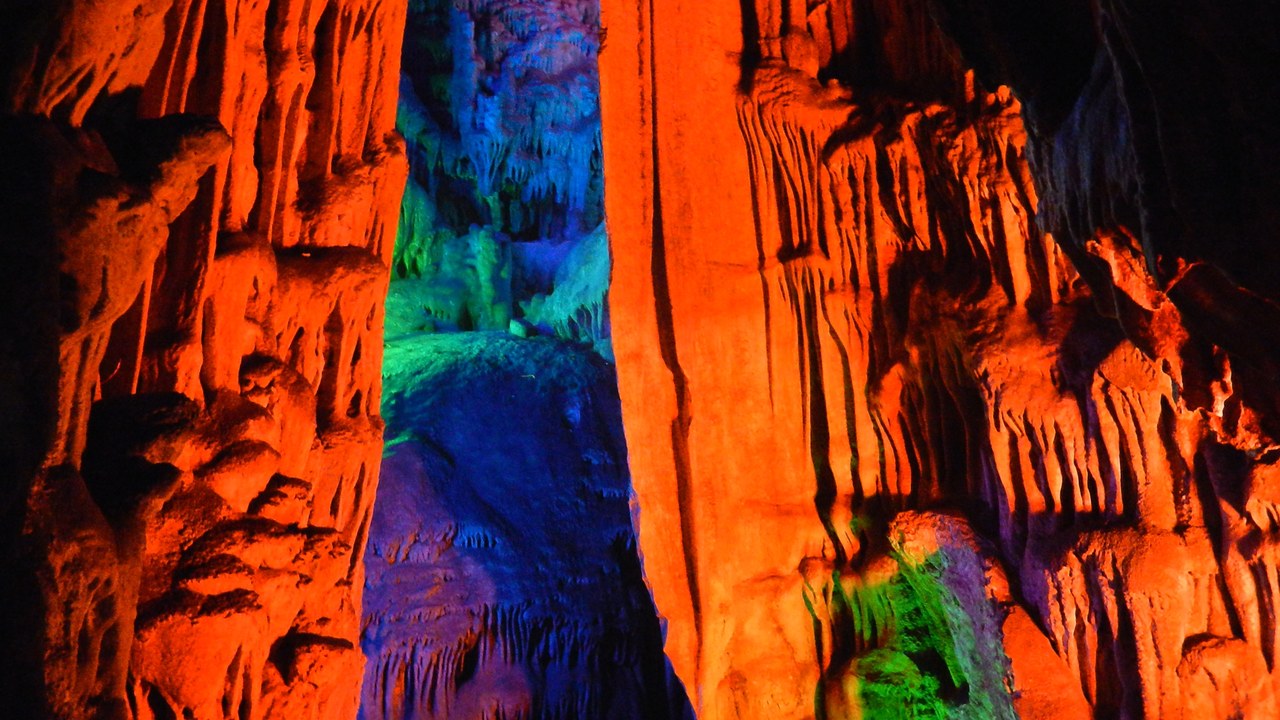
Reed Flute Cave in China’s Guilin region is nicknamed the “Palace of Natural Arts,” and it was named for the reeds growing outside its mouth, which were used to make flutes, according to History Hit.
Its stone walls carry ancient inscriptions, the oldest dating to the Tang Dynasty about 1,300 years ago. Today the cave is lit in bright colors, which makes its formations look even more otherworldly to visitors.
5. Eisriesenwelt: The World of the Ice Giants
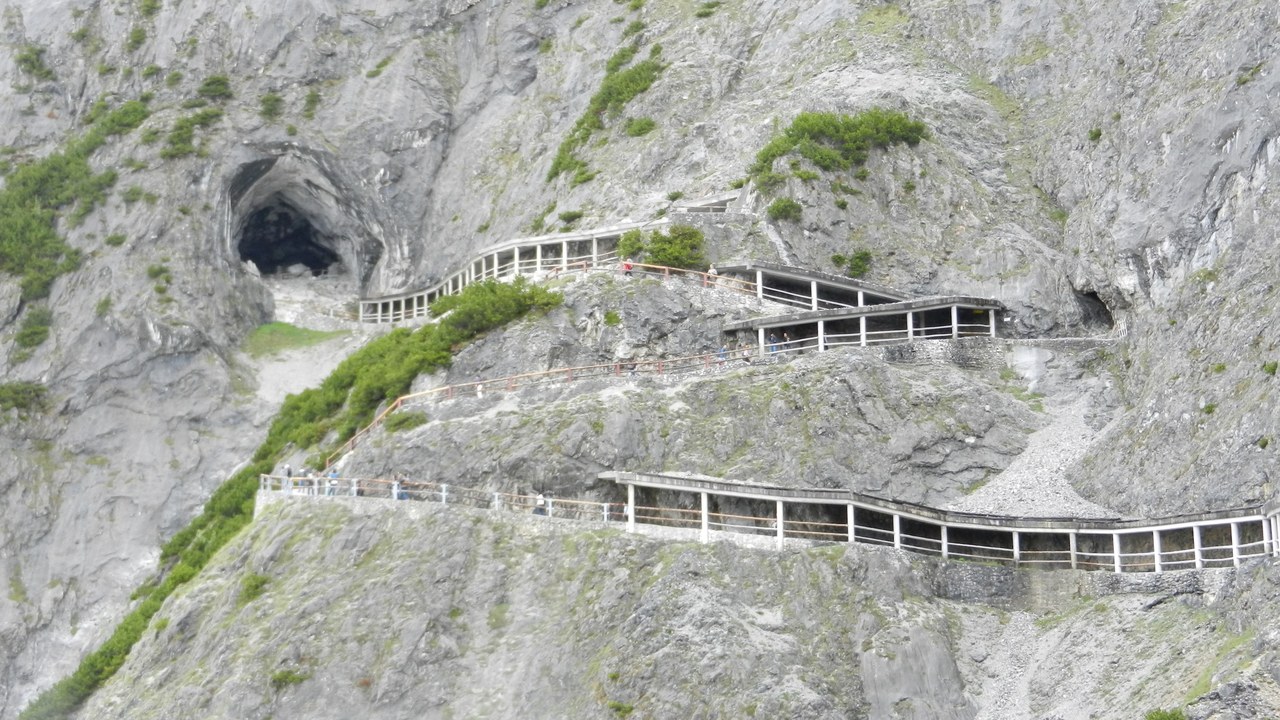
Eisriesenwelt, German for “World of the Ice Giants,” near the Austrian market town of Werfen, is the largest ice cave in the world, extending around 42 kilometers into the Hochkogel mountain, according to History Hit.
The ice stays frozen all year round. Many locals once believed the cave was an entrance to hell, but today it is one of the region’s most important tourist attractions, drawing visitors into its frozen halls each summer.
6. Fingal’s Cave: The Cave That Inspired Music
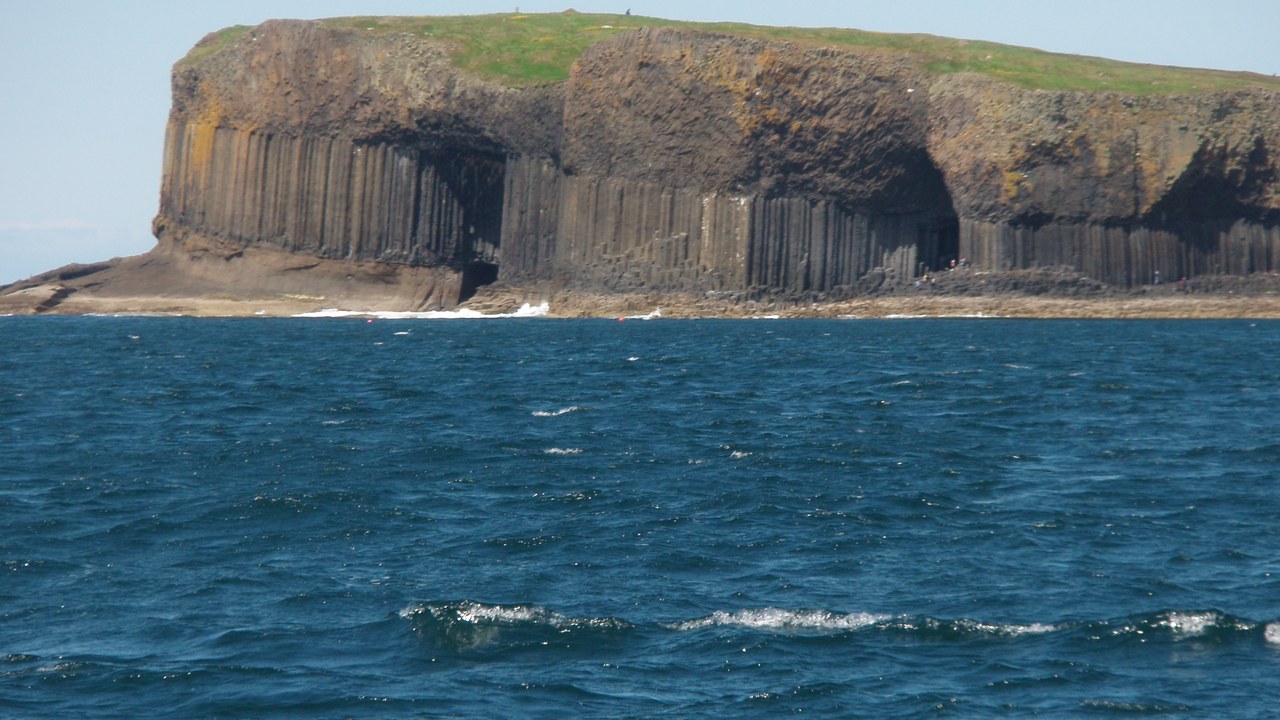
Fingal’s Cave is a sea cave on the uninhabited Scottish island of Staffa, about 6 miles west of the Isle of Mull, and it is renowned for its natural acoustics, according to History Hit.
German composer Felix Mendelssohn was so inspired by it that he wrote a piece celebrating it, the Fingal’s Cave Overture. Its walls are made of hexagonal basalt columns of volcanic origin, which give the arched cave the look of a natural cathedral.
7. Blue Grotto: A Grotto Filled With Blue Light
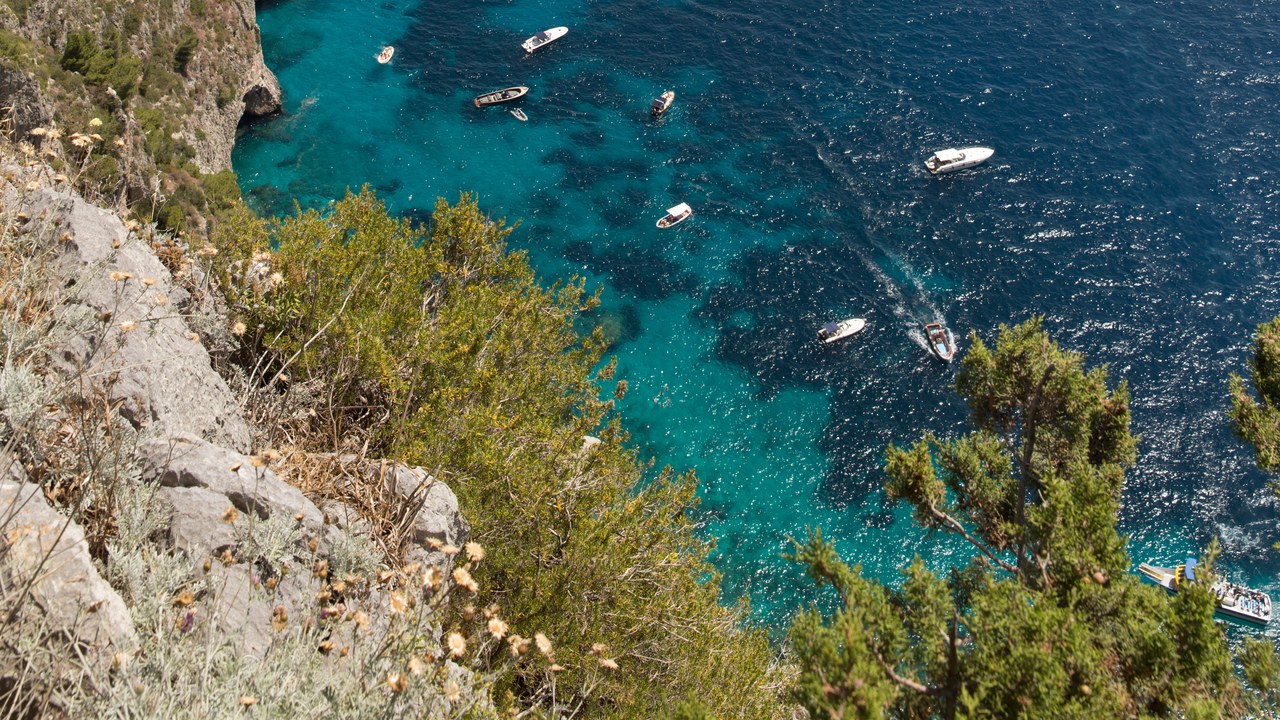
A brilliant blue light fills the Blue Grotto, a sea cave on the coast of Capri in southern Italy, according to TravelTriangle. Sunlight passing through seawater and two openings in the cave creates the glow.
Visitors buy tickets at the pier and enter in a small rowing boat. Going early helps avoid long lines, though the middle of the day is considered the best time to see the color at its strongest.
8. Deer Cave: Once the Largest Cave in the World
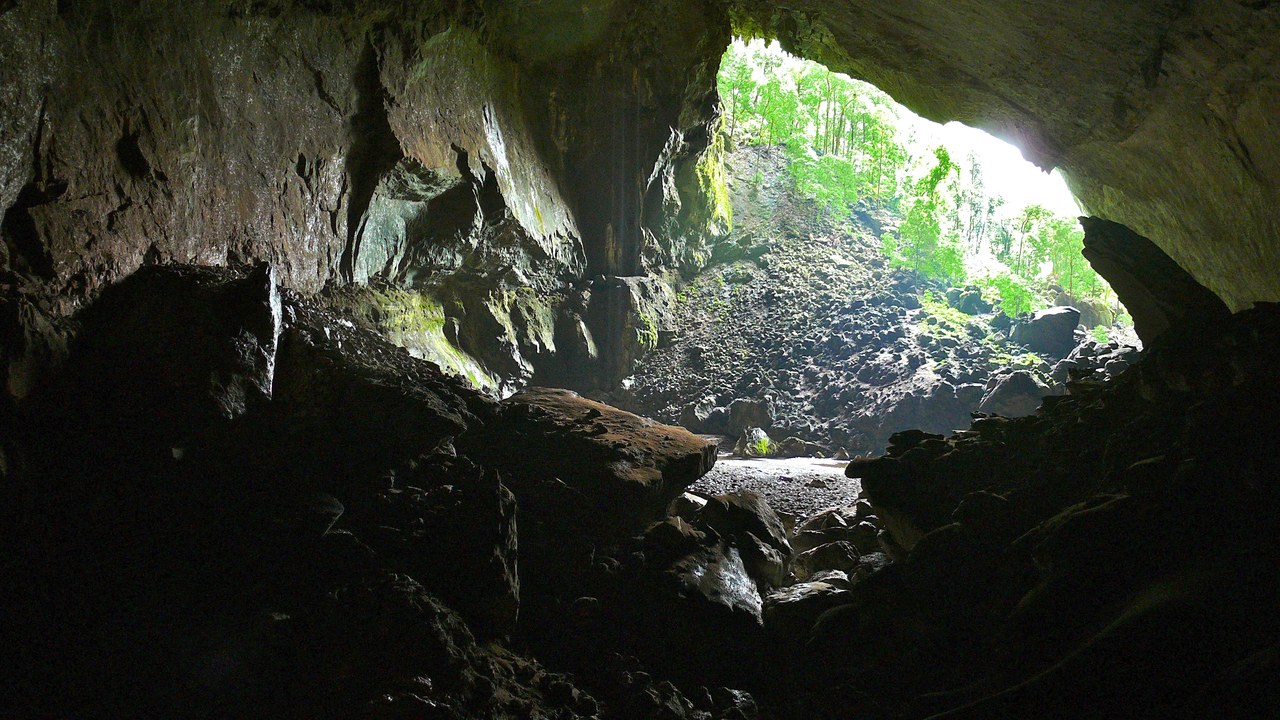
Before Son Doong was found, Malaysia’s Deer Cave was ranked as the largest cave in the world, according to StartCaving. It no longer holds that title, but it remains one of the most famous caves anywhere.
It contains a distinctive stromatolite formation that, from certain angles, looks like a statue of Abraham Lincoln. Its fame now rests on that history, its size and the rock formation that visitors come to find.
9. Lascaux: The Sistine Chapel of Prehistory
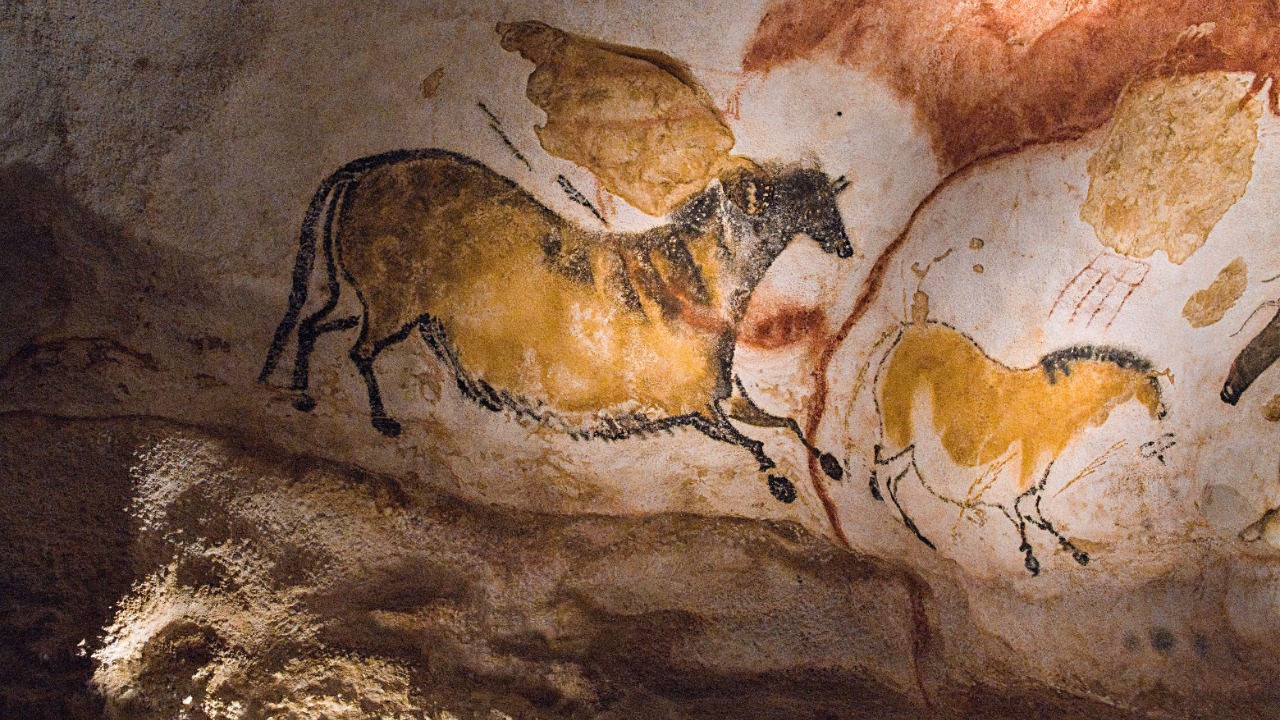
Lascaux in southwestern France is filled with ancient animal paintings estimated at around 17,300 years old, according to TheTravel. Its images of deer, cattle, horses and bulls are prized for their realism.
Four teenagers discovered the cave in 1940 after their dog fell into a hole in the ground. Because the original cave is fragile, a replica was built nearby so visitors can experience the paintings without damaging them.
10. Jeita Grotto: Two Levels of Wonders
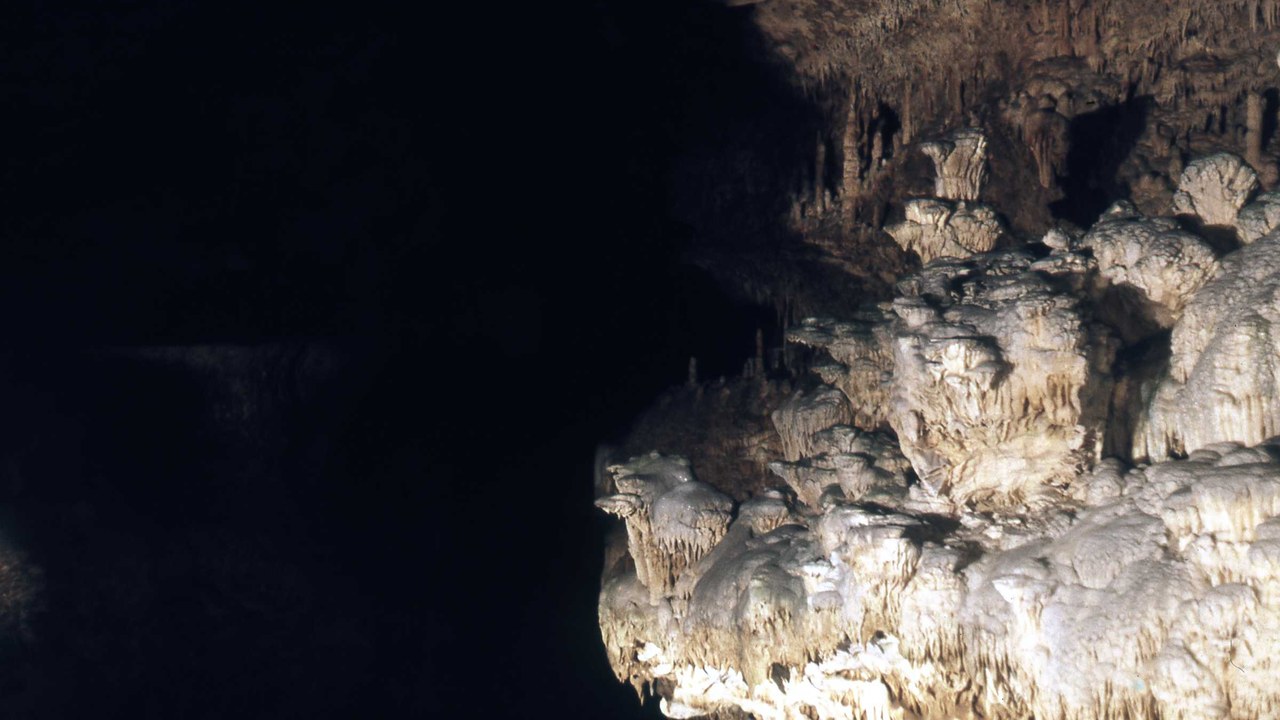
Jeita Grotto in Lebanon is a calcite cave divided into two main sections, the upper galleries and the lower galleries, according to TheTravel. Its passages are considered among the most beautiful cave corridors in the world.
The upper galleries can be reached on foot and hold chambers filled with rock formations. The lower galleries can only be reached by boat, along an underground river that runs through the mountain.
11. Kungur Ice Cave: Russia’s Frozen Cave

In the Ural Mountains region of Russia, the Kungur Ice Cave is lined with ice formations and underground lakes, according to TheTravel. Light reflecting off its frozen surfaces gives the cave an eerie, glittering appearance.
TheTravel describes it as an incredible natural wonder whose atmosphere feels closer to a prehistoric era than to the present, and its frozen formations make it one of the most unusual caves open to visitors in Russia.
12. Waitomo Glowworm Caves: Caves Lit by Glowworms
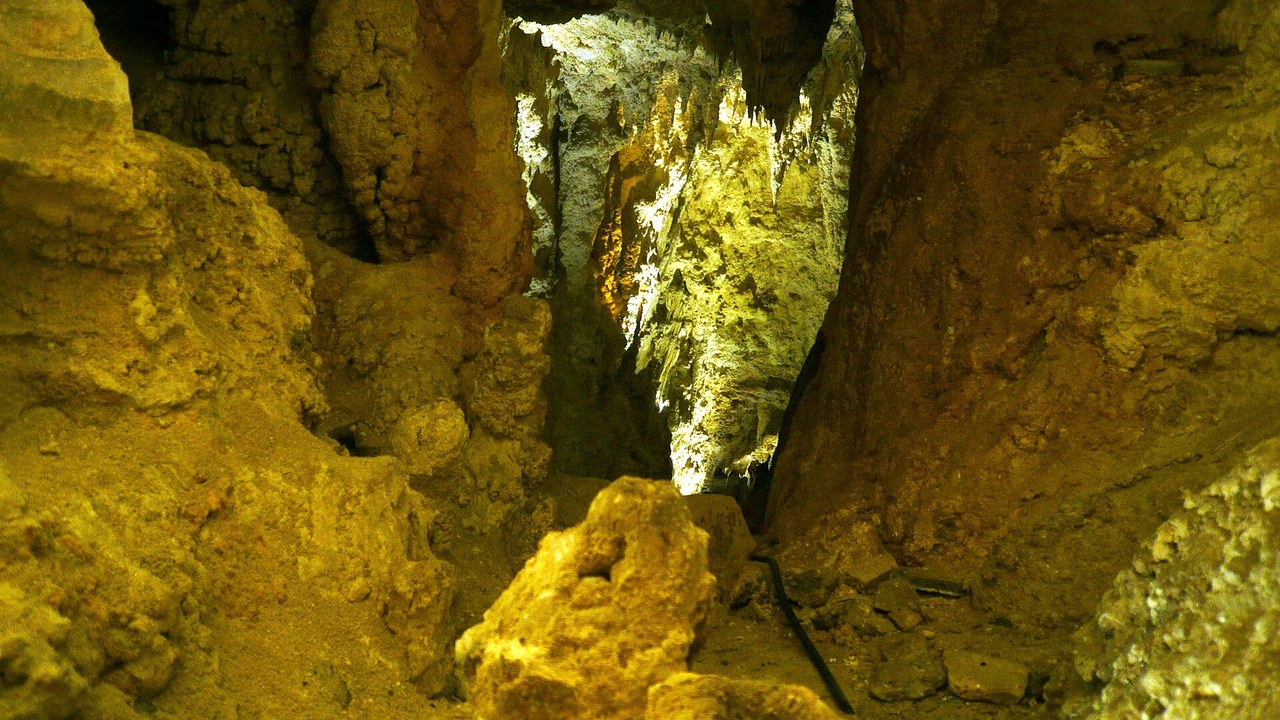
On New Zealand’s North Island, the Waitomo caves glow with colonies of glowworms that light the walls an eerie blue, according to History Hit. Europeans found them in the late 19th century, though Maori people knew of them a century earlier.
Visitors walk through part of the limestone system and then drift by boat along an underground river beneath ceilings dotted with thousands of tiny lights that look like a starry night sky.
13. Iceland’s crystal ice caves: Ice Caves That Change Every Year
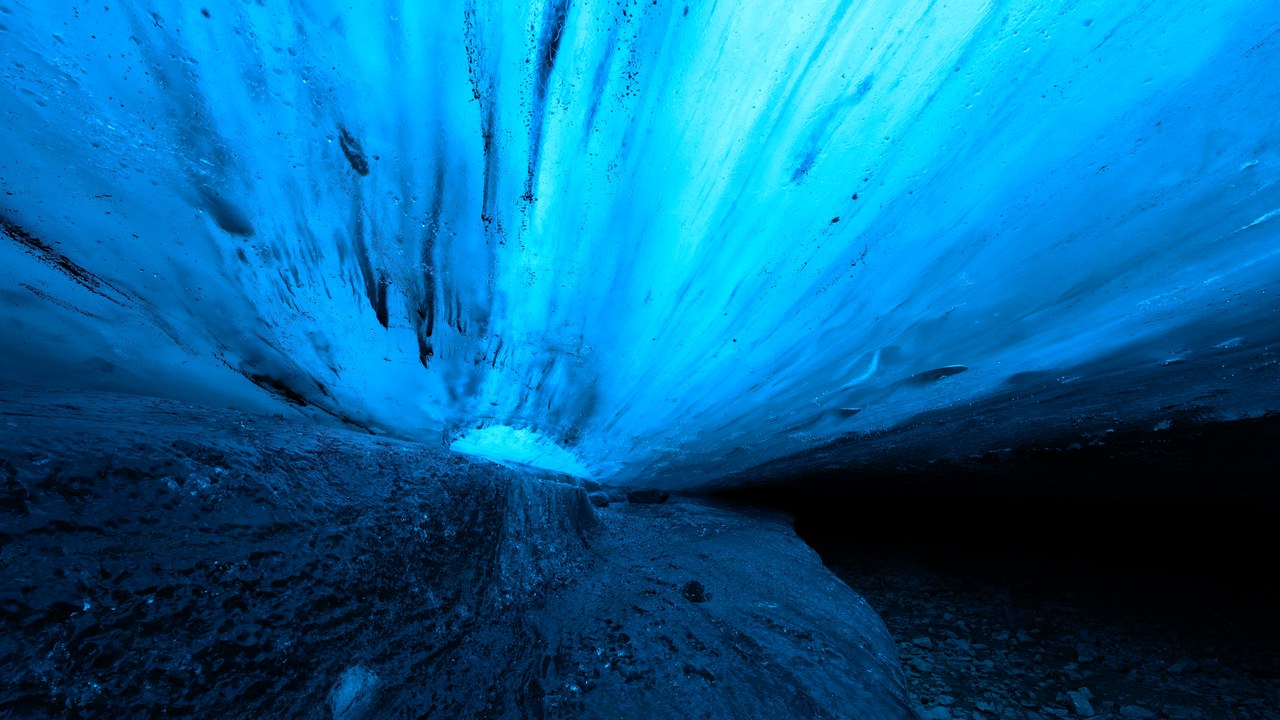
Iceland’s crystal ice caves form in Vatnajökull, the largest glacier in Europe, as glacial rivers retreat and freeze in winter, according to History Hit. That process makes them unusually dynamic.
They change shape and size from year to year, and their ice glows an intense shade of blue. Because they are remade by each season’s melt, no two winters offer the same caves, which makes guided visits a different experience every time.
14. Son Doong: The Largest Cave Ever Found
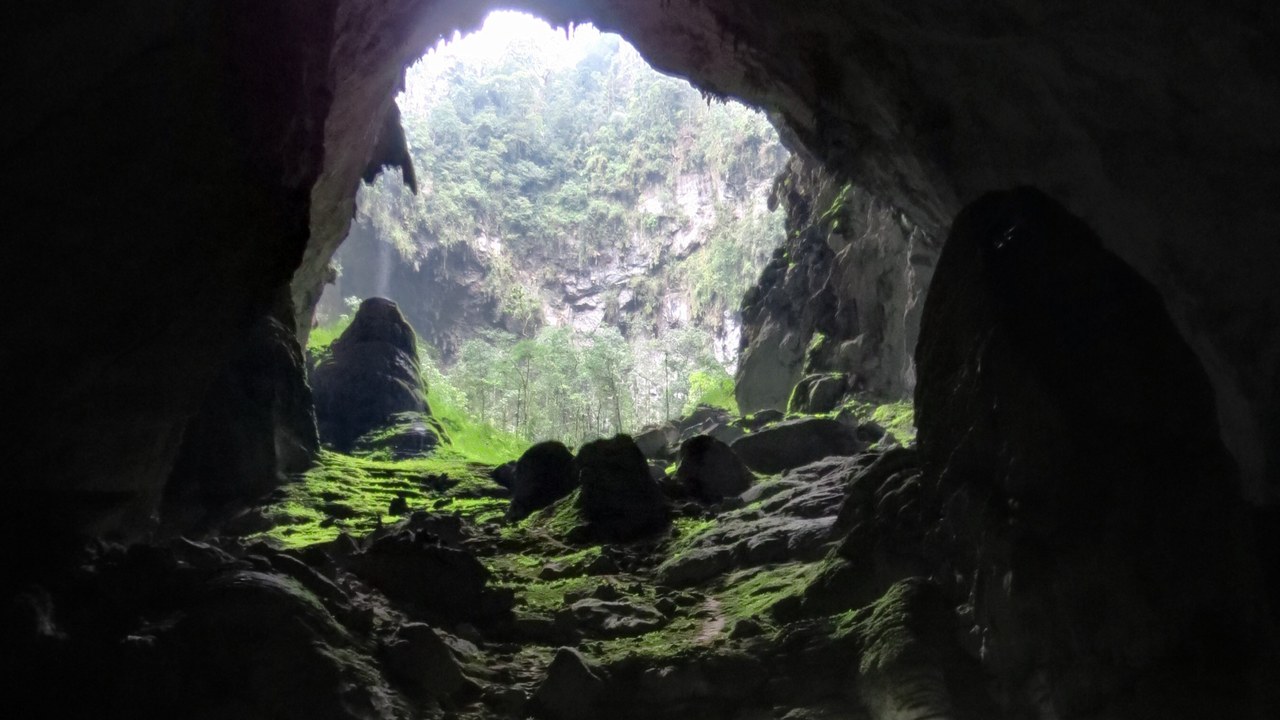
Vietnam’s Hang Son Doong is the world’s largest cave, more than 5 kilometers long with sections up to 200 meters tall and 150 meters wide, big enough for a 747 to fly through one of its caverns, according to Interesting Engineering.
It holds enormous stalactites, its own jungle and a local weather system created by the mist that fills it. The cave lies in Phong Nha-Ke Bang National Park in Quang Binh province, and reaching it is a serious expedition.
15. Batu Caves: Temples in the Rock
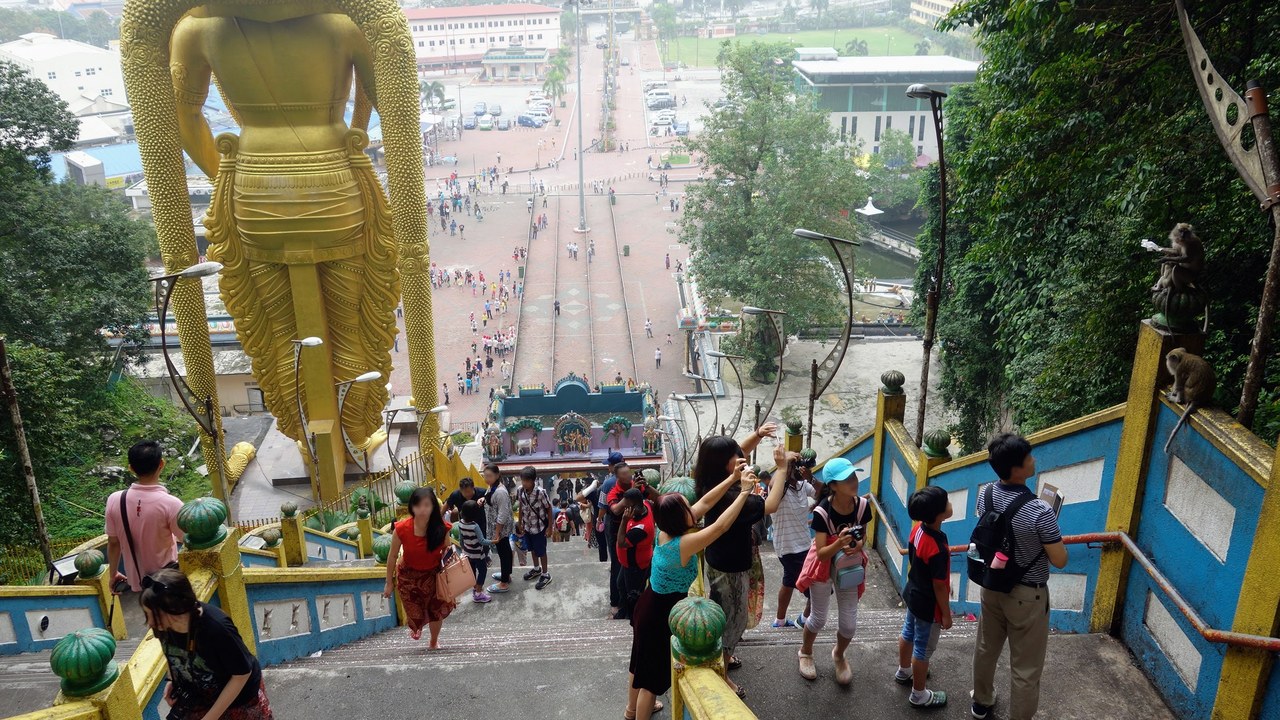
North of Kuala Lumpur in Malaysia, the Batu Caves hold a cluster of limestone caves with temples built beside them, according to StartCaving. The caves are said to be more than 400 million years old.
They are also home to huge numbers of bats, and locals have collected the bat waste for use as fertilizer. The temples and the dramatic limestone setting have made the caves one of Malaysia’s best-known landmarks.
More from Morning Overview
- Over 20 trillion gallons of rain fell on the Four Corners states and Nevada in two weeks
- 11 engines built to run well past 200,000 miles
- Two Kentucky residents died when a small plane crashed at Missouri’s Lake of the Ozarks, and the NTSB is investigating
- A handful of car transmissions are so tough that mechanics say they almost never die
