
Beneath parts of the American West sit volcanic systems so large that their past eruptions buried whole regions in ash. They are quiet today, but scientists track their every tremor, swelling and hot spring. These pictures show the calderas, the ash they left behind and the places where their heat still reaches the surface.
Read next on Morning Overview: 11 engines built to run well past 200,000 miles
Yellowstone Caldera: The Best-Known Supervolcano
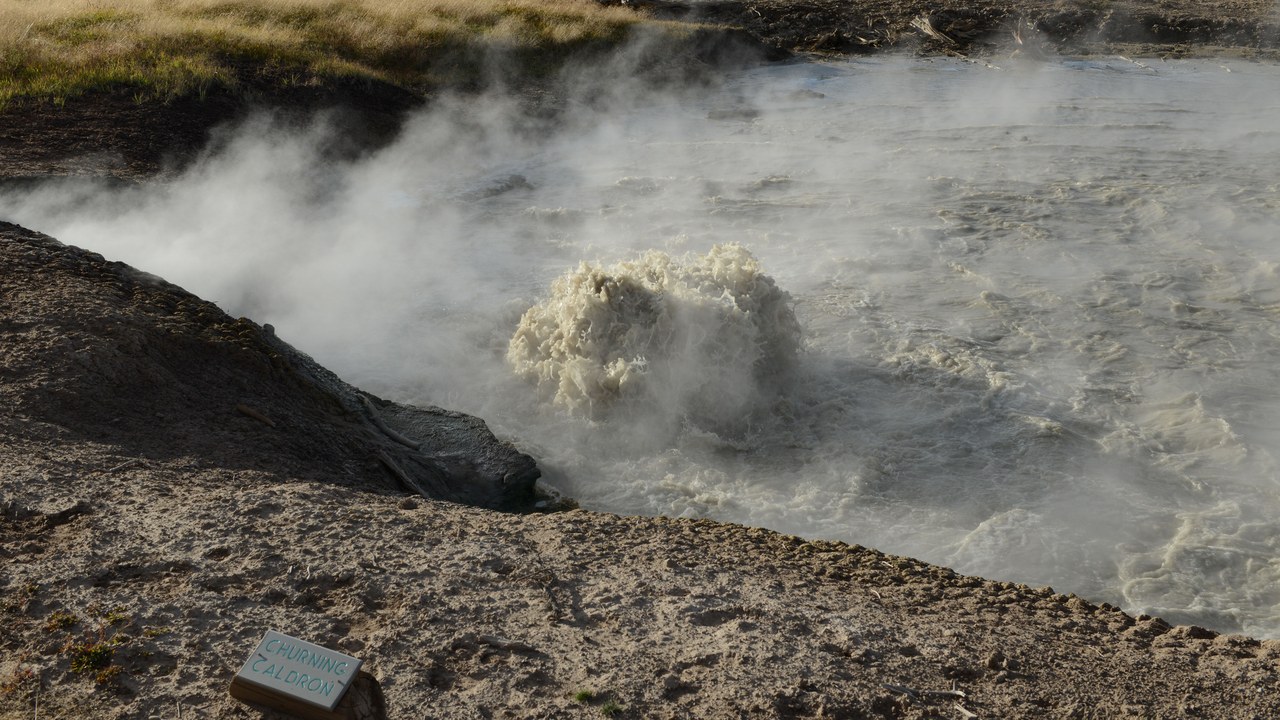
The Yellowstone Caldera, also called the Yellowstone Plateau Volcanic Field, is driven by the Yellowstone hotspot and lies largely within Yellowstone National Park, as its Wikipedia entry explains. Its overlapping calderas, lava domes and flows originally covered about 6,600 square miles.
Volcanism there began 2.15 million years ago and proceeded through three major cycles, each with a huge explosive eruption, pyroclastic flows, ash fall and caldera collapse. The first and largest produced the Huckleberry Ridge Tuff about 2.08 million years ago.
Long Valley Caldera: California’s Giant Bowl
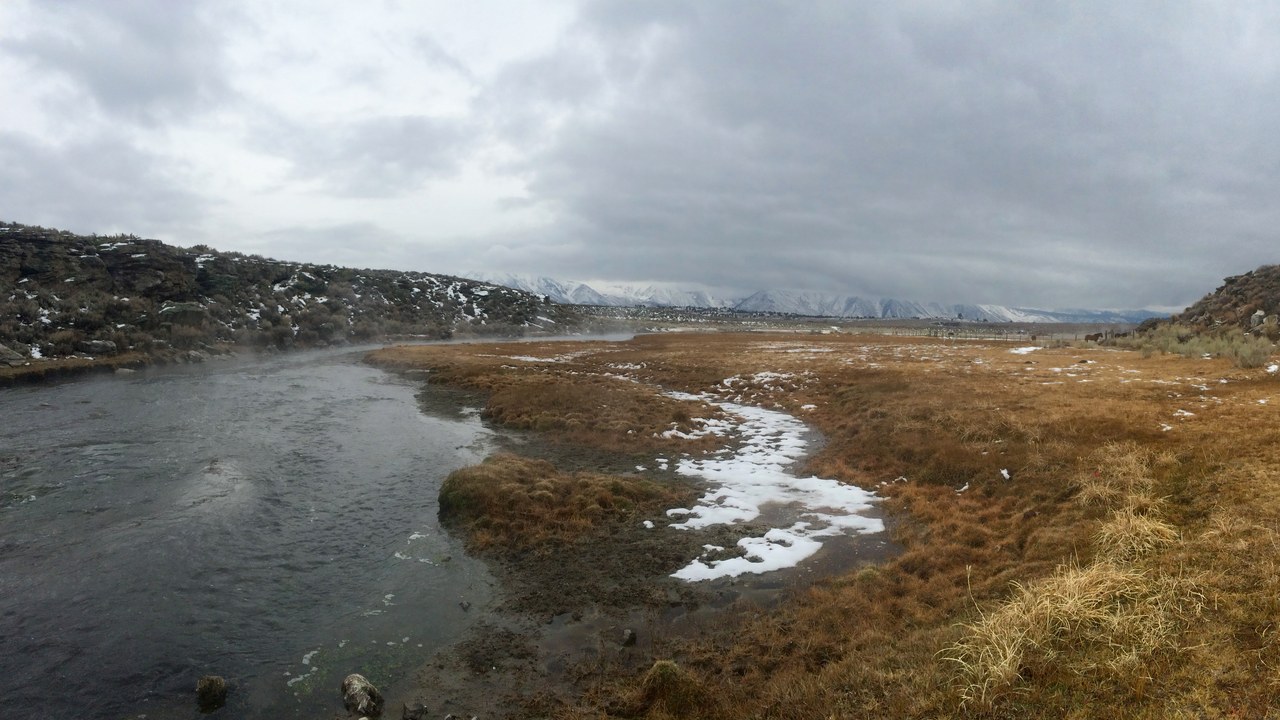
Long Valley Caldera in eastern California, next to Mammoth Mountain, is one of Earth’s largest calderas, about 20 miles long, 11 miles wide and up to 3,000 feet deep, according to its Wikipedia entry. It formed 760,000 years ago in a very large eruption.
That eruption emptied the magma chamber until the ground collapsed, and its second phase sent pyroclastic flows across thousands of square miles. Ash blanketed much of what is now the western United States, and the floor of the bowl now lies between 6,500 and 8,500 feet above sea level.
Valles Caldera: New Mexico’s Caldera Preserve
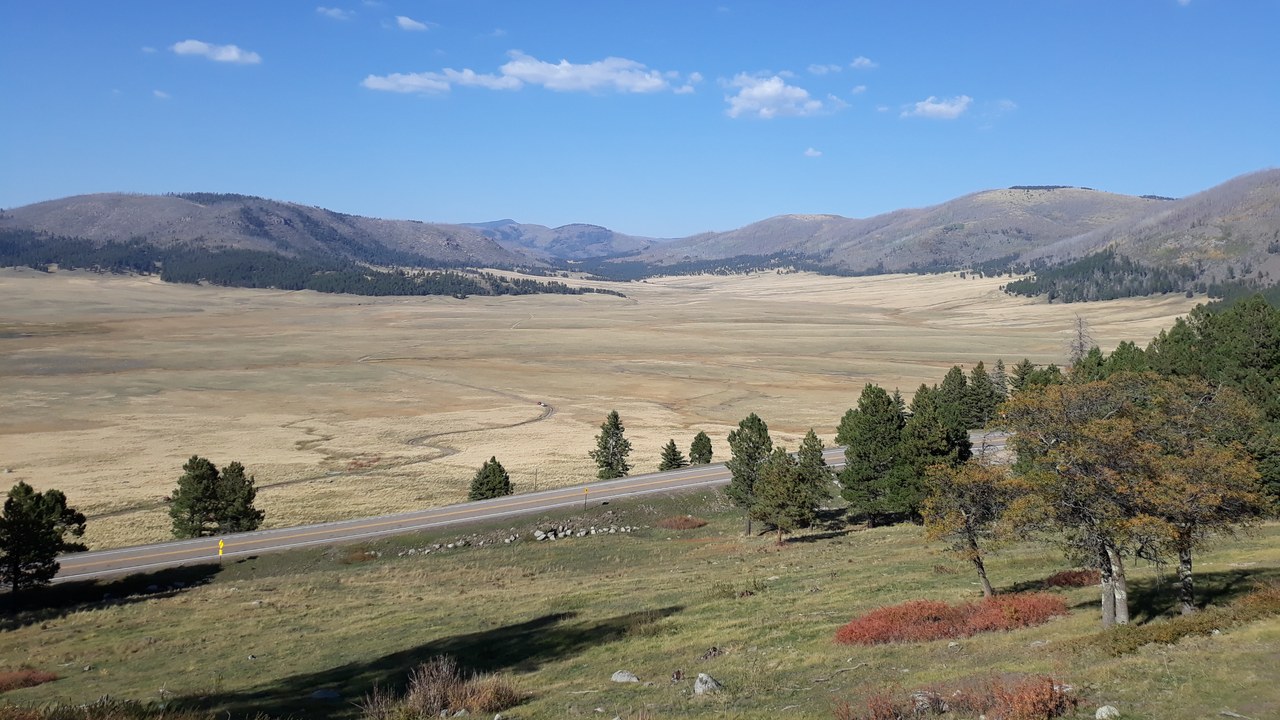
The Valles Caldera in northern New Mexico’s Jemez Mountains is 13.7 miles wide, and hot springs, streams, fumaroles, natural gas seeps and volcanic domes dot its landscape, as its Wikipedia entry describes. Its highest point is Redondo Peak, an 11,254-foot lava dome that rose inside the caldera.
Grassy valleys called valles fill parts of the basin, the largest being Valle Grande. In 1975 it was designated a National Natural Landmark, and much of it is now protected as the Valles Caldera National Preserve, part of the National Park System.
Grand Prismatic Spring: A Rainbow Over Hot Water
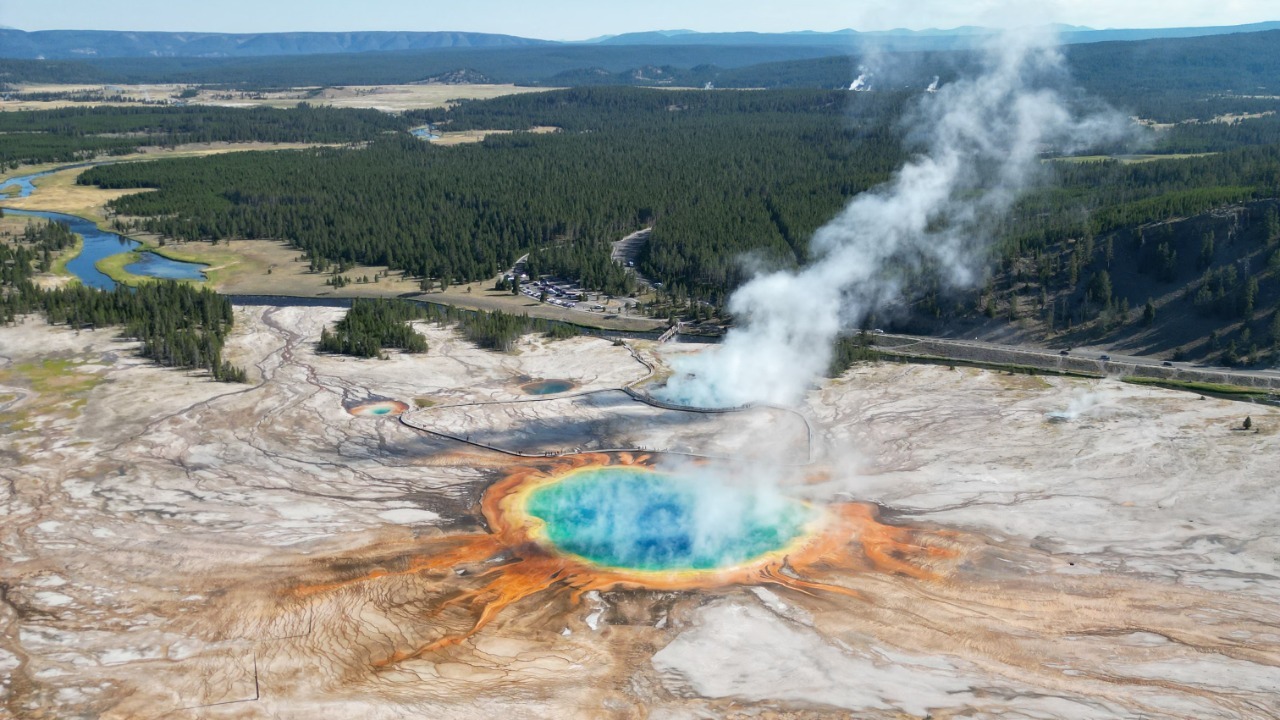
The Grand Prismatic Spring is the largest hot spring in Yellowstone National Park and the third largest in the world, according to its Wikipedia entry. It sits in the Midway Geyser Basin and was named by geologists of the 1871 Hayden survey for its striking colors.
Those colors, ranging from red and orange to green and blue, come from microbial mats of heat-loving bacteria and archaea living around the mineral-rich water. Trappers who crossed the basin in 1839 described a “boiling lake” about 300 feet across, most likely this spring.
Old Faithful: The Geyser on a Schedule
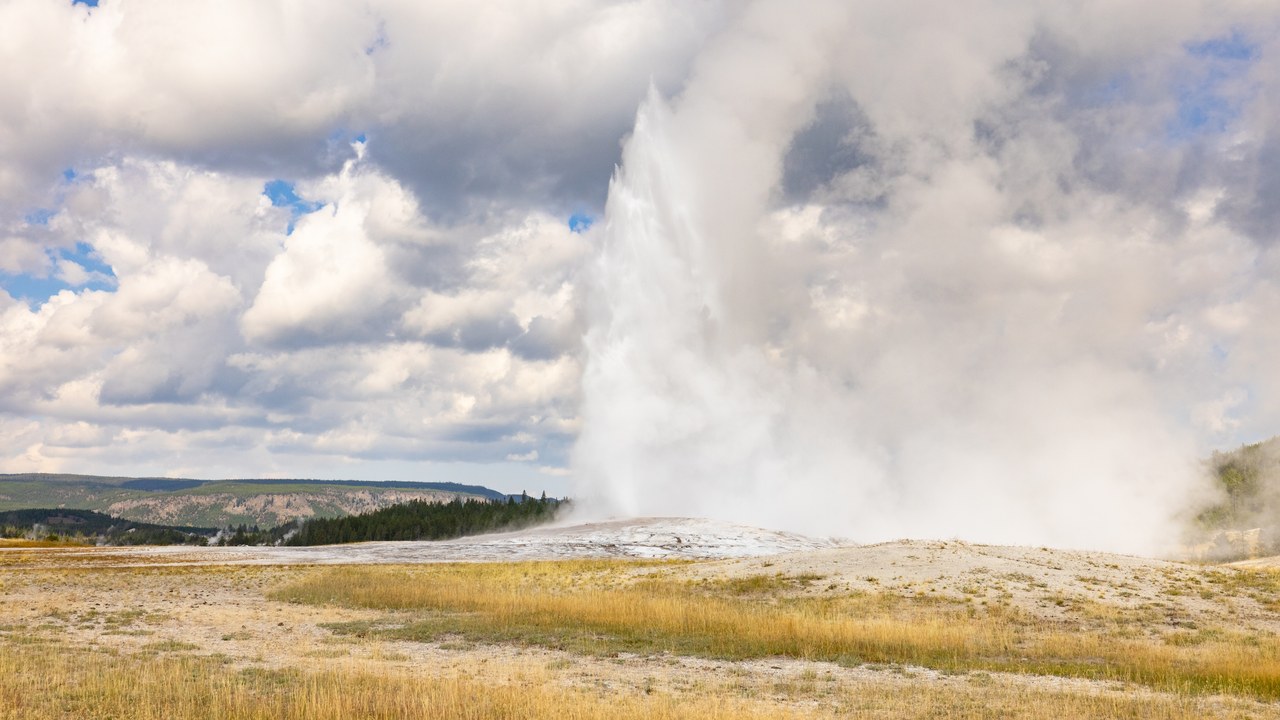
Old Faithful, a cone geyser in Yellowstone’s Upper Geyser Basin, was named in 1870 by the Washburn-Langford-Doane Expedition and was the first geyser in the park to be named, as its Wikipedia entry notes. It erupts on average about every 92 minutes.
The interval between eruptions ranges from about 35 to 120 minutes, which makes it one of the most predictable geothermal features anywhere. When the expedition members first saw it on Sept. 18, 1870, it spouted nine times during their stay, throwing columns of boiling water 90 to 125 feet high, according to one member’s account.
Yellowstone Lake: A Lake Over a Volcano
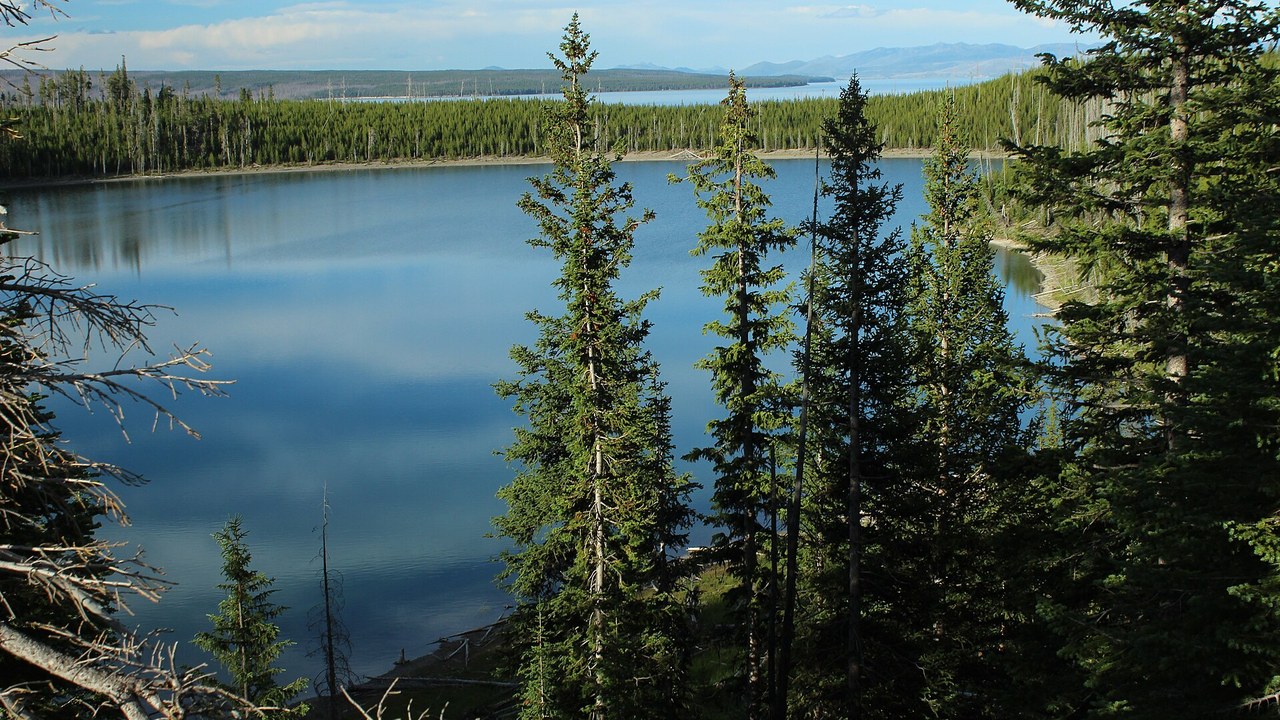
Yellowstone Lake is the largest body of water in Wyoming and the largest freshwater lake above 7,000 feet in North America, according to its Wikipedia entry. It sits 7,732 feet above sea level, covers 136 square miles and has 110 miles of shoreline.
Its average depth is 139 feet, with its deepest point at least 394 feet. In winter, ice nearly three feet thick covers most of the lake except where shallow water lies over hot springs, a reminder of the heat moving beneath the lake floor.
Mammoth Lakes, California: A Town on the Caldera’s Edge
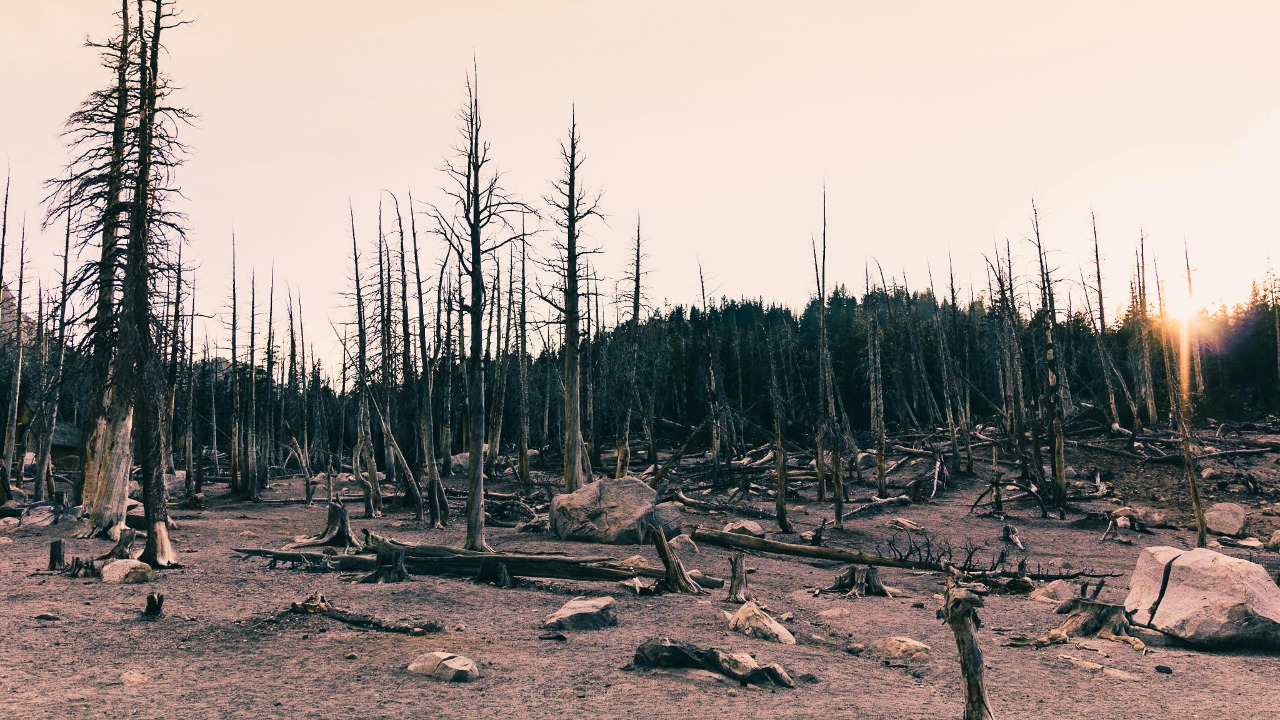
Mammoth Lakes, California, sits immediately east of Mammoth Mountain at an elevation of 7,880 feet, as its Wikipedia entry describes. Its population was 7,191 at the 2020 census, a decrease of 12.7% from 2010.
The town lies beside the Long Valley Caldera, and the Mono people were its first settlers thousands of years ago. Its modern history began with an 1877 mining claim and a gold rush that drew 1,500 people to a camp called Mammoth City by the end of 1878.
Bishop Tuff: Ash That Became Rock
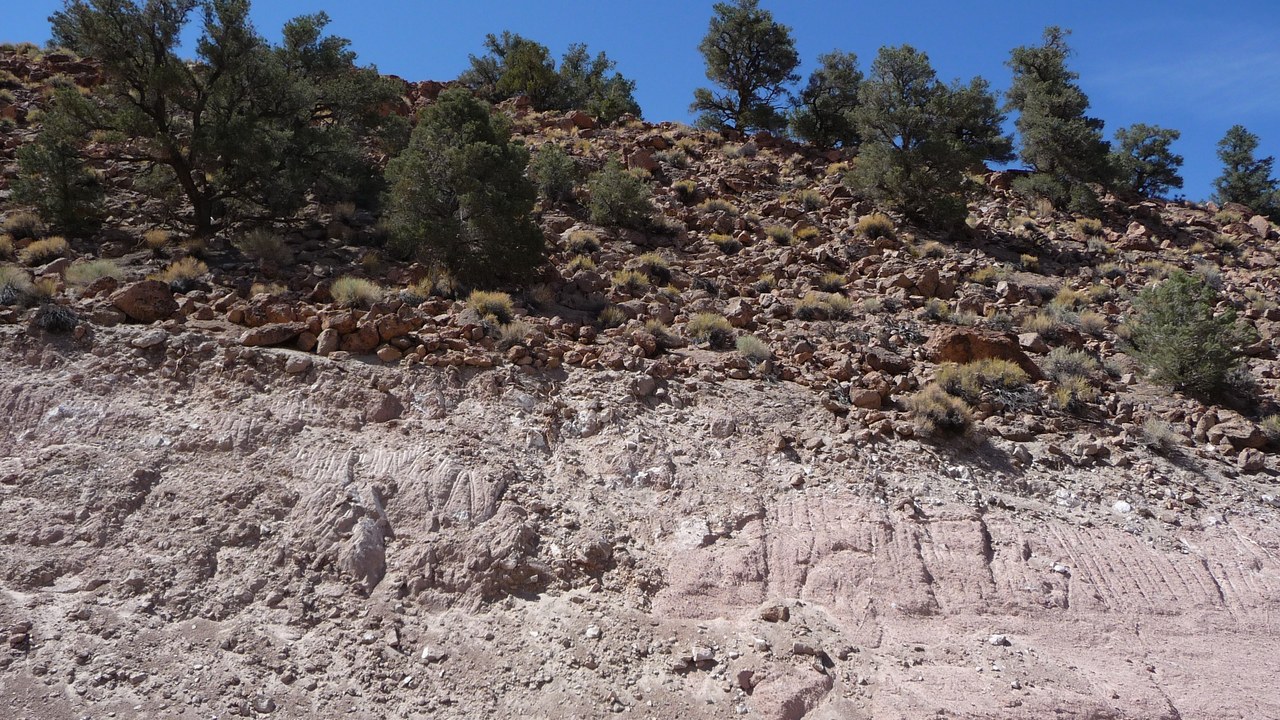
The Bishop Tuff is the rock laid down by the Long Valley eruption, with large outcrops in Inyo and Mono counties in California, according to its Wikipedia entry. About 200 cubic kilometers of ash and tuff erupted outside the caldera.
It caps a volcanic plateau in the northern Owens Valley, called the Volcanic Tableland, with deposits covering nearly 850 square miles and reaching 660 feet thick. The Owens River has carved a gorge through it, exposing the scale of a single eruption.
Lava Creek Tuff: The Eruption That Made Today’s Caldera
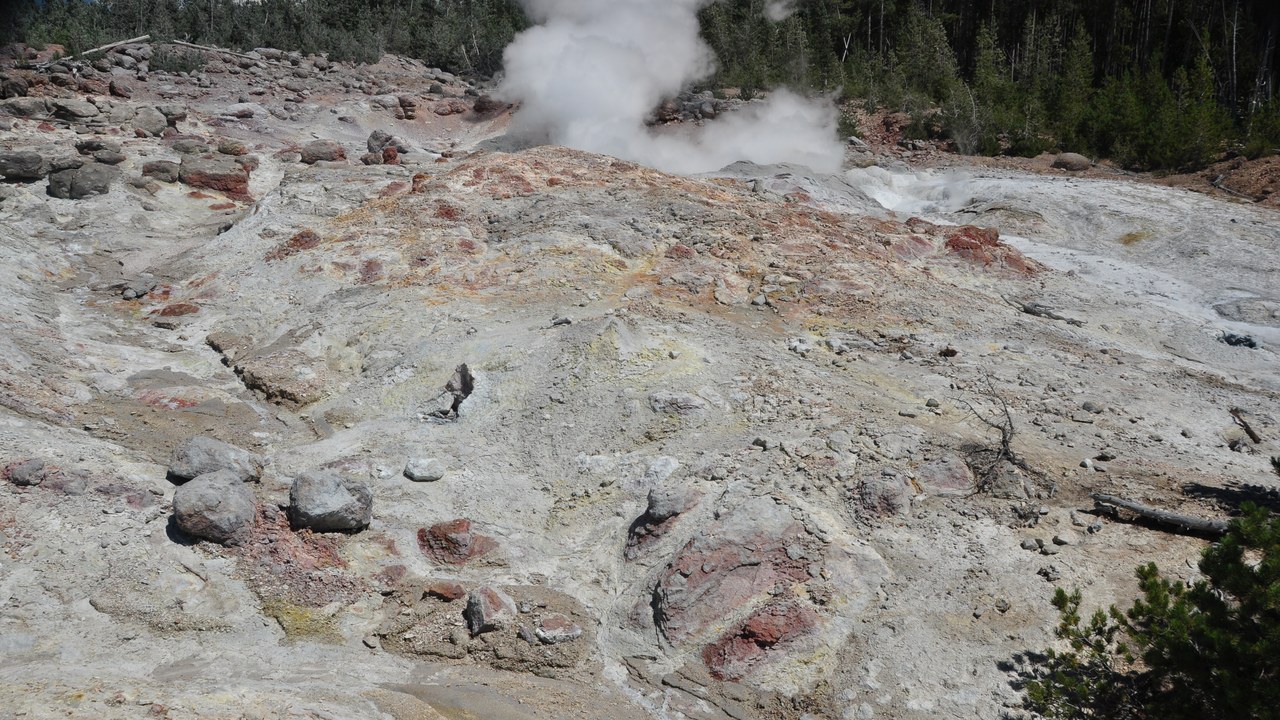
The Lava Creek Tuff formed in an eruption around 640,000 years ago that created the Yellowstone Caldera seen today, as its Wikipedia entry explains. It was the climactic event of Yellowstone’s third volcanic cycle.
The tuff covers more than 2,900 square miles around the caldera, from an estimated 1,000 cubic kilometers of magma. Its fallout blanketed much of North America, and the layer is well exposed at places inside the park such as Tuff Cliff along the Gibbon River and Virginia Cascade.
Steamboat Geyser: The Tallest Active Geyser
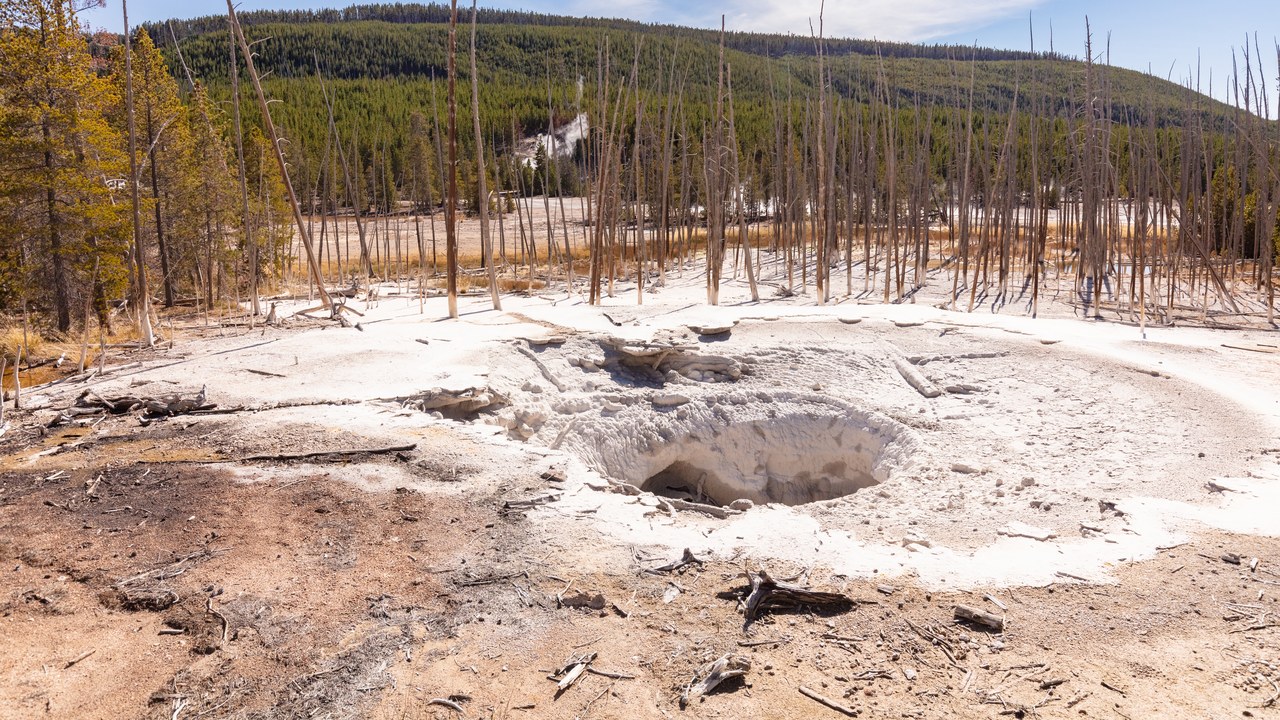
Steamboat Geyser in Yellowstone’s Norris Geyser Basin can throw water more than 300 feet into the air during a major eruption, according to its Wikipedia entry. Its major eruptions generally last from 3 to 40 minutes and are followed by powerful jets of steam.
Unlike Old Faithful, it keeps no schedule: recorded intervals between major eruptions have ranged from three days to fifty years, and it was dormant from 1911 to 1961. In 1964 it erupted 29 times, and several eruptions during its 2018 active phase lasted more than an hour, the kind of change scientists track closely.
Huckleberry Ridge Tuff: One of the Largest Eruptions Known
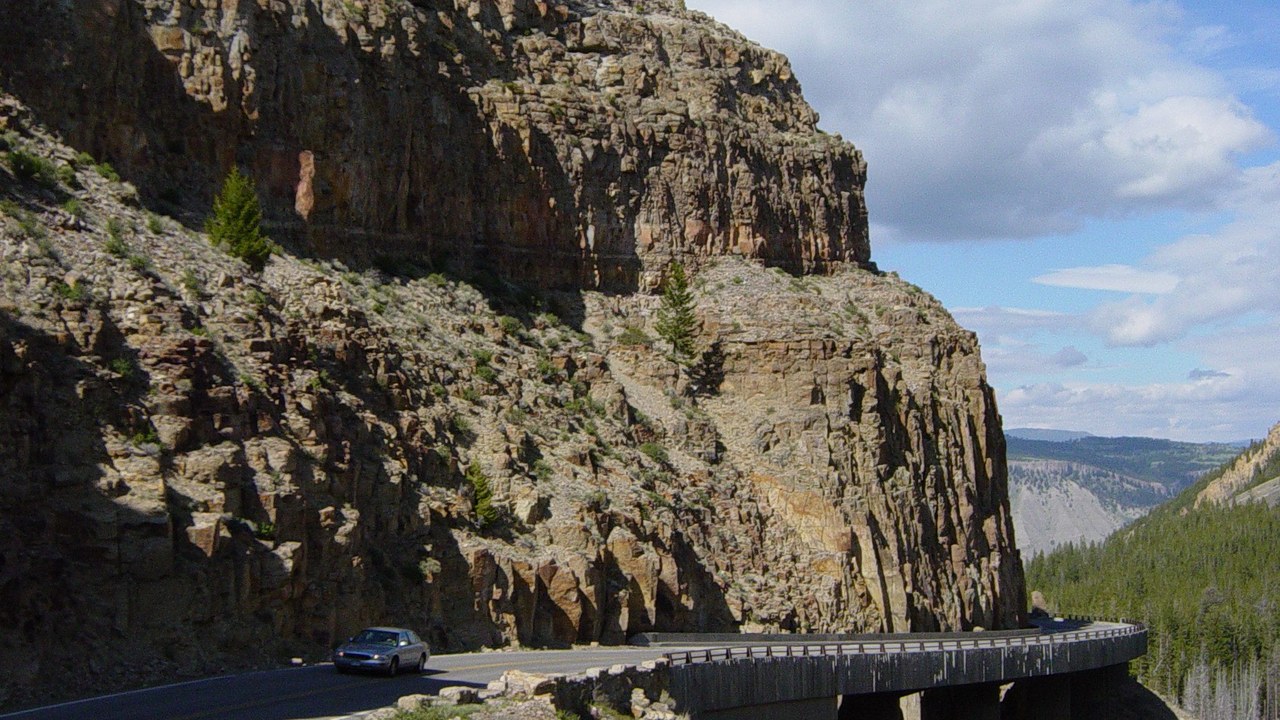
The Huckleberry Ridge Tuff came from an eruption of about 2,450 cubic kilometers of material, which is thought to be one of the largest in the Yellowstone hotspot’s history, as its Wikipedia entry notes. It took place about 2.1 million years ago.
It was the oldest of the three large caldera-forming eruptions from the Yellowstone hotspot, followed later by the Mesa Falls Tuff and the Lava Creek Tuff. Researchers have described it as the evacuation of multiple magma systems in a complex, episodic eruption.
Island Park Caldera: The Older Caldera Next Door
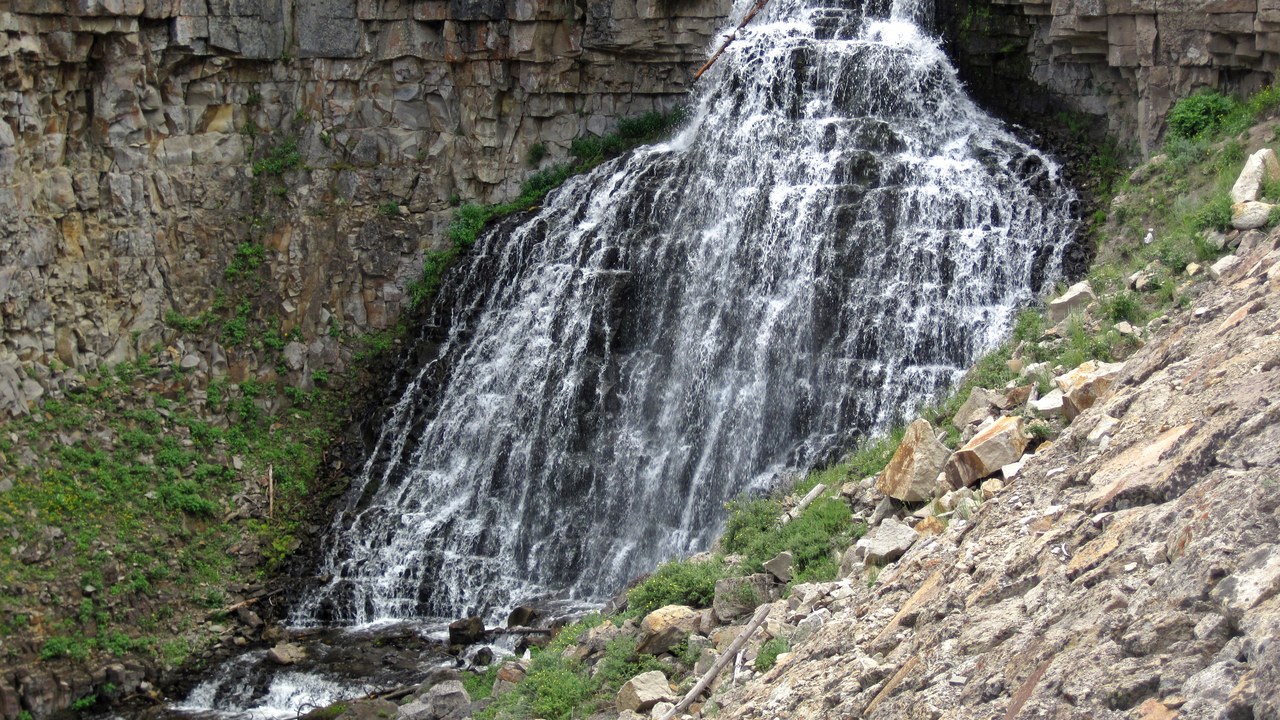
The Island Park Caldera in Idaho and Wyoming is one of the world’s largest calderas, about 80 by 65 kilometers, according to its Wikipedia entry. Its ashfall produced the Huckleberry Ridge Tuff, found from southern California to the Mississippi River.
That super-eruption of about 2,500 cubic kilometers produced 2,500 times as much ash as the 1980 eruption of Mount St. Helens. The smaller, younger Henry’s Fork Caldera, formed 1.3 million years ago, is nested inside it and is the shape most visible today.
More from Morning Overview
- A $1 billion gas plant planned for Superior, Wisconsin, has been abandoned
- Shaq spent $1.3 million on three Rolls-Royce Phantoms to prove a point to a salesman
- The Justice Department asked courts to undo approvals for three offshore wind farms, one already making power
- Over 20 trillion gallons of rain fell on the Four Corners states and Nevada in two weeks
