
Few nameplates have stayed on American roads as long as the Camry, which grew from a modest import into a fixture of the sedan market. Its generations show a steady shift from fours and V6s toward efficiency and, finally, hybrid power only. Here are twelve Camry milestones, ending with the 2025 model.
Stay ahead on AI: Join 600,000+ professionals who read The Deep View, the free daily newsletter that keeps you up to date with artificial intelligence.
Subscribe to The Deep View free →
We may earn a commission if you sign up.
1. Toyota Camry (1983, first generation): Humble Beginnings

The first U.S. Camry offered 1.8- or 2.0-liter fours, with the larger engine reaching 95 hp by 1985, plus a short-lived turbodiesel. Close to 130,000 were sold in its first two years.
Those early cars were simple and modest, yet they set the pattern for the nameplate. Anyone tracing the Camry’s rise to sedan dominance can start with this first generation and its quick acceptance by American buyers. The two engine choices were typical of the period, when small fours carried the lineup and the car earned its first reputation among American households that wanted a dependable, well-built sedan.
2. Toyota Camry LE (1988, Kentucky-built): Made in Kentucky
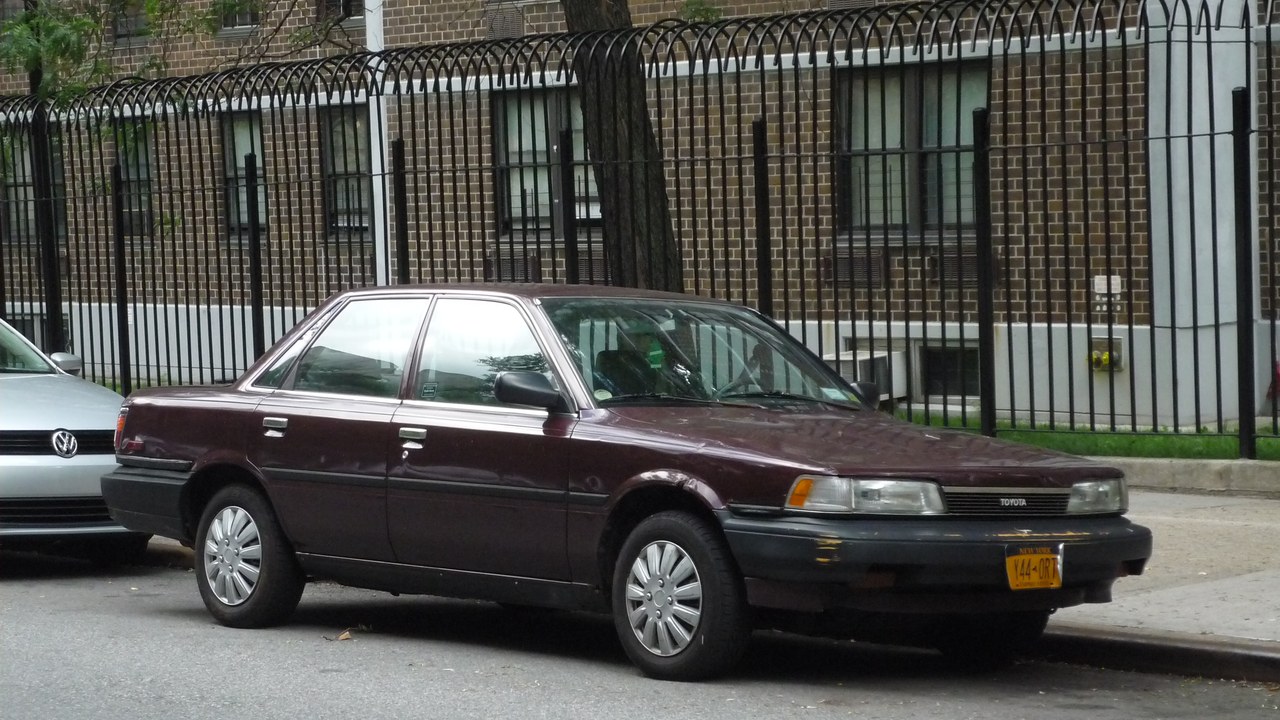
The Camry LE made its North American production debut in Georgetown, Kentucky, in May 1988, and Toyota said in 2021 that the Camry had been America’s best-selling car 23 of the last 25 years.
Building the car in Kentucky tied the Camry to American production early in its life. The sales record that followed explains why the sedan became the default comparison for family cars. The milestone matters because local assembly showed Toyota committing to the American market rather than only importing cars, a commitment that grew steadily in the decades after that first Kentucky build.
3. Toyota Camry wagon (1987): The First Camry Wagon

With the second-generation car that debuted for 1987, a station wagon joined the Camry lineup for the first time, according to an AutoGuide history of the model. The same redesign brought a more aerodynamic body and a 16-valve version of the 2.0-liter four rated at 115 horsepower.
The wagon gave families a practical Camry with extra cargo room, and it stayed in the range through the next redesign, when a third row of seating became available. By the 1997 model year the body style had been dropped for good, which makes these square-backed late-1980s wagons a short chapter in the car’s long history.
4. Toyota Camry (1992, third generation): Bigger and Smoother

The 1992 Camry brought a 130-hp 2.2-liter four and a 3.0-liter V6 of up to 188 hp, debuted the Camry SE, and offered a wagon with a third row.
Power rose sharply compared with the earliest cars, and the trim lineup began to broaden. The wagon with its extra seating also shows how varied the Camry family briefly became. Taken together, the changes made the third generation feel like a clear step up in size and ambition, with more choice for buyers who wanted either economy or extra power and space.
5. Toyota Camry (1997, fourth generation): The Dominator

Nicknamed the Dominator, the 1997 Camry offered a 194-hp 3.0-liter V6, dropped the wagon, and spun off the Solara coupe in 1999 with a convertible a year later.
The nickname reflected the car’s grip on the mainstream sedan market. Dropping the wagon narrowed the range, while the Solara handled buyers who wanted something with a sportier profile. The sequence of coupe, convertible and sedan variants in these years shows Toyota stretching the family into new body styles, an approach it would later scale back as the lineup changed.
6. Toyota Camry Solara (1999): Coupe Spin-Off

The Camry-based Solara coupe arrived for 1999, built in Cambridge, Ontario, with a 200-hp V6 option and a convertible for 2000. Sales slid to just over 20,000 a year before it ended in 2008.
The Solara found a following but never matched the sedan’s reach. Its decline shows that even a trusted nameplate could not carry every body style forward. For anyone shopping on the used market, the Solara remains a distinctive alternative to the sedan, though its modest annual sales mean fewer examples were built and sold than the Camry it shared a name with.
7. Toyota Camry (2002, fifth generation): Used-Buy Favorite
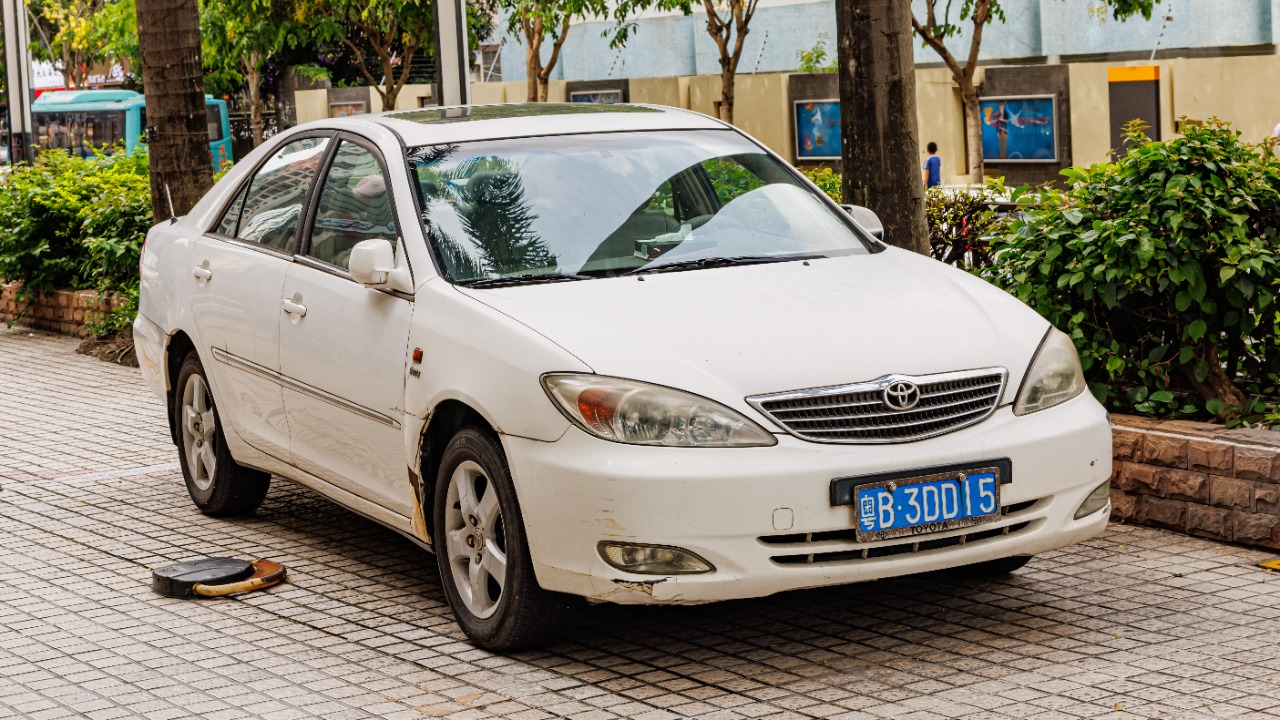
Autotrader rates the 2002-2006 Camry a best-value used buy for its strong reliability reputation and low prices, while noting a known transmission issue some owners hit.
Shoppers weighing these fifth-generation cars get a candid mix of praise and caution. Checking for that transmission problem is the sensible step before buying one of these inexpensive sedans. Because the advice comes from a used-car buying guide, it speaks to real ownership rather than showroom promises, and it frames this generation as an affordable and sensible way into Camry ownership.
8. Toyota Camry Hybrid (2007): Hybrid Arrives
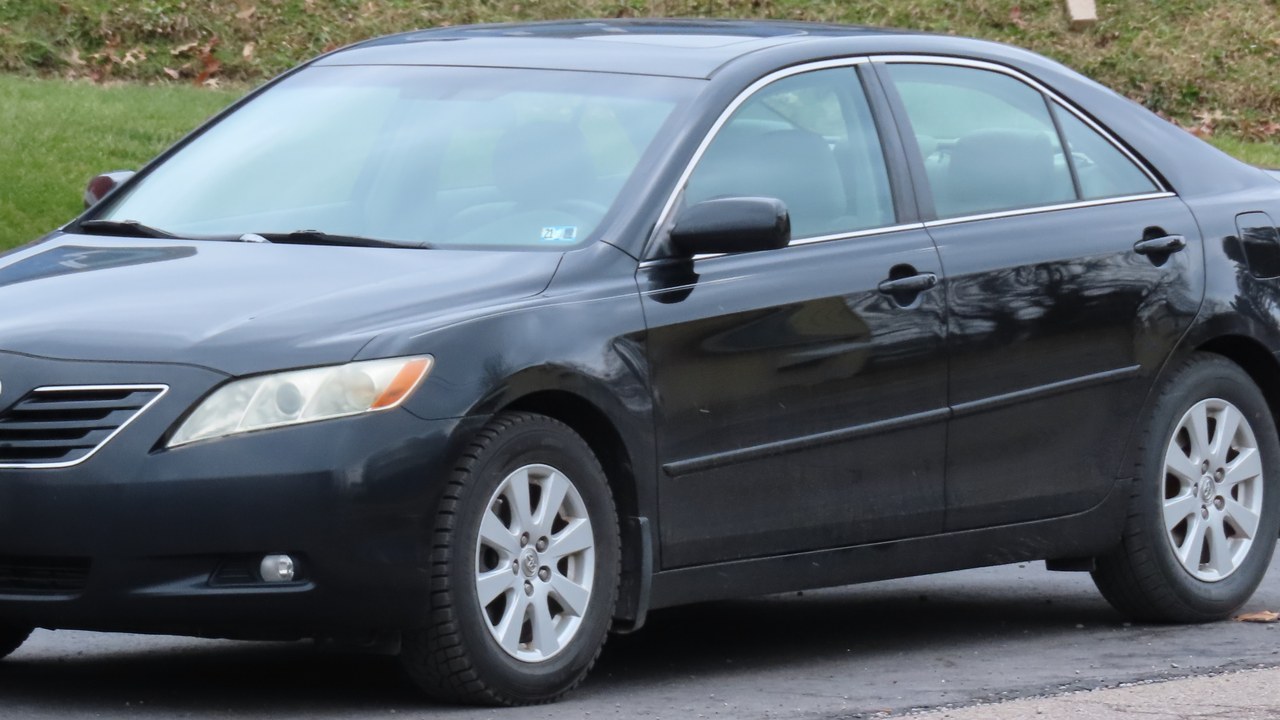
The 2007 Camry was the first offered as a gas-electric hybrid, with 188 hp combined; it won 2007 Green Car of the Year, and U.S. sales reached 154,977 by December 2009.
The hybrid gave the Camry a fuel-saving option without a change of body style. That early success foreshadowed the hybrid-only lineup that later defined the nameplate. The Green Car of the Year award underlined that the gas-electric Camry was taken seriously by critics and not just by early adopters, giving later hybrid models a strong reputation to build upon.
9. Toyota Camry (2012, seventh generation): Seventh Generation

The all-new 2012 Camry brought a 178-hp 2.5-liter four, and Autotrader names the 2012-2017 cars a best-value period for used buyers.
A clean-sheet redesign gave the car fresh footing, and the used market has treated it kindly. Buyers working with a tight budget will find a long window of model years to consider. Used-market guidance like this is useful because the sedan is plentiful, so shoppers can compare several examples and choose one with a solid history instead of settling for the first car they see.
10. Toyota Camry (2018, eighth generation): New Platform
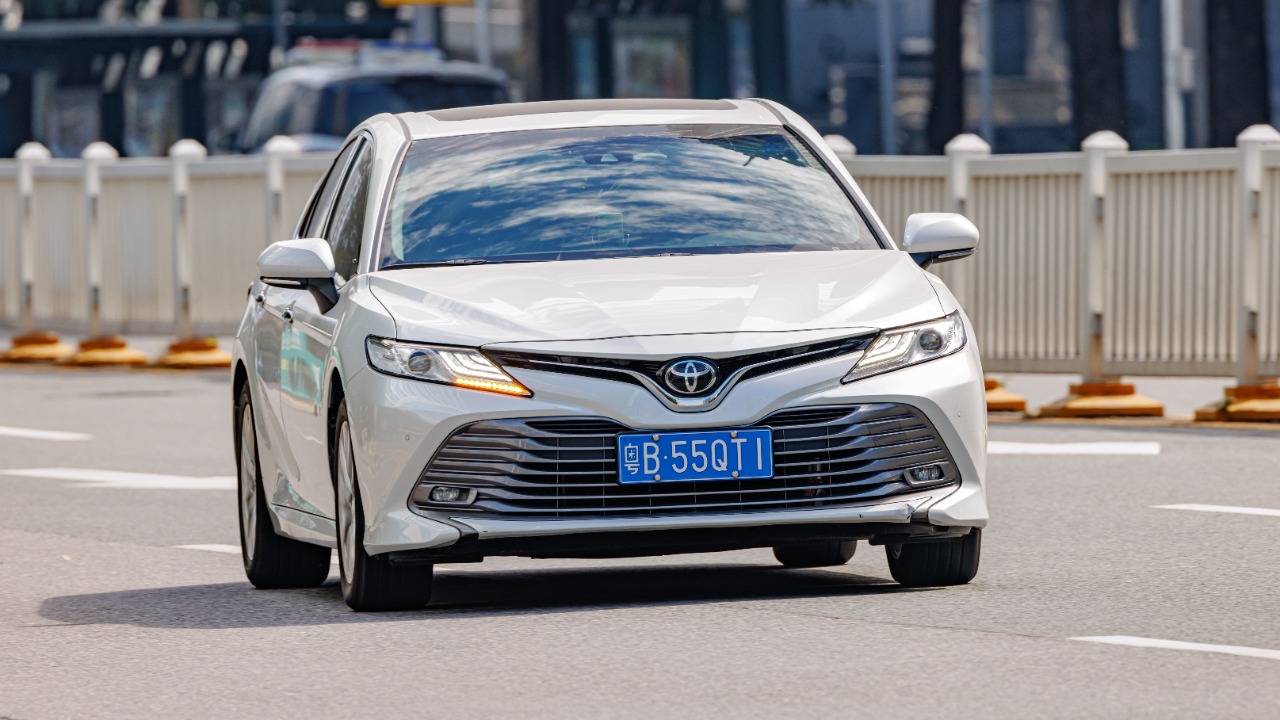
Introduced at the 2017 Detroit auto show on Toyota’s TNGA GA-K platform, the eighth-generation Camry offered a 301-hp V6 and, for 2020, all-wheel drive for the first time in North America since 1991.
The new architecture changed the car’s character and brought back a feature missing for nearly three decades. It also gave the Camry its strongest V6 output of the entire run. Together, the V6 and the return of all-wheel drive showed the generation aiming for broader appeal, offering strong straight-line power alongside better traction in poor weather for owners in snowy regions.
11. Toyota Camry TRD (2020): TRD Gets Sporty

The Camry TRD debuted for 2020 as a V6-only performance trim with lowered suspension and upgraded brakes, handling and exhaust, and Autotrader lists it at 22/31/25 mpg.
A sporty Camry was a notable change of tone for a sedan known for sensible comfort. The fuel economy figures show the price of that performance focus, though they remain reasonable. For shoppers who want some sport without leaving the Camry badge, the TRD stands as a distinctive and unusually focused trim in a lineup better known for quiet and practical transportation.
12. Toyota Camry (2025, ninth generation): Hybrid Only
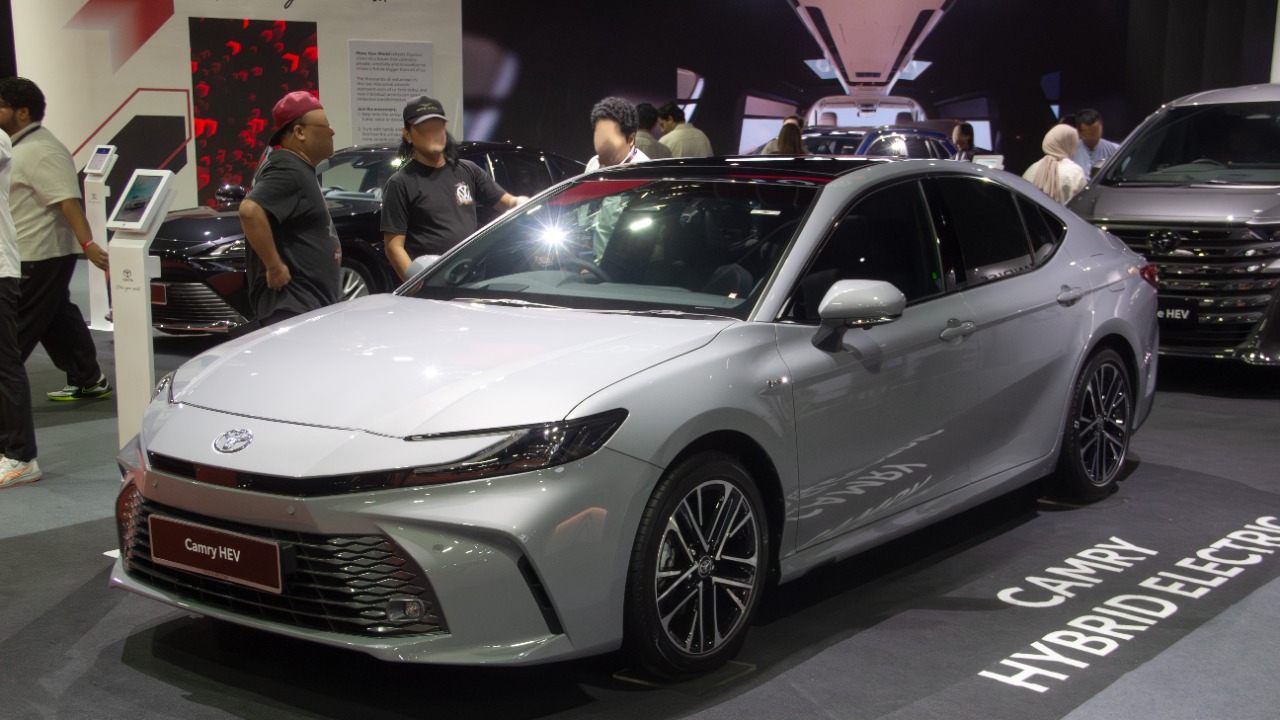
The 2025 Camry is hybrid-only, with 225 net hp in front-drive form and up to 51 mpg combined in the LE; Toyota sold more than 316,000 Camry sedans in 2025.
Every buyer now gets a hybrid, a marked shift from the fours and V6s of earlier eras. Strong sales suggest that the all-hybrid approach has not hurt the Camry’s appeal. The sales figure also confirms that the sedan still draws large numbers in a market that has moved heavily toward crossovers, which helps explain why Toyota kept investing in the model through a full redesign.
More from Morning Overview
- Ford is recalling 223,472 F-150 pickups because the fuel tank can leak or detach
- Hybrids have 15% fewer problems than gas cars, while EVs and plug-in hybrids have about 80% more, Consumer Reports finds
- Regulators cleared the first U.S. small modular reactor, 4 months early
- Lake Powell sank to a record 3,517 feet, nearing the level that stops Glen Canyon Dam’s turbines
