
American rock has given up some of the most recognizable dinosaurs ever mounted in a museum hall. Fossil beds in the Dakotas, Wyoming, Colorado, Utah, Arizona, Montana and Texas have supplied everything from a famous predator skeleton to long-necked giants. Here are twelve dinosaurs dug from American rock, starting with a Tyrannosaurus more than 40 feet long.
Free daily tech newsletter: TLDR is the free daily newsletter with links and TLDRs of the most interesting stories in startups, tech and programming.
We may earn a commission if you sign up.
1. Tyrannosaurus (SUE the T. rex): The Famous Skeleton
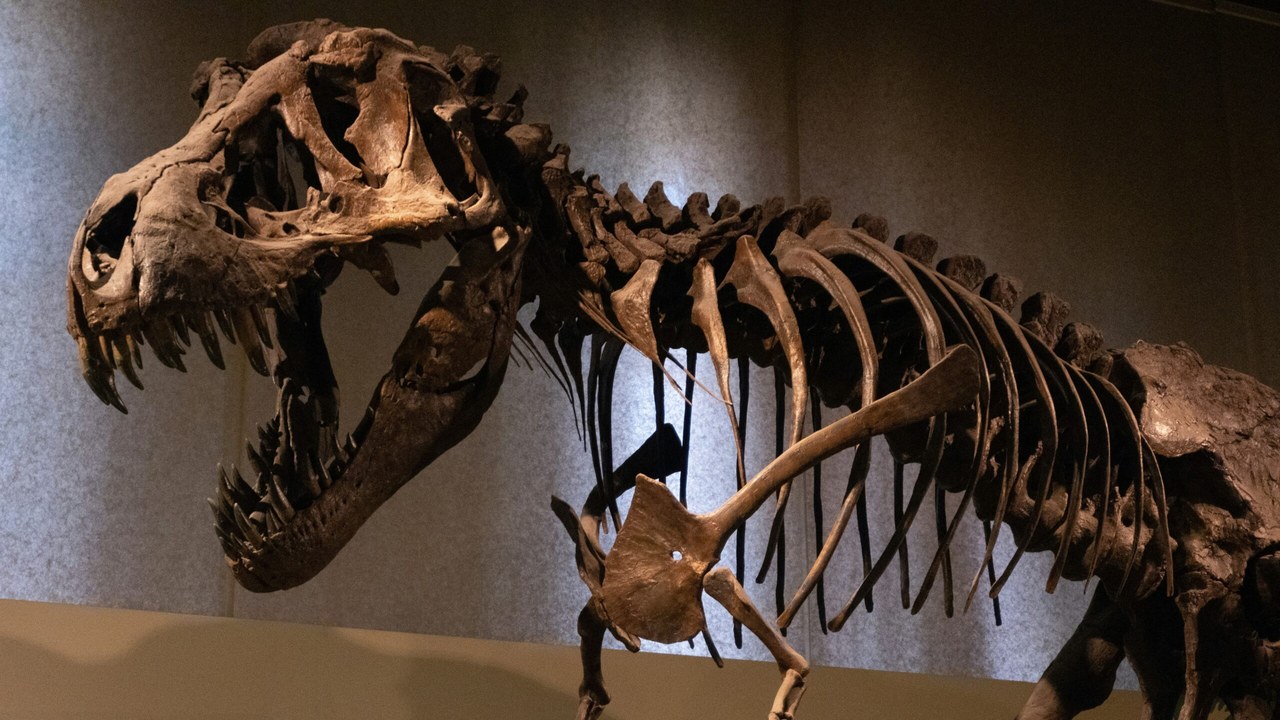
Found in 1990 north of Faith, South Dakota, the Field Museum’s SUE is more than 40 feet long, 13 feet tall at the hip and about 90 percent complete.
A skeleton that complete is rare for a predator of this size, which helps explain why SUE became one of the best-known fossils in the world. Visitors to the Field Museum see a Tyrannosaurus close to its true scale, with the discovery in South Dakota still central to the story.
2. Triceratops: Horns for Display
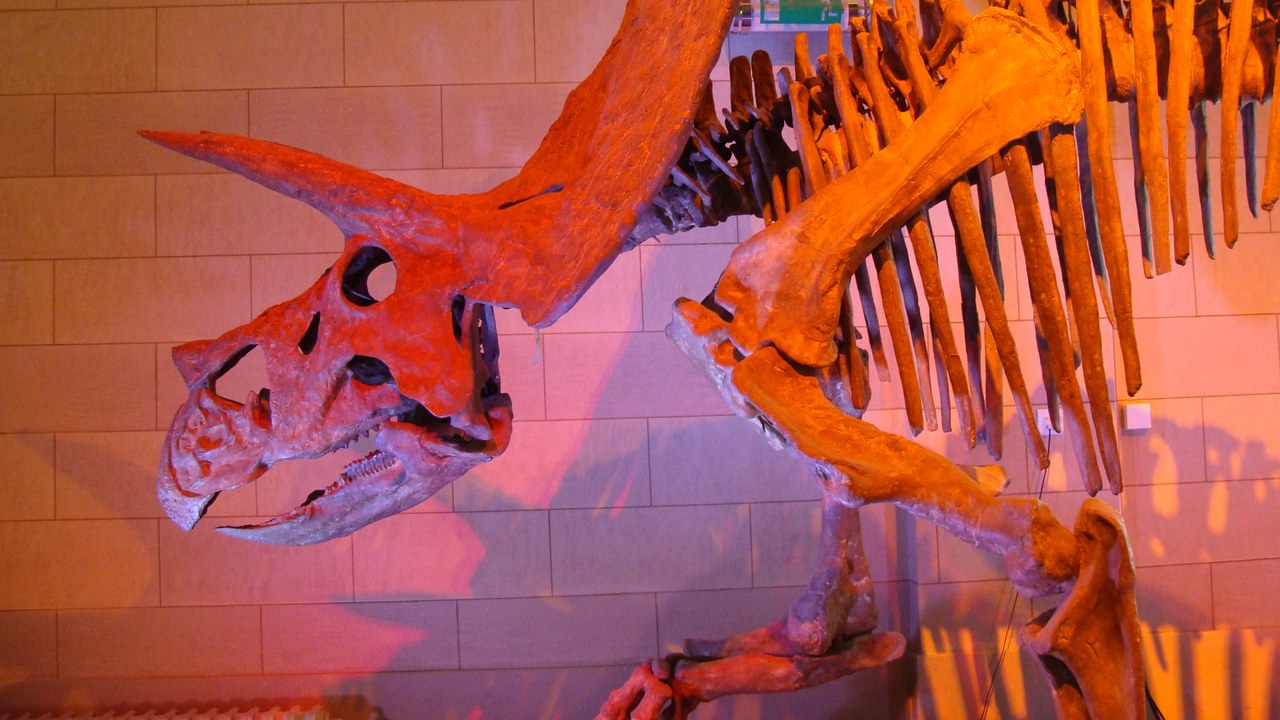
Its brow horns ran about 1 meter long, about 3.3 feet; Triceratops is South Dakota’s official state fossil and Wyoming’s state dinosaur, and scientists now think the horns served mainly for display and courtship.
That view revises the old picture of a dinosaur using its horns mainly as weapons. Two states claiming the animal as an official symbol shows how deeply it is woven into American fossil culture, and the display idea makes the three-horned face more social than fierce.
3. Diplodocus: Dippy Goes Global
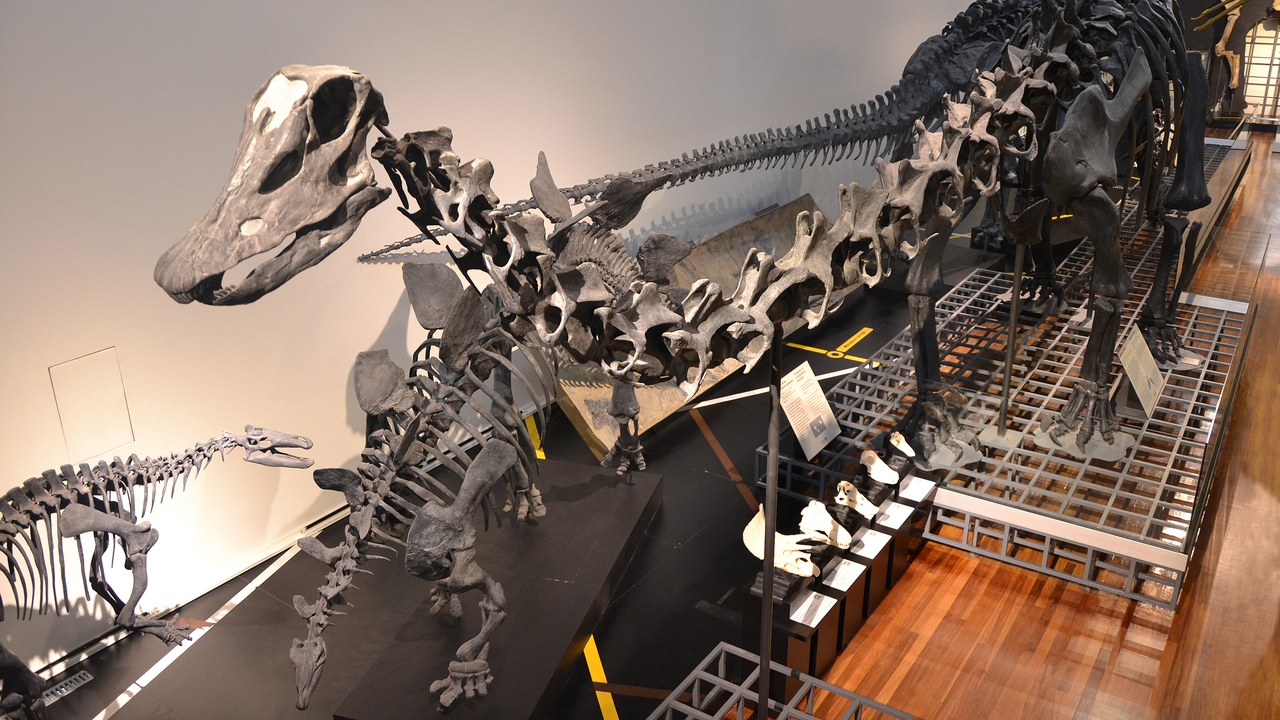
Pittsburgh’s composite ‘Dippy’ skeleton, mounted in 1907 from bones dug at Sheep Creek, Wyoming, was cast for museums from London to Mexico City; D. carnegii ran about 79 to 85 feet long.
Copies of one Wyoming skeleton carried the Diplodocus name to audiences far from the quarry. Because the mount is composite, assembled from bones of more than one animal, it reflects early museum practice, yet it still shows how long and slender these giants were.
4. Apatosaurus: Once a Swamp Dweller
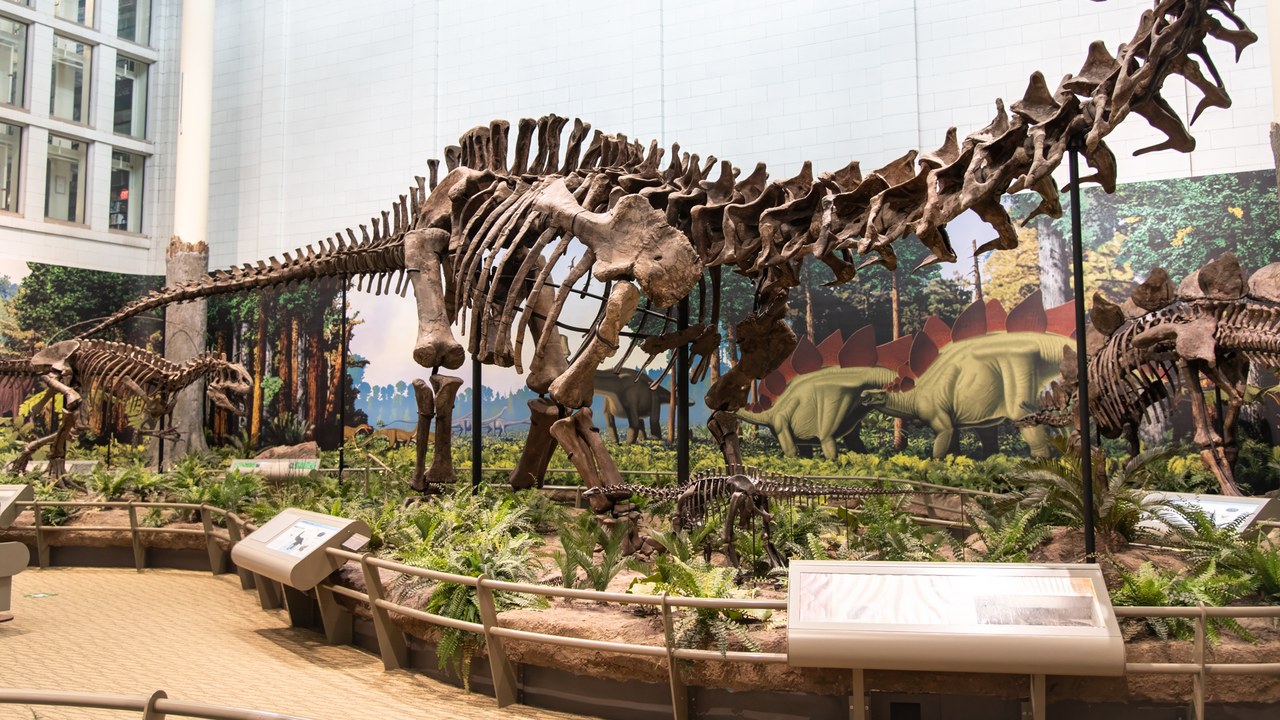
First dug up near Morrison, Colorado, in 1877, Apatosaurus averaged 69 to 75 feet long; scientists once pictured it wallowing in swamps, but current evidence says it lived fully on land.
Changing ideas about this animal show how science corrects itself as evidence improves. A creature once drawn standing in water is now understood as a land walker, a reminder that older museum paintings and textbook images may not match present findings.
5. Stegosaurus: Plates and Tail Spikes
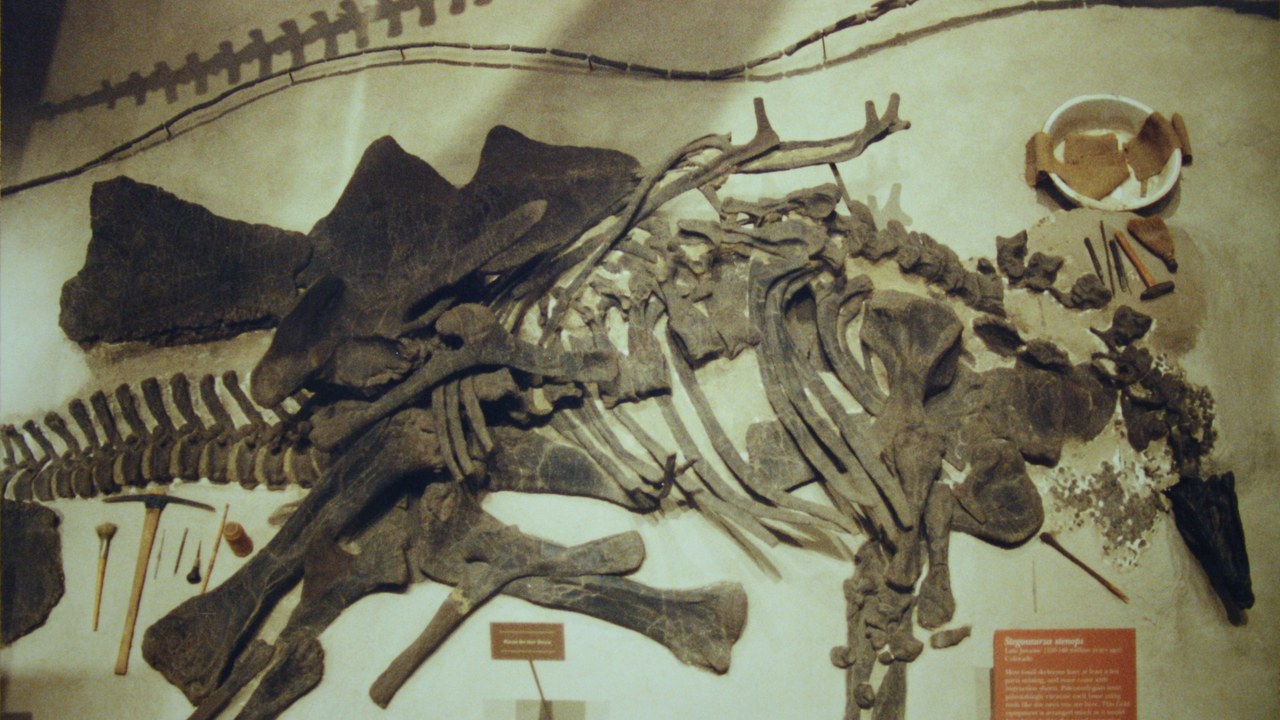
Stegosaurus remains, with huge back plates and four tail spikes, are among the bones on view in the Quarry Exhibit Hall at Dinosaur National Monument.
Seeing real bones in the rock gives the animal a presence that a reconstruction cannot quite match. The Quarry Exhibit Hall lets visitors view the plates and spikes where the Park Service has preserved them, which is a rare chance to see a famous silhouette in its natural setting.
6. Allosaurus: Morrison’s Top Predator
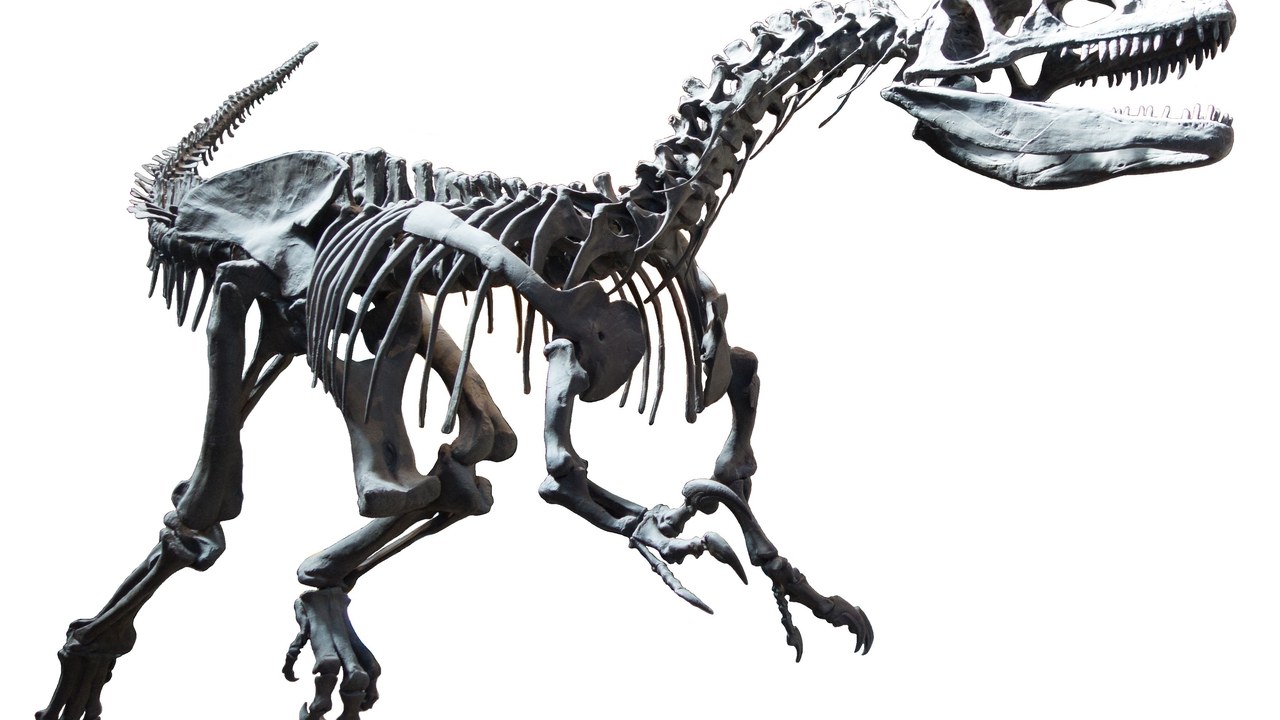
The National Park Service calls Allosaurus fragilis the most common large predator of the Morrison ecosystem preserved at Dinosaur National Monument.
That ranking puts Allosaurus at the top of the food web in the Morrison landscape, hunting among the giants that fill the rest of this list. Its abundance in the monument’s record makes it a central character in the Park Service’s account of the ancient ecosystem, and a useful anchor for anyone trying to picture which animals hunted and which were hunted.
7. Camarasaurus: Most Abundant Giant
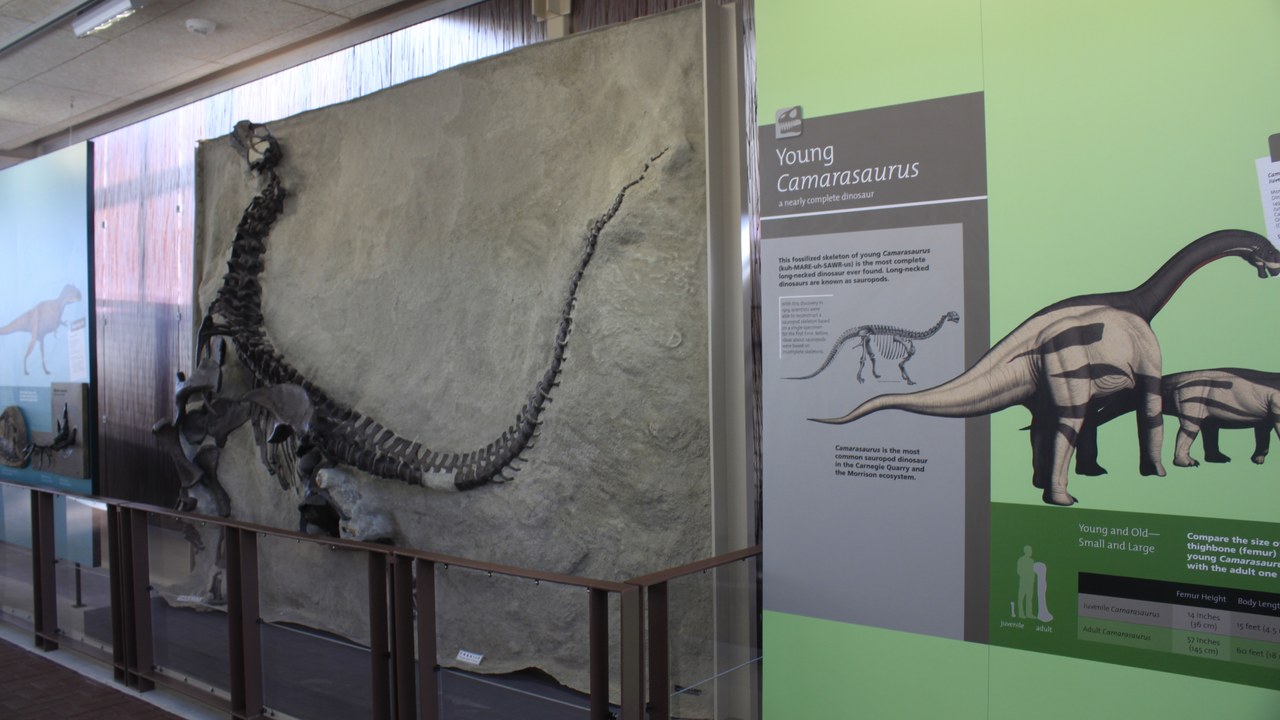
Camarasaurus lentus is the most abundant large dinosaur found in the Carnegie Quarry at Dinosaur National Monument, the Park Service says.
Abundance in a single quarry hints at how common these long-necked plant eaters were in the Morrison world. For visitors, the fact that Camarasaurus is the most frequent large find adds context to the other big names preserved at the same site, and it helps explain why the quarry has proved such a rich source of fossils for so long.
8. Barosaurus: A Neck Longer Than Its Tail
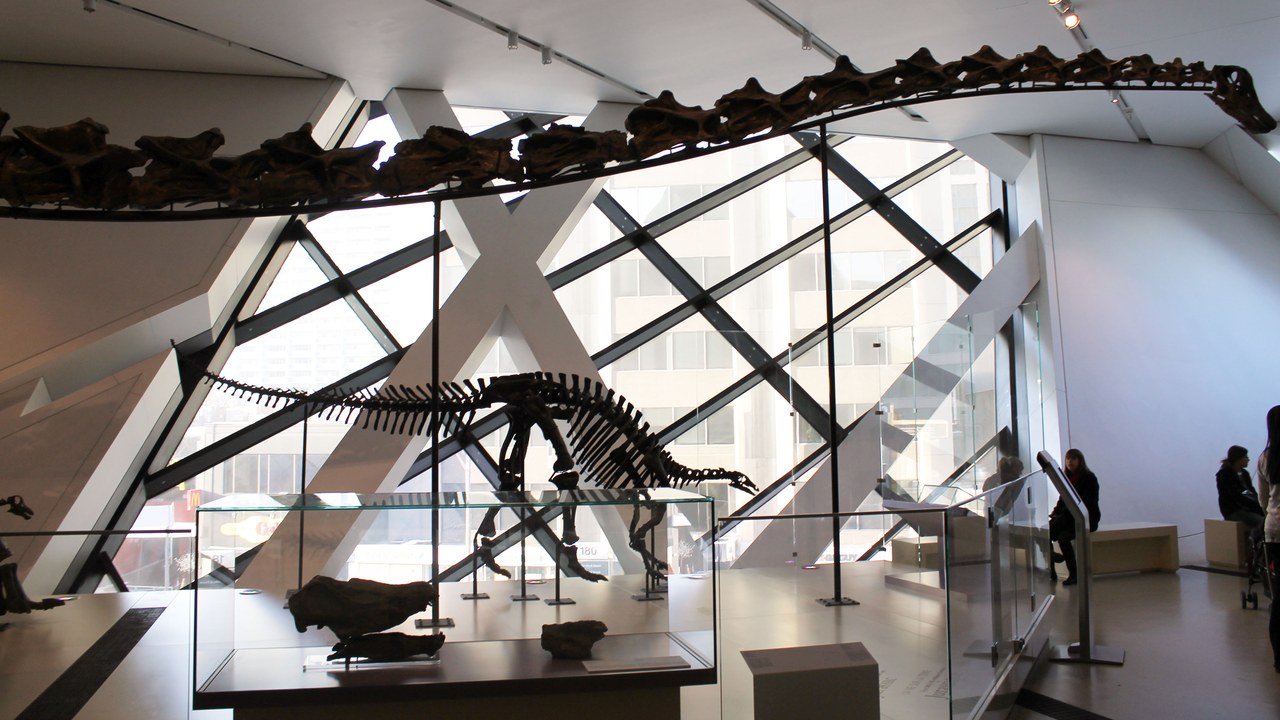
Barosaurus lentus, found in Dinosaur National Monument’s Carnegie Quarry, had a neck that was longer than its tail, according to the Park Service.
That proportion is a handy way to tell this sauropod apart from relatives with different builds. Its place in the Carnegie Quarry, shared with Camarasaurus and other giants, underscores how crowded the Morrison landscape once was with huge plant eaters, and it gives visitors a simple feature to look for when comparing the quarry’s long-necked giants.
9. Alamosaurus: A Giant in Big Bend
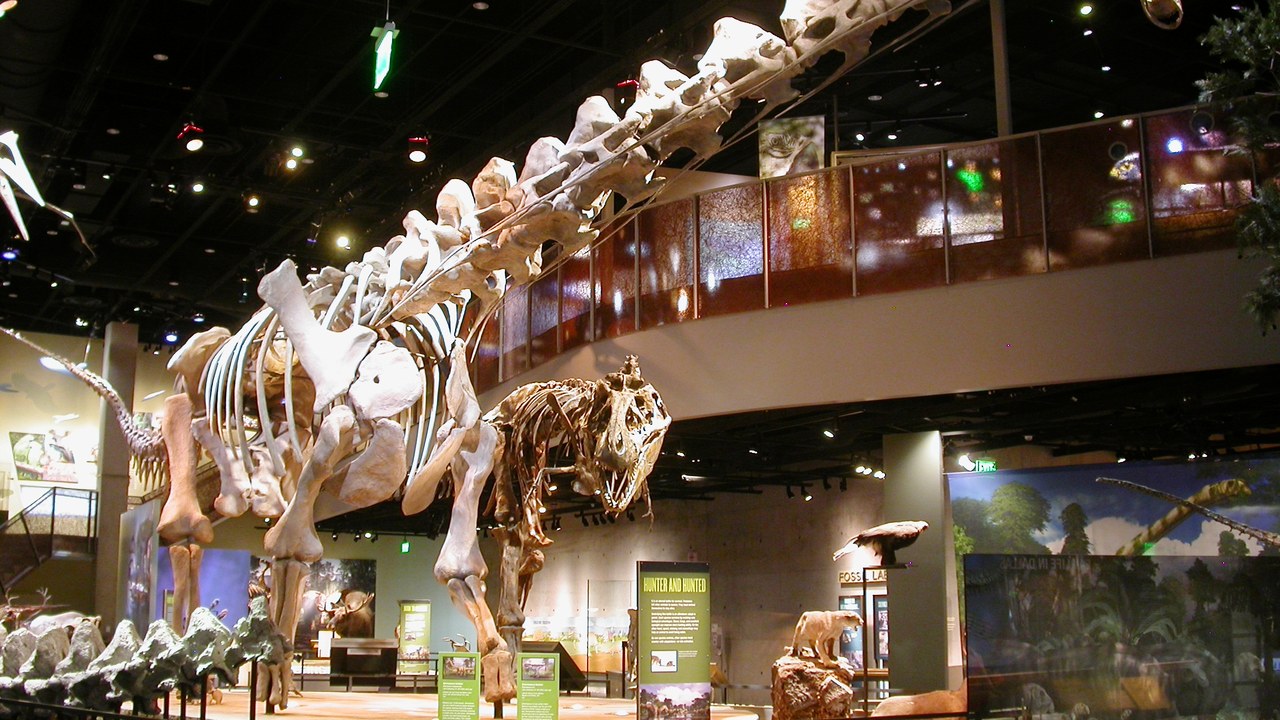
Texas’s Big Bend National Park has yielded Alamosaurus, a giant sauropod from the Late Cretaceous, the Park Service’s paleontology newsletter reports.
Many of the names in this list come from sites in other states, so a Late Cretaceous sauropod from Texas widens the map of American dinosaurs. The find shows that national parks beyond the famous quarries also hold fossils worth following, according to the Park Service, and it gives Texas a place beside the better-known quarry states.
10. Utahraptor: Utah’s Young Champion
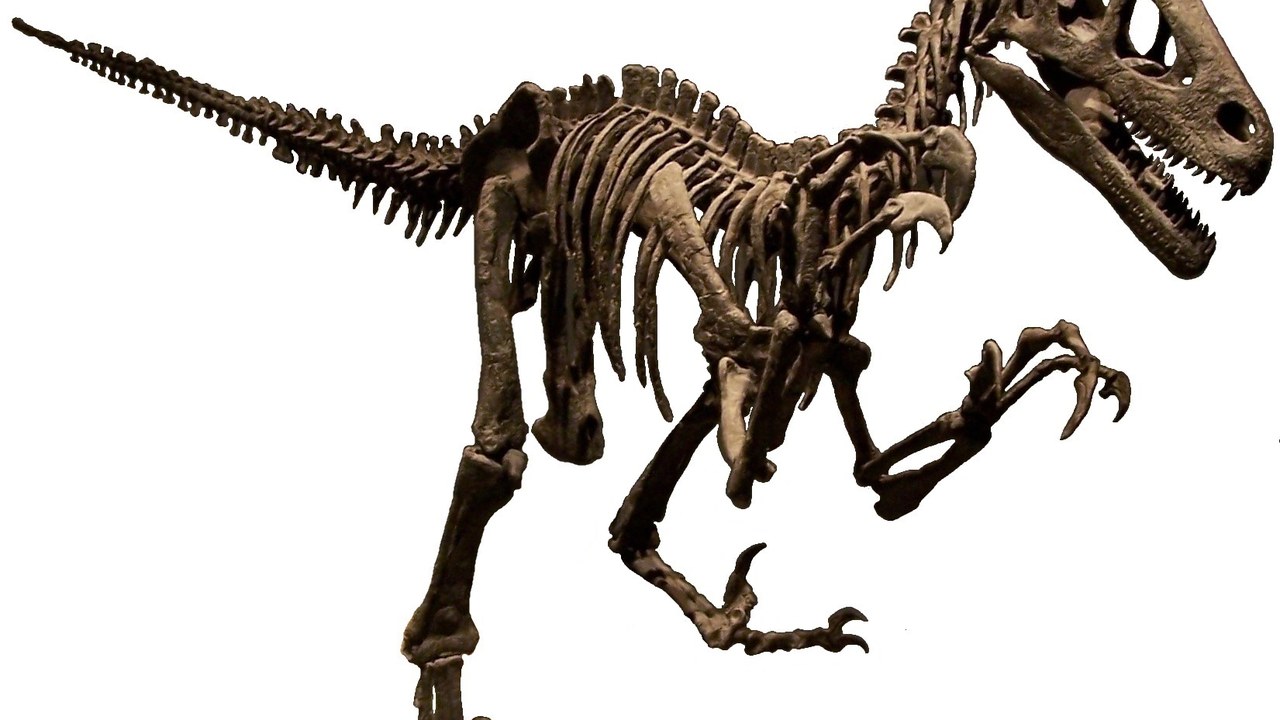
Utahraptor, about 20 to 23 feet long with a killing claw near 9.4 inches, became Utah’s state dinosaur in 2018 after a 10-year-old student proposed it.
A schoolchild’s proposal turned a fearsome predator into an official state symbol, a nice example of civic science at work. The killing claw near 9.4 inches gives the animal an unmistakable look, and the long body shows it was far larger than the raptors of popular imagination.
11. Dilophosaurus: The Real Dilophosaurus
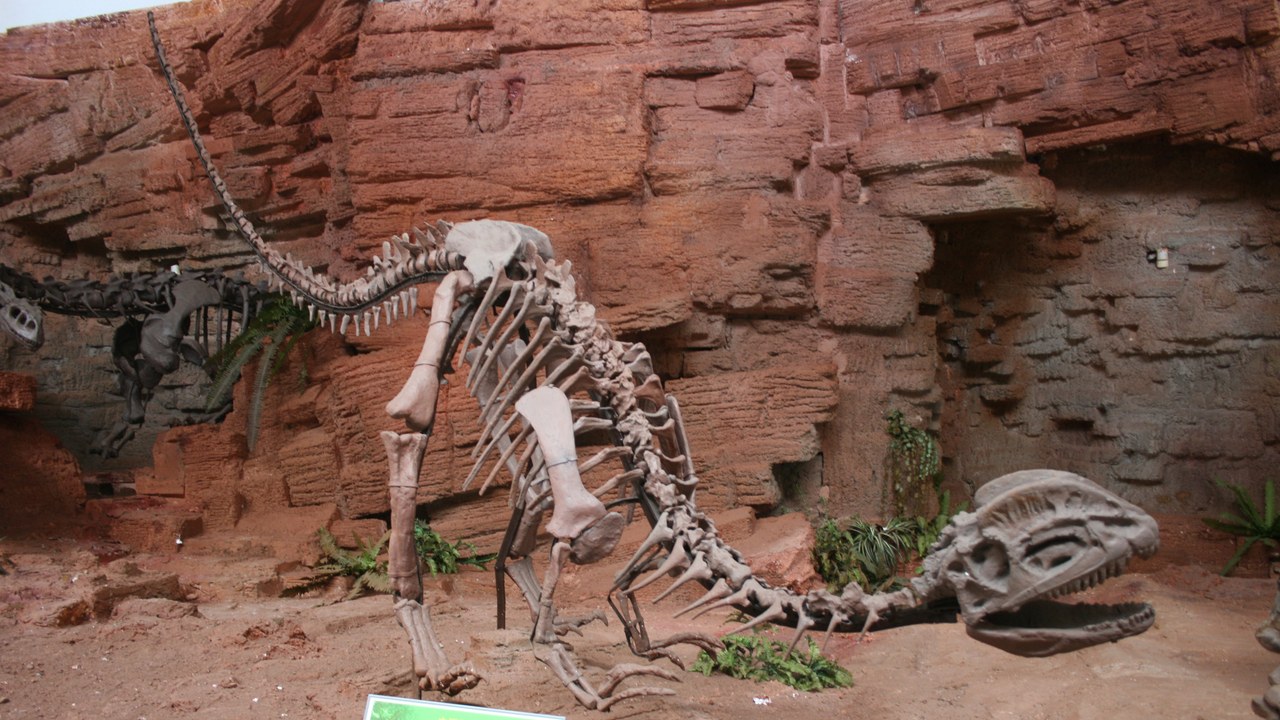
Found by Navajo man Jesse Williams in northern Arizona in 1940, the real Dilophosaurus reached about 23 feet and had no venom or neck frill like its Jurassic Park version.
The film version is a useful reminder that popular images and scientific findings can differ. The actual animal was a sizable predator found in Arizona, and its real story, beginning with a discovery in 1940, needs no added venom or frill to be interesting.
12. Deinonychus: The Terrible Claw
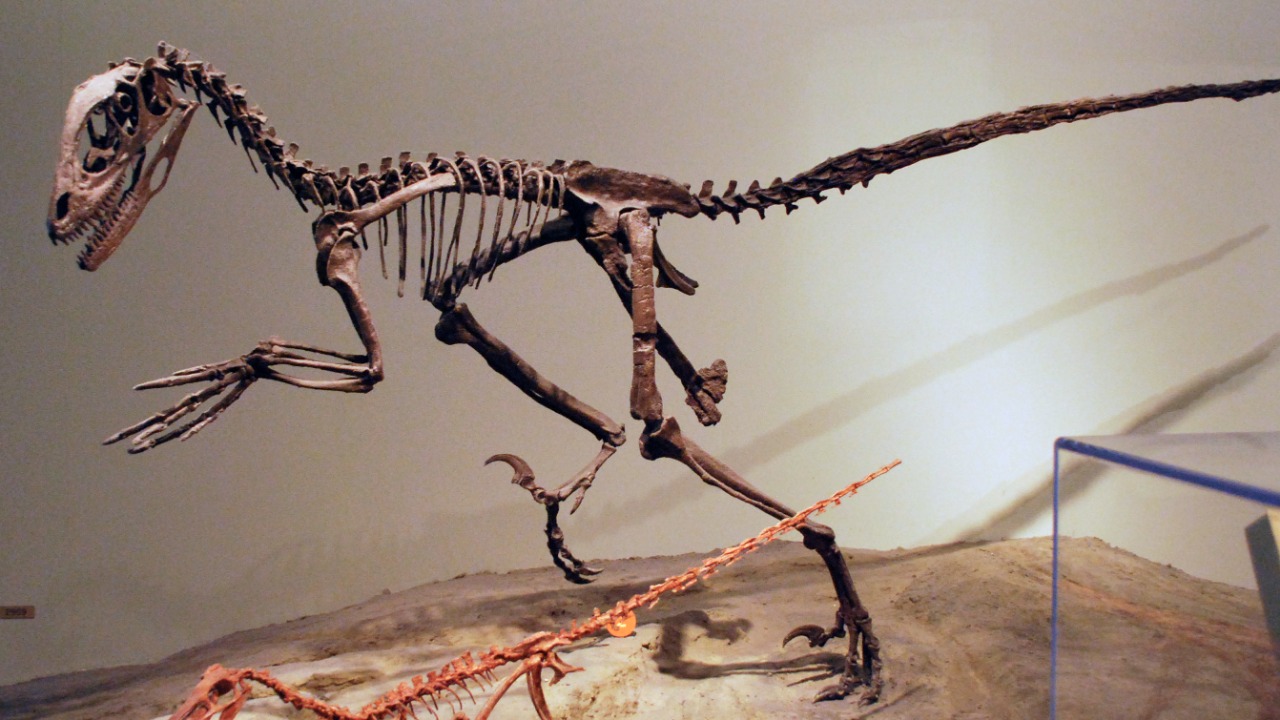
Named from Greek for “terrible claw,” Montana’s Deinonychus, up to 11 feet long, is the animal Michael Crichton said his Velociraptor copied in almost every detail.
Few dinosaurs have had such a direct line into popular culture. The novelist’s own statement ties this Montana predator to one of fiction’s best-known raptors, so readers who recognize the movie version are, in a sense, already familiar with Deinonychus. The Greek name, the length of up to 11 feet and the famous claw together make a compact portrait of the real animal behind the screen version.
More from Morning Overview
- Long use of a common prostate pill is tied to a higher chance of glaucoma
- Ford is recalling 223,472 F-150 pickups because the fuel tank can leak or detach
- Hybrids have 15% fewer problems than gas cars, while EVs and plug-in hybrids have about 80% more, Consumer Reports finds
- Regulators cleared the first U.S. small modular reactor, 4 months early
