
American Motors never had the budget of Detroit’s giants, so it often competed by being odd, small or unexpectedly clever. That habit produced some of the most memorable shapes and ideas of its era, and a few of them found fame far beyond showrooms. Here are ten AMC cars, from a tiny Nash to a four-wheel-drive pioneer.
Tech news in one quick read: Get the most interesting stories in startups, tech and programming, each with a short TLDR, in one free daily email from TLDR.
We may earn a commission if you sign up.
1. Nash Metropolitan (1954): Pint-Sized Pioneer
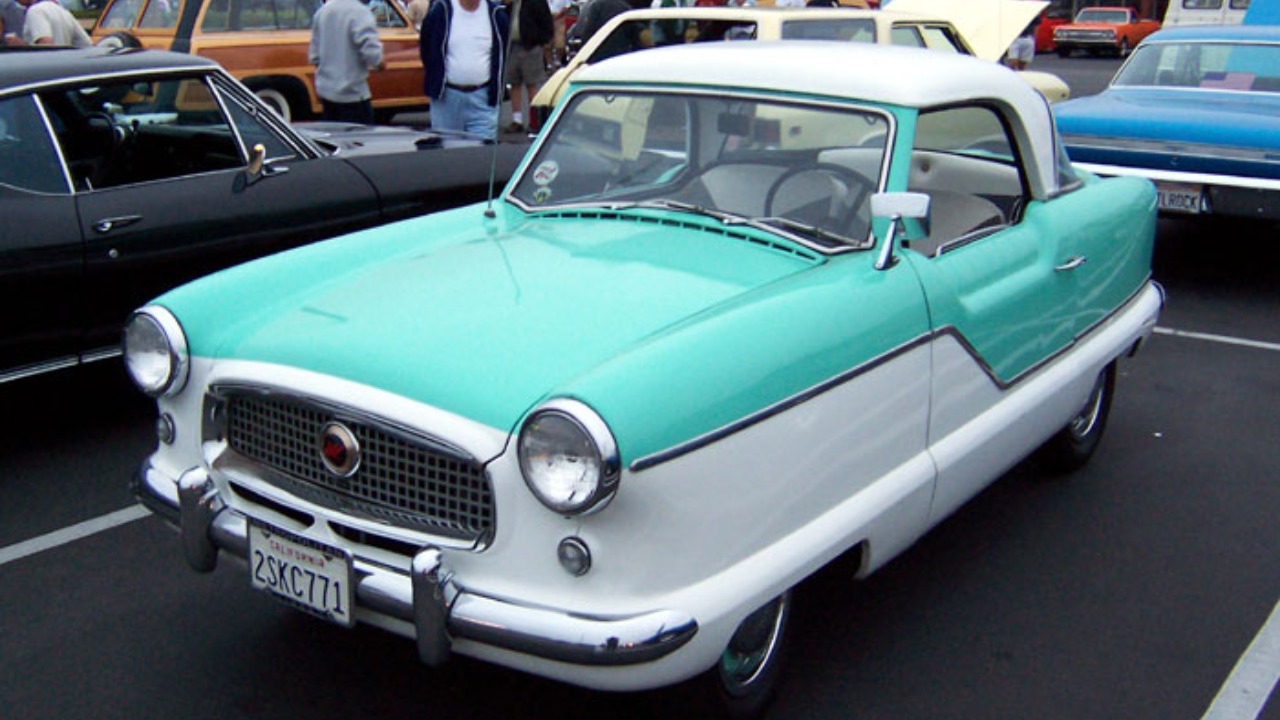
Tiny by American standards, the Metropolitan came from AMC’s early years and sold approximately 95,000 units over its production run, according to Wikipedia’s Nash Metropolitan entry. The car carried Nash branding and stood apart from the full-size sedans filling dealer lots.
That sales total is modest next to mainstream Detroit models, yet it is substantial for such an unconventional little car. Anyone looking at one today is looking at AMC’s earliest bet that Americans might want something much smaller. The numbers also make it a manageable find, since a car built in the tens of thousands is far from unobtainable for a determined buyer, and its small size suits modern parking.
2. Rambler American (1958): Last Rambler Standing
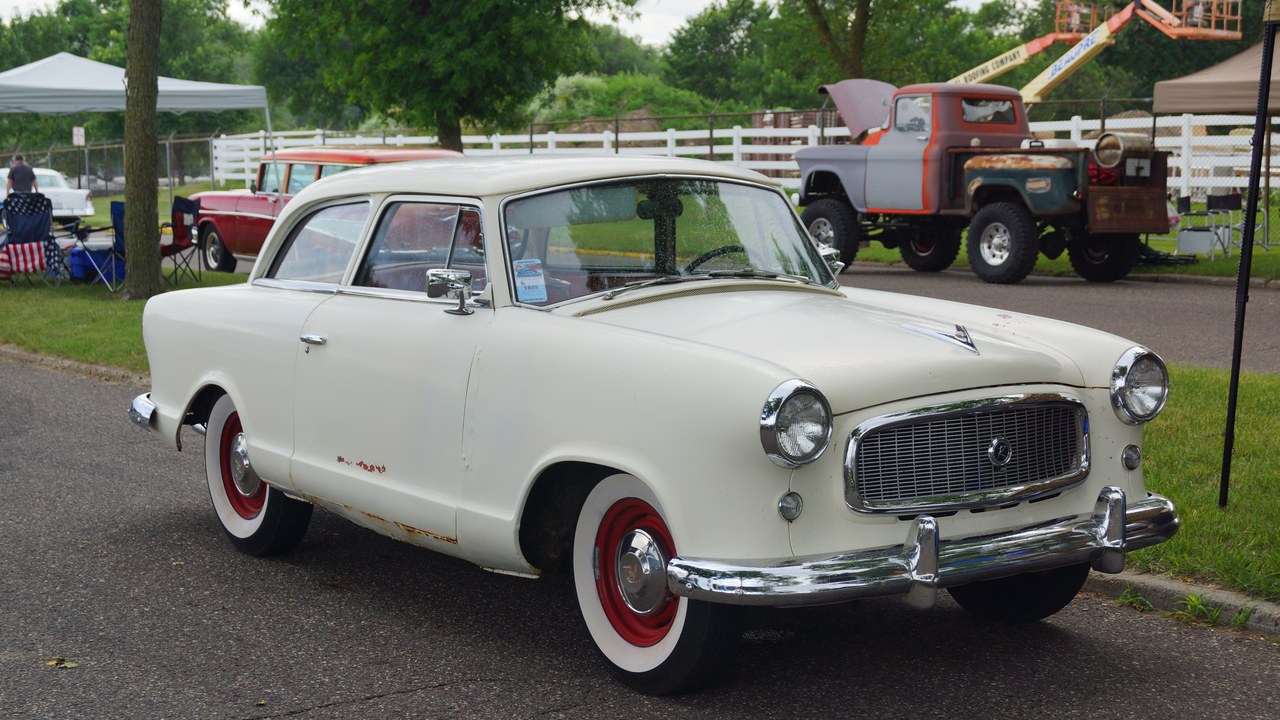
AMC brought back the compact for 1958, building it on the 100-inch wheelbase of the 1955 Nash Rambler with few changes. The American became the last product to carry the Rambler name, which it did through 1969.
The car shows how AMC stretched an existing design rather than start fresh, a pattern that recurs across the company’s history. For collectors, it stands as the final chapter of a nameplate that once defined the company. Prospective owners should note that the 1958 revival leaned on older engineering, which usually means simple mechanicals and straightforward repairs for anyone working on one at home.
3. AMC Marlin (1965): A Fastback Misfit
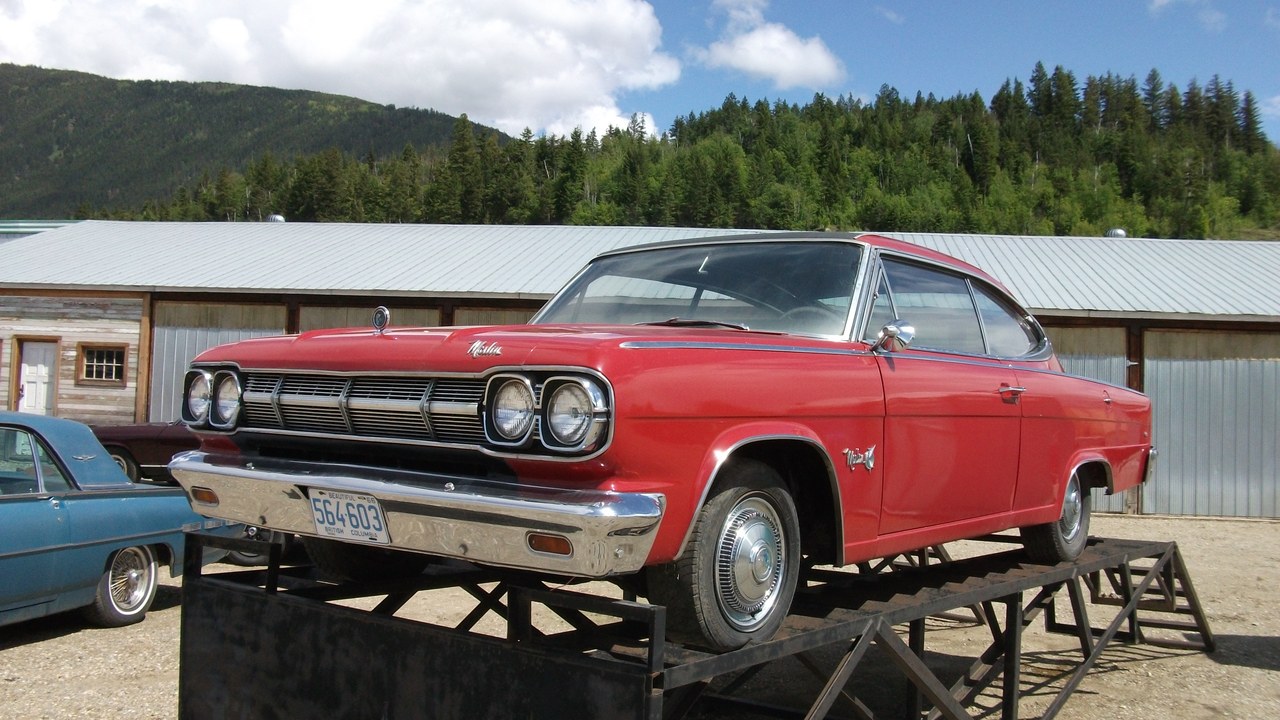
Hagerty described the Marlin’s look as makeshift, since a strange fastback was grafted onto an existing design. The much prettier Javelin succeeded the Marlin in 1968, which suggests AMC itself saw room for improvement.
Oddity is exactly the appeal for some enthusiasts, who prize the Marlin because it looks like nothing else from the period. Buyers should expect a conversation piece rather than a conventionally handsome classic. Reading about the Javelin that followed makes the contrast plain, because the same company moved from an awkward fastback to a far cleaner shape within a few model years.
4. AMC Ambassador (1968): Air Conditioning for All
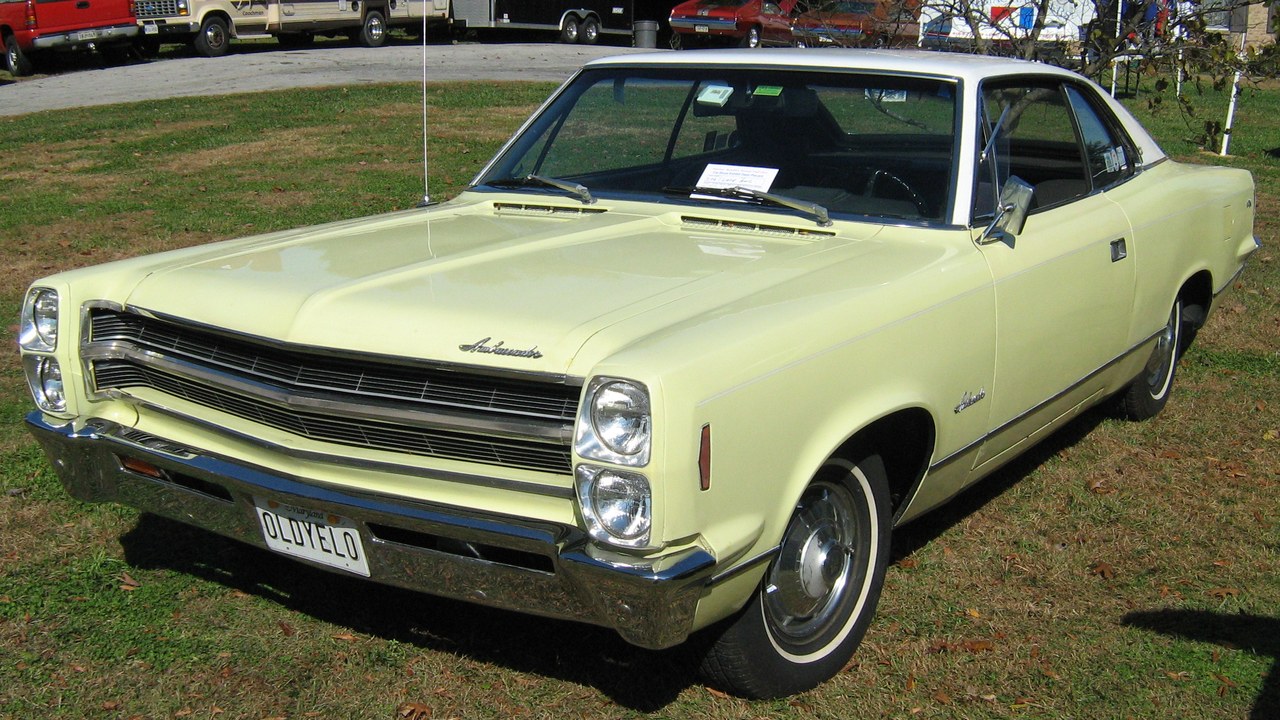
For 1968, the Ambassador made air conditioning standard, and that made AMC the first U.S. automaker to offer it that way on a line of cars. The nameplate itself ran far longer, from 1927 through 1974.
Comfort features that now seem routine were once extras, so the Ambassador marks an early step toward the equipment buyers take for granted. Its long nameplate history also makes it one of the more enduring names in AMC lore. Shoppers weighing one should remember that the standard air conditioning applied to the 1968 model year, so earlier cars may differ.
5. AMC AMX (1968): Two Seats, Corvette Rival
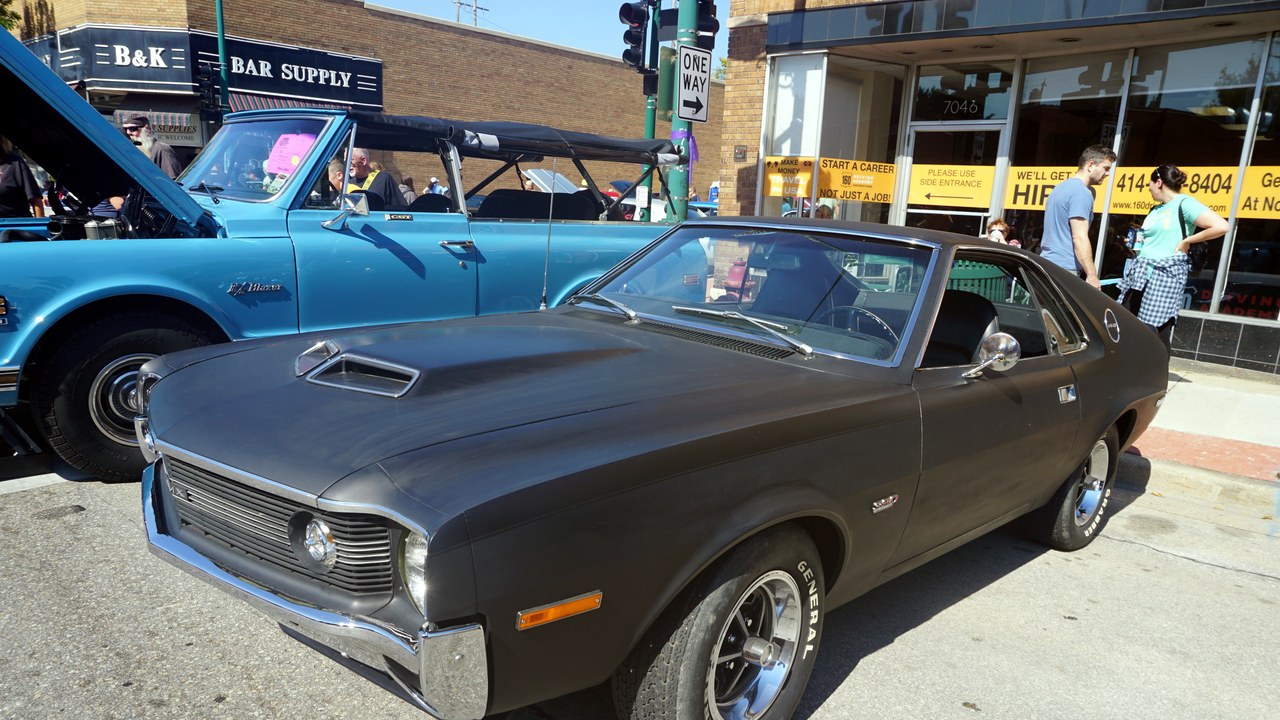
Priced at $3,245 in 1968, the steel-bodied AMX undercut the Corvette by nearly 25%. Prepared AMXs set 106 speed and endurance records, and 19,134 were built through 1970.
A two-seater from a company better known for compacts was a bold move, and the records backed up the claim to performance. The short production run helps explain why enthusiasts treat the AMX as a standout among AMC cars. Those records, set by prepared cars, reinforced the idea that a small company could build something fast, and the price gap with the Corvette made the pitch easy to understand.
6. AMC Hornet (1970): Best Seller Since Classic
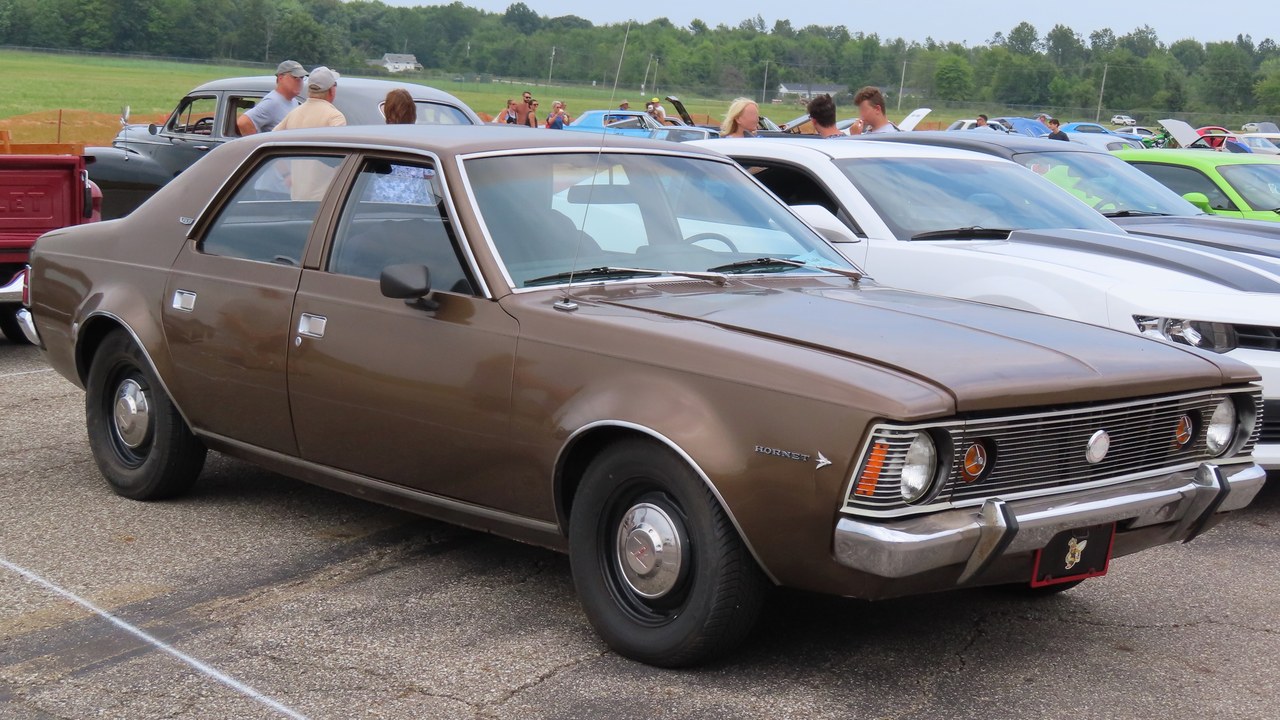
Debuting in 1970, the compact Hornet became AMC’s best-selling passenger car since the Rambler Classic. More than 860,000 were built by the time production ended in 1977.
That volume made the Hornet the dependable workhorse of the lineup during those years. It also supplied the basis for other cars on this list, which is a good reason to understand it before looking at the oddballs. Compact, plain and widely sold, it is the sensible counterpoint to the stranger models around it, and parts and knowledge tend to follow high-volume cars.
7. AMC Gremlin (1970): Where Is the Rest?
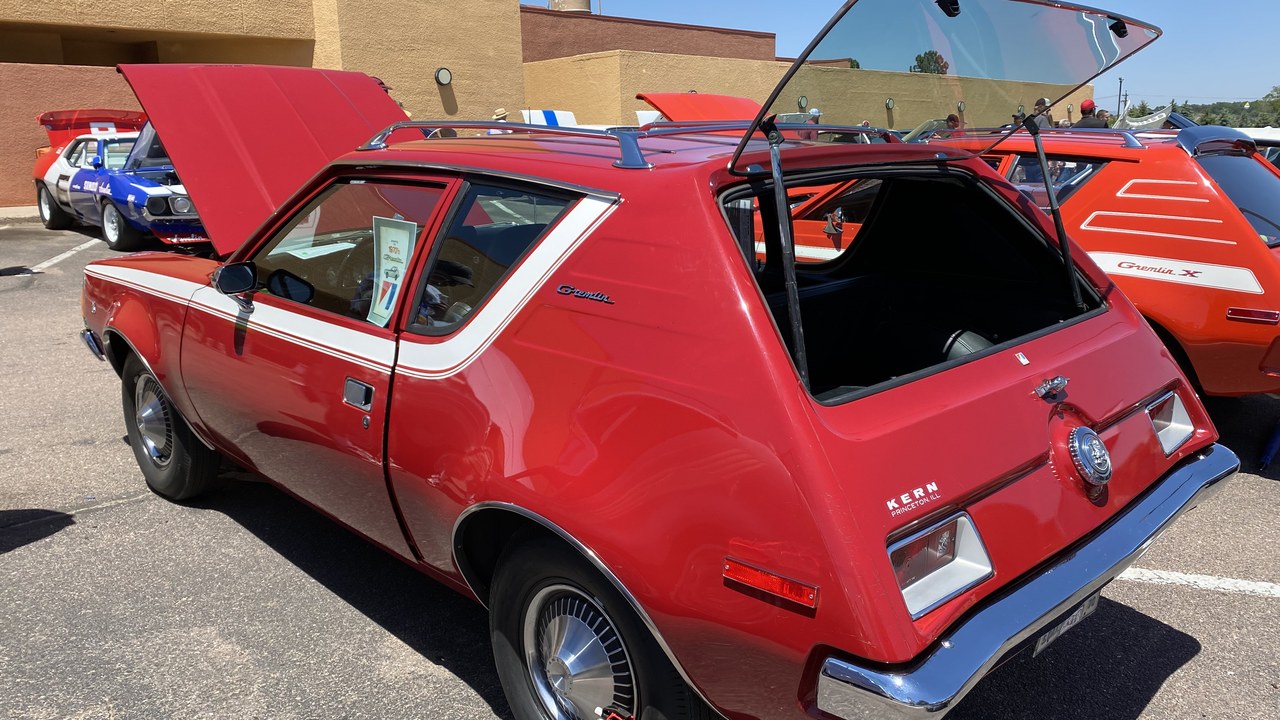
Essentially a shortened Hornet, the Gremlin turned up in a period ad where a gas station attendant asks the owner where the rest of the car went, with a playful toots tacked on. The joke leaned directly into the car’s stubby proportions.
Few automakers have embraced a car’s oddness so openly in advertising. The Gremlin remains a favorite for people who like their classics quirky, and its Hornet roots mean it shares basic ingredients with a more conventional AMC car.
8. AMC Matador Coupe (1974): Styling Award Winner
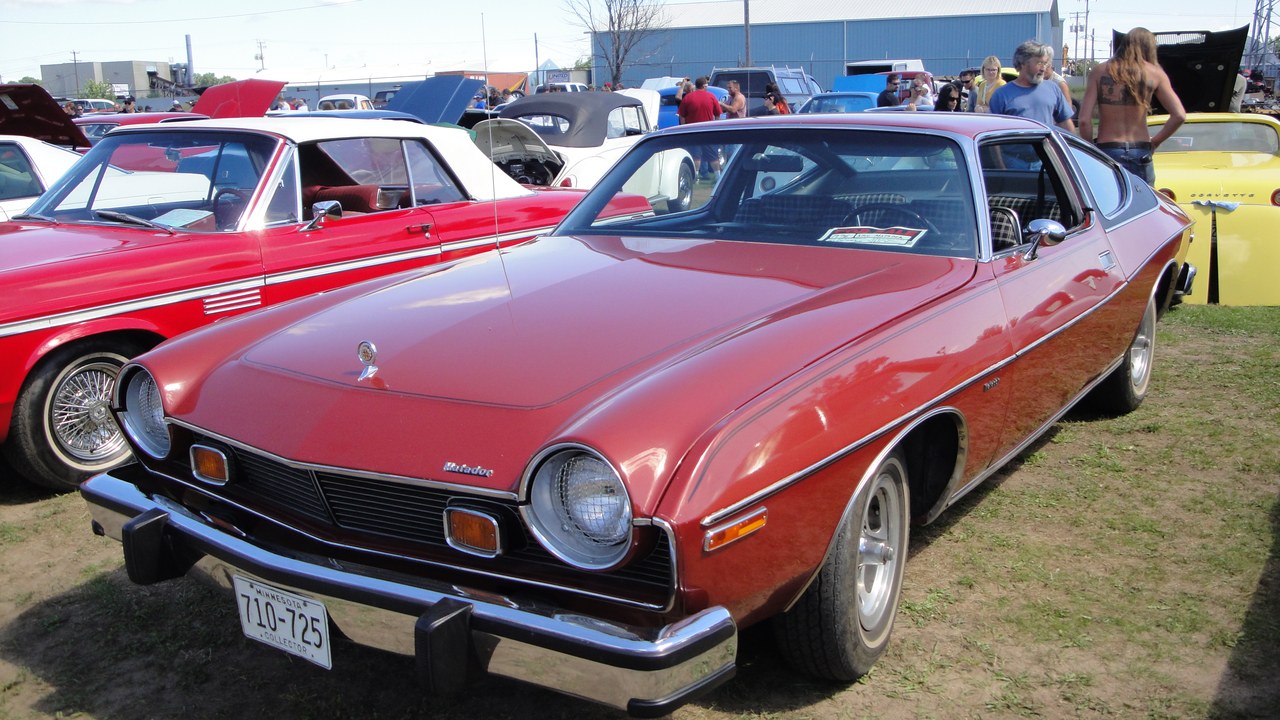
Car and Driver named the 1974 Matador Coupe its Best Styled Car of 1974, and AMC sold almost 100,000 of the coupes over five years. The Los Angeles Police Department also drove Matadors as cruisers.
The honor shows that AMC’s willingness to try something different could earn real praise from the press. Police use adds an unexpected footnote for a car that few would picture in a pursuit. With nearly 100,000 coupes sold in five years, the Matador Coupe was not a rarity, so buyers have a fair chance of finding a decent survivor.
9. AMC Pacer (1975): Wayne’s World Famous
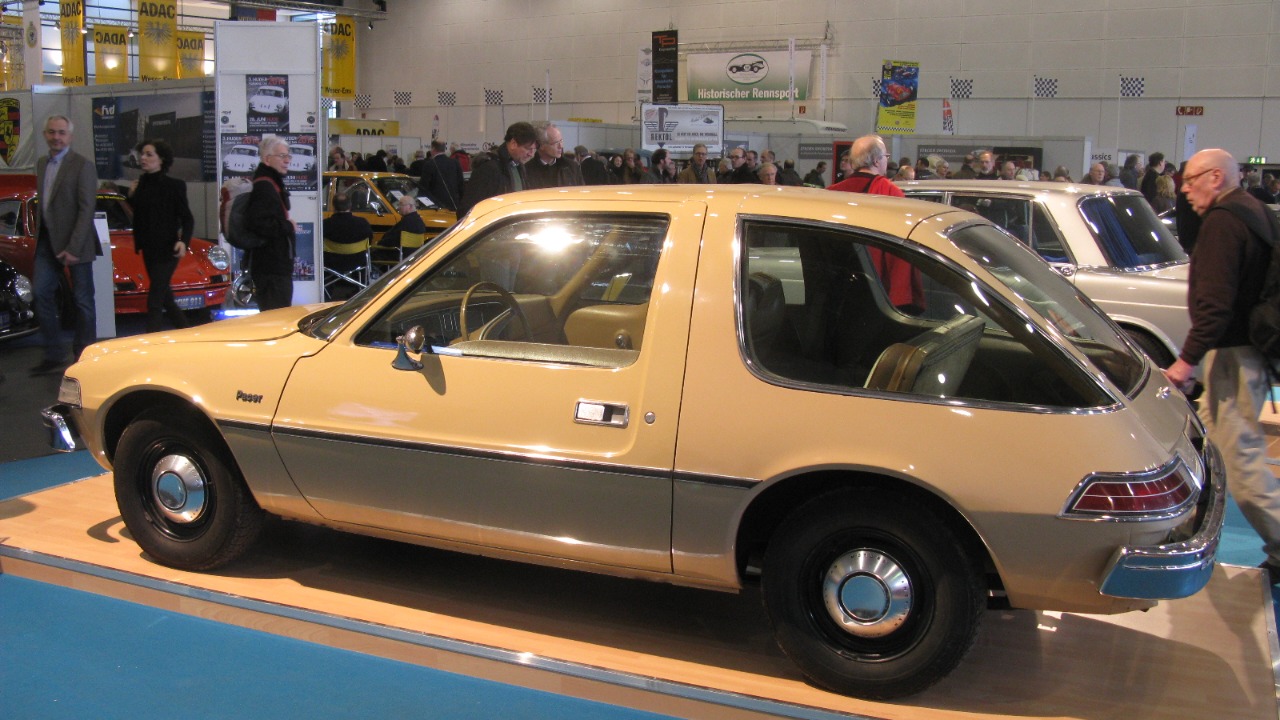
Very wide for its length, the Pacer was meant for a GM rotary engine that never reached production, so it mostly used AMC’s old 258 six. It later became a collectible nerd car after appearing in Wayne’s World.
The film turned an oddity into a pop-culture icon, and the nickname stuck. Owners now prize the Pacer for exactly the proportions once criticized, and its story of a missing engine adds to the charm. Anyone browsing for one should know that most used the old 258 six, since the intended rotary never arrived.
10. AMC Eagle (1980): Four-Wheel-Drive First
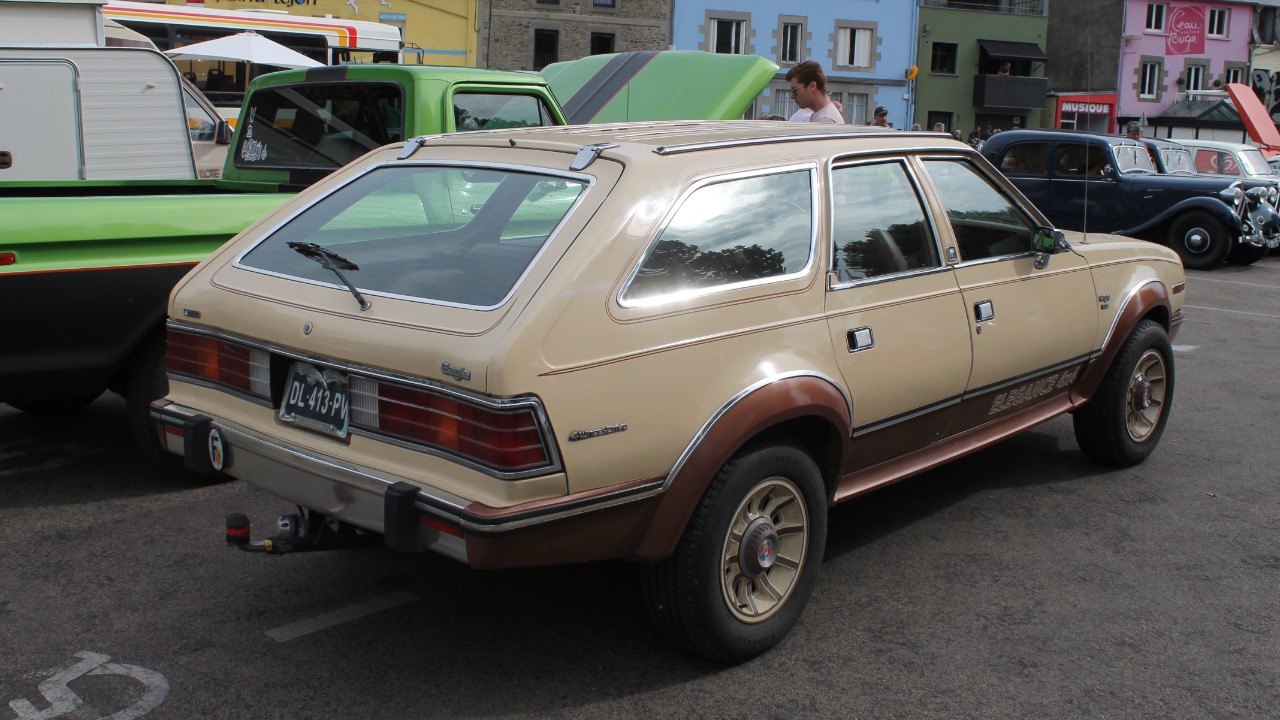
Pairing a drivetrain from AMC’s Jeep division with the Concord wagon, the Eagle is described as the first successful mass-produced four-wheel-drive passenger car. It arrived for 1980 and put a Jeep-derived system into an ordinary car body.
That idea anticipated a segment that later grew large, which makes the Eagle one of the more forward-looking AMC products. Its Jeep connection gives it appeal to buyers who want all-weather ability in a classic. As a result, it is often discussed as a precursor to the wagons and crossovers that later made all-wheel drive commonplace.
More from Morning Overview
- Regulators cleared the first U.S. small modular reactor, 4 months early
- Lake Powell sank to a record 3,517 feet, nearing the level that stops Glen Canyon Dam’s turbines
- Seven of Earth’s nine planetary boundaries are breached, and all seven are worsening
- The NSA says three phone features should be off whenever you aren’t using them
