
Raptors are the sharp-eyed hunters that ride thermals, skim marshes and slip silently through the night over every region of the country. Federal agencies and conservation groups have documented their speed, size, hunting skills and recoveries with some striking numbers. Here are twelve birds of prey, each paired with a trait or figure from an official source.
Tech news in one quick read: Get the most interesting stories in startups, tech and programming, each with a short TLDR, in one daily email from TLDR.
We may earn a commission if you sign up.
1. Bald eagle: A Comeback Story
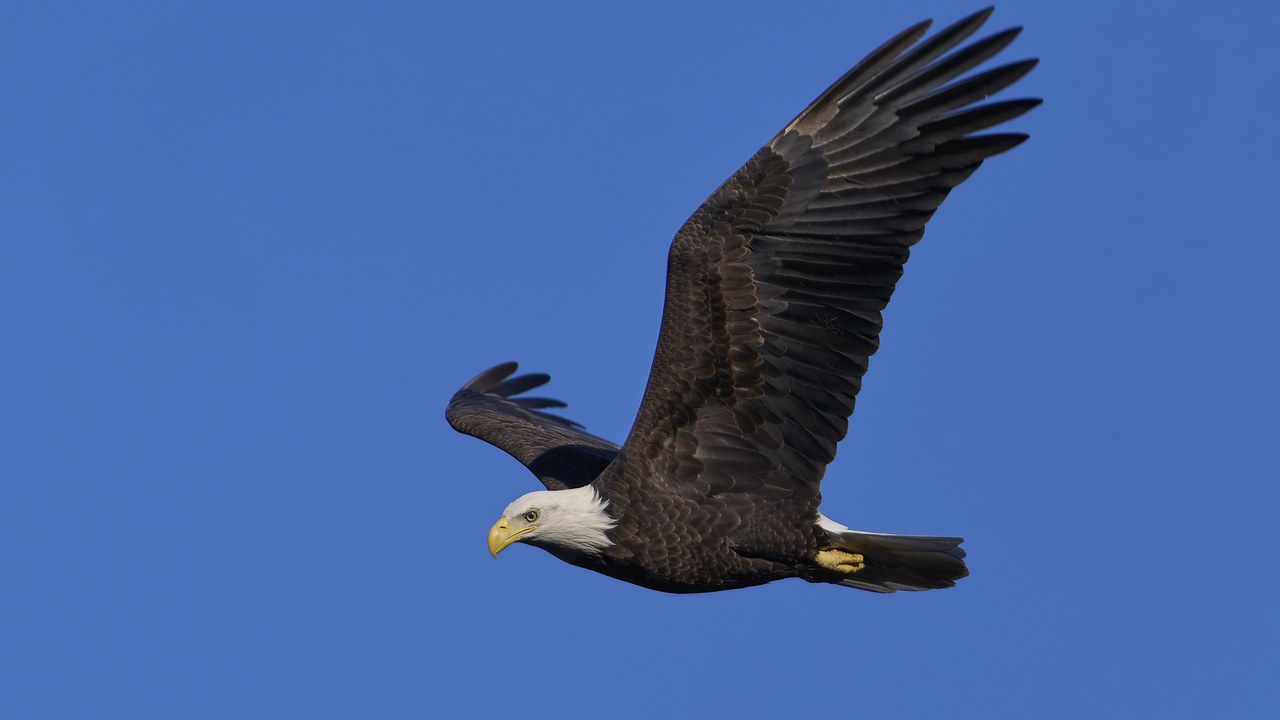
The national bird of the United States was in serious trouble in the middle of the last century. A Fish and Wildlife Service species profile notes that only 417 nesting pairs remained in 1963, and the agency later counted 71,467 pairs by 2018-19.
Adult bald eagles are large raptors with white heads and tails, and they are often found near lakes, rivers and coastlines where fish are easy to catch. The jump from a few hundred pairs to tens of thousands ranks among the best-known conservation recoveries in the country, and the species is now a familiar sight across much of the continent.
2. Peregrine falcon: Speed In A Stoop
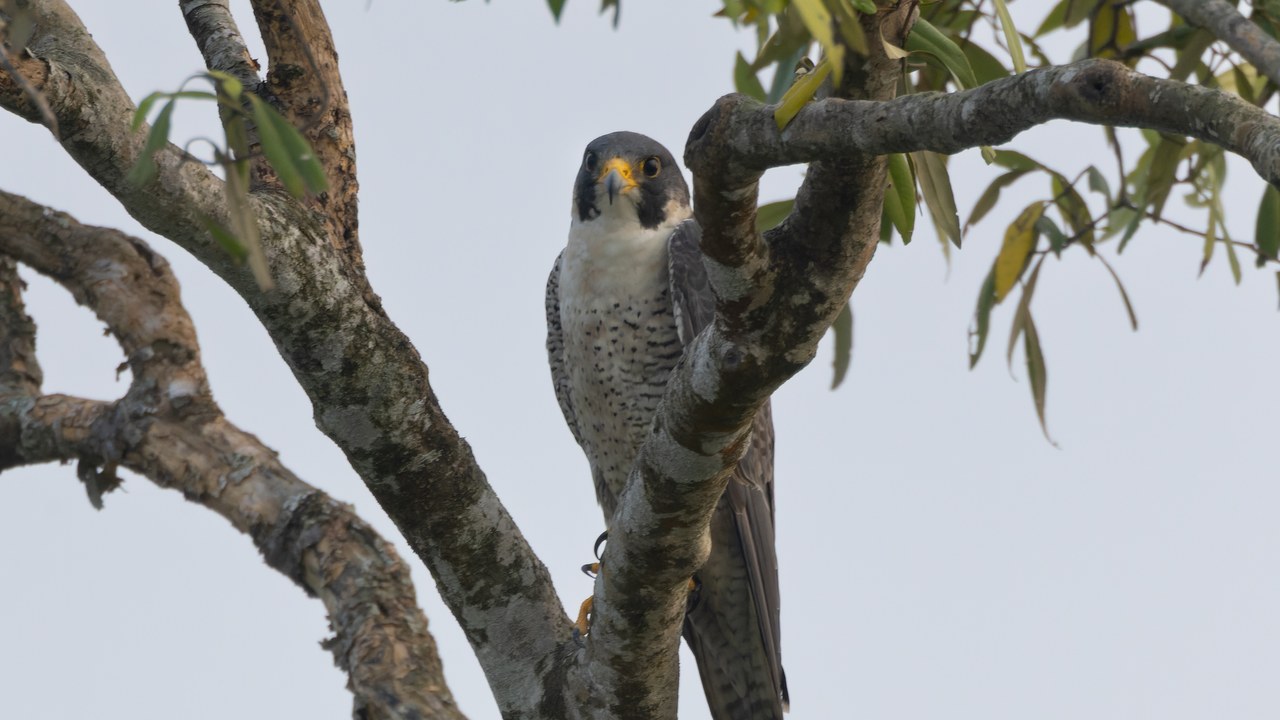
Few animals anywhere are as fast as this falcon in a hunting dive. The National Park Service raptor page says peregrines can reach 238 mph while stooping, the term for that steep, folded-wing plunge.
The same source documents 450 North American bird species as prey, which shows how widely the falcon hunts. Peregrines are medium-sized raptors with pointed wings and a dark patch beneath each eye, and they often nest on cliff ledges. Many have also adapted to city life, using tall buildings in place of rock faces.
3. Golden eagle: Heavy Lifter
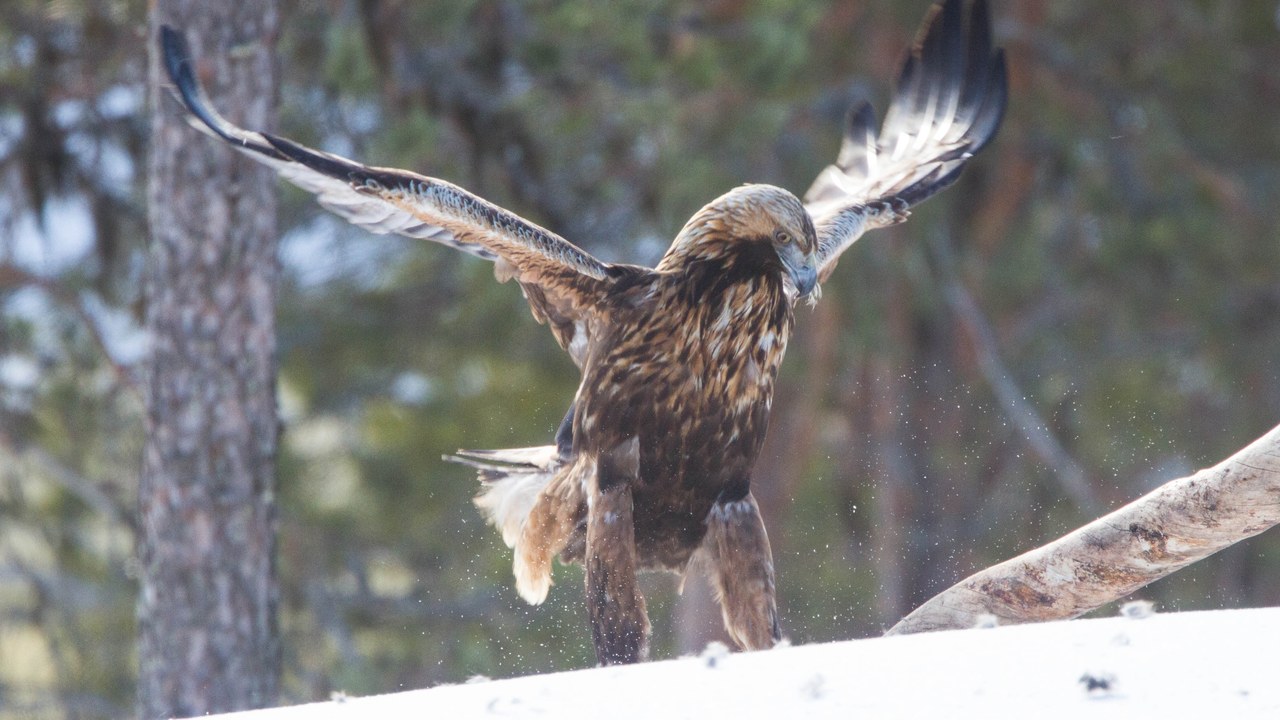
Power defines the largest eagle that regularly hunts across the open country of the American West. According to the Bryce Canyon raptor guide, golden eagles can swoop at up to 200 mph and carry as much as 8 pounds in flight.
Golden eagles are named for the gold-tinted feathers on the back of the head and neck, and adults are otherwise dark brown. They favor open terrain such as mountains, canyons and grasslands, where broad wings let them soar for long periods. Rabbits and other mid-sized animals make up a large part of the typical menu.
4. Red-tailed hawk: Eyes Like Binoculars
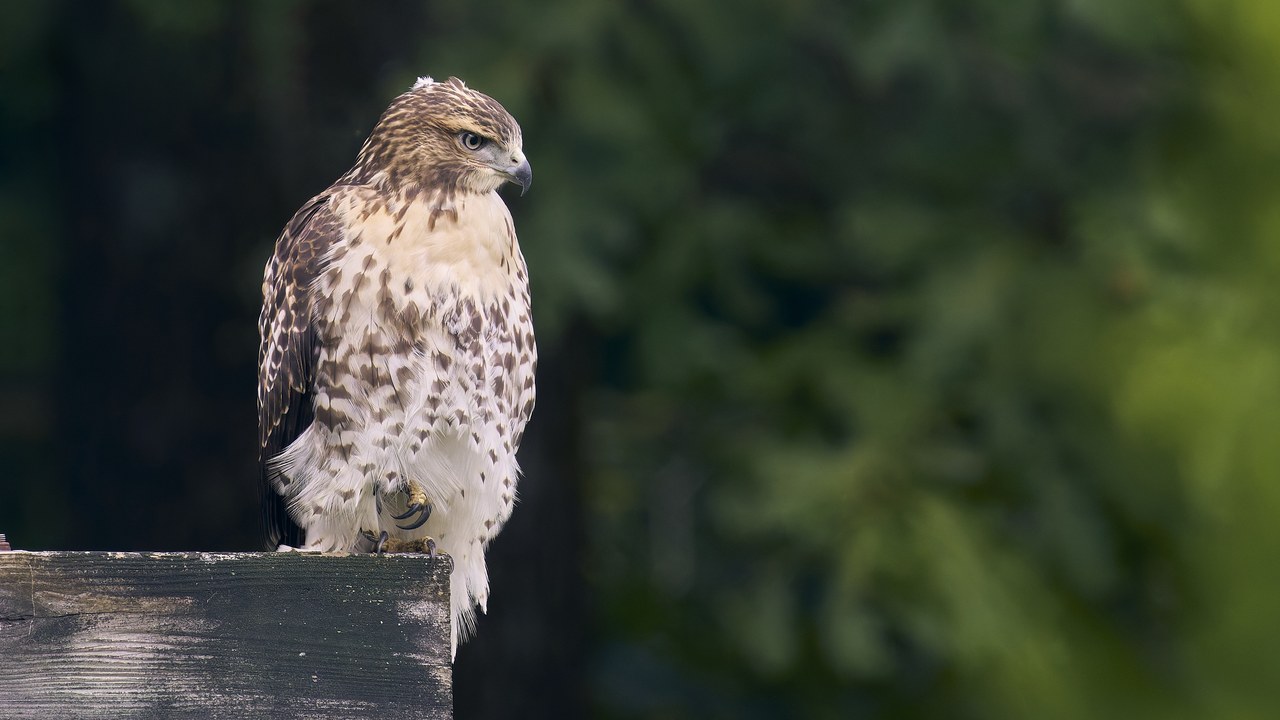
Drivers who spot a large hawk perched on a highway pole are very often looking at this species. The park service raptor page calls it probably the most common hawk in North America and says its vision is about eight times more powerful than a human’s.
That sharp eyesight helps a hunter watching open ground for small mammals from a high perch or a slow circle overhead. Adults typically show the rust-colored tail that gives the bird its name, and the species lives in a wide range of habitats from deserts to woodlands. The broad wings and short tail make its soaring silhouette easy to learn.
5. Northern harrier: Low-Flying Hunter
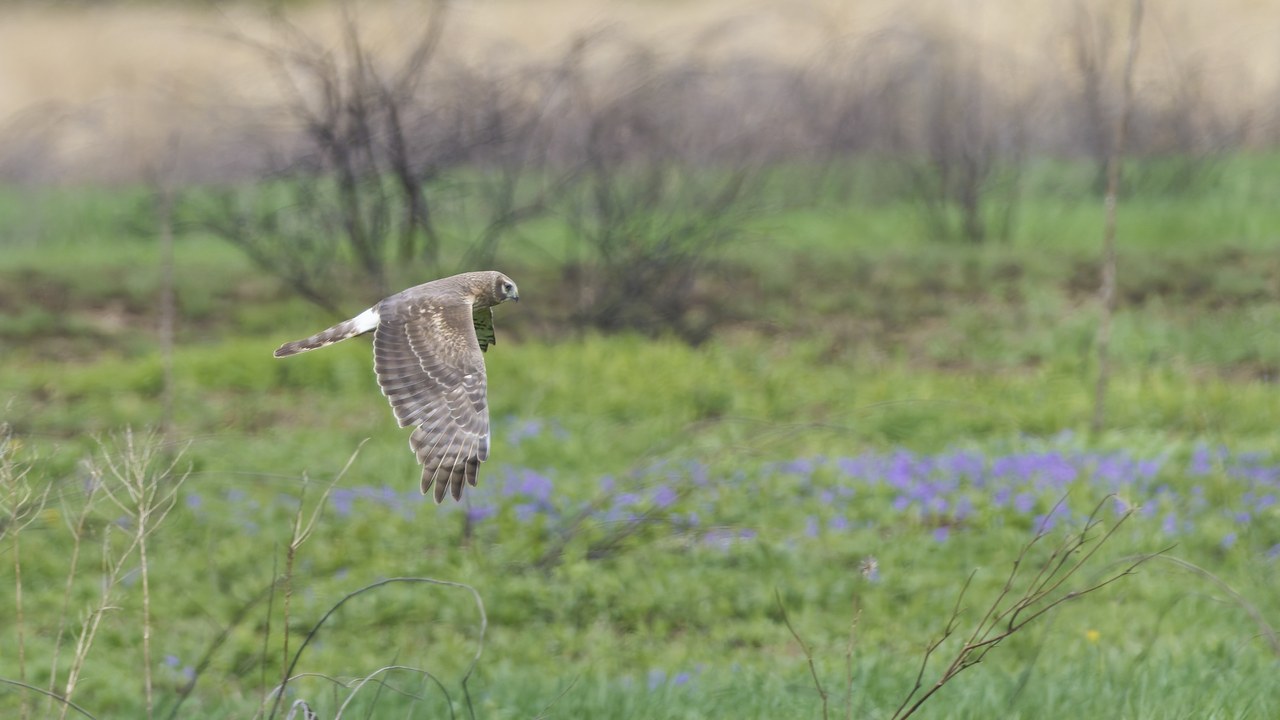
Open marshes and fields are the preferred hunting grounds of a slim hawk that flies low over the ground. The Bryce Canyon raptor guide lists a 3-foot-6-inch wingspan for the northern harrier and says it hunts rabbits and ducks.
Harriers glide with wings held in a shallow V and tilt from side to side while scanning the vegetation below. A white patch at the base of the tail makes the bird easy to recognize in flight. Unlike many hawks, the species relies partly on hearing, and a flat, owl-like facial disc helps it find prey hidden in grass.
6. California condor: Giant Of The Sky
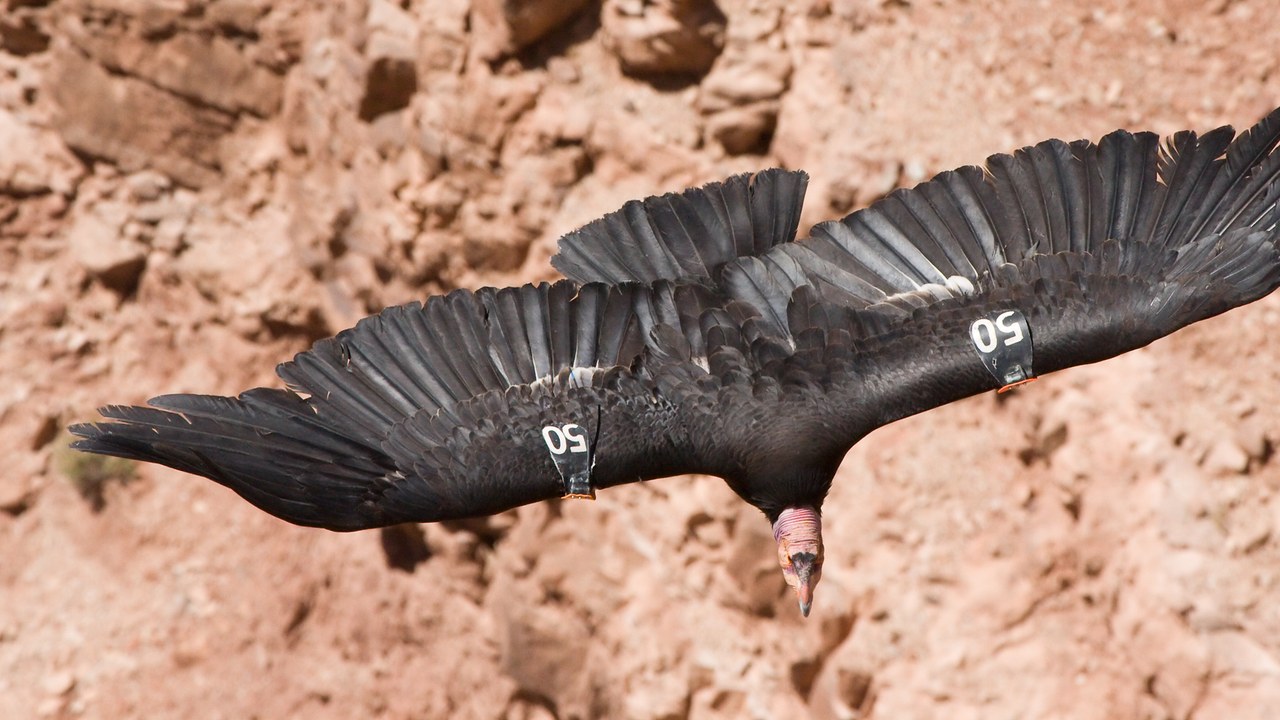
No other flying bird on the continent spreads wings as wide. The Grand Canyon birds of prey page gives the California condor a 9.5-foot wingspan, making it North America’s biggest flier, while noting that fewer than 450 are alive today.
Condors are scavengers that feed on carcasses, and their huge wings let them ride warm air currents for long distances with little flapping. The species nearly vanished in the twentieth century, and intensive recovery work has kept it from disappearing. Sightings near the Grand Canyon rim draw visitors hoping to glimpse one overhead.
7. Mexican spotted owl: Canyon Dweller
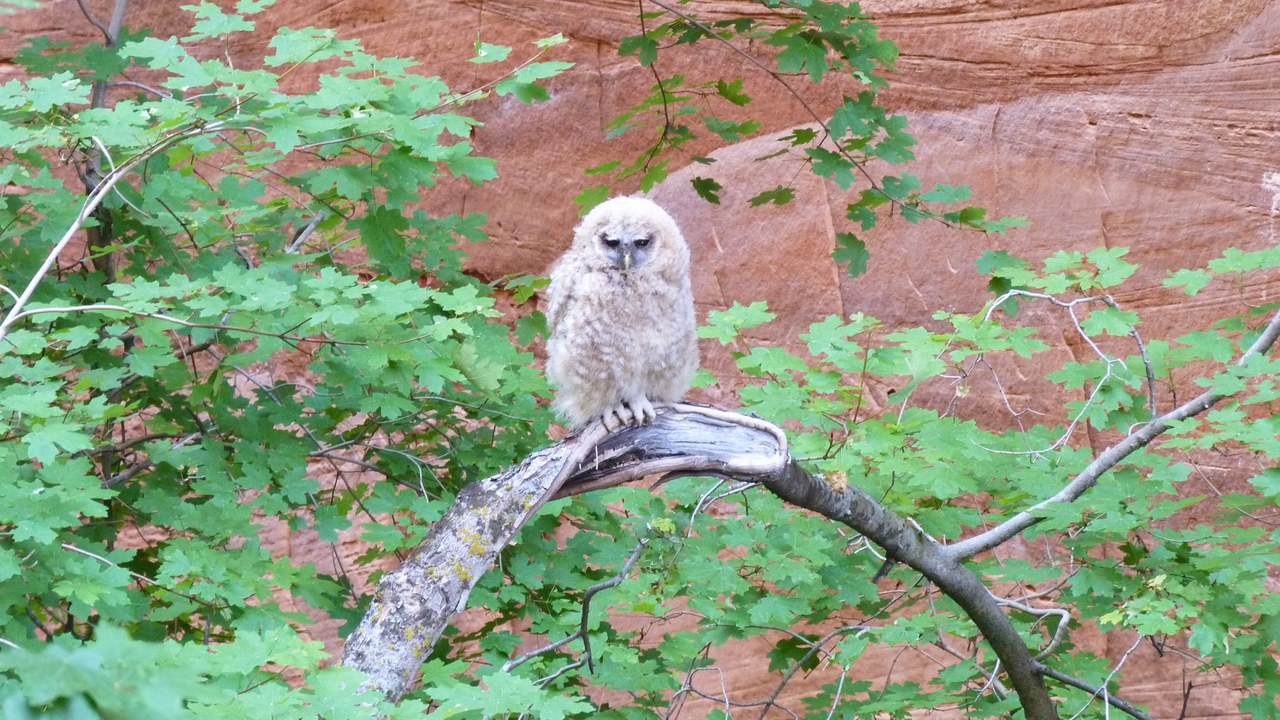
Rocky canyons of the Southwest shelter a dark-eyed owl that few visitors ever see. The National Park Service bird overview identifies the Mexican spotted owl as an endangered species that calls the Grand Canyon home and nests there.
This subspecies of the spotted owl is a medium-sized, round-headed bird with brown plumage dotted with white spots and large dark eyes. It is active mainly at night, roosting by day in shaded places such as cliff crevices and forested side canyons. Its protected status makes every confirmed nesting site important to wildlife managers.
8. Osprey: Fish Hawk
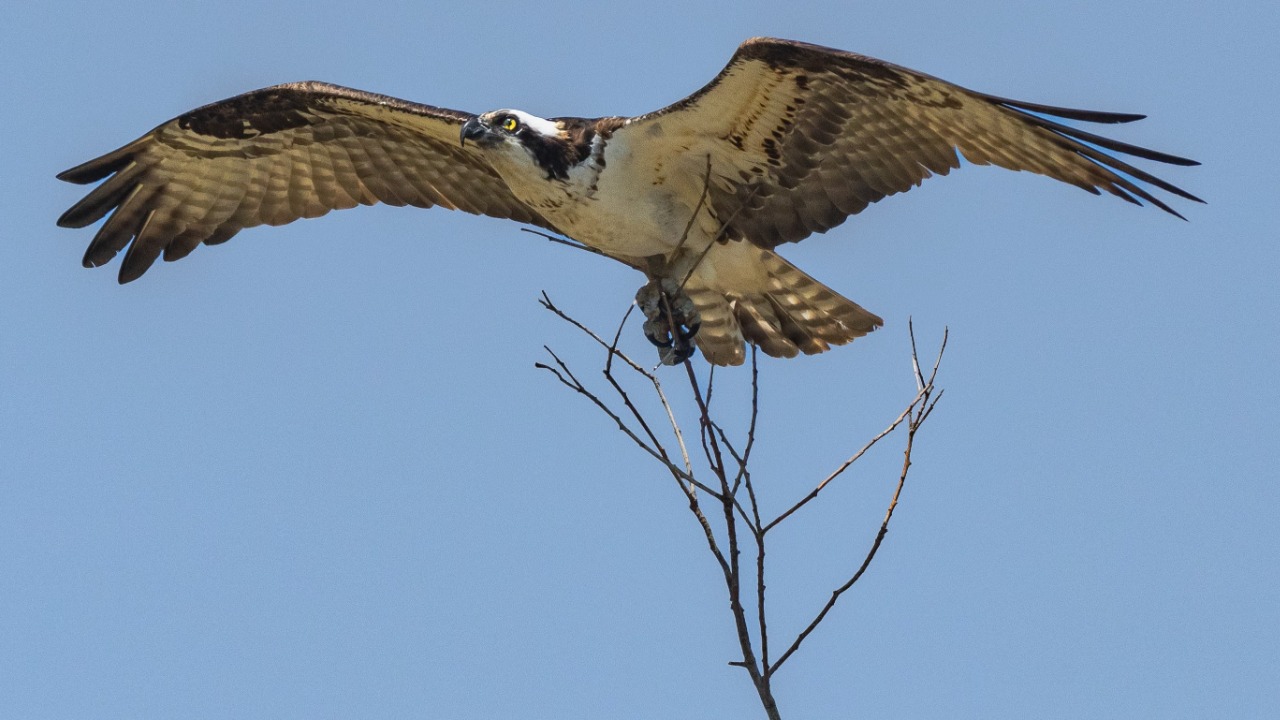
Along coasts, rivers and reservoirs, one raptor stands out for plunging into water after its meals. Per the Gulf Islands osprey page, an osprey has a 72-inch wingspan, dives feet first for fish, and rebounded after the 1972 DDT ban.
Ospreys eat almost nothing but fish, and specialized feet with rough pads help grip slippery catches. Their large stick nests are often built on tall poles, dead trees and platforms placed near water. The recovery after the pesticide ban shows how quickly a bird population can bounce back once a harmful chemical is removed from the environment.
9. Great horned owl: Winter Nester
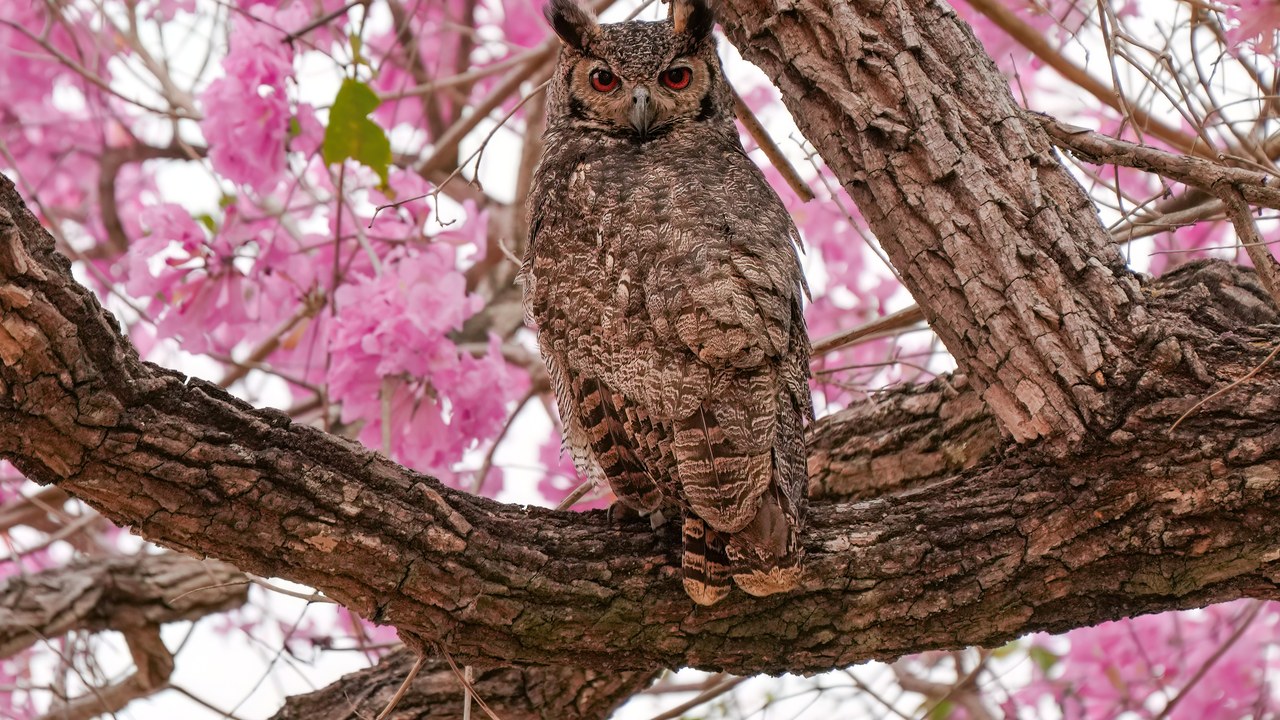
While most birds wait for warm weather, this owl starts its family early. As the Audubon owl guide explains, great horned owls mate and lay eggs in the middle of winter, which gives the chicks a head start on spring.
Large feather tufts on the head look like horns and give the species its name, and the bird has a deep, hooting call. It lives in forests, deserts, suburbs and almost any place with a few trees and prey. Great horned owls commonly take over old nests built by other large birds rather than constructing their own.
10. Barn owl: Silent Wings
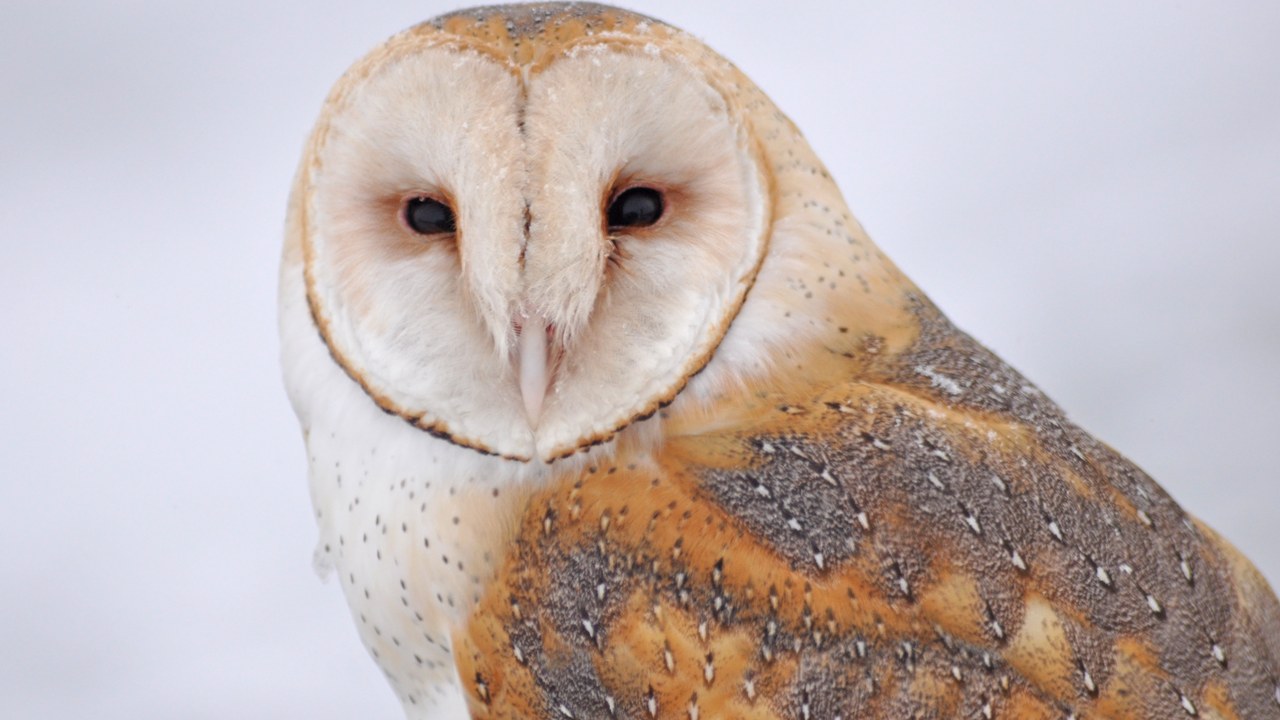
Pale and heart-faced, this owl glides through the dark without a sound. The Audubon owl article describes the American barn owl as virtually silent in flight, a result of the shape and texture of its feathers.
That quiet approach lets the bird hear and strike small prey such as mice before they sense danger. Barn owls have a distinctive white, heart-shaped face and pale underparts, and they often roost in old barns, silos and hollow trees. The species is found in many parts of the world, and farms with open grassland provide good hunting grounds.
11. Snowy owl: Arctic Visitor
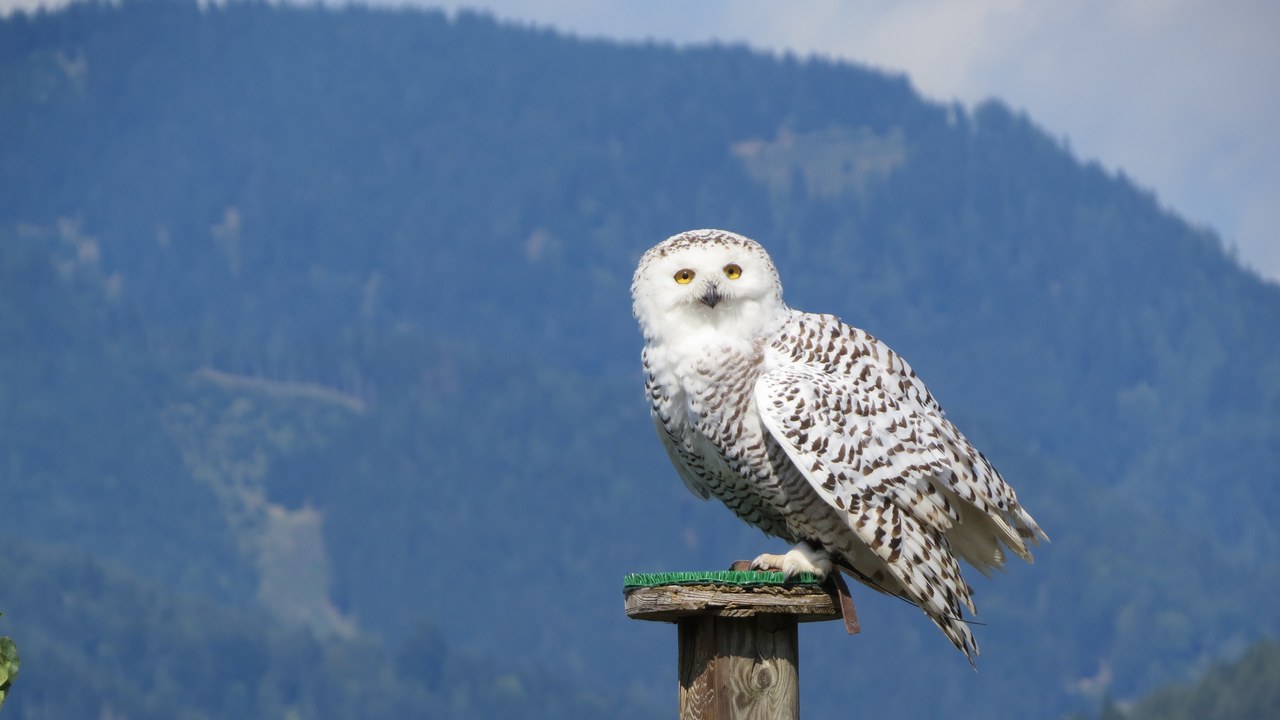
Snowy white birds sometimes appear on beaches, airports and farm fields far from the tundra where they breed. The Audubon owl feature explains that good breeding years send young snowy owls south in an influx throughout the Lower 48.
Adults are heavy-bodied owls with thick feathering that protects them in cold climates, and males tend to be whiter than females. Unlike many owls, the species hunts in daylight, so watchers can spot one perched in open country. Winters with many sightings can bring excitement to birders who rarely see such northern visitors.
12. Great gray owl: Big Eyes, Bigger Look
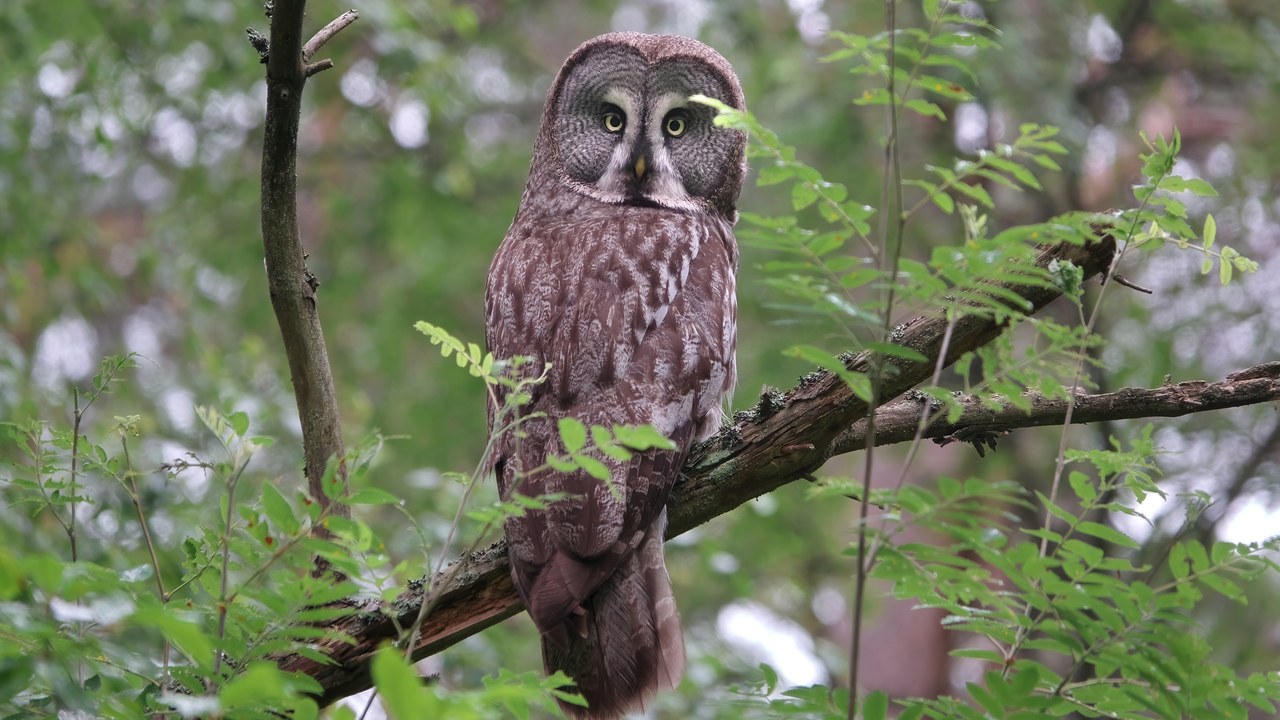
Tall and round-faced, this owl looks even larger than it is thanks to a mass of fluffy gray feathers. According to the Audubon owl roundup, the great gray owl’s eyes are roughly the size of an adult human’s eyes.
Concentric rings around its face form a wide facial disc that funnels sound toward the ears, a useful tool for locating small animals moving beneath snow or grass. The bird lives mainly in northern forests and mountain meadows. Its pale yellow eyes appear small against the large head, which is why the human-sized comparison surprises many people.
Tech news in one quick read: Subscribe to TLDR →
We may earn a commission if you sign up.
More from Morning Overview
- NOAA now gives this winter a 75% chance of the strongest El Nino since 1950
- Doctors warn a silent liver disease now affects one in three American adults
- The FBI told the rest of ShinyHunters to surrender after a 24-year-old was arrested
- Two passengers died at an Ohio toll plaza, and the NTSB now wants the cash lanes shut
