
Yellowstone sits atop one of the most active hydrothermal systems on Earth, and its geysers, springs and basins have drawn visitors for generations. National Park Service and USGS figures put numbers on the spectacle, from towering eruptions to a drill hole that hit scalding temperatures. Here are twelve of the park’s wonders, along with the heat that makes each one a hazard as well as a marvel.
The day in tech, in one email: TLDR is the daily newsletter with links and TLDRs of the most interesting stories in startups, tech and programming.
We may earn a commission if you sign up.
1. Old Faithful: The Famous Clock
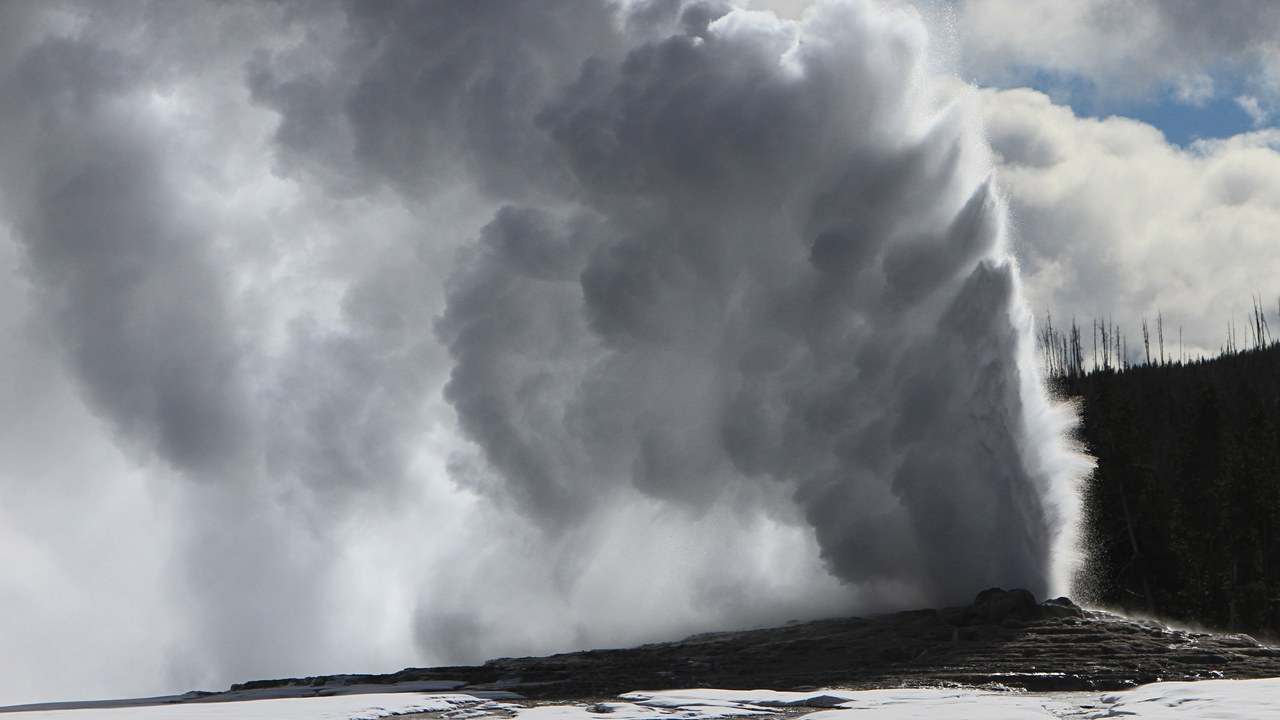
Perhaps no geyser in the world is better known than Old Faithful, and Park Service figures say it averages an eruption of 130 feet, about every 94 minutes.
That regularity is the reason the geyser became a symbol of Yellowstone, drawing crowds to the Upper Geyser Basin to wait for each show on a rough schedule. Rangers post predicted eruption times, and visitors gather along the boardwalk to watch hot water and steam rise high above the forest. The scalding water is a reminder that thermal features in the park are never merely decorative.
2. Steamboat Geyser: Tallest In The World
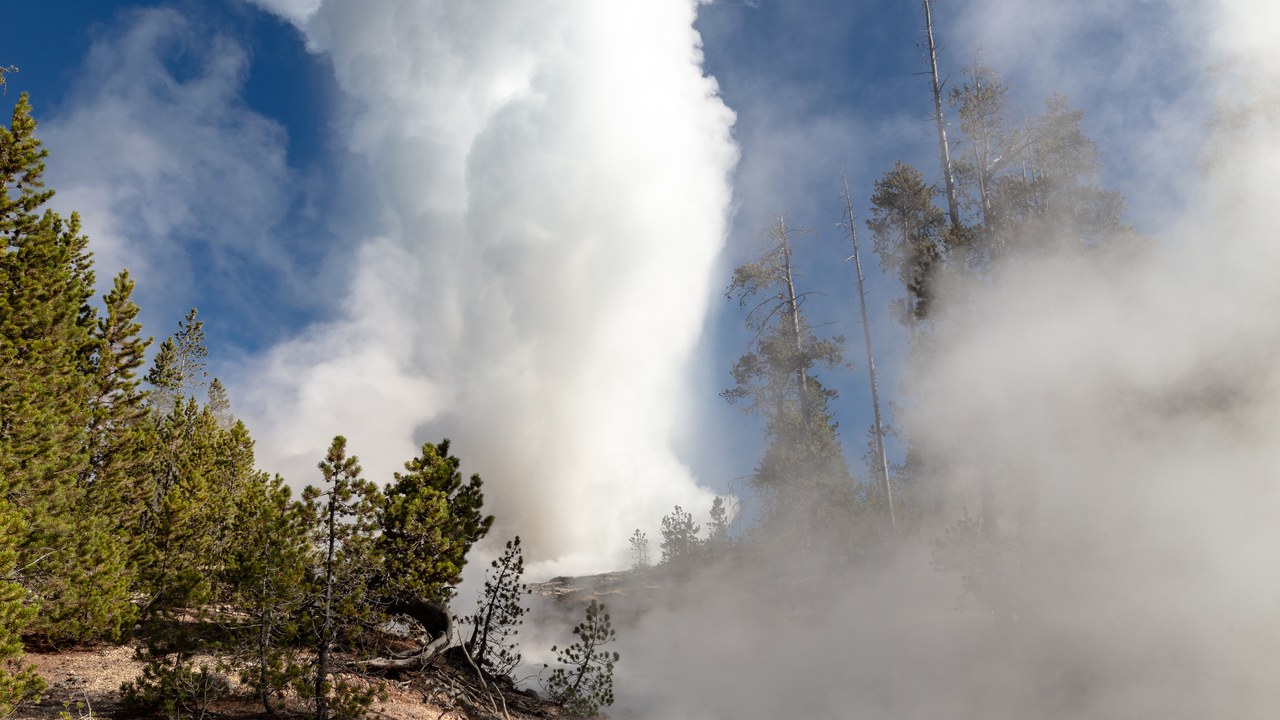
Steamboat holds a record that no other active geyser matches, since the Park Service description calls it the tallest active geyser in the world, blasting water and steam more than 300 feet into the air.
Located in Norris Geyser Basin, it behaves very differently from clockwork performers such as Old Faithful, with major eruptions that arrive unpredictably and sometimes after long quiet stretches. When it does erupt, the column of water and steam towers over the surrounding landscape. Boardwalks keep spectators at a safe distance because the superheated water can cause serious burns.
3. Grand Prismatic Spring: Rainbow In The Basin
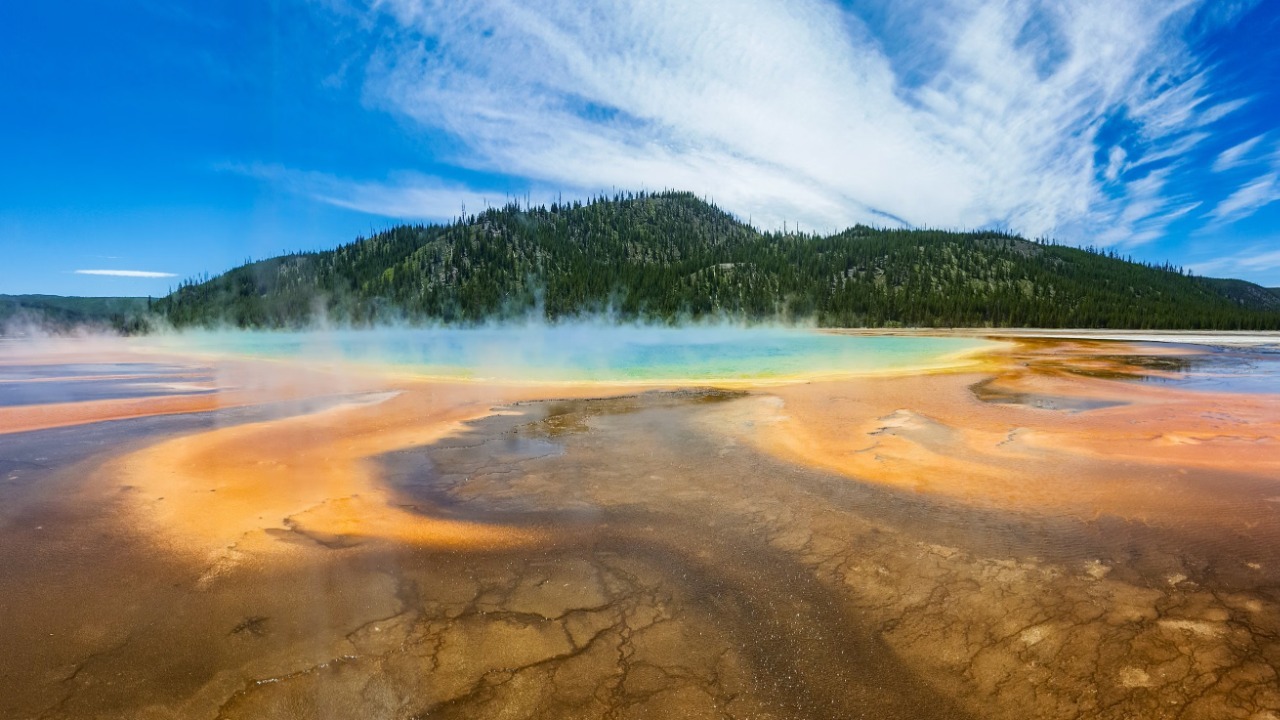
Grand Prismatic Spring is Yellowstone’s largest hot spring, measuring 200 to 330 feet across and more than 121 feet deep, according to NPS park highlights.
The bands of orange, yellow and green that ring its center come from heat-loving microbes that thrive at different temperatures, while the deep blue middle reflects clear, very hot water. It lies in the Midway Geyser Basin, and a boardwalk lets visitors approach the steaming surface. Stepping off the path is dangerous, since the water is hot enough to scald and the crust at the edges is thin.
4. Excelsior Geyser Crater: A Crater Of Steam
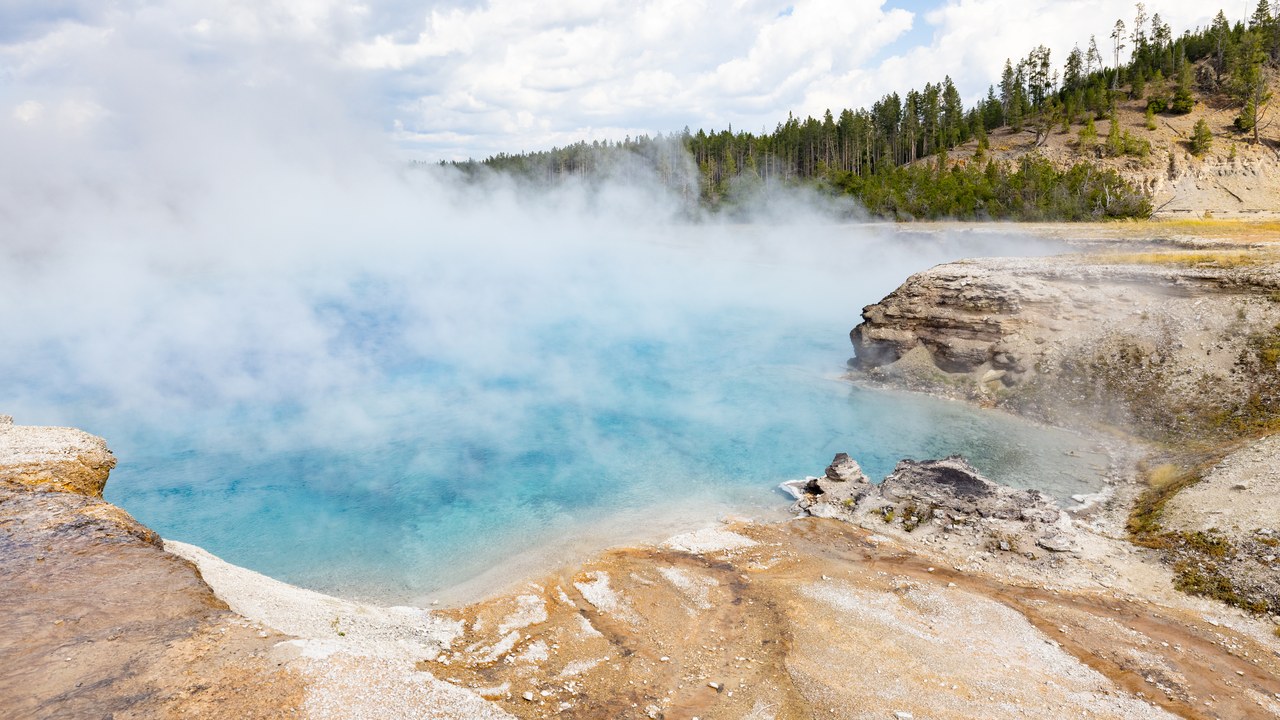
Excelsior Geyser Crater pours out more than 4,000 gallons of water per minute, a flow the Park Service lists among the most striking in the Midway Geyser Basin.
The huge crater sits near Grand Prismatic Spring and releases a steady cloud of steam over the landscape. It was once an erupting geyser, famed for violent eruptions in the nineteenth century, but today it is mainly a roiling hot spring. Visitors view the vast pool from a boardwalk, where the rising vapor and the colorful runoff channel make the scale easy to appreciate.
5. Grand Geyser: A Slow-Building Show
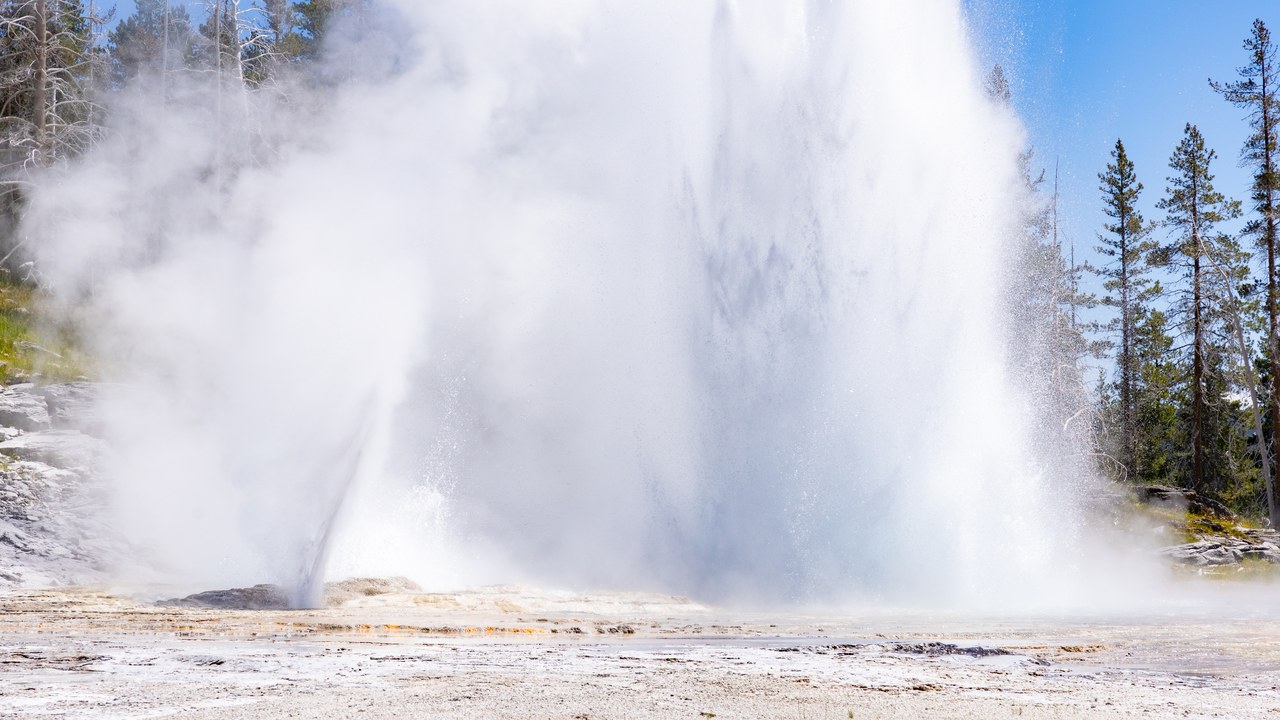
The Park Service lists Grand at 160-plus feet with a roughly 6.5-hour interval, which makes each eruption of Grand Geyser an event worth planning around.
Grand Geyser sits in the Upper Geyser Basin and is known for eruptions that come in bursts, with several surges of water following one another. Because the waiting time stretches for hours, observers often settle in near the boardwalk with the predictions posted in the Old Faithful area. The fountains of hot water and steam, climbing high above the nearby trees, reward that patience.
6. Beehive Geyser: A Narrow Water Spout
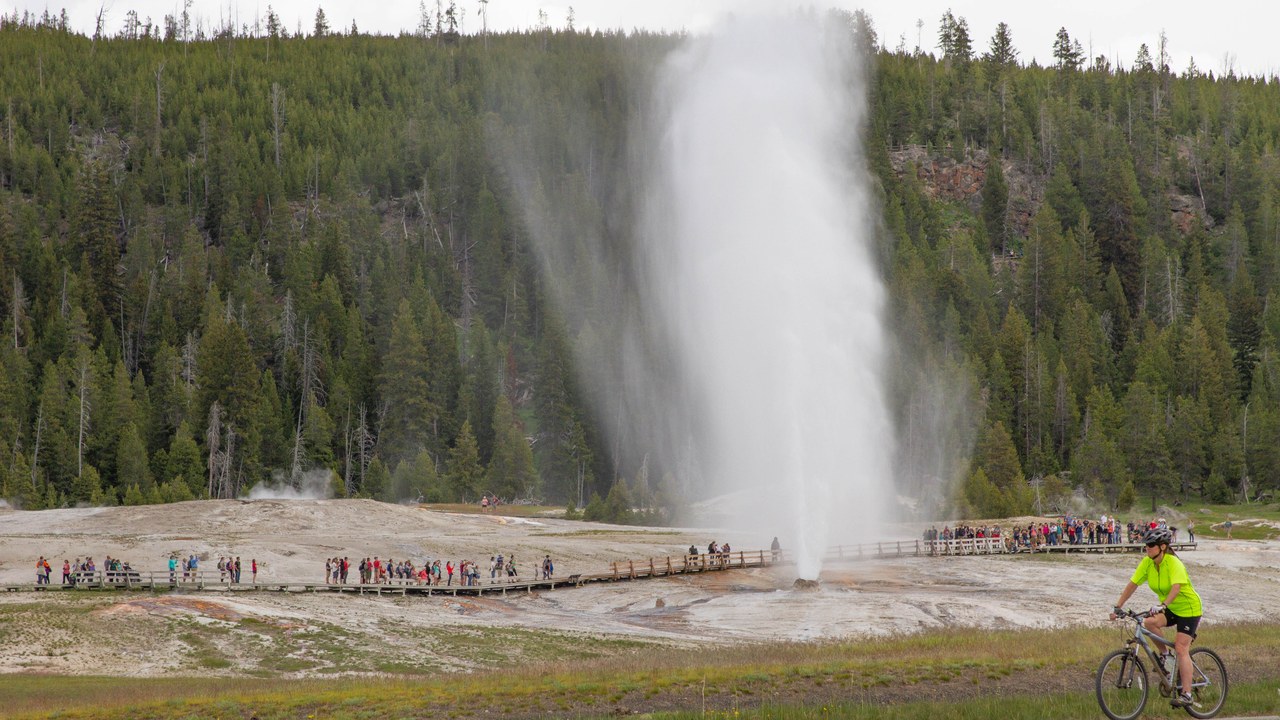
Beehive Geyser rises from a small cone shaped like a beehive, and the Park Service lists it at 150-plus feet.
It sits in the Upper Geyser Basin near the Firehole River. Its eruption is a narrow, powerful jet of water that shoots skyward, one of the most forceful displays in the basin. Rangers often watch a smaller indicator geyser nearby for a hint that the main event is coming. Boardwalk rules keep people back from the scalding spray.
7. Giant Geyser: Rare And Mighty
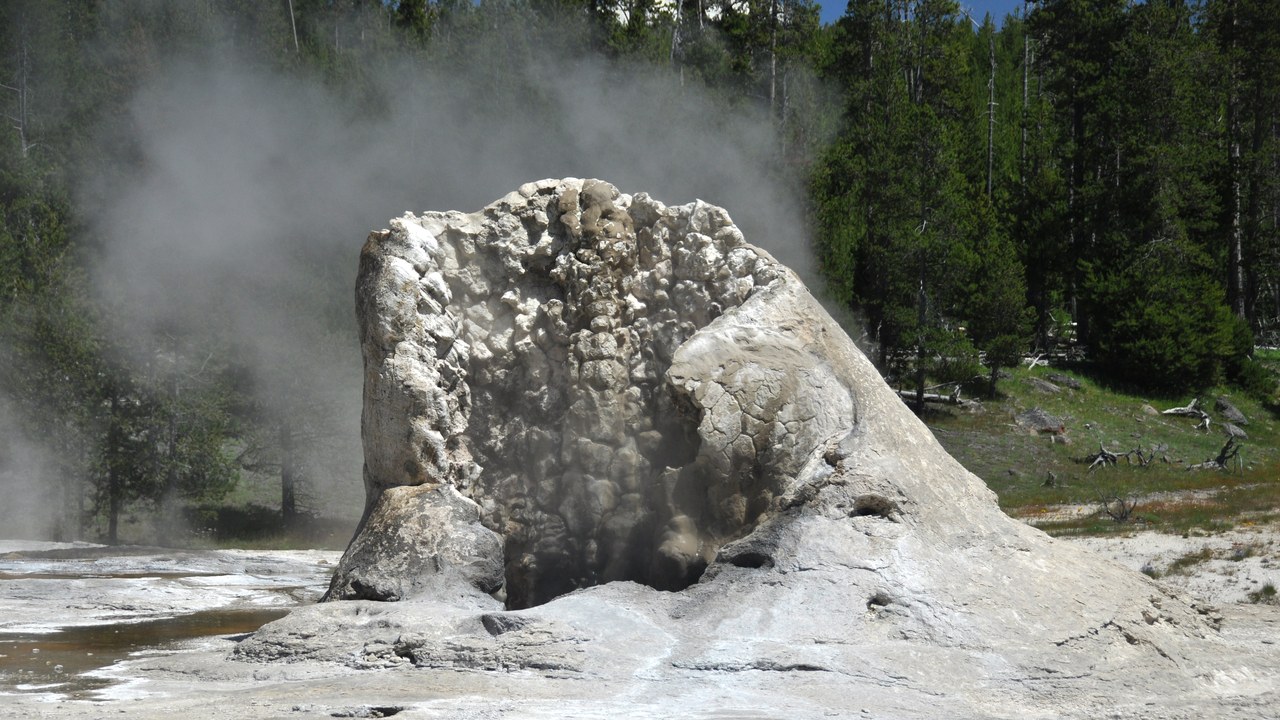
Giant Geyser is listed at 200-plus feet in Park Service eruption data, placing it among the loftiest fountains in the Upper Geyser Basin.
Its broad, rugged cone looks like a weathered stump, and the geyser has a reputation for long dormant periods followed by powerful, long-lasting eruptions. Visitors who reach it usually do so on foot along the trail beyond Old Faithful, hoping to catch a rare show. Hot water and steam near the cone can scald, so observers stay on the marked paths.
8. Castle Geyser: A Fortress Of Sinter
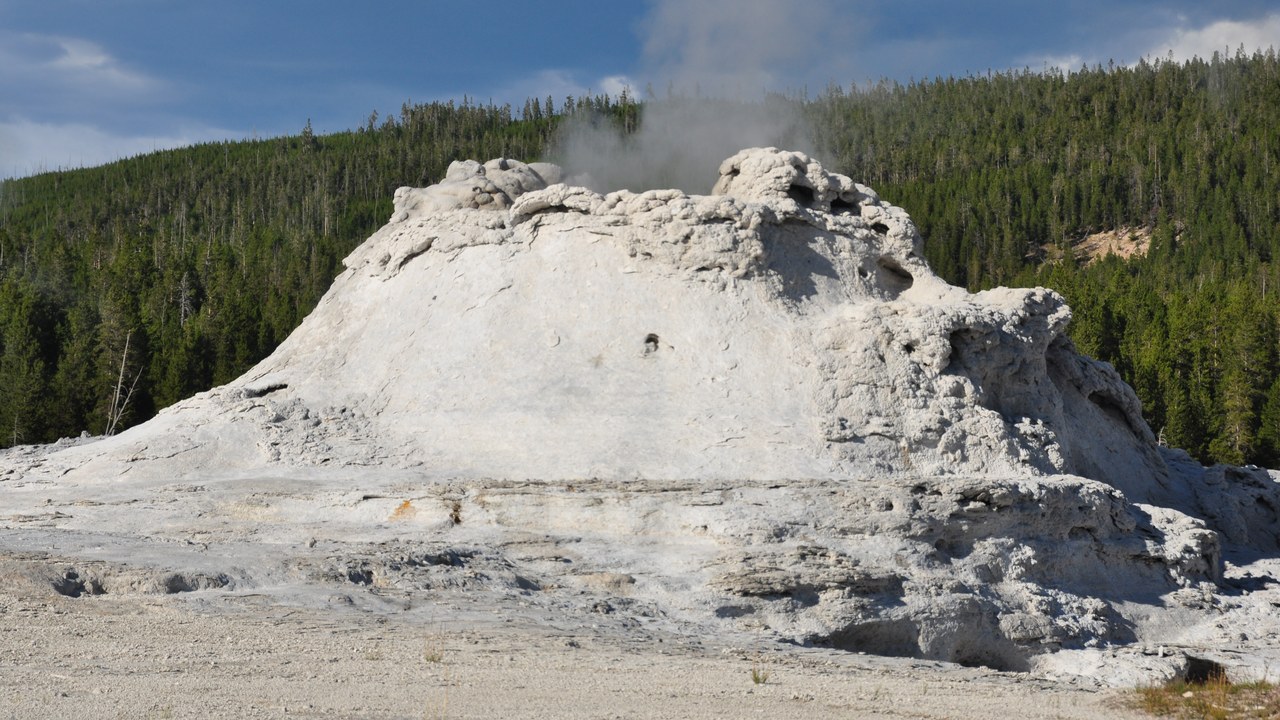
Castle Geyser erupts about 75 feet roughly every 13 hours 30 minutes, according to Park Service data.
Its name comes from the large, jagged mound of mineral deposits, called sinter, built up around the vent over a very long time. The cone is among the biggest in the Upper Geyser Basin and is visible from a distance. After the water phase ends, Castle continues with a loud steam phase, a roaring finish to the display. Hot ground around the formation is fragile and dangerous.
9. Norris Geyser Basin: Hottest Of Them All
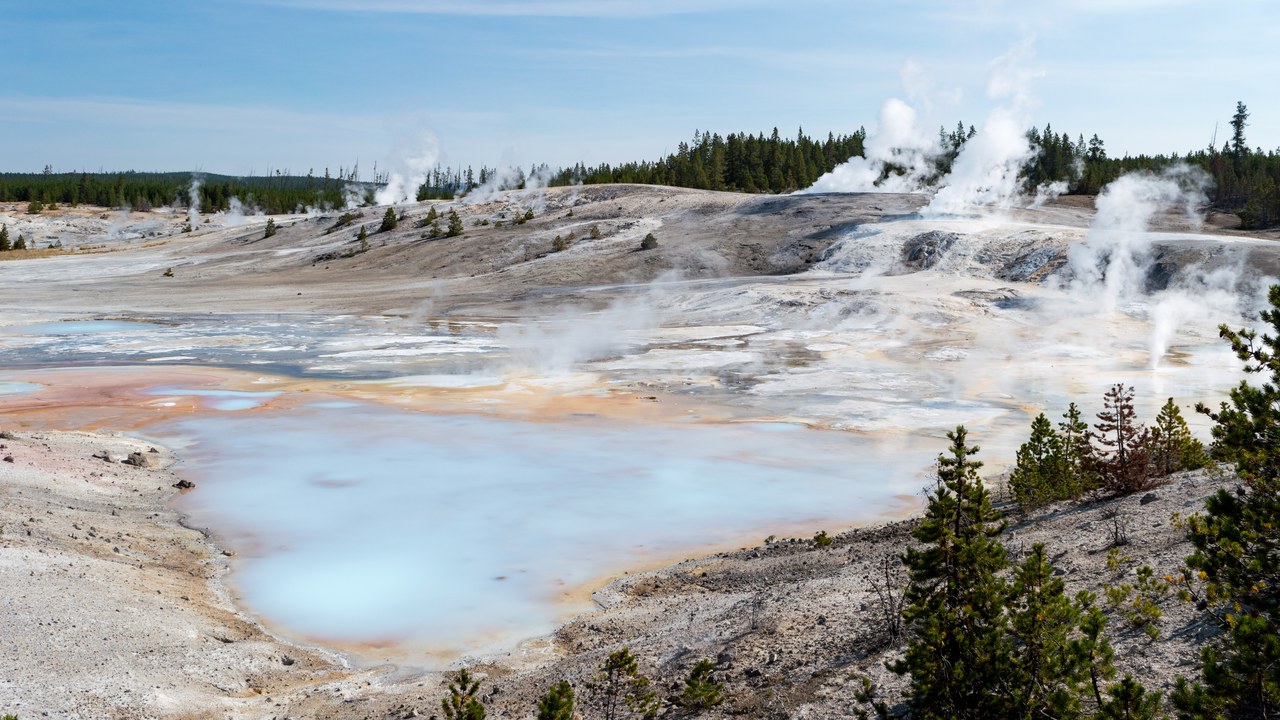
Norris is described by the Park Service as the hottest, oldest and most dynamic basin, and a drill hole there hit 459 degrees Fahrenheit at 1,087 feet.
That temperature is far above the boiling point of water at the surface, which shows how much heat lies close beneath the ground. The basin sits near a major road junction, and its landscape shifts as vents open, close and change. Barren, acidic ground and steaming pools give it an otherworldly look. Staying on the boardwalks matters because the thin crust can break.
10. Gibbon Falls: A Roadside Cascade
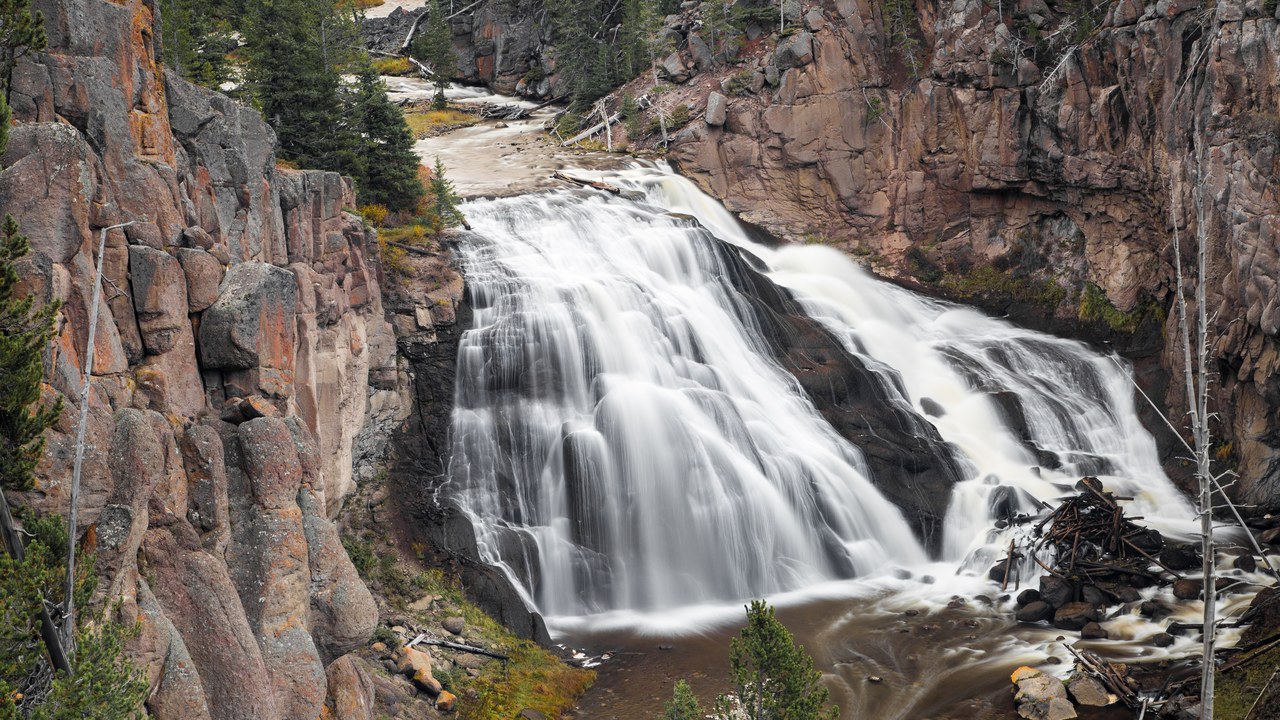
Gibbon Falls drops 84 feet beside the Norris road, a figure given on the Norris planning page.
The Gibbon River spills over a broad rim in a veil of white water, and a short walk from a roadside pullout leads to views of the cascade. Unlike the geysers nearby, this wonder is ordinary cold water, yet its place on the edge of the ancient volcanic caldera ties it to the same geology that powers the thermal features elsewhere in the park.
11. Biscuit Basin: After The Blast
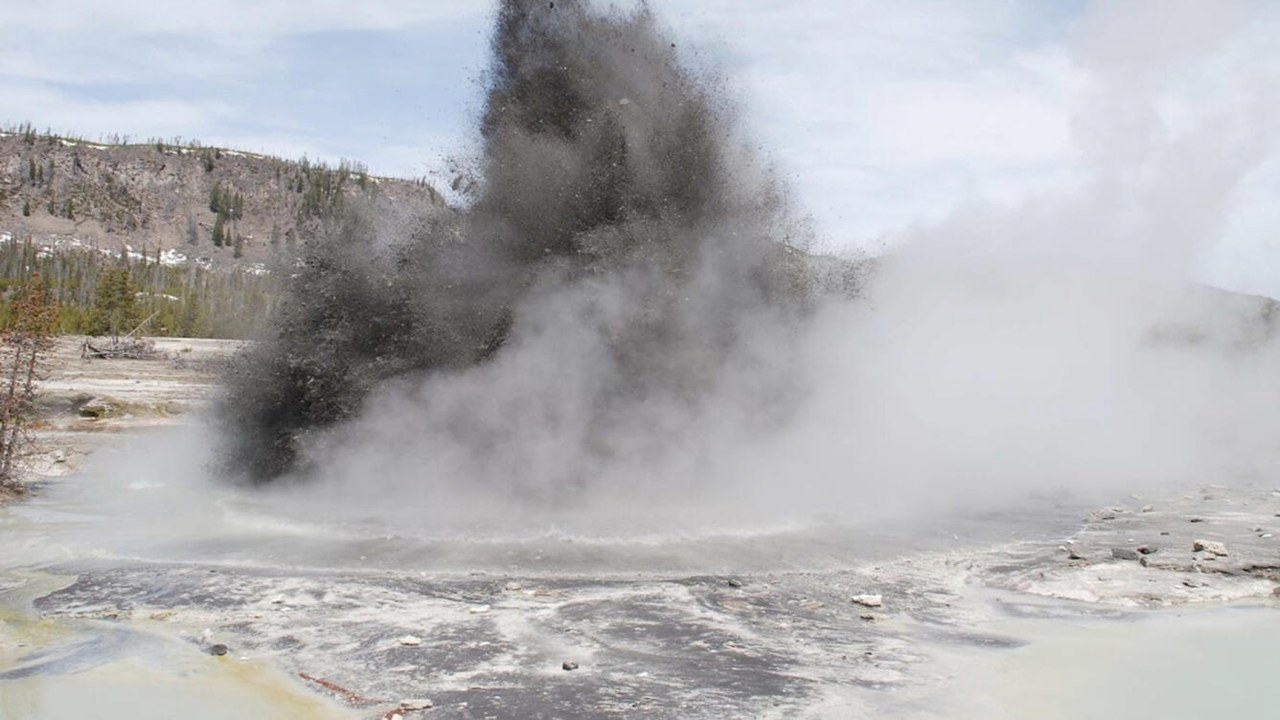
USGS says a hydrothermal blast on the scale of the 2024 Biscuit Basin explosion may recur once every decade to few decades, on average, in its explosion probability assessment.
Hydrothermal explosions happen when water trapped underground flashes to steam and shatters the rock above, hurling debris outward. Biscuit Basin, a thermal area near the Upper Geyser Basin, was the site of the 2024 event. The basin is known for colorful pools, and the assessment is a reminder that thermal areas can change suddenly and that visitors should follow posted warnings.
12. Morning Glory Pool: Blue Pool, Hidden Plumbing
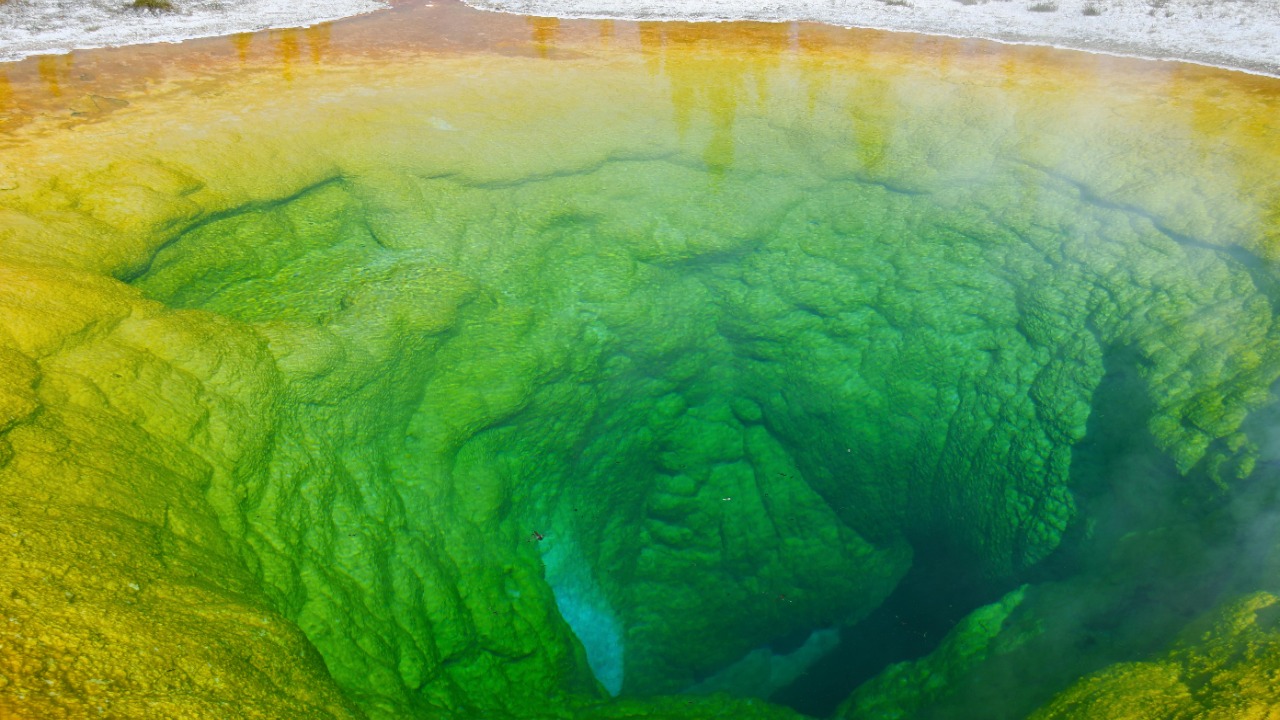
A USGS helicopter survey mapped Yellowstone’s hydrothermal plumbing, including the system under Morning Glory Pool, and the work covers over 10,000 active hydrothermal features.
Morning Glory Pool is famed for its funnel shape and deep blue center that fades to yellow and orange at the rim, colors shaped by heat and microbes. It lies in the Upper Geyser Basin, a walk from Old Faithful. Visitors have historically thrown trash into the pool, which dulled its color, a reminder that thermal features are fragile.
The day in tech, in one email: Get TLDR →
We may earn a commission if you sign up.
More from Morning Overview
- Long use of a common prostate pill is tied to a higher chance of glaucoma
- Ford is recalling 223,472 F-150 pickups because the fuel tank can leak or detach
- Hybrids have 15% fewer problems than gas cars, while EVs and plug-in hybrids have about 80% more, Consumer Reports finds
- Regulators cleared the first U.S. small modular reactor, 4 months early
