
Tailfins rose across American showrooms in the late 1940s, climbed to extreme heights by 1959 and then shrank within a few years. Press and public grew weary of the exaggeration, and the fins added cost and complexity that makers were glad to shed. Here are ten finned cars that trace that rise and retreat.
1. 1948 Cadillac: A Fighter Plane Inspires Fins
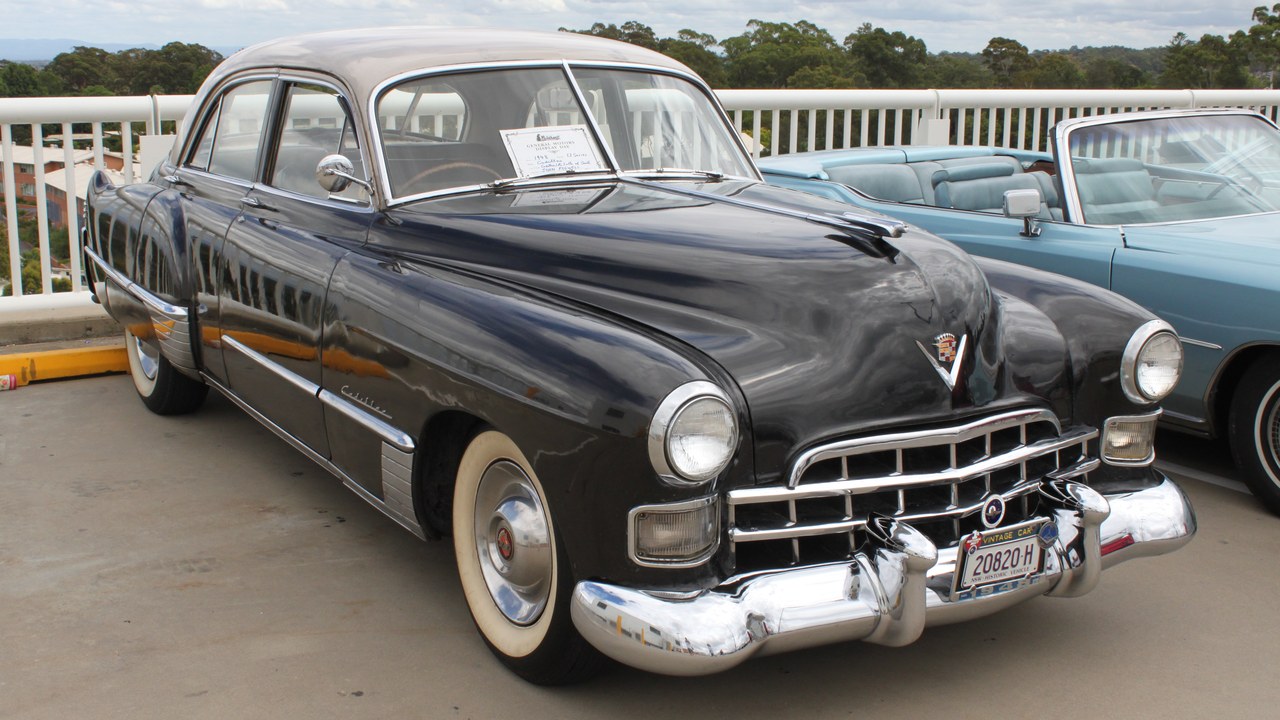
Designer Franklin Quick Hershey drew the first fins from the P-38 Lightning fighter, while GM design chief Harley Earl initially opposed them.
The story shows a fashion that began as a designer’s idea and met resistance from the top. As consumers’ tastes changed, the fins receded into the bodies of Cadillac’s sedans, and Hagerty notes they were gone by 1963. For collectors, the 1948 car is the origin point of the entire fin era. The Smithsonian’s account helps explain why the design spread, since a single designer’s idea influenced later Cadillac styling across the following decade.
2. 1959 Cadillac Eldorado: Peak Fin, Forty-Five Inches
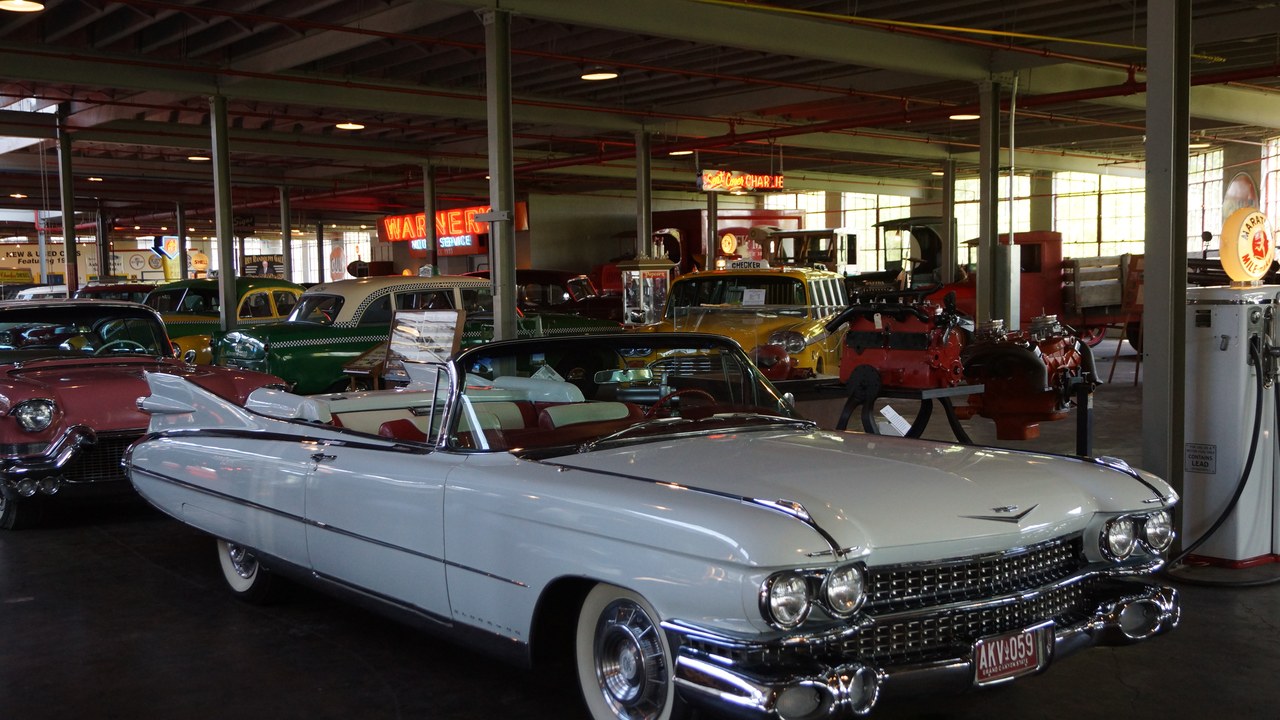
The 1959 Cadillac’s tailfins rose as high as 45 inches, according to History.com.
That height marks the extreme of the trend rather than the typical case. Cadillac’s fins were gone by 1963, and the 1965 cars even adopted a downward slope, a speed of retreat that fits the History.com view that fins were a fad. Buyers seeking the most exaggerated look of the era can start here. The extreme height also helps explain why some critics of the era found fins excessive, though the sources here describe that weariness in general terms.
3. 1959 Chevrolet Impala: Batwings on the Rear Fenders
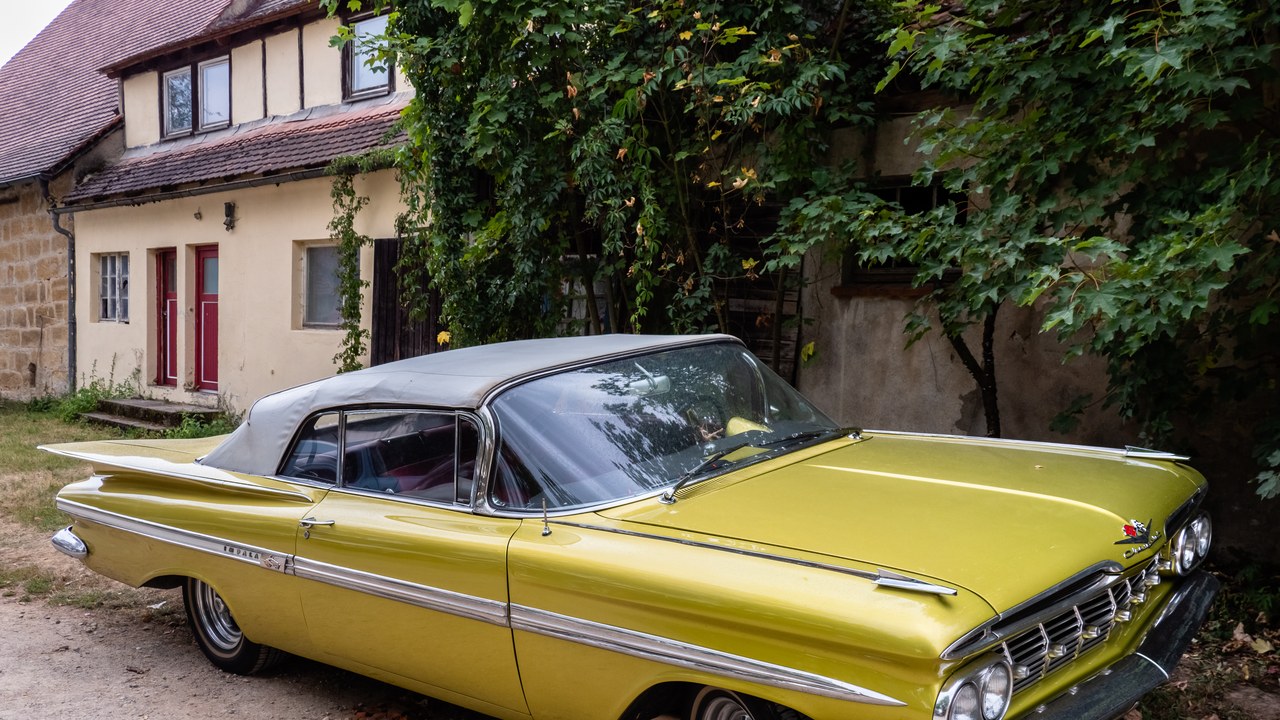
The 1959 Chevrolet wore flamboyant, outward-sweeping tailfins that resembled batwings.
Styling of that kind left the automotive press and much of the public weary of tailfins, according to Wikipedia, and manufacturers were ready to phase them out because they added cost and complexity to design and manufacturing. The Impala shows fin design at its most theatrical for a mainstream Chevrolet, which makes the 1959 car easy to spot. The batwing description captures how far the shape had moved from the first Cadillac fins of 1948.
4. 1957 DeSoto: Flicking Its Tail at Traffic
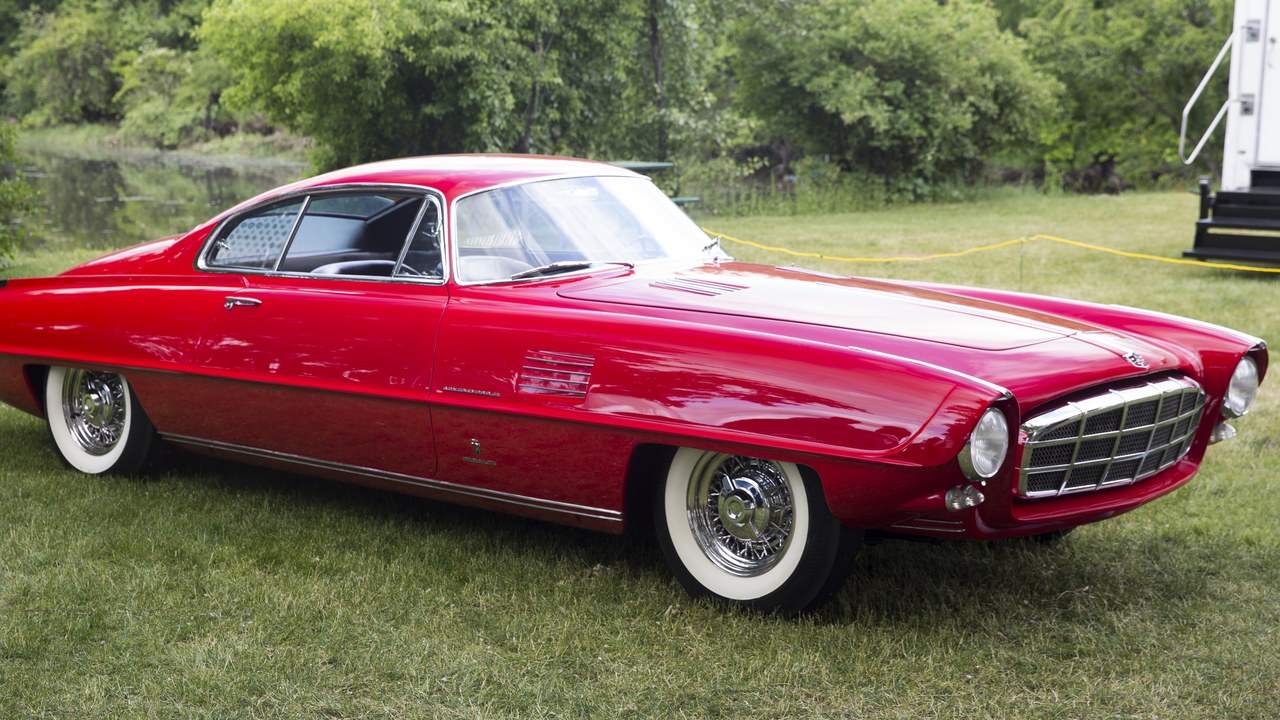
DeSoto’s 1957 magazine ad boasted that its finned car could flick its tail at anything on the road, in the copy’s words.
The line shows fins being sold as a selling point in their own right, not merely tolerated as decoration. The claim is advertising language rather than a measured performance figure, so collectors should read it as period marketing, a snapshot of how confident automakers were before fins began to lose favor. The phrasing captures the swagger of the mid-1950s in a way production figures cannot.
5. 1957 Chrysler 300C: Forward Look With a Hemi
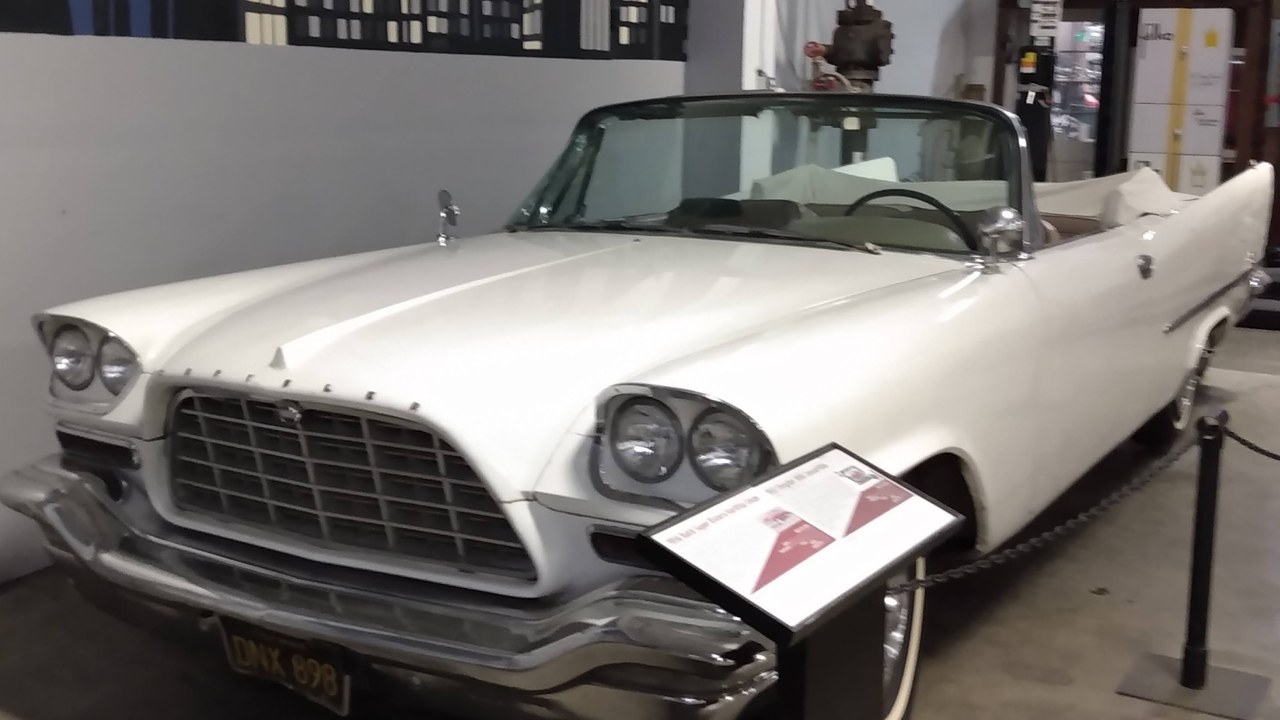
Virgil Exner’s Forward Look 300C had gradually rising tailfins starting from the doors and a 392 Hemi making 375 hp. Chrysler built 2,402 of them.
The small production run and the 375-hp Hemi make the 300C a scarcer performance car than most finned models, including the 12,258 Imperials built for 1961. Its fins are subtler than the tallest Cadillac versions, which suits a car sold on power as much as styling. Exner’s styling and the Hemi engine together define what the 300C offered buyers in 1957.
6. 1960 Chrysler 300F convertible: Last Days of the Fin Craze
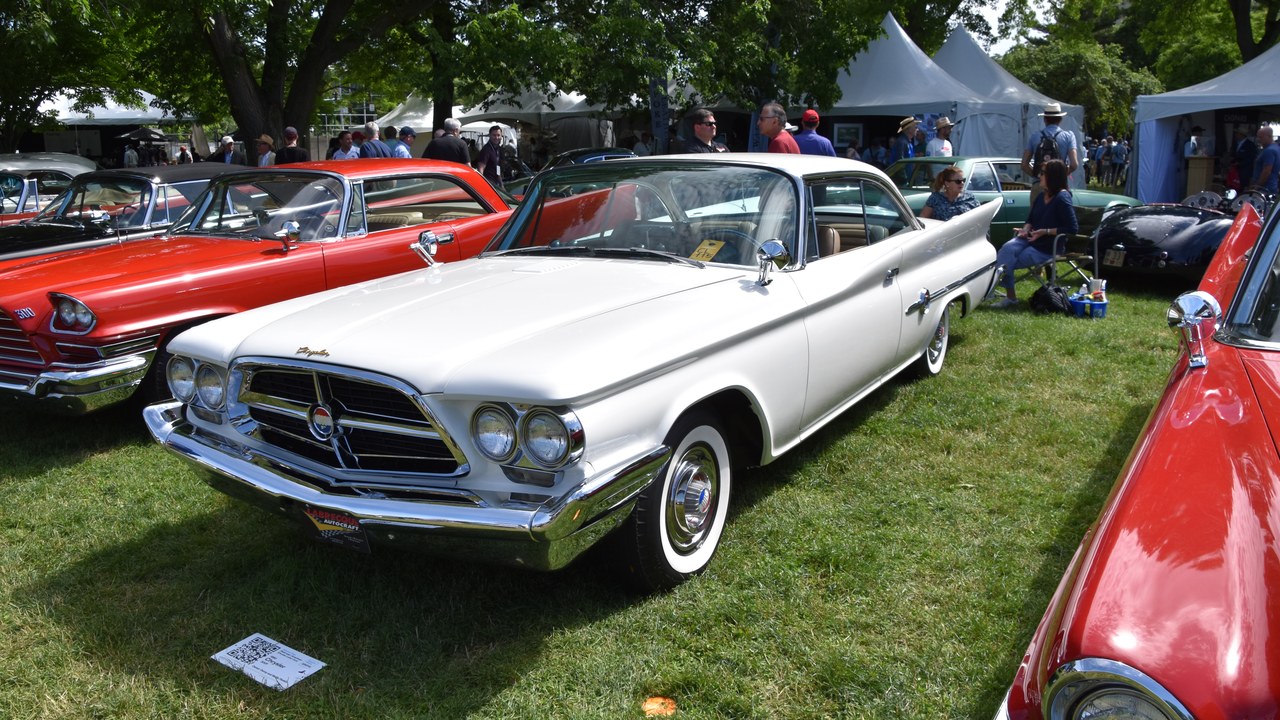
Exner’s 300F fins knife up and out from mid-door. The 375-hp 413 car cost $5,841 new, and just 248 convertibles were made.
Hagerty groups three 1960 drop-tops as marking the last days of an American obsession, and the 300F fits that framing, built as the fin fashion was fading. The 248-car convertible run makes it a genuine rarity, and the original price gives a useful baseline for judging today’s asking figures. Buyers today should note the small production number, since a convertible of such rarity calls for careful documentation.
7. 1958 Plymouth Fury: Christine’s Finned Fury
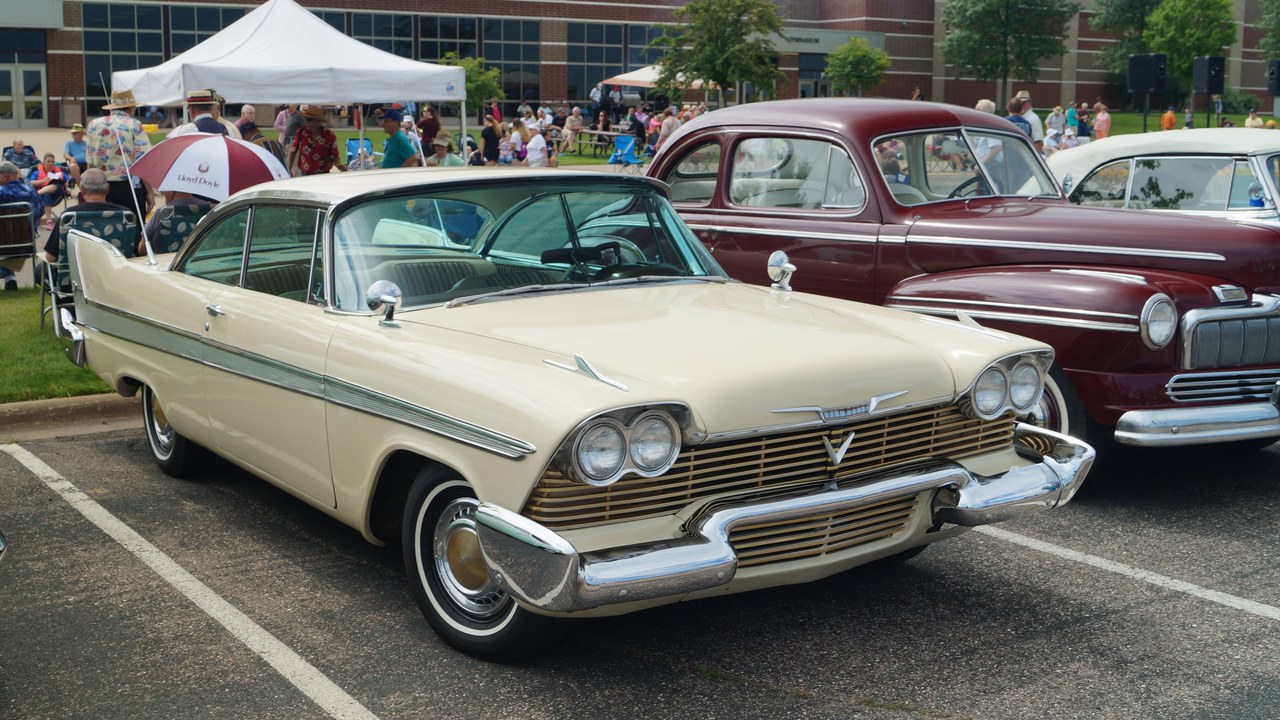
The restyled 1957 Plymouths got very large vertical tailfins, and a 1958 Fury became the killer car in Stephen King’s Christine.
The 1957 models were also longer and wider, with a new torsion bar front suspension replacing coil springs, so the change went beyond styling. Fiction gave the fins a menacing reputation, which keeps the Fury in the public eye long after the trend they represented had disappeared. The large vertical fins are the styling feature that ties the 1957 restyle to the car’s later fictional fame.
8. 1961 Imperial: The Largest Fins Ever
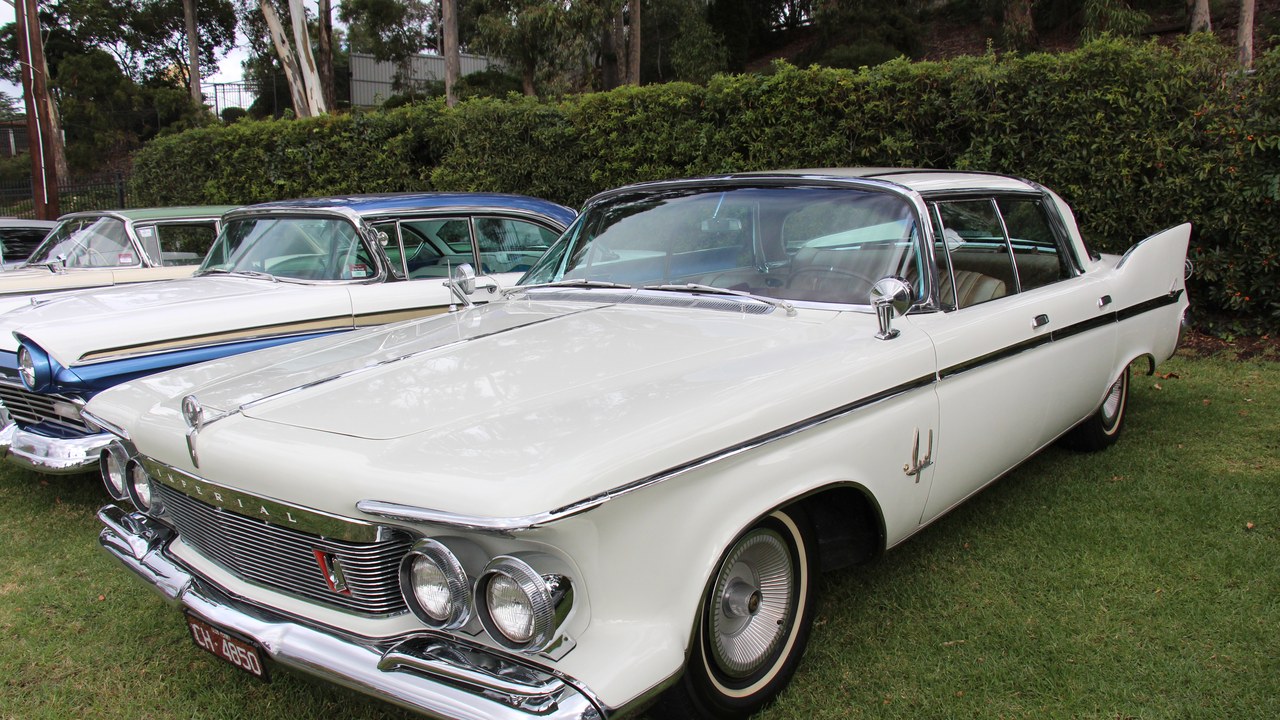
The 1961 Imperial paired free-standing headlights on stalks with the largest tailfins ever. Chrysler built 12,258 of them.
The 1961 car arrived just before Cadillac’s fins were gone by 1963, placing it near the end of the trend. Its unusual headlight treatment and oversized fins make it one of the more distinctive cars of the period, and the modest production total suggests it was never a common sight. Collectors who want the fin era at full volume will find few cars in this gallery that go further.
9. 1959 Buick Electra: Delta-Fins Arrive at Buick
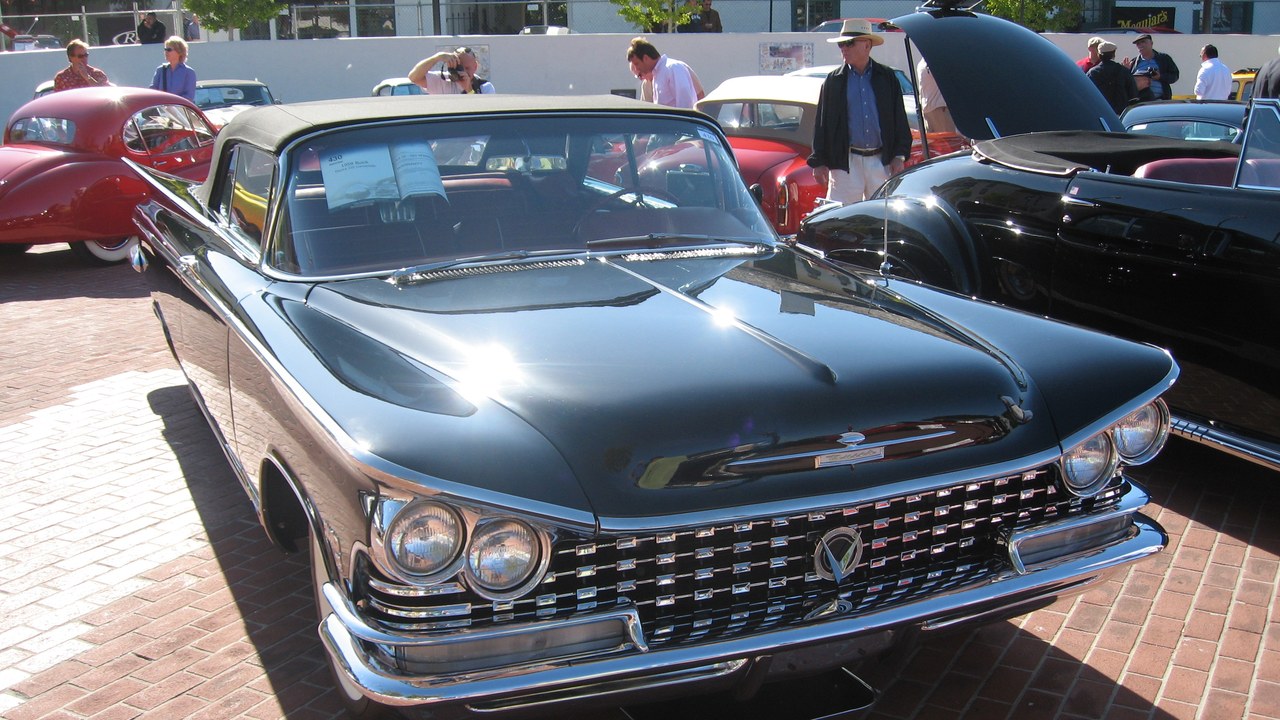
The Electra debuted in 1959 with signature Buick Delta-Fins and a 325-hp 401 Wildcat V8.
That debut year sits at the height of the fashion, only a few years before tailfins began descending throughout the early 1960s. For collectors, the appeal is a first-year Electra combining a named fin design with a large-displacement V8, a pairing that captures the period’s taste for both style and power. The Wildcat V8 gave the fins some real muscle, so the Electra was more than a styling exercise, and its first-year status adds interest for collectors.
10. 1957 Chevrolet Bel Air: Restraint Made a Classic
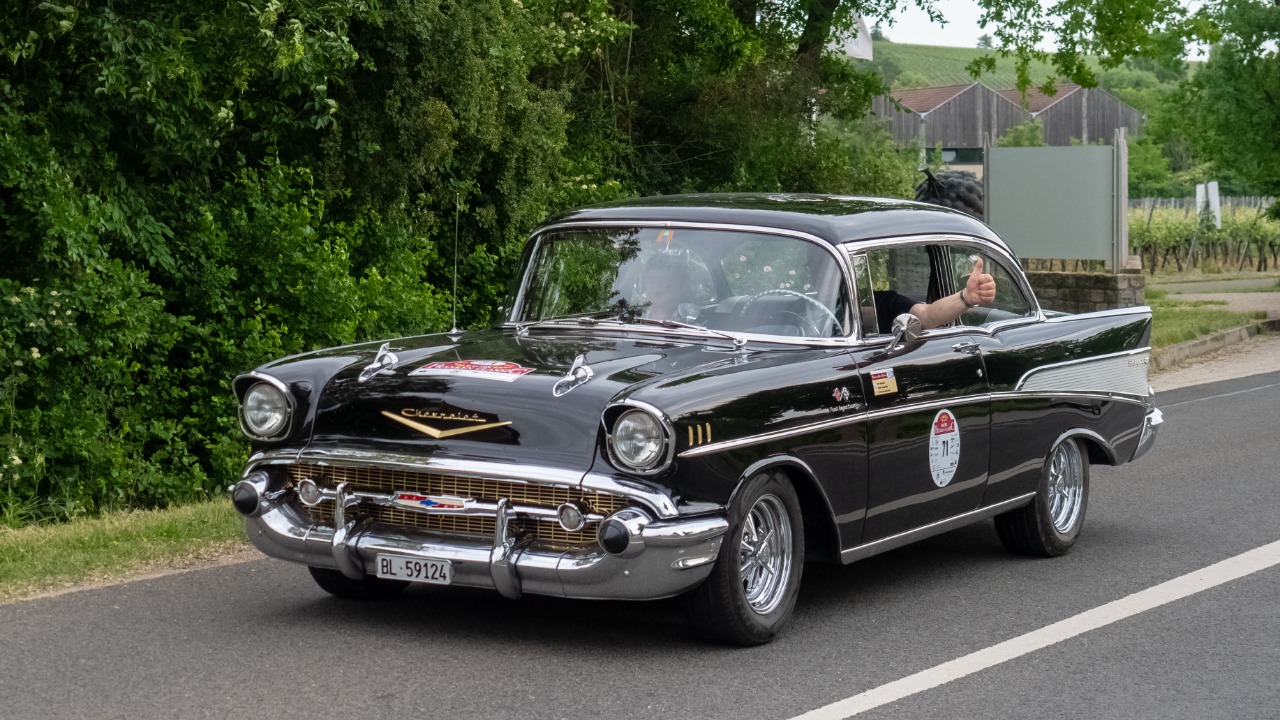
Its restrained fins helped make the 1957 Bel Air one of the most recognizable American cars of all time. The fuel-injected 283 V8 made 283 hp.
The modest fin contrasts with the 45-inch versions on the 1959 Cadillac and shows that exaggeration was not required for lasting appeal. That durability suits the reasons automakers later clipped fins, since the fashion depended on excess while the Bel Air’s proportions stayed easy to live with. The car’s identity rests on overall proportion, and the fuel-injected engine adds interest for those who care about performance.
More from Morning Overview
- The NSA is again telling phone owners to switch off one location setting
- Supplements now rank as the fifth-leading cause of death from liver disease.
- Herbal supplements are landing Americans in the hospital with liver damage, doctors warn
- General Motors is switching on cameras that record inside your vehicle by update
