
Some of Britain’s richest archaeological discoveries came from ploughed fields and a search for something far more mundane. Ploughmen and hobbyists with metal detectors brought Roman coins, Viking silver, and Iron Age gold back into daylight. Here are eight finds that reshaped what museums know about the distant past.
1. Hoxne Hoard: A Lost Hammer Pays Off
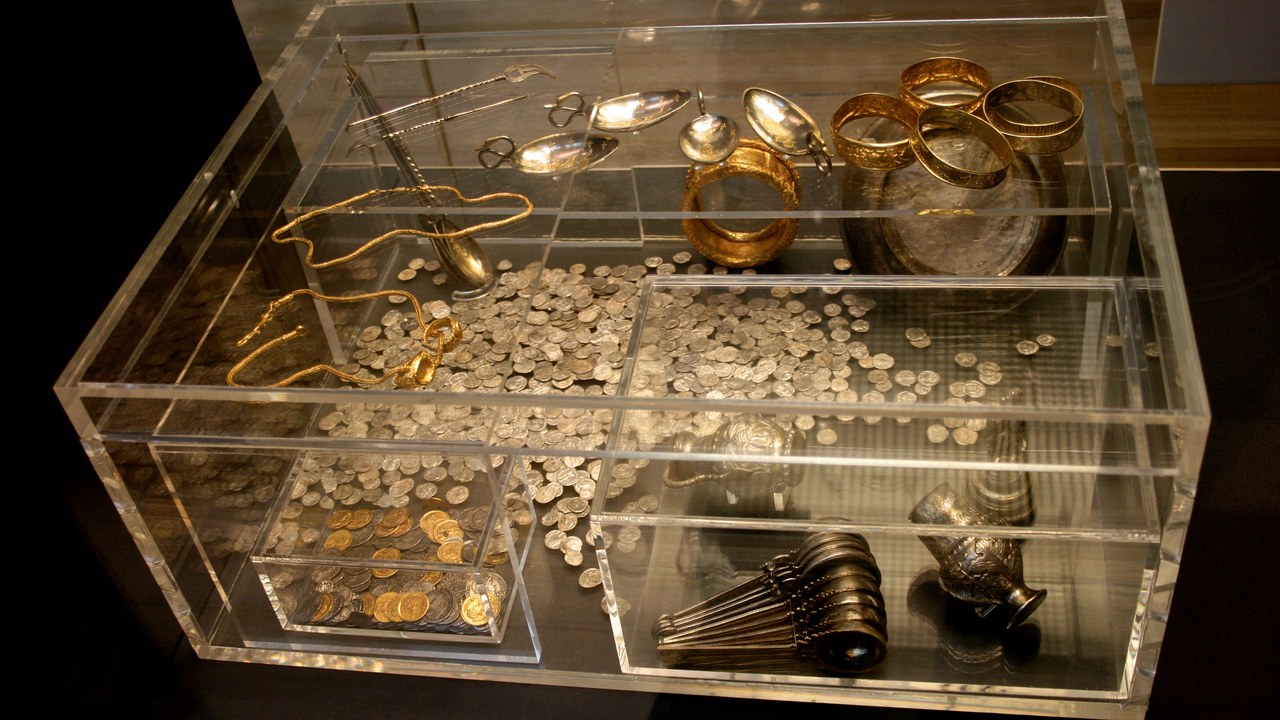
Eric Lawes was using a metal detector to look for a lost hammer in 1992 when the search instead uncovered the Hoxne Hoard, a cache of 15,234 Roman coins, dozens of silver spoons, and about 200 gold objects. Smithsonian coverage describes it as the largest cache of Roman treasure ever found in Britain.
The story shows how accidental such discoveries can be, since the hammer was the only thing anyone meant to find. Museum visitors who study the Roman spoons and gold jewelry are looking at objects that stayed buried for centuries until an everyday errand went sideways.
2. Staffordshire Hoard: Gold Beneath a Ploughed Field
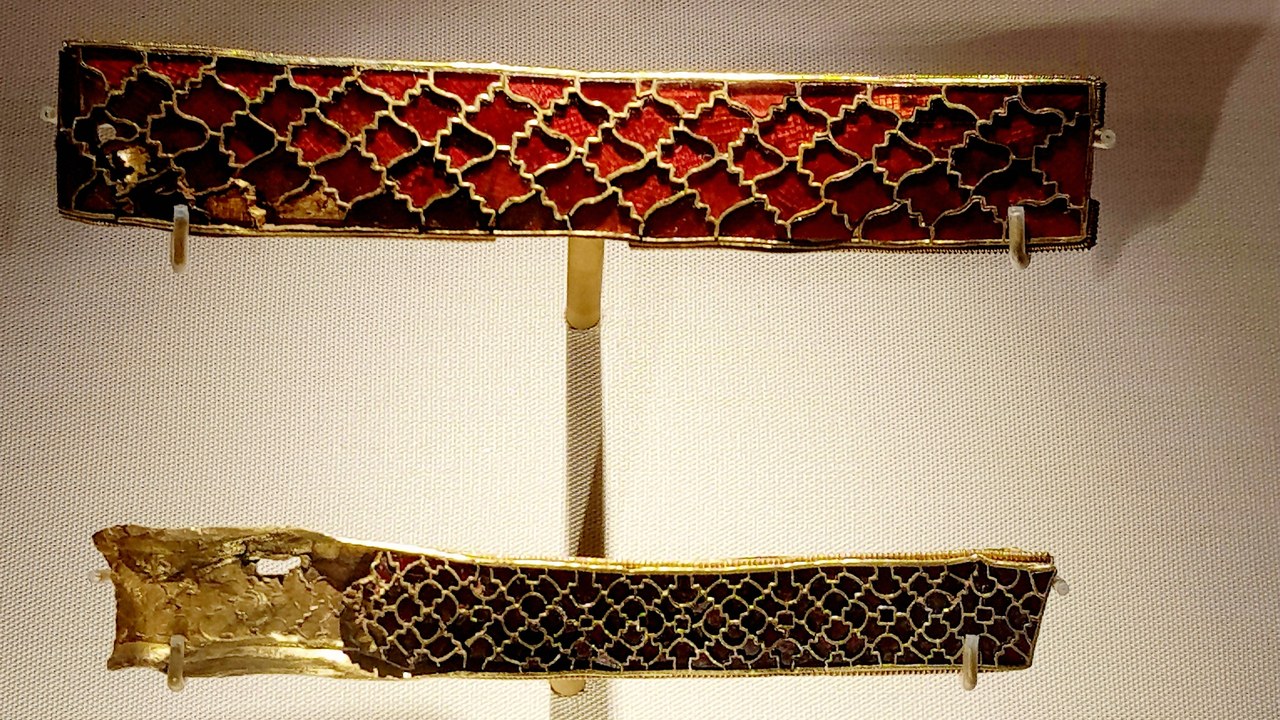
Detectorist Terry Herbert found almost 4,600 items in a ploughed field in 2009, and the result is regarded as the largest Anglo-Saxon treasure of gold and silver discovered to date. The hoard totals 5.1 kilograms of gold and 1.4 kilograms of silver.
Those weights are modest beside a big coin hoard, yet the treasure is notable because the precious metal sits in worked objects rather than money. For a museum visitor, the pieces offer a rare direct look at Anglo-Saxon metalwork recovered by a hobbyist’s detector. The source’s wording is that no other Anglo-Saxon gold and silver find has matched it so far, which leaves room for future discoveries to change the ranking.
3. Galloway Hoard: A Detectorist’s Viking Jackpot
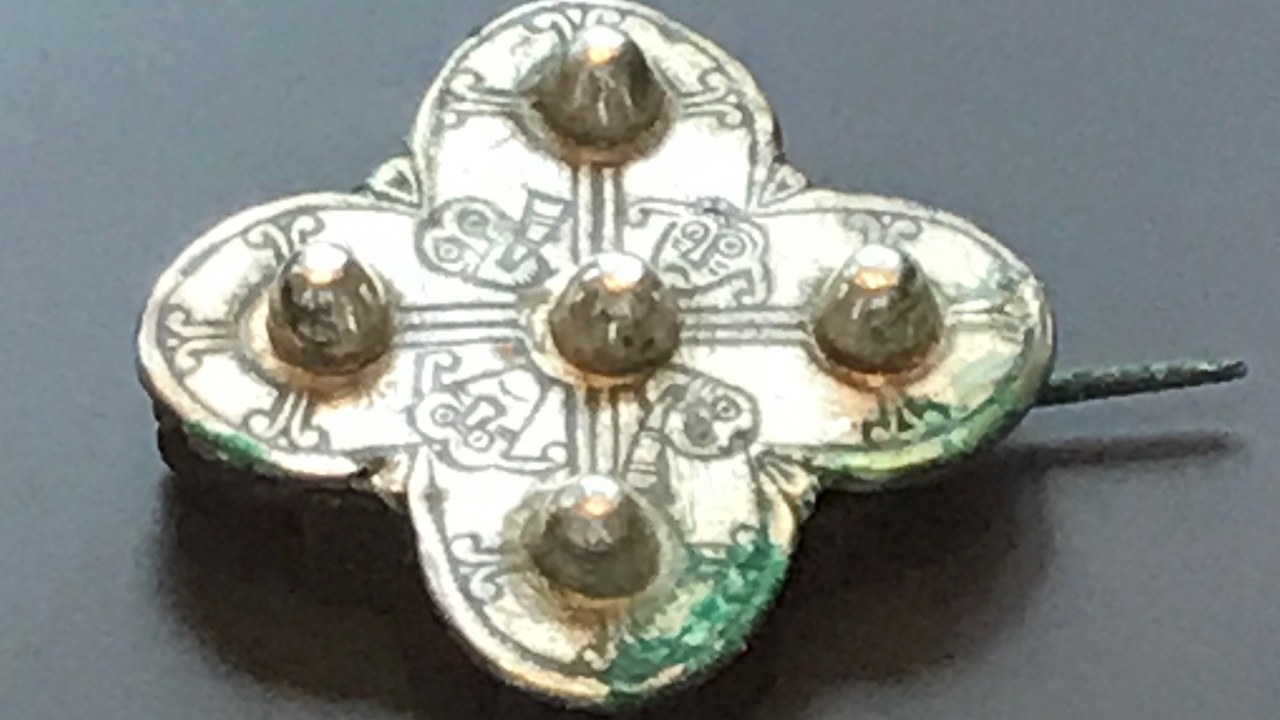
A detectorist found the Galloway Hoard in 2014, and its more than 100 objects have been called “the richest collection of rare and unique Viking-age objects ever found in Britain or Ireland.” The hoard was buried around AD 900, and National Museums Scotland received it in 2017.
Placing the burial near AD 900 ties the objects to the Viking age the museum describes, and the 2017 acquisition gives the public a national collection to visit. One caveat applies: the superlative is the museum’s own description rather than an independent ranking.
4. Frome Hoard: One Pot, Tens of Thousands of Coins
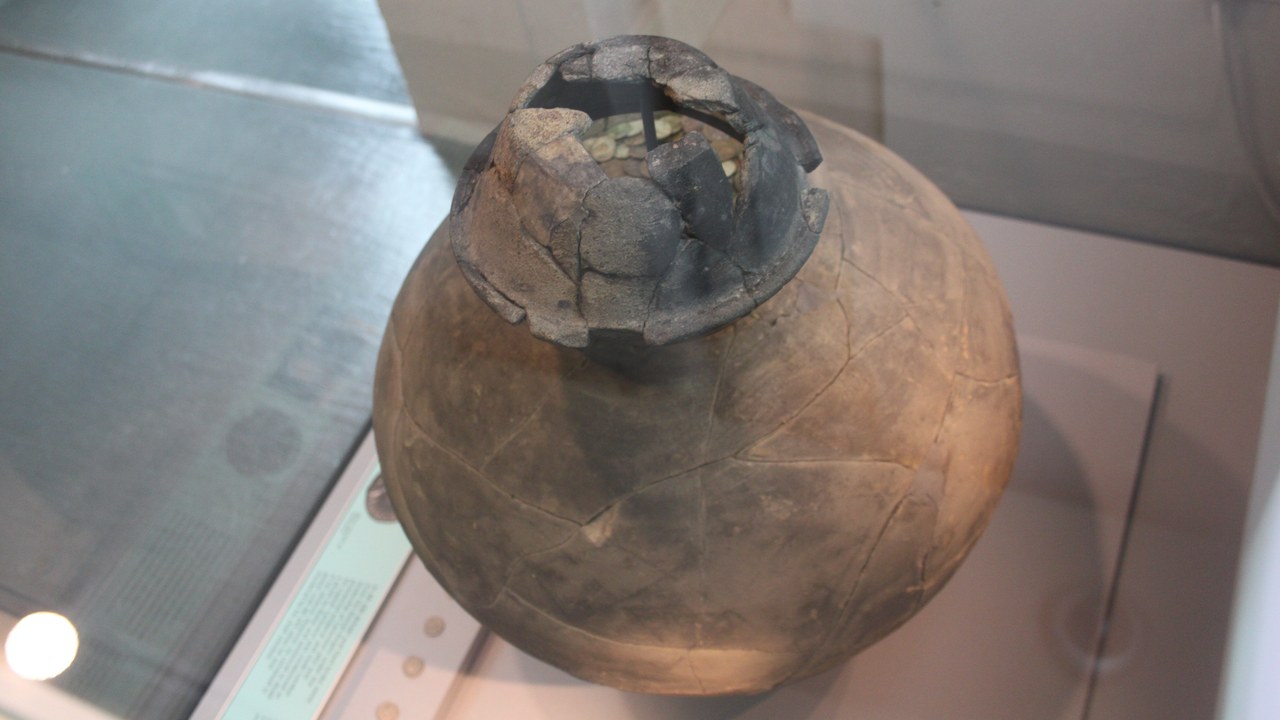
Dave Crisp’s 2010 find, the Frome Hoard, comprised 52,503 Roman coins packed into a single ceramic pot about 45 centimeters, or 18 inches, across. The filled pot weighed about 350 pounds.
The sheer count makes a useful yardstick against the 15,234 coins of the Hoxne Hoard, another Roman find on this list, since Frome held more than three times as many. Visitors to the display see how much coinage a single container could hold. Pairing the two Roman finds shows how differently hoards were assembled, with Hoxne mixing coins, spoons, and gold objects while Frome was a pot of coins alone, as far as the sources describe.
5. Vale of York Hoard: Silver in a Gilt Cup
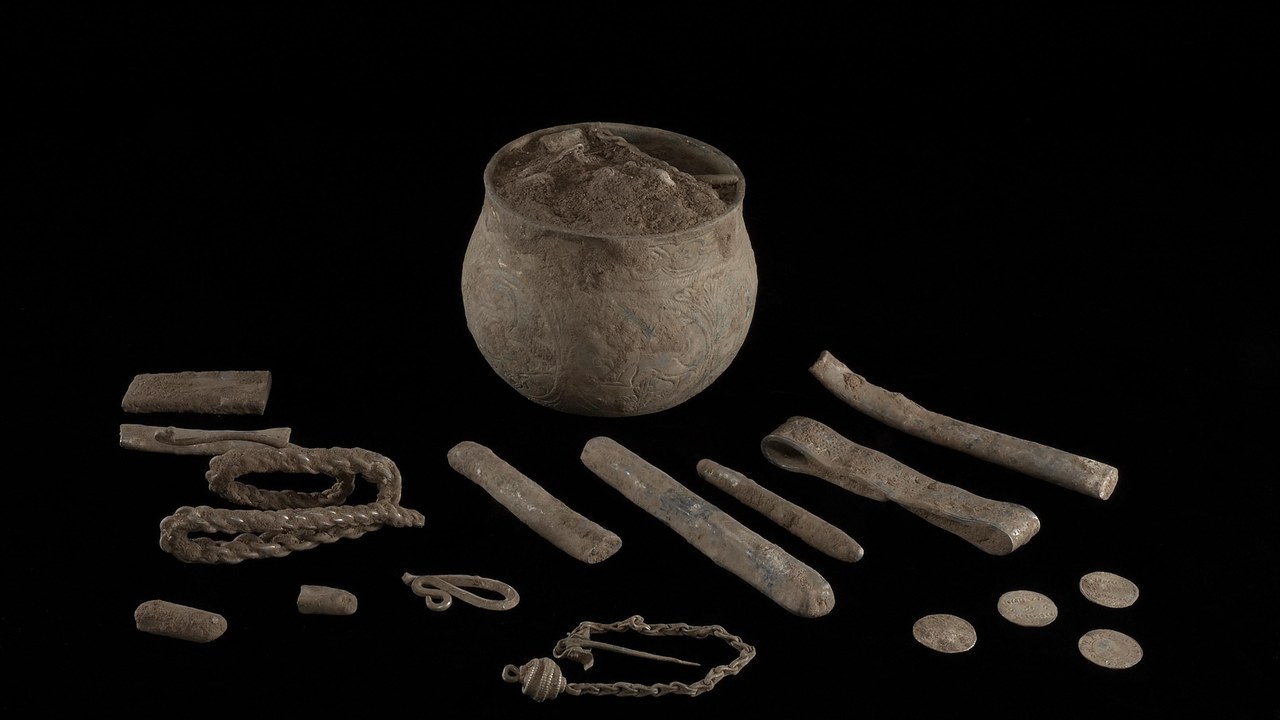
A father and son with metal detectors found 617 silver coins in a gilt cup in 2007, an event now recorded as the Vale of York Hoard. Sources call it the largest Viking hoard discovered in Britain since the Cuerdale hoard turned up in Lancashire in 1840.
The 167 years between the two finds show how rarely Viking hoards of this size surface. The gilt cup that held the coins is part of the story, and museum visitors see the silver together with the vessel that protected it. Cuerdale, in Lancashire, remains the benchmark for Viking silver in Britain, and the York find is measured directly against it in the source.
6. Mildenhall Treasure: A Great Dish Emerges
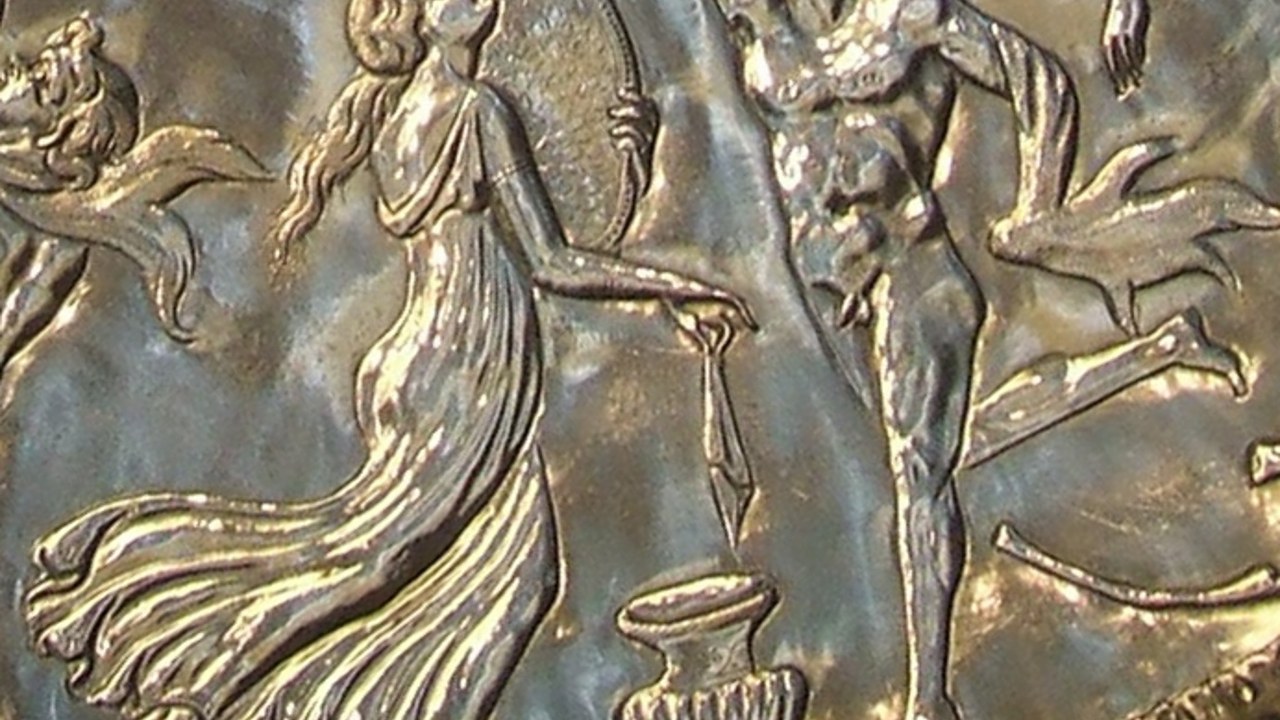
Ploughing in 1942 brought up the Mildenhall Treasure, whose Great Dish of Roman silver is 605 millimeters, nearly 24 inches, across and weighs 8.256 kilograms, over 18 pounds.
The date places the discovery in the middle of the Second World War, a reminder that finds of this kind can surface in any era. A single serving piece of that size gives a museum visitor an immediate sense of the scale of Roman table silver. The treasure is a reminder that ordinary farm work, not only deliberate searching, has repeatedly brought major ancient objects into view, with the ploughing here dated to 1942.
7. Snettisham Hoard: A Ploughman’s Trove of Torcs
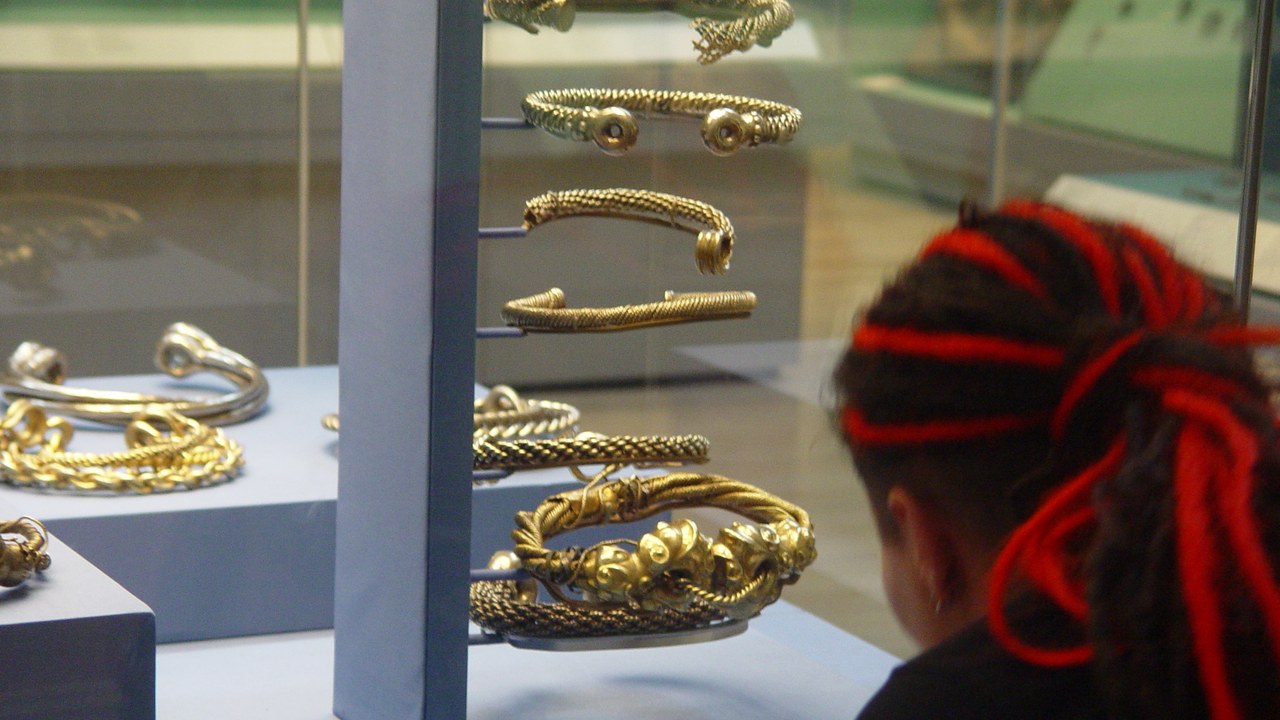
A ploughman’s 1948 discovery began the story of the Snettisham treasure, eventually counted as some 175 Iron Age torcs and about 30 kilograms of metal, much of it gold and silver. Roughly 75 of the torcs were more or less complete.
Counting complete pieces separately from fragments matters here, since the total of 175 includes fragments of about 100 more. Visitors should read the figure as a tally of neck rings recovered, not 175 intact objects. The 30-kilogram figure likewise covers all the metal recovered, much of it gold and silver, so it is a total weight of metal rather than a measure of precious metal alone.
8. Lewis chessmen: Walrus Ivory From Uig Bay
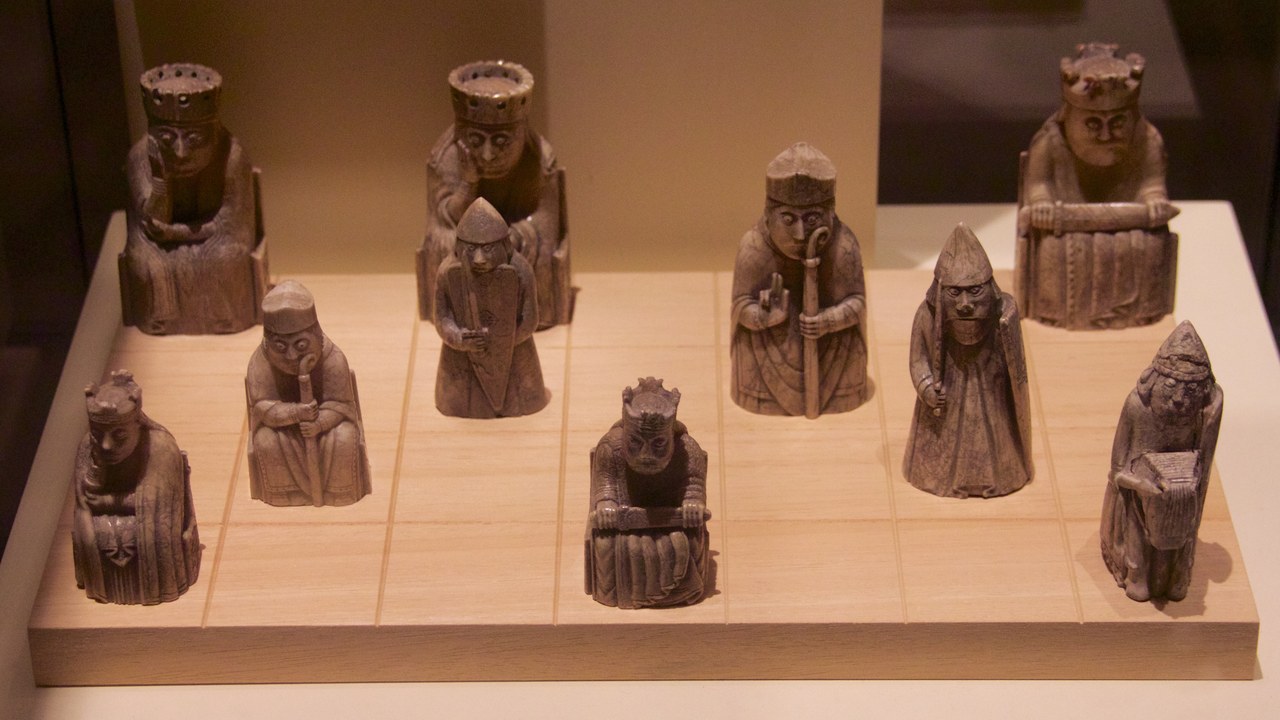
A hoard of 93 gaming pieces, mostly walrus ivory, turned up near Uig Bay on Scotland’s Isle of Lewis and was first exhibited in 1831, as told in the Lewis chess pieces story. Some accounts name a local man, Malcolm MacLeod, as the finder.
The pieces come from at least four chess sets as well as other games, so the hoard is broader than the familiar chessmen alone. The finder’s identity rests on those accounts rather than a settled record, and it is best treated with caution. Their first public showing in 1831 makes this the oldest exhibition date among the finds in this gallery, well before metal detectors existed.
More from Morning Overview
- Four U.S. startups fired up their first small nuclear reactors, aiming to power AI data centers on-site
- Card skimmers hidden on gas pumps and ATMs are draining accounts, and here’s the tell
- Doctors warn a silent liver disease now affects one in three American adults
- Hackers are hijacking outdated home routers, and the FBI named the models to check
