
Saturn’s small moon Enceladus hides an ocean under its ice, and it does not keep the secret to itself. Geysers at its south pole fire water and ice into space, where a passing spacecraft could sample them without ever landing. These eight pictures follow the discovery, from the first Voyager flybys to Cassini’s final plunge into Saturn.
Read next on Morning Overview: Melting permafrost is setting off a newly identified kind of catastrophic landslide, scientists say
Enceladus: A Small Moon With a Hidden Sea
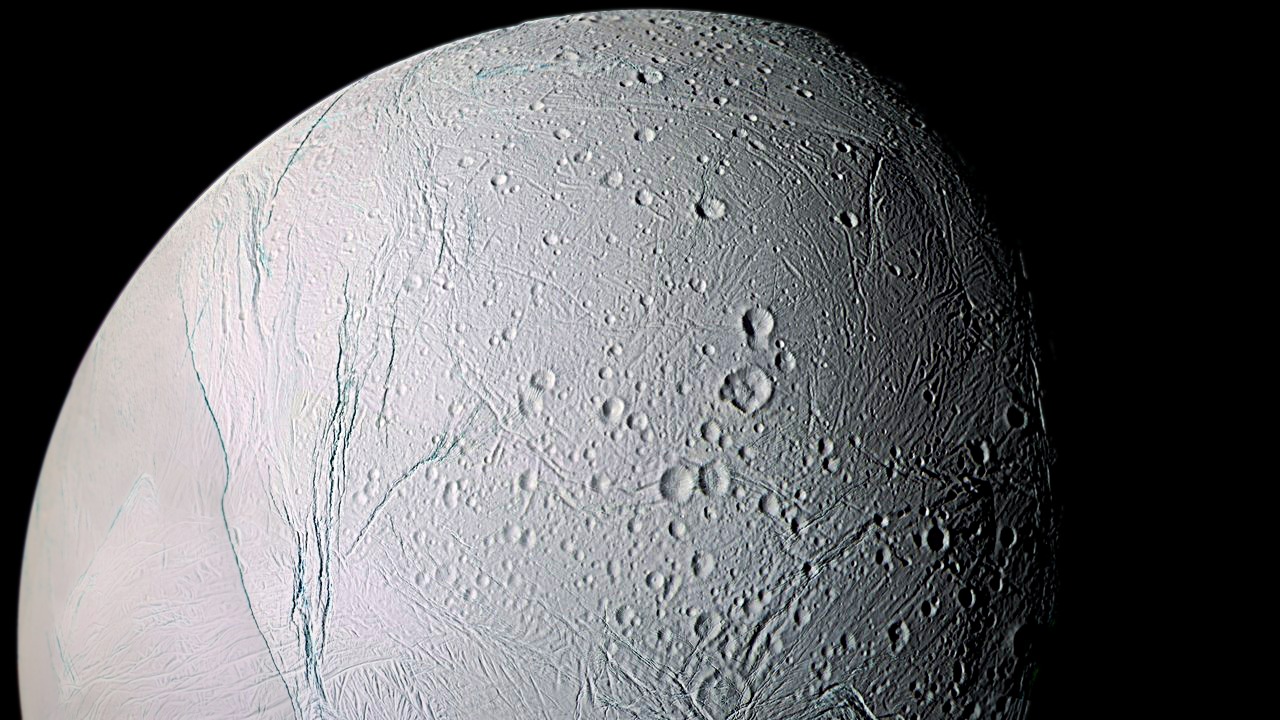
Enceladus likely hosts a global ocean of liquid water beneath its icy surface. The ocean is about 2 percent the size of all of Earth’s oceans, which sounds small until one considers that the entire moon has roughly the surface area of France.
The surface is far too cold for liquid water, at about minus 330 degrees Fahrenheit, and the moon has no thick atmosphere. Below the ice shell, the ocean likely stays liquid because it is salty, which lowers the melting point, and because it is heated, possibly as Saturn’s gravity stretches and squeezes the moon’s interior, a process called tidal heating.
Tiger stripes: Geysers Along the Tiger Stripes
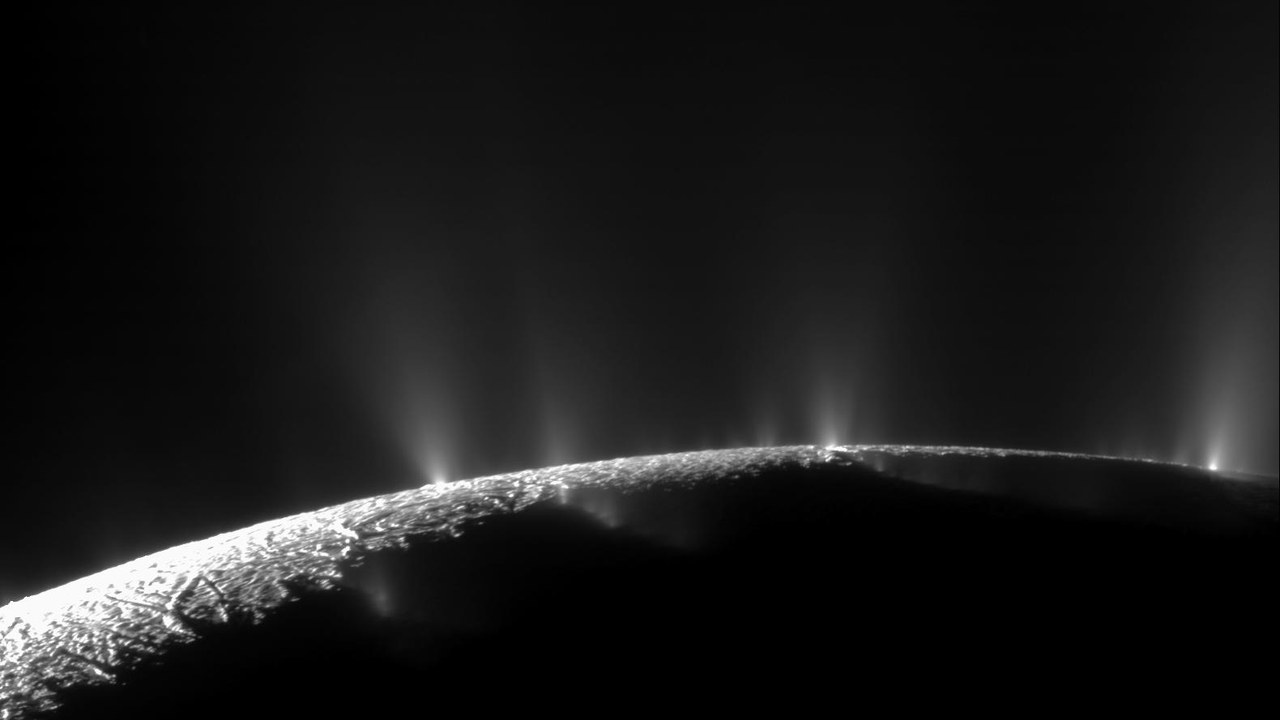
Tiger stripes streak across the surface of Enceladus, and what sets the moon apart from other ocean worlds are the dozens of geysers around its south pole, which launch plumes of gas and ice grains away from the moon.
Those plumes make the hidden ocean far easier to study. Instead of sending a probe to drill through the icy shell, scientists can send one to fly through a plume and sample what is inside. When NASA’s Cassini did exactly that in 2015, it found evidence of interaction between the rocky seafloor and the ocean, plus hints of hydrothermal vents and organic molecules.
Voyager 2: The First Close Look
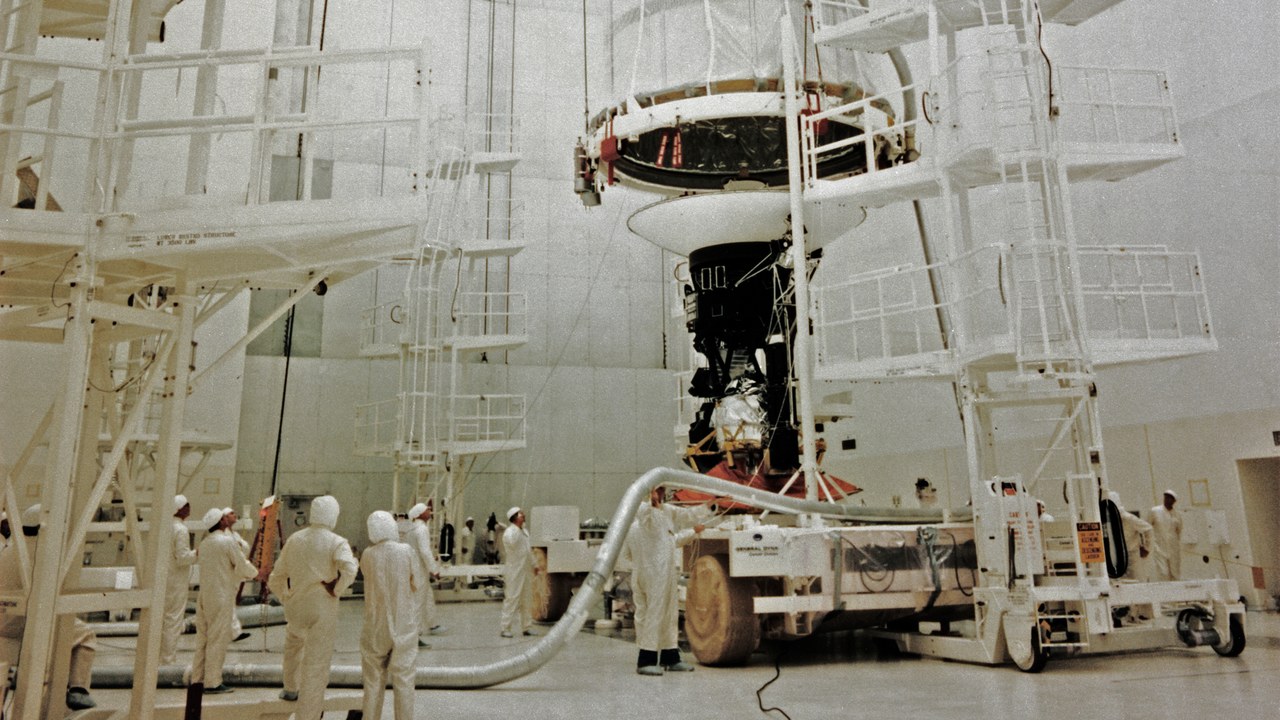
At the start of the 1980s, the twin Voyager spacecraft became the first missions to study Enceladus up close. They found a surface without many craters and made other geologic discoveries.
Enceladus is tiny by planetary standards, about 313 miles across. Its thin atmosphere is mostly water vapor with small amounts of nitrogen, carbon dioxide and methane, and its solar day lasts 32.9 hours. It took the next generation of spacecraft, beginning with Cassini’s first Enceladus flyby in 2005, to reveal the plumes and the first major signs of an ocean.
Cassini–Huygens: A 13-Year Tour of Saturn
NASA’s Cassini spent 2004 to 2017 at Saturn and flew through the plume and E ring numerous times. Scientists found that the moon’s ice grains contain a rich array of minerals and organic compounds, including the ingredients for amino acids.
In 2023, a team using Cassini data announced it had found phosphorus, the least abundant of the elements essential to biology, locked in salt-rich grains from Enceladus. Lab work showed phosphate concentrations in the ocean at least 100 times those of Earth’s oceans. Co-investigator Christopher Glein stressed that life has not been found there, only the ingredients.
E ring of Saturn: A Ring Fed by a Moon
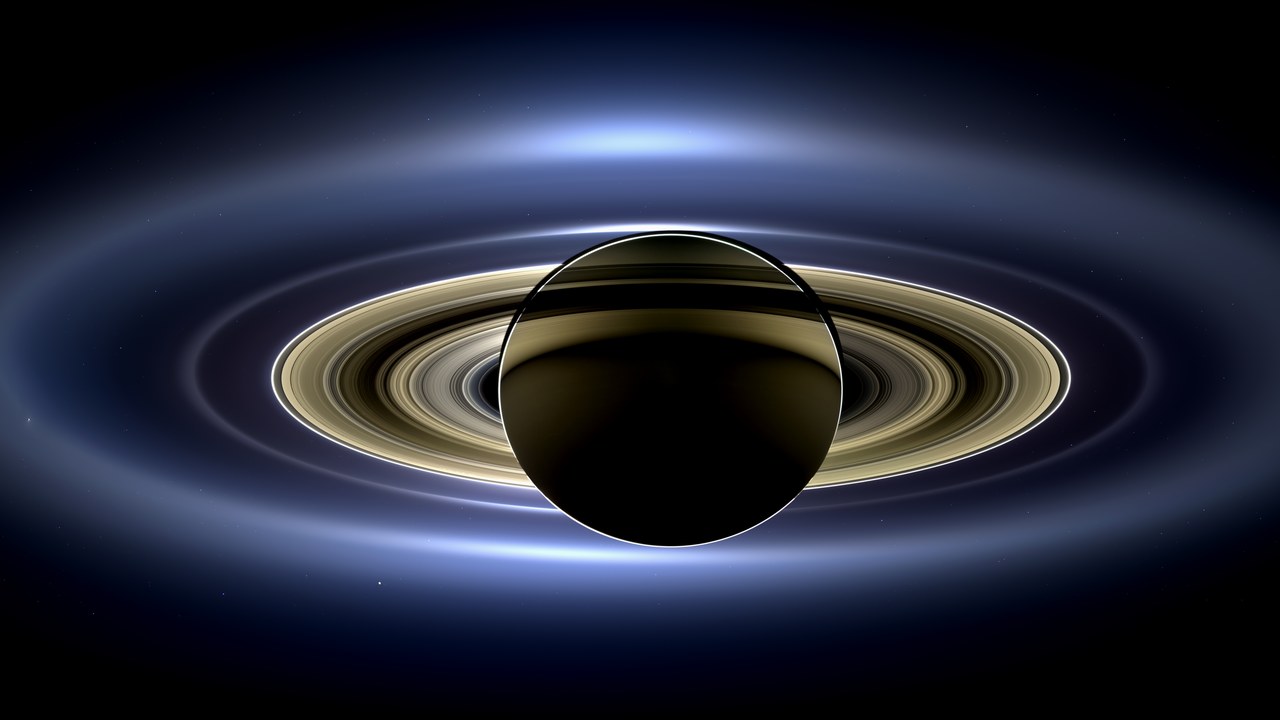
The plume does more than escape. It feeds Saturn’s E ring, a faint ring outside the brighter main rings, with icy particles from Enceladus. That made the ring itself a sampling ground for Cassini’s Cosmic Dust Analyzer.
Many more grains were analyzed when Cassini flew through the E ring than through the plume alone, giving scientists far more signals to work with. That is where they found high concentrations of sodium phosphates. Earlier analysis had already shown sodium, potassium, chlorine and carbonate compounds, with modeling suggesting a moderately alkaline ocean, conditions that favor habitability.
Titan: The Moon With Liquid on Its Surface
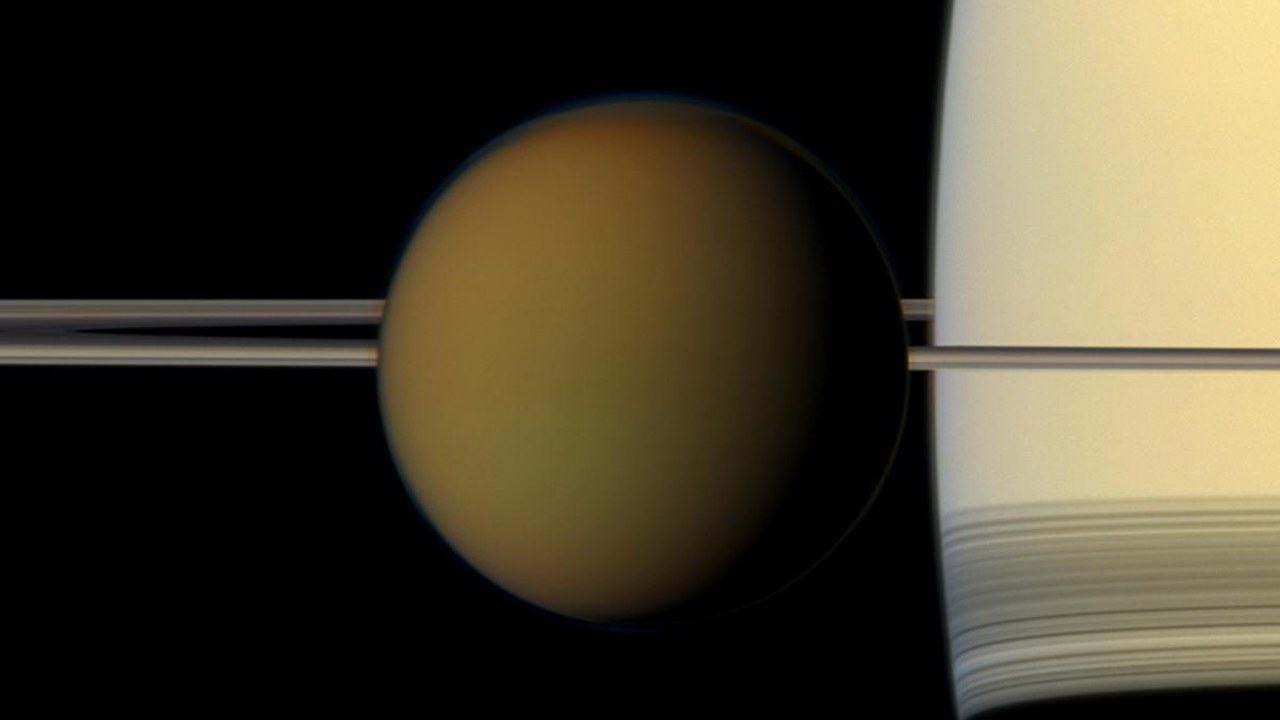
Cassini carried a passenger to Saturn. The European Space Agency’s Huygens probe landed on Titan on January 14, 2005, and during its two-and-a-half-hour descent it revealed a surface hidden by thick haze, with eerily Earth-like landscapes.
From orbit, Cassini’s radar went on to find lakes and seas of methane and other hydrocarbons, making Titan the only other known place in the solar system with stable liquid on its surface. In Titan’s atmosphere Cassini detected many complex organic molecules, some considered building blocks of life on Earth.
Saturn: A Planet Ringed by Discoveries
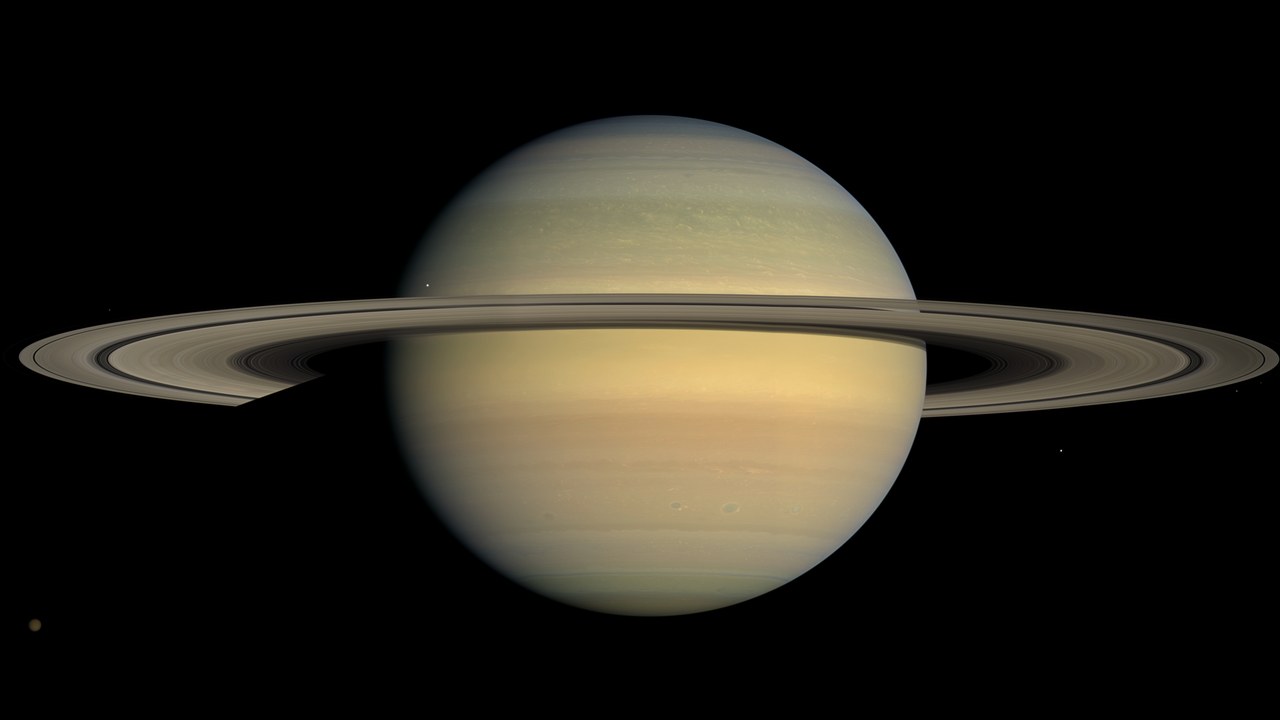
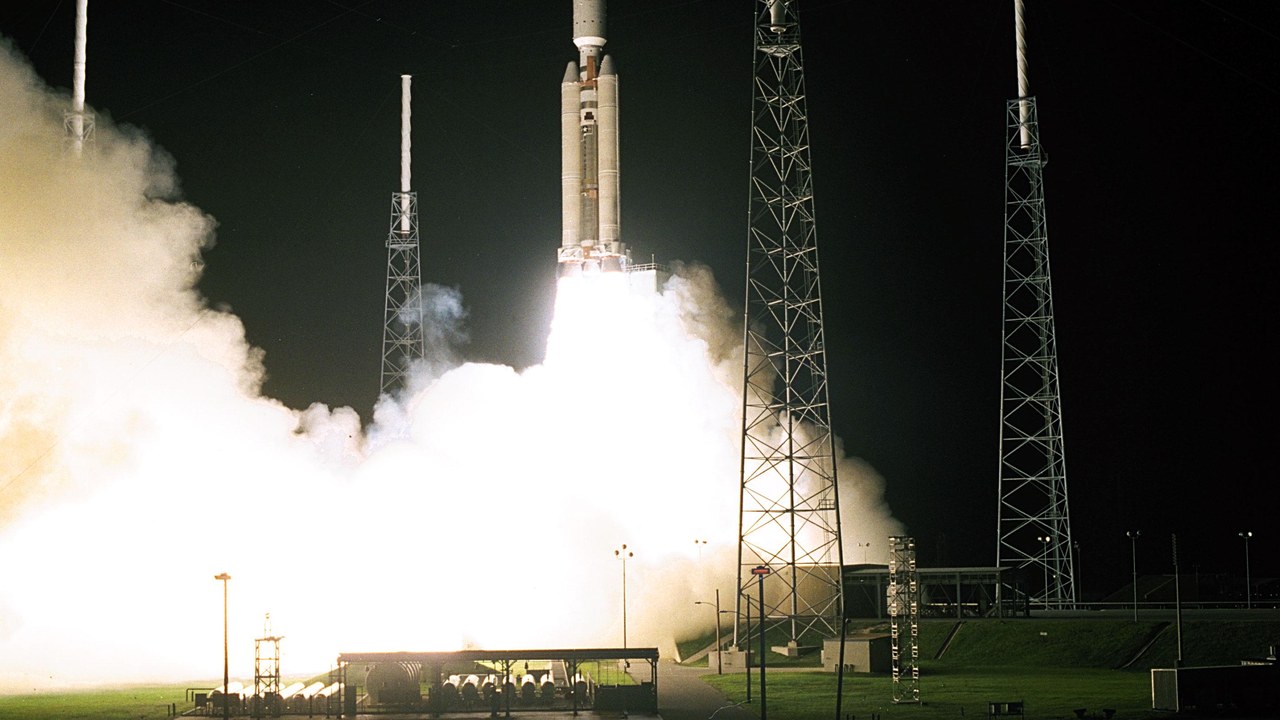
Cassini launched on October 15, 1997, and reached orbit around Saturn on June 30, 2004. ESA counts the icy plumes erupting from Enceladus as one of the major discoveries of the entire mission, with later findings pointing to hydrothermal activity on the sea floor.
The tour also showcased Saturn’s other moons, from Iapetus with its equatorial ridge to sponge-like Hyperion, ravioli-shaped Pan and Mimas, which resembles the Death Star. For the mission’s last five months, Cassini dove between Saturn’s rings and atmosphere in 22 grand finale orbits, ending with a farewell flyby of Titan.
Cassini Spacecraft: A Planned Final Plunge
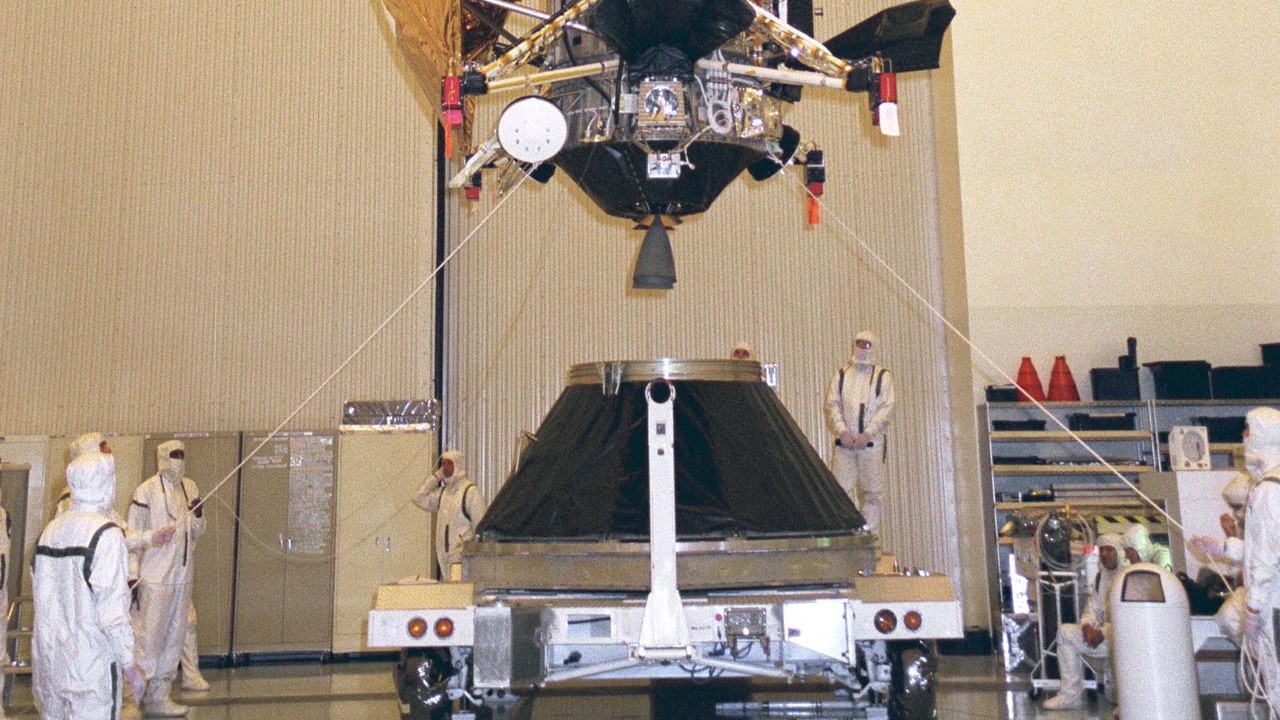
Cassini’s mission ended on September 15, 2017, with an intentional dive into Saturn. Confirmation reached NASA’s Jet Propulsion Laboratory at 11:55 GMT, 83 minutes after the signal was lost at Saturn, some 1.4 billion kilometers from Earth.
The plunge was deliberate. With its propellant spent, the spacecraft was destroyed so that ocean-bearing Enceladus could not be contaminated by microbes that might have survived on board, leaving it pristine for future exploration. In its final moments, Cassini made the deepest-ever measurements of Saturn’s atmosphere and sent data in near real time until its antenna lost Earth.
More from Morning Overview
- Over 20 trillion gallons of rain fell on the Four Corners states and Nevada in two weeks
- 11 engines built to run well past 200,000 miles
- Two Kentucky residents died when a small plane crashed at Missouri’s Lake of the Ozarks, and the NTSB is investigating
- A handful of car transmissions are so tough that mechanics say they almost never die
