
Outside Tucson, thousands of retired military aircraft sit in neat rows on the desert floor. Some will fly again, some feed spare parts to active fleets and many are cut up for scrap. Here is a look inside the Arizona Boneyard, from the planes that started it to the oddities parked along its Celebrity Row.
Read next on Morning Overview: New FCC rules on how people can stop robocalls and texts take effect Nov. 25
309th Aerospace Maintenance and Regeneration Group: Nearly 4,000 Aircraft in the Desert
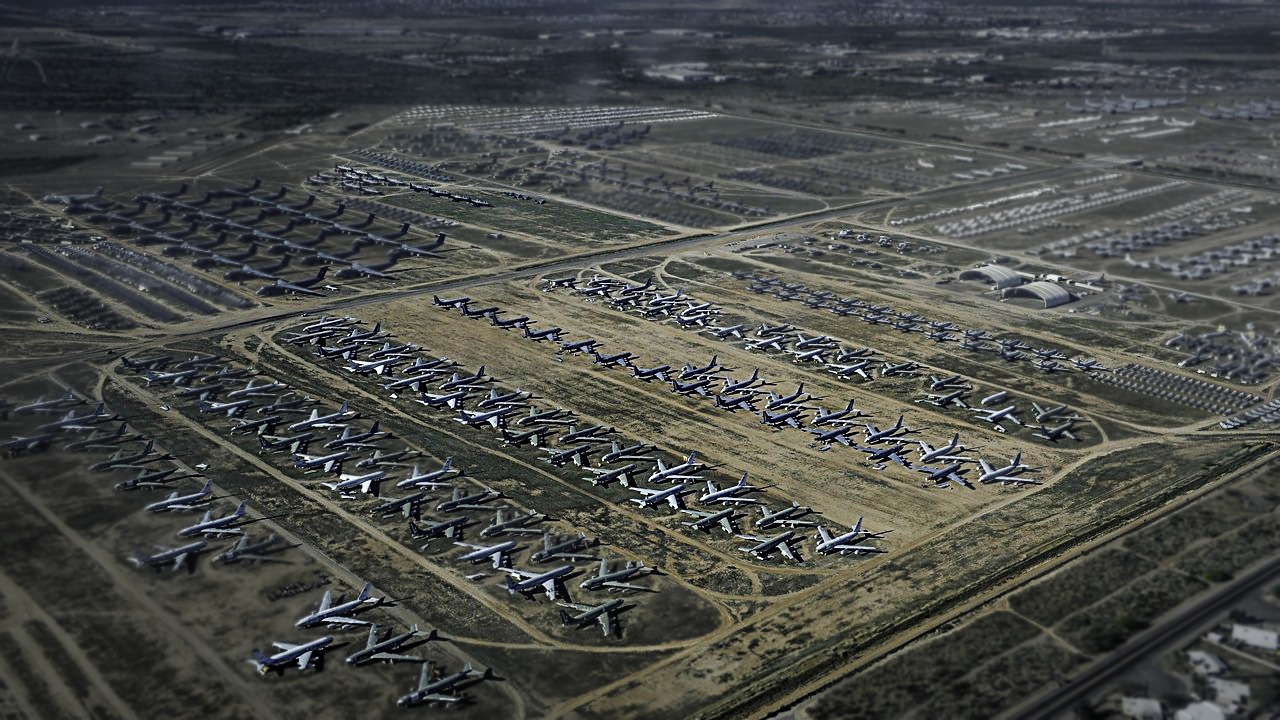
The Boneyard’s official name is the 309th Aerospace Maintenance and Regeneration Group, the caretakers of nearly 4,000 U.S. military aircraft headed for scrap, storage or potential rebirth, all parked on 2,600 acres of Arizona desert, as Air & Space magazine described it on a 2014 visit.
Later accounts give a similar count of nearly 4,000 aircraft and call it the largest aircraft storage and preservation facility in the world. Once meant for excess Defense Department and Coast Guard planes, it has become the sole repository for out-of-service aircraft from all branches of the federal government.
Davis–Monthan Air Force Base: Where the Boneyard Lives
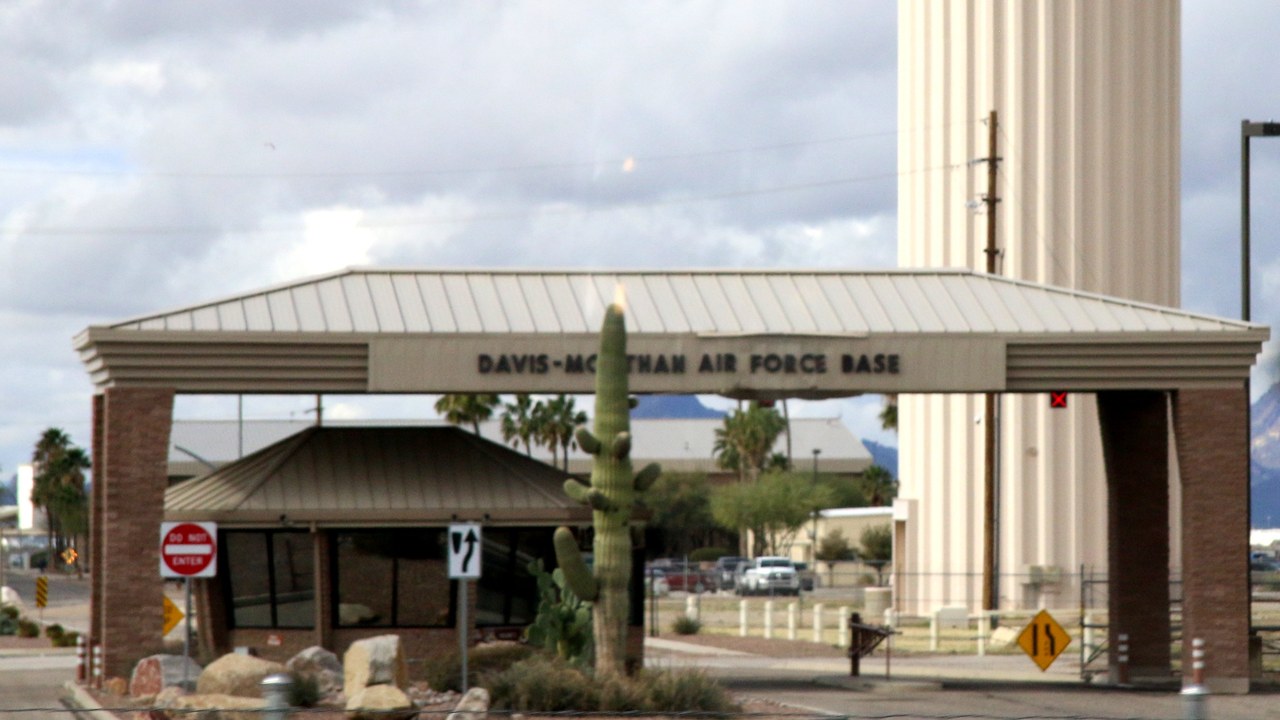
The Boneyard sits inside Davis–Monthan Air Force Base, which was established in 1925 as Davis–Monthan Landing Field when the City of Tucson dedicated a runway southeast of town.
The base’s host unit today is the 355th Wing. Its desert setting explains the storage mission: Tucson’s low humidity, infrequent rain, alkaline soil and 2,550-foot altitude all slow rust and corrosion, and the hard ground lets crews move aircraft around without paving the storage areas. Davis’s father attended the 1925 dedication of the field.
Spirit of St. Louis: A Famous Early Visitor
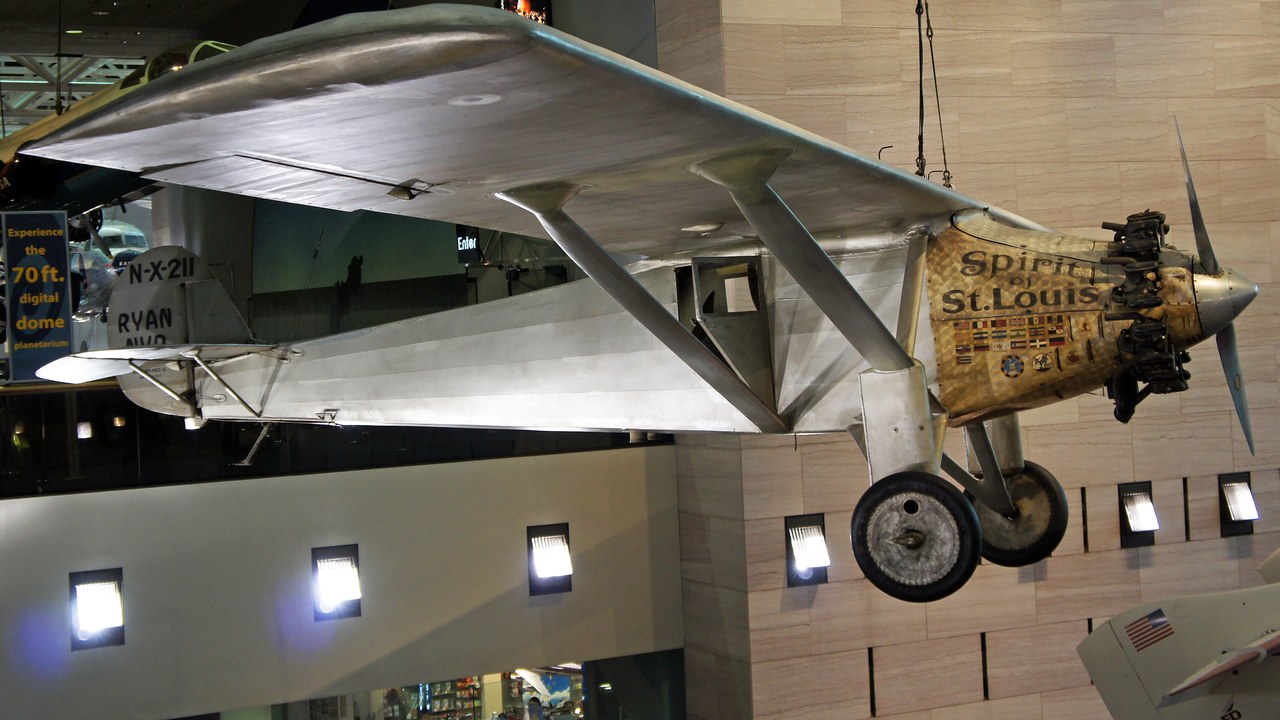
The field drew a celebrity almost immediately. Charles Lindbergh flew his Spirit of St. Louis to Tucson in 1927, fresh from his nonstop crossing of the Atlantic Ocean, to dedicate the airport at Davis–Monthan Field.
The single-engine monoplane has long since stopped flying and now hangs in the Smithsonian’s National Air and Space Museum in Washington, far from the desert airfield it helped dedicate. Lindbergh’s visit came just two years after the Tucson field opened, decades before it became a parking lot for retired warplanes.
Boeing B-29 Superfortress: The First Tenants
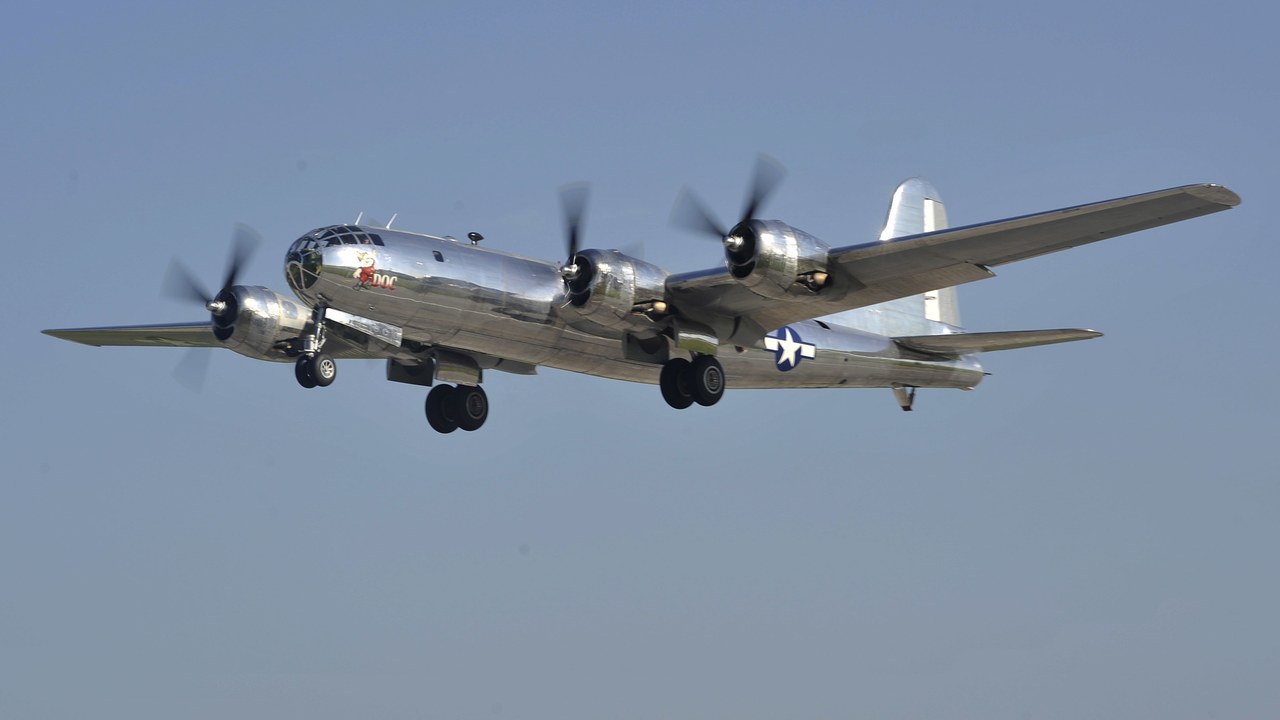
Aircraft storage at the field began in 1945, when the 4105th Army Air Forces Base Unit was organized to house Boeing B-29 Superfortress and Douglas C-47 Skytrain aircraft after World War II.
The B-29 had been the long-range bomber of the war’s final years, and once the fighting ended the base was chosen to hold hundreds of decommissioned aircraft. Davis–Monthan won the job because of Tucson’s dry climate and hard soil, the same conditions that keep the storage operation there today.
Douglas C-47 Skytrain: From One Service to All
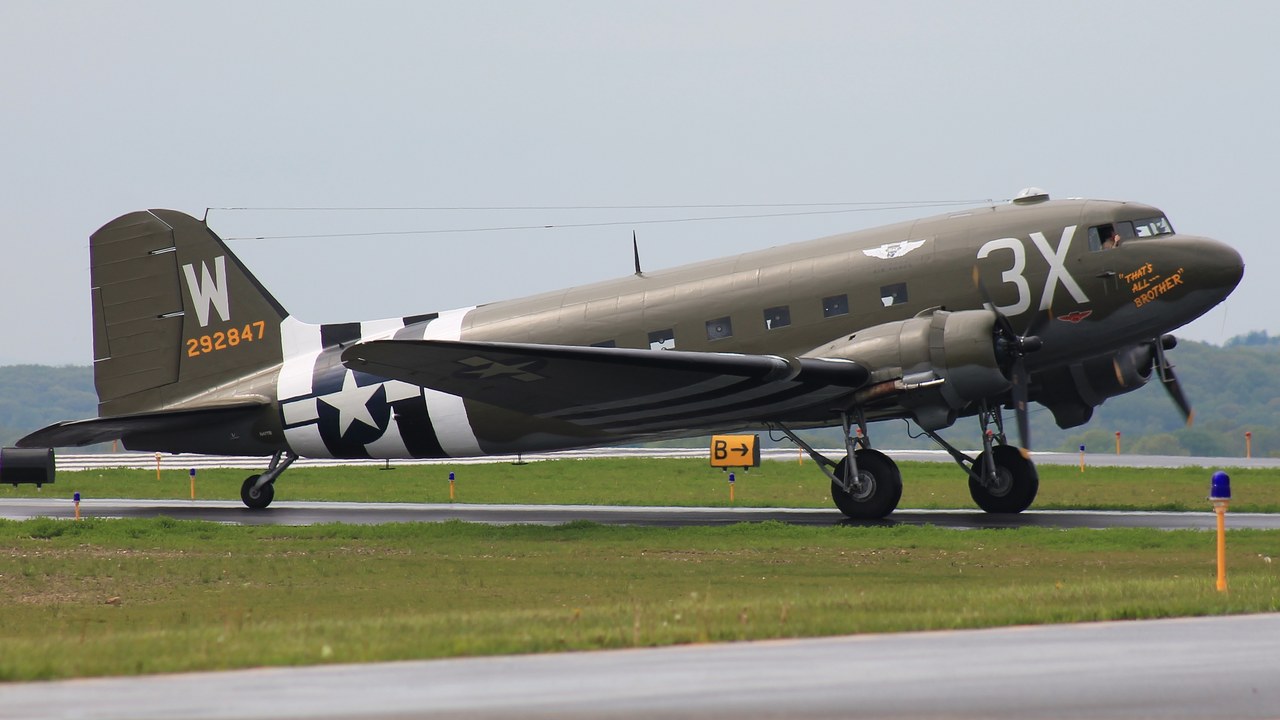
The C-47 Skytrain, the military cargo version of the Douglas DC-3 airliner, was the other type the 1945 storage operation was set up to hold.
In 1949, after the Air Force became a separate service, the storage unit was renamed the 3040th Aircraft Storage Depot. In 1965 it became the Military Aircraft Storage and Disposition Center and began processing aircraft for all of the U.S. armed forces, not just the Air Force, the start of the role it still plays.
Boeing B-52 Stratofortress: Bombers Cut by Treaty
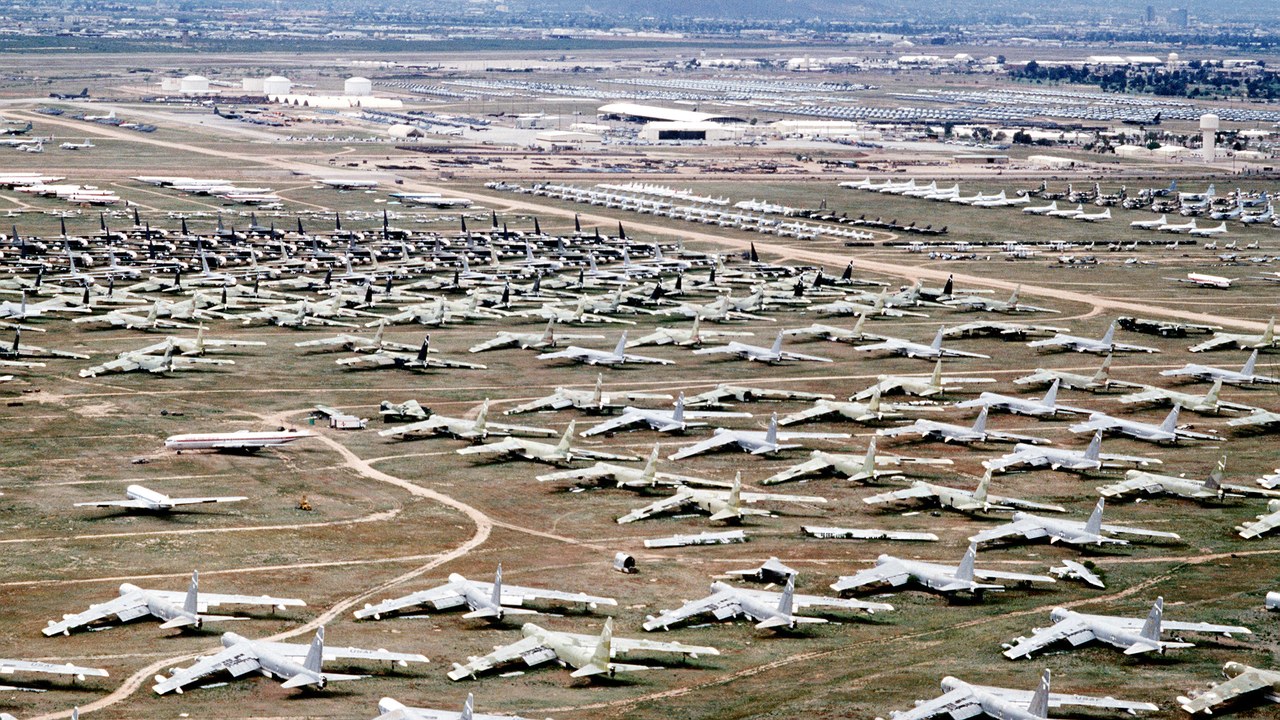
Some aircraft arrive only to be destroyed. In the 1990s, under the START I arms-control treaty, the center was tasked with eliminating 365 Boeing B-52 Stratofortress bombers.
At first the giant bombers were chopped into pieces with a 13,000-pound guillotine blade winched up by a crane and dropped onto the airframes. The base’s host unit, the 355th Wing, is listed as Air Combat Command’s executive agent for compliance with the INF and START treaties. Disposal of that kind is one of the Boneyard’s least visible jobs.
McDonnell Douglas F-4 Phantom II: Phantoms Turned Into Targets
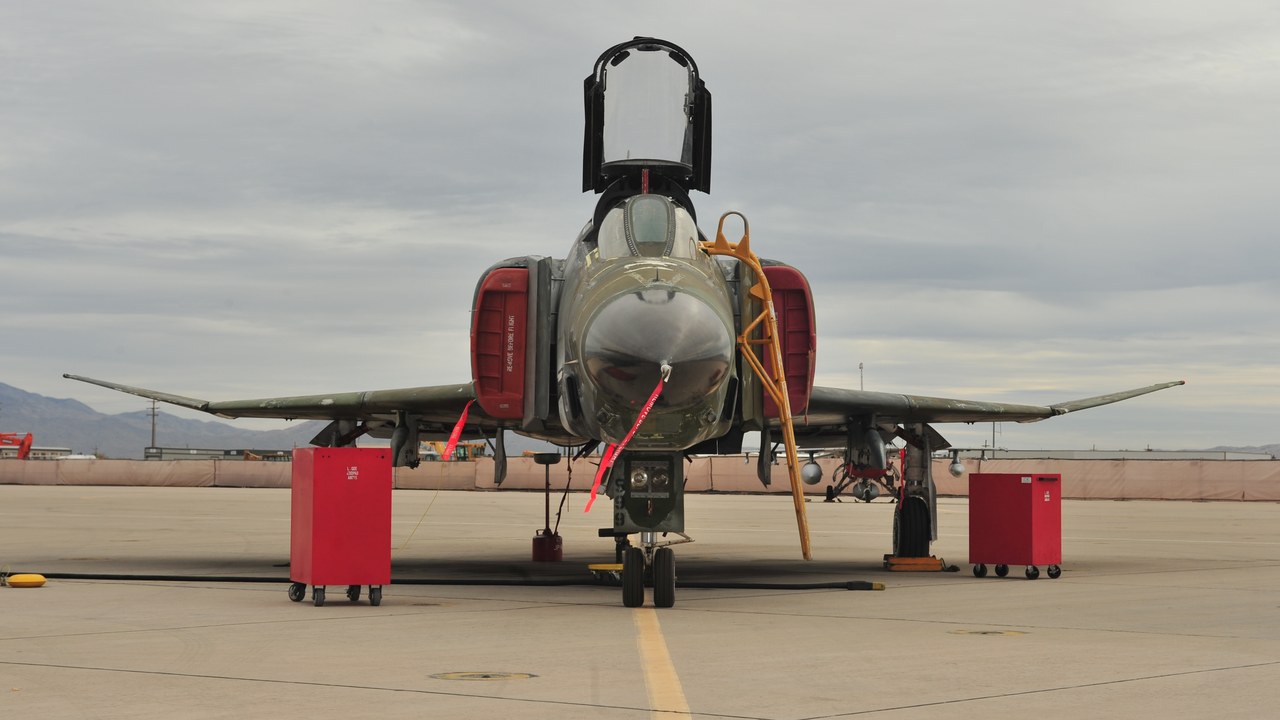
When Air & Space toured the Boneyard in 2014, a good number of F-4 Phantoms were still there being converted into target drones, along with more modern but outmoded early-model F-16s.
The writer, a former F-4 crew chief, said Phantoms always looked grumpy to him. Turning retired fighters into remotely flown targets gave the airframes one last job in weapons testing, and the photo here shows a Phantom converted for that role in 2013. Phantoms first flew in the 1950s and served for decades.
Boeing YC-14: The Prototype That Lost
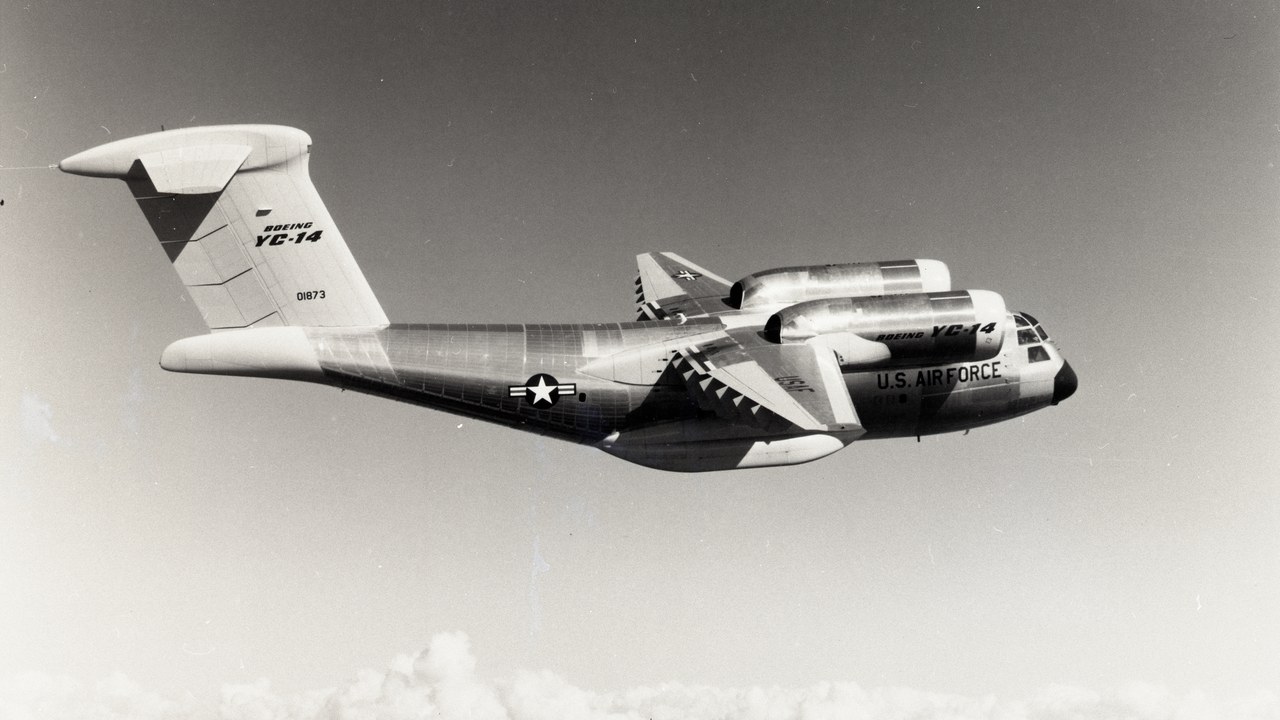
Parked on the Boneyard’s Celebrity Row is one of only two YC-14s Boeing ever built, a transport prototype from a competition that Boeing did not win at the time.
The YC-14 used blown flaps, directing engine exhaust across the wing, and promised high-performance delivery of troops and cargo into austere combat zones. The concept became operational in the McDonnell Douglas C-17 Globemaster III, which, as Air & Space noted, is now a Boeing airplane. The writer had flown to and from Afghanistan aboard a C-17.
Boeing YAL-1: A Laser Jet at the End of the Line
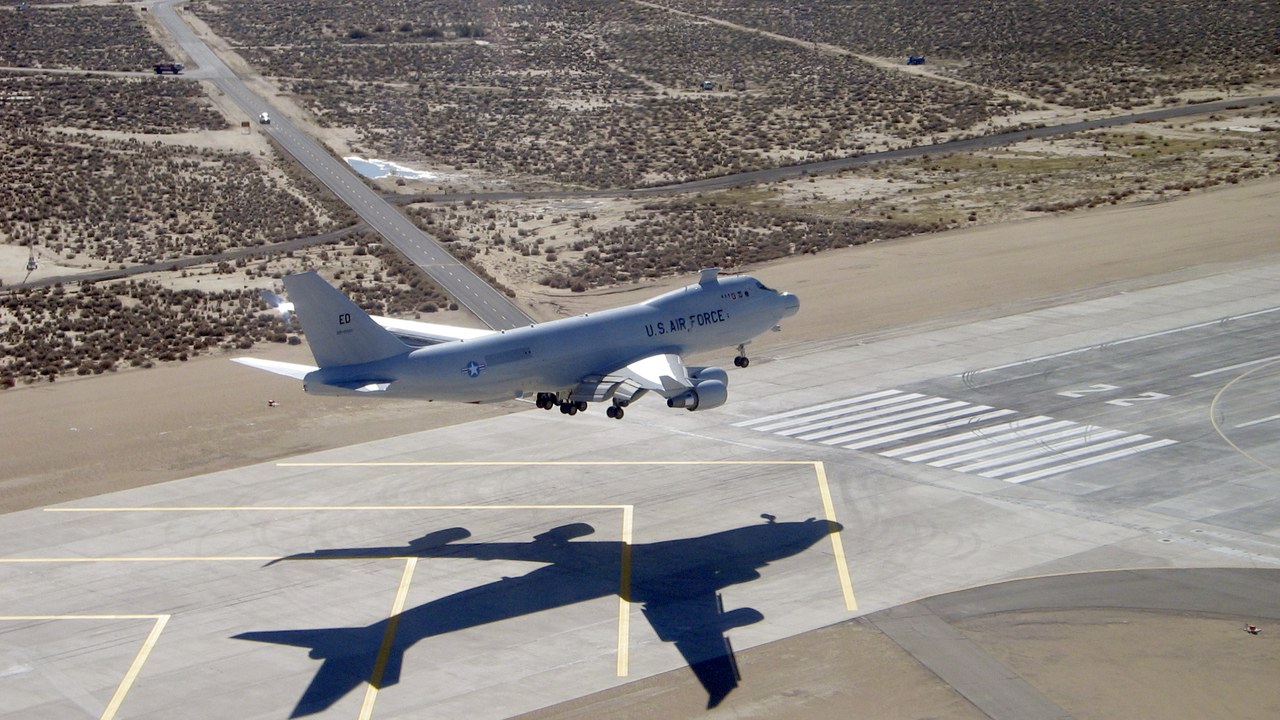
The same tour passed the massive YAL-1 Airborne Laser, a Boeing 747-400 airframe fitted with a high-powered laser that was supposed to shoot down incoming ballistic missiles.
On that 2014 visit the test bed sat engineless, awaiting its cut-up for scrap at Davis–Monthan. Not every aircraft that reaches the desert gets a second career; for one-of-a-kind experiments like this, the Boneyard is the last stop. Nearby, the bus also passed acres of stored C-5 Galaxies, KC-135 tankers, C-130s, HH-60 helicopters and S-3 Vikings.
Fairchild Republic A-10 Thunderbolt II: The Warthog’s Home Base
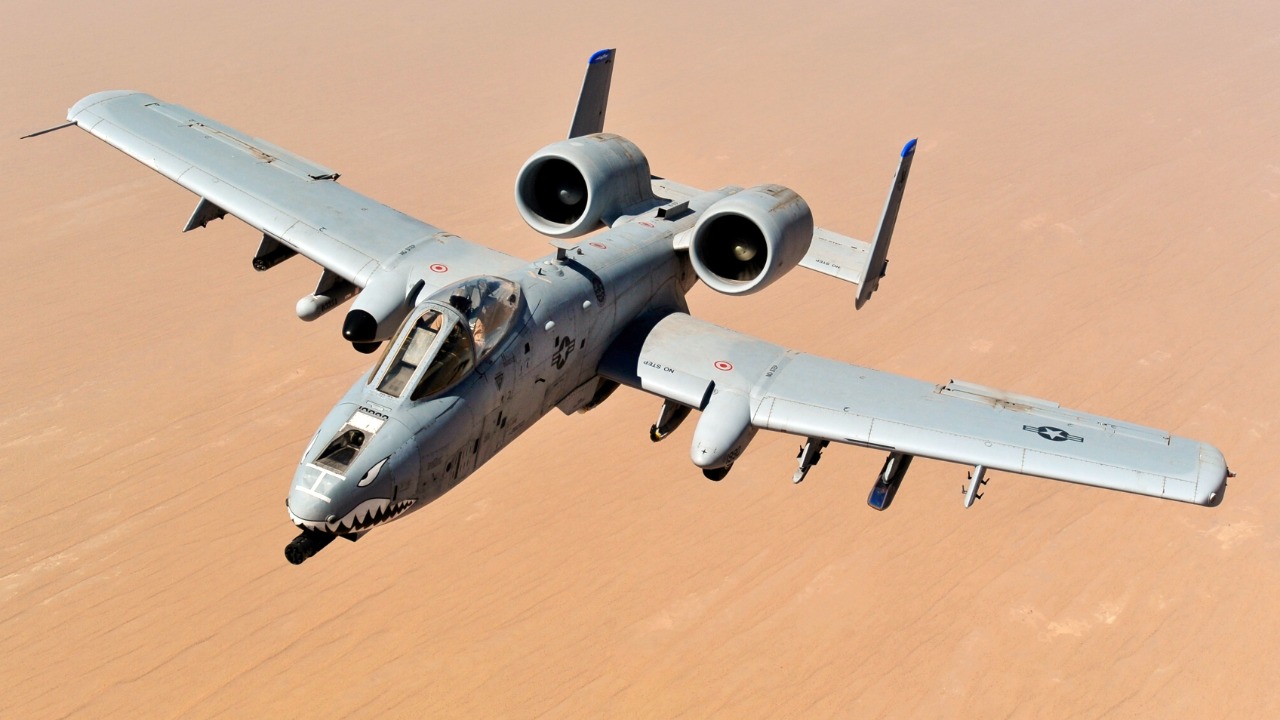
Davis–Monthan has a long history with the A-10 Thunderbolt II: the 355th Tactical Fighter Wing accepted the first A-10 in 1976, and from 1979 the base became the training location for pilots of the attack jet.
Stored A-10s are part of the Boneyard scene, too. The Air & Space writer, a former A-10 crew chief, called the endless rows of the tank-busting jets parked in the desert one of the heartbreaks of his 2014 tour. Fighter fans, he advised, should sit on the left side of the bus.
Pima Air & Space Museum: How Visitors Get In
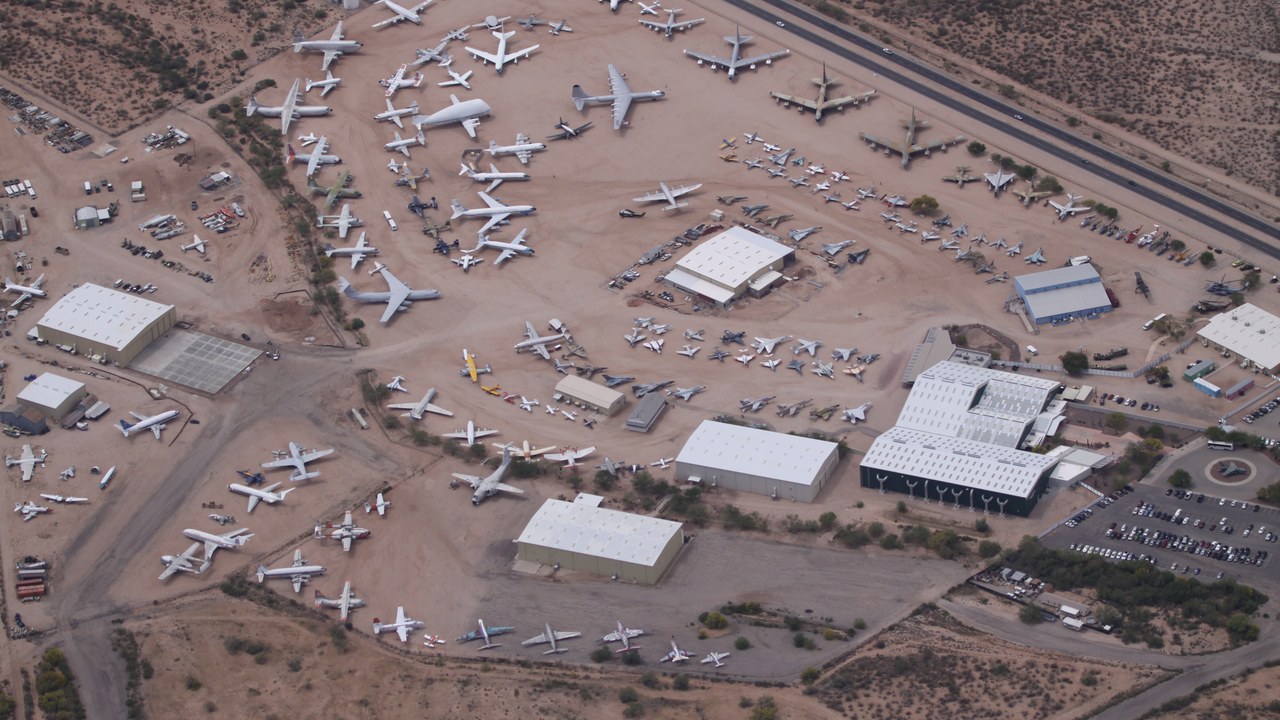
Visitors cannot wander the Boneyard on their own. Tours are run by the Pima Air and Space Museum, immediately south of the base and administered by the nonprofit Arizona Aerospace Foundation.
Buses leave from the museum’s main entrance after identification and bag checks. The museum’s own grounds hold a large collection of aircraft in hangars and outdoors, and the same foundation runs the nearby Titan Missile Museum, one of two remaining Titan II missile sites in existence. Air & Space’s visitors met guests from Italy, Ukraine and the United Kingdom.
More from Morning Overview
- Cadillac cut the price of its cheapest EV, which goes up to 317 miles on a charge
- Winter weather advisories cover I-80, I-70 and the Bighorns with up to 15 inches of snow
- Arizona’s governor declared a statewide emergency after Flagstaff logged its wettest Nov. 1 on record
- Zero Motorcycles unveiled an electric motorcycle targeted at under $8K and a street-legal dirt bike at EICMA
