
Spider size is measured two ways, and the two rarely agree: leg span stretches the animal across a ruler, while body length counts only the head and abdomen. The heaviest species and the widest ones are not the same animal. Here are nine spiders that sit at the far end of both measurements.
1. Goliath birdeater: The Heaviest Spider Alive
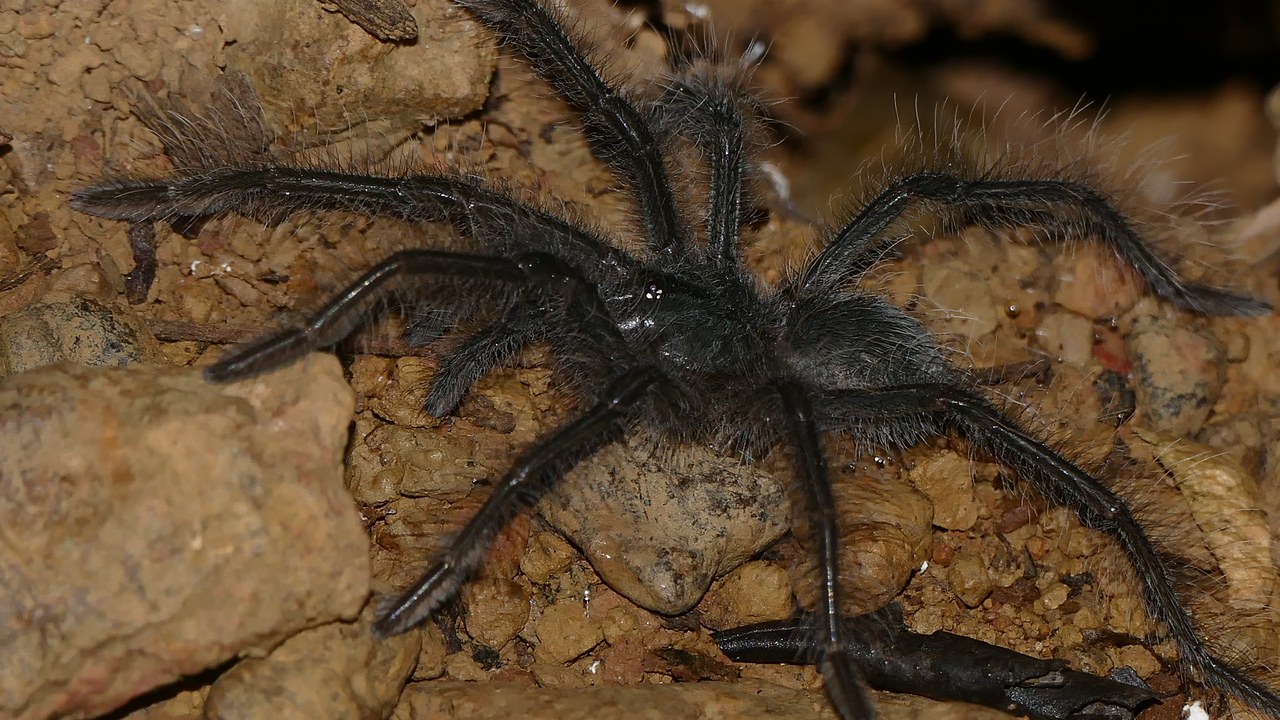
Weight, not reach, earns this species its place. Native to the rainforests of northern South America, the Goliath birdeater can approach 175 grams and carries a leg span of roughly a foot, making it the heaviest known spider on record. It hunts from a silk-lined burrow rather than a web, ambushing earthworms, insects, frogs and the occasional small rodent that wanders past the entrance.
The name oversells the menu; birds are a rare meal, and the label traces to an old engraving rather than typical behavior. For people the greater nuisance is defensive: the spider flicks barbed hairs from its abdomen that irritate skin and eyes. Its bite is painful but not considered medically serious.
2. Giant huntsman spider: The Widest Reach on Record
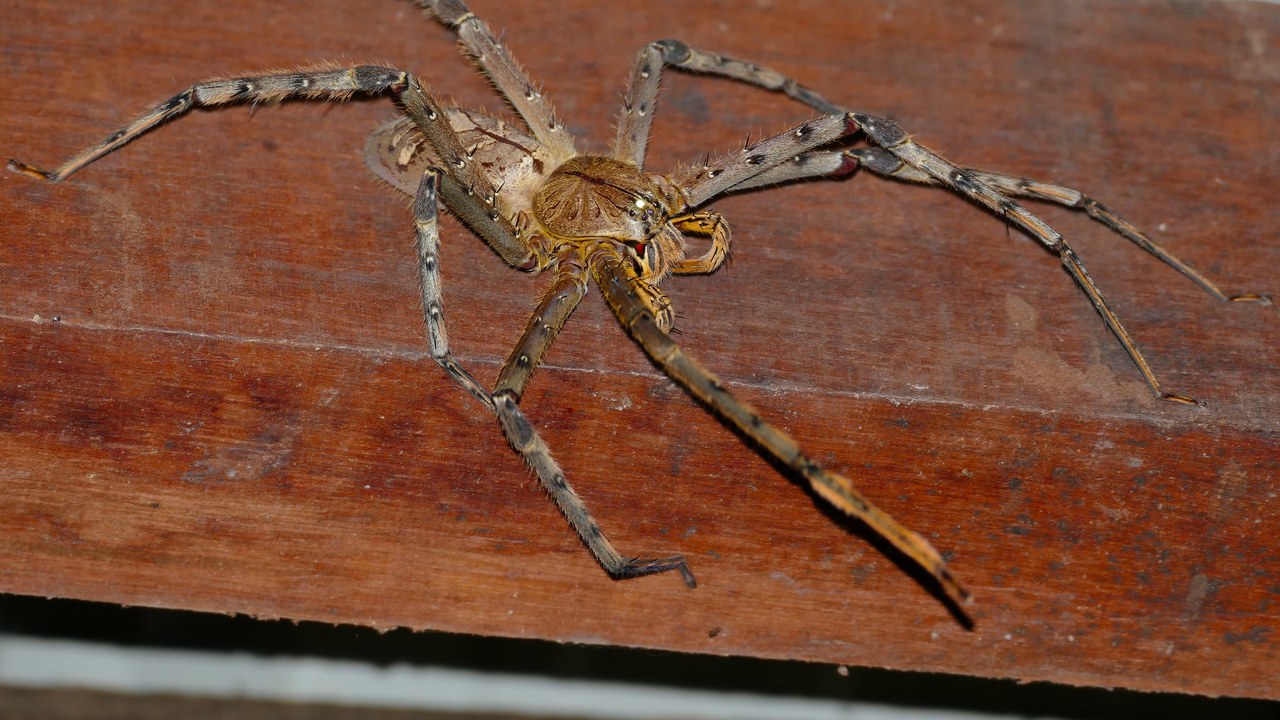
Measured leg tip to leg tip, no spider stretches further. Described in 2001 from caves in Laos, the giant huntsman spans roughly 30 centimeters on a body only a few centimeters long, which is why it looks heavier than it is. Researchers credit it with the widest leg span of any known spider.
It builds no web, running down prey in the dark instead, and that speed makes it hard to study; sightings are scarce enough that its full range remains unmapped. Despite the dimensions it poses no meaningful threat to people, since huntsman bites cause local pain and swelling at worst.
3. Brazilian wandering spider: Big Body, Serious Venom
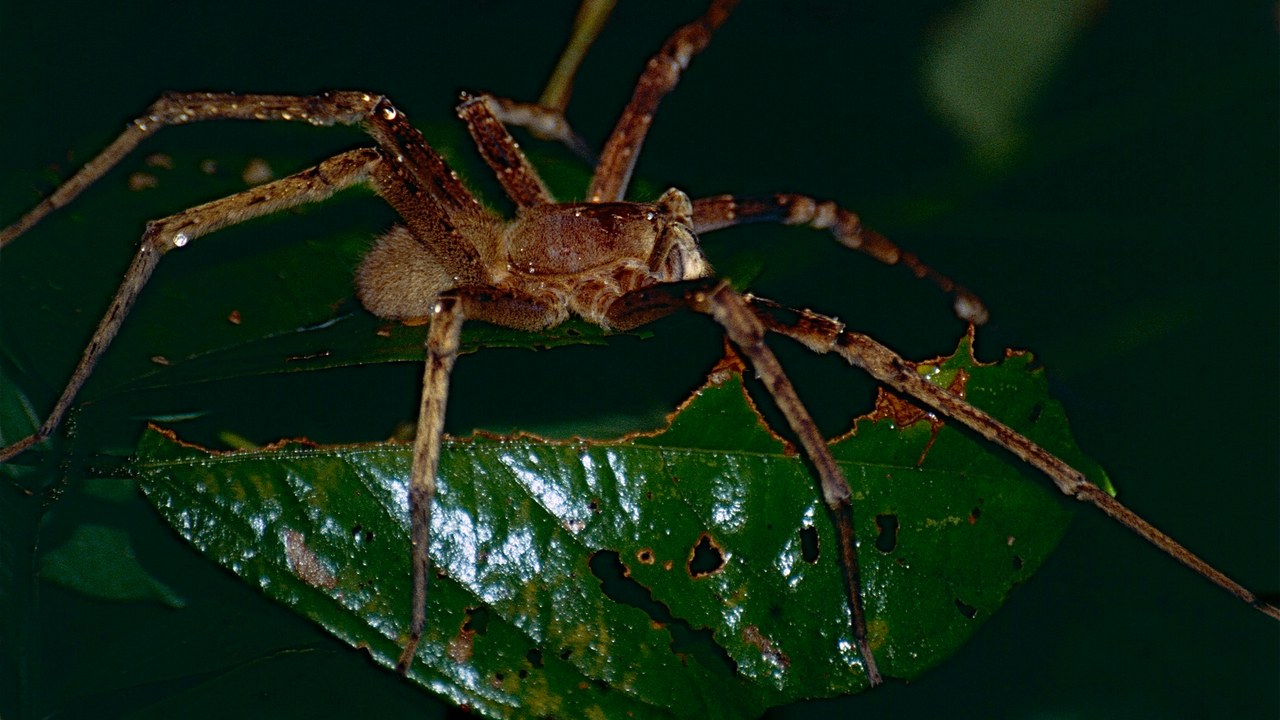
Phoneutria is a genus of South American species that skip webs entirely, patrolling the forest floor after dark and sheltering under logs, in banana bunches and inside houses by day. The largest reach body lengths near five centimeters with leg spans in the 13-to-15-centimeter range, and their habit of wandering into human spaces is what brings them into contact with people.
Their venom is genuinely medically significant, and bites can cause intense pain, sweating and, rarely, systemic effects. The outcome is far less dire than the reputation suggests: antivenom has been produced in Brazil for decades, most bites deliver little venom, and confirmed deaths are extremely rare.
4. Sydney funnel-web spider: Stocky, Glossy and Notorious
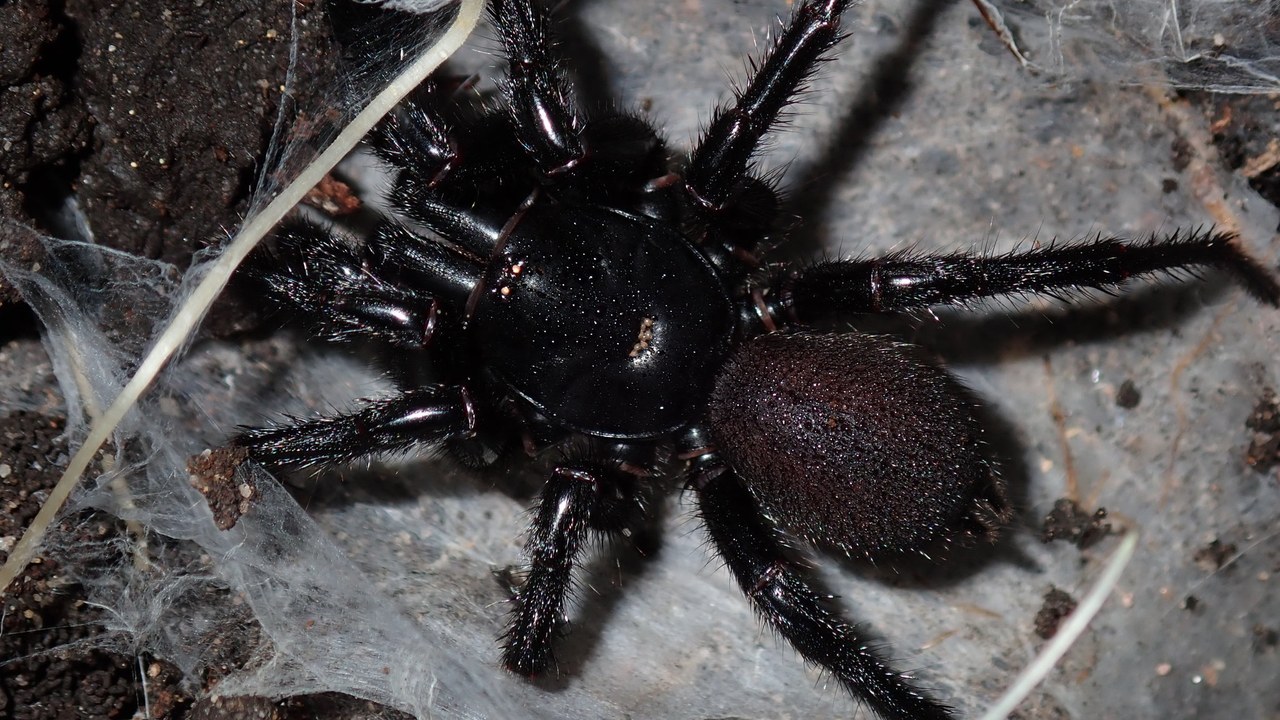
Bulk rather than reach defines this one: a heavy, glossy black spider with a body up to about five centimeters, thick legs and outsized fangs capable of piercing a fingernail. It lives within roughly 100 kilometers of Sydney, in humid burrows lined with silk trip lines, and males wander in summer searching for mates, which is when most bites occur.
The male’s venom is medically significant to primates and was lethal before treatment existed. An antivenom introduced in 1981 changed that outright: no death has been recorded in Australia since, and hospitals along the coast keep supplies on hand. Bites still warrant immediate emergency care.
5. Golden silk orb-weaver: Webs Measured in Meters
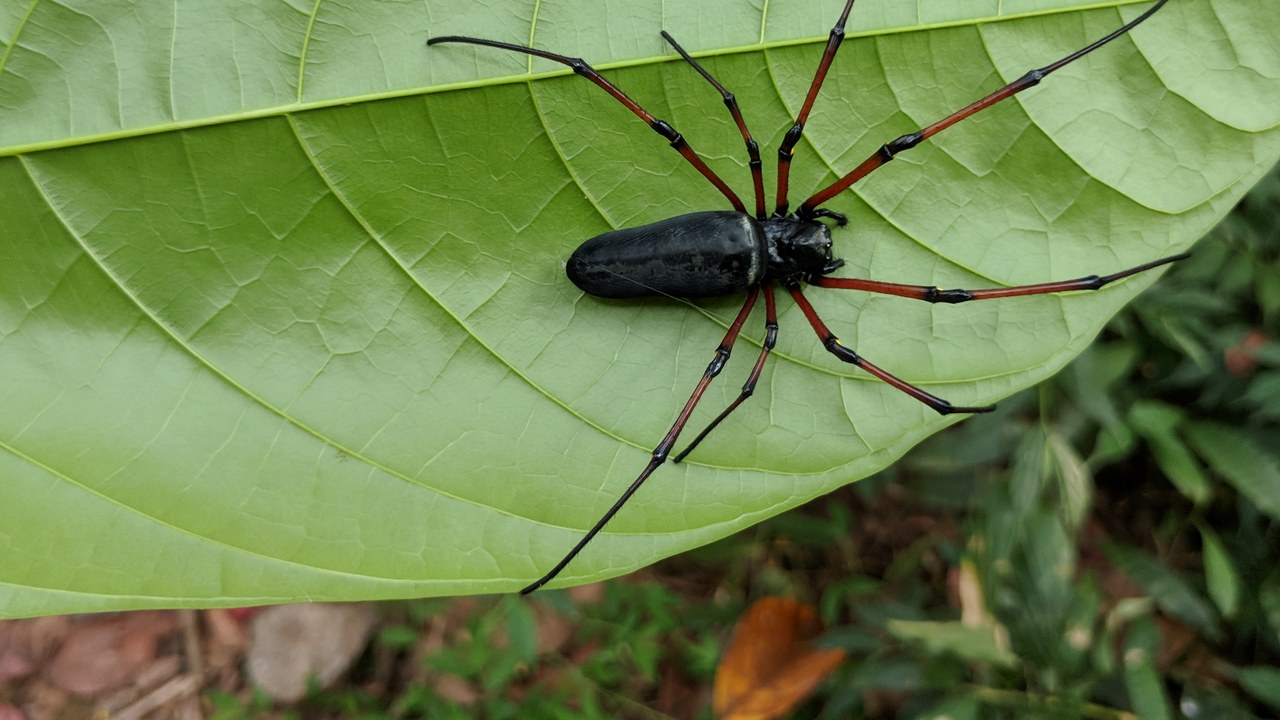
Nephila is a genus rather than a single species, and its females are the giants: bodies of four to five centimeters with leg spans past a dozen centimeters, dwarfing males a fraction their size. What earns the entry is the architecture, because the golden-toned orb webs stretch more than a meter across, on anchor lines that can run several meters between trees.
The silk is unusually tough and has been tested for textiles and medical suture research, a rare case of a spider being studied for what it makes rather than what it bites. The spiders themselves are harmless to people; a bite produces brief local pain comparable to a bee sting.
6. Salmon pink birdeater: Fast Growth, Foot-Wide Span
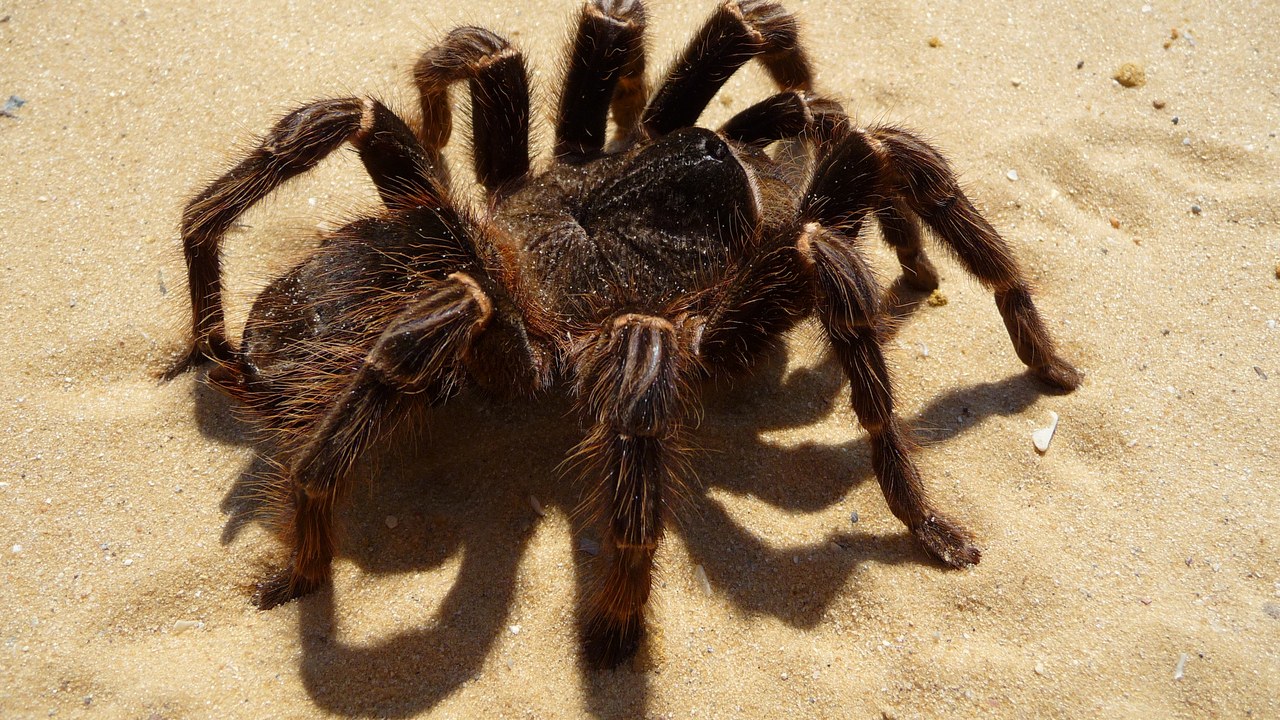
Endemic to the Atlantic forest of northeastern Brazil, Lasiodora parahybana ranks among the largest tarantulas by leg span, with mature females approaching 25 to 28 centimeters across on a body about nine centimeters long. It reaches that size unusually quickly, which is part of why the salmon pink birdeater became a fixture of the exotic pet trade.
Its defense is mechanical rather than chemical: when threatened it kicks clouds of barbed hairs from its abdomen, which lodge in skin and airways and cause days of itching. The venom itself is mild by human standards, and the reddish hairs that give the species its name are most visible on adults.
7. Huntsman spider: The Family Built Flat
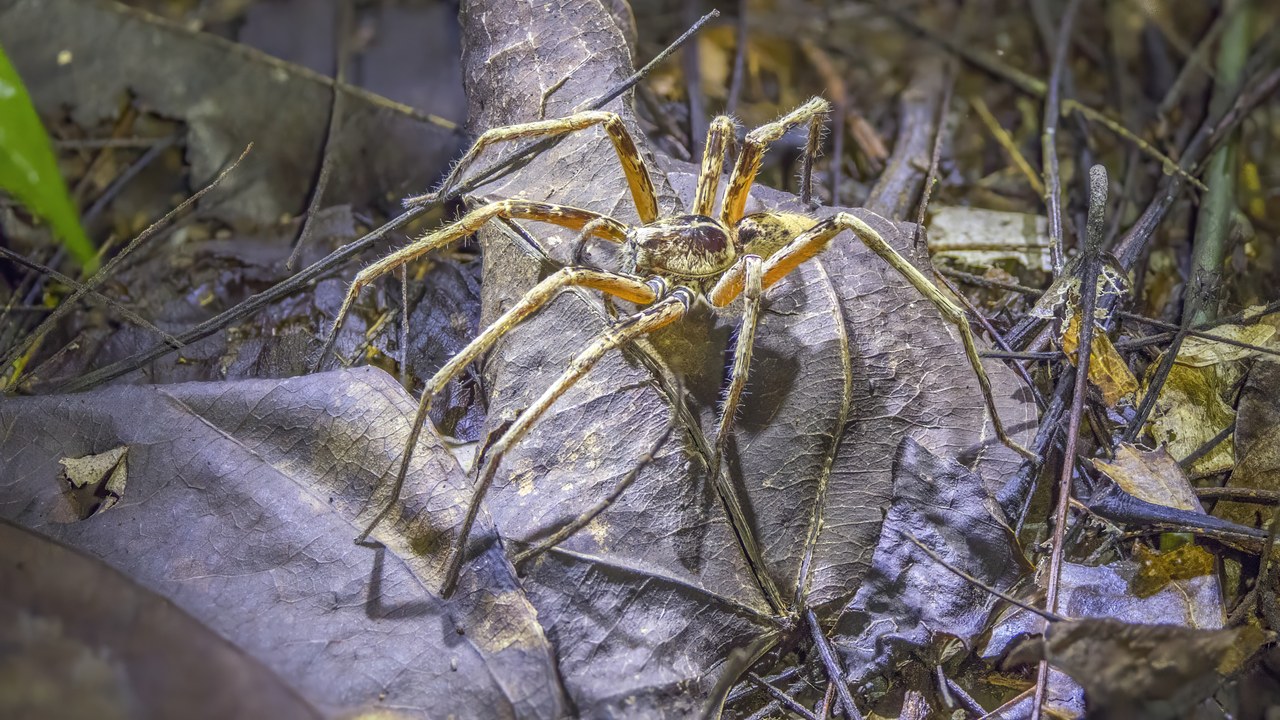
This entry covers a family, not one animal: more than a thousand Sparassidae species share forward-angled legs, a crab-like stance and a body flattened enough to slide under bark or into a door seal. The largest members reach leg spans of 15 centimeters or more, and their sideways sprinting gait makes them look bigger still as they cross a wall.
Because they hunt rather than build webs, huntsmen turn up indoors across warm regions and are routinely mistaken for something dangerous. In practice they are among the more useful houseguests, eating cockroaches and other pests, and their bites are minor, causing pain and swelling that fades within hours.
8. Wolf spider: The Ground Hunter’s Bulk
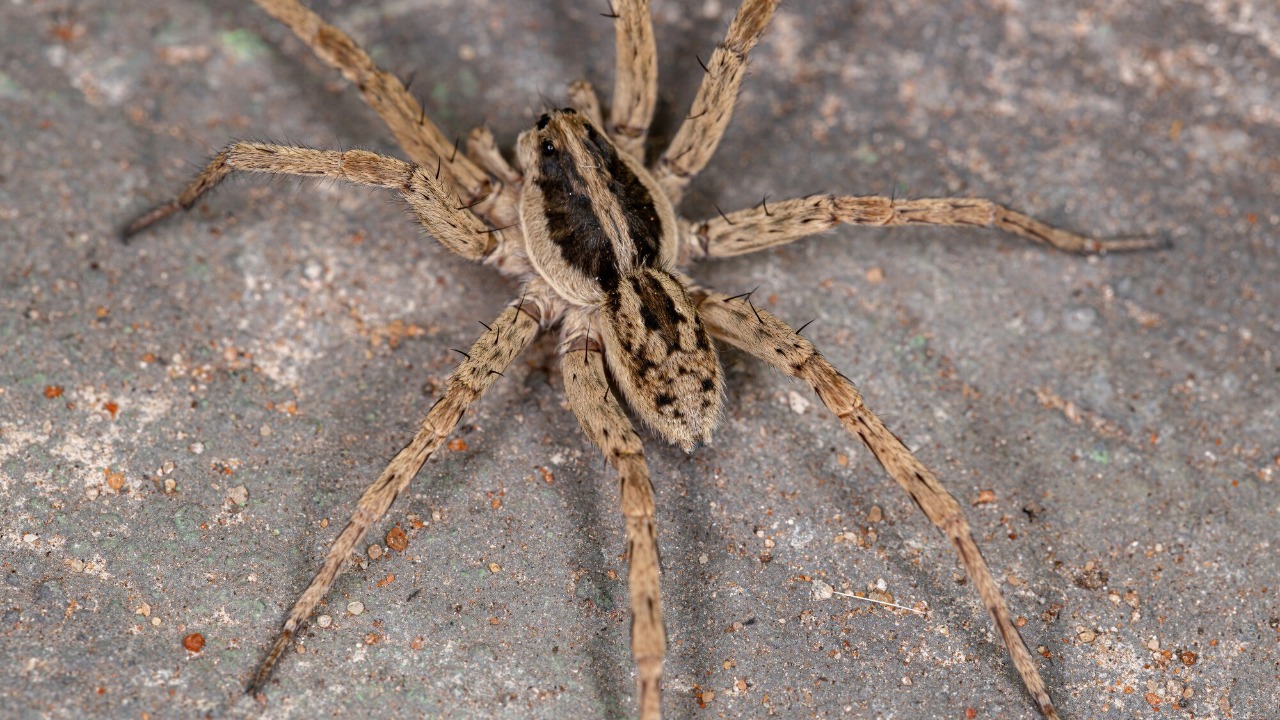
Lycosidae is another family entry, and its size comes from build rather than reach: the heaviest species carry thick, hairy bodies of three to four centimeters with leg spans around ten centimeters, closer to a tarantula’s proportions than an orb-weaver’s. They chase prey down on foot across leaf litter and sand, and a headlamp at night reveals the green eyeshine from their large forward eyes.
Maternal care sets the family apart: females drag an egg sac attached to the spinnerets, then carry the hatched spiderlings on their abdomen for days, which makes an already bulky spider look enormous. Bites are uncommon and medically trivial, producing brief pain rather than lasting harm.
9. Tarantula: The Heavyweight Family
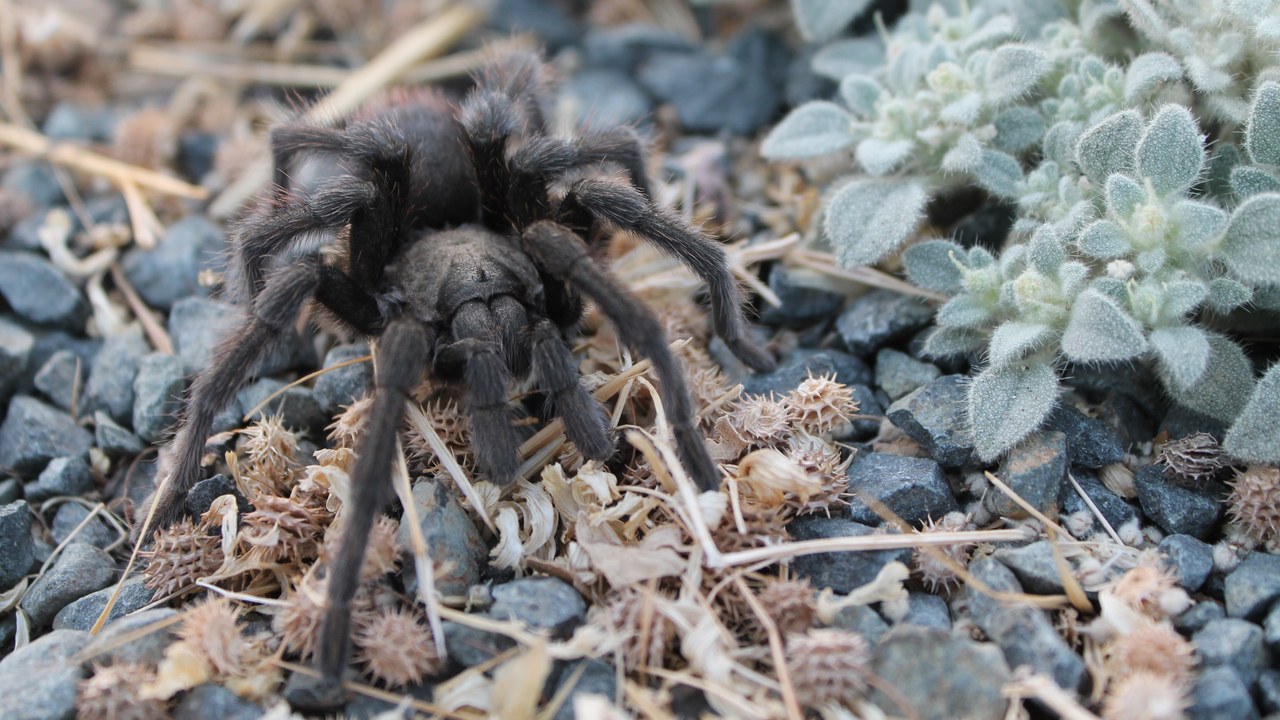
Nearly a thousand species sit inside Theraphosidae, and the group anchors any size list because its members combine mass with reach: the largest carry leg spans near 30 centimeters and bodies the length of a human palm. Dense hair, thick legs and a slow, deliberate walk give the tarantula body plan its heft even at modest spans.
Longevity is the other outlier: females of some species live two to three decades, far beyond the single season most spiders manage. Bites are rare and no tarantula venom is known to be lethal to a healthy adult, though large species can inflict a mechanically painful puncture with fangs over a centimeter long.
More from Morning Overview
- A California supervolcano has bulged upward about two and a half feet since 1978
- The FTC is warning about a scam quietly draining thousands from victims
- The NSA is again telling phone owners to switch off one location setting
- A handful of car transmissions are so tough mechanics say they almost never fail
