Image Credit: Julian Herzog (Website) - CC BY 4.0/Wiki Commons
Aircraft size is measured several different ways, and no single machine holds every record at once. Wingspan, fuselage length, maximum takeoff weight and payload each crown a different airframe, which is why the biggest-plane argument never quite settles. Seven aircraft dominate those measures, from a one-off flying boat that lifted off exactly once to a twin-fuselage launch platform still working today.
1. Antonov An-225 Mriya: The Heaviest Airplane Ever Flown
Image Credit: Myroslav Kaplun – CC BY-SA 4.0/Wiki Commons
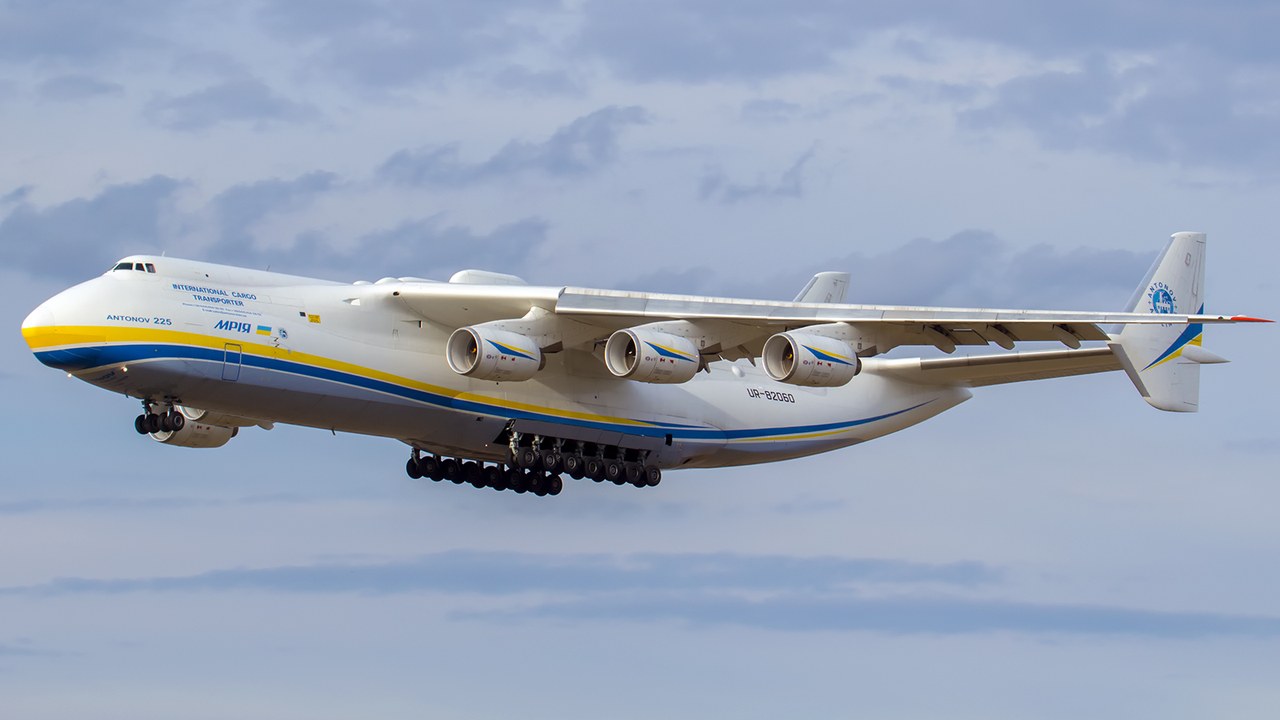
Built to carry the Soviet Buran shuttle on its back, the six-engine An-225 first flew in 1988 at a maximum takeoff weight of about 1.4 million pounds, heavier than any aircraft before or since. Its 275-foot fuselage was the longest ever completed, and in 2001 the airplane lifted a single load of roughly 560,000 pounds, an airlift record nothing has matched.
Only one Mriya was ever finished. Russian forces destroyed it at Hostomel airport outside Kyiv in February 2022 and it was written off, leaving a second airframe partially assembled and unfunded in a hangar. The weight records on this list that belonged to the An-225 now belong to an aircraft that no longer exists.
2. Hughes H-4 Hercules: A Wingspan Record That Stood Seventy-Two Years
Image Credit: SDASM Archives – Public domain/Wiki Commons
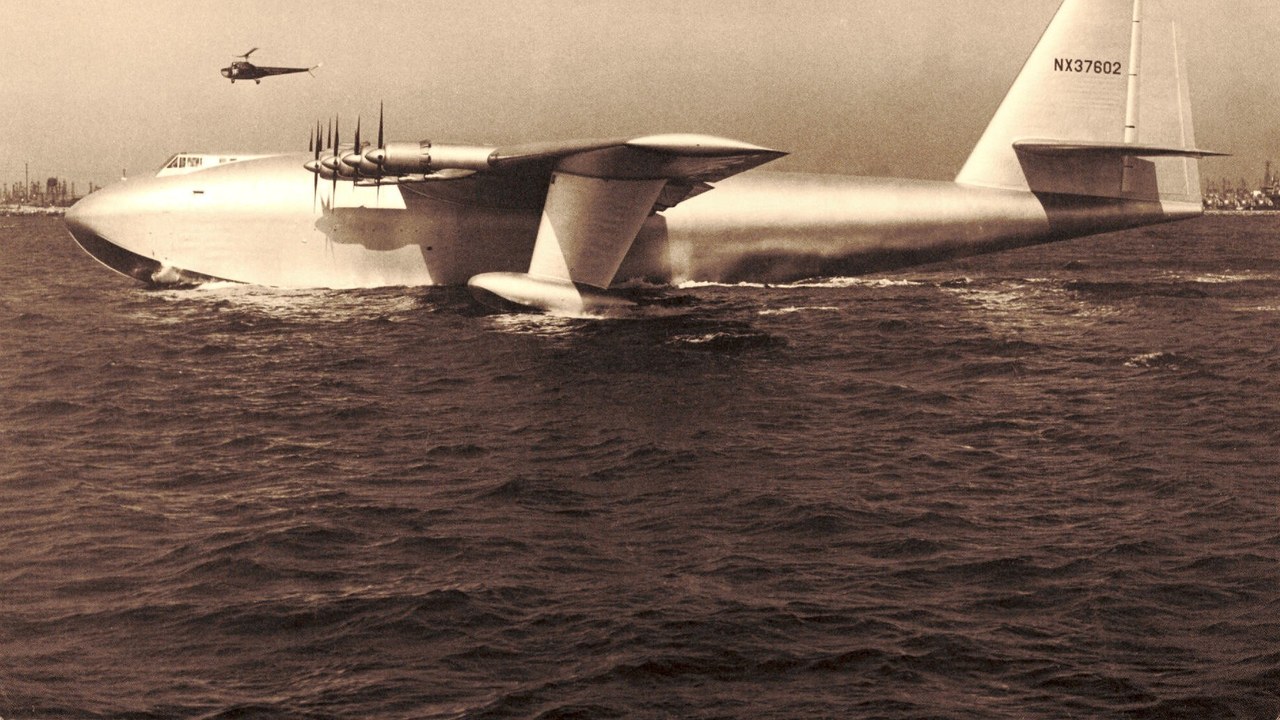
Howard Hughes’s plywood flying boat stretched 320 feet across the wings, wider than anything that had left the ground before it and wider than anything that followed for seventy-two years. Ordered as a wartime troop transport when metal was rationed, the birch-built Hercules was finished too late to serve, and on November 2, 1947, Hughes lifted it about 70 feet above Long Beach harbor for roughly a mile.
That hop lasted under a minute, and the aircraft never flew again. Hughes maintained it in a climate-controlled hangar at a reported million dollars a year until his death in 1976, and it now sits on display at the Evergreen Aviation and Space Museum in Oregon. The spruce in the nickname was always wrong: the structure is laminated birch.
3. Antonov An-124: The Heaviest Production Freighter
Image Credit: Peter Bakema – GFDL 1.2/Wiki Commons
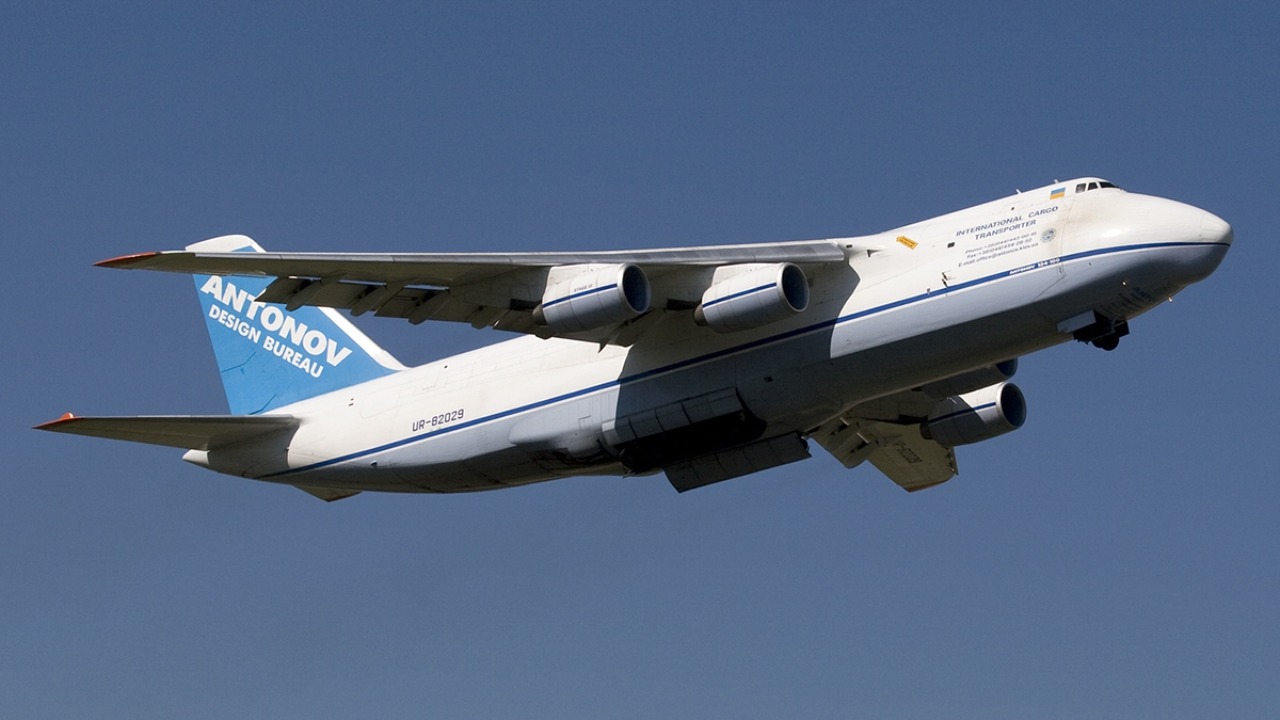
Series production is the distinction the An-124 holds over its record-setting sibling. Rated at a maximum takeoff weight near 893,000 pounds and a payload ceiling around 330,000 pounds, the Antonov An-124 Ruslan is the heaviest production cargo airplane ever flown, comfortably out-lifting the American C-5 it was built to answer. Nose and tail doors open for locomotives, turbines and satellites.
About 55 were built, and the surviving fleet is split between Ukrainian and Russian operators, which has sharply cut the airframes available for Western outsize charter work. Nothing comparable is in production. Aid agencies, satellite makers and defense ministries now plan around a shrinking pool of aircraft rather than a market.
4. Airbus A380: The Only Full Double-Decker
Image Credit: Pascal Borener/Pexels
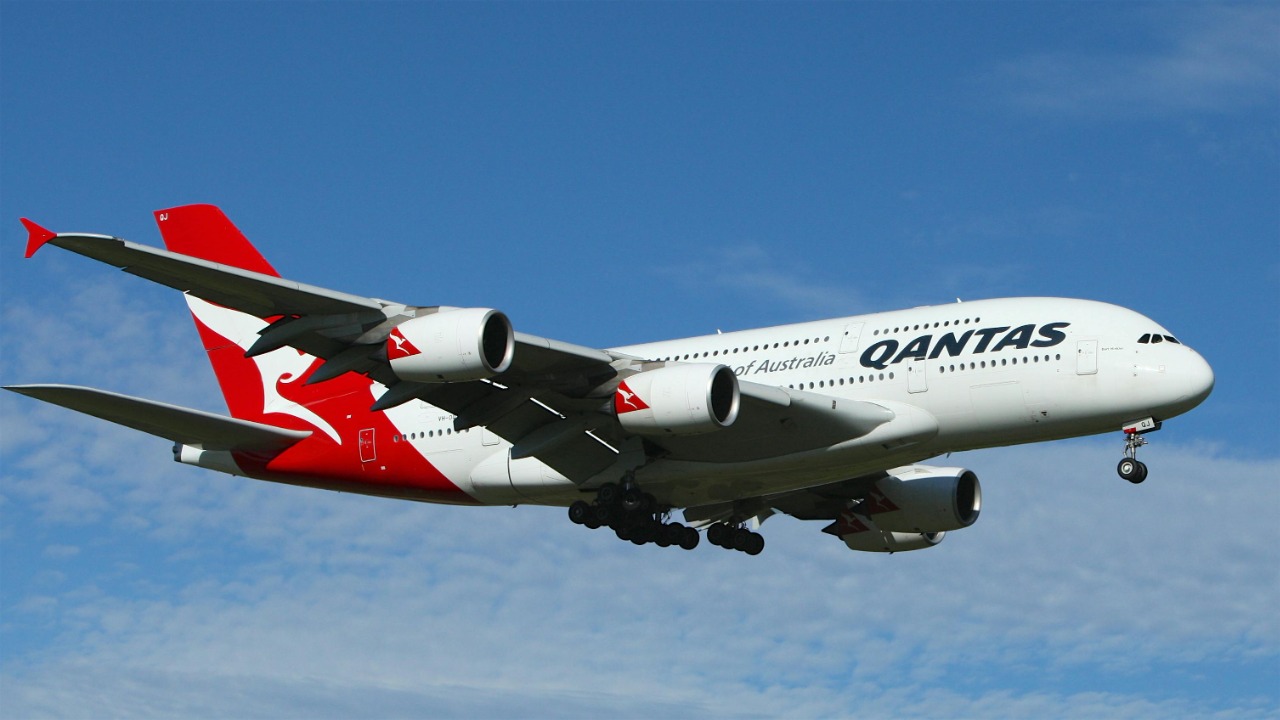
No other airliner carries a second deck down its full length. The A380 pairs a 262-foot wingspan with a maximum takeoff weight near 1.27 million pounds, and certification allows as many as 853 seats, though the Airbus A380 typically flies around 500 passengers in three or four classes. That span was deliberately held just under 80 meters so existing airport gates could accept it.
Engineering success never became commercial success. Airbus closed the line in 2021 after 251 aircraft, a fraction of what the program needed, as carriers shifted to twin-engine widebodies that fill more easily. Emirates operates most of the fleet and has kept the type central to its network, so the largest passenger airliner should stay in service into the 2030s.
5. Boeing 747: The Longest Airliner Ever Built
Image Credit: Jeffry Surianto/Pexels
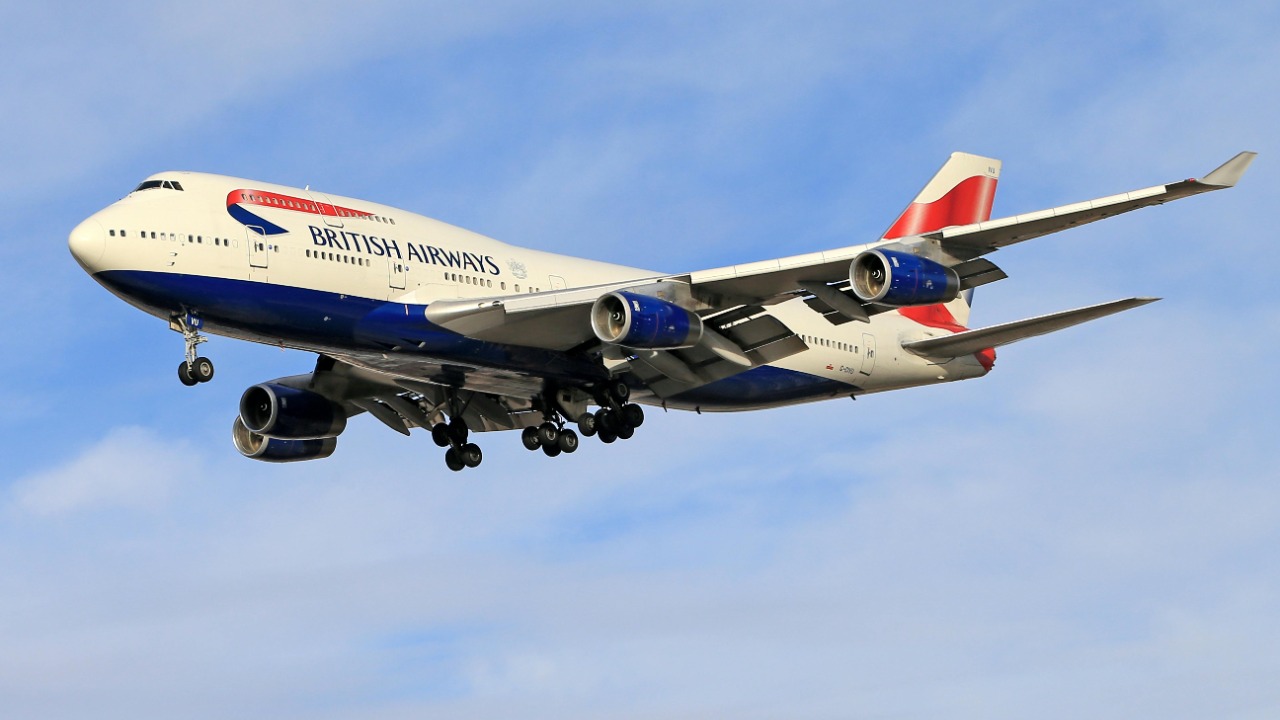
Length is the 747’s own record. The stretched 747-8 measures 250 feet from nose to tail, the longest airliner ever built and slightly longer than the A380 that beats it on every other dimension. Flying since 1969 and in Pan Am service by January 1970, the original Boeing 747 roughly doubled the capacity of anything before it and cut seat-mile costs enough to open long-haul travel to ordinary passengers.
The line closed in January 2023 after 1,574 airframes and 54 years of production. Most passenger operators have retired the type, but freighters persist because the nose hinges upward for end-loading, and the famous hump exists precisely because engineers raised the flight deck in the 1960s to make that door possible.
6. Stratolaunch Roc: The Widest Wings Ever Flown
Image Credit: Eva Folsom – CC BY-SA 4.0/Wiki Commons
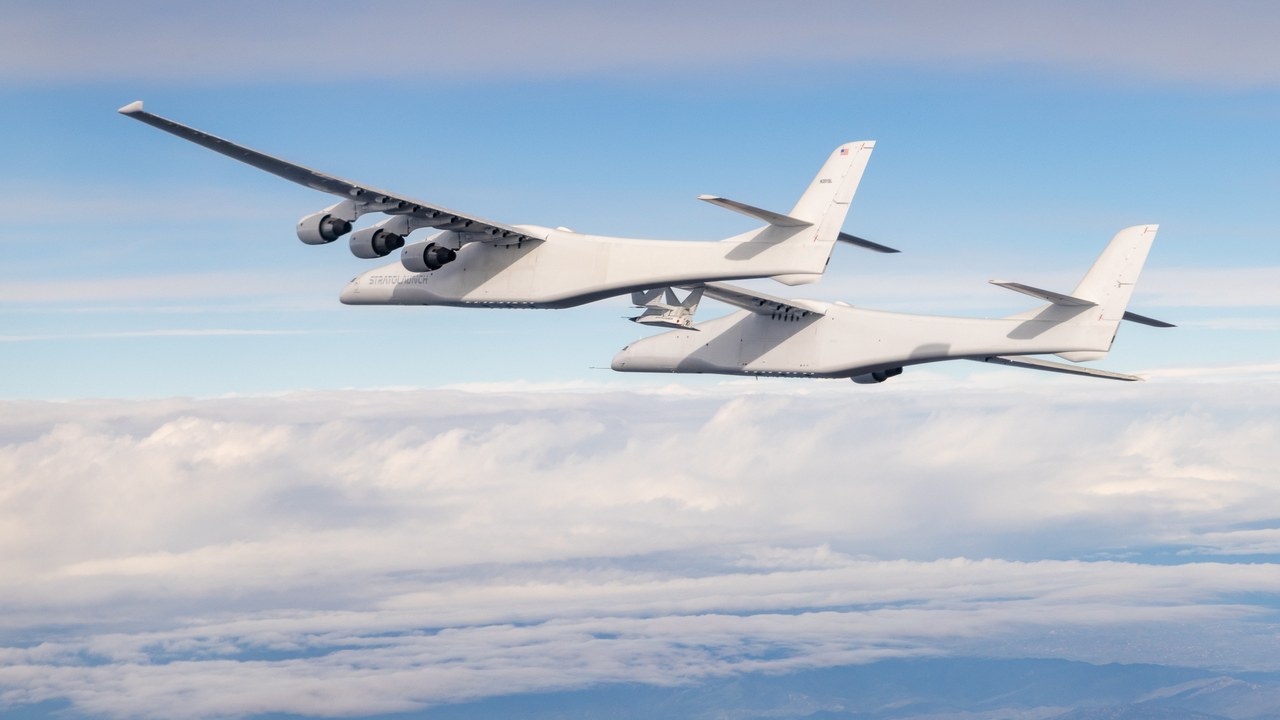
Roc measures 385 feet between the tips of its twin-fuselage wing, nearly 65 feet more than the Hughes H-4 and the widest span ever flown. Six Pratt & Whitney engines salvaged from two used 747s hang beneath it, 28 wheels carry a maximum takeoff weight of about 1.3 million pounds, and the Stratolaunch carrier aircraft first left Mojave Air and Space Port in April 2019.
The design is a launch platform rather than a freighter: payloads ride on the center wing between the fuselages and release at altitude. After the original satellite-launch business was abandoned, Roc was redirected to carrying Talon-A hypersonic testbeds for government and commercial customers, which is the work it does today. Only one was completed.
7. Lockheed C-5 Galaxy: The Transport That Loads From Both Ends
Image Credit: U.S. Air Force photo by Walter Talens – Public domain/Wiki Commons
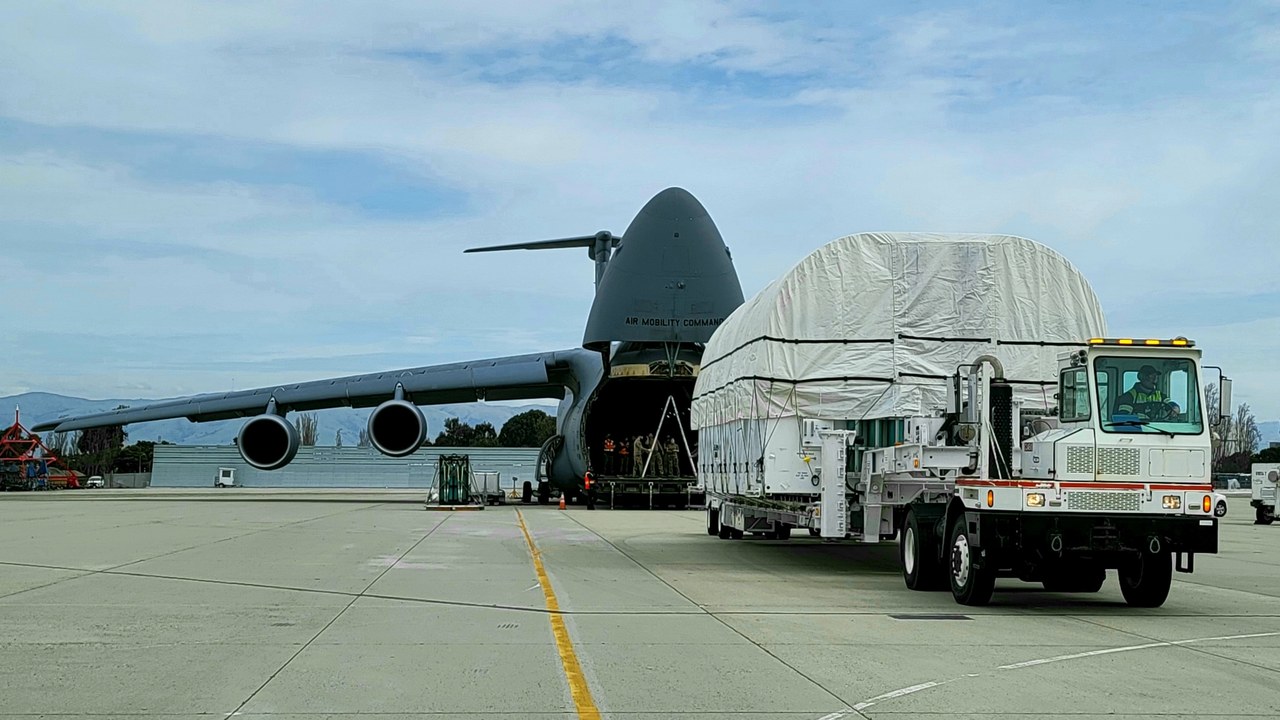
Loading from both ends is the Galaxy’s trick. A hinged nose visor and a rear ramp let vehicles drive straight through a 121-foot hold, and the C-5 Galaxy carries up to 281,000 pounds at a maximum takeoff weight near 840,000 pounds on a 222-foot span, enough for two M1 Abrams tanks or six attack helicopters in one load.
Deliveries began in 1970, and the fleet has been rebuilt rather than replaced. The C-5M Super Galaxy program fitted new engines and dozens of other upgrades, pushing planned service life past 2040 and lifting availability rates that had long embarrassed the Air Force. Of 131 built, the modernized survivors still move outsize cargo the smaller C-17 cannot physically accept.
Morning Overview is reader-supported. Some links in our articles are affiliate links, and we may earn a commission at no extra cost to you. As an Amazon Associate I earn from qualifying purchases. Full disclosure.