
When the Predator first flew in 1994, it was a camera-carrying scout. Today remotely flown planes, helicopters and loitering munitions watch, strike and even refuel fighters on missions that can last more than a day. Here are fourteen military drones that changed how wars are fought, from hand-thrown scouts to carrier tankers.
Read next on Morning Overview: Winter weather advisories cover I-80, I-70 and the Bighorns with up to 15 inches of snow
1. MQ-9 Reaper: The original hunter-killer
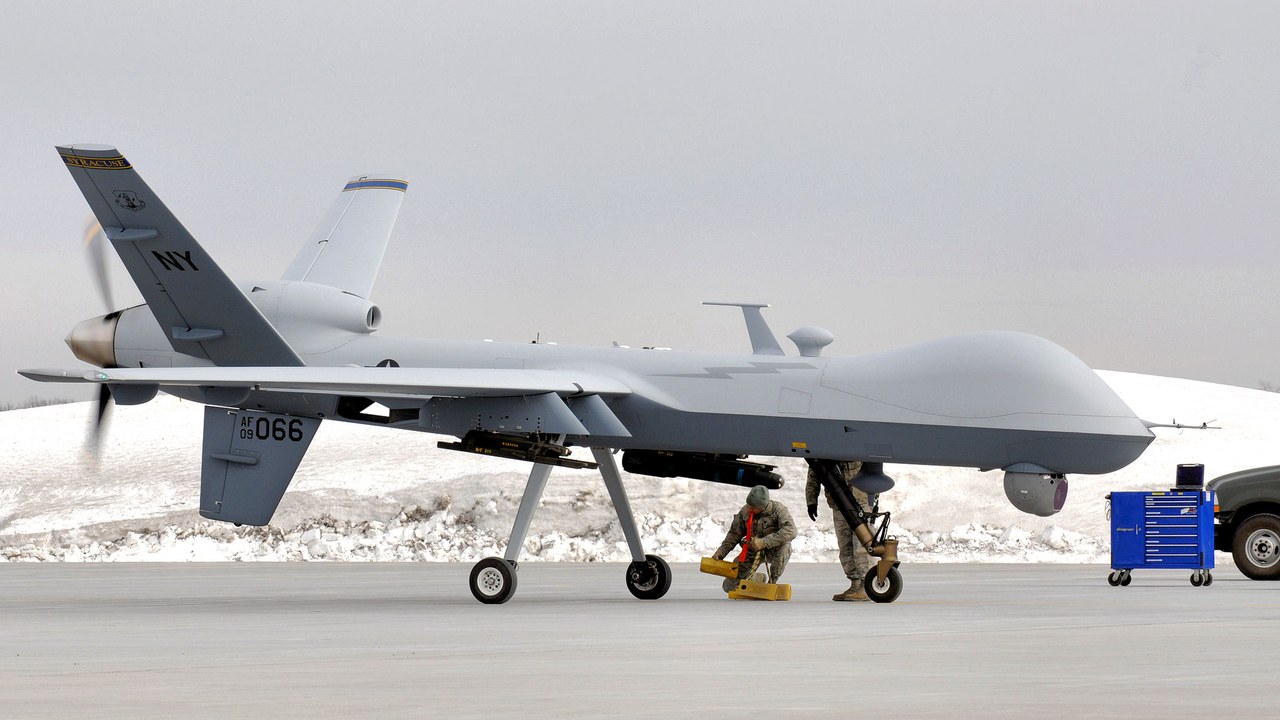
The MQ-9 Reaper is described as the first hunter-killer drone designed for long-endurance surveillance. Its 950-shaft-horsepower turboprop, against the Predator’s 115-horsepower piston engine, lets it carry 15 times more ordnance and cruise about three times as fast.
A proof-of-concept Predator B first flew on February 2, 2001. The U.S. Air Force operated more than 300 Reapers as of May 2021, at an estimated average cost of $34 million each in 2025 dollars, and expects the fleet to serve until about 2035.
2. MQ-1 Predator: The drone that started it
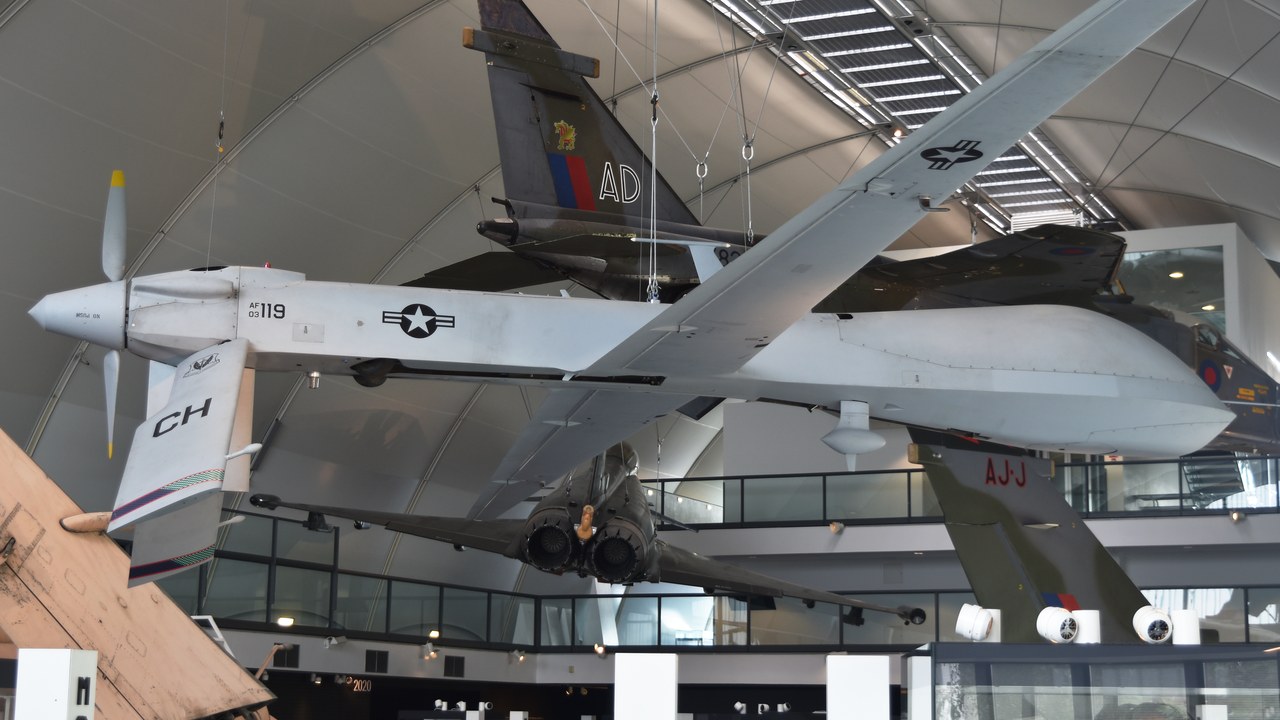
Conceived in the early 1990s as a camera-carrying scout, the Predator was later modified to fire two Hellfire missiles. It first flew on July 3, 1994, at El Mirage airfield in California’s Mojave Desert and entered service in 1995.
It went on to see combat in Bosnia, Yugoslavia, Afghanistan, Pakistan, Iraq, Yemen, Libya, Syria and Somalia, flown by the U.S. Air Force and the CIA. The Air Force retired the Predator in 2018 and replaced it with the larger, faster Reaper.
3. RQ-7 Shadow: The brigade’s eye in the sky
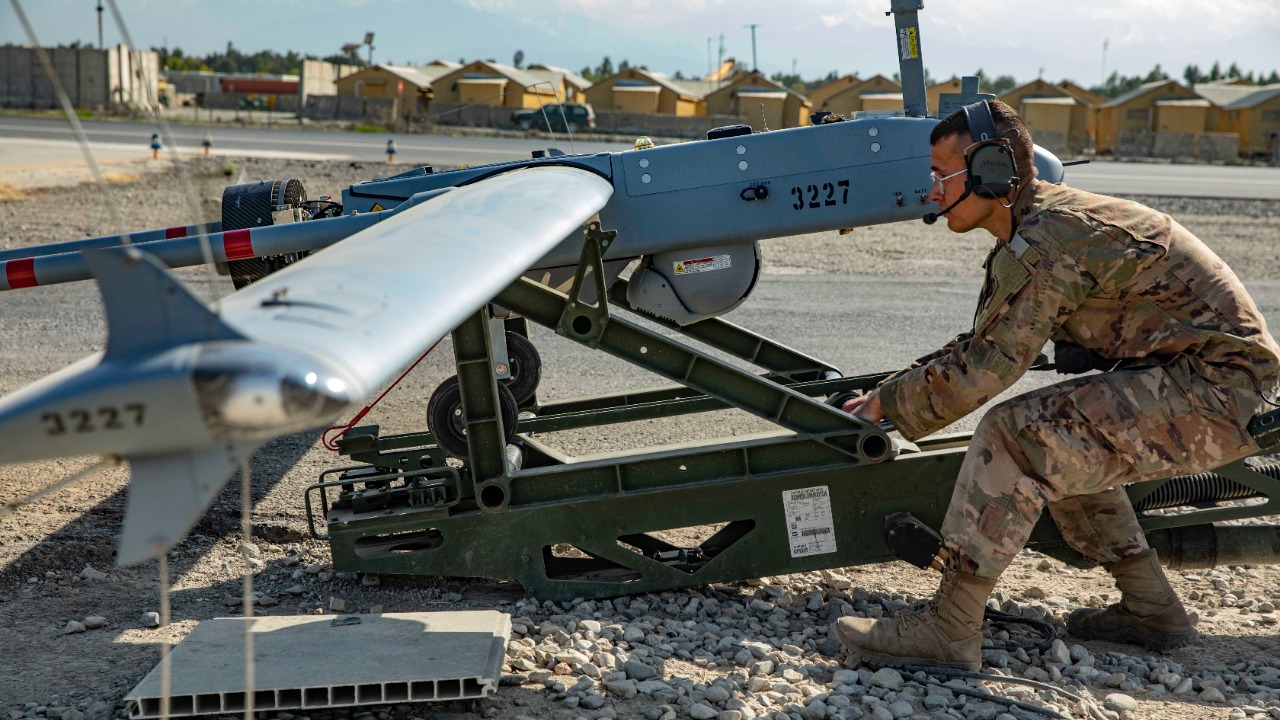
The Army’s RQ-7B Shadow gave brigade combat teams their own near-real-time scout. A 2014 Army fact sheet lists a 20-foot wingspan, a payload of about 60 pounds and nine hours of endurance from takeoff to landing, with a gross weight above 460 pounds.
By then the Shadow had flown more than 900,000 hours, most of them supporting combat operations. Starting in 2014, Shadow platoons moved into aviation brigades to fly alongside Apache attack helicopters as a manned-unmanned team.
4. MQ-1C Gray Eagle: The Army’s armed long-hauler
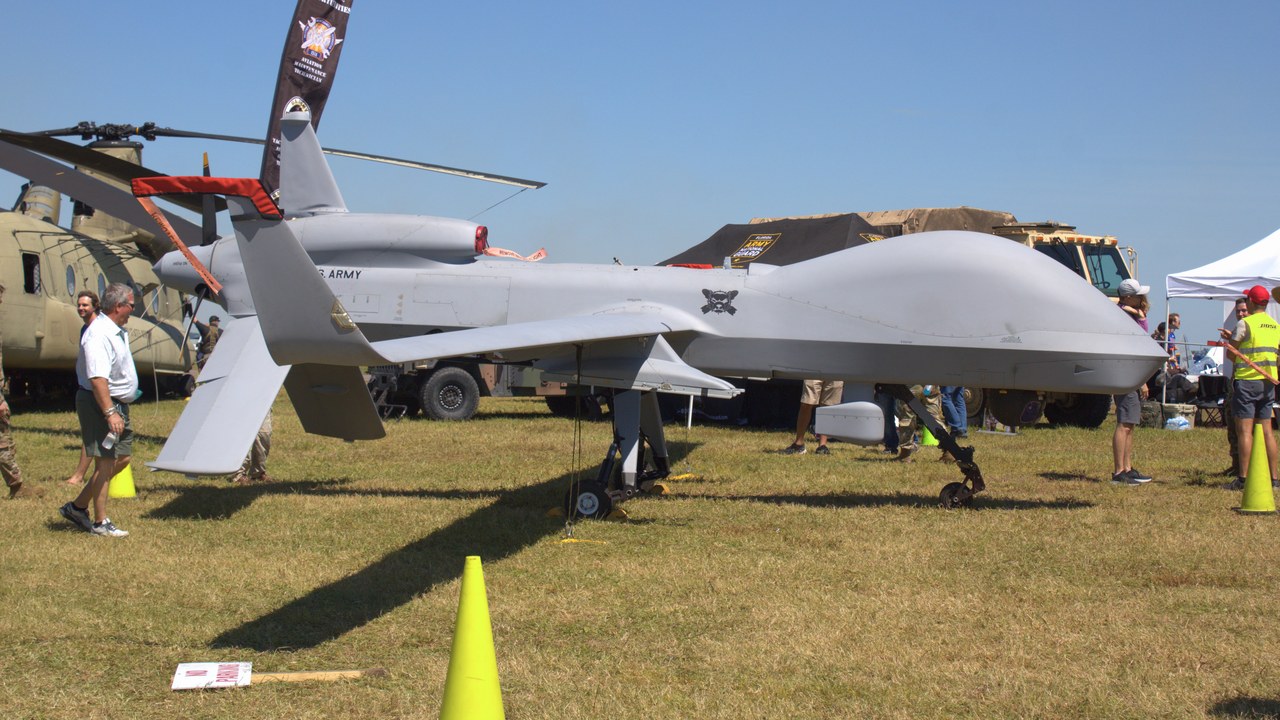
The Army built the MQ-1C Gray Eagle for long, armed missions. Its fact sheet lists up to four Hellfire missiles, a 56-foot wingspan and 24 hours of endurance, along with a 25,000-foot ceiling and a top speed of 150 knots.
The aircraft is 28 feet long and has a gross takeoff weight of 3,600 pounds. Flying through satellite links, it can range out to 2,500 nautical miles, far beyond the reach of the smaller tactical drones the Army flew before it.
5. Bayraktar TB2: The export hit from Türkiye

Turkish maker Baykar bills the TB2 as the world’s most actively deployed UAV. Its spec sheet lists a 12-meter wingspan, more than 20 hours in the air and a top speed of 110 knots, with domestically made MAM-L and MAM-C munitions.
The drone normally operates at 16,000 feet and can climb to 22,000 feet. Baykar says its flight record stands at 27 hours and 3 minutes, and that the aircraft takes off and lands fully automatically, with a triple-redundant autopilot.
6. RQ-11 Raven: Thrown into the sky by hand
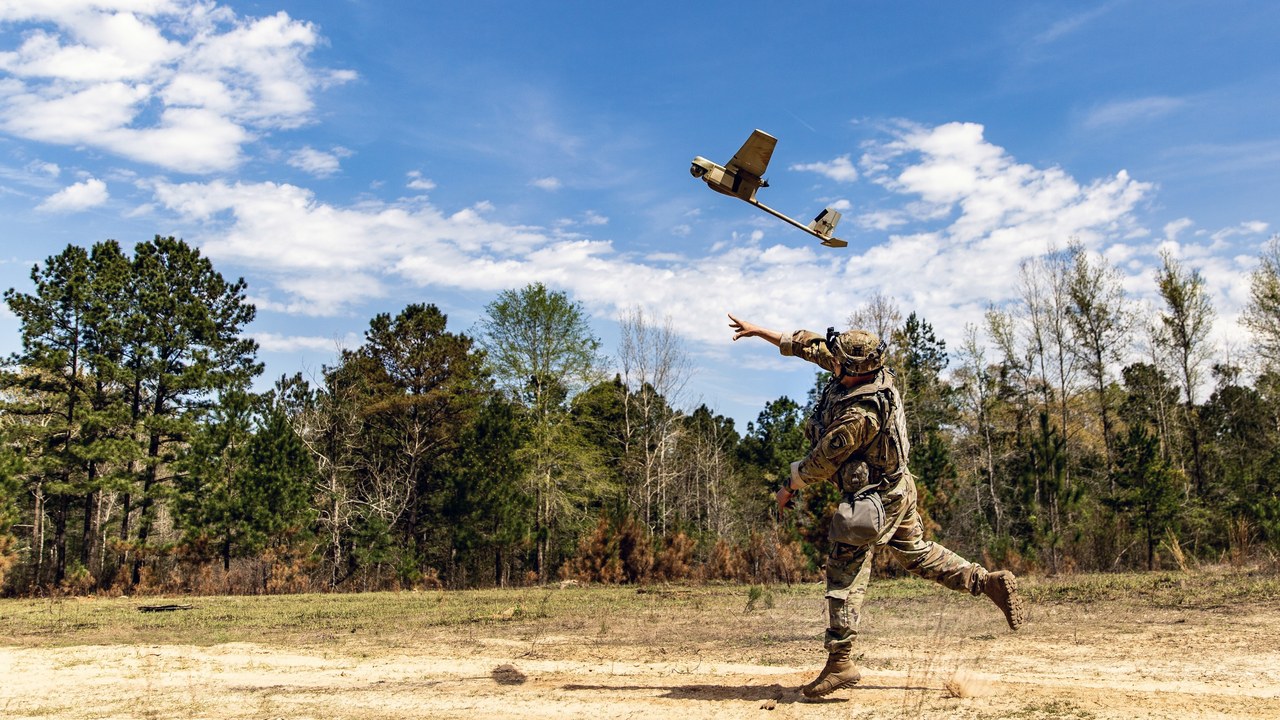
The RQ-11 Raven put a drone in the hands of ordinary infantry. The small Raven is launched by hand and powered by an electric pusher motor, and the RQ-11B weighs about 4.2 pounds, flies for 60 to 90 minutes and works out to roughly 6 miles.
It won the Army’s small-drone competition in 2005 and entered full-rate production in 2006, and the Army fields it at company level. More than 19,000 Raven airframes have been delivered worldwide. As of early 2012 that made it the most widely adopted drone system in the world.
7. Switchblade 600: A tank-killer that loiters
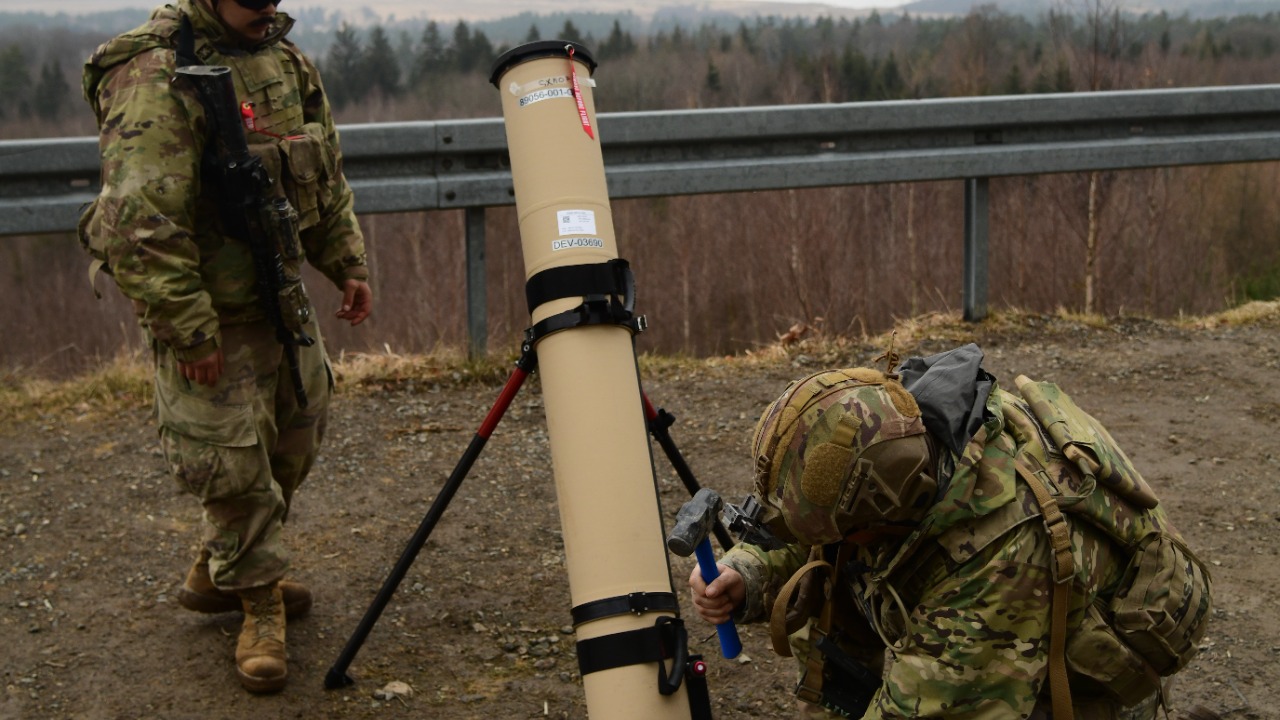
AeroVironment’s Switchblade 600 is a loitering munition: it flies to an area, waits and then dives on its target. The maker says it offers more than 40 minutes of loiter time and an anti-armor warhead for hitting hardened targets 40 kilometers away and more.
The whole round weighs 65 pounds. It cruises at more than 65 mph, dashes at more than 100 mph and, with a forward handoff to another operator, can reach more than 55 miles, giving small units firepower once reserved for artillery.
8. RQ-4 Global Hawk: Spying from 60,000 feet
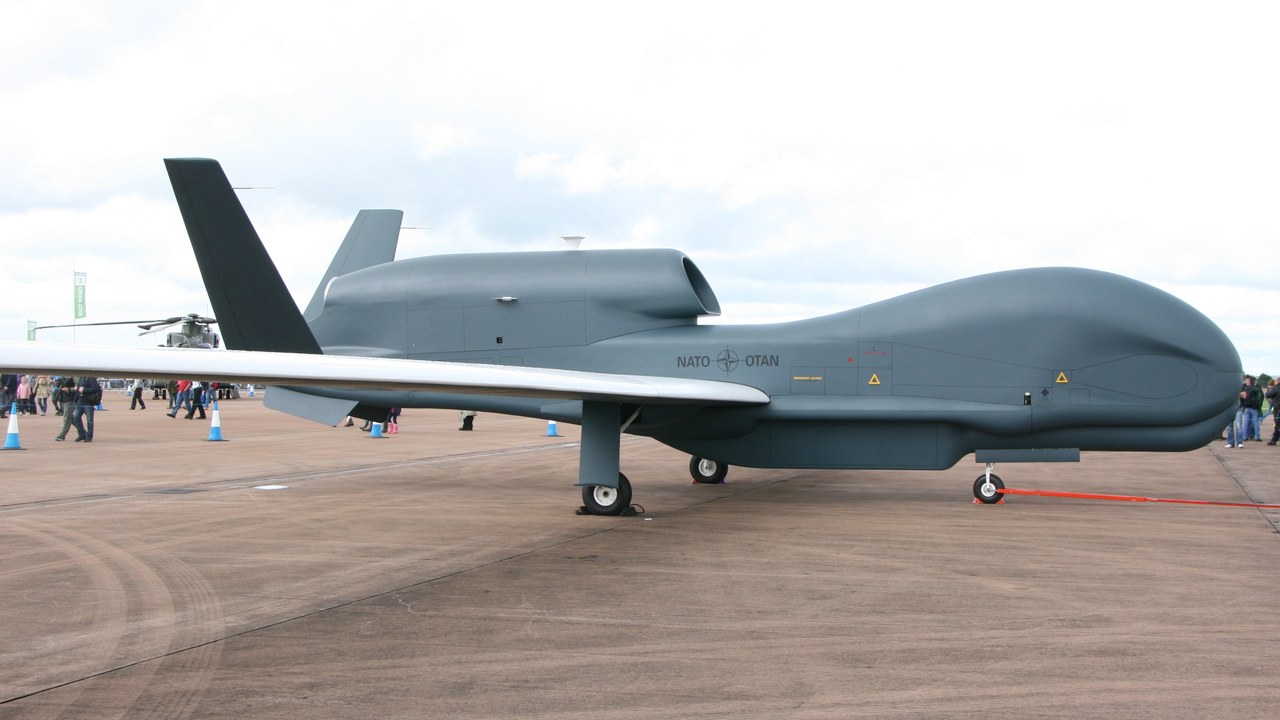
Northrop Grumman’s Global Hawk is capable of cruising above 60,000 feet and watching the battlefield for more than 30 continuous hours, according to The Defense Post’s guide. Its wingspan is about 130.9 feet, and its length about 47.6 feet.
In 2014 a Block 40 Global Hawk stayed aloft for 34.3 hours, an unrefueled Air Force record. The Block 40 version swaps the camera package for a ground-surveillance radar that tracks moving vehicles, and a single Rolls-Royce turbofan powers every variant.
9. MQ-4C Triton: A Global Hawk for the ocean
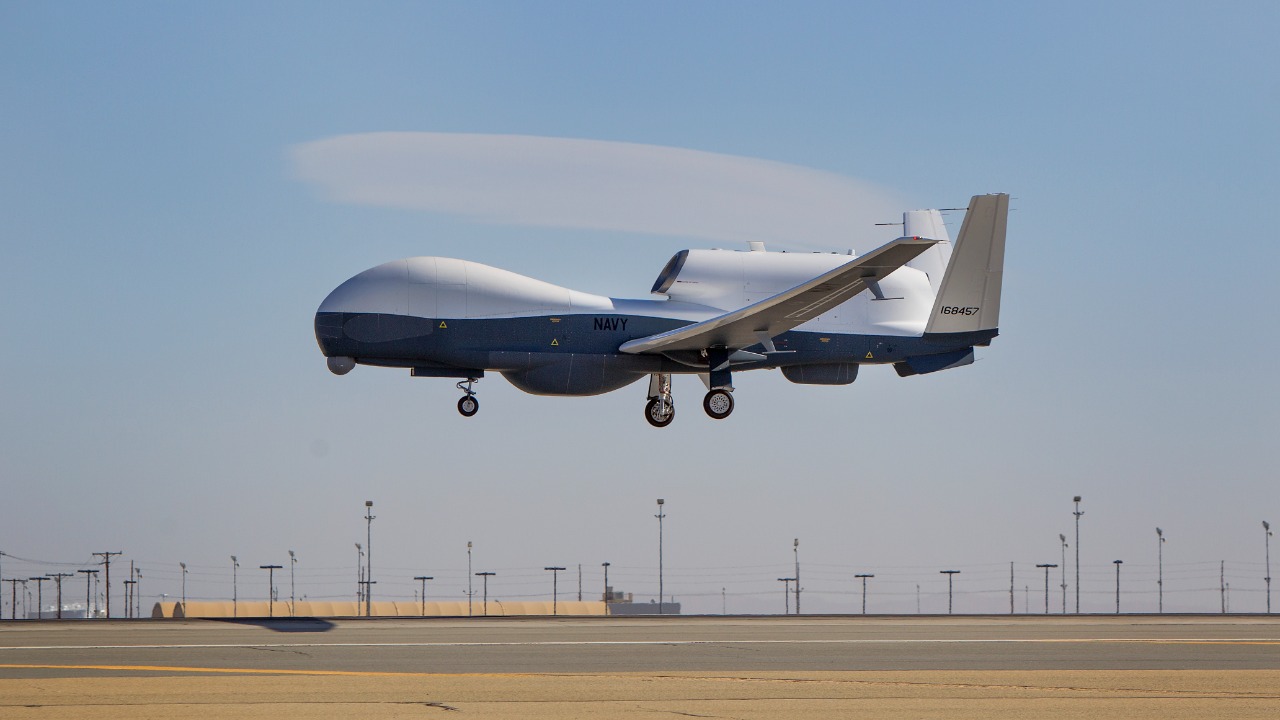
The Navy’s MQ-4C Triton is a Global Hawk adapted for watching the sea. Reinforced wings, de-icing and lightning protection let it descend through cloud layers for a closer look at ships, complementing the P-8 Poseidon patrol plane.
The first Triton flew on May 22, 2013. It joined the fleet in 2018 and reached initial operational capability in 2023, and Australia has ordered four, with the first entering service with the Royal Australian Air Force in June 2024.
10. MQ-8 Fire Scout: A helicopter with no one aboard
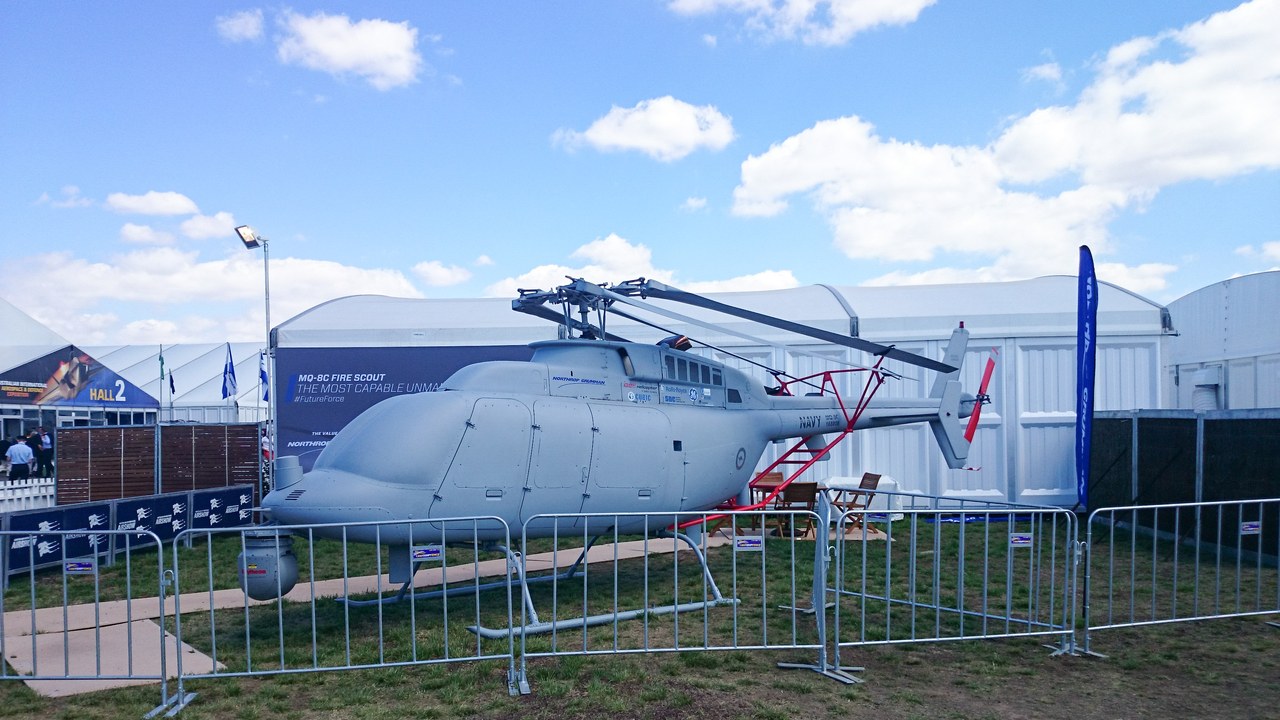
The Fire Scout is an unmanned autonomous helicopter built for scouting, fire support and precision targeting. The first RQ-8A was based on the Schweizer 330 light helicopter, and the improved MQ-8B was derived from the Schweizer 333.
The MQ-8B first flew on December 18, 2006, at Naval Air Station Patuxent River and was retired in October 2022. The larger MQ-8C, the version pictured, is based on the Bell 407 helicopter, a much bigger airframe than the Schweizer-based versions.
11. ScanEagle: From tuna spotter to warplane
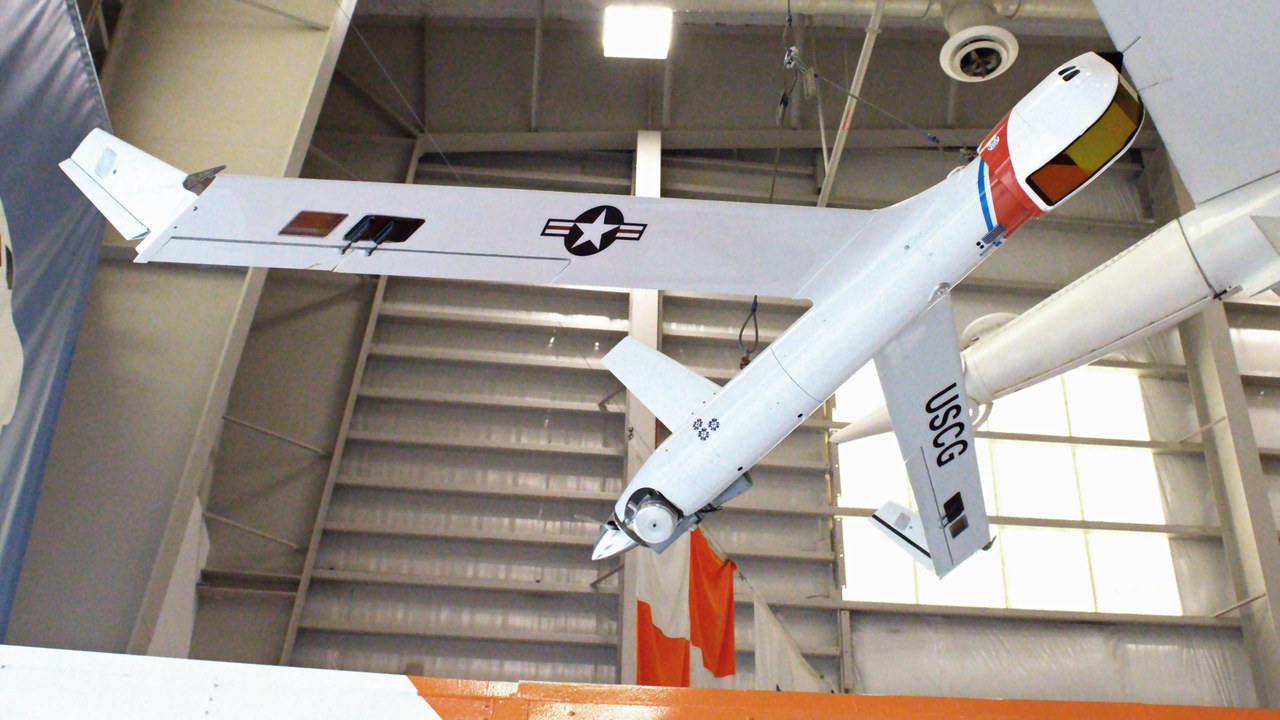
Boeing subsidiary Insitu’s ScanEagle grew out of the SeaScan, a drone designed to help fishermen track schools of tuna. It has been deployed since August 2004, starting in the Iraq War, and flies for more than 20 hours on a mission.
A Block D aircraft set a type record of 22 hours and 8 minutes. The ScanEagle needs no runway: a catapult launches it, and the Skyhook system recovers it as a hook on its wingtip snags a rope hanging from a 30-to-50-foot pole.
12. Hermes 900: Israel’s day-and-a-half flyer
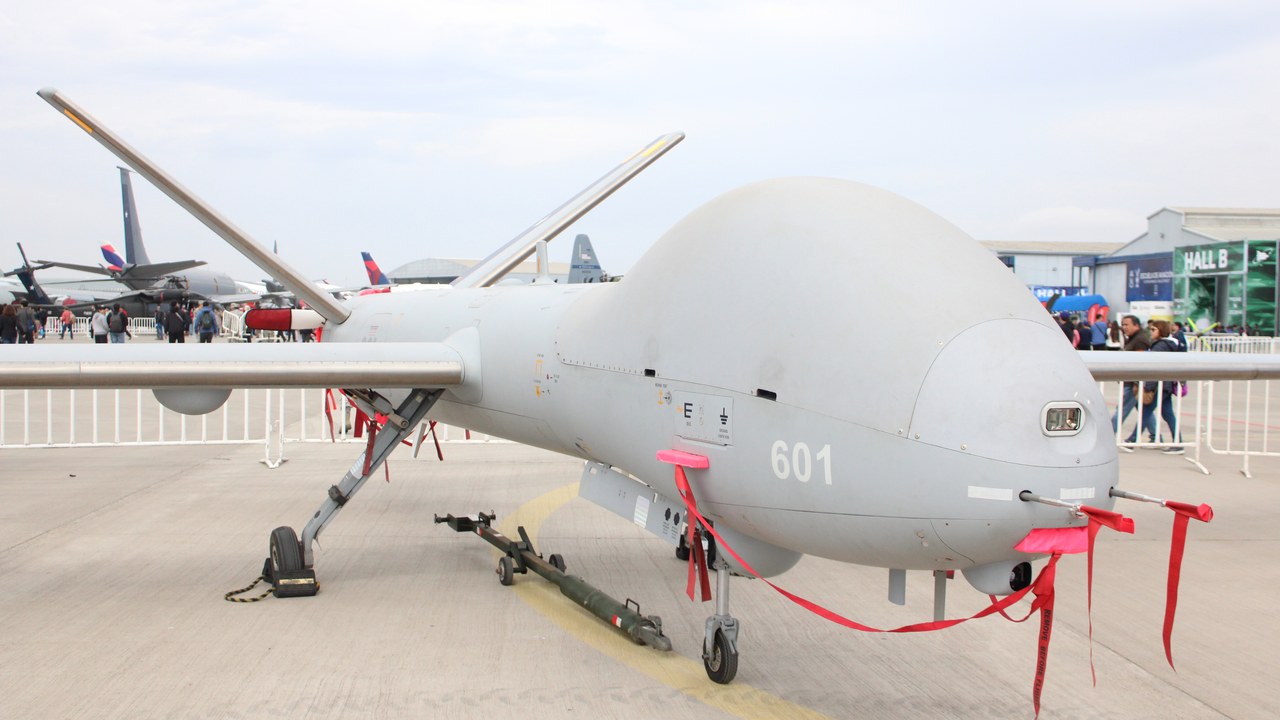
Elbit Systems’ Hermes 900 is a large Israeli surveillance drone. The company lists endurance of up to 36 hours, a service ceiling of 30,000 feet and a maximum payload of 350 kilograms on an aircraft with a takeoff weight of 1,180 kilograms.
Elbit pitches the Hermes 900 as highly autonomous and mission effective, carrying several sensors at once for persistent over-the-horizon missions. In March 2023 the company announced it had received an order for its 120th Hermes 900.
13. Wing Loong: China’s Predator lookalike

The Wing Loong, also called the Pterodactyl I, is a medium-altitude, long-endurance drone developed by China’s Chengdu Aircraft Industry Group. It bears a distinct resemblance to the American Predator and Reaper and can carry up to 200 kilograms of sensors and weapons.
The program began in May 2005, and the first flight came in October 2007. Exports followed, and in 2019 forces loyal to Libyan general Khalifa Haftar made extensive use of Wing Loong I and II drones supplied by the United Arab Emirates.
14. MQ-25 Stingray: A flying gas station for carriers
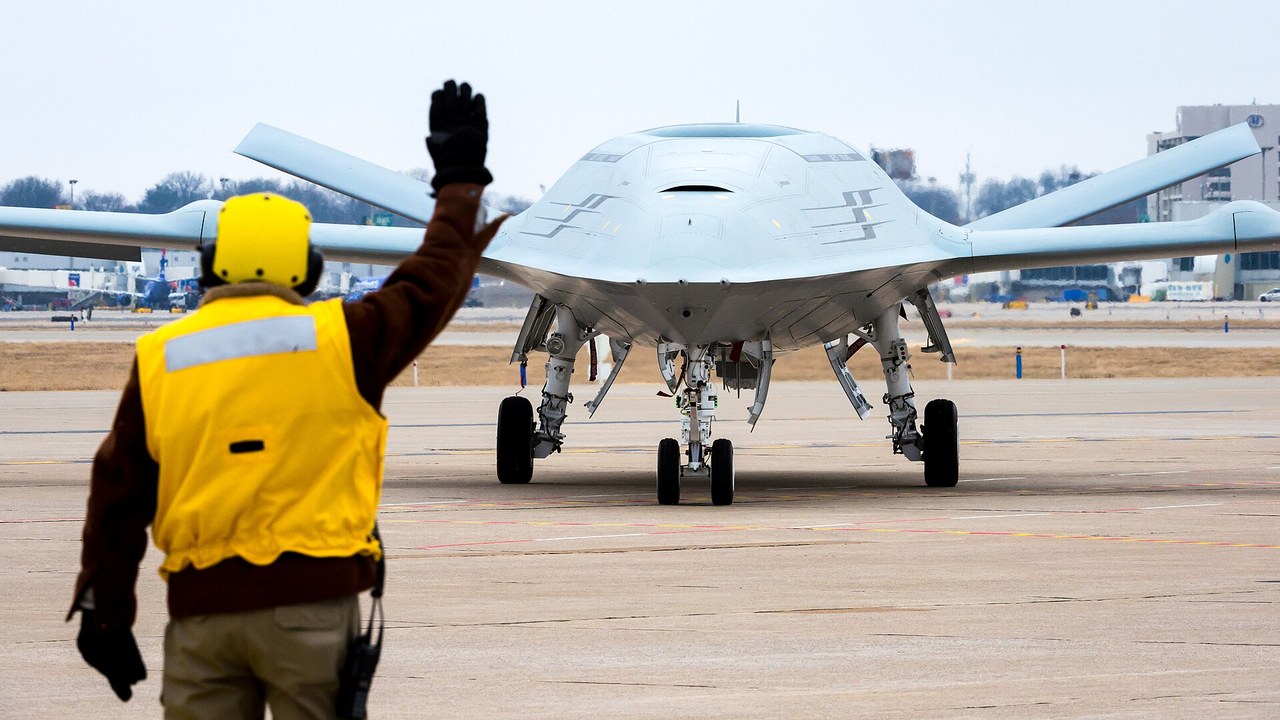
Boeing’s MQ-25 Stingray is an aerial refueling drone built to top off fighters from aircraft carrier decks. The Navy picked Boeing’s design on August 30, 2018, and the aircraft first flew on September 19, 2019.
On June 4, 2021, an MQ-25 passed fuel to an F/A-18F Super Hornet in the first refueling test. The Navy stood up a test squadron in 2022 and established VUQ-11, its first operational MQ-25 unit, on April 1, 2026, to be based at Point Mugu, California.
More from Morning Overview
- Two Kentucky residents died when a small plane crashed at Missouri’s Lake of the Ozarks, and the NTSB is investigating
- A handful of car transmissions are so tough that mechanics say they almost never die
- Melting permafrost is setting off a newly identified kind of catastrophic landslide, scientists say
- Cadillac cut the price of its cheapest EV, which goes up to 317 miles on a charge
