
Postwar American automakers turned the rear ends of their cars into rolling sculpture, borrowing shapes from jet fighters and rockets. Chrome, bullet taillights, and soaring sheet metal signaled optimism, speed, and status on suburban driveways across the country. These twelve models show how far Detroit stylists pushed that flamboyant chapter of design.
1. Cadillac Eldorado: The car whose fins defined the era
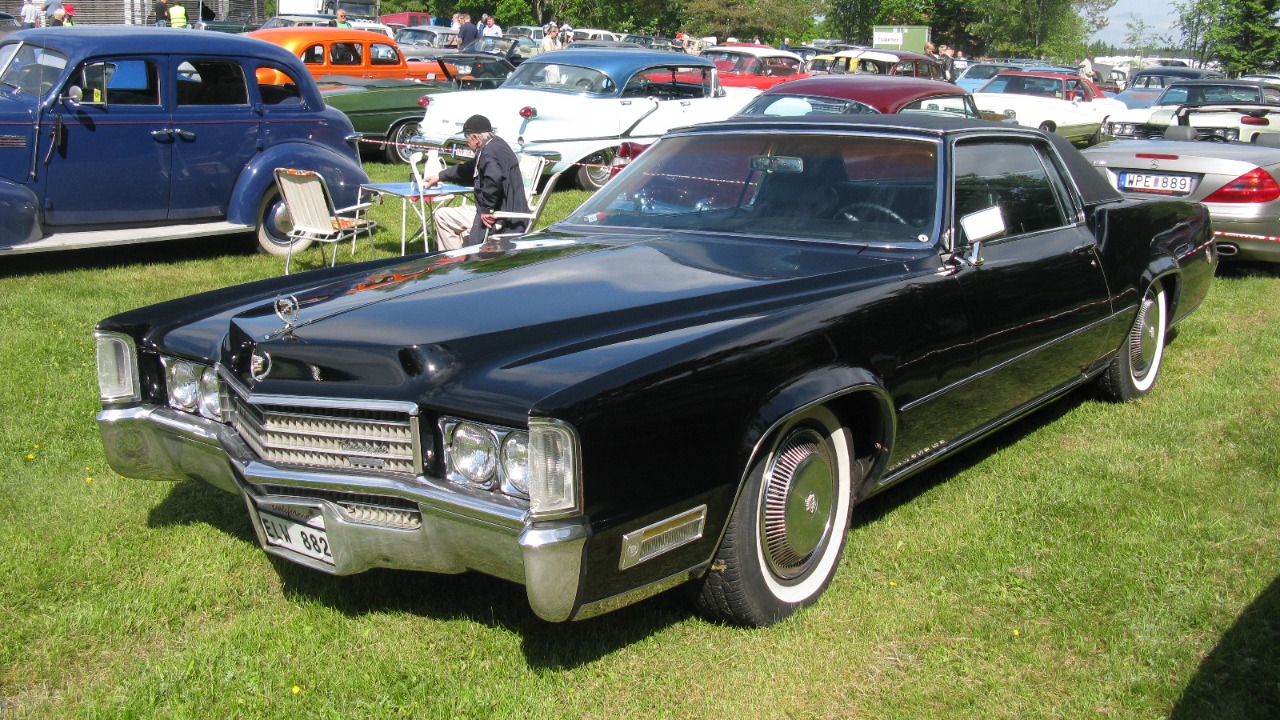
General Motors introduced the Cadillac Eldorado in 1953 as its flagship personal luxury car, and by the end of the decade it had become the definitive symbol of chrome-age excess. The 1959 model wore the tallest rear fins the industry ever produced, each capped by twin bullet-shaped taillights.
Cadillac priced the Eldorado well above its standard lineup, treating it as a halo product for buyers who wanted the marque’s boldest look. Hand-finished trim, sweeping bodywork, and exaggerated proportions turned it into a status object rather than simple transportation. The nameplate survived for decades, but its late-1950s form remains the reference point for flamboyant styling.
2. Chevrolet Bel Air: Chrome and fins on a mainstream classic
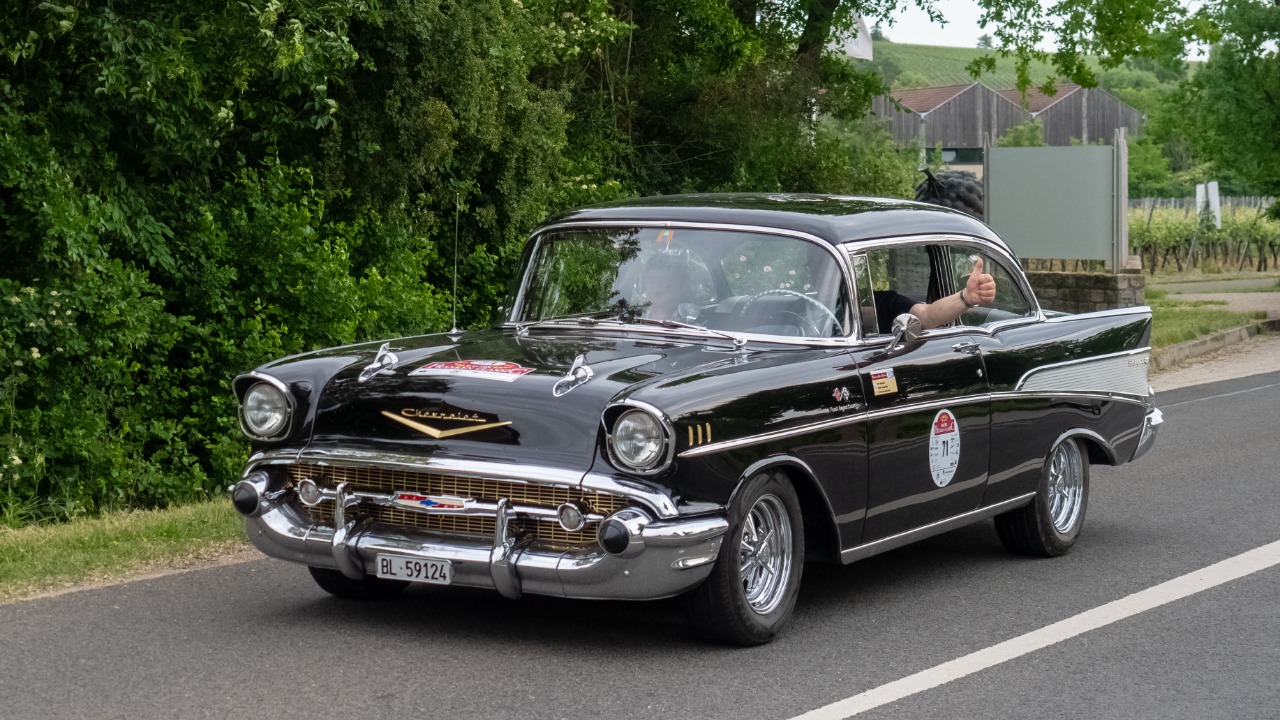
Chevrolet named the Bel Air after an affluent Los Angeles neighborhood, positioning it as the top trim of its full-size range from 1950 onward. The celebrated 1957 edition paired restrained tail fins with generous chrome, gold-anodized accents, and a wide grille that made it instantly recognizable.
Unlike the towering fins of costlier brands, the Bel Air delivered stylish flair at a price ordinary families could reach, which helped make it one of the most beloved cars of its generation. Two-tone paint and hardtop rooflines added to its showroom appeal. Today the 1957 Bel Air is among the most collected and reproduced American automobiles.
3. Plymouth Fury: A finned Mopar of the late 1950s
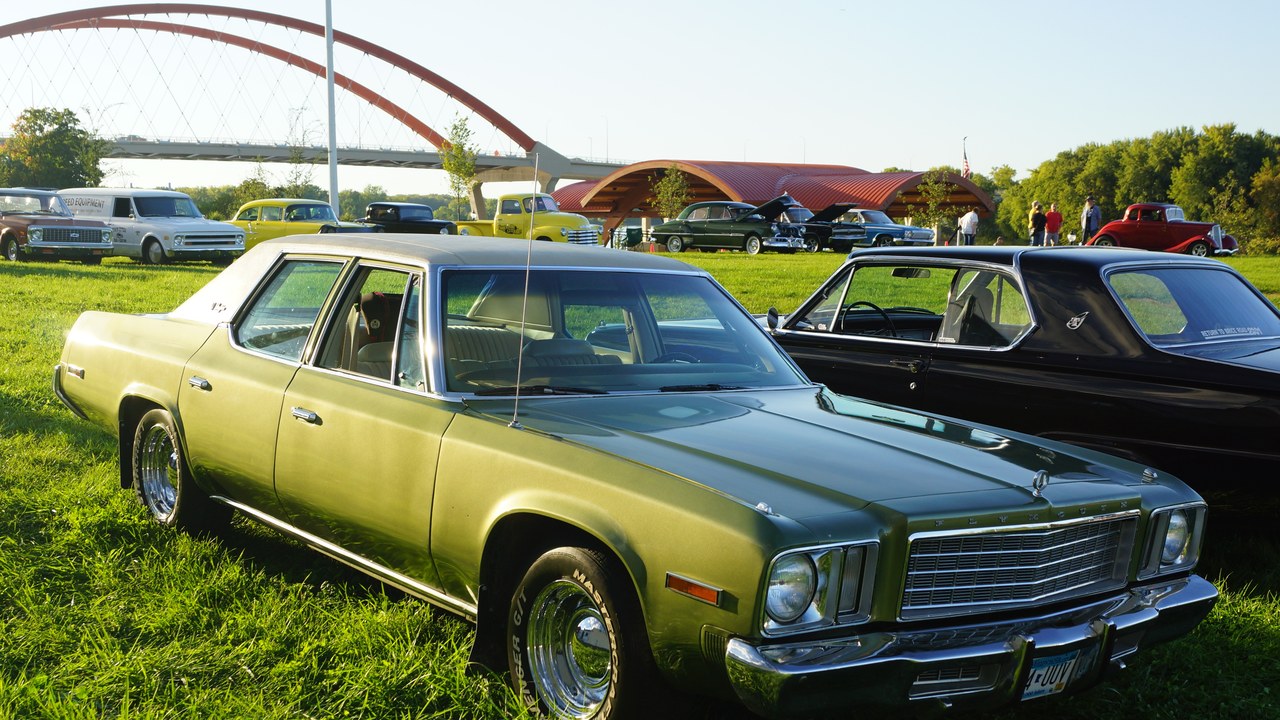
Plymouth launched the Fury in 1956 as a limited, sporty subseries before expanding it into a full model line. Its late-1950s cars embodied designer Virgil Exner’s Forward Look, with dramatically angled fins that swept upward from the doors toward pointed taillights.
The Forward Look gave Chrysler’s brands some of the sharpest, most aggressive fins in Detroit, and the Fury carried that styling into the mainstream market. A white-and-gold 1958 Fury later gained lasting fame as the menacing car in a popular horror story. Over successive generations the name migrated to larger sedans, but its finned early cars define its image.
4. Ford Fairlane: Ford’s finned mid-century cruiser
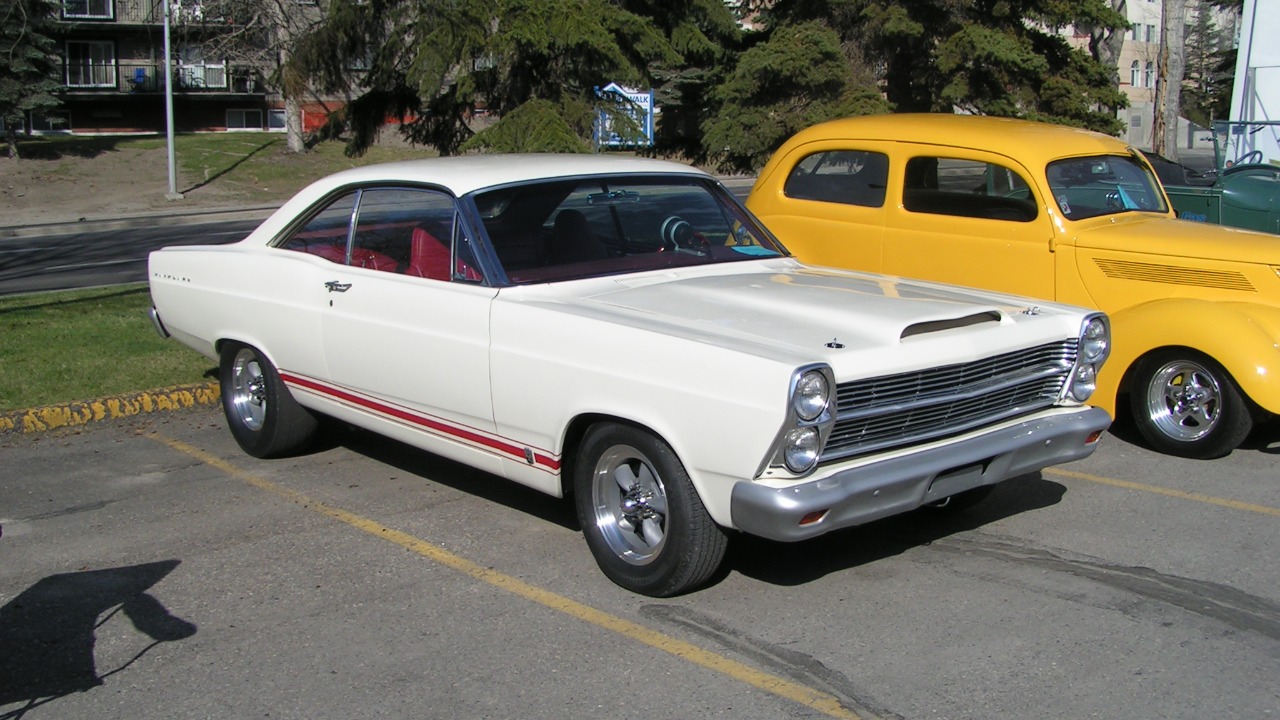
Ford borrowed the Fairlane name from Henry Ford’s Dearborn estate, Fair Lane, applying it to its full-size cars beginning in 1955. The late-1950s versions adopted modest but distinct rear fins, sweeping side trim, and a lower, wider stance that echoed the industry’s rush toward jet-age styling.
Where rival brands chased ever-taller fins, Ford kept the Fairlane’s proportions comparatively balanced while still nodding to the trend. The line offered a broad range of body styles, from sedans to hardtops and convertibles, aimed at a wide swath of buyers. In the 1960s the Fairlane name shifted to Ford’s intermediate cars, leaving the finned models as period pieces.
5. Chrysler 300: A letter-series muscle-luxury finned coupe
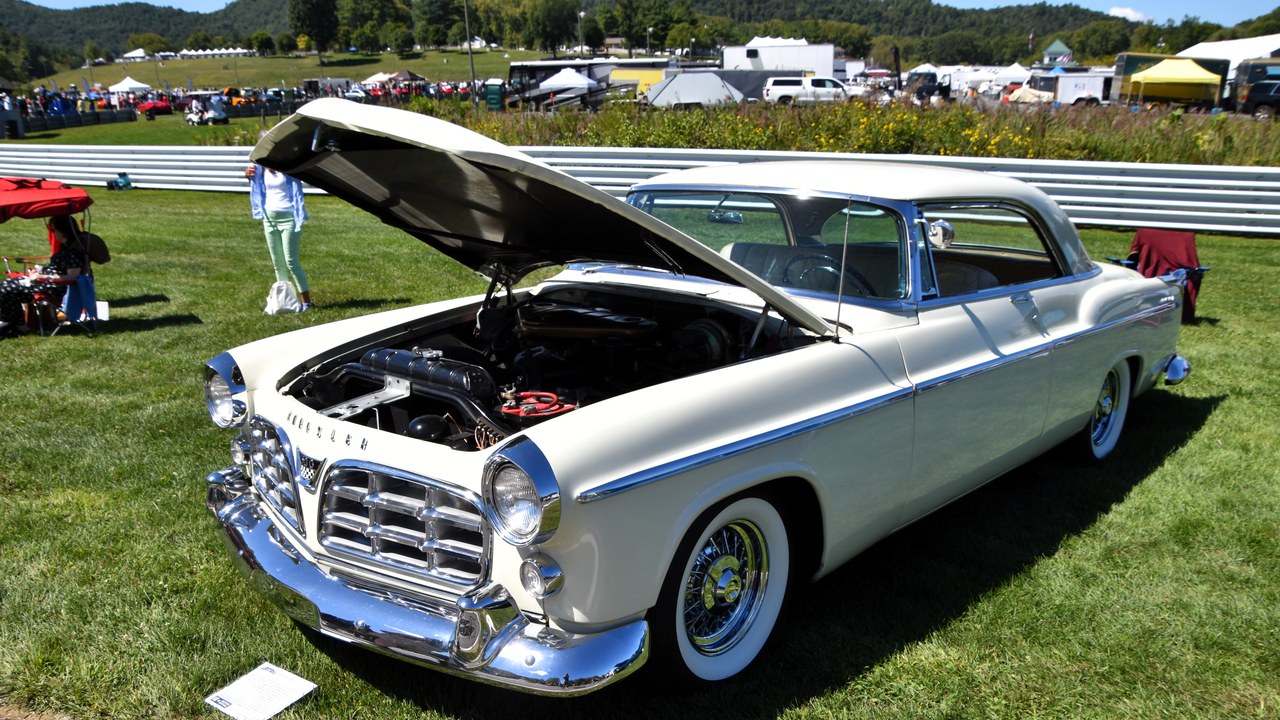
Chrysler built the 300 letter series from 1955 as a rare blend of luxury and high performance, powered by potent Hemi V8 engines. The 1957 300C added prominent tail fins to that formula, marrying brute power with the era’s most theatrical styling.
Each year brought a new letter, from the original C-300 through later editions, and the cars earned a reputation as America’s fastest production automobiles of their day. Limited production and premium pricing kept them exclusive, favored by wealthy enthusiasts who wanted speed without sacrificing comfort. Collectors still prize the finned letter cars as some of the boldest machines Chrysler ever produced.
6. DeSoto Adventurer: Chrysler’s flamboyant finned brand
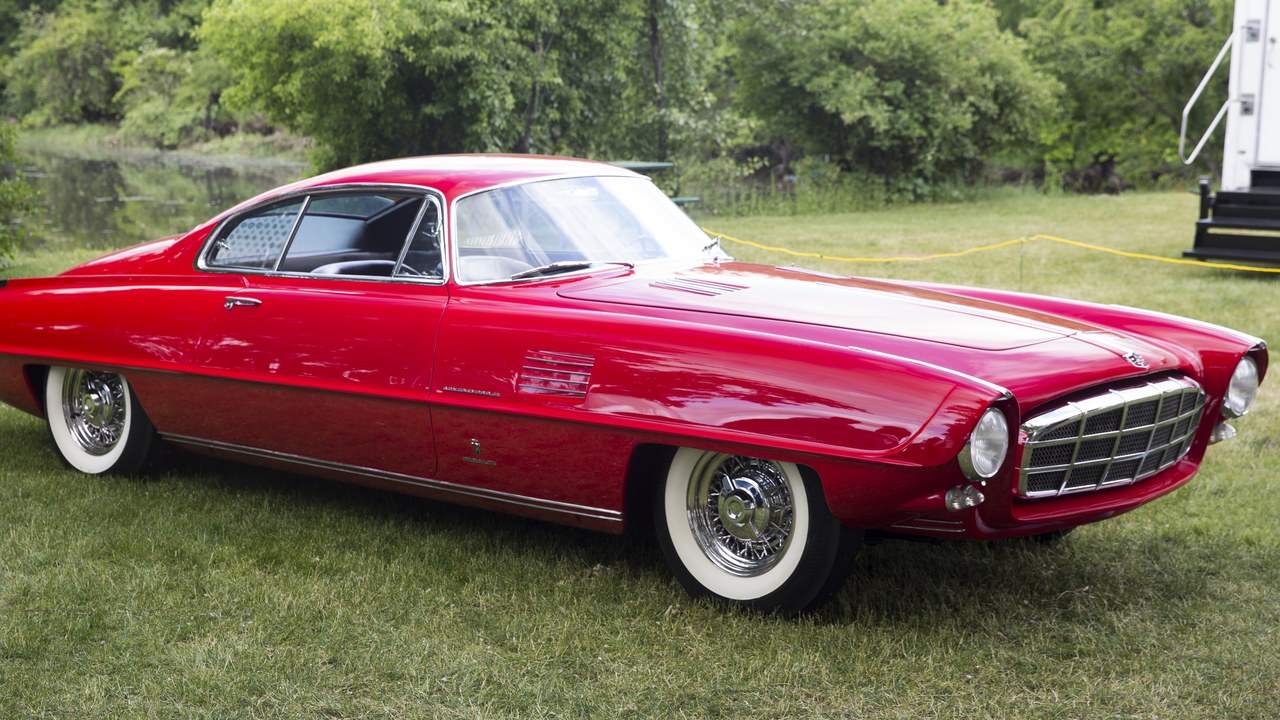
The DeSoto Adventurer debuted in 1956 as the marque’s high-performance halo model, trimmed in gold accents and built to showcase Chrysler styling. Its Forward Look bodywork carried tall, sharply pointed fins that made DeSoto one of the most flamboyant brands on the road.
DeSoto occupied the mid-priced tier of Chrysler’s lineup, and the Adventurer gave the brand a genuine performance flagship to rival costlier competitors. Powerful V8 engines and dramatic proportions defined the late-1950s cars. Falling sales and overlap with sibling brands doomed DeSoto, which was discontinued in 1961, leaving the finned Adventurers as reminders of its brief flamboyant peak.
7. Dodge Custom Royal: A finned Dodge of the late 1950s
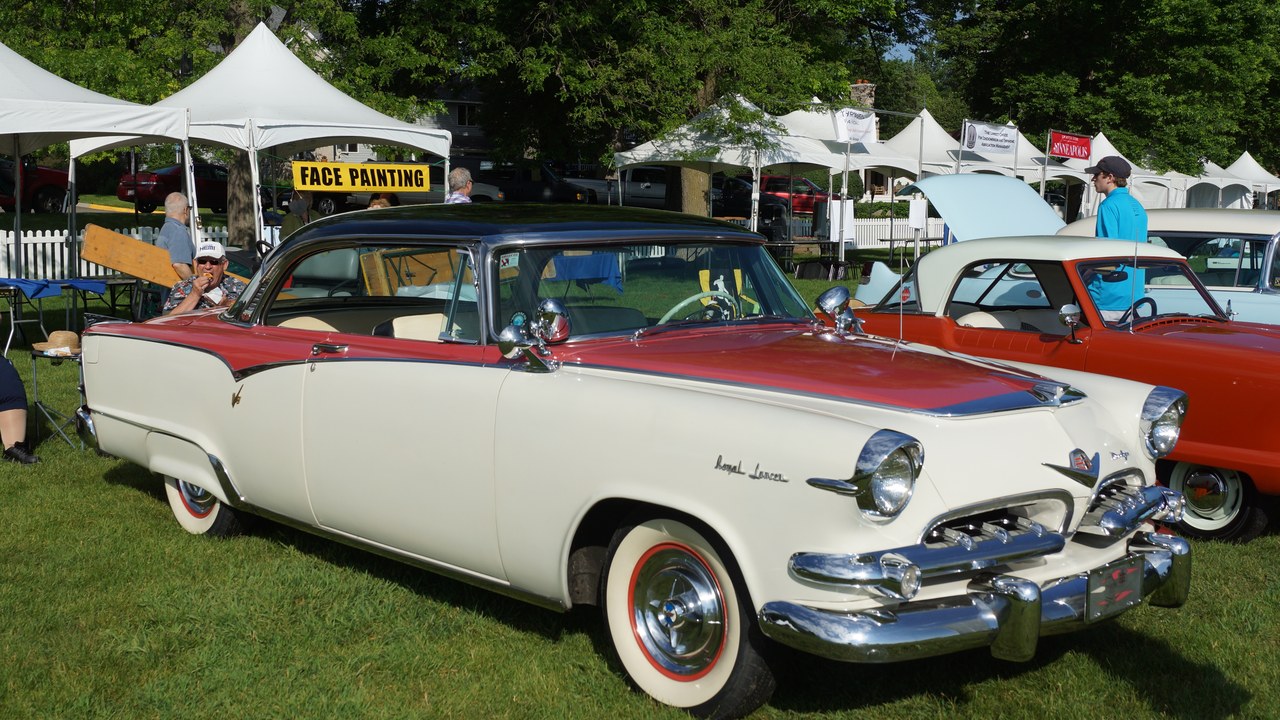
Dodge sold the Custom Royal as its top trim level from 1955 through 1959, dressing it in the brand’s most elaborate chrome and two-tone paint. The 1957 and 1959 cars wore soaring Forward Look fins that stretched the full length of the rear fenders.
As the flagship Dodge, the Custom Royal offered powerful V8 options and a long list of comfort features aimed at buyers stepping up from cheaper models. Its styling embodied the industry’s belief that longer, lower, and finnier cars conveyed modernity and success. When Dodge reshuffled its lineup at the end of the decade, the Custom Royal name was retired.
8. Pontiac Bonneville: Wide-track Pontiac style with fins
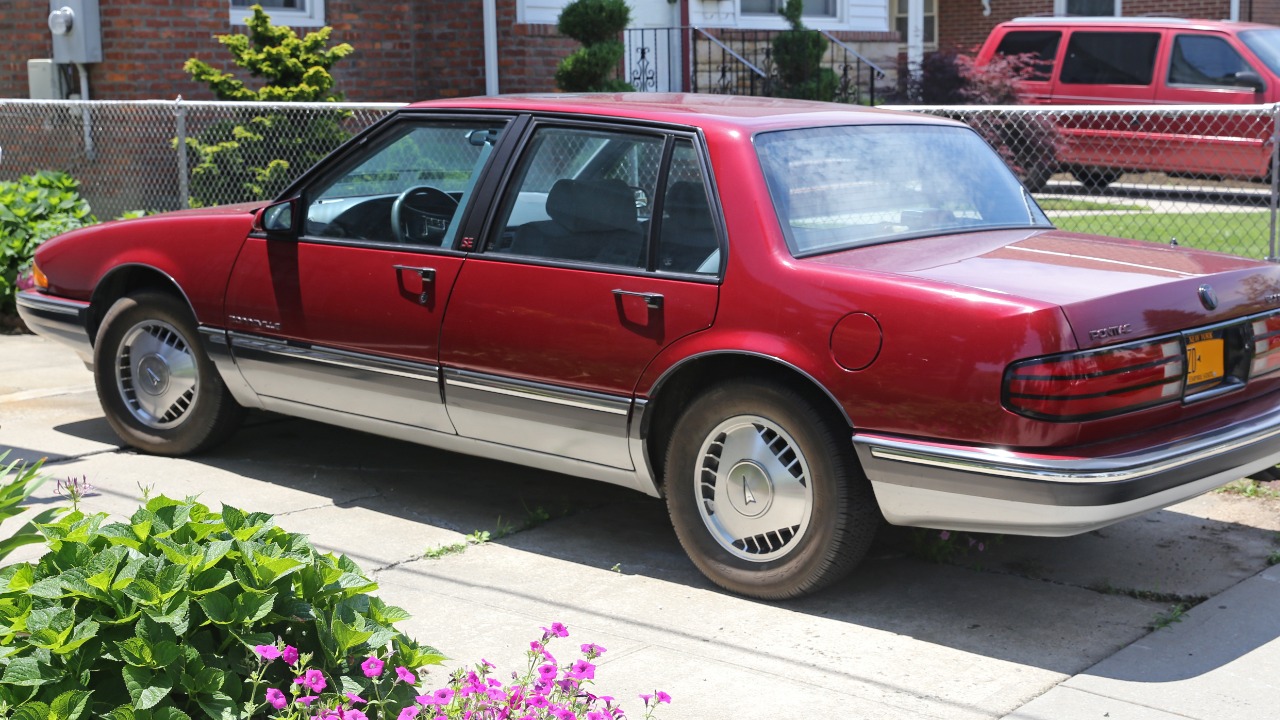
Pontiac introduced the Bonneville in 1957, named after the Utah salt flats famous for land-speed records, and made it a full model line the following year. The 1959 car adopted twin-fin rear styling and the brand’s new Wide-Track stance that pushed the wheels toward the body’s edges.
The Bonneville anchored the top of Pontiac’s range, blending sporty pretensions with full-size comfort and strong V8 performance. Its splayed fins and low, wide proportions helped Pontiac shed a stodgy image and climb the sales charts. The nameplate endured for decades afterward, but its late-1950s debut cars capture the moment when the brand fully embraced the fin craze.
9. Oldsmobile 88: A finned full-size Olds
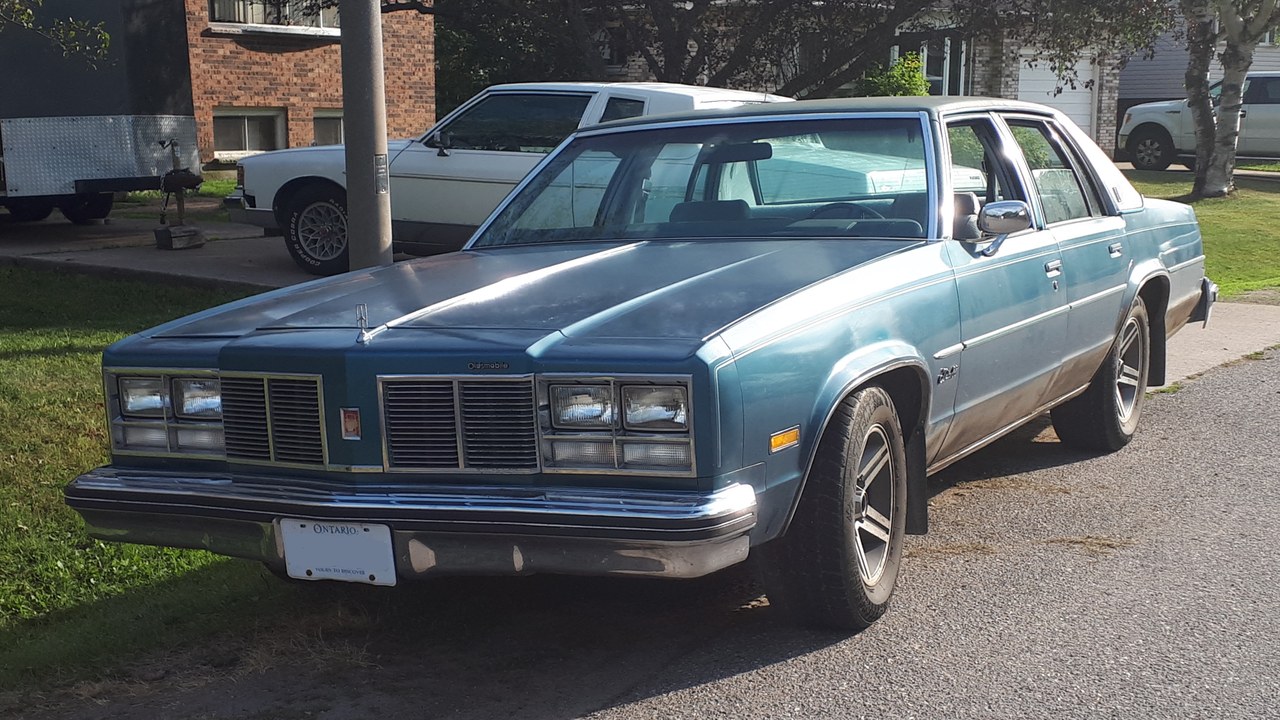
Oldsmobile launched the 88 in 1949, pairing a relatively light body with the potent Rocket V8 to create one of the earliest performance sensations. By the late 1950s the full-size 88 had grown longer and lower, gaining the chrome and rear fins that marked the period.
The Rocket 88’s speed made it a favorite on early stock-car tracks and even inspired popular music of the day. As a mid-priced brand, Oldsmobile used the 88 to offer style and power below Cadillac while staying above Chevrolet. The nameplate ran for half a century, but its finned 1950s versions belong squarely to the jet-age design era.
10. Lincoln Premiere: Lincoln’s finned luxury of the era
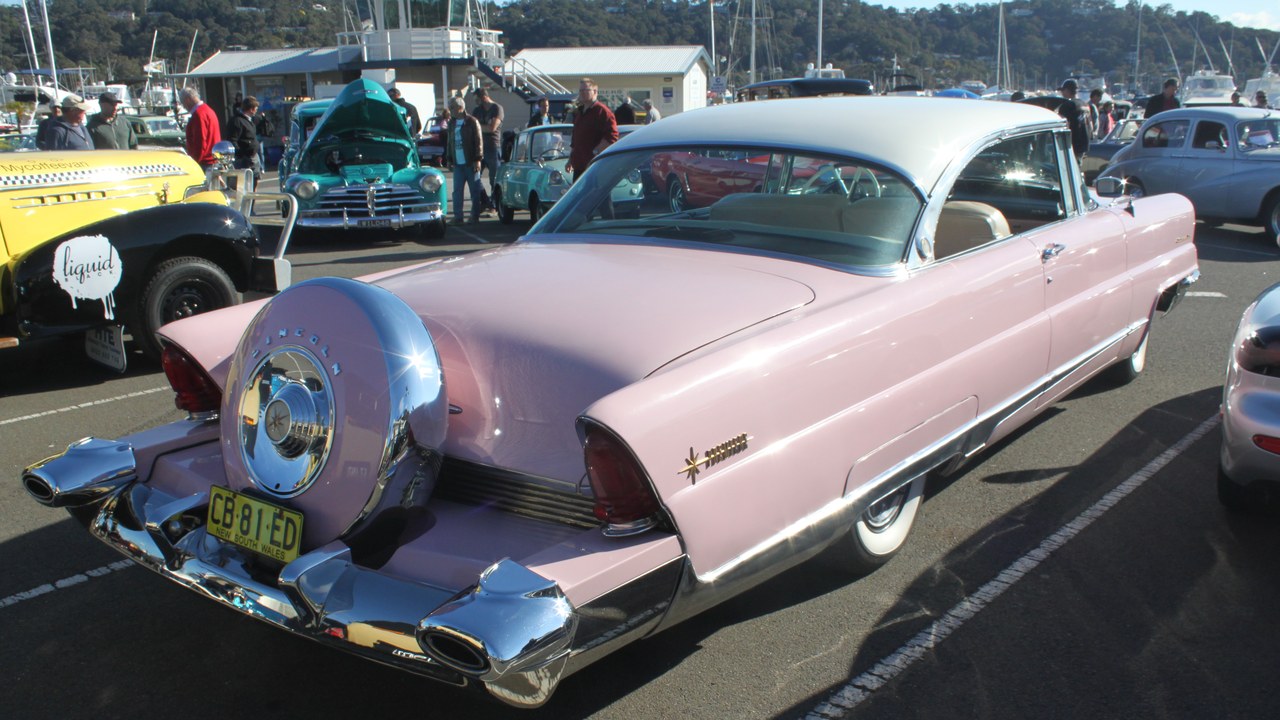
Ford’s luxury division built the Lincoln Premiere from 1956 through 1960 as a plush alternative to Cadillac. The later cars grew enormous, stretching to great lengths and sprouting canted rear fins that fit the brand’s grand, imposing character.
The Premiere shared its body with the Lincoln Capri but wore richer trim and appointments aimed at affluent buyers. Big V8 engines, quad headlights, and acres of sheet metal reinforced its flagship stature during the decade’s styling arms race. Massive size and modest sales limited its run, yet the finned Premiere remains a striking example of late-1950s American luxury excess.
11. Buick Roadmaster: Chrome-laden finned Buick
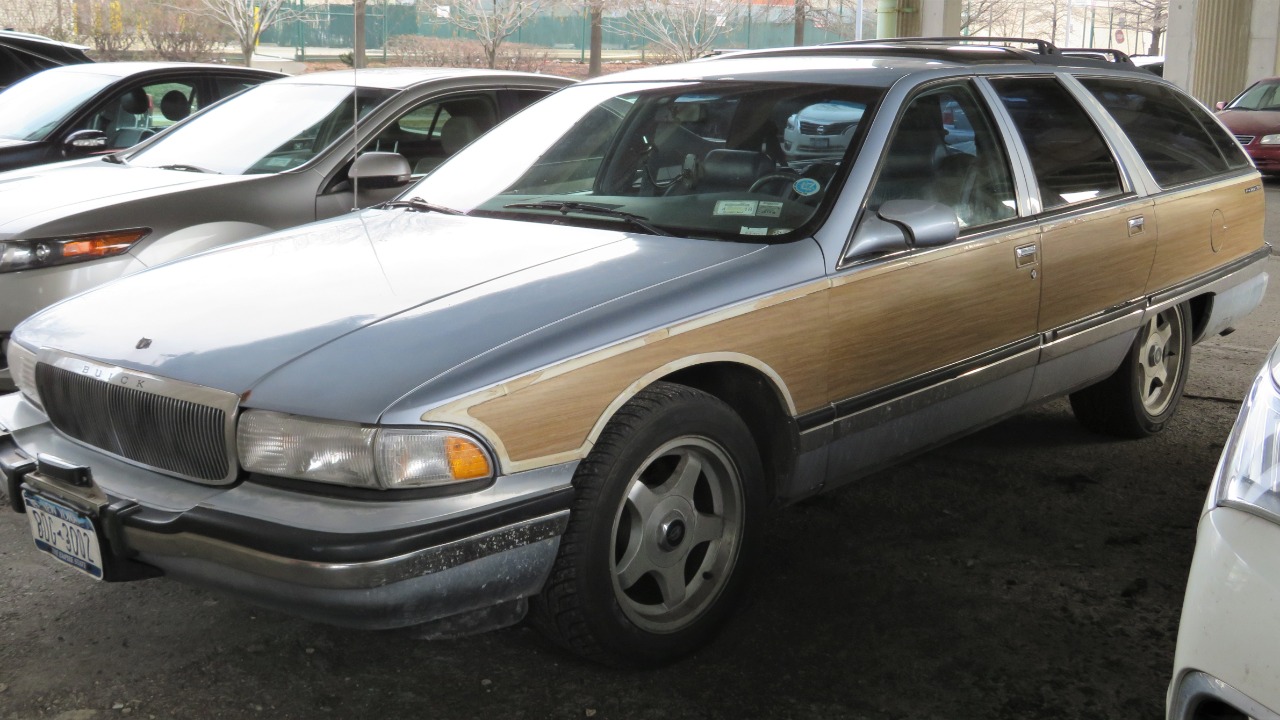
Buick’s Roadmaster served as the brand’s premium full-size car, and its 1950s editions piled on the chrome that defined the marque. Trademark portholes, a toothy grille, and rising rear fenders gave the cars an unmistakably ornate, prosperous appearance.
The Roadmaster sat near the top of Buick’s hierarchy, offering powerful V8 engines and a smooth, heavy ride prized by upscale buyers. Its abundant brightwork made it one of the most decorated cars of the decade, a rolling display of postwar optimism. Buick retired the name in 1958 before reviving it decades later on a very different vehicle.
12. Chevrolet Impala: The finned 1959 Impala’s batwing rear
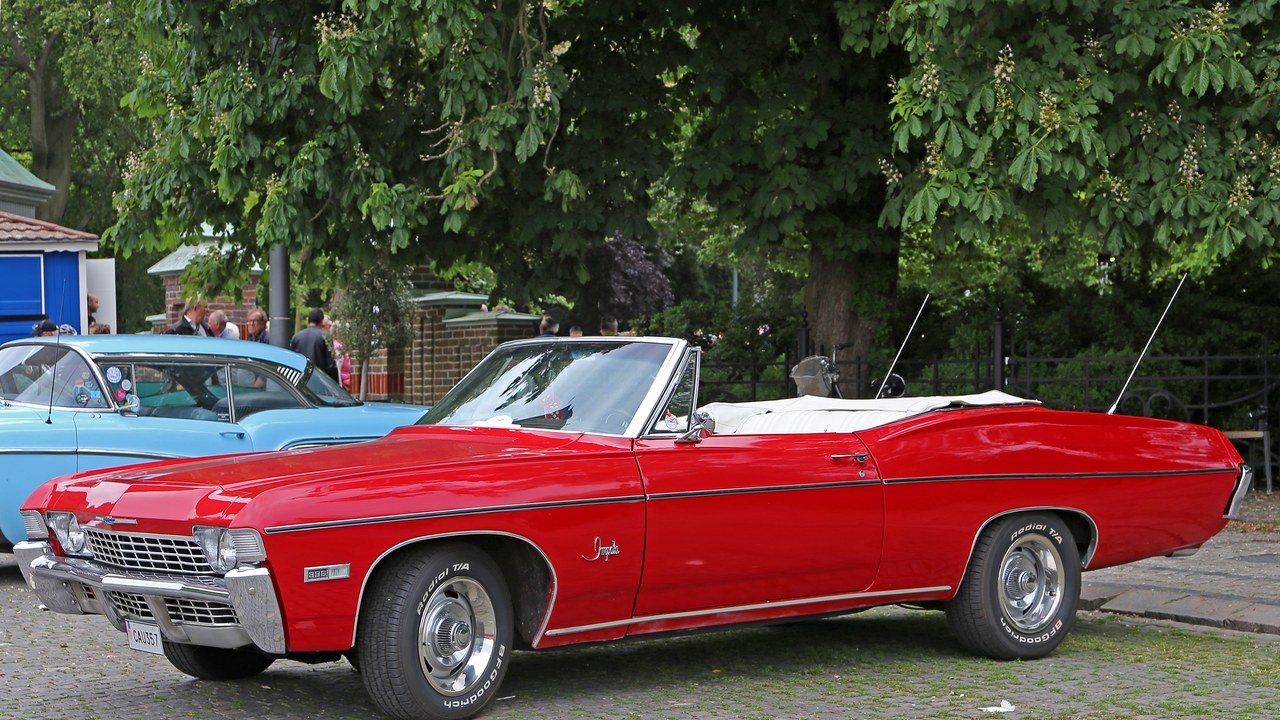
Chevrolet introduced the Impala in 1958 as a top trim before spinning it into its own line the next year. The 1959 model is unmistakable for its horizontal batwing fins and distinctive teardrop taillights, a radical departure from the upright fins on rival cars.
That flat, gull-wing rear treatment gave the Impala one of the most unusual profiles of the fin era, wide and low rather than tall and pointed. The car became a runaway sales success and grew into one of Chevrolet’s longest-running nameplates. Its 1959 styling, however, stands out as the boldest and most experimental interpretation of the trend.
More from Morning Overview
- More than 60,000 people flee the Spokane area as complex fires overrun 600 structures
- 11 engines built to run well past 200,000 miles
- Card skimmers hidden on gas pumps and ATMs are draining accounts, and here’s the tell
- The FBI says hackers are hijacking outdated home routers, and it named the models to check
