
West of Naples, the ground of the Campi Flegrei caldera has been rising for two decades, setting off swarms of earthquakes that include some of the strongest there in 40 years. Italian authorities keep the volcano on yellow alert, and about half a million people live in its red zone. These nine pictures show where the ground is moving and what is at stake.
Read next on Morning Overview: The Justice Department asked courts to undo approvals for three offshore wind farms, one already making power
Campi Flegrei: A Caldera on Yellow Alert
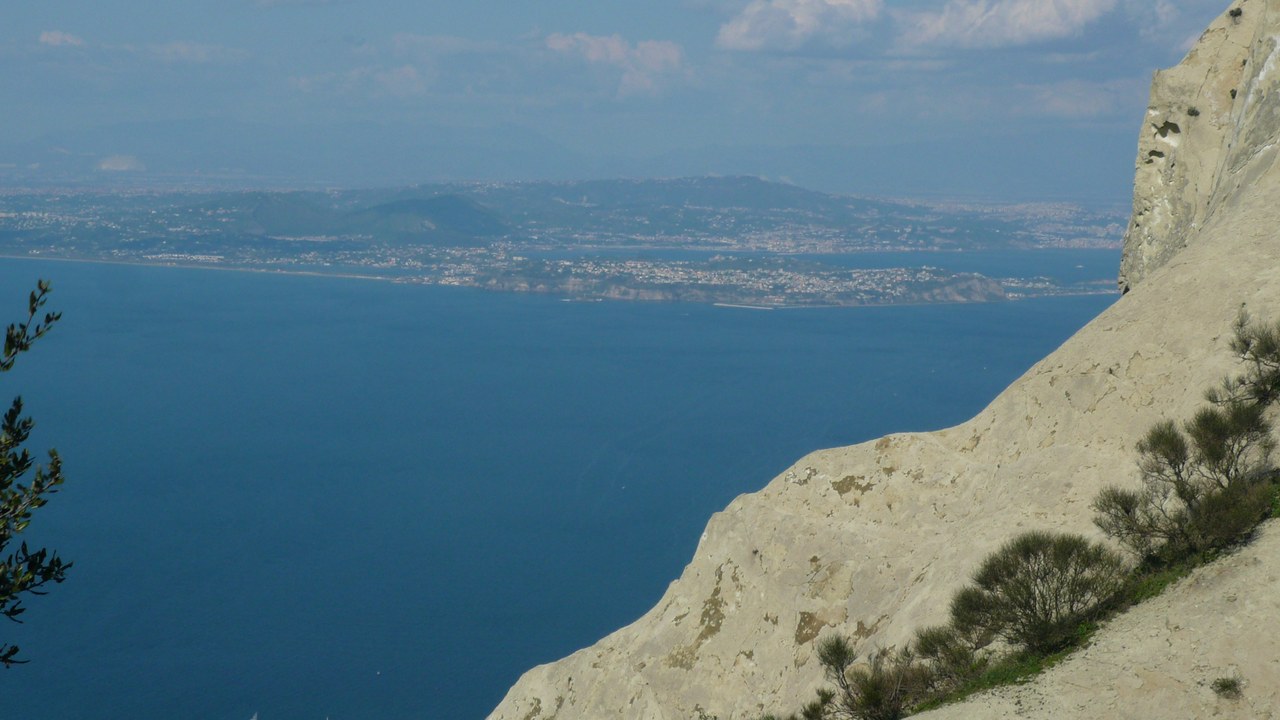
The Campi Flegrei, or Phlegraean Fields, form a volcanic caldera whose activity began more than 80,000 years ago and whose last eruption came in 1538. According to Italy’s national volcano institute, INGV, a new phase of ground uplift under way since 2005 had raised the land by about 144 centimeters by April 2025.
It has also produced swarms of earthquakes, including some of the most energetic in 40 years: magnitude 4.4 on 20 May 2024 and magnitude 4.6 on 13 March 2025. Because of these changes, the volcano’s alert level has stood at yellow, or attention, since 2012.
Rione Terra: The Point of Maximum Uplift
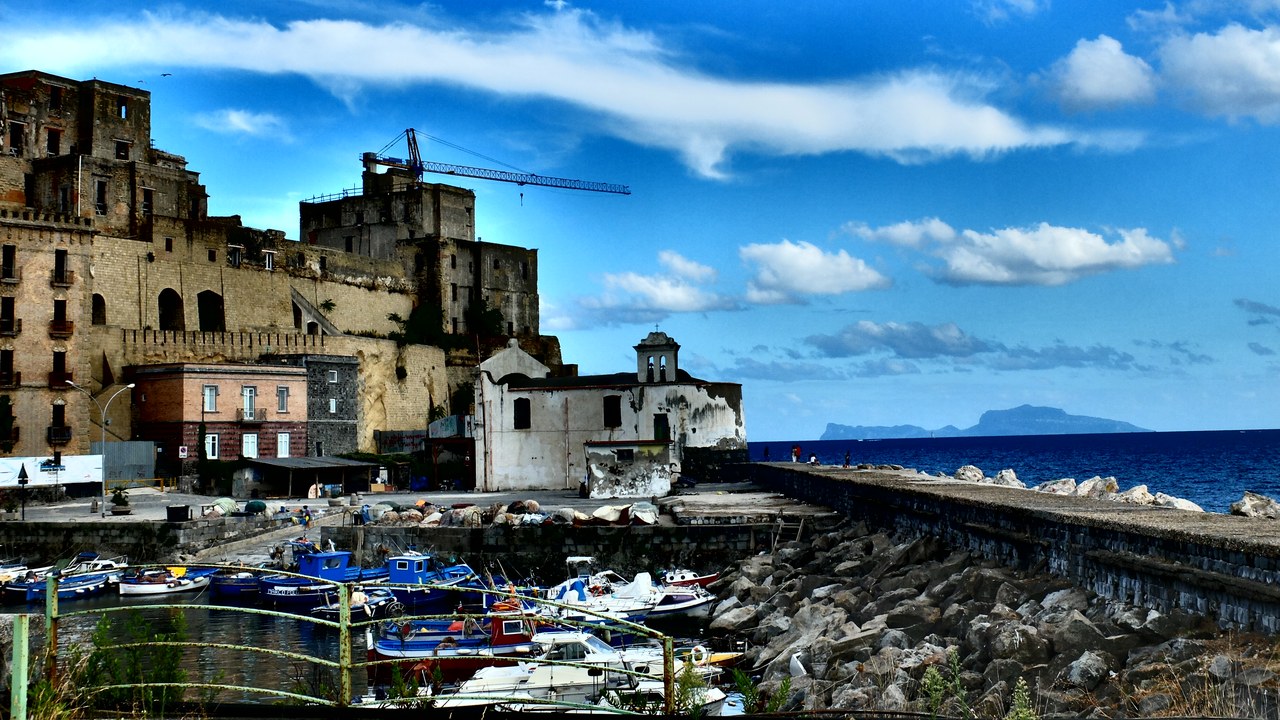
The ground has risen fastest at Rione Terra in Pozzuoli. Italy’s Civil Protection Department says that by the end of August 2024 the maximum uplift there, the point of greatest deformation in the caldera, had reached 132.5 centimeters since the current phase began in 2005.
From January 2023 to August 2024 alone, the ground at Rione Terra rose 30.5 centimeters. Seismic activity has been increasing since 2018, with most earthquakes in the area occurring at depths of no more than about 4 kilometers, and most concentrated in the first 2 kilometers.
Pozzuoli: A Town That Has Moved Before
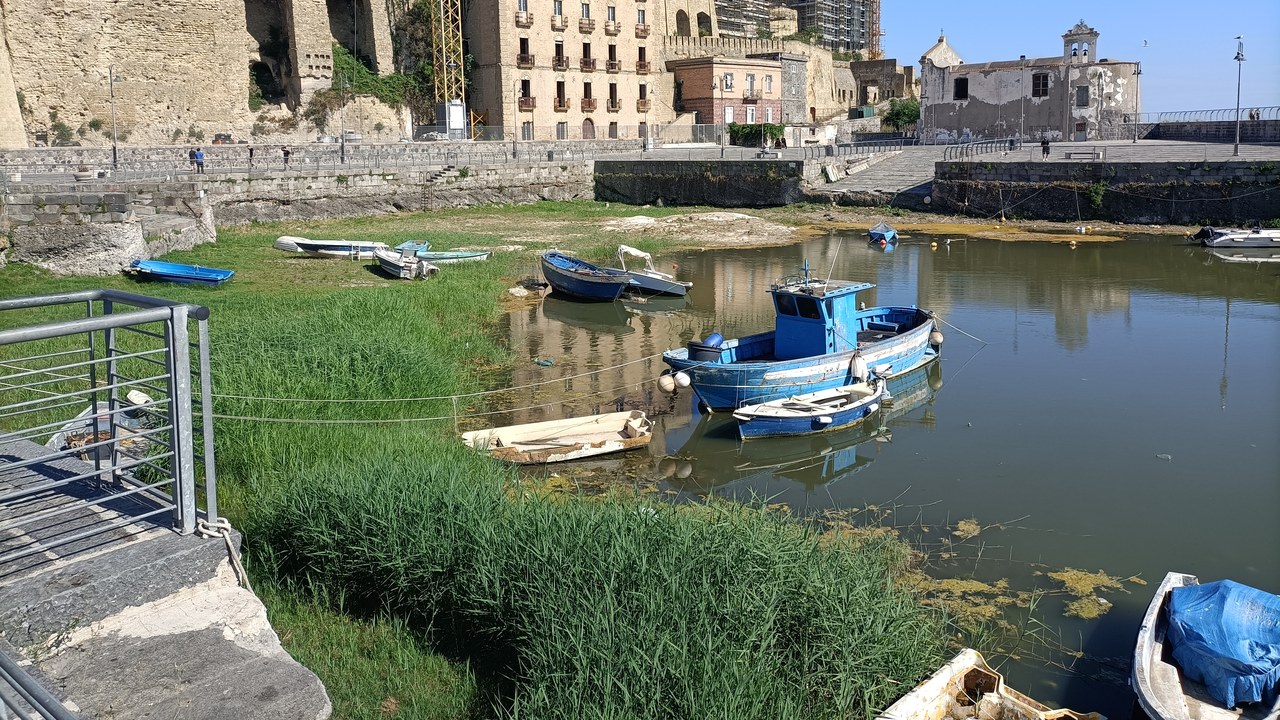
Pozzuoli has lived through this before. The INGV’s history of the caldera notes that the most recent uplift episodes before today’s, in 1969 to 1972 and 1982 to 1984, forced many residents, especially in Pozzuoli’s historic center, to abandon their homes.
That earlier movement of the ground, known as bradyseism, is part of a wider process of resurgence in which the land slowly rises and falls. Today’s uplift is centered just southeast of Rione Terra, rising at rates that have varied over the years from about 10 to 30 millimeters a month.
Solfatara: Steam, Gas and a 4.4 Quake
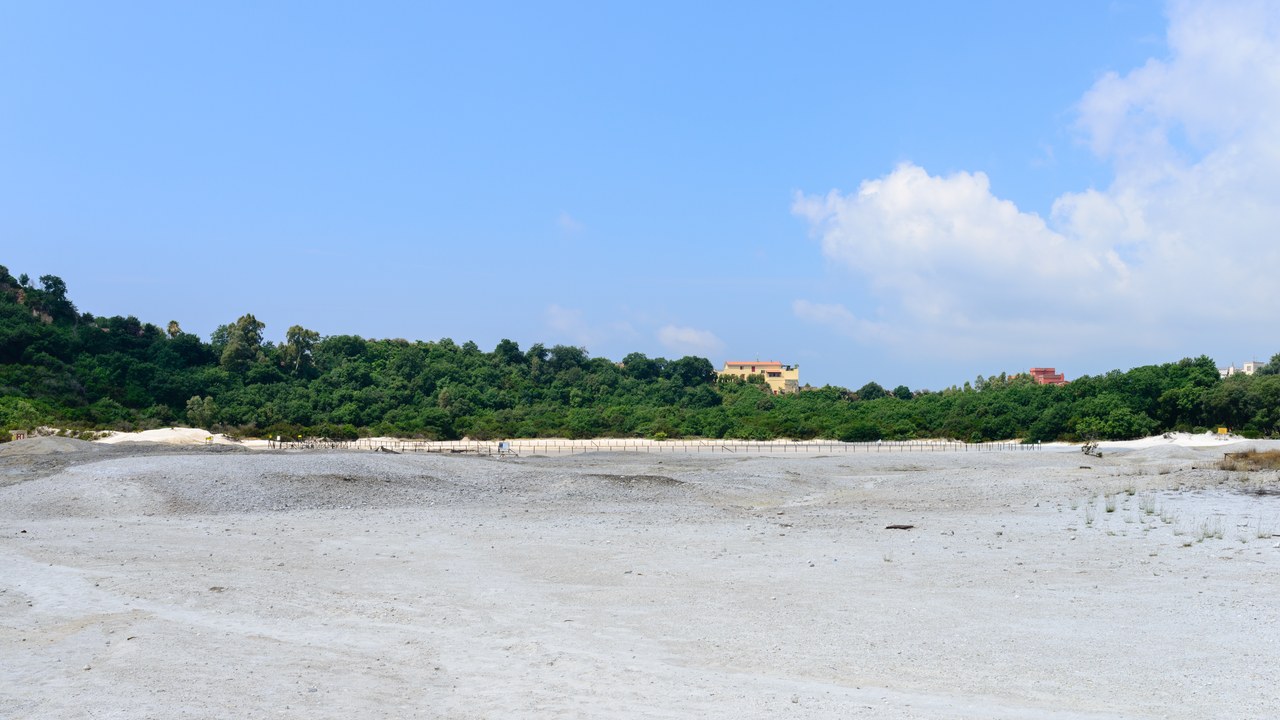
The Solfatara crater, inside the caldera near Pozzuoli, is one of the most active spots in the Campi Flegrei. The Civil Protection Department’s hazard guide lists it, with nearby Pisciarelli, as an area of intense volcanic gas emissions, and warns that phreatic, or steam-driven, explosions are possible in such hydrothermal zones.
On 20 May 2024, a magnitude 4.4 earthquake struck in the Solfatara area of Pozzuoli. Carbon dioxide from the ground there is especially hazardous because it is odorless and colorless, and at high concentrations the gases can endanger people and animals.
Naples: Half a Million in the Red Zone
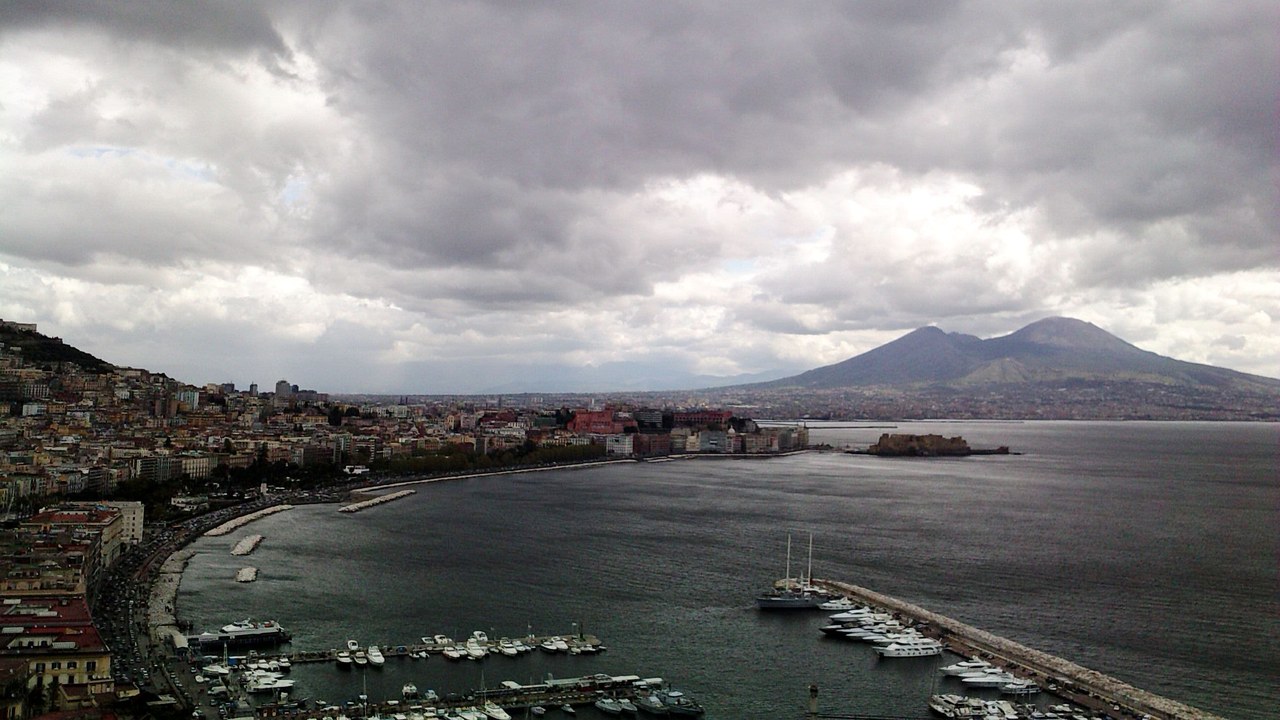
The Campi Flegrei red zone, where pyroclastic flows are the main danger, covers Bacoli, Monte di Procida, Pozzuoli, Quarto and parts of other towns, plus Naples neighborhoods including Bagnoli, Fuorigrotta, Pianura and Soccavo. The Civil Protection Department puts its population at about 500,000.
If a volcanic risk warning is issued, evacuation of the red zone is mandatory even if no eruption follows, and access stays banned until authorities say otherwise. A wider yellow zone, exposed to falling ash and lapilli, is home to more than 800,000 people.
Macellum of Pozzuoli: Columns That Record the Ground
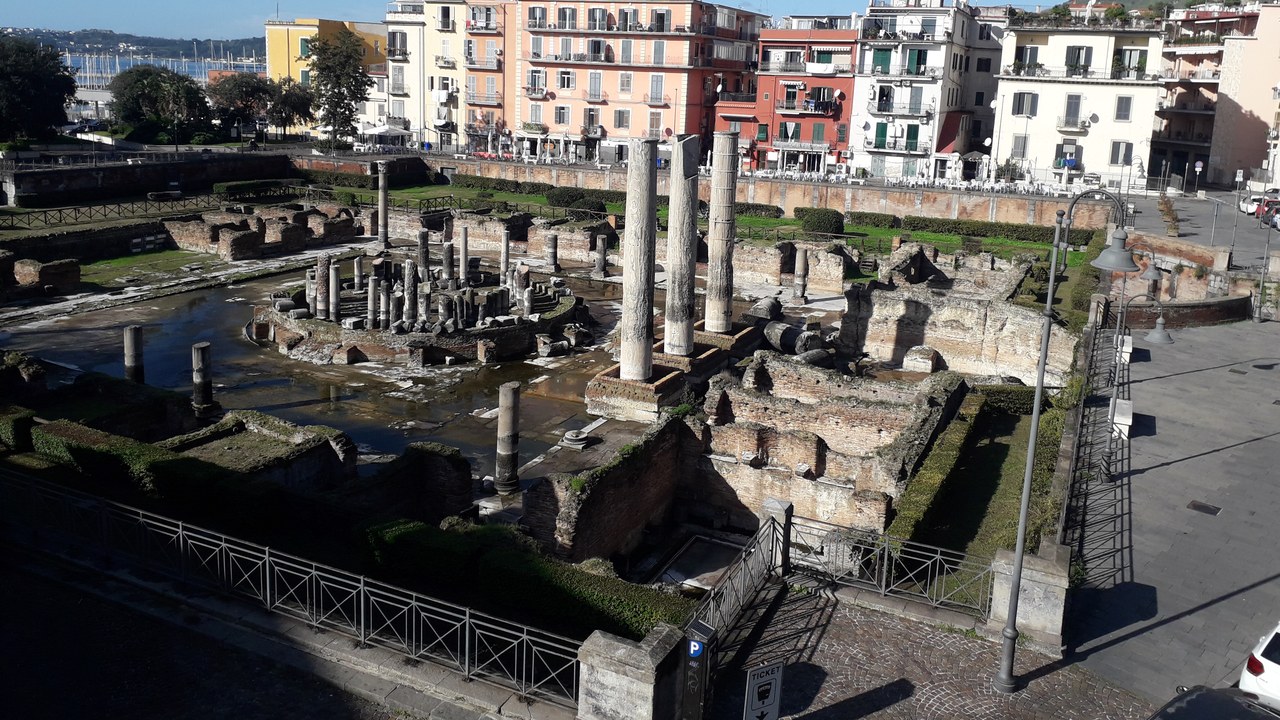
Pozzuoli’s Roman market, the Macellum, was misidentified as a Temple of Serapis after a statue of that god was found during 18th-century excavations. The Macellum’s history explains that a band of borings left by marine Lithophaga molluscs on three standing marble columns shows they stayed upright while the site sank below sea level and later re-emerged.
The puzzle became a famous case in early geology, featured on the frontispiece of Charles Lyell’s Principles of Geology in 1830. Today the columns remain a visible record of how far the land under Pozzuoli has gone up and down over the centuries.
Monte Nuovo: The Mountain Born in a Week
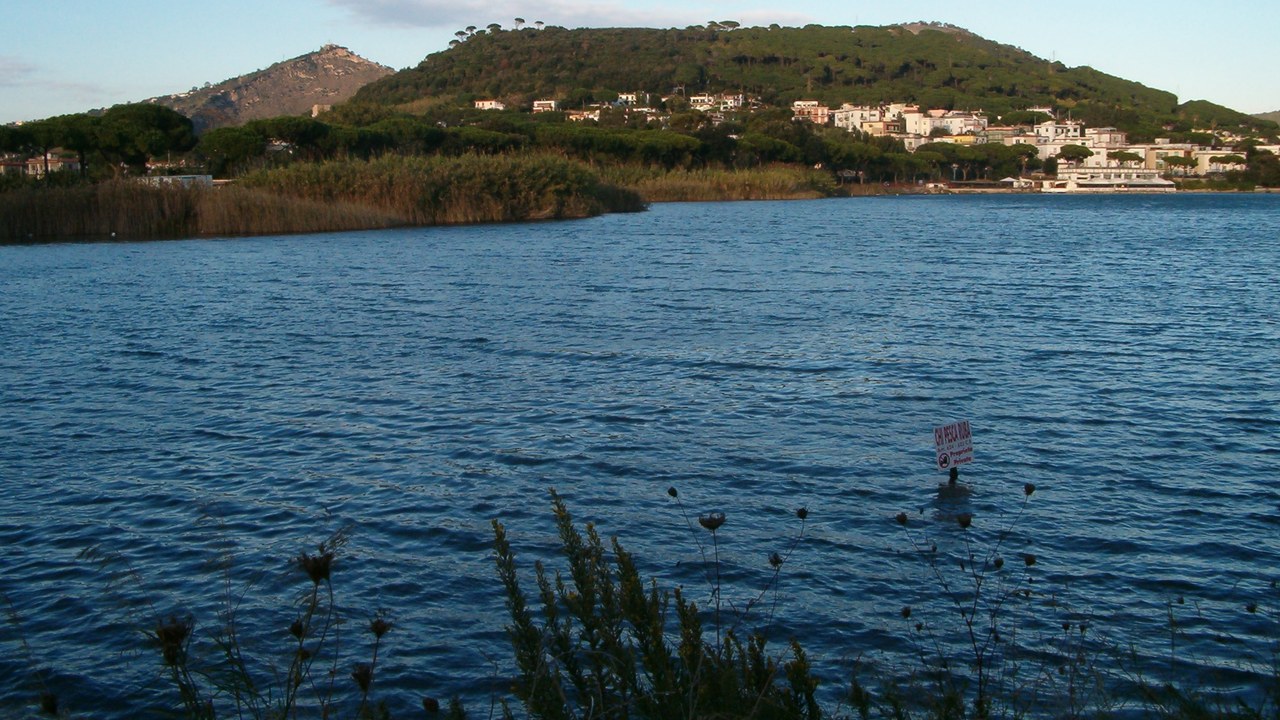
The last eruption in the Campi Flegrei built a new hill. The record of Monte Nuovo says the eruption lasted from 29 September to 6 October 1538 and formed the cinder cone, whose name means New Mountain, now 132 meters high.
Its vent opened beside the medieval village of Tripergole on the shores of Lake Lucrino, a thermal bath village inhabited since Roman times. The village was buried so completely that its exact location can no longer be identified, and the eruption was the first in modern times to be described by many witnesses.
Lake Avernus: The Lake the Romans Feared
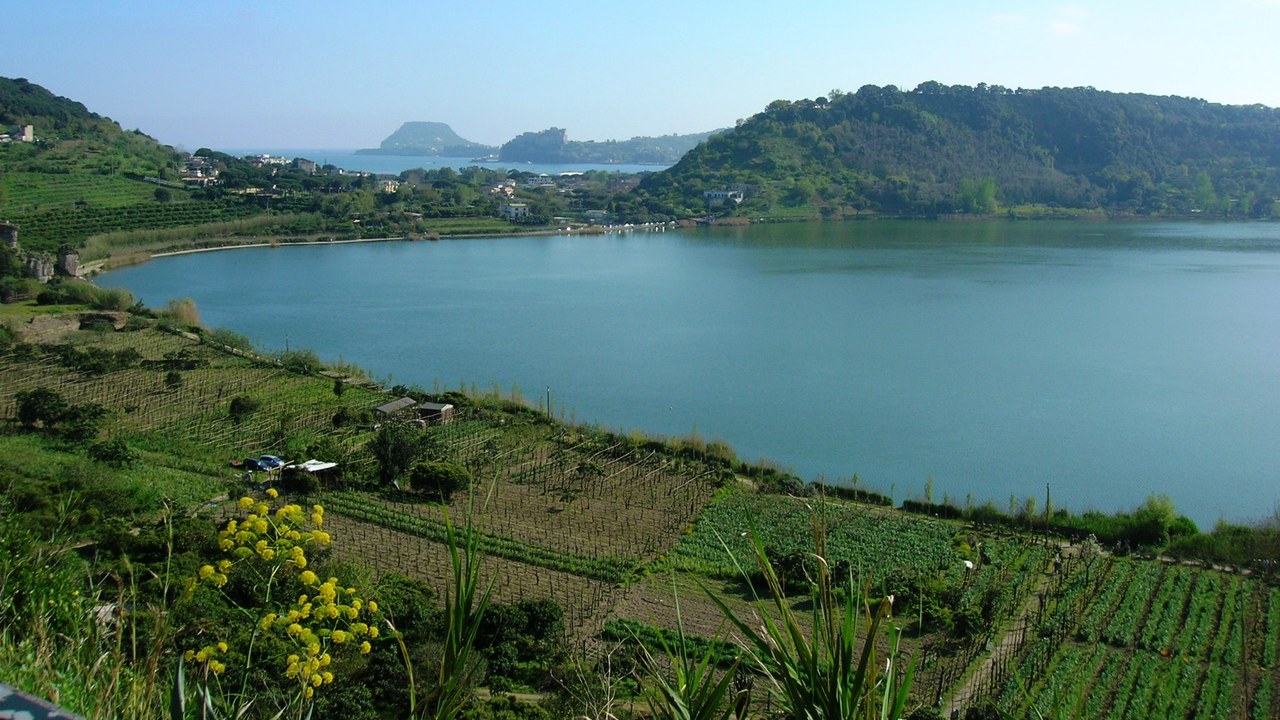
Lake Avernus fills a volcanic crater about 4 kilometers west of Pozzuoli, roughly circular with a 2-kilometer circumference and a depth of 60 meters. The lake’s history notes that the Romans considered it the entrance to Hades, and Roman writers used its name as a synonym for the underworld.
In Virgil’s Aeneid, Aeneas descends to the underworld through a cave near the lake, and in Hyginus’ Fabulae, Odysseus also goes to the lower world from this spot. The crater is one of the many volcanic features still visible across the Phlegraean Fields.
Mount Vesuvius: The Other Volcano Next Door
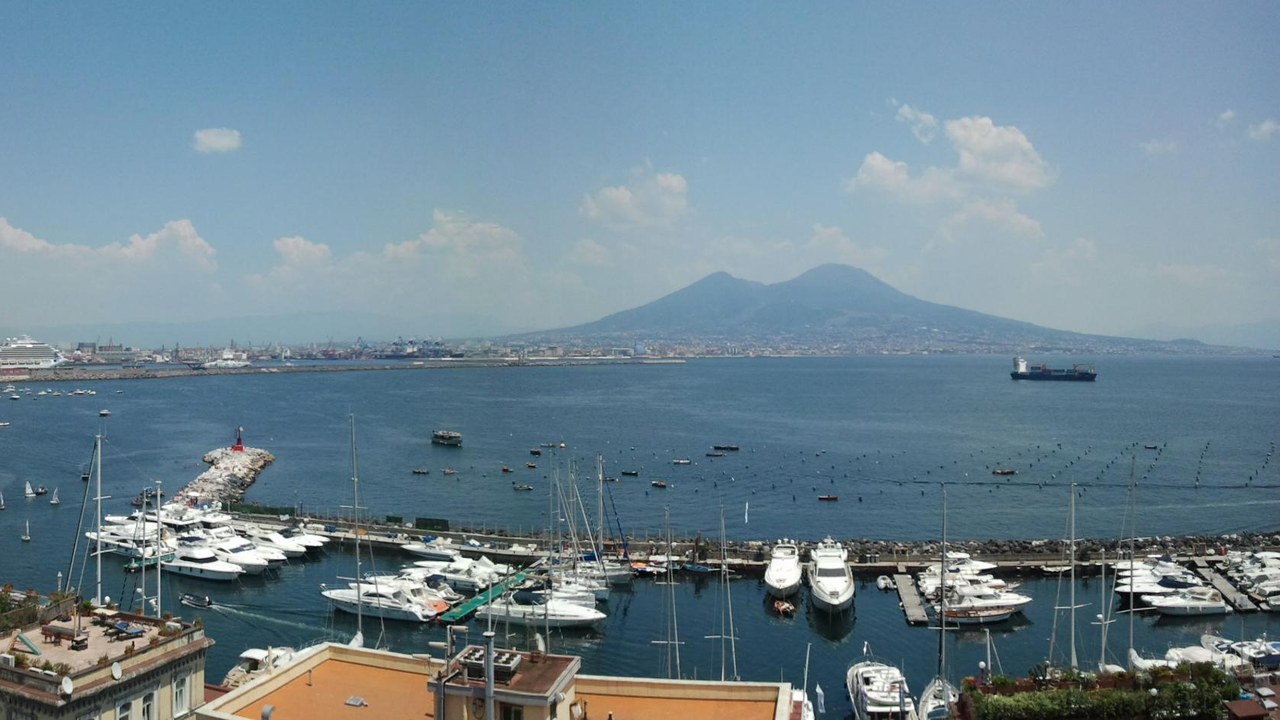
Naples lives between two volcanic threats. The Campi Flegrei are part of the Campanian volcanic arc, which also includes Mount Vesuvius, about 9 kilometers east of the city, and the caldera’s profile notes that part of Naples is built directly over the Phlegraean Fields.
The Phlegraean Fields are monitored by the Vesuvius Observatory. The Campi Flegrei’s largest known eruptions rate 7 on the volcanic explosivity index, including the Campanian Ignimbrite eruption about 40,000 years ago, which is why the caldera is often described as a supervolcano in popular media.
More from Morning Overview
- Neanderthals in Spain carved a wooden object that matches nothing archaeologists have ever found
- The FAA wants $2.39 million from a flight school it says flew a Cessna about 280 times with an unapproved part
- A $1 billion gas plant planned for Superior, Wisconsin, has been abandoned
- Shaq spent $1.3 million on three Rolls-Royce Phantoms to prove a point to a salesman
