
The four Iowa-class battleships were the last battleships the American Navy ever commissioned, and they fought in four wars across nearly half a century. Today none of them sails, but all four survive as museum ships open to visitors. These eight pictures follow the class from the shipyard to the piers where Missouri, Iowa, New Jersey and Wisconsin now rest.
Read next on Morning Overview: Zero Motorcycles unveiled an electric motorcycle targeted at under $8K and a street-legal dirt bike at EICMA
USS Iowa (BB-61): A Battleship That Carried a President
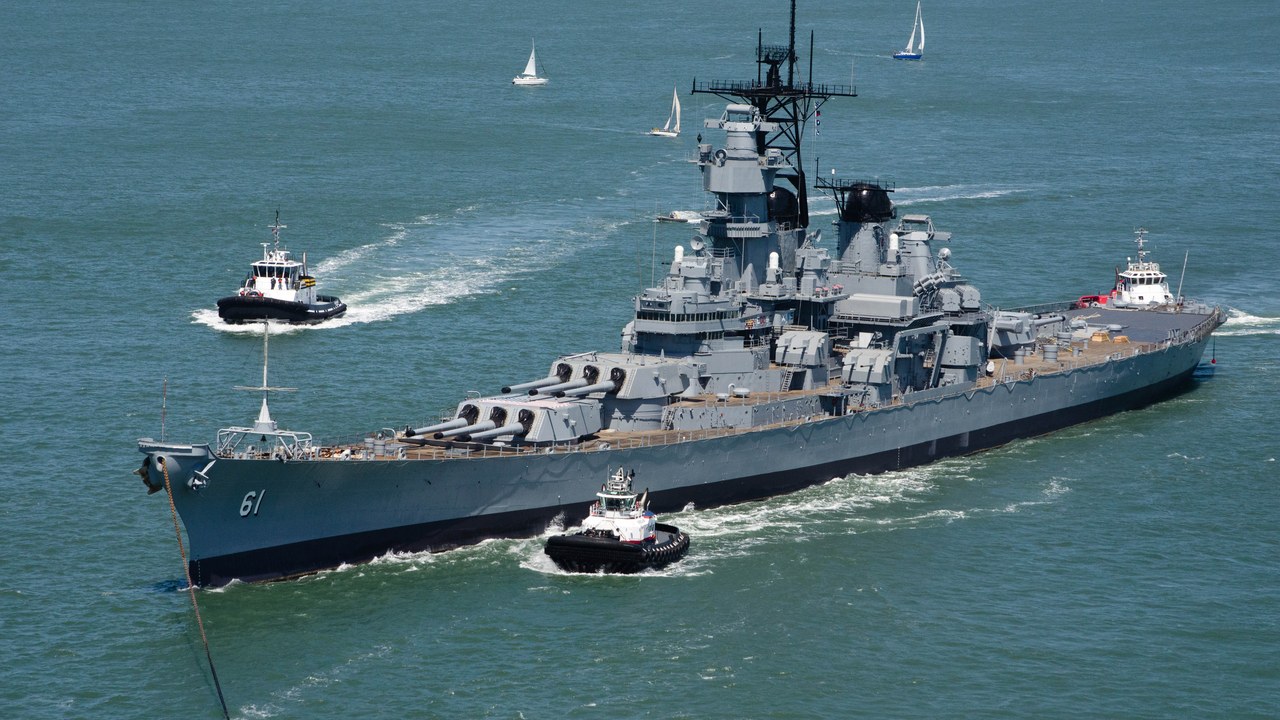
USS Iowa was commissioned on February 22, 1943, and in November of that year she carried President Franklin D. Roosevelt across the Atlantic on the first leg of his trip to the Tehran Conference. She was even fitted with a bathtub for him, since Roosevelt, paralyzed in 1921, could not use a shower.
Her later career had triumph and tragedy. In January 1989 she fired a 16-inch shell 23.4 nautical miles, a record for the caliber, and that April an explosion in her No. 2 turret killed 47 crewmen. After two decades in reserve, she was towed to San Pedro, Los Angeles, in 2012 and opened as a museum on July 7.
16-inch/50-caliber Mark 7 gun: Nine Guns, Two Kinds of Shell
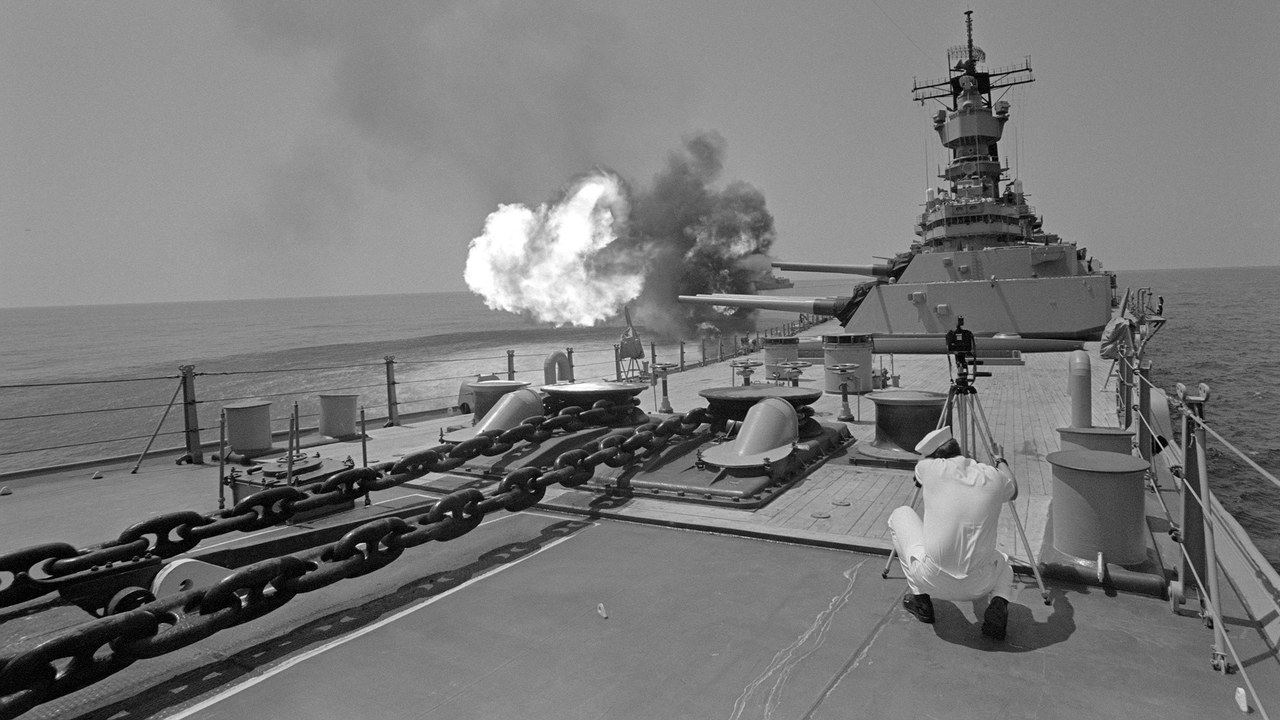
Each Iowa carried nine 16-inch/50-caliber guns, and each of their turrets weighed some 400 long tons more than the turret of the earlier 16-inch/45 gun. The guns fired two different conventional 16-inch shells: a 2,700-pound armor-piercing round for ships and fortifications and a 1,900-pound high-explosive round for shore bombardment.
That firepower kept the ships relevant long after air power took over. In World War II they mostly escorted fast aircraft carriers and shelled Japanese positions. In Korea they provided naval gunfire support for United Nations forces, the role that later made Congress reluctant to let them go.
USS New Jersey (BB-62): The Battleship That Went to Vietnam
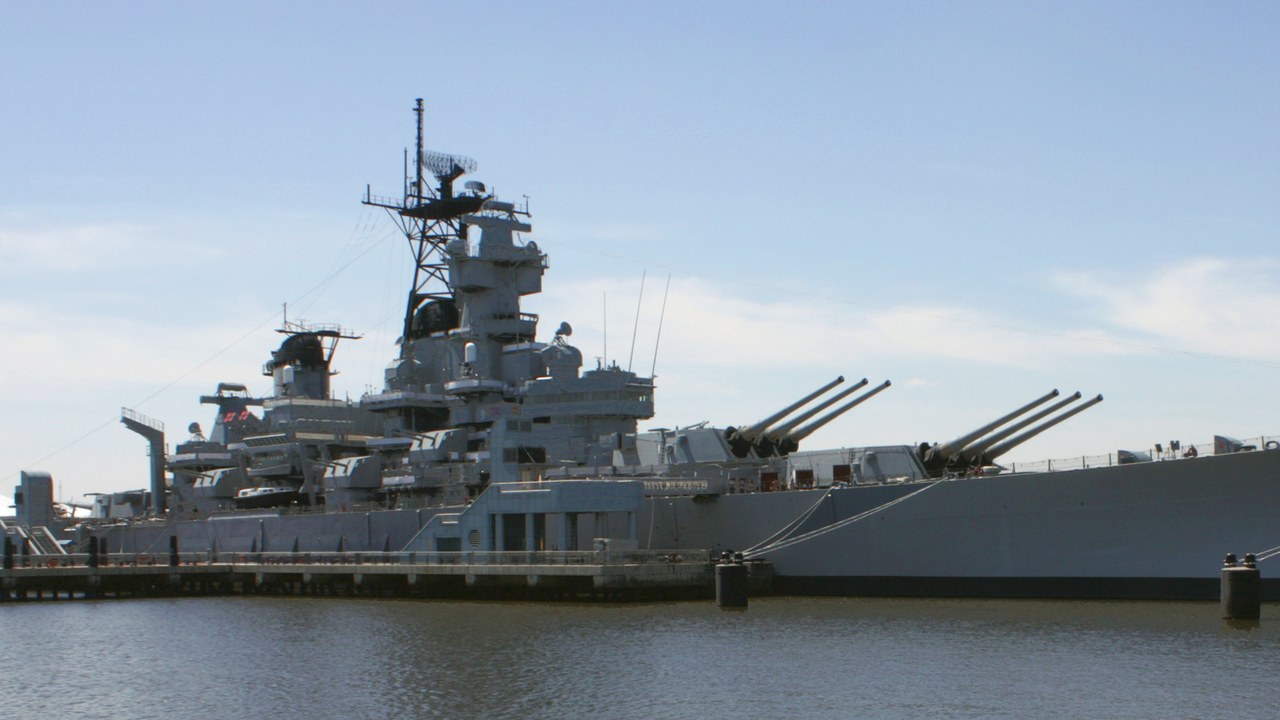
Of the four, New Jersey saw the most unusual service. In 1968, she shelled Viet Cong and North Vietnamese forces in the Vietnam War, after earlier providing gunfire support in Korea.
All four ships were reactivated and modernized at Congress’s direction in 1981 as part of the 600-ship Navy initiative. Costly to maintain, they were decommissioned again in the early 1990s. Congress forced the Navy to reinstate two of them for a time over concerns about shore bombardment, before all four were finally stricken. New Jersey is now preserved as a museum ship in Camden, New Jersey.
Tomahawk cruise missile: Cruise Missiles on a 1940s Hull
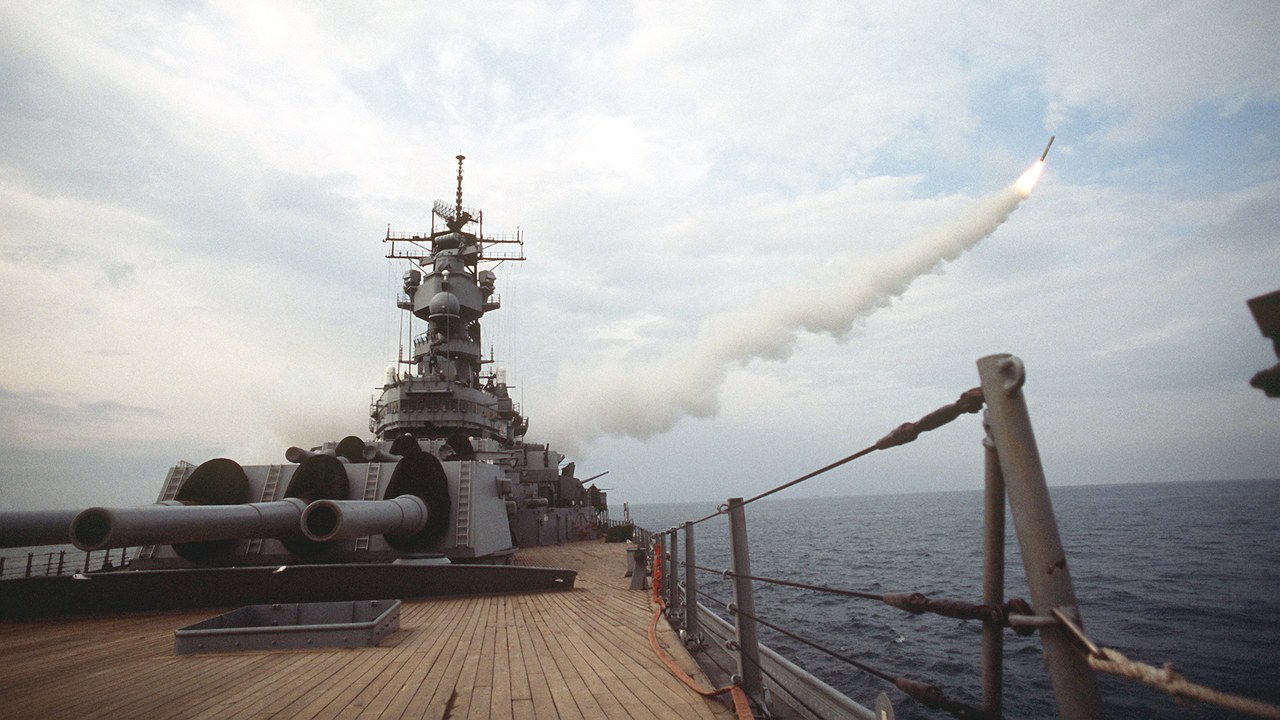
The 1980s modernization gave the old battleships a new weapon, but it took real surgery. Because of the original 1938 design, Tomahawk missiles could not be fitted until the ships were rebuilt to hold the launchers, which meant removing anti-aircraft guns and four of each ship’s ten 5-inch gun mounts.
The mid and aft sections were rebuilt for the missile launchers, and caution zones were set around the second and third turrets so the blast of the big guns would not wreck the new equipment. The payoff came in Operation Desert Storm in 1991, when Missouri and Wisconsin fired both missiles and 16-inch guns at Iraqi targets.
USS Missouri (BB-63): The Last Battleship Commissioned
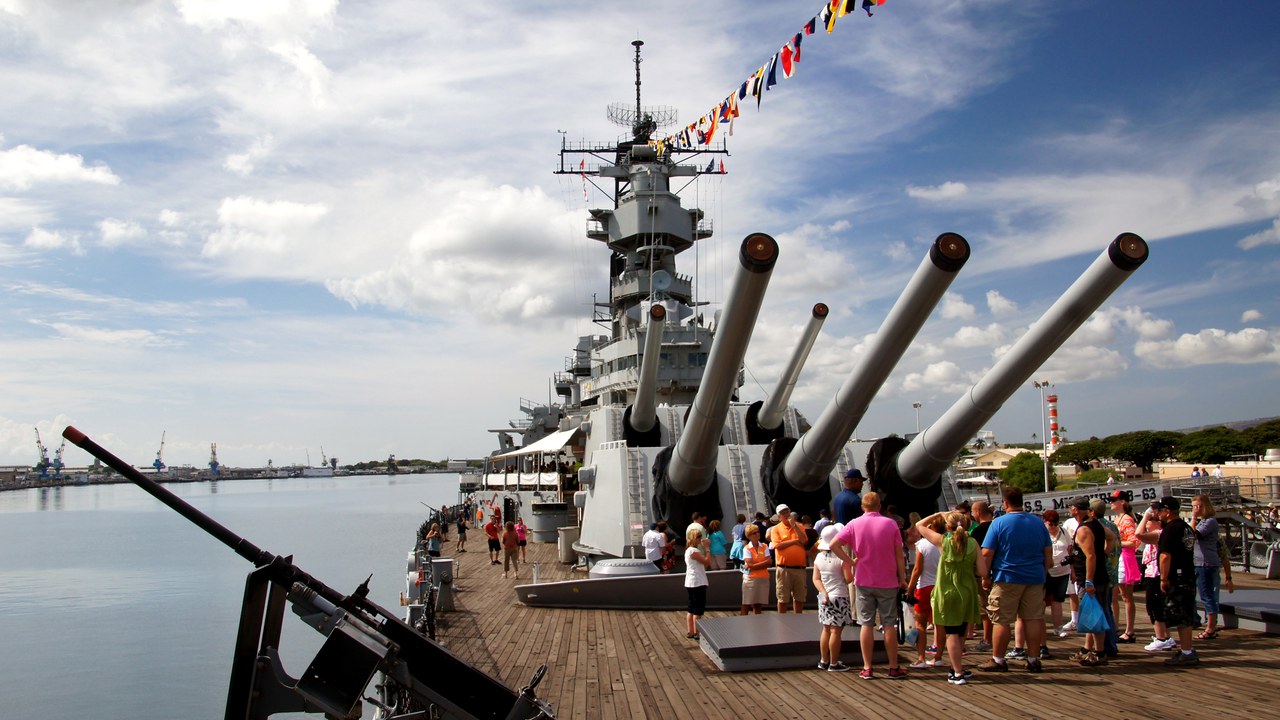
USS Missouri, completed in 1944, is the last battleship commissioned by the United States. She fought at Iwo Jima and Okinawa and shelled the Japanese home islands, and on her quarterdeck the Japanese Instrument of Surrender was signed on September 2, 1945, officially ending World War II.
She was christened at her launch in January 1944 by Margaret Truman, daughter of then-Senator Harry S. Truman. Decommissioned for the last time in 1992 and struck from the Naval Vessel Register in 1995, she was donated in 1998 to the USS Missouri Memorial Association and became a museum ship at Pearl Harbor, where she remains.
USS Arizona Memorial: Facing the Ship That Began the War
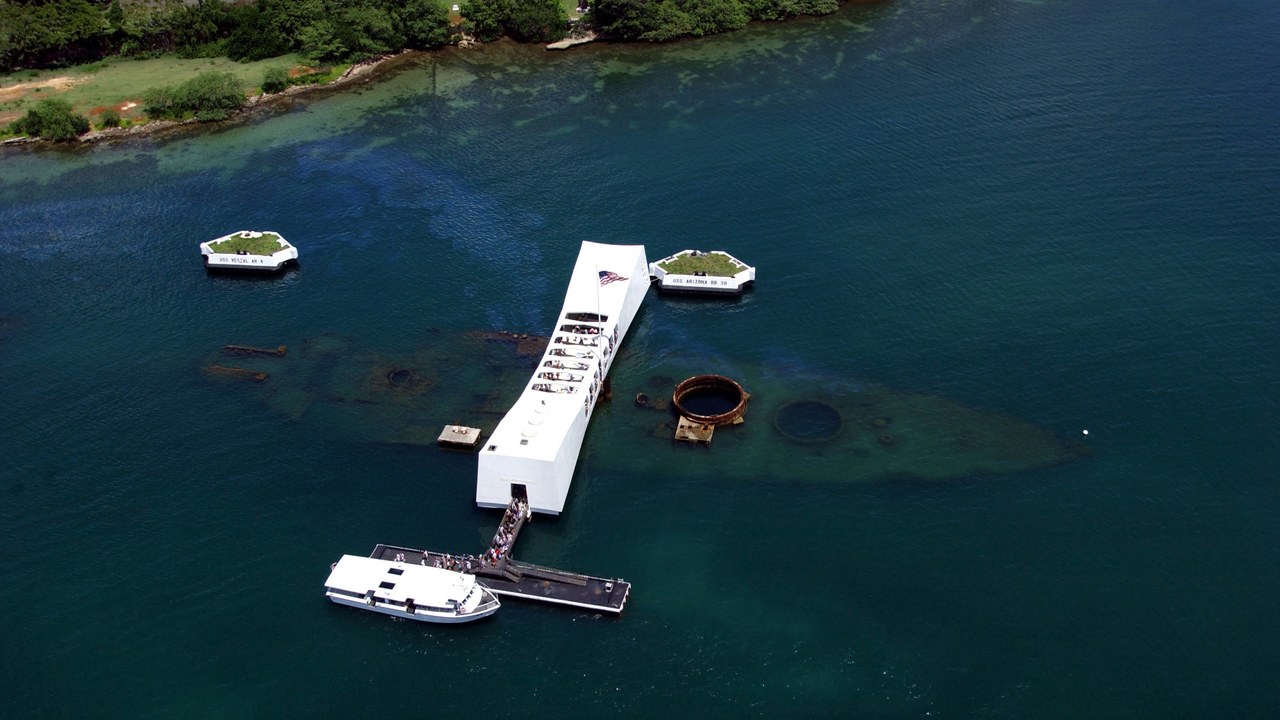
Missouri’s new home put her near USS Arizona, whose explosion and sinking on December 7, 1941, became synonymous with the attack on Pearl Harbor. The National Park Service worried that the famous battleship would overshadow the Arizona, the memorial to that day.
The answer was placement. Missouri was berthed well back from the Arizona Memorial and facing it, so that ceremonies on her aft decks would not look onto the memorial. Her bow points toward the Arizona to convey that Missouri watches over the remains of the sunken ship, pairing symbols of the beginning and the end of the war for the United States.
Brooklyn Navy Yard: Where Iowa Was Born
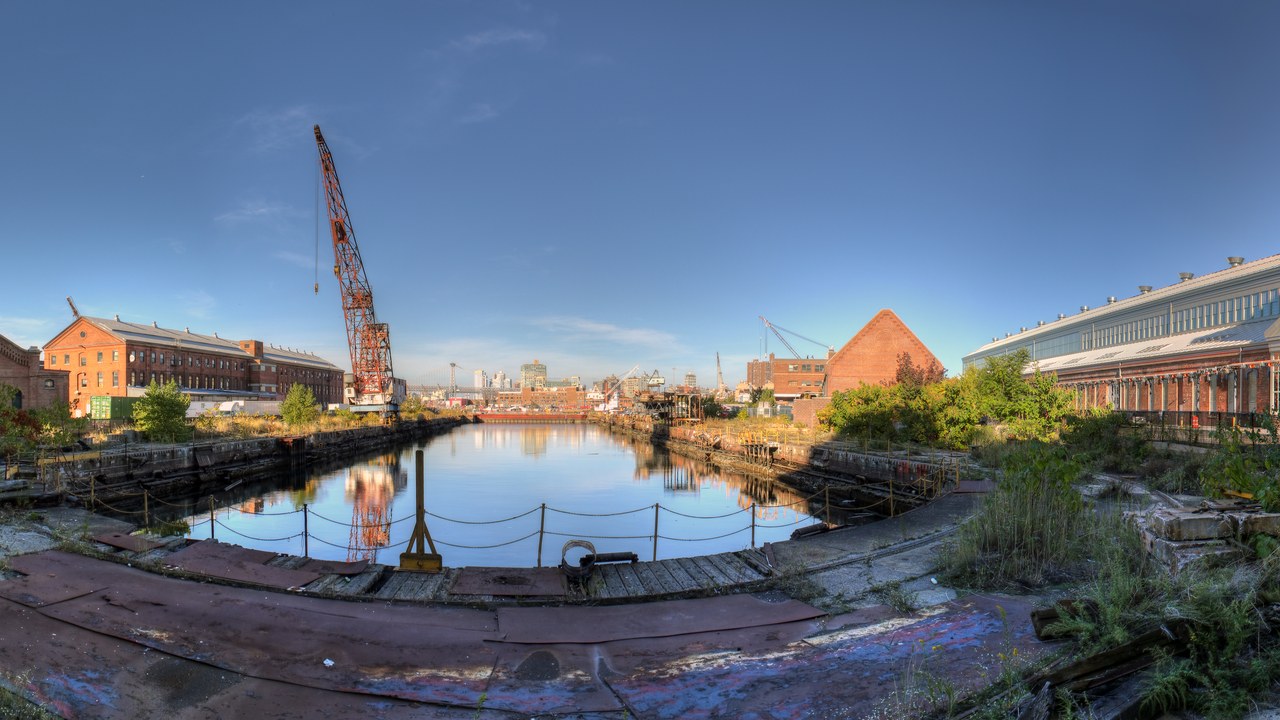
Iowa came out of the New York Naval Shipyard in Brooklyn, where she was laid down in June 1940. She was launched on August 27, 1942, sponsored by Ilo Wallace, the wife of Vice President Henry Wallace, and commissioned with Captain John L. McCrea in command.
Her first assignment was a shakedown cruise in the Chesapeake Bay, followed by a deployment to Argentia, Newfoundland, in case the German battleship Tirpitz broke into the Atlantic. Roosevelt later told her crew that “from all I have seen and all I have heard, the Iowa is a ‘happy ship,'” praise from a commander in chief who sailed aboard her.
Pearl Harbor: A Museum Beside Battleship Row
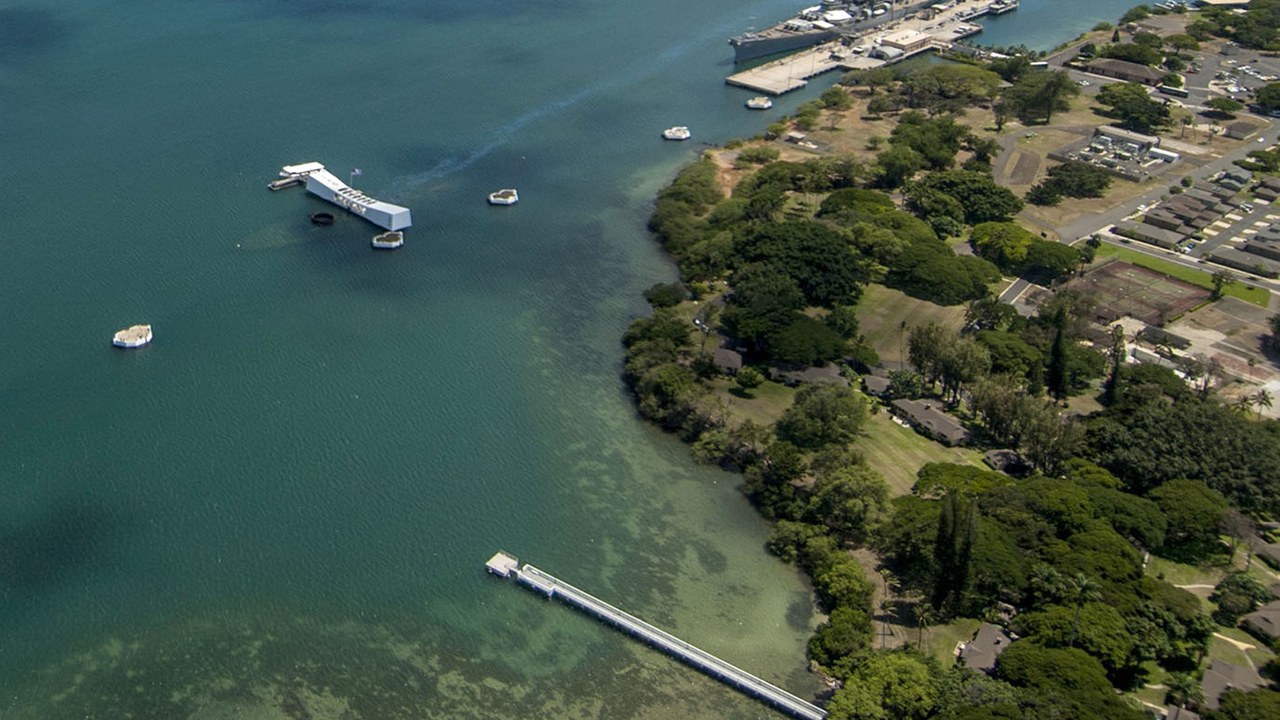
Missouri sits at Ford Island in Pearl Harbor and was listed on the National Register of Historic Places in 1971 for hosting the surrender signing. She is not eligible to be a National Historic Landmark because she was extensively modernized after the war.
The ship keeps changing as a museum. In 2018, a $3.5 million project restored and preserved her superstructure, including the navigation bridge, chart house, captain’s at-sea cabin, pilot house and conning tower. On the 80th anniversary of the end of World War II, a permanent exhibit on Missouri’s wartime experience opened aboard the ship.
More from Morning Overview
- Melting permafrost is setting off a newly identified kind of catastrophic landslide, scientists say
- Cadillac cut the price of its cheapest EV, which goes up to 317 miles on a charge
- Winter weather advisories cover I-80, I-70 and the Bighorns with up to 15 inches of snow
- Arizona’s governor declared a statewide emergency after Flagstaff logged its wettest Nov. 1 on record
