
The land speed record has never been a contest of ordinary machines. Each new mark demanded a purpose-built projectile, driven by aero engines, jet turbines or rocket motors and aimed down a dry lake bed or a stretch of hard sand. Here are eight record cars and the barriers each of them broke.
1. Thrust SSC: The Sound Barrier Falls
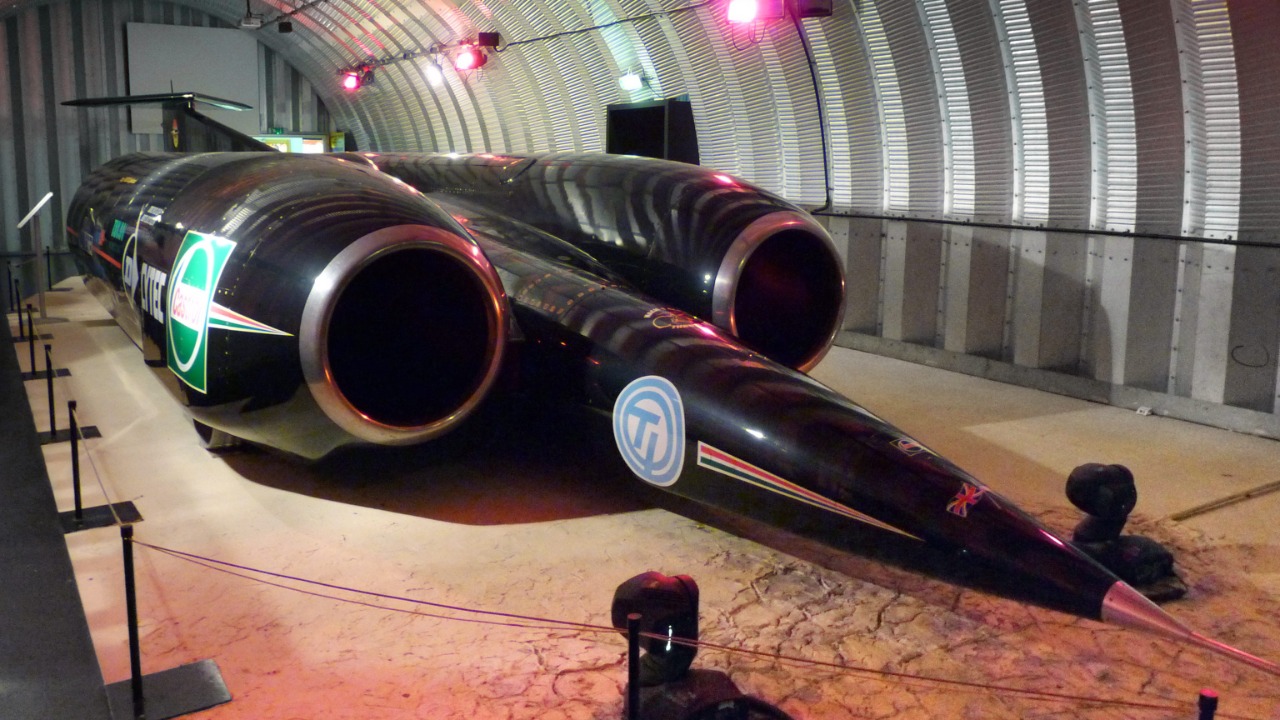
On October 15, 1997, Royal Air Force pilot Andy Green drove Thrust SSC across Nevada’s Black Rock Desert at an average of 763.035 mph, becoming the first driver to set a supersonic land speed record. The two-way average worked out to roughly Mach 1.02, and observers on the desert floor reported hearing a sonic boom roll off the car. Two Rolls-Royce Spey turbofans, the same engines used in the F-4 Phantom, supplied about 110,000 horsepower.
The mark has stood for more than a quarter of a century, longer than any other outright record of the jet era. Its survival owes as much to money as to physics: few teams have ever assembled the funding, the permits and the pilot willing to try.
2. Bloodhound LSR: The Chase for 1,000 MPH
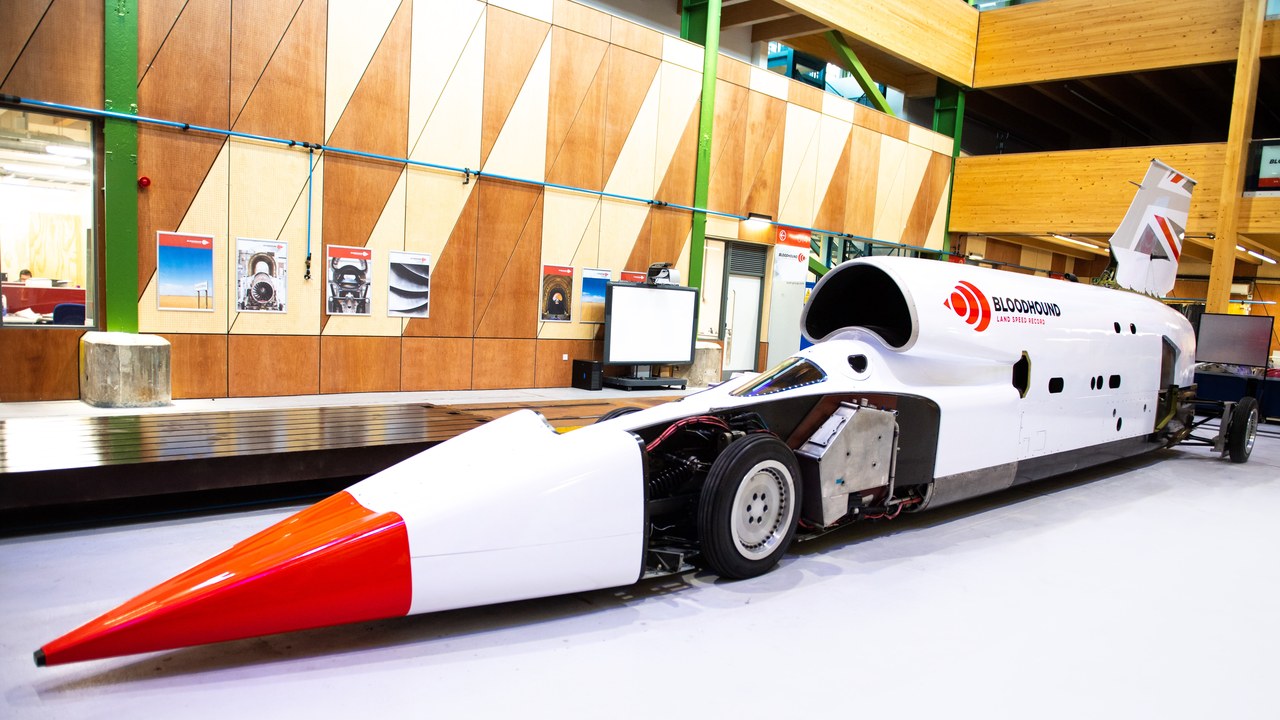
Bloodhound began life as a British project to push the record past 1,000 mph, pairing a Eurofighter Typhoon EJ200 jet with a rocket for the final push. In November 2019 the car reached 628 mph during high-speed trials on Hakskeen Pan in South Africa, well short of its target but enough to validate the aerodynamics and the desert track.
Funding, not physics, has been the obstacle ever since. The effort entered administration in 2018, was rescued by a private buyer, and was later offered for sale while the record attempt itself remained unrun, a reminder that land speed records are financed as much as they are engineered.
3. Sunbeam 1000 hp: Two Hundred on the Sand
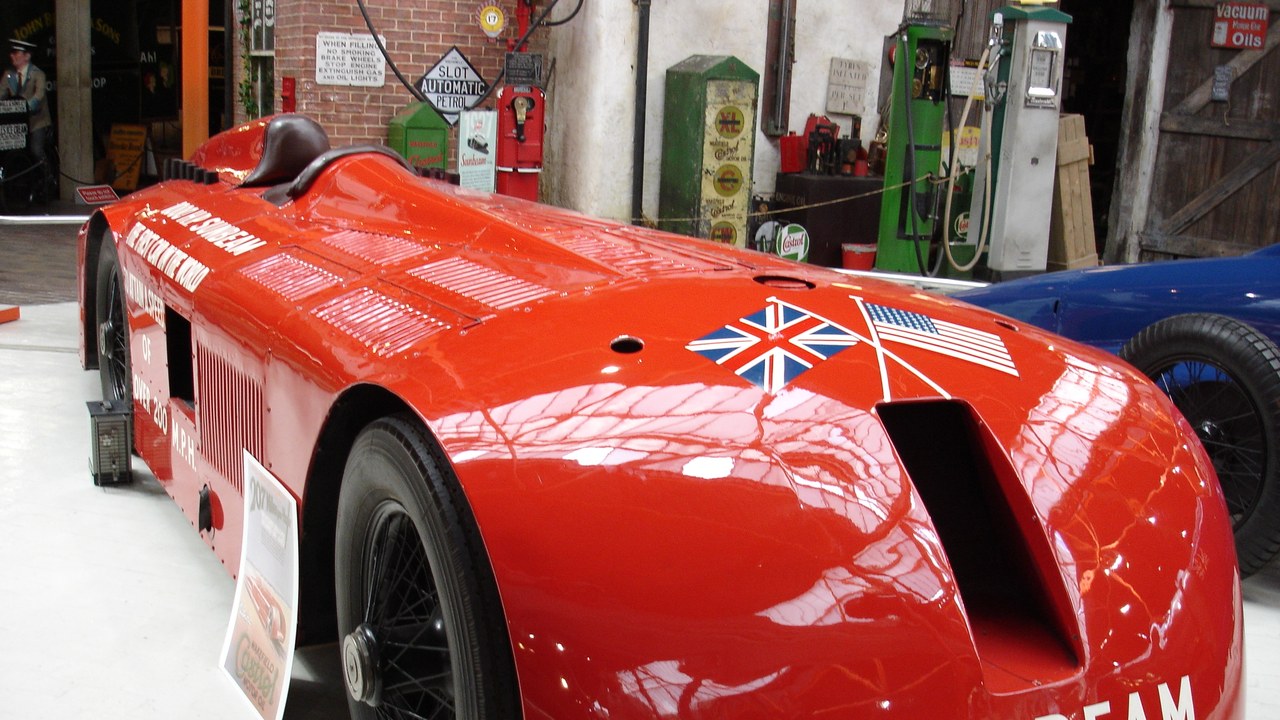
Henry Segrave took the Sunbeam 1000 hp onto the packed sand at Daytona Beach on March 29, 1927, and averaged 203.79 mph to break the 200 mph barrier. Power came from two Sunbeam Matabele aircraft engines totaling roughly 44.9 liters, one mounted ahead of the driver and one behind, together good for the nominal 1,000 horsepower in the car’s name.
The nickname the crew used, the Slug, sat oddly on a machine that redefined what a wheeled vehicle could do. Segrave’s run also moved the contest away from Britain’s Pendine Sands toward Daytona’s harder, wider beach, which stayed the venue of choice until Bonneville’s salt flats took over in the 1930s.
4. Blue Bird: Past Three Hundred at Bonneville
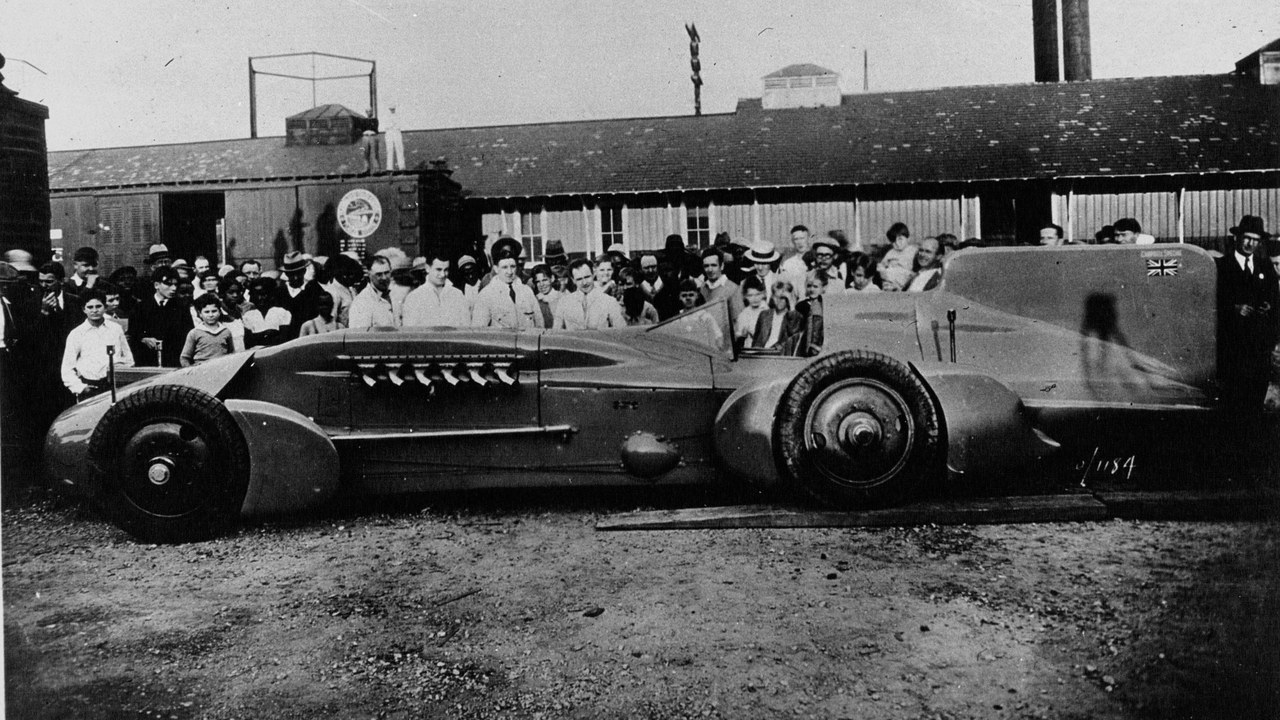
Malcolm Campbell’s final Blue Bird, rebuilt around a supercharged Rolls-Royce R aero engine, carried him to 301.129 mph on the Bonneville Salt Flats on September 3, 1935, making him the first driver past 300 mph. It was his ninth land speed record and the last he attempted; he turned to water speed records afterward.
The Bonneville switch mattered as much as the engine. Campbell had run at Daytona for years, but the beach was running out of room at those speeds, and the salt offered a wider, flatter course that every subsequent wheel-driven record would use. The escalation was startling: he had first held the record at 146 mph in 1924, and more than doubled it in eleven years.
5. The Blue Flame: Thirteen Years on Top
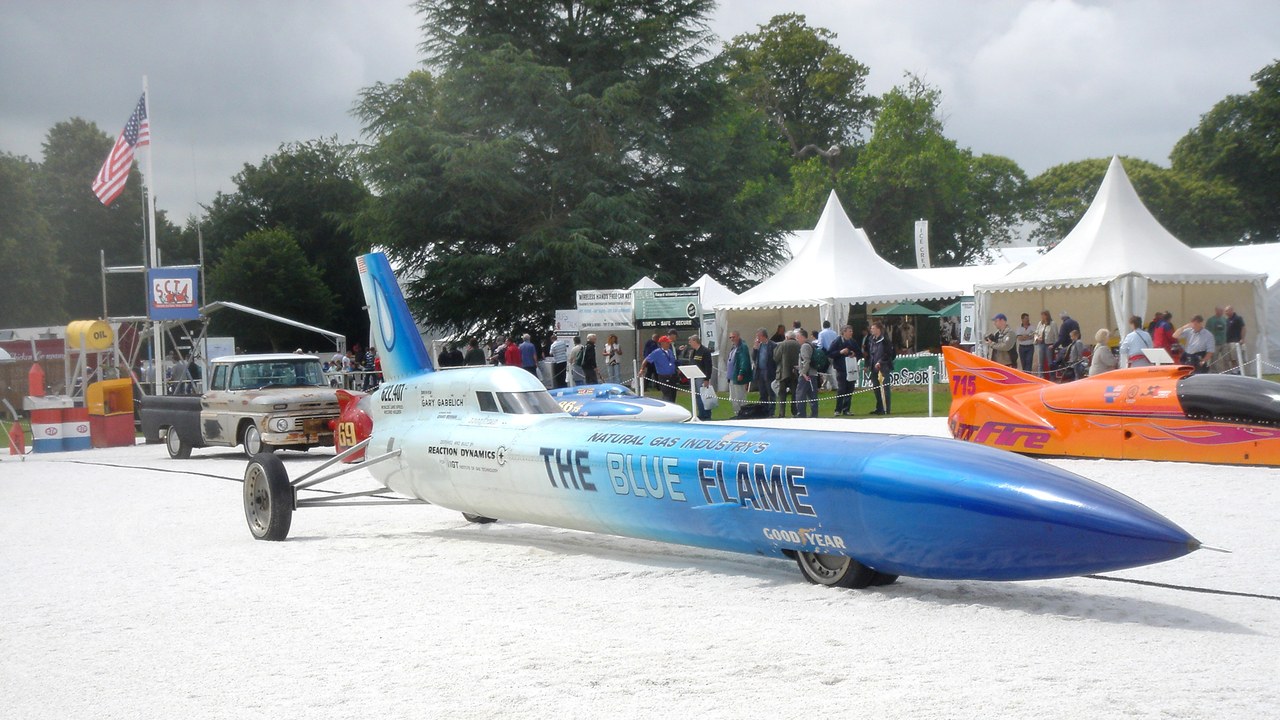
Gary Gabelich drove the rocket-powered Blue Flame to 622.407 mph at Bonneville on October 23, 1970, burning a mix of liquefied natural gas and hydrogen peroxide through a single rocket motor. The roughly 37-foot car was built by a Wisconsin team, Reaction Dynamics, and bankrolled by the American natural gas industry, which wanted a visible showcase for its fuel.
The record then went untouched for thirteen years, until Richard Noble’s Thrust2 beat it in 1983. Gabelich’s run also confirmed a shift that has never reversed: since 1964 the outright record has belonged to thrust rather than to power delivered through driven wheels, splitting the sport into two separate categories.
6. Railton Mobil Special: Four Hundred in One Direction
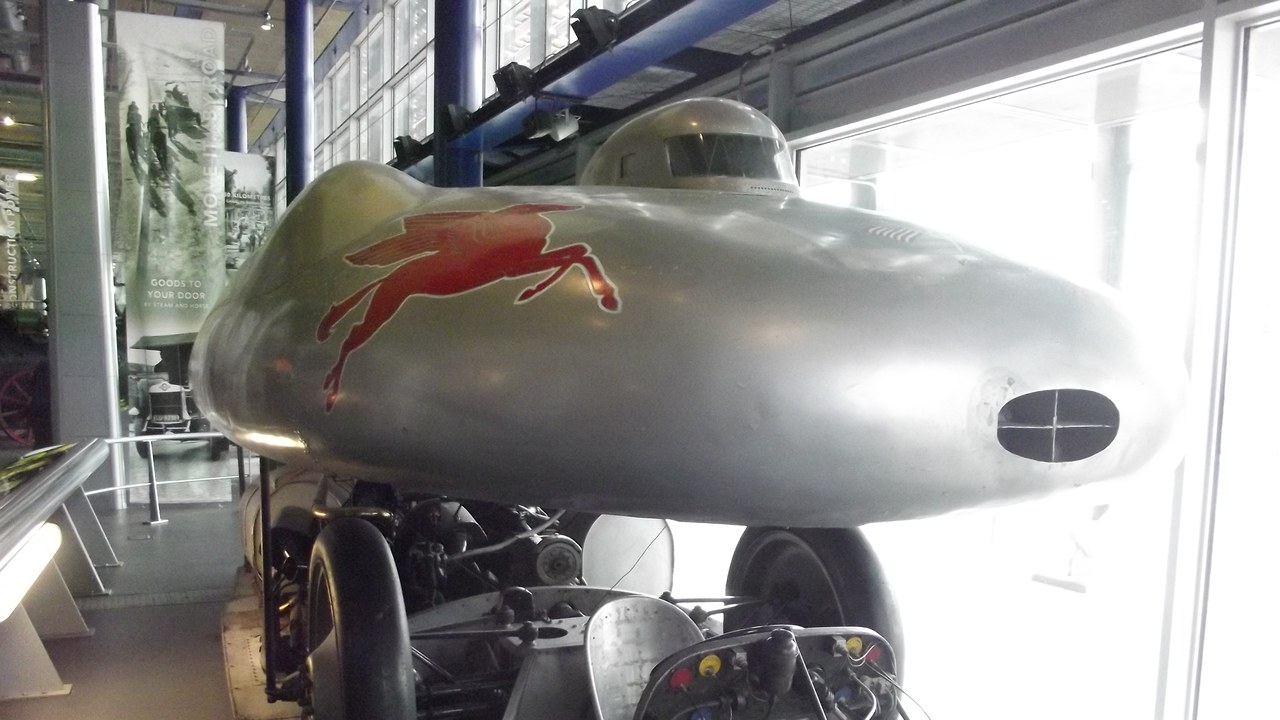
John Cobb’s Railton Mobil Special averaged 394.19 mph over the measured mile at Bonneville on September 16, 1947, and on one leg the car passed the 400 mph mark, the first car to do so in either direction. Two supercharged Napier Lion aero engines sat in a slim aluminum body, each driving one axle.
That average stood as the outright record for sixteen years, until jet cars arrived in the 1960s. Reid Railton’s layout was unusually clever for its era: an S-shaped tubular chassis put the driver ahead of both engines, with a teardrop shell that lifted off for access. Cobb was killed in 1952 pursuing the water speed record on Loch Ness.
7. Golden Arrow: One Record, Then Retirement
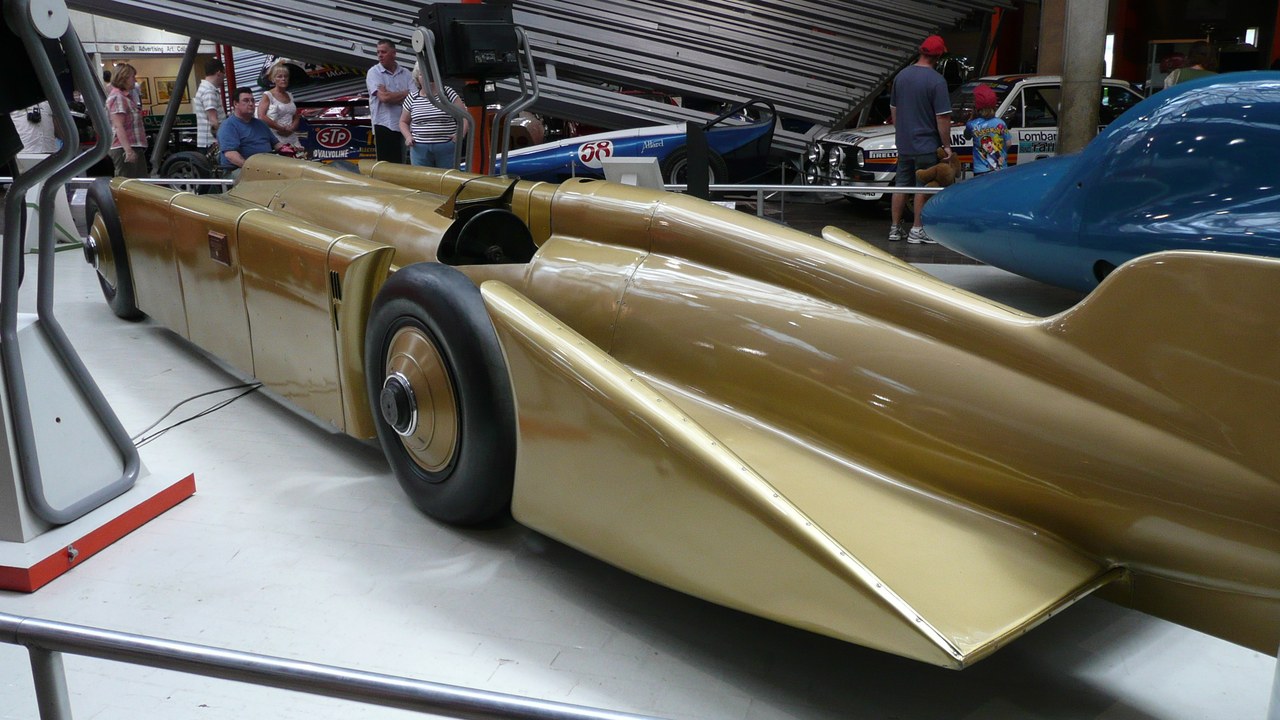
Segrave’s Golden Arrow averaged 231.45 mph on the sand at Daytona Beach on March 11, 1929, powered by a single 925-horsepower Napier Lion aero engine. Cooling came from ice packed into tanks alongside the cockpit rather than a conventional radiator, one of several measures that kept the Golden Arrow low and slender.
Days after the record, a rival attempt ended in a fatal crash on the same beach when Lee Bible lost control of the Triplex, and the meeting was abandoned. Segrave never ran the car again, and it went into a museum with under nineteen miles on it, probably the least used record car ever built and one of the best preserved.
8. Napier-Railton: The Lap That Still Stands
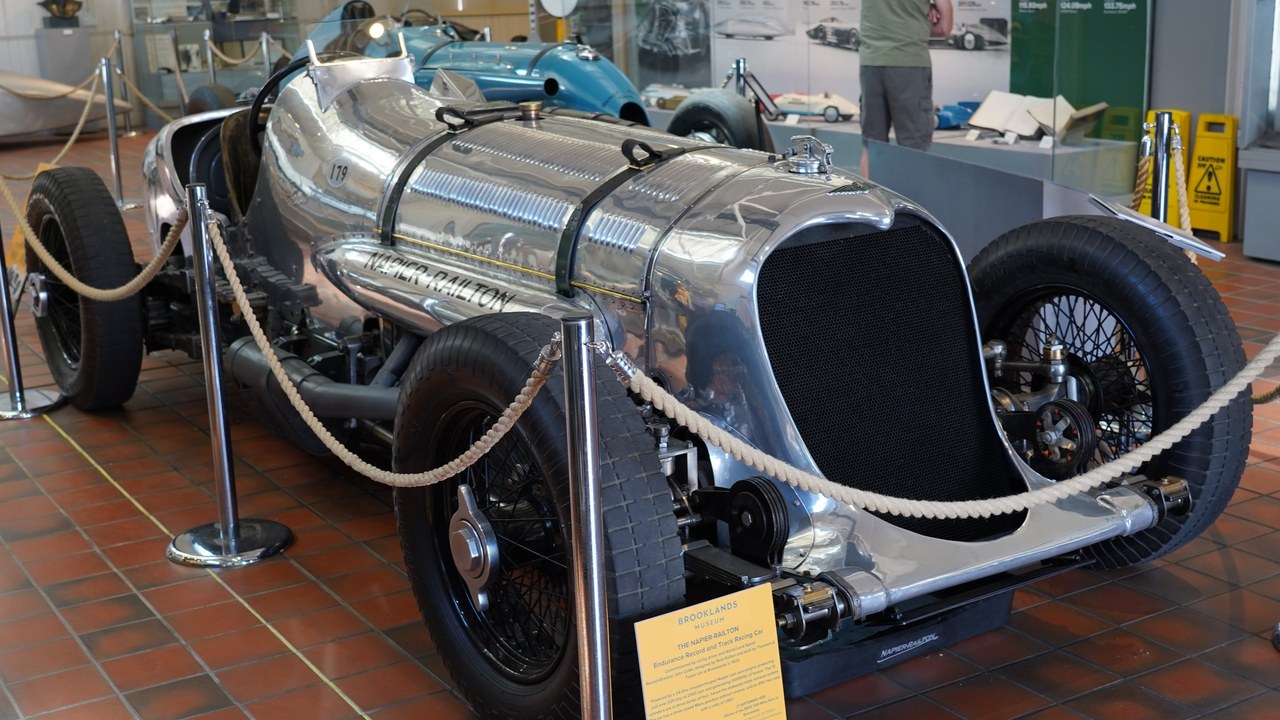
Built in 1933 for John Cobb, the Napier-Railton used a 24-liter Napier Lion aero engine producing about 500 horsepower to lap the banked Brooklands circuit at 143.44 mph in October 1935. The track closed to racing in 1939, so Cobb’s outright lap record was never beaten and stands to this day.
The car was never an outright land speed contender, but it set 47 world records, including a 24-hour average of over 150 mph at Bonneville in 1936, and it was later used to test aircraft brake parachutes for the Royal Aircraft Establishment. Brooklands Museum keeps it running, which makes it the rare record machine still heard rather than only seen.
More from Morning Overview
