
Abandoned places rarely stay empty for long, because vines, moss, sand and wildlife move in the moment people leave. These sites range from Cold War coal towns and colonial prisons to amusement parks and temple complexes. Here are fourteen abandoned places that nature is taking back.
Read next on Morning Overview: A flight school faces a $2,388,500 FAA fine for flying an unairworthy plane
1. Pripyat: Frozen After Chernobyl
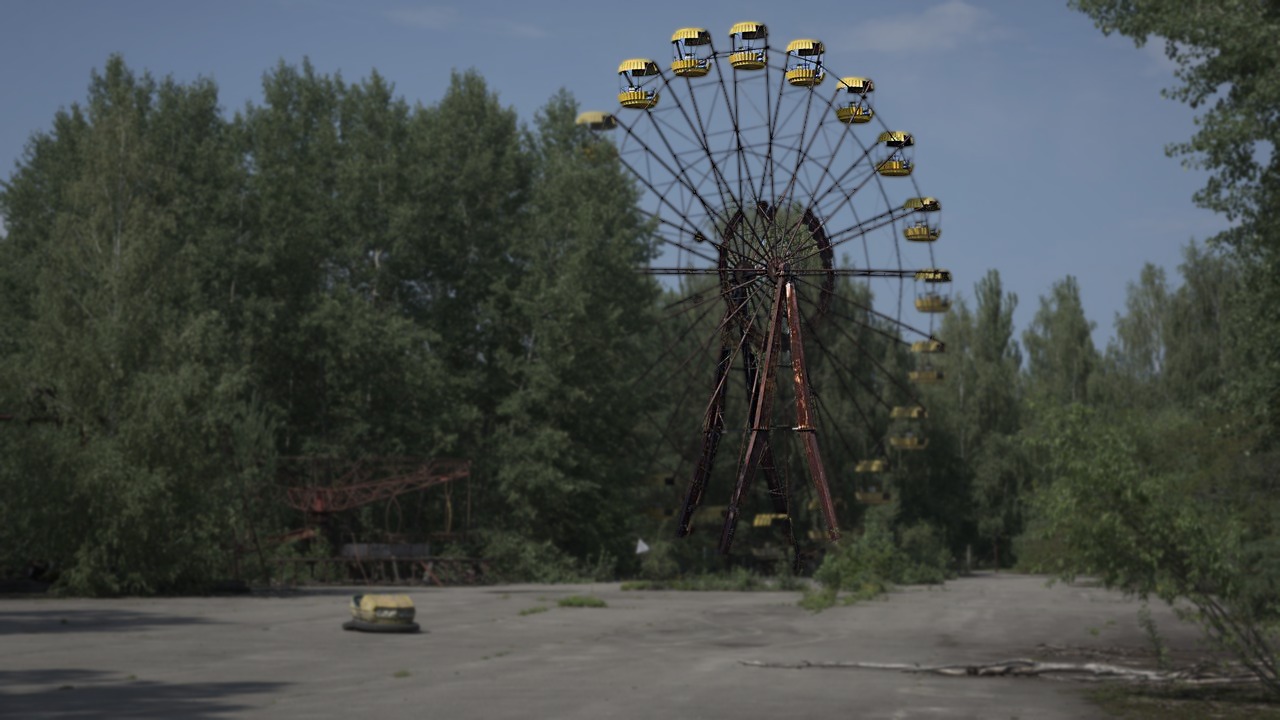
About 50,000 people left in the evacuation of April 27, 1986 that followed the Chernobyl disaster, and the Ukrainian city has stood empty since. Trees now push up between the residential blocks, and the skyline of apartment buildings is slowly vanishing behind a growing canopy.
Pripyat remains a frozen-in-time city, which is exactly why it is a textbook case of how fast vegetation can claim a place once people are gone. Access is controlled because of the surrounding exclusion zone, so most visitors see it only through photographs.
2. Craco: The Hilltop Town That Slid Away
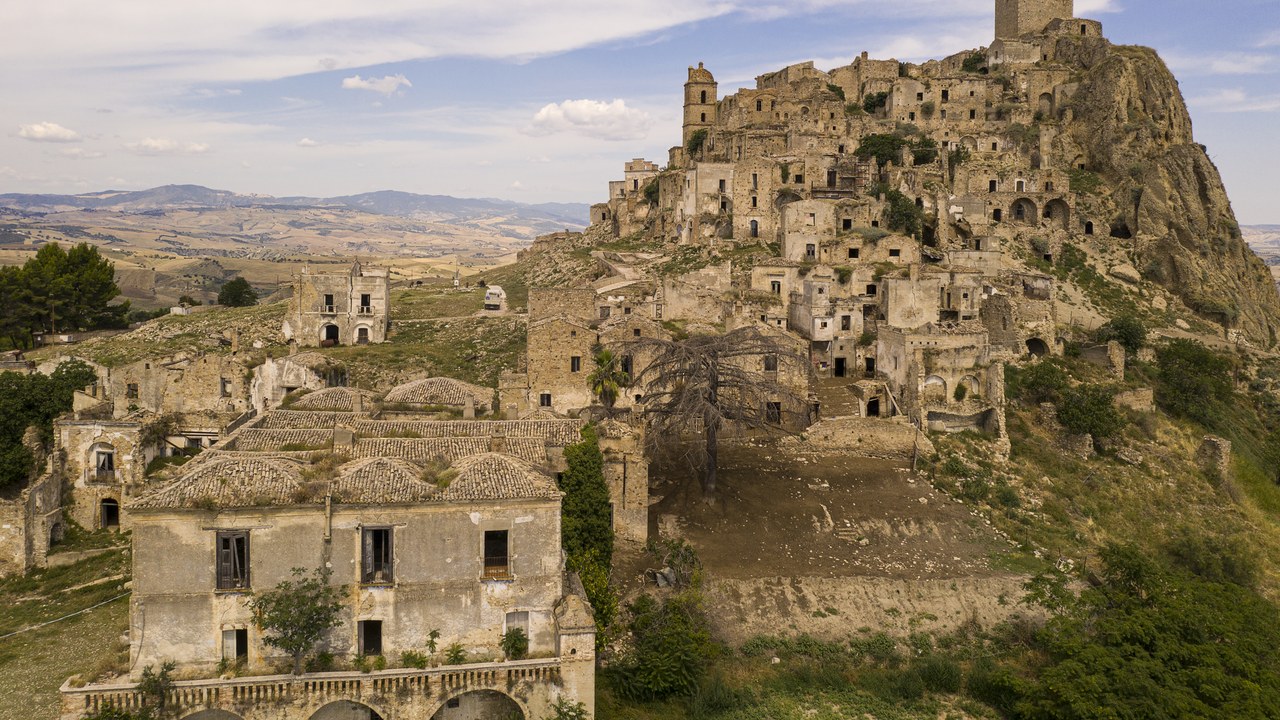
Craco is a hilltop Italian town emptied after a series of landslides caused by sewage and water works in the 1960s, then finished off by the 1980 earthquake. Its stone houses and tower still cling to the ridge in the Basilicata region, but plants now grow from walls and doorways.
The ruin shows how human engineering mistakes can doom a settlement long before nature moves in. Its dramatic setting has made it a favorite for photographers and film crews, though the unstable ground is the reason it was abandoned in the first place.
3. Hashima Island: Coal Island Left to Rust
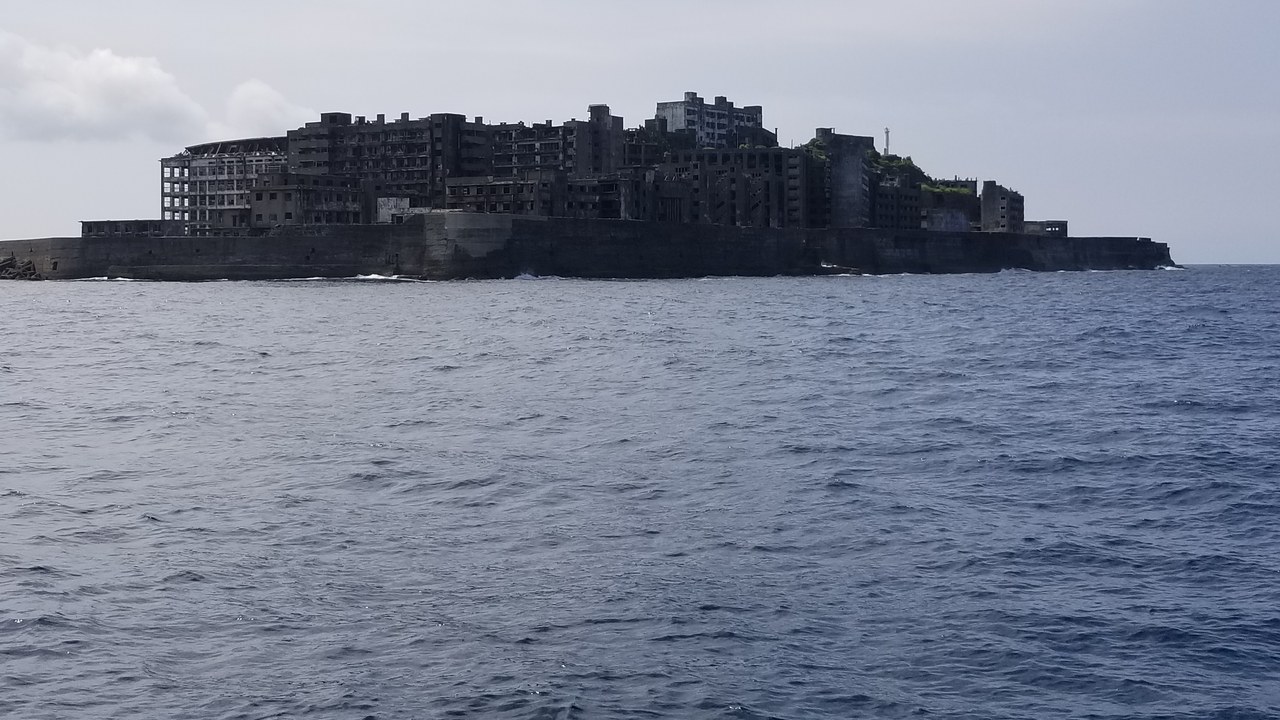
Hashima Island sat above an undersea coal mine that ran from 1887 to 1974, and when the demand for coal dissipated, the community was cast aside. The concrete apartment blocks and mine buildings that crowded the tiny island have been left to the weather and salt spray ever since.
Nicknamed Gunkanjima, or Battleship Island, for its silhouette, it is one of Japan’s best-known industrial ruins. Crumbling concrete and the sea are doing the reclaiming here rather than a jungle, which makes it a different kind of takeover from the greener entries on this list.
4. Pyramiden: A Soviet Town at the Edge of the Arctic
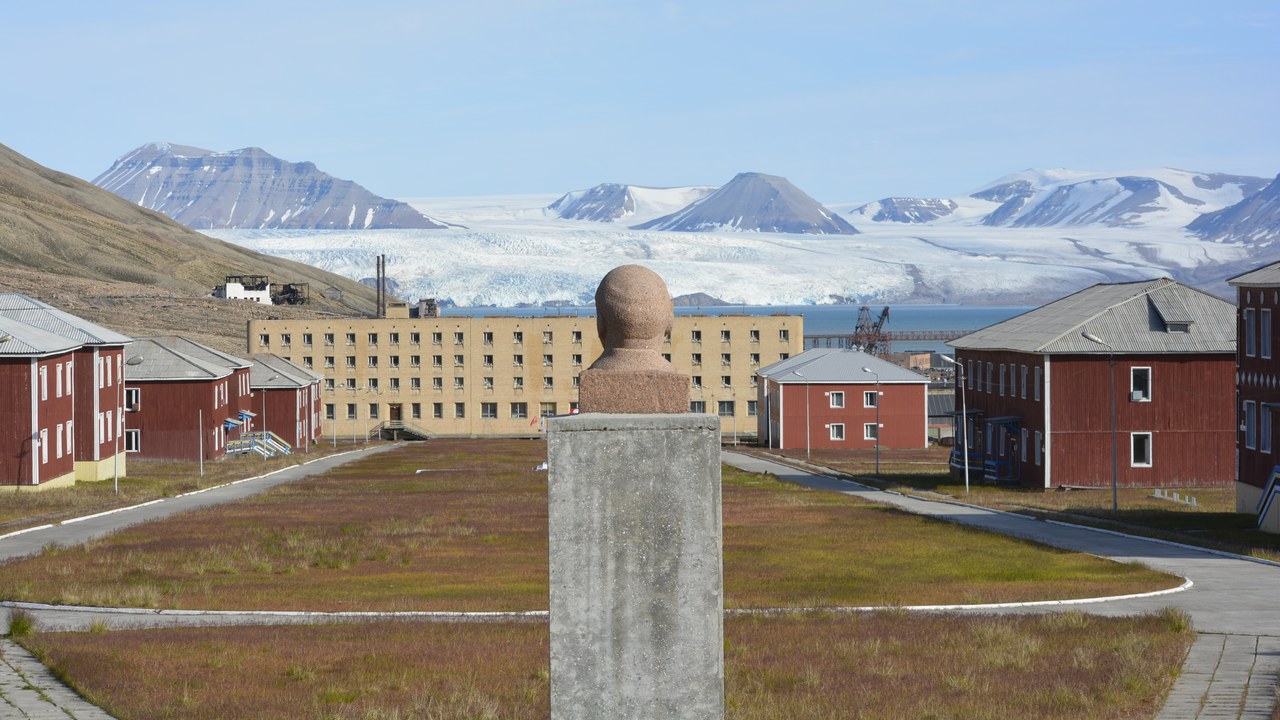
Pyramiden was a Soviet-run coal town on Svalbard, and no coal has been mined there since 1998. Its Soviet-era buildings still stand beneath the mountains and glacier of the Norwegian archipelago, preserved by the cold, dry polar climate.
Here the Arctic slows decay more than it speeds it, so the town reads as a time capsule rather than a jungle ruin. Visitors who reach it by boat find a settlement where the harsh landscape, not vegetation, is the force slowly wearing things down.
5. Oradour-sur-Glane: A Village Kept as a Memorial
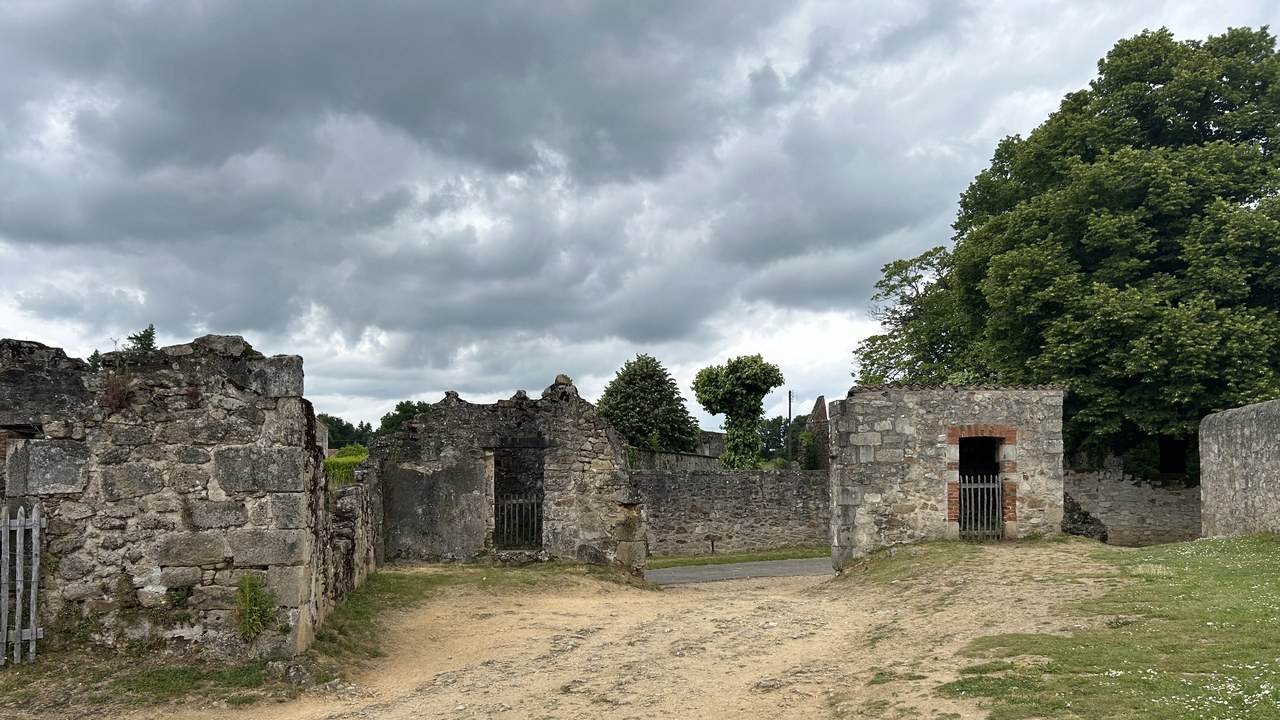
Oradour-sur-Glane in France has been left relatively untouched since June 10, 1944, the date of the wartime massacre that destroyed the village. Its roofless stone walls and shells of houses stand in the open, with grass and trees growing around them.
Unlike the other places here, the ruins were left standing deliberately, as a memorial to the victims. Nature creeping across the walls is a quiet by-product of that decision, and the site is treated as a place of remembrance rather than a curiosity.
6. Ta Prohm: Roots Over Stone
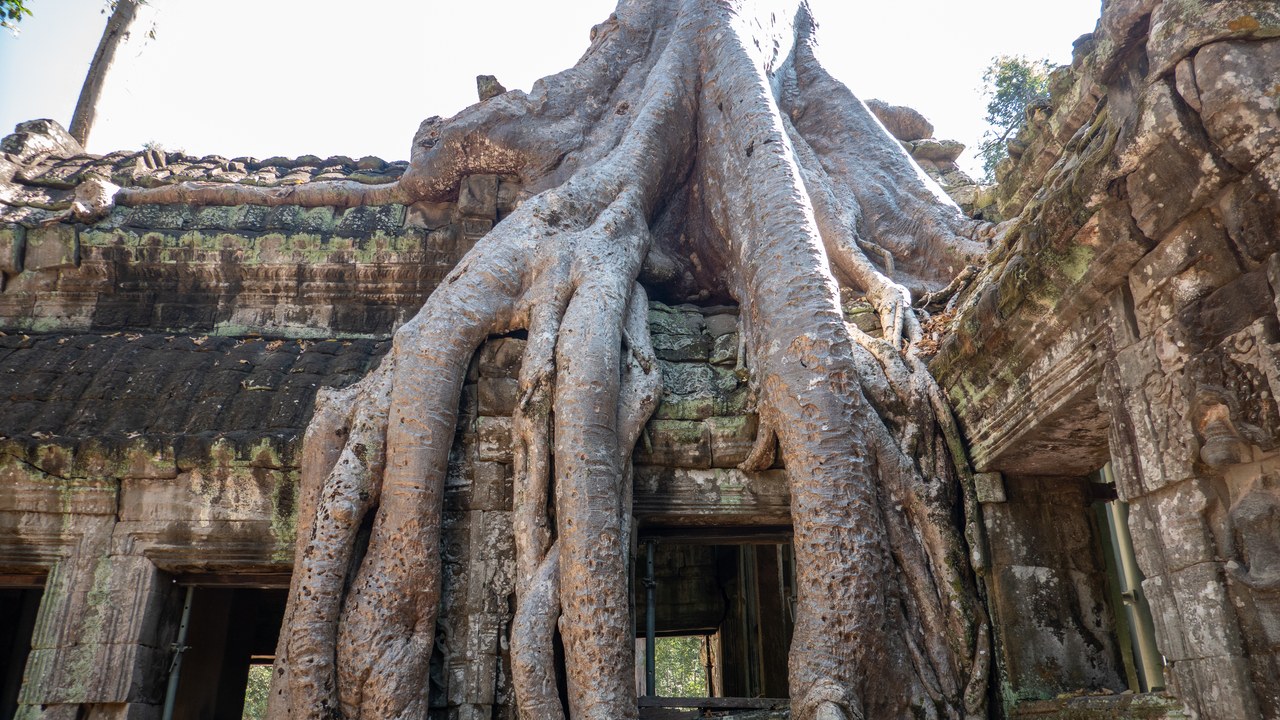
Ta Prohm is a 12th-century temple in the Angkor complex in Cambodia, where silk-cotton and strangler fig roots twine over the temple and pull apart the stonework. Giant trunks rise from the roofs and walls, and the roots grip the masonry like fingers.
The temple has been kept in a partly overgrown state, so the trees are now both the threat and the attraction. Conservation work has to balance the need to protect the stone with the fact that many of the roots now help hold the structure together.
7. Ross Island (Andaman Islands): Fig Trees in the Ruins
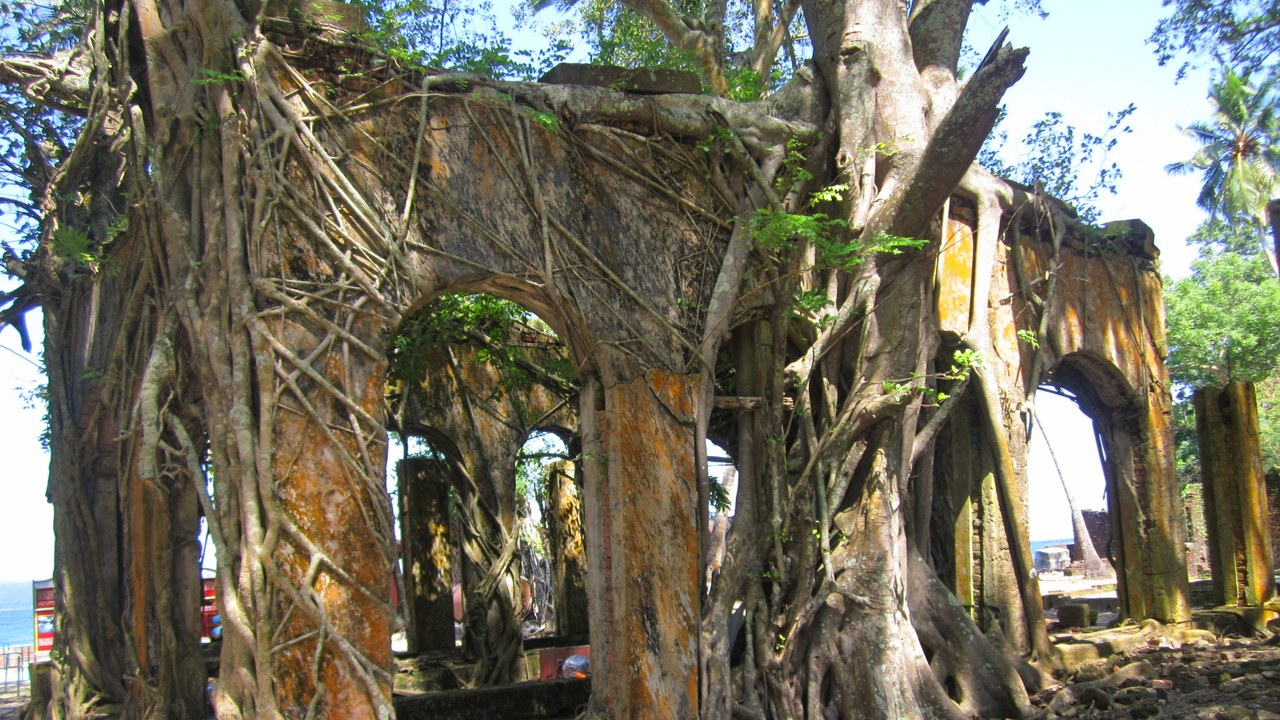
Ross Island in the Andaman Islands was a penal settlement abandoned in the 1940s, and ficus trees now tighten their grasp on the ruins. Their roots wrap around archways and walls, sometimes holding crumbling brickwork upright.
The former colonial outpost shows how quickly tropical growth can swallow masonry once maintenance stops. Today the island is a ruin-filled curiosity, with the trees arguably more prominent than the buildings they have overtaken.
8. North Brother Island: Typhoid Mary’s Quarantine Island
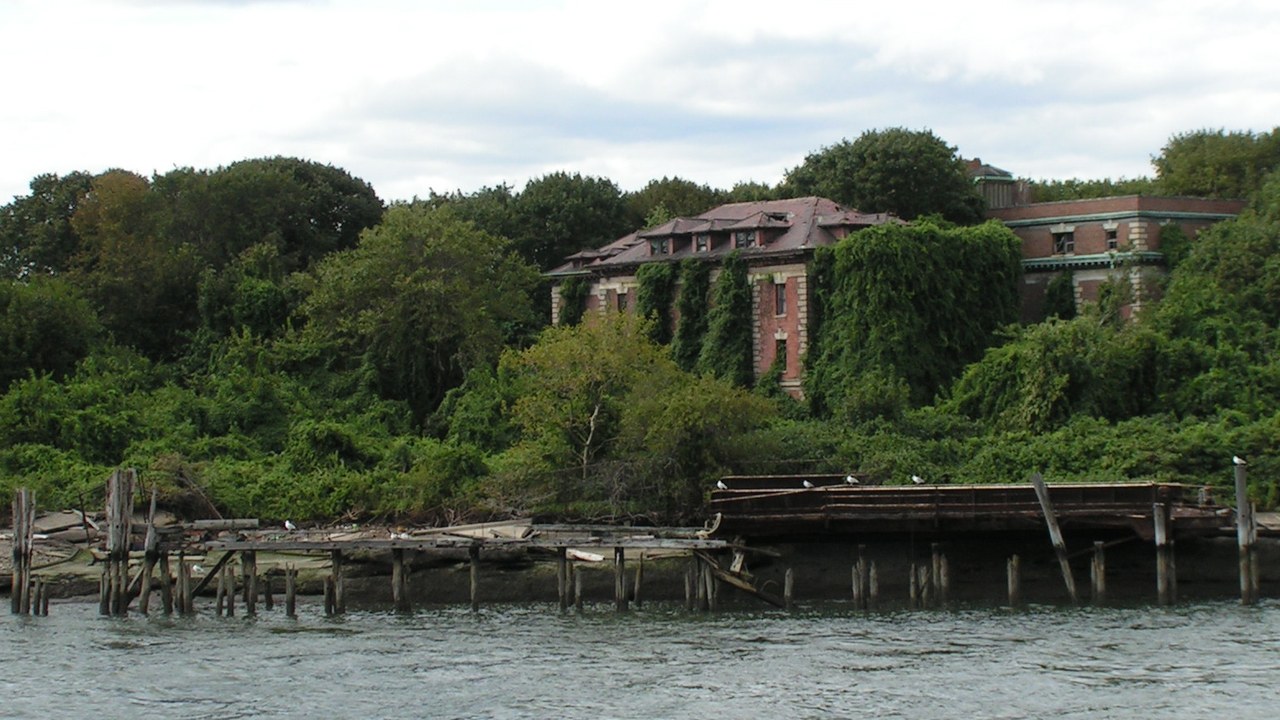
North Brother Island in New York’s East River was a quarantine island where Typhoid Mary was exiled, and now kudzu and other foliage creeps over the hospital structures. Dense growth hides much of what remains of the buildings from the water.
The island sits within sight of the city, yet it is a world apart from it, a reminder that abandonment does not require a remote location. Its overgrown hospital buildings make it one of the more unexpected urban ruins on this list.
9. Mallows Bay: The Potomac’s Ghost Fleet
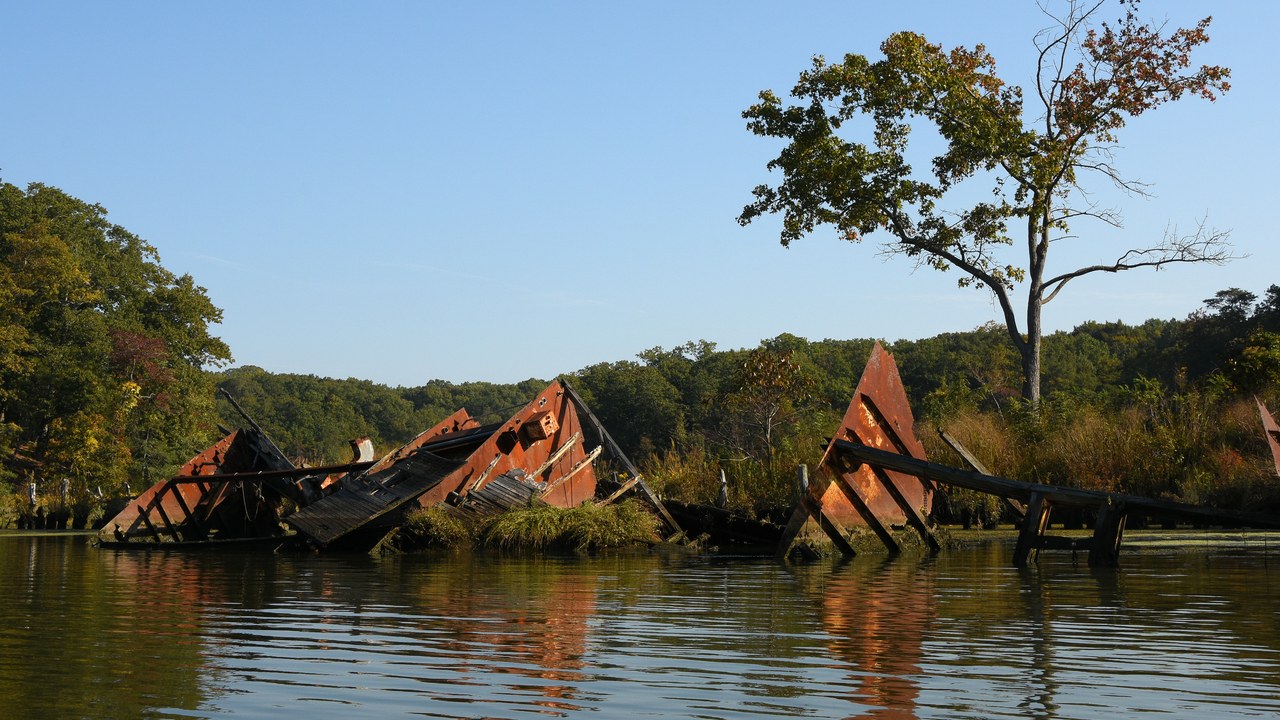
About 200 shipwrecks lie in Mallows Bay on the Potomac, and the hulls now serve as bat caves, osprey nest sites, and heron rookeries. Trees and marsh plants have taken root on some of the half-sunken timbers.
Here the takeover is not just visual but ecological, as the wrecks have become habitat for wildlife. The bay has become a case study in how abandoned human structures can become part of a living landscape rather than simply decaying.
10. Kolmanskop: Diamonds Buried in Sand
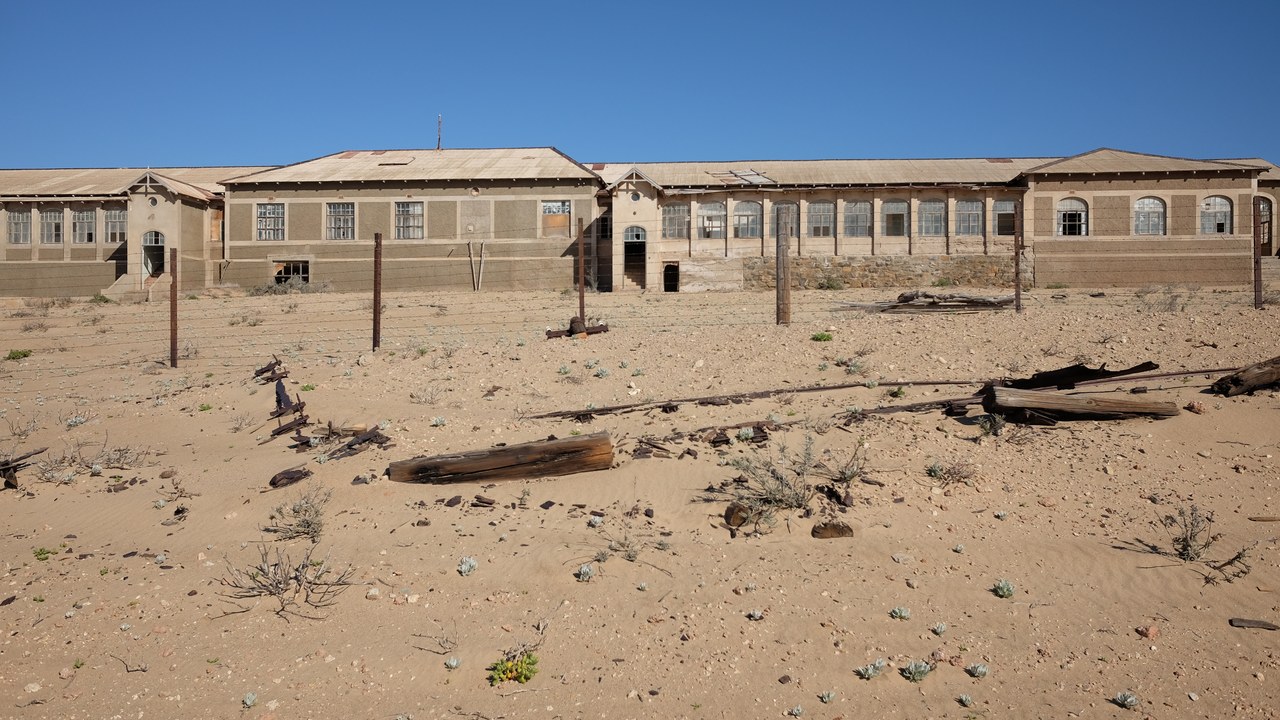
Kolmanskop is a Namibian diamond town abandoned in the 1950s, where the desert is slowly consuming the perfectly preserved buildings. Drifts of sand fill the rooms and spill out of doorways and windows.
Instead of vines, the force at work is wind-blown sand from the surrounding Namib. The result is a ghost town that photographers favor for its pale drifts, and its rooms illustrate how a desert can reclaim a settlement as thoroughly as any forest.
11. Spreepark: A Park Swallowed by Green
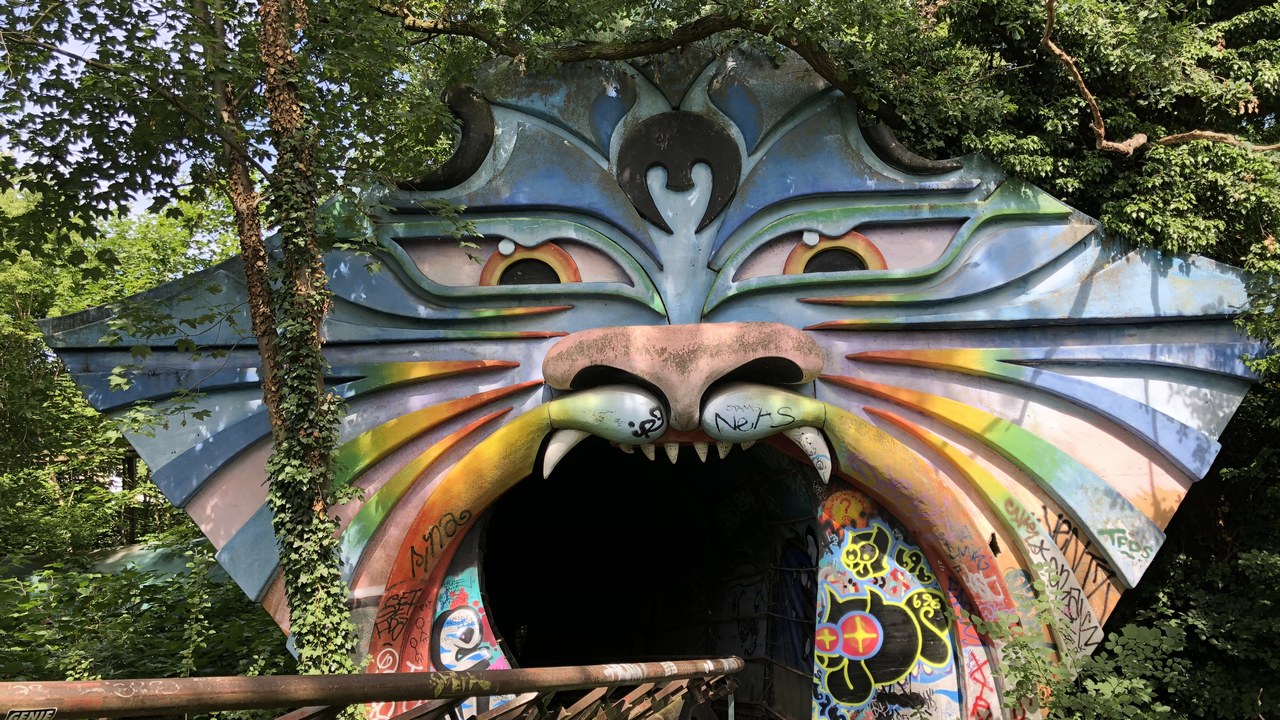
Spreepark was an East Berlin amusement park that closed in 2002, and today lush greenery encases the park while moss covers a few of the remaining rides. Painted attractions and structures sit half hidden among the trees.
The overgrown rides turned an ordinary leisure site into one of the better-known urban ruins in Europe. It shows how quickly a place built for crowds can become a thicket once the gates close.
12. Okunoshima: Rabbit Island’s Dark Past
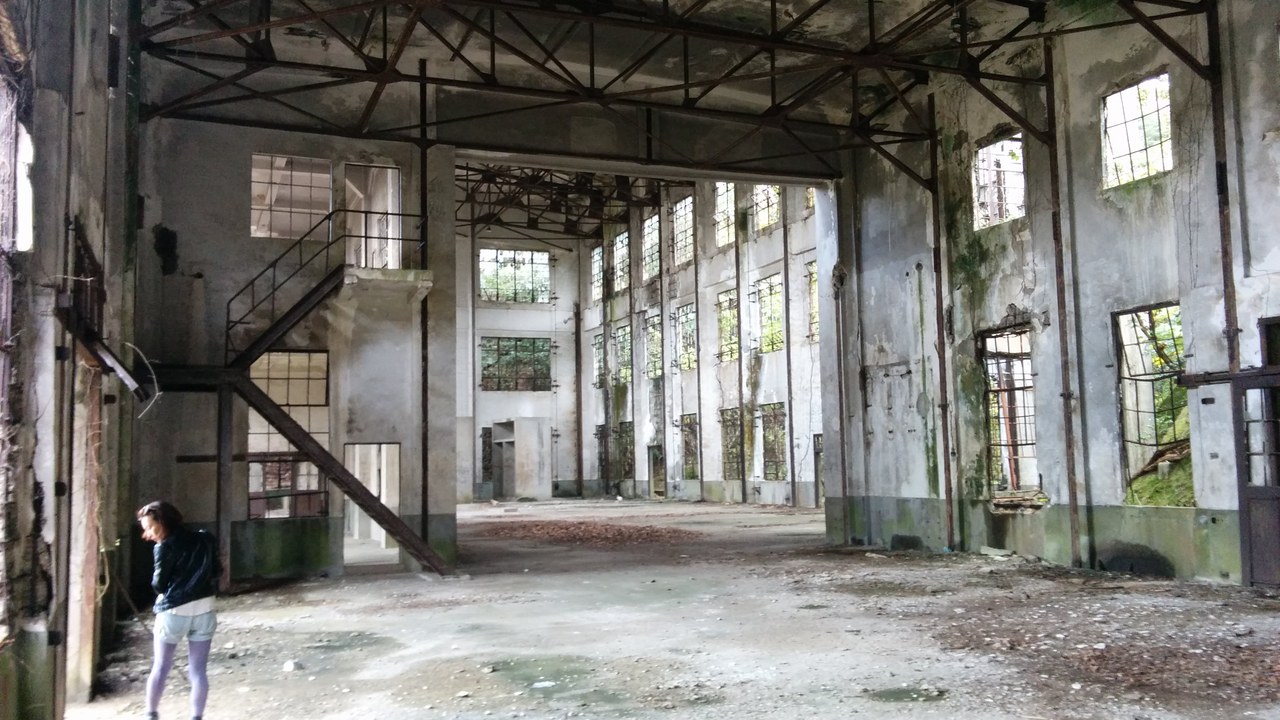
Ōkunoshima is known as Japan’s Rabbit Island, and the rabbits roam the island in great numbers, with many using the abandoned factory as shelter. The building was formerly a chemical weapons factory.
The animals now live where the island once served a very different purpose, a striking contrast between its past and present. The empty factory shells and power plant ruins remain among the island’s quieter attractions for visitors who come mainly for the rabbits.
13. Houtouwan: A Fishing Village Under Vines
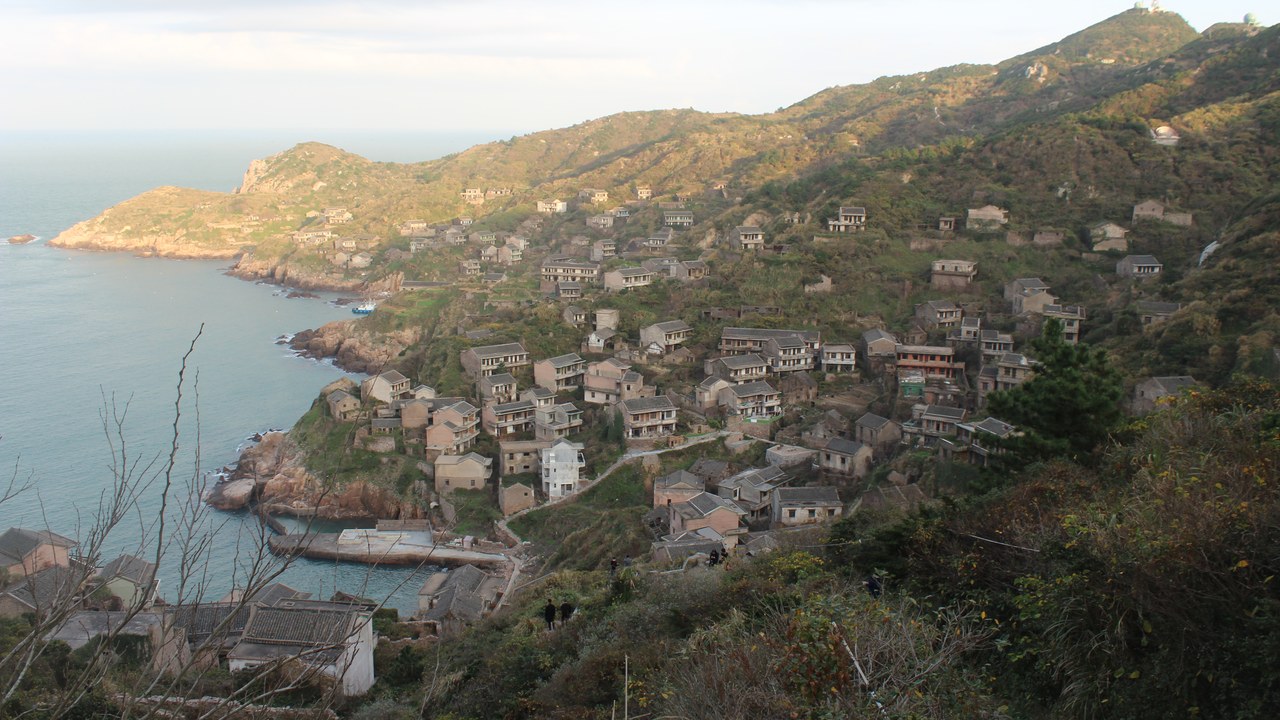
Houtouwan is a Chinese island fishing village abandoned in the early 1990s, and nearly every building is completely covered, roof to ground, in greenery. It sits on a steep hillside in the Shengsi Islands, with the sea below.
The vines turned the stone houses into a green cascade that has drawn photographers from far beyond the region. The overgrown village is a vivid example of how fast vegetation can take over when a community leaves.
14. Six Flags New Orleans: Jazzland After the Flood
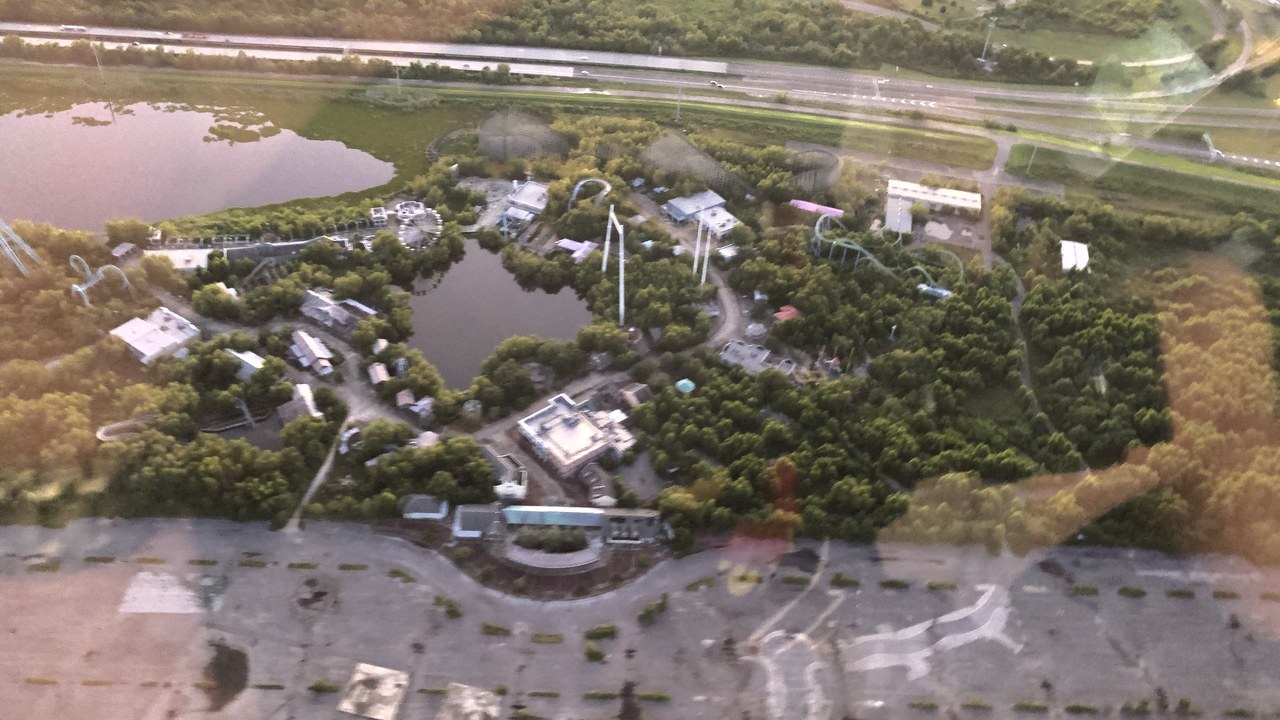
Six Flags New Orleans opened as Jazzland in 2000 and last operated on August 21, 2005, eight days before Hurricane Katrina. Floodwater left the park submerged in up to 7 feet of brackish water for over a month, and by early 2010 the site was overgrown with debris and weeds.
Six Flags salvaged a few rides, including Batman: The Ride, and several redevelopment proposals for the site failed. The park sat abandoned for nearly two decades, drawing urban explorers, until demolition began in November 2024.
More from Morning Overview
- California’s Long Valley supervolcano is quietly sinking, its biggest drop on record
- Up to 5 feet of snow is burying Donner Pass, and forecasters warn against Sierra travel
- Refiners are making less gasoline and more diesel, and here’s why
- The NSA warns phone owners to switch off Bluetooth whenever they aren’t using it
