
Long before the minivan, the station wagon carried American families to beaches, national parks and grandparents across the country. Some came with fake wood siding, some with glass roofs and some with seats facing backward. Here are twelve classic station wagons that defined the family road trip, from the Chevrolet Nomad to the Volvo 1800ES.
Read next on Morning Overview: New FCC rules on how people can stop robocalls and texts take effect Nov. 25
1. Chevrolet Nomad: The Coolest Wagon of the 1950s
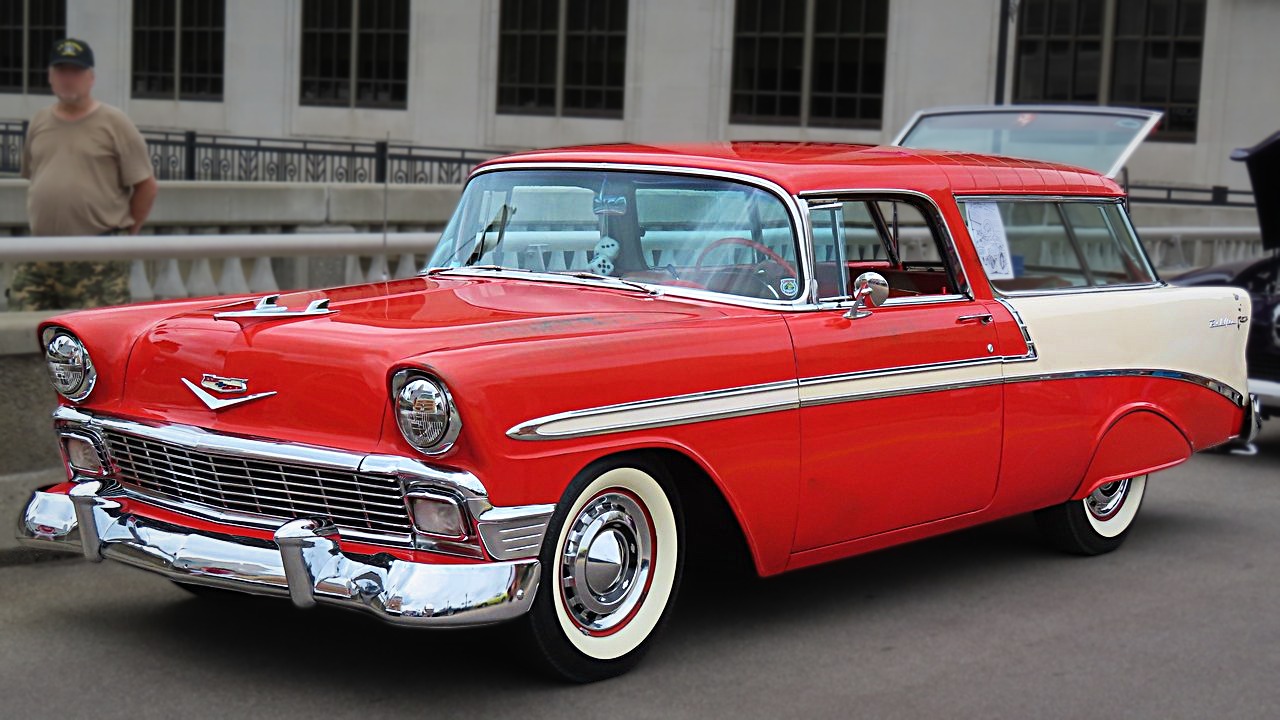
The Tri-Five Chevrolet, built from 1955 to 1957, was likely the postwar high-water mark for the brand. It came in many body styles and offered the first version of Chevrolet’s legendary small-block V8, and Hagerty says the two-door Nomad wagon gives even the convertible a serious run in the cool department.
Hagerty argues that cars like the Nomad might make anyone rethink the idea that wagons were all mom mobiles. Writing about classic road trips, the company joked that anyone taking a classic on a holiday drive would have to leave the Corvette at home and take the Nomad instead.
2. Plymouth Suburban: The Wagon That Ditched the Wood
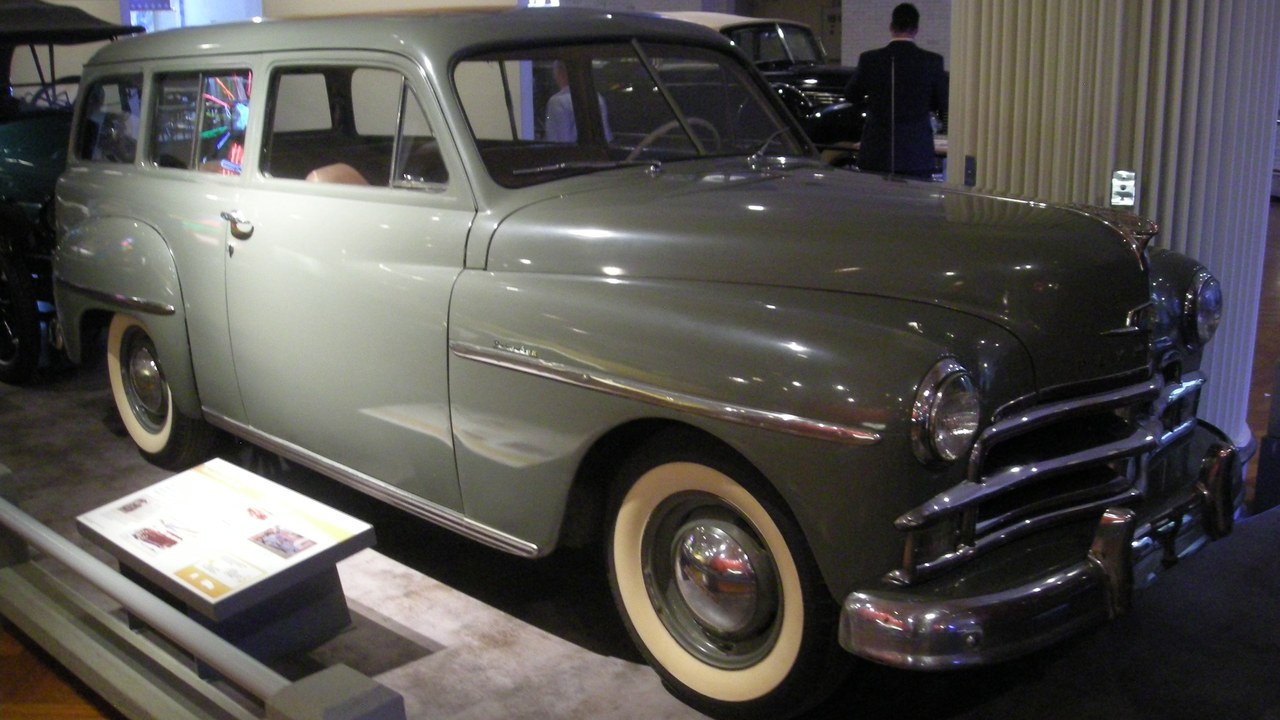
Before 1949, Plymouth offered only a four-door woodie wagon that was expensive to build and to buy. That year, it revolutionized the U.S. station wagon market with the Suburban, the industry’s second all-steel wagon after the Willys Jeep Station Wagon.
The first Suburban was a two-door that seated six. Its back row folded flat to give 42 inches of flat floor space, and it became popular as a commercial wagon too. Plymouth kept the Suburban name on its wagons from 1949 until 1978, nearly three decades of family hauling.
3. Ford Country Squire: The Woodgrain King
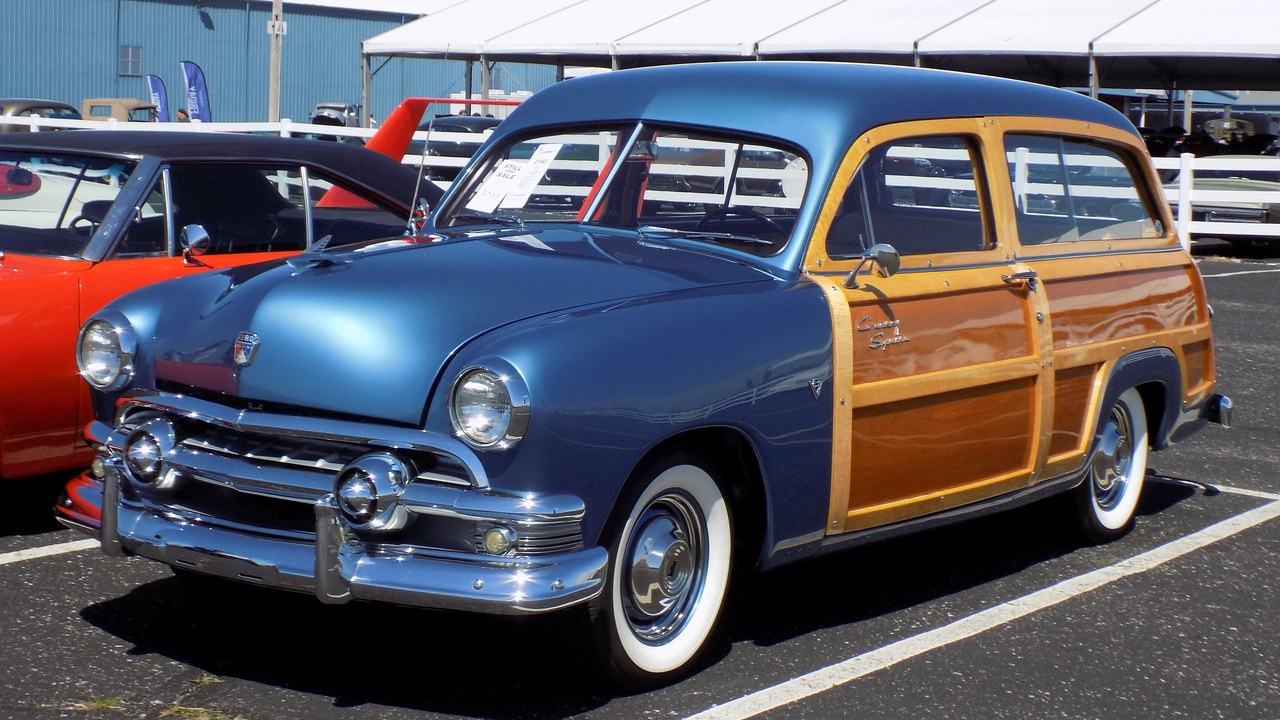
The Ford Country Squire was the top station wagon of the Ford division, distinguished by woodgrain bodyside trim. Eight generations were built from the 1950 through 1991 model years.
For 1965, Ford replaced its third-row seat with two optional flat-folding rear seats facing each other across the cargo area, raising capacity to 10 passengers. A year later, all Ford wagons gained the Magic Doorgate rear door configuration. Hagerty names the Country Squire as one of the wagons that immediately come to mind for the back backseat.
4. Ford Ranch Wagon: Ford’s Budget Hauler
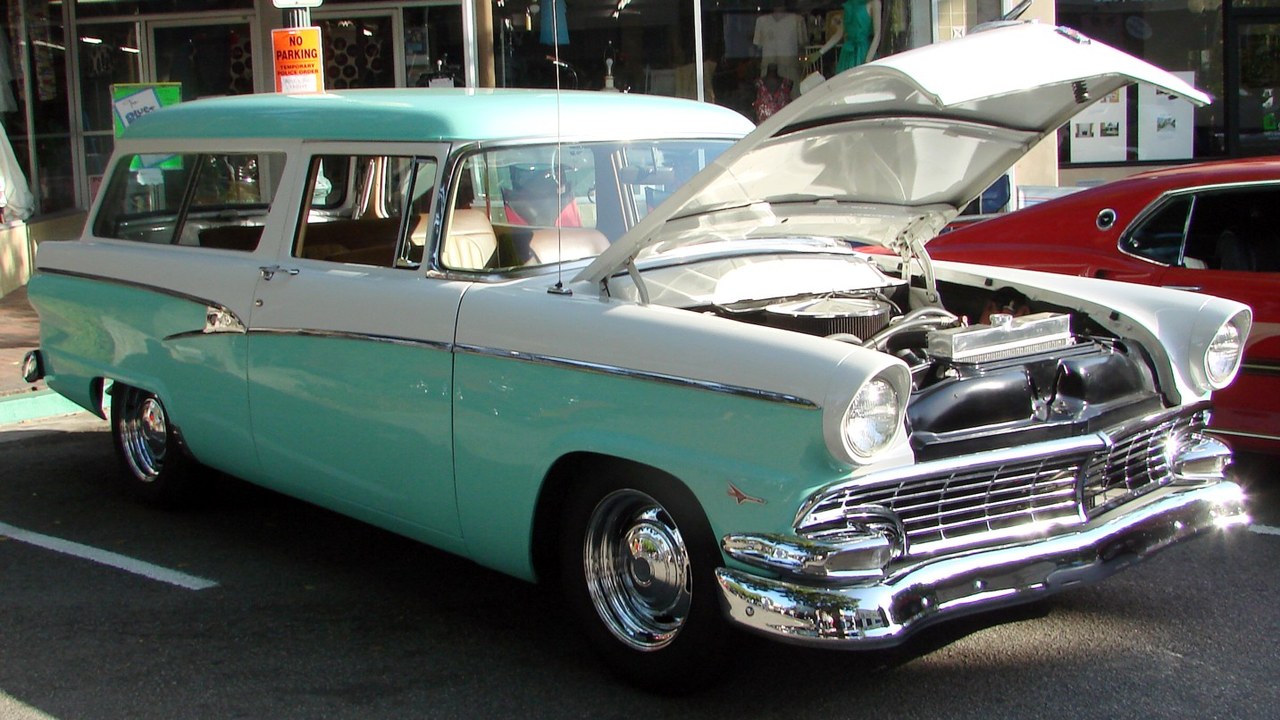
When Ford redesigned its cars for 1952, the wood-bodied wagon was becoming upscale and expensive. Alongside the Country Squire, Ford offered buyers the first all-steel wagons in its history, and one of them was the Ranch Wagon.
The original Ranch Wagon was a two-door model in the economy Mainline series, inspired by the European shooting brake. Ford built it from 1952 to 1974, and it was always the lowest-priced choice in its line. It was a full-size wagon except in 1963 and 1964, when it joined the intermediate Fairlane series.
5. Mercury Colony Park: The Upscale Twin
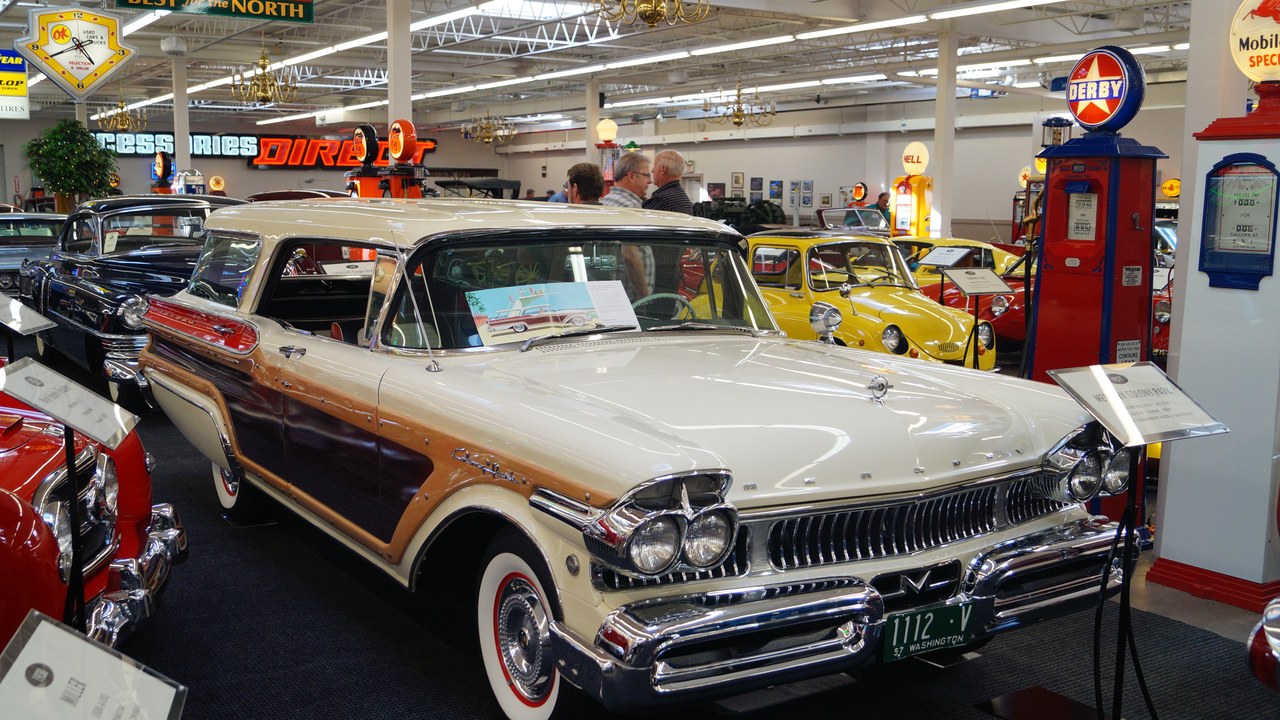
The Mercury Colony Park was a station wagon marketed from the 1957 to 1991 model years and distinguished by its simulated wood-grain paneling. After the Edsel brand died in 1960, it shared its body with the Ford Country Squire.
It was the more exclusive and upscale of the pair. The Colony Park served as the flagship wagon of Ford Motor Company, competing against the Chrysler Town and Country, the Buick Estate and the Oldsmobile Custom Cruiser, each with woodgrain trim, three rows of seats and a V8 engine.
6. Pontiac Safari: Fins Like a Missile
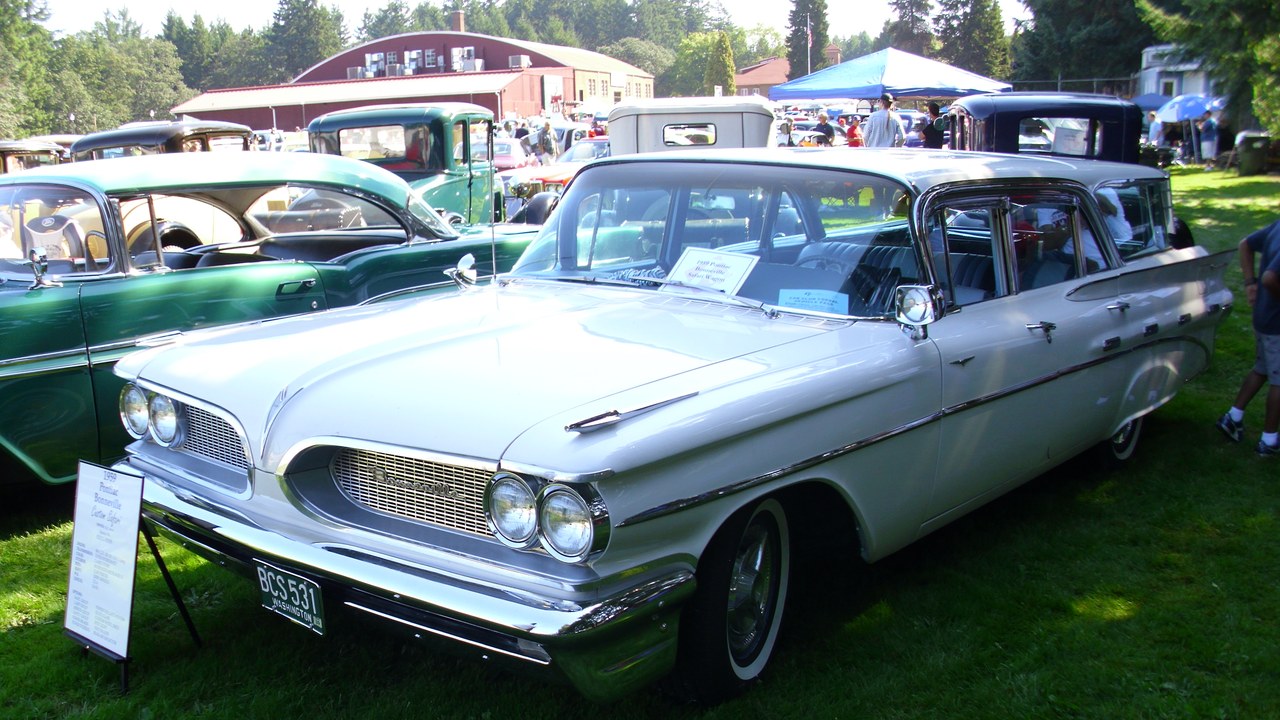
The 1950s were full of station wagons with over-the-top styling, and Hagerty’s vote goes to the 1959 Pontiac Safari. That was the model year when tail fins reached their absurd peak.
The 1959 Safari actually had two sets of fins on the top and bottom of its rear fenders, making it look like a Redstone ballistic missile, which Hagerty suspects was no accident. Large American wagons from the 1950s through the 1970s remain popular with collectors, and Hagerty reported in 2015 that its price guide values for wagons had risen 16 percent over five years.
7. Chevrolet Kingswood: Nine Seats and a Backward View
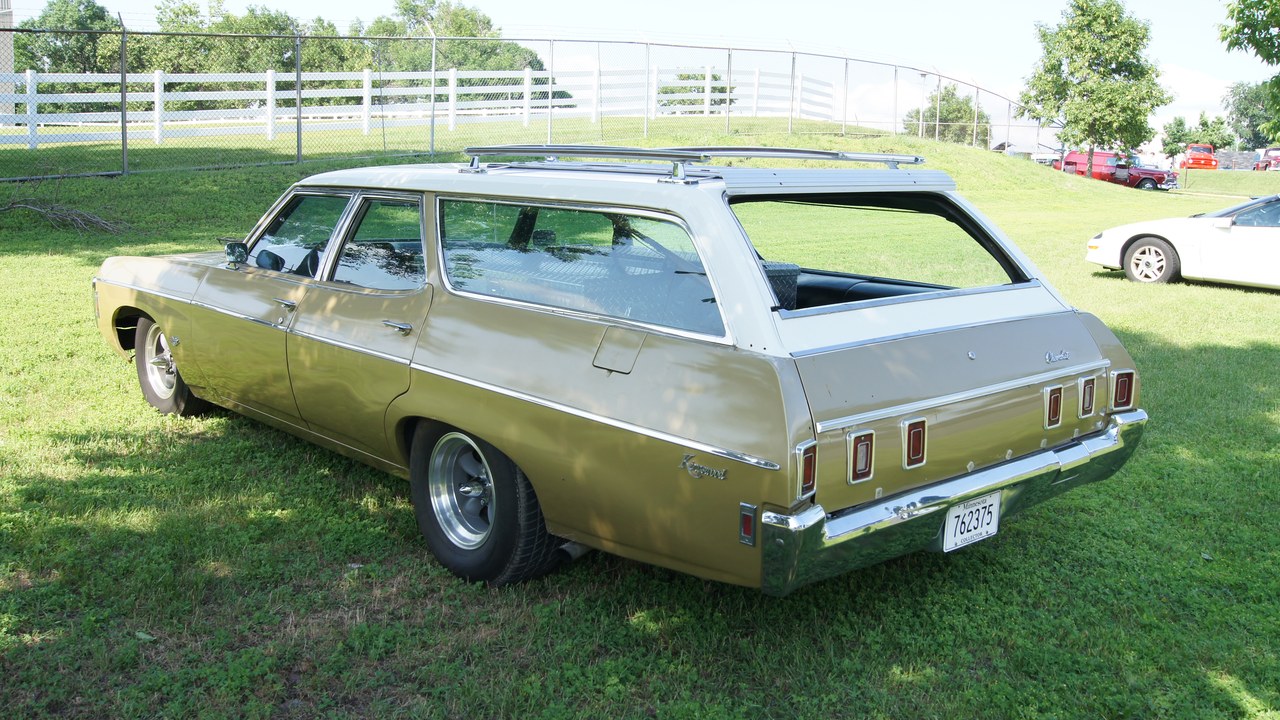
The Chevrolet Kingswood was a four-door station wagon built in 1959 and 1960 and again from 1969 to 1972. The 1959 model was offered only as a nine-passenger wagon, with a rear-facing third-row jump seat as standard.
At 210 inches long, the 1959 Kingswood was the longest car in the low-priced range. Its flat, wing-shaped tail fins were recognizable from a distance, and buyers could order any engine and transmission, including the 348 V8 and the fuel-injected 283 V8.
8. Studebaker Wagonaire: The Wagon With a Sliding Roof
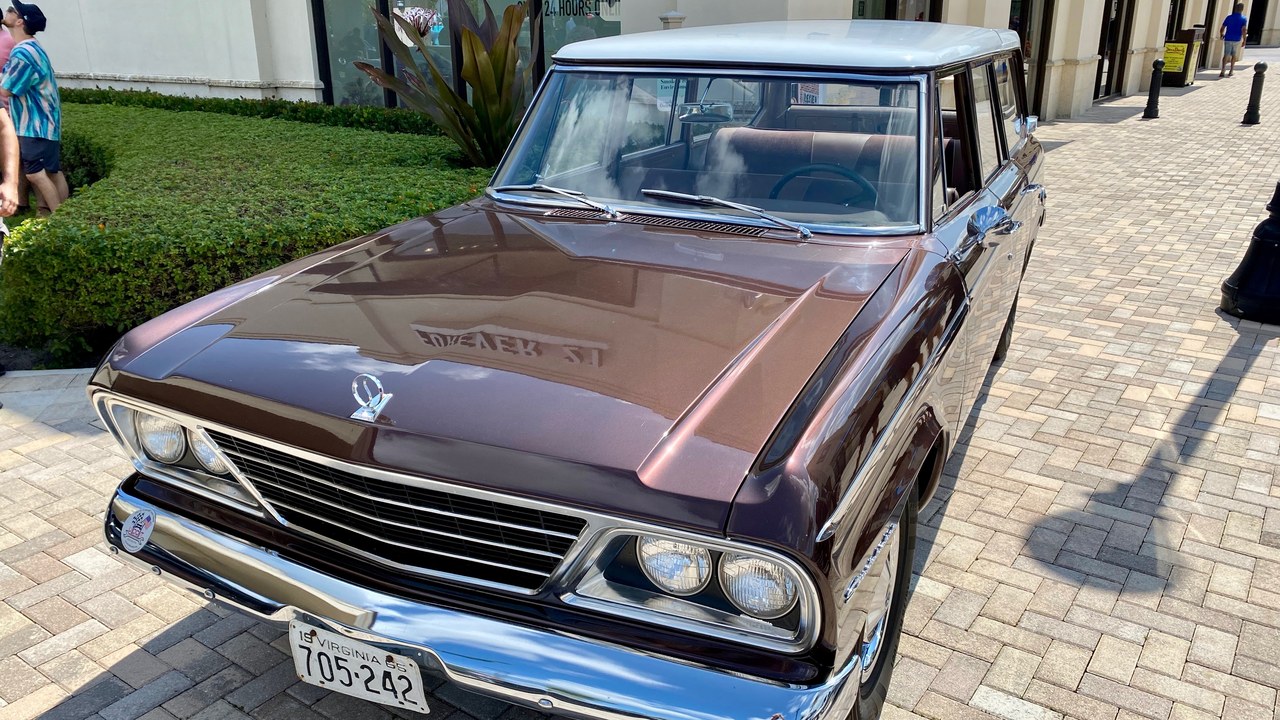
Studebaker built the Wagonaire from 1963 to 1966. It had a retractable sliding rear roof section that let it carry items too tall for an ordinary station wagon of the era.
The roof was the idea of industrial designer Brooks Stevens, who also designed the Jeep Wagoneer. The idea had a catch. Early buyers found that their new wagons leaked water near the front of the sliding section, and Studebaker rushed fixed-roof wagons into production alongside the Wagonaire by January 1963.
9. Chevrolet Chevelle wagon: The Sleeper Wagon
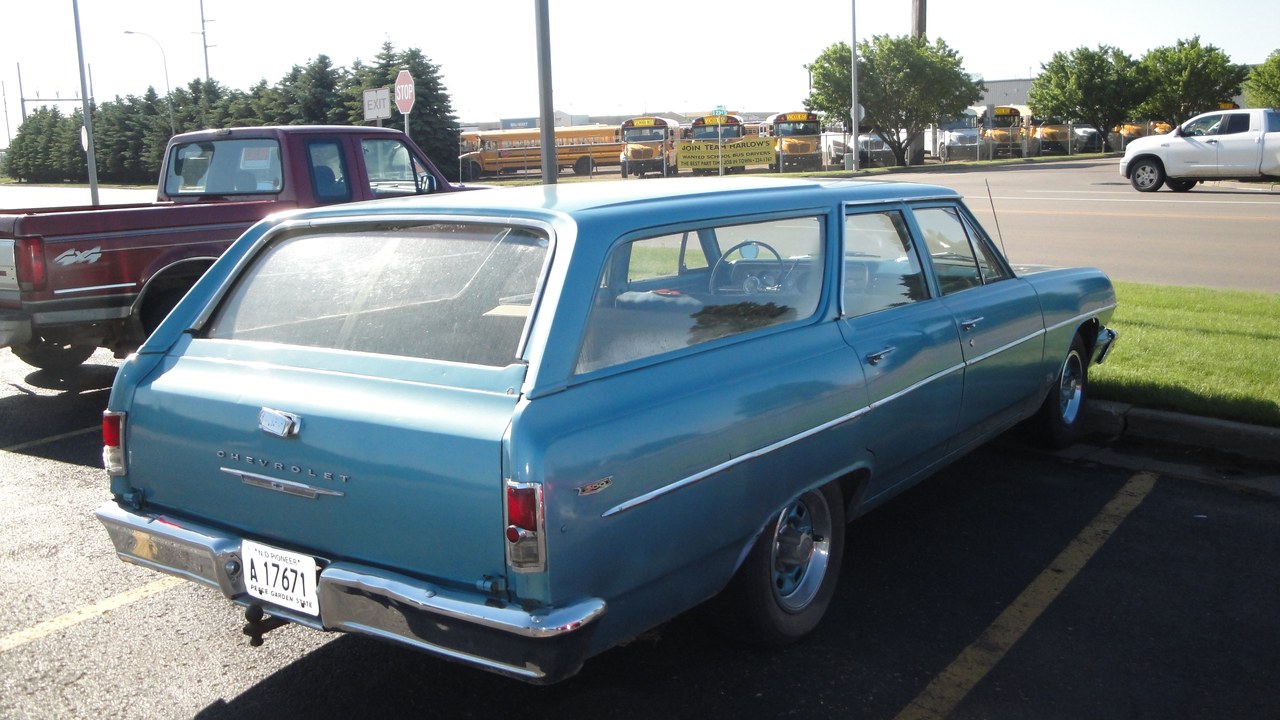
Two-door wagons are impractical to the point of defeating the purpose, Hagerty admits, but they look cool. The magazine loves the first-generation Chevelle two-door wagon built in 1964 and 1965 for its handy size and great looks.
There is a bonus for enthusiasts. All of the performance parts from the two-door Chevelle SS coupe fit the wagon, which Hagerty says makes it a great sleeper muscle car. Hagerty notes that wagons are often rarer than their sedan or coupe counterparts, and its quotes for classic wagons jumped 46 percent in 2015.
10. Buick Sport Wagon: Skylights for the Back Seat
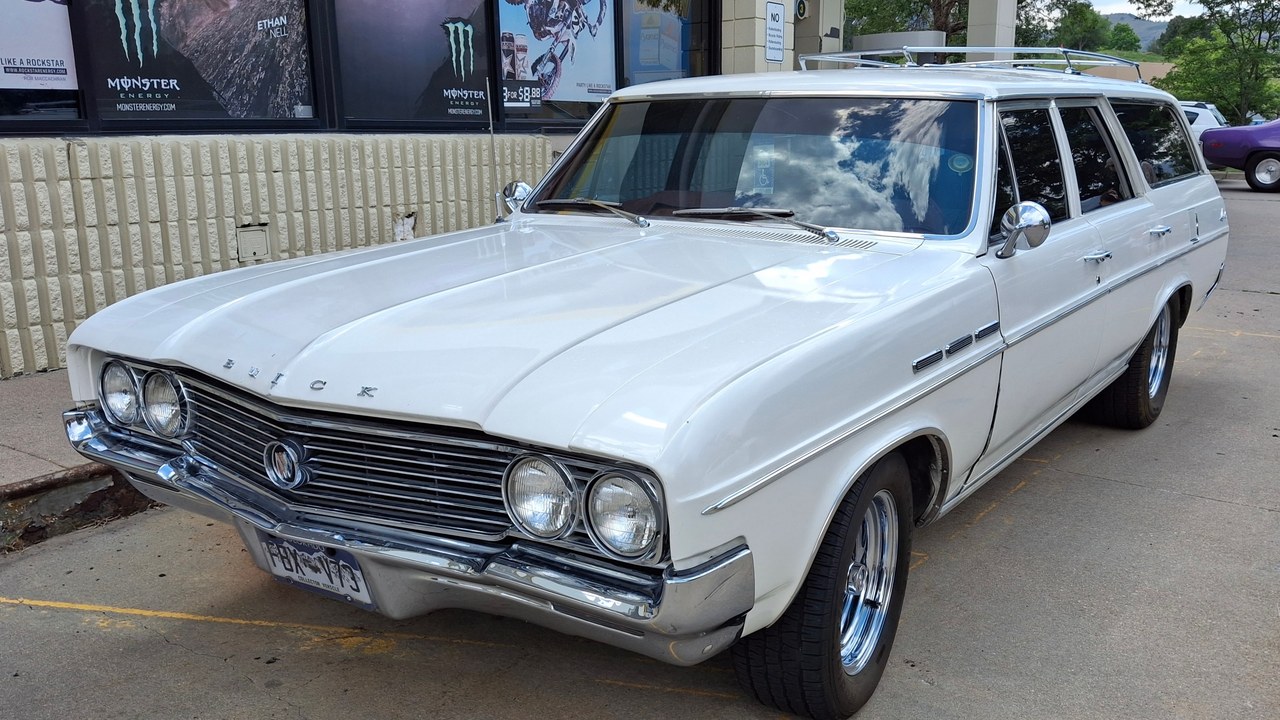
The Buick Sport Wagon was a mid-size wagon with a raised roof and skylights over the cargo area and second row. It shared its body with the Oldsmobile Vista Cruiser and was an extended-wheelbase version of the Buick Skylark wagon.
It was introduced on February 4, 1964, on a 120-inch wheelbase, five inches longer than other Skylark four-door sedans and coupes. The early models had a standard skyroof made of tinted glass panels. Sport Wagons were built in three generations, spanning 1964 to 1972.
11. Oldsmobile Vista Cruiser: The Back Backseat
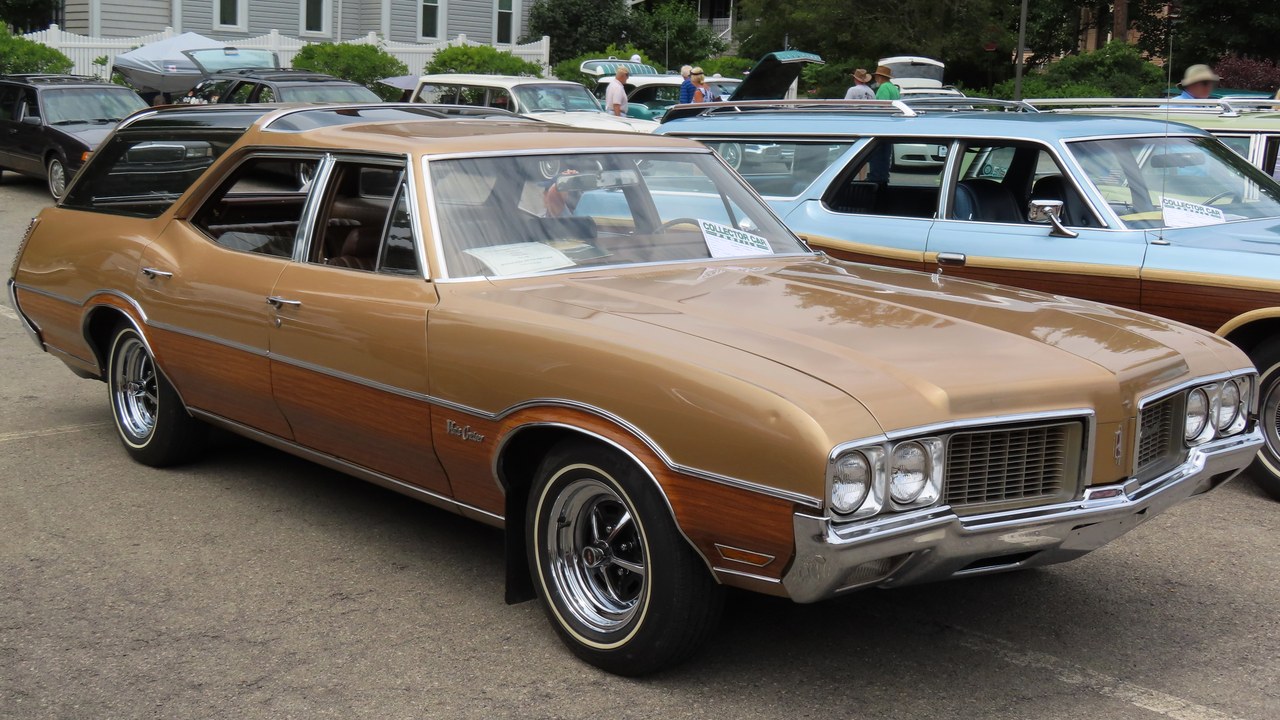
The Vista Cruiser and the Ford Country Squire are the wagons that immediately come to mind for the back backseat, Hagerty says, and one of them was probably where an agitated father first threatened to come back there.
Hagerty gives the Oldsmobile the edge for its glass roof and General Motors styling. Introduced on February 4, 1964, the Vista Cruiser had fixed-glass skylights over the second row, a raised roof behind them and a third row of forward-facing seats, according to Wikipedia.
12. Volvo 1800ES: Snow White’s Hearse
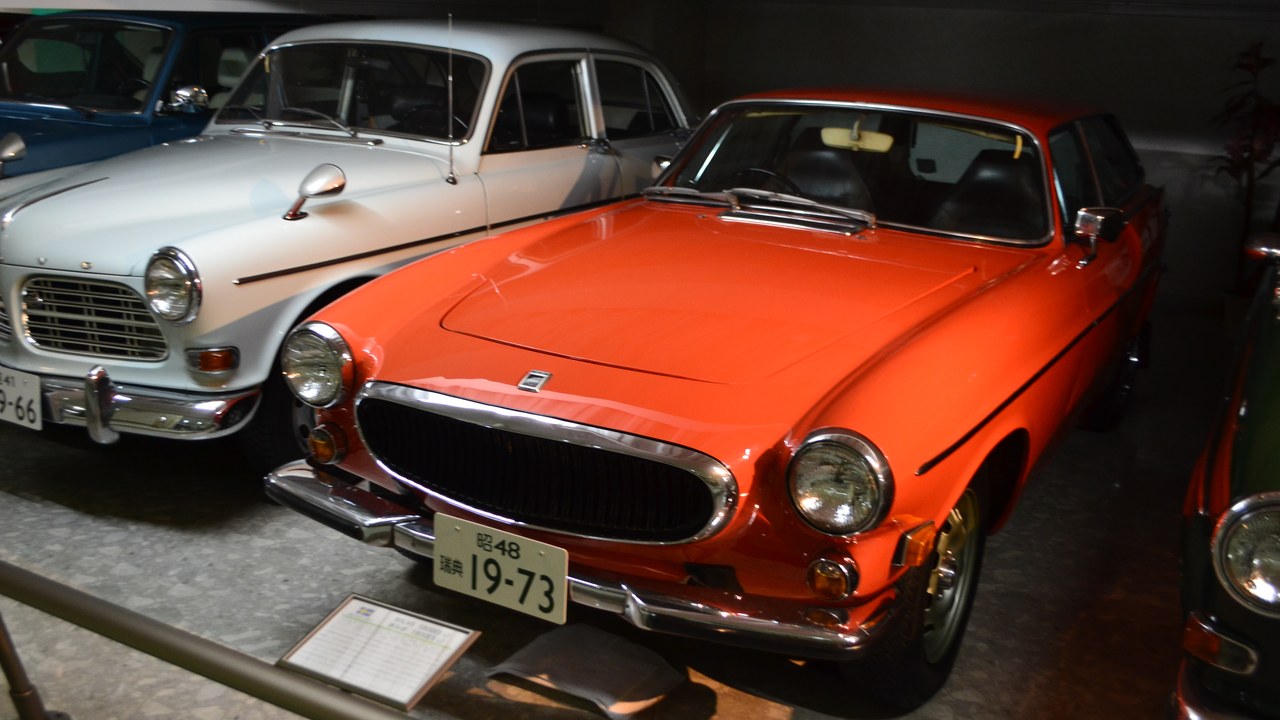
Volvo of the 1960s and 1970s was not known for high style, but the P1800 coupe was gorgeous, and from 1971 to 1973 it was also sold as a two-door sports wagon, the 1800ES. Hagerty notes that only 8,077 examples of the elegant wagon were ever built.
Hagerty calls it one of the few truly collectible Volvos. Its long, flat roofline and generous glass earned nicknames like Cinderella’s Coffin and Snow White’s hearse, and thanks to Volvo’s build quality it enjoys an unusually high survival rate. Hagerty says these wagons run virtually forever.
More from Morning Overview
- Cadillac cut the price of its cheapest EV, which goes up to 317 miles on a charge
- Winter weather advisories cover I-80, I-70 and the Bighorns with up to 15 inches of snow
- Arizona’s governor declared a statewide emergency after Flagstaff logged its wettest Nov. 1 on record
- Zero Motorcycles unveiled an electric motorcycle targeted at under $8K and a street-legal dirt bike at EICMA
