
American Motors was formed on May 1, 1954, when Nash-Kelvinator and Hudson merged to survive against General Motors, Ford and Chrysler. Over 33 years it built compacts, muscle cars and oddballs with a fraction of its rivals’ money, until Chrysler bought it in 1987. Here are sixteen AMC cars from the underdog that took on Detroit.
Read next on Morning Overview: Cadillac cut the price of its cheapest EV, which goes up to 317 miles on a charge
1. Nash Metropolitan: A British-Built American
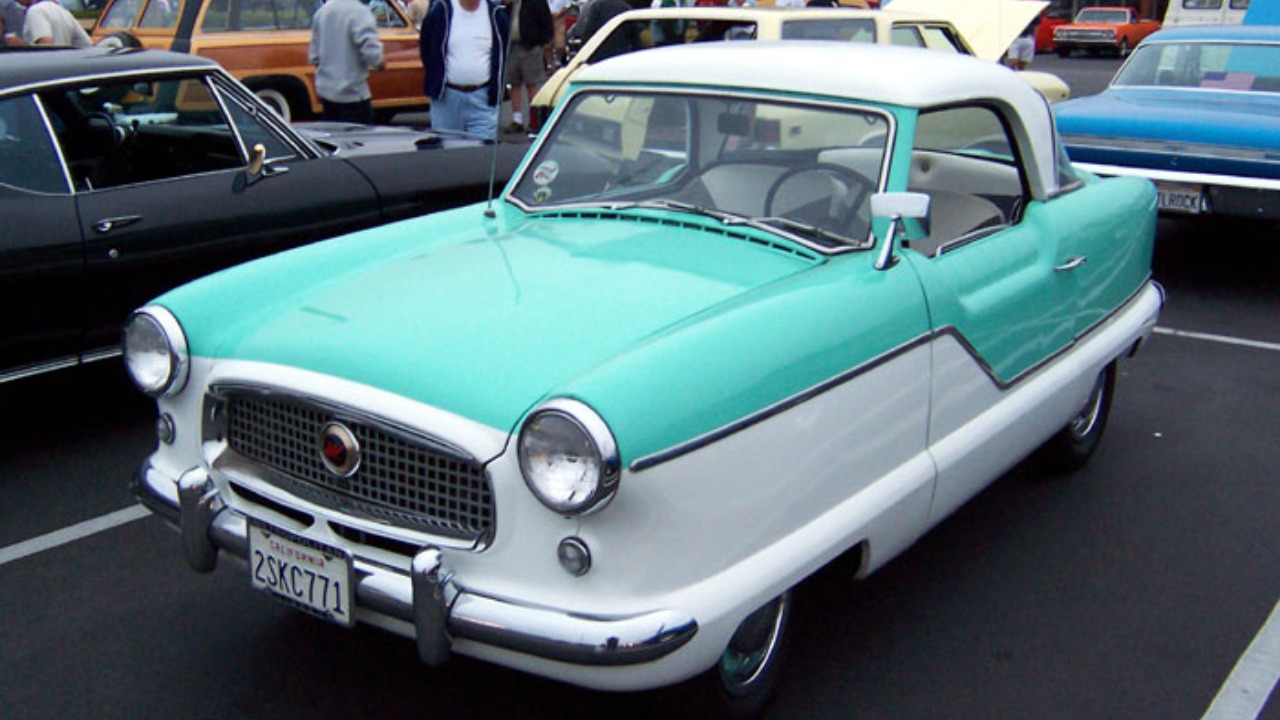
The Metropolitan was designed and marketed in the United States by Nash and its successor companies from 1953 until 1962. Yet it was built entirely in England, in British Motor Corporation factories using many existing BMC parts.
Today it would be called a subcompact, a class that did not yet exist when it was made. At the time it was categorized as a small economy car, and it shared many parts with British-market cars.
2. Rambler American: The Compact That Went Muscle
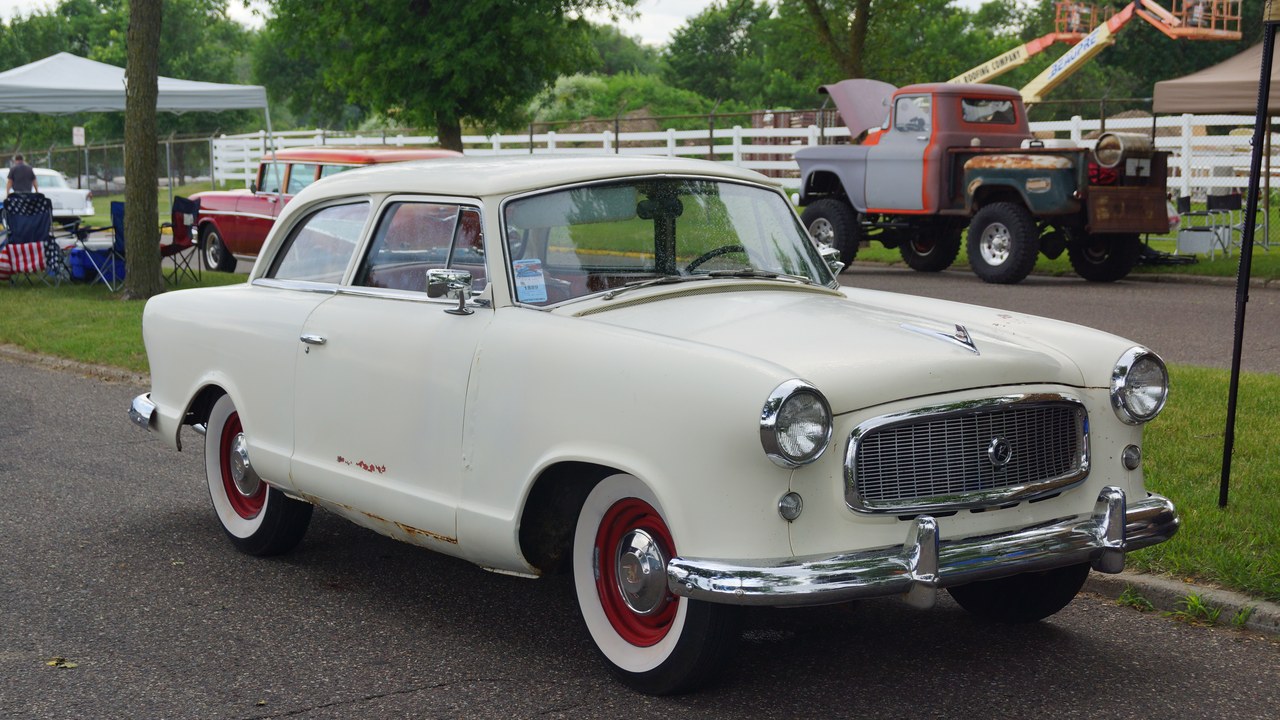
The Rambler American began as an elegant, sleek compact that stood out from the bigger cars dominating the market. Its third generation added V8 power, and Hagerty notes it spawned the SC/Rambler to take on the Dodge Dart, Ford Falcon and Chevy Nova.
Hagerty says the early car practically looked like a European import. In Argentina, a Pininfarina-restyled version was built as the IKA Torino and became famous for racing.
3. Rambler Classic: The Mid-Size Workhorse
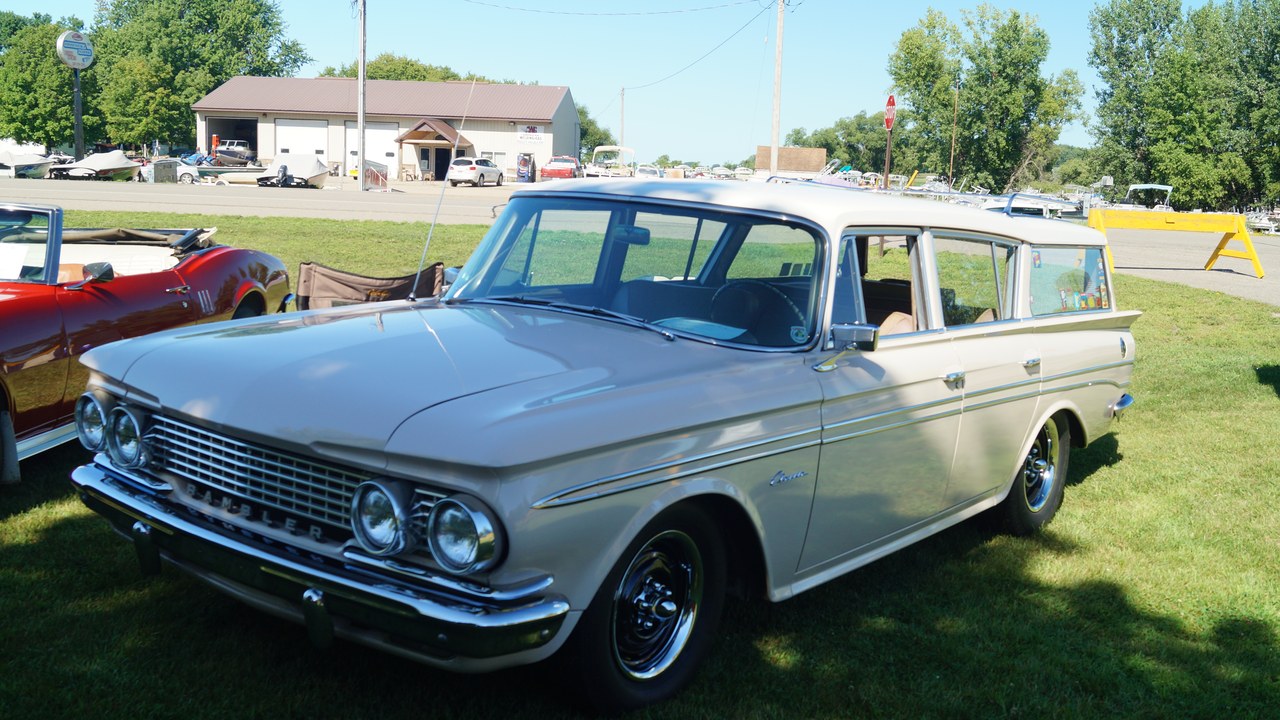
The Rambler Classic was AMC’s intermediate car from the 1961 through 1966 model years, built in three generations. It replaced the Rambler Six and Rebel V8 names, which were retired after the 1960 model year.
It was first offered as a six-passenger four-door sedan and six- or eight-passenger station wagons, and AMC added more body styles over the years, including two-door hardtops and convertibles.
4. AMC Ambassador: The Full-Size Flagship
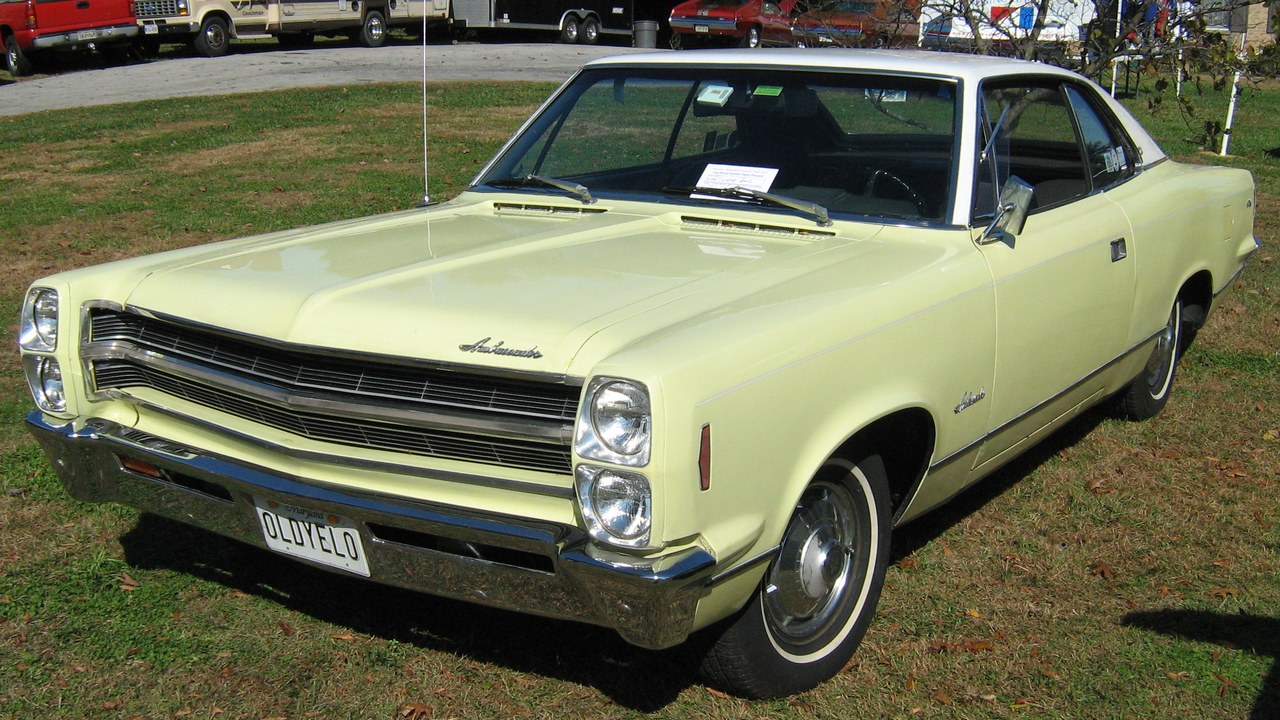
The Ambassador was AMC’s full-size car, built in eight generations from 1958 to 1974 in a wide range of body styles. It often served as the company’s flagship, and for 1968 Hagerty notes it came with standard air-conditioning.
That feature was still optional across most of the industry, even on far more expensive cars. Hagerty’s favorite is the 1965-66 wagon, with stacked headlights that make it look almost like a concept car.
5. Rambler Marlin: The Fastback That Inspired a Charger
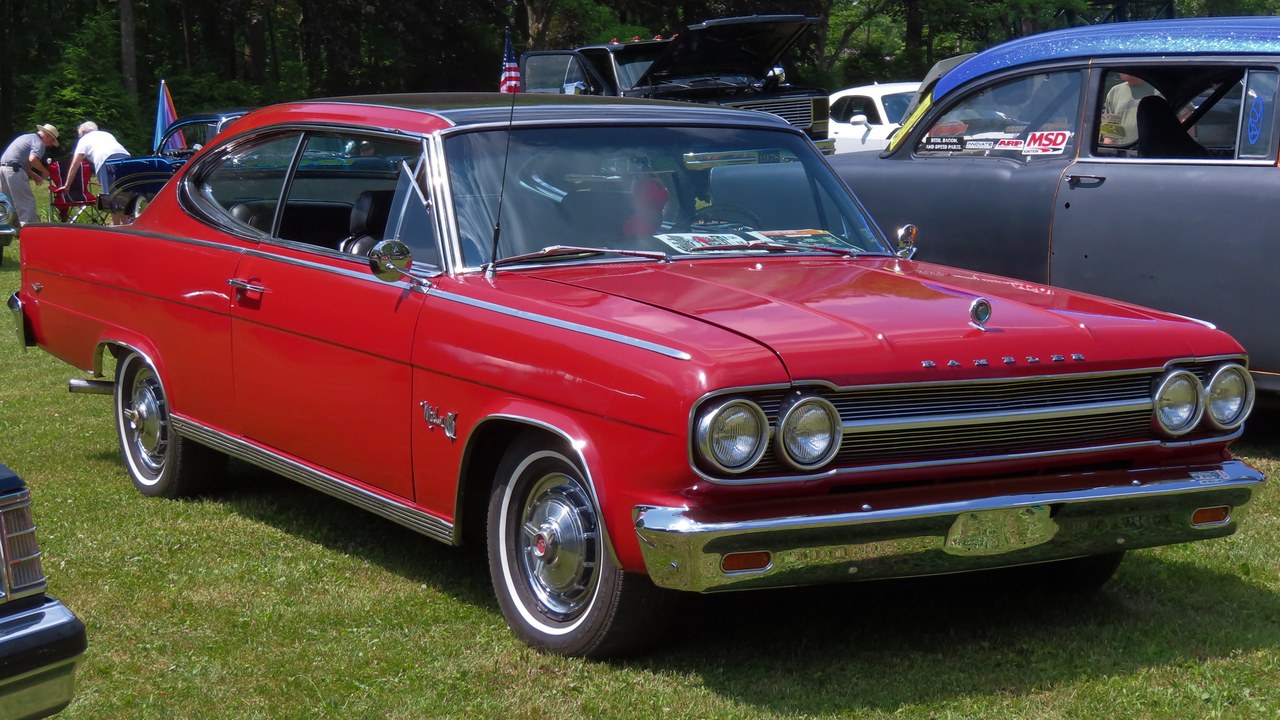
AMC launched the Marlin for 1965, a fastback based on the Rambler Classic with a 112-inch wheelbase. Jalopnik reports its design was so influential that Dodge borrowed the formula for its first-generation Charger.
Two V8s were offered, including a 327-cubic-inch engine with 270 horsepower, and power disc brakes were standard. In 1967 the Marlin moved to the bigger Ambassador chassis.
6. AMC Javelin: Trans Am Champion
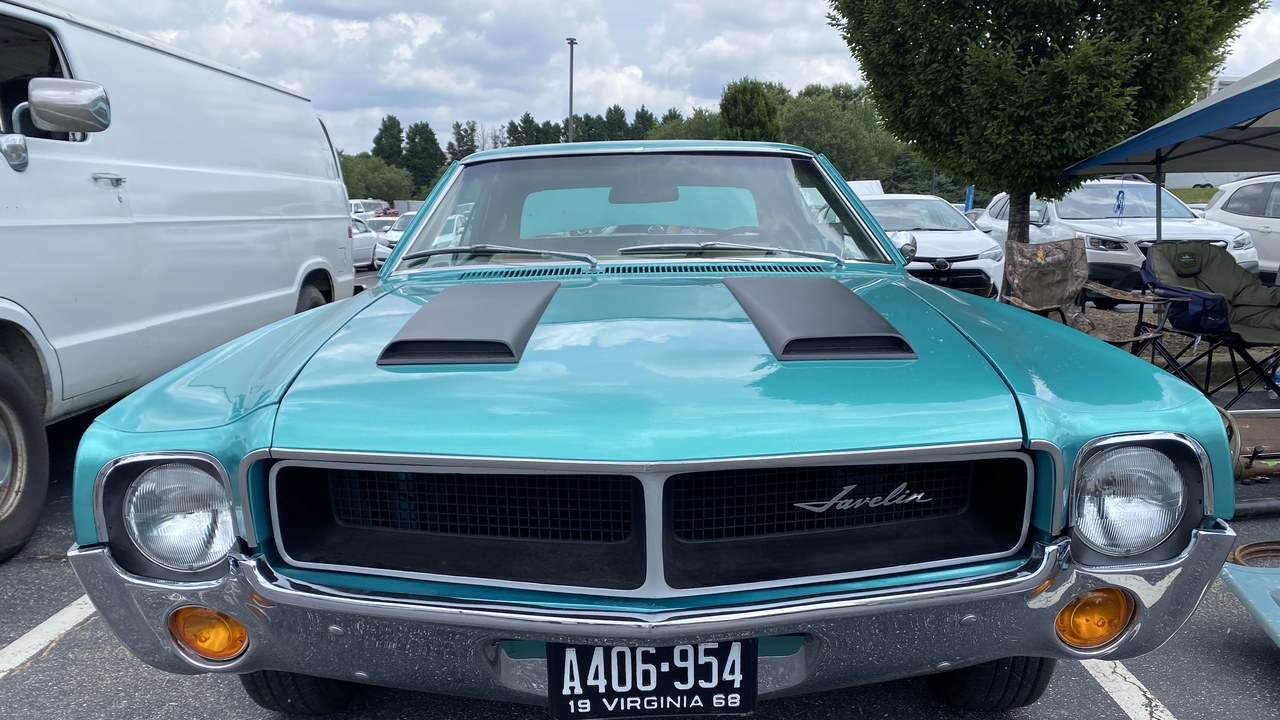
The Javelin was AMC’s take on the pony car, offered with several potent V8s. A blue, white and red Javelin driven by Mark Donohue won the Trans Am championship for AMC for the first time in 1971, and George Follmer repeated the feat in 1972.
Hagerty’s favorite is the one-year-only 1970 model, with a unique front end. Its 390 V8 and four-speed combination made the Javelin one of the more interesting pony cars of the era.
7. AMC AMX: A Two-Seat Challenger
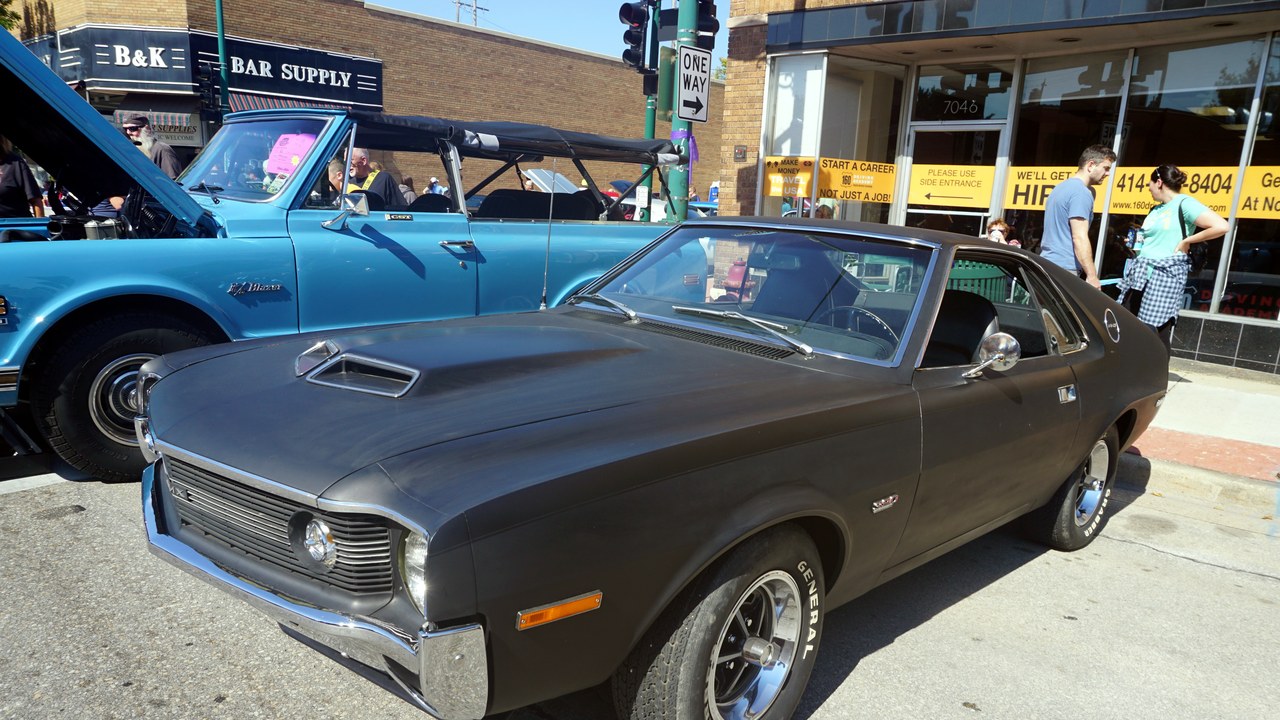
To compete with Chevrolet’s Corvette, AMC shortened the Javelin and restyled it from the doors back to create the two-seat AMX. Hagerty notes AMC proudly announced it started at less than $4,000, the price of a loaded Mustang or Camaro.
It came standard with a V8 and a four-speed with a Hurst shifter. Production lasted from 1968 to 1970, after which AMX became an option package on the Javelin, Hornet and Spirit.
8. AMC Rebel: The Machine

The Rebel was AMC’s mid-size car, and its loudest version was the 1970 Rebel Machine. Hagerty says it featured a 340-horsepower 390 V8 breathing through a big hood scoop, more power than even the AMX had.
It was offered with a red, white and blue paint scheme. Hagerty calls it loud, brash and a solid performer, and its styling also included fenders that bulged to mimic the close-fitting bumpers.
9. AMC Hornet: The Insurance Dodger
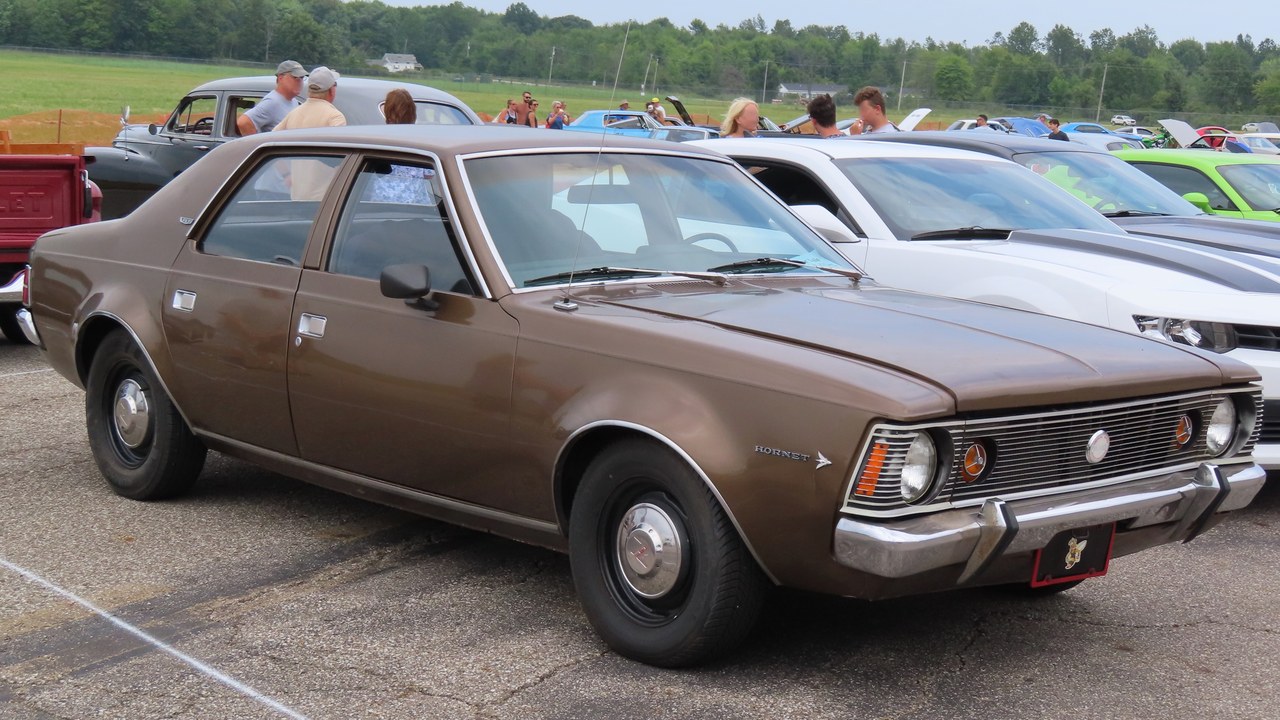
The compact Hornet replaced the Rambler American for 1970. In 1971, when insurers began surcharging high-powered cars, AMC put its 360 V8 in the Hornet SC/360, which Jalopnik says stayed just under the rules that triggered a 25 percent penalty.
The SC/360 weighed just 3,108 pounds and could reach 60 mph in 5.6 seconds. A 1974 Hornet hatchback also starred in The Man With the Golden Gun’s famous corkscrew jump.
10. AMC Gremlin: A Chopped Hornet
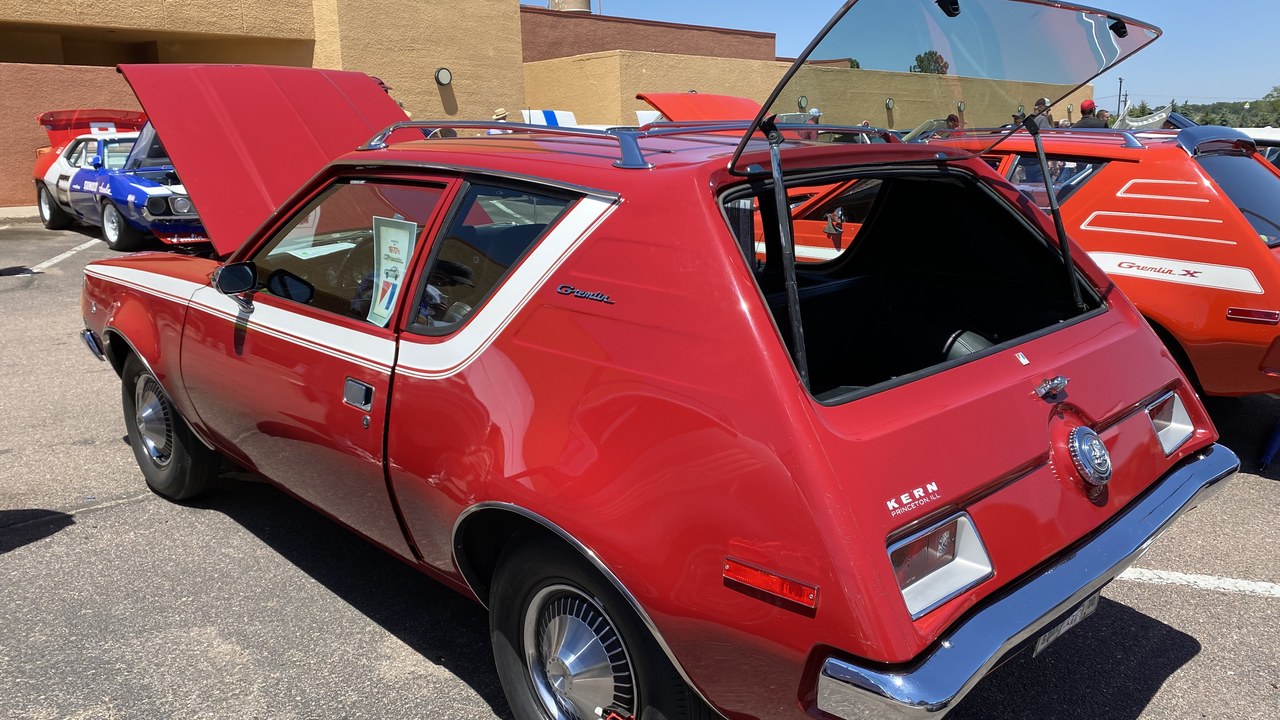
AMC needed a smaller, more affordable car, so it took the already compact Hornet, cut 12 inches from the wheelbase and chopped off the rear to create the Gremlin. Hagerty admits the result is a bit awkward compared with the AMX-GT concept that spawned it.
That has not stopped enthusiasts from loving the odd little hatchback. A 304 V8 was offered, making the lightweight Gremlin surprisingly punchy for an economy car.
11. AMC Matador: Elegance Over Muscle
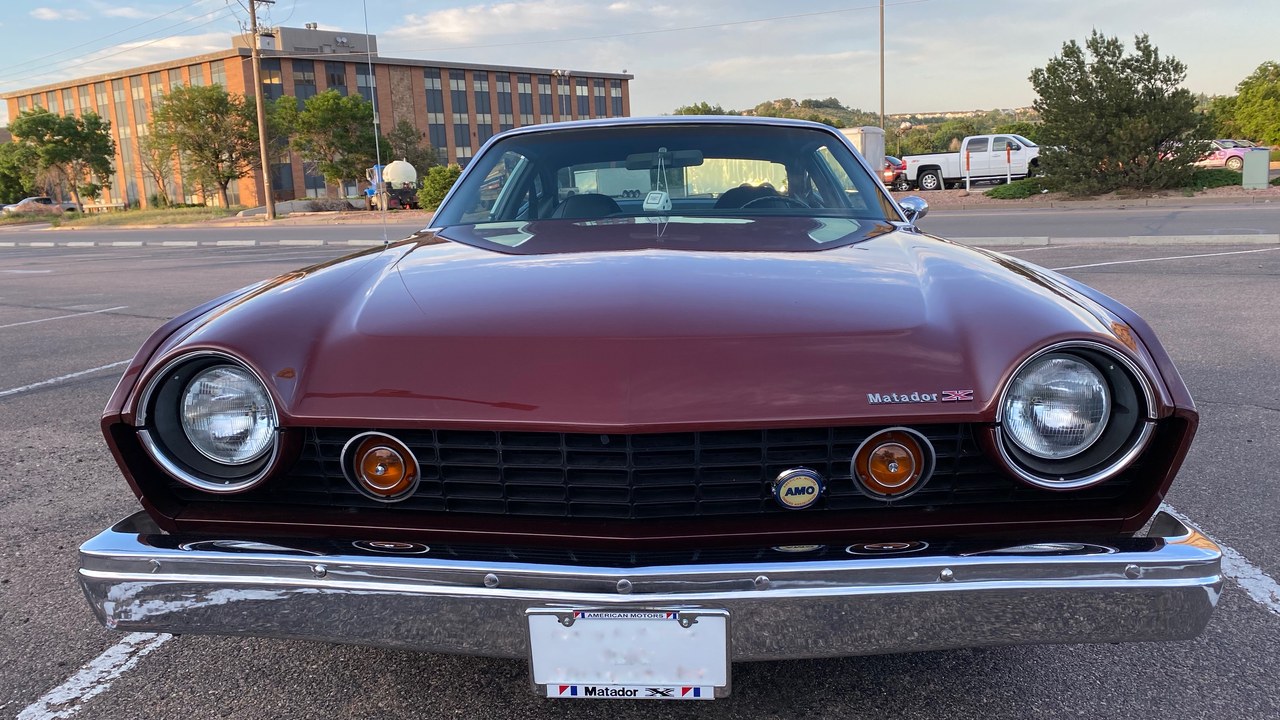
In an era when most American performance cars went for an aggressive stance, AMC chose sleekness. Jalopnik calls the 1974 Matador X coupe perhaps the best-looking coupe of the 1970s, apart from its frog-eyed front end.
Dick Teague’s design team created the graceful, aerodynamic, long-on-style Matador X, and Jalopnik says the team once again surpassed itself with a car that still stands apart from its muscular rivals.
12. AMC Pacer: The Fishbowl on Wheels
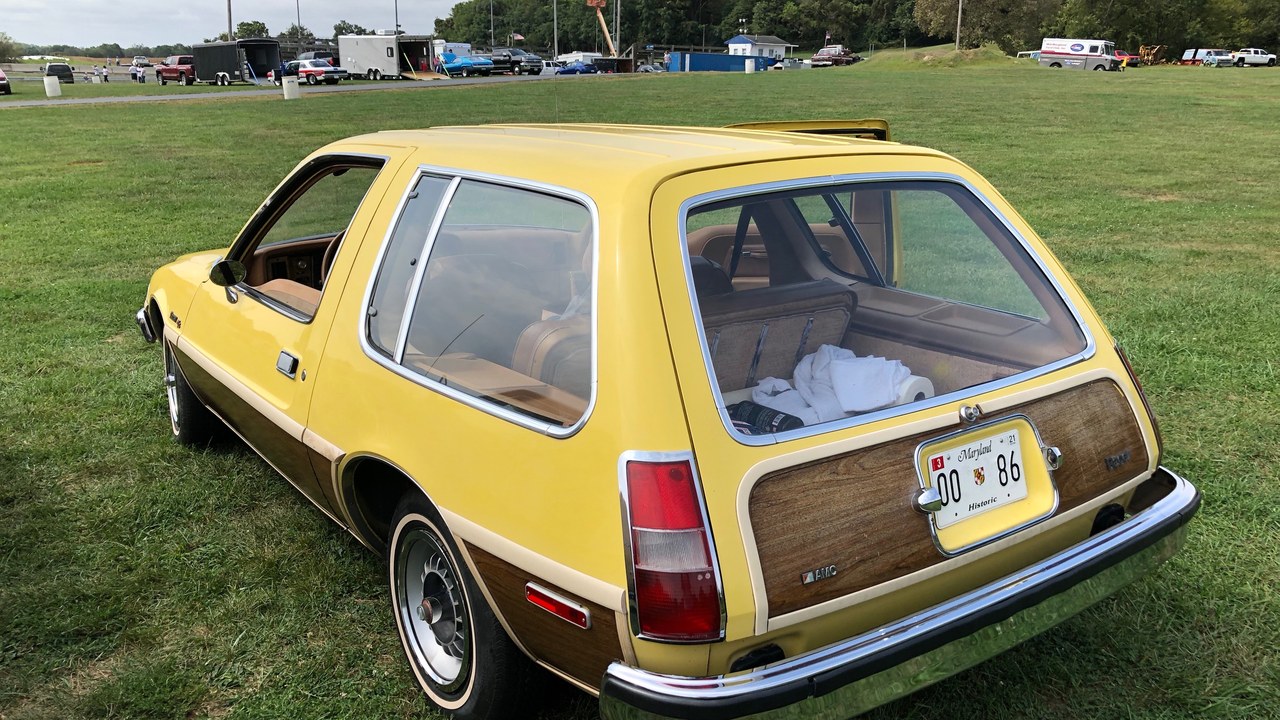
The Pacer was a two-door compact built by AMC from 1975 through 1980. Its rounded shape and large glass area were unusual compared with the three-box designs of the era, and design work began in 1971.
Hagerty notes its passenger door was longer than the driver’s so rear passengers could get in on the curb side. It was also built in Mexico by VAM and sold there as a premium-priced car.
13. AMC Concord: A Better-Built Hornet
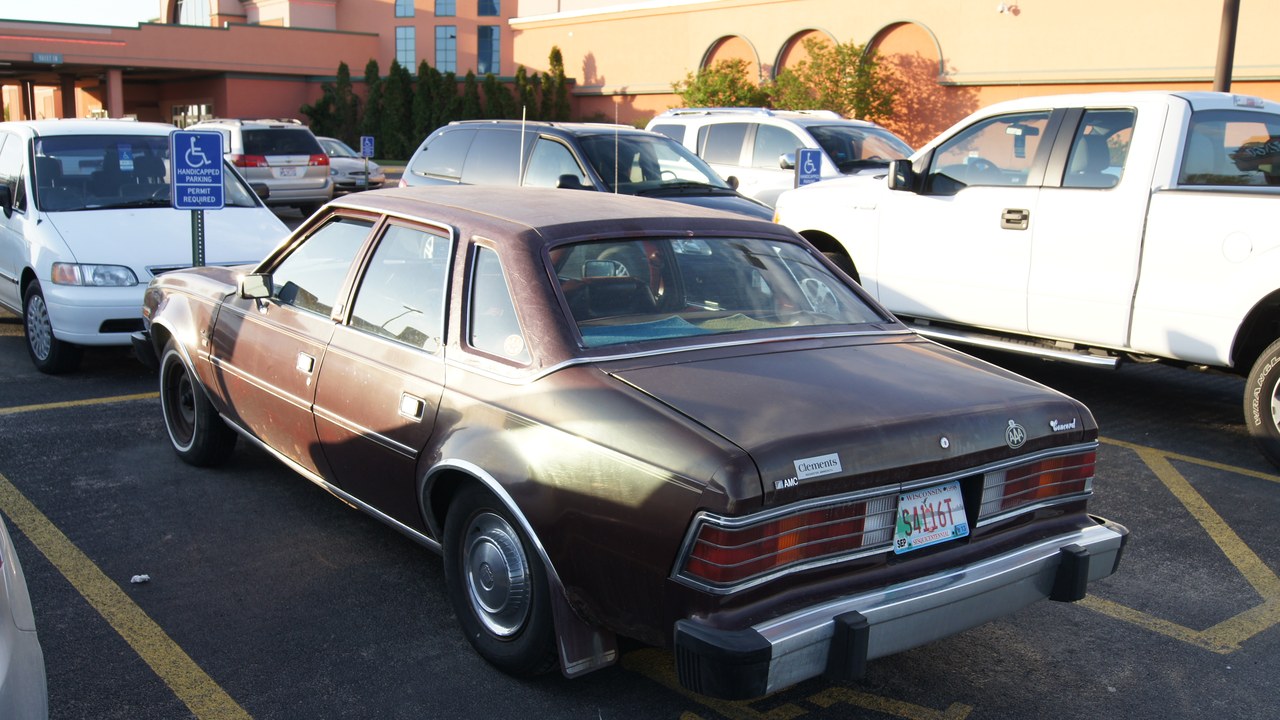
The Concord was a compact AMC sold for model years 1978 through 1983. It was essentially a revision of the Hornet, but better equipped, quieter and smoother-riding than the car it replaced.
It was offered as a four-door sedan, a two-door coupe, a three-door hatchback and a four-door station wagon, and it later served as the basis for the four-wheel-drive Eagle.
14. AMC Spirit: The Gremlin’s Successor
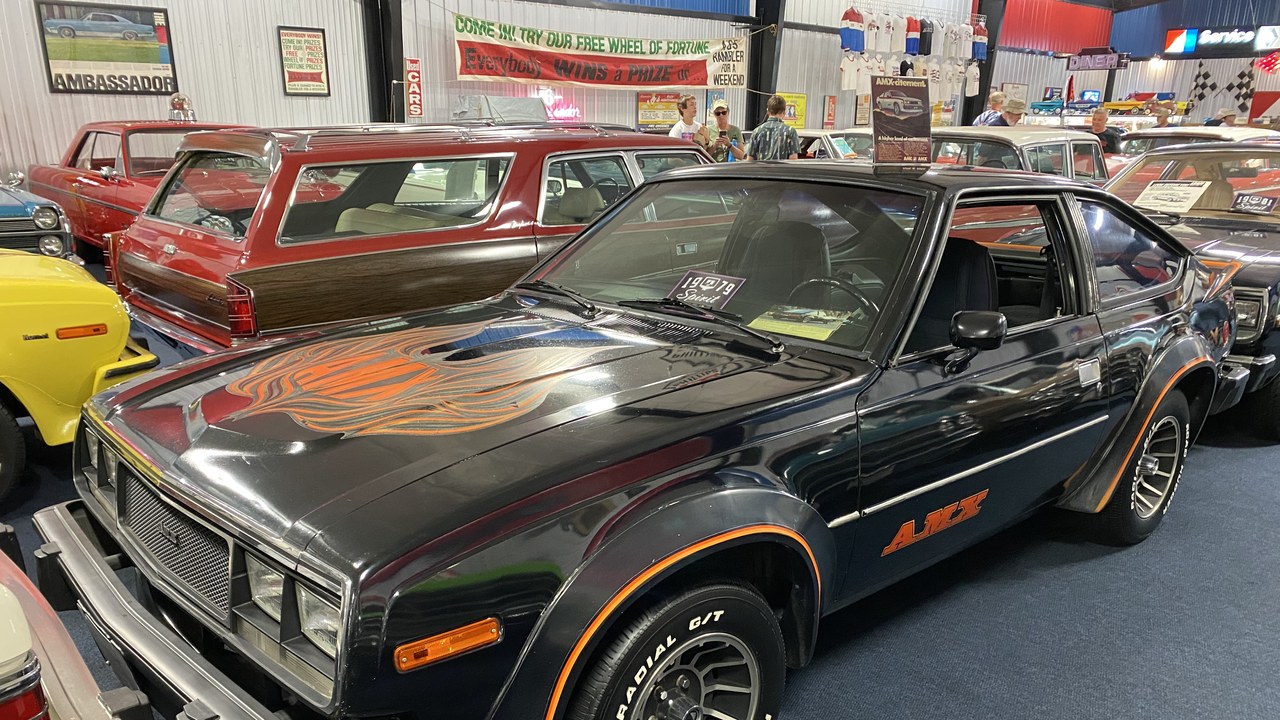
The Spirit replaced the Gremlin and was sold from 1979 through 1983. It came in two body styles, both two-door hatchbacks: a restyled Gremlin called the Spirit Kammback or sedan, and a Liftback with a more gently sloping rear.
Budget limits meant AMC reused much of what it already had. A sporty Spirit AMX version, like the one pictured, kept the performance name alive into the 1980s.
15. AMC Eagle: The First Crossover
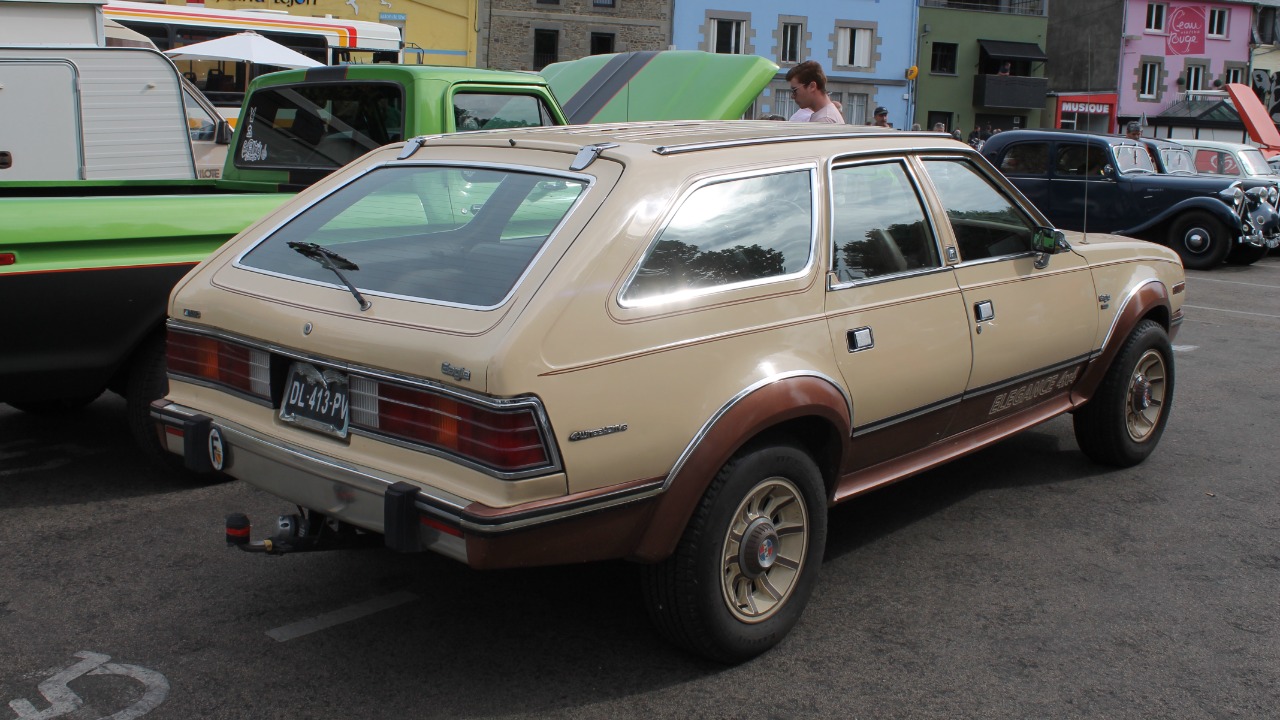
The Eagle was a compact four-wheel-drive passenger car built by AMC for the 1980 to 1987 model years, and by Chrysler for 1988. Its coupe, sedan and wagon models were based on the Concord.
Hagerty calls its four-wheel-drive layout a precursor to today’s ubiquitous crossovers. In 1981, smaller Spirit-based models, the two-door SX/4 and the Kammback, joined the lineup, broadening the Eagle family.
16. Jeep Cherokee XJ: AMC’s Lasting Legacy
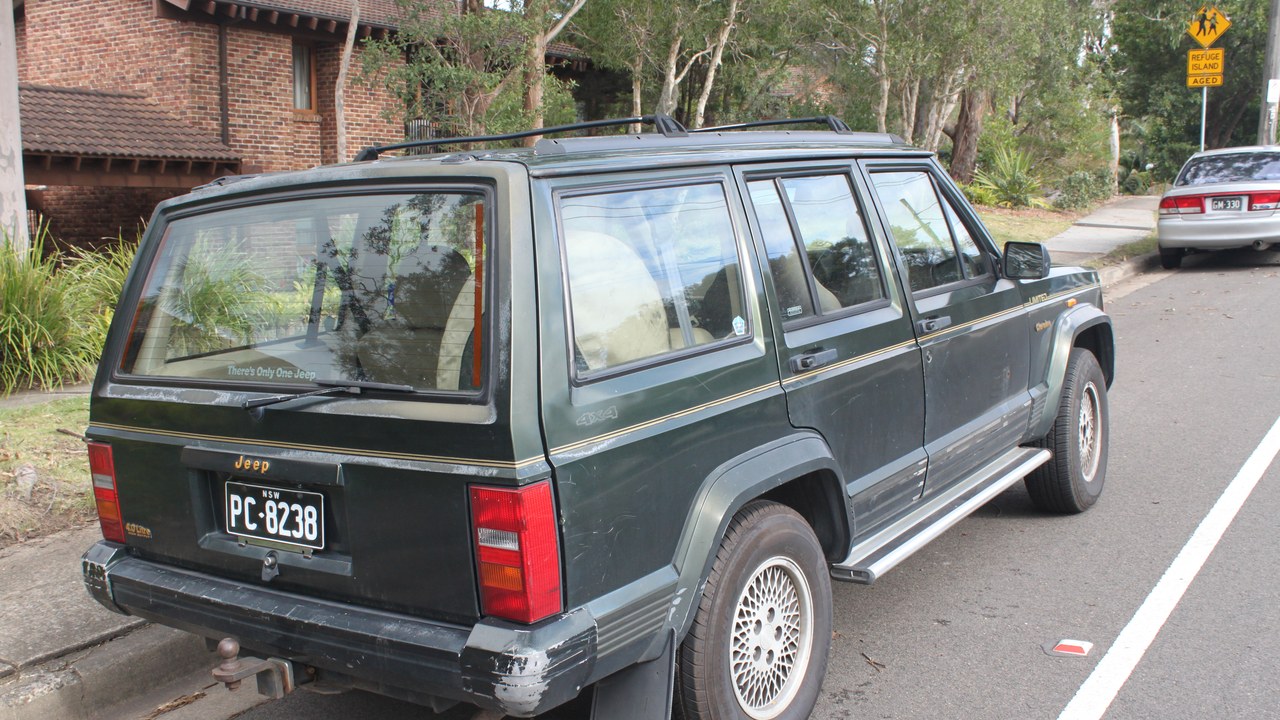
The Jeep Cherokee XJ was developed by American Motors and sold by Jeep in the United States from 1983, as a 1984 model, through 2001. The 1984 XJ shared its name with the original full-size Cherokee and was offered in two- and four-door forms with rear- or four-wheel drive.
Globally, production continued through 2014. When Chrysler bought AMC in 1987, Jeep was the part of the company that survived, and today only Jeep remains.
More from Morning Overview
- 11 engines built to run well past 200,000 miles
- Two Kentucky residents died when a small plane crashed at Missouri’s Lake of the Ozarks, and the NTSB is investigating
- A handful of car transmissions are so tough that mechanics say they almost never die
- Melting permafrost is setting off a newly identified kind of catastrophic landslide, scientists say
