
Steep terrain has produced a family of American transport that climbs by cable, rack, incline, or aerial car rather than by ordinary road. They differ in age, grade, and purpose, from a commuter tram to hillside lifts that date to the nineteenth century. Here are twelve of them, each with the fact that defines its climb.
1. San Francisco cable car system: The Last Hand-Operated Line
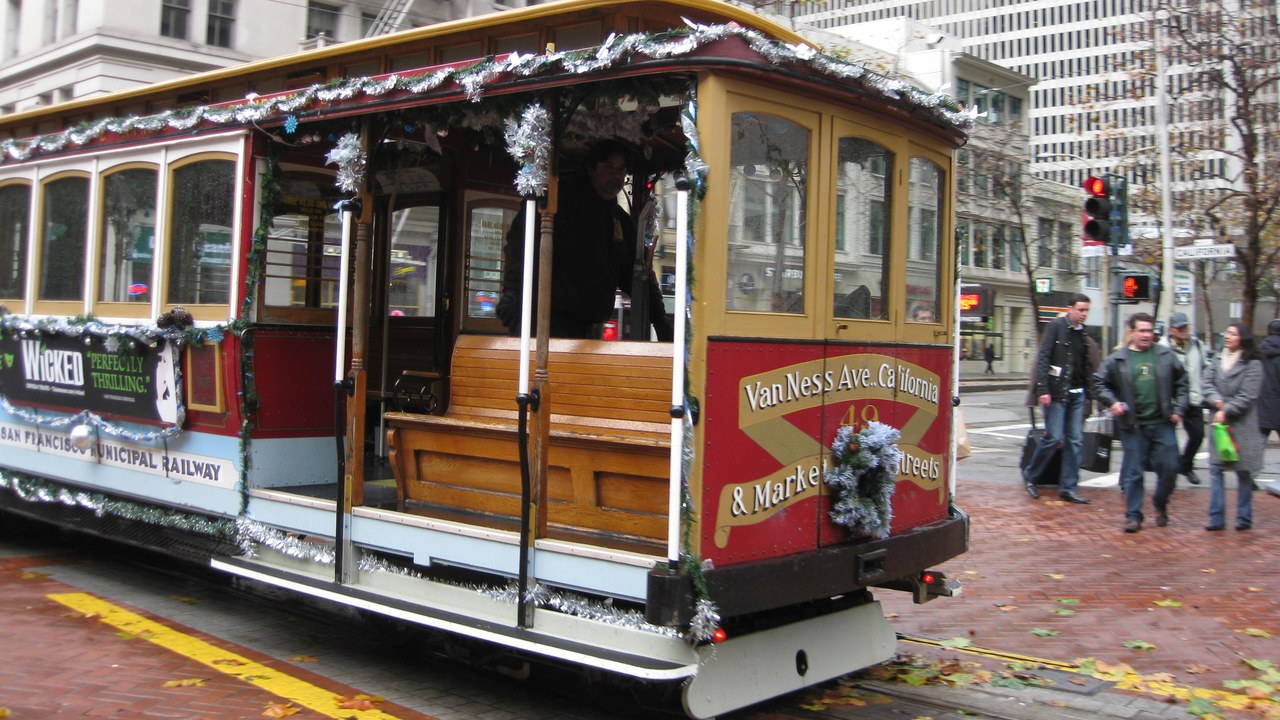
The San Francisco cable car system is the world’s last manually operated cable car system and an icon of the city of San Francisco.
Manual operation is the distinction, since the cars are worked by people and not automated, a feature that sets the system apart from every other cable car line. For a visitor, the ride is both a form of transportation and a working piece of the city’s identity, an icon of San Francisco.
2. Mount Washington Cog Railway: Second-Steepest Rack Line
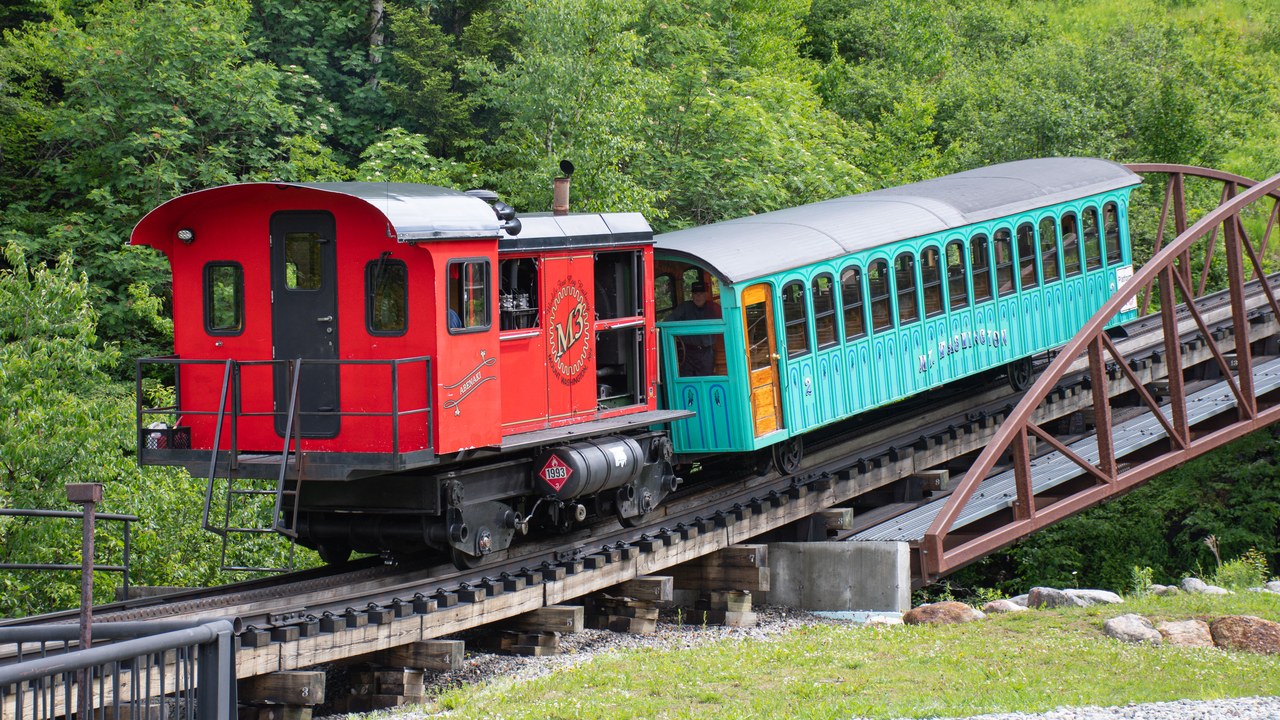
The Mount Washington Cog Railway is the second-steepest rack railway in the world, after the Pilatus Railway in Switzerland. Its average grade is over 25 per cent, and its maximum grade reaches 37 per cent.
Only the Swiss line is steeper. The gap between the average and the maximum shows that the climb is uneven, with its sharpest pitch well above the typical grade of the line. The comparison with Pilatus comes from the railway’s Wikipedia entry.
3. Pikes Peak Cog Railway: Nine Miles to the Summit
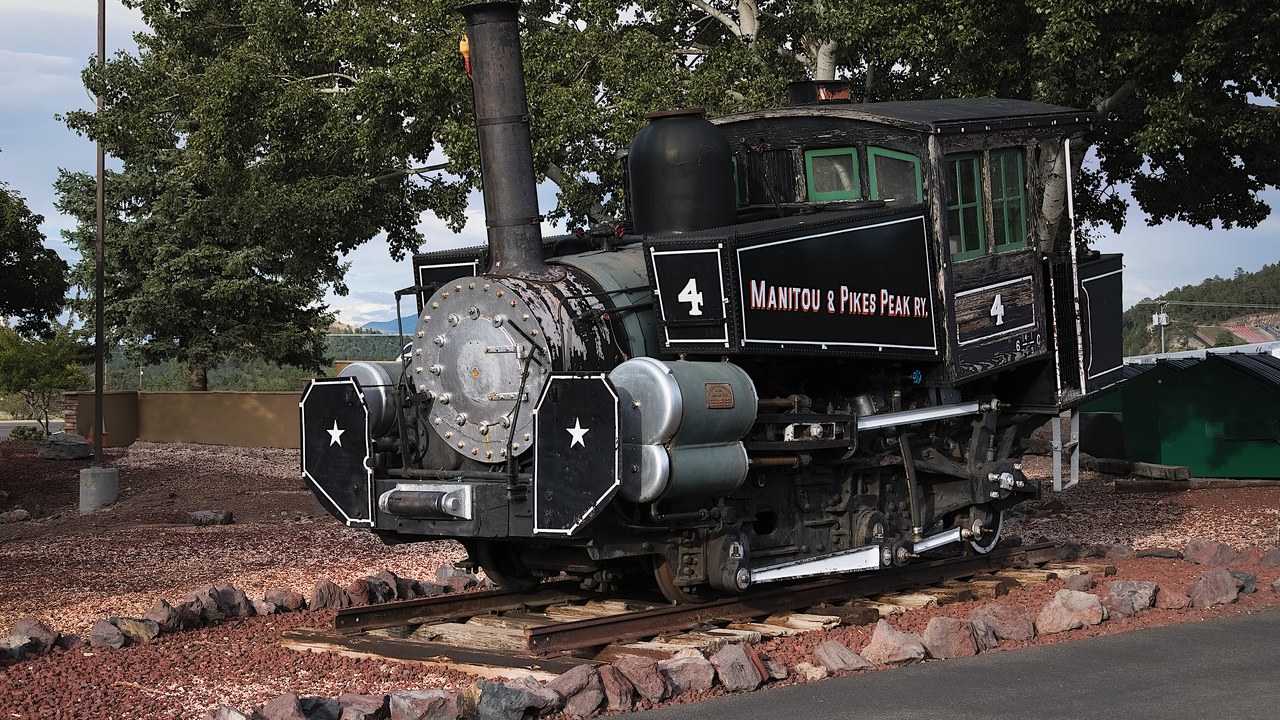
The Pikes Peak Cog Railway carries passengers 9 miles up to the summit of Pikes Peak, according to the operator’s description of its route. The line is built as rack track, the cog design suited to steep mountain grades.
The operator frames the ride as a trip back in time as well as a climb. The nine-mile figure is the length of the journey from the base to the summit, which is the main measure of the trip.
4. Angels Flight: Two Cars Since 1901
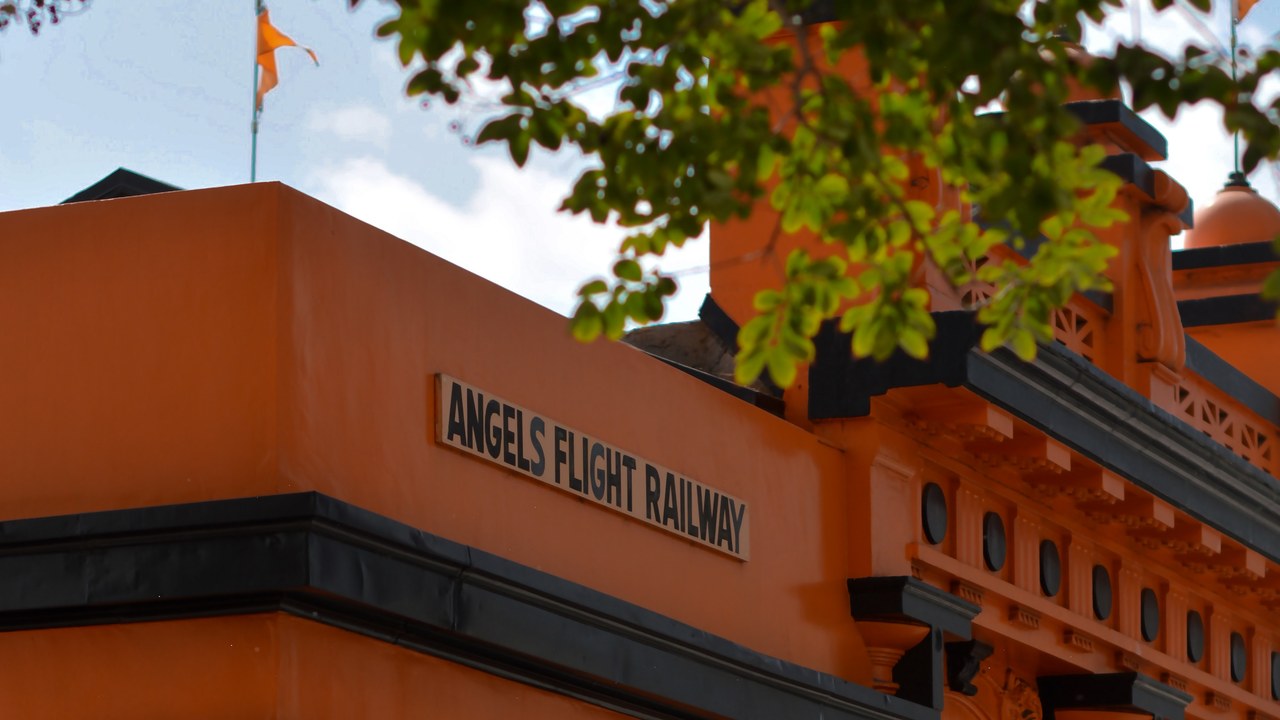
The two railway cars of Angels Flight have been in Los Angeles since 1901, and they work the slope of Bunker Hill. The Angels Flight history page adds that 1905 is the date to use for the rebuilding that produced the vehicles in service now.
The dual date reflects that rebuilding, so either year is accurate depending on what is being counted. The line’s two cars have served the hill for well over a century, while the present vehicles date from 1905.
5. Duquesne Incline: Facts on the Duquesne
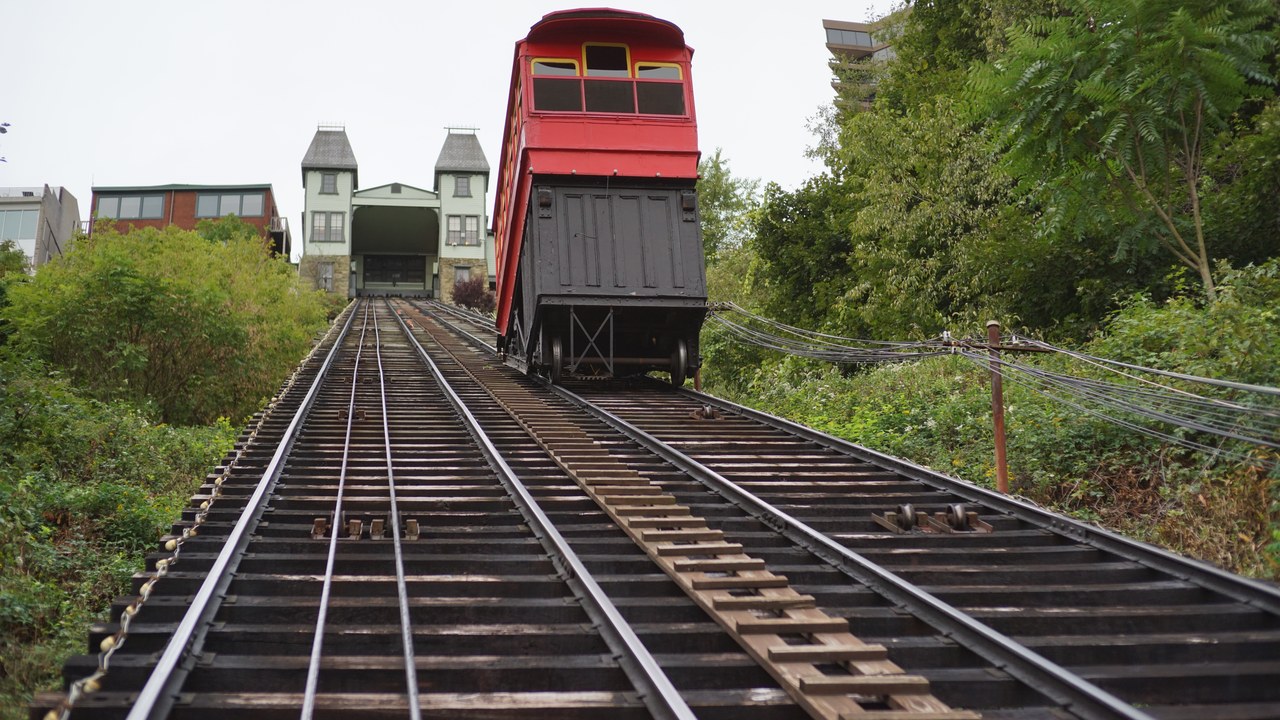
Open to the public since May 20, 1877, the Duquesne Incline runs 794 feet of track and lifts passengers 400 feet at a 30.5-degree grade. The incline’s own facts list gives the cost to build as $47,000.
Each car holds 18 passengers and travels at 6 miles per hour, so the ride is a slow, steady ascent. The figures come from the incline’s own list of facts, which presents them as the basic specifications of the line.
6. Monongahela Incline: Oldest Still Running
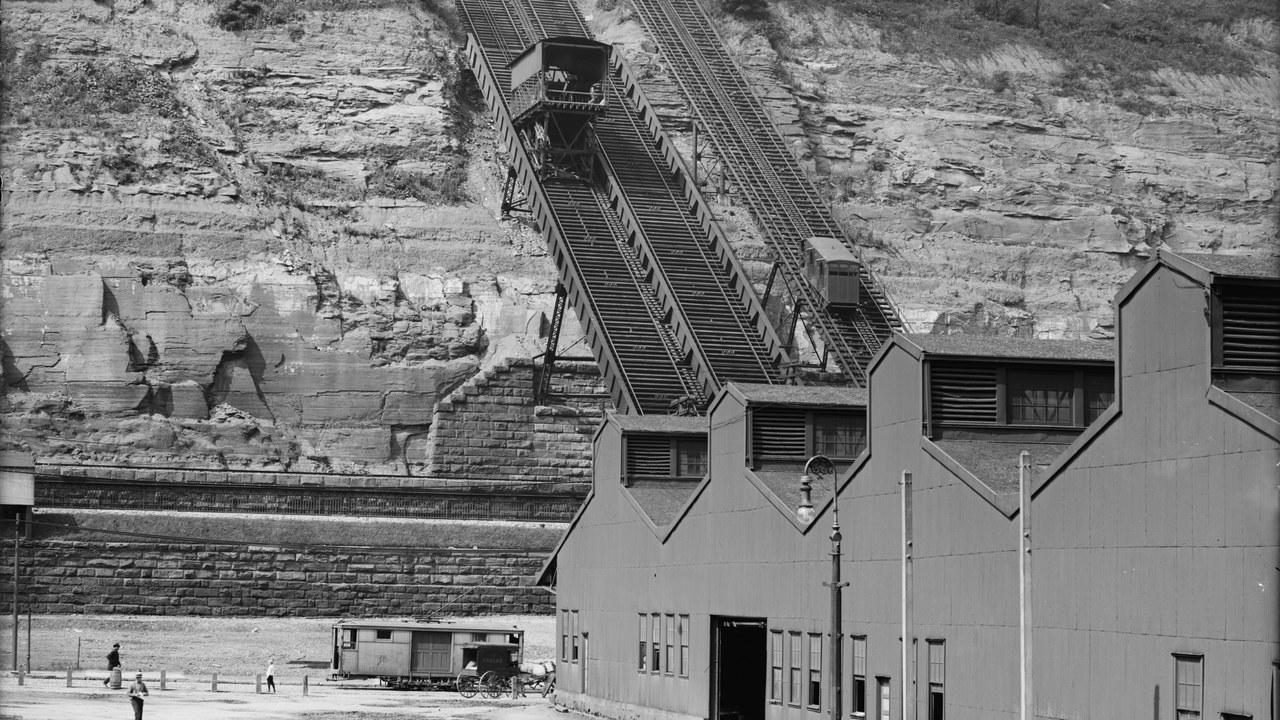
Designed and built by the Prussian-born engineer John Endres in 1870, the Monongahela Incline is the oldest continuously operating funicular in the United States. The Wikipedia entry gives 1870 as the year of construction and names the engineer, John Endres.
That 1870 date predates the Duquesne Incline’s 1877 public opening on this list. The claim is specific to continuous operation, so it rests on the line having kept running ever since it was built, which is the qualifier that separates it from older lines that no longer operate.
7. Johnstown Inclined Plane: A 70.9 Percent Grade
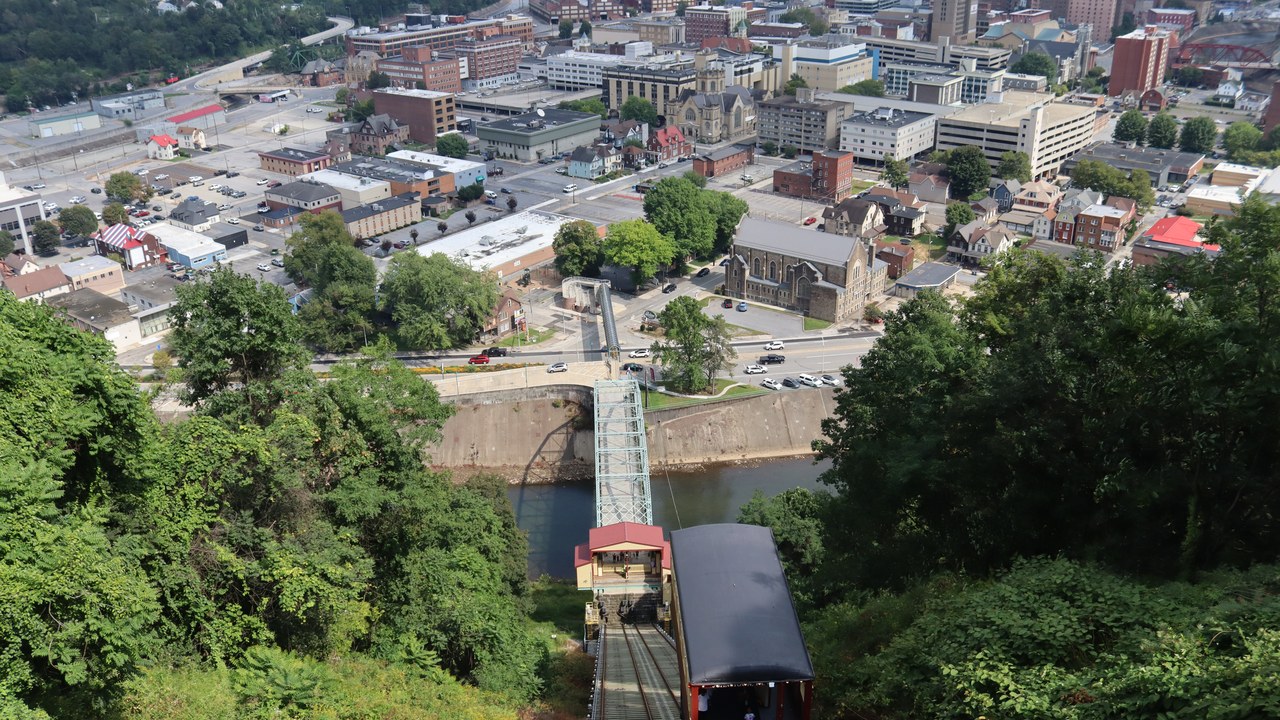
The Johnstown Inclined Plane began providing transportation up Yoder Hill on June 1, 1891, a slope with a steep 70.9% grade. The track runs 896.5 feet, and the cars weigh 38 tons.
A grade of 70.9 per cent is a higher figure than the 37 per cent maximum of the Mount Washington line on this list. The incline has been in service since 1891, and the slope of Yoder Hill is the reason its grade is the headline figure.
8. Lookout Mountain Incline Railway: The Second Incline
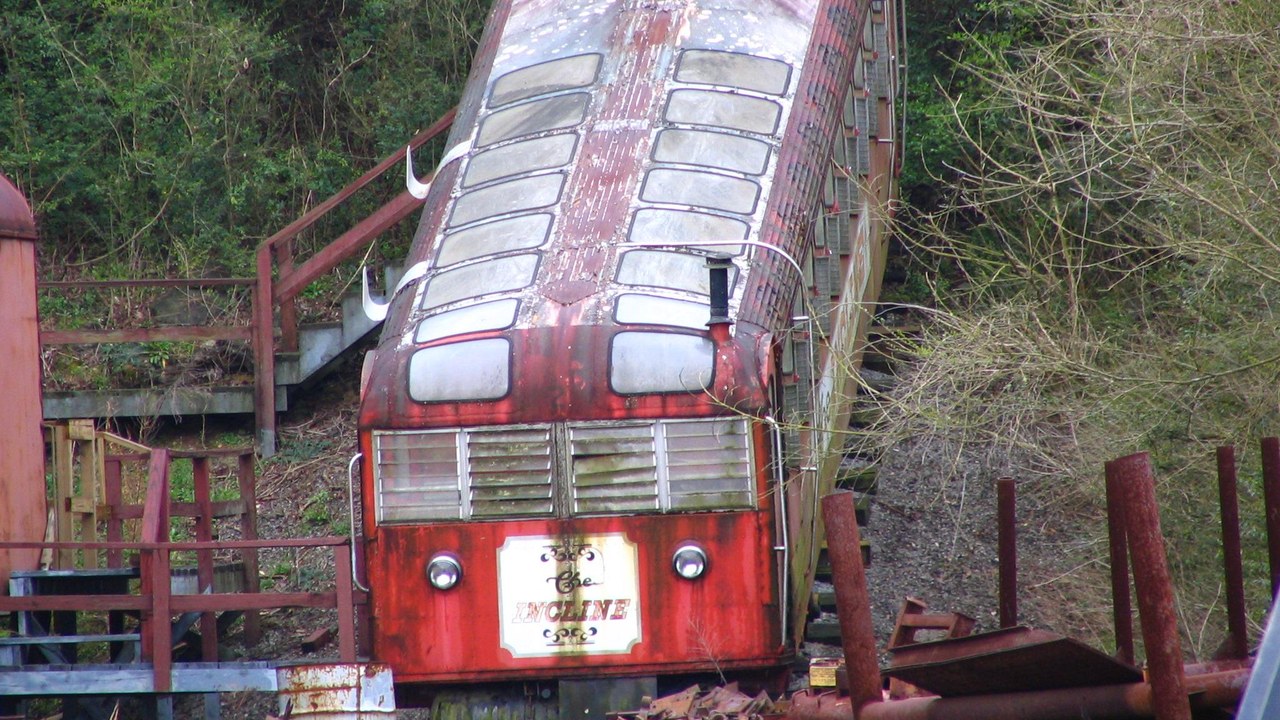
The Lookout Mountain Incline Railway is a funicular that opened on November 16, 1895. It was engineered by John Crass, and the second incline built there is the one still in operation today.
The word second matters, since an earlier incline came before it. The 1895 line remains the working route up the mountain today, which makes the opening date the key fact and the engineer’s name the secondary one. The operator gives 1895 as the opening date.
9. Roosevelt Island Tramway: First Commuter Tram
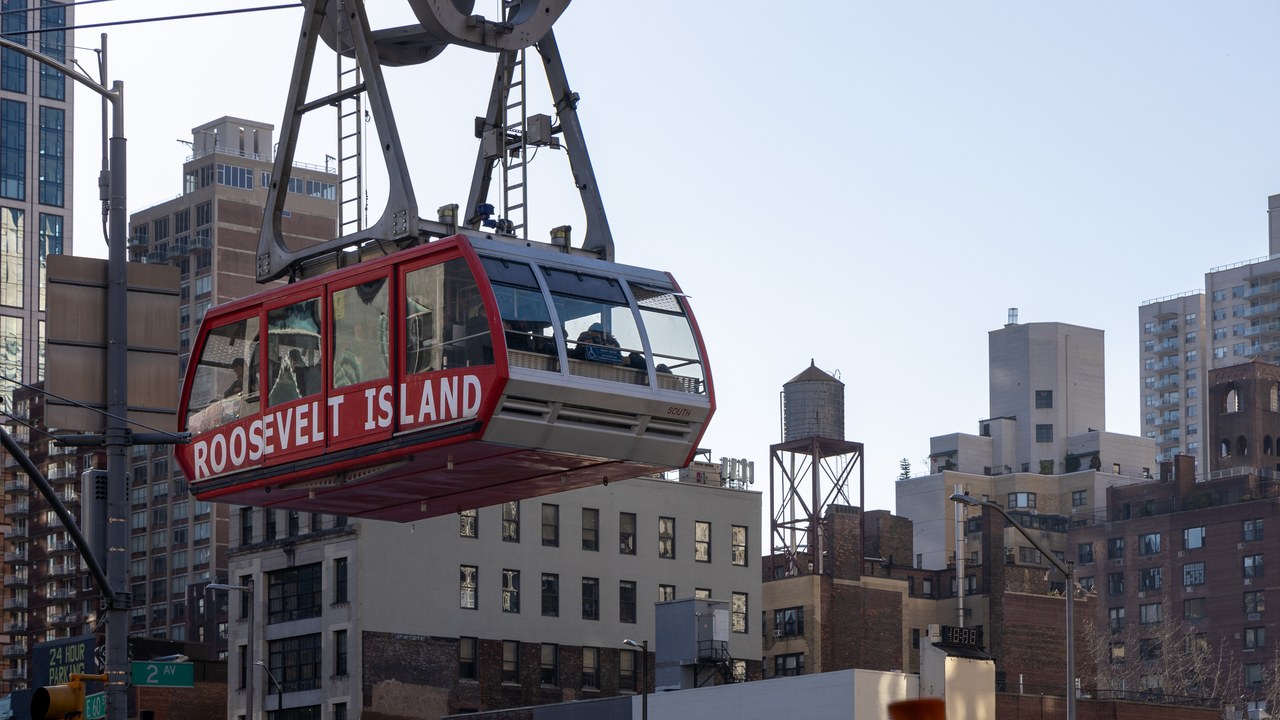
The Roosevelt Island Tramway is the first commuter aerial tramway in the United States, opened on May 17, 1976. It was built to serve residential developments on Roosevelt Island, according to its Wikipedia entry.
Its stated purpose was a commuter link for new housing and not a scenic ride, which is the reason for the distinction in its description. The opening date and the residential setting are both stated in the Wikipedia entry.
10. Seattle Center Monorail: Ahead of the World’s Fair
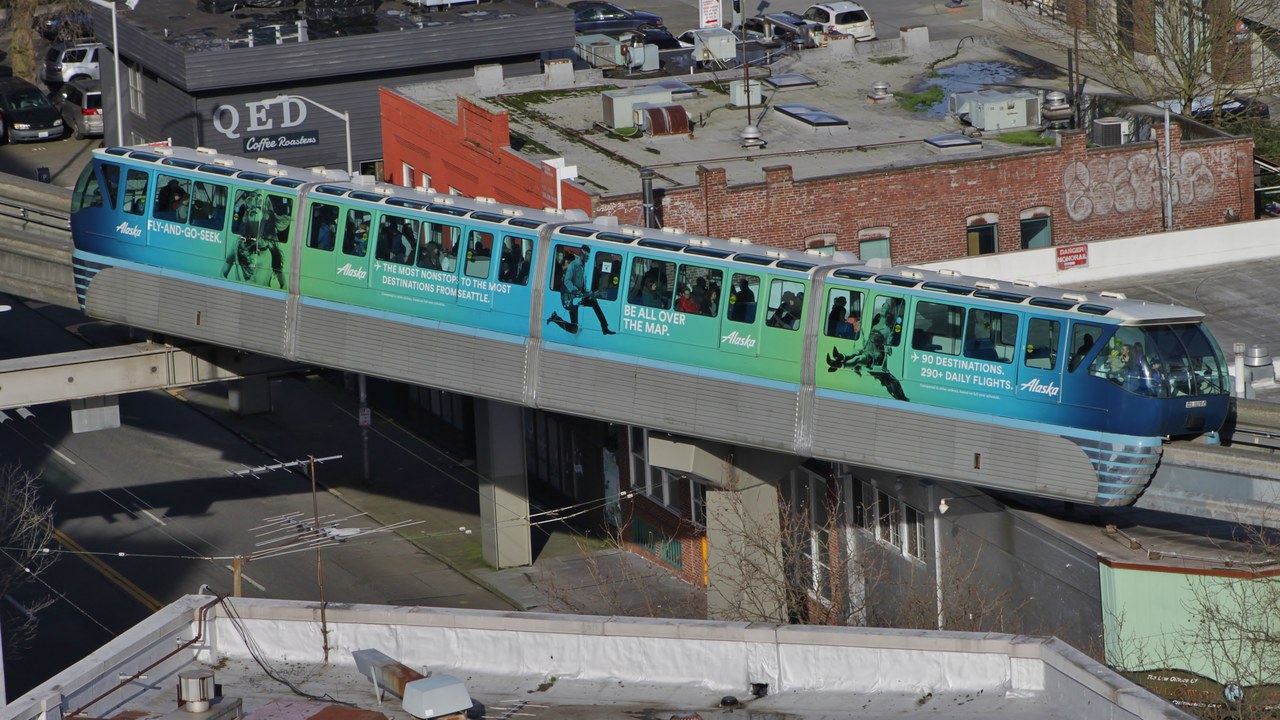
The Seattle Center Monorail opened to the public on March 24, 1962, nearly one month before the start of the World’s Fair. The operator states the date on its description of the line.
The timing shows the line was ready ahead of the event it was built to serve. The opening date is the fact that matters, and the gap before the fair is given only as nearly one month, as the operator words it.
11. Palm Springs Aerial Tramway: Ten Minutes to 8,516 Feet
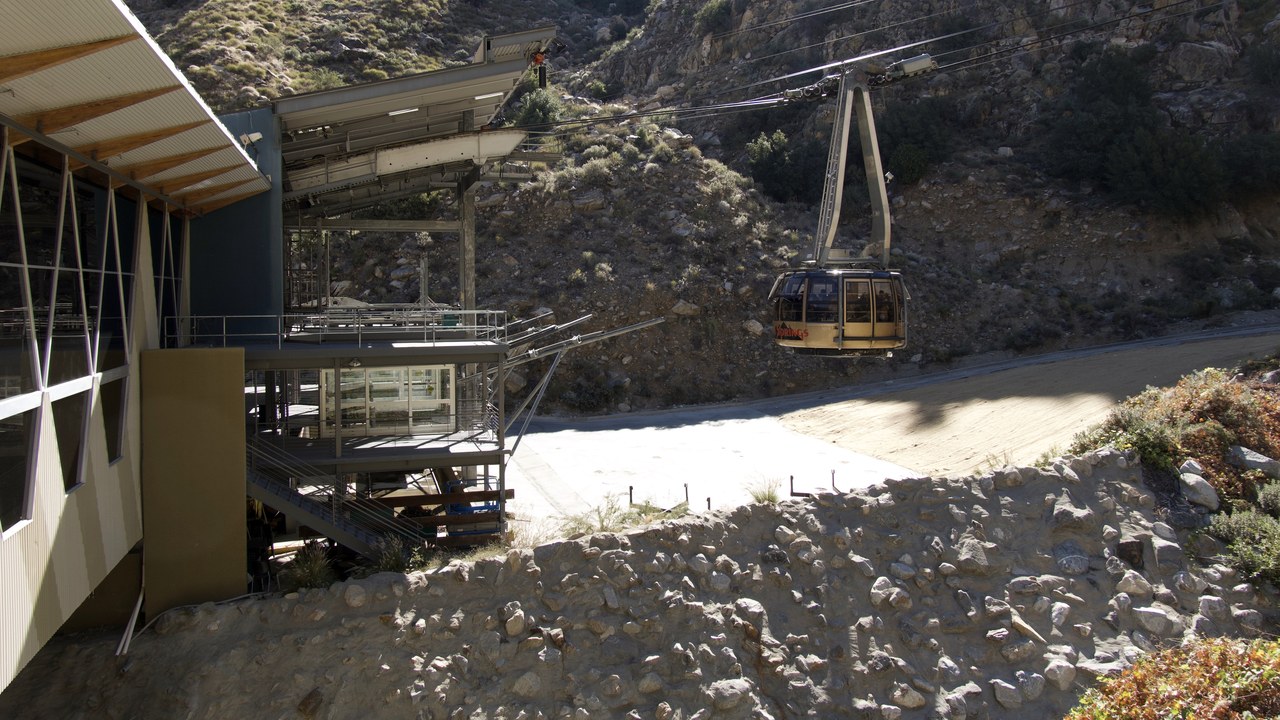
The Palm Springs Aerial Tramway takes visitors on a 10-minute ride from the Valley Station at 1 Tram Way in Palm Springs to the Mountain Station, at an elevation of 8,516 feet. The ride covers roughly 6,000 vertical feet.
The short ride time against the large change in elevation is the defining feature. The mountain end sits at 8,516 feet, a figure the operator gives directly, and the vertical gain is stated as approximate, so the 6,000-foot number should be read as a round figure.
12. Sandia Peak Tramway: Longest in the Americas
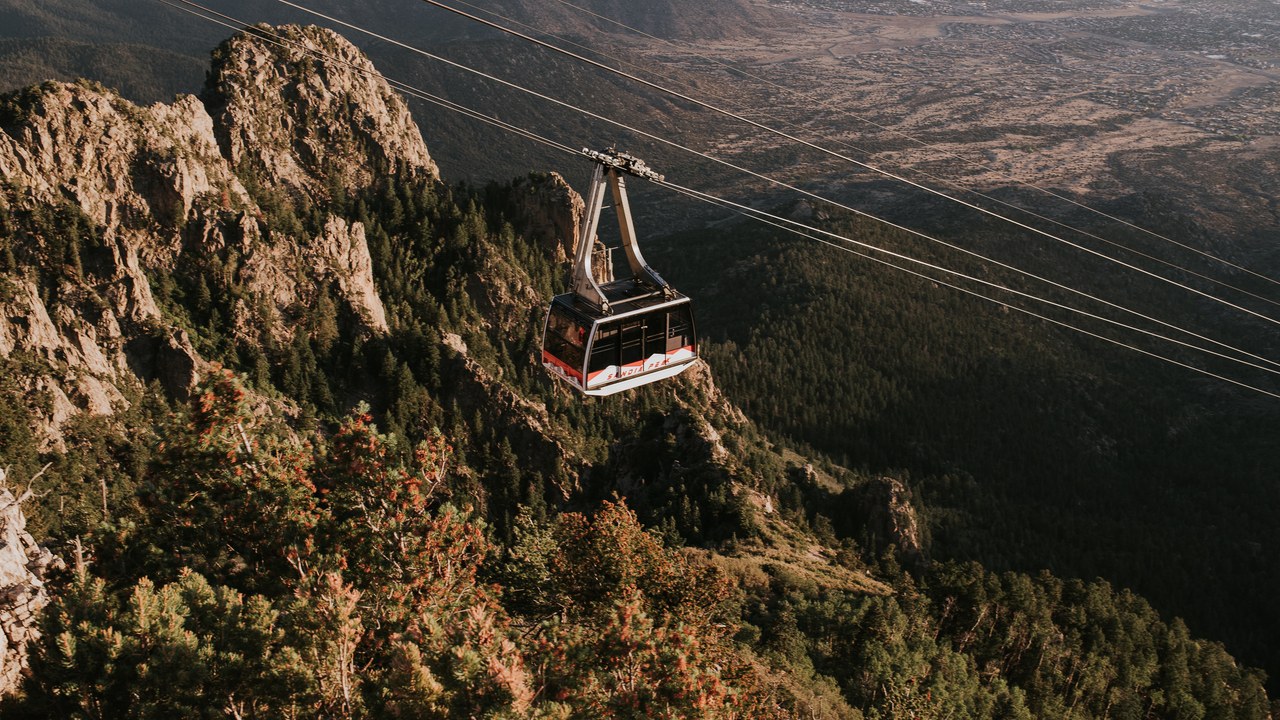
The Sandia Peak Tramway is the longest aerial tram in the Americas, and it was the longest in the world from 1966 until it was surpassed in 2010 by the Wings of Tatev in Armenia. It has a single span ranked third longest in the world.
More than 12 million passengers have ridden it since 1966. The world title was lost in 2010, but the Americas distinction stands, and the third-longest single span is the figure behind its continuing ranking.
More from Morning Overview
- General Motors is switching on cameras that record inside your vehicle by update
- A geomagnetic storm is forecast to hit Earth today, pushing the northern lights unusually far south
- A recalled pill hid a stimulant dose linked to heart attacks and death
- Four U.S. startups fired up their first small nuclear reactors, aiming to power AI data centers on-site
