
Caves in the United States range from record-setting networks of passage to single chambers of enormous volume. Many are run by the National Park Service, while others operate as state parks or commercial attractions with guided routes. Here are twelve caves that members of the public can enter on a tour or a trail.
1. Mammoth Cave: The Longest Known System
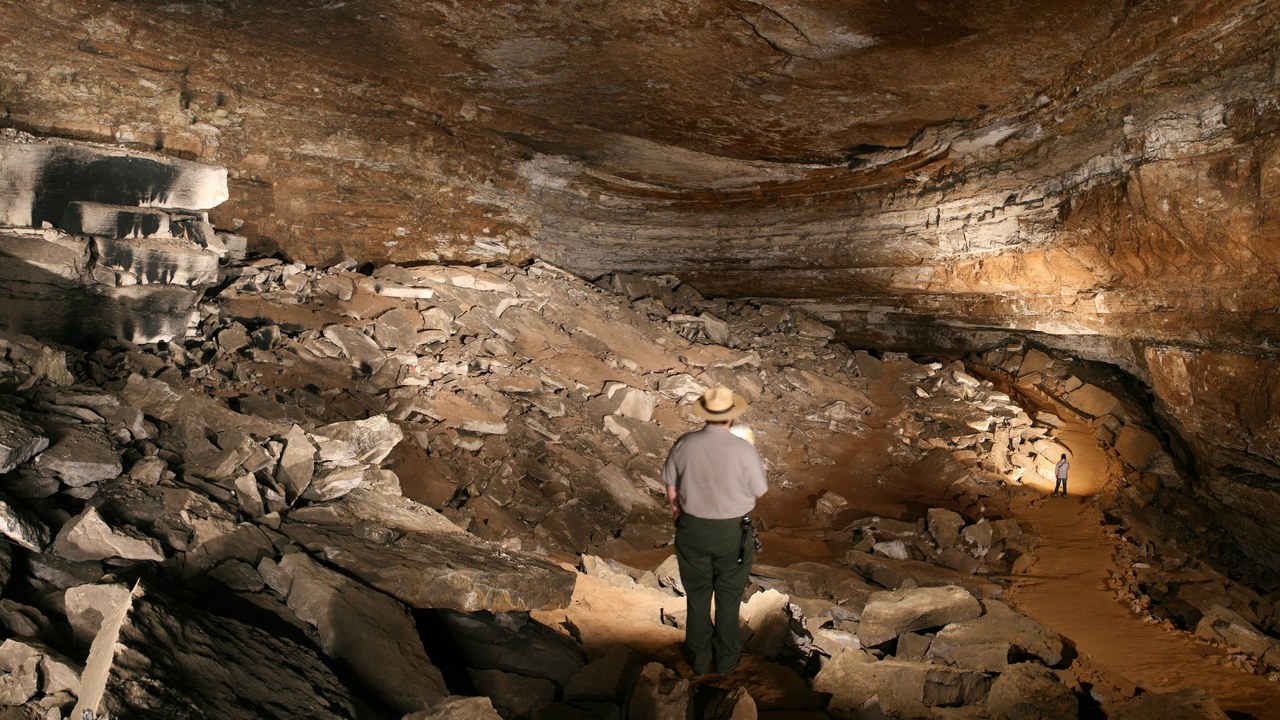
Mammoth Cave National Park is home to the longest known cave system in the world. Ranger-led tours run daily out of the historic entrance in Kentucky, according to the Park Service, which makes the longest known network open to ordinary visitors.
Length is the claim to fame here, and it is the length of a whole system rather than of a single room. A guided tour samples the cave instead of traversing all of it, so each visit covers a portion of a network that no one can cross in a day.
2. Carlsbad Caverns: The Big Room
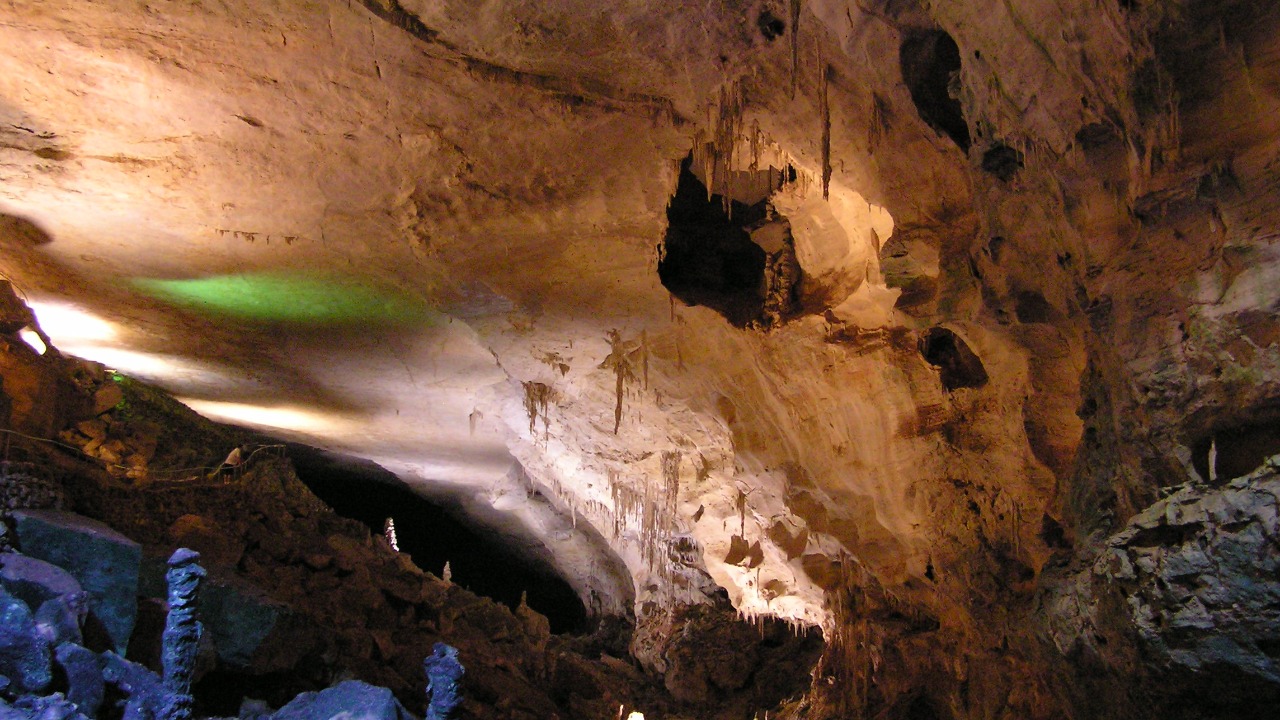
The Big Room at Carlsbad Caverns is the largest single cave chamber by volume in North America, according to the Park Service. The chamber is reached through the cavern, and visitors can explore it on a self-guided route rather than waiting for a ranger.
Walking out gains about 750 feet of elevation, comparable to climbing a 75-story building. That physical cost is worth weighing before setting off, since the climb at the end of the visit comes after the long walk through the chamber itself.
3. Jewel Cave: Over 220 Miles Mapped
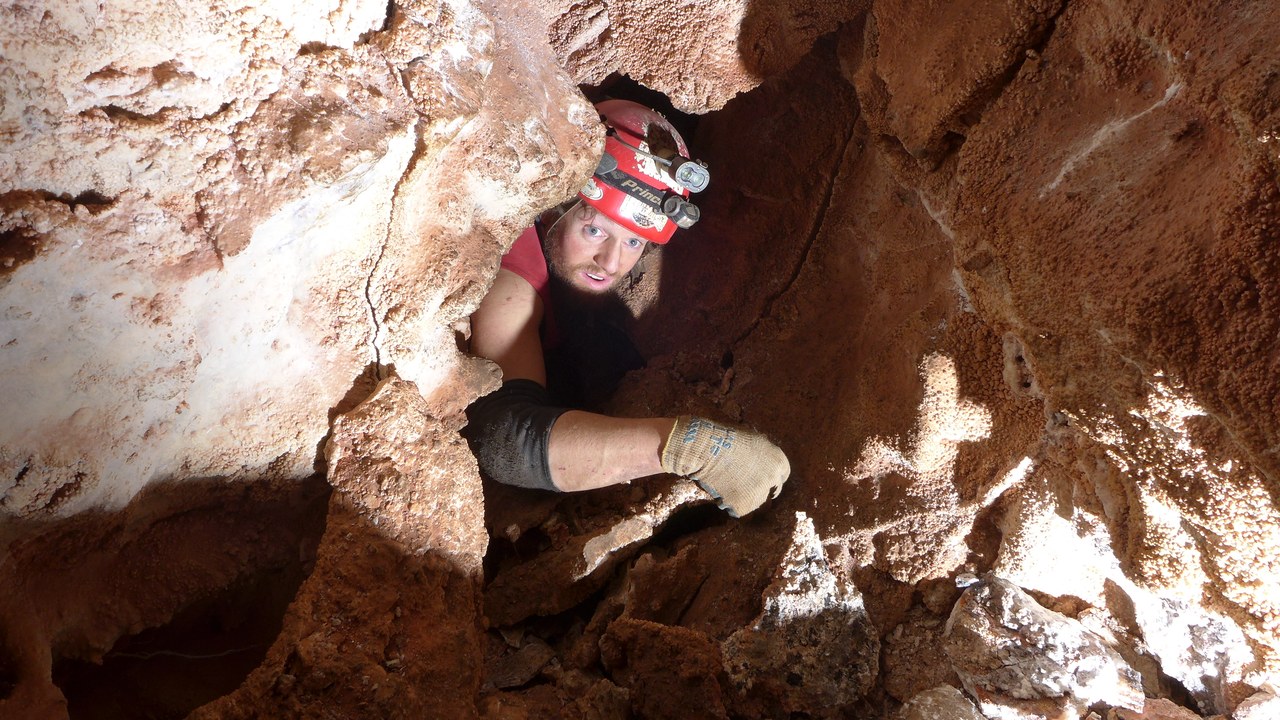
Surveyors had mapped 220.33 miles of passage in Jewel Cave as of September 7, 2024, making it the fifth longest cave in the world. The Park Service describes the cave as more than 200 miles in length.
The mileage is a survey tally, and the Park Service uses the word currently when ranking the cave, which signals that the number and the rank come from ongoing exploration. Visitors enter a small part of a much larger mapped maze.
4. Wind Cave: Boxwork Capital
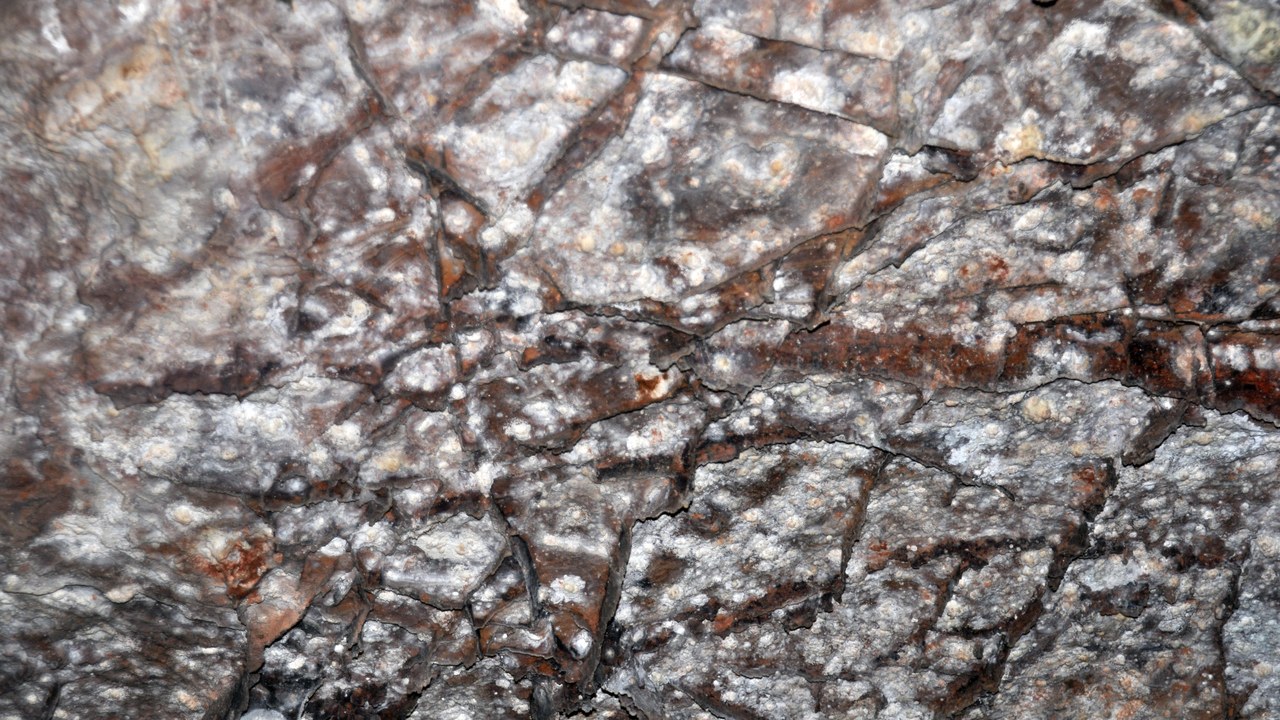
Approximately 95 percent of the world’s discovered boxwork formations are found in Wind Cave. The thin, intersecting mineral fins are the cave’s signature feature, and that concentration sets the South Dakota cave apart from nearly every other.
The cave also has 168.02 miles of explored passage, so the boxwork is only one part of a large system. For visitors, a trip here is the best-documented chance to see a formation that is rare almost everywhere else.
5. Lehman Caves: Tours Since 1885
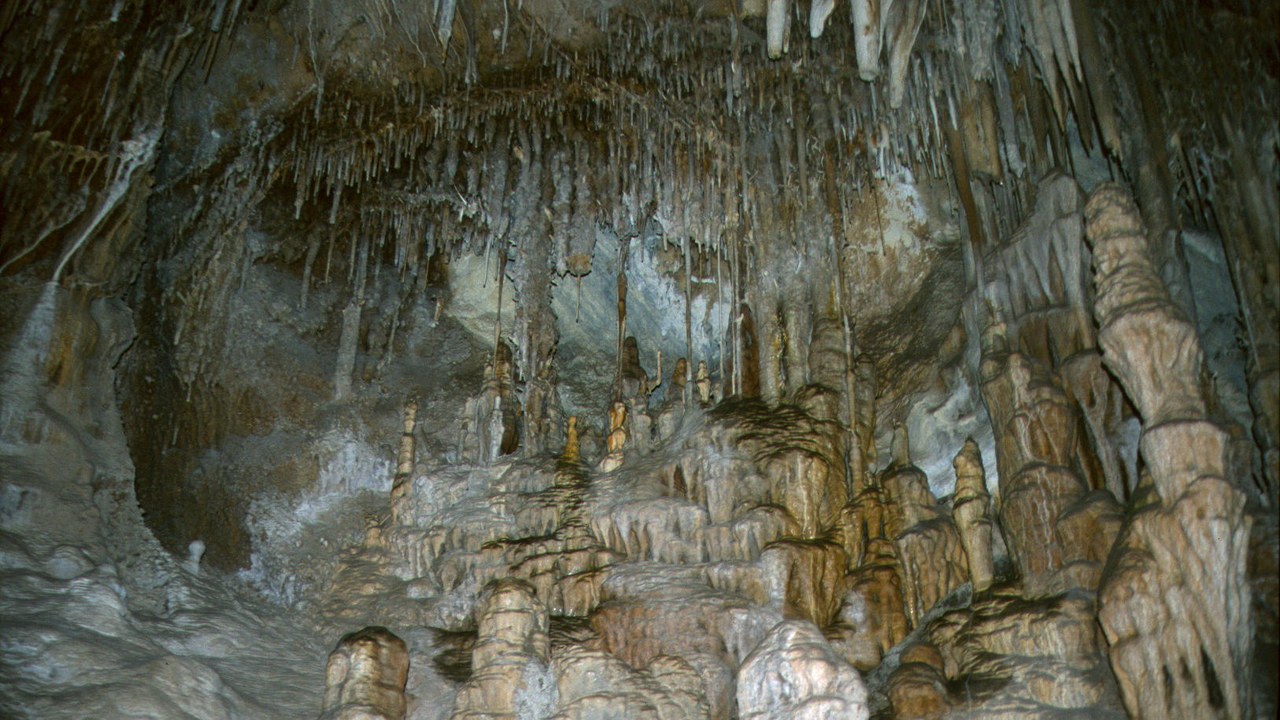
Lehman Caves tours have been entering the cave since 1885, according to the Park Service. That history makes the cave one of the long-running guided experiences within Great Basin National Park.
The 90-minute Grand Palace route covers 0.6 miles and 69 stairs, a pace that suits walkers who can handle steps. The length of the tour and the number of stairs are worth checking ahead of time, since both are published by the Park Service.
6. Timpanogos Cave: A 1,092-Foot Climb
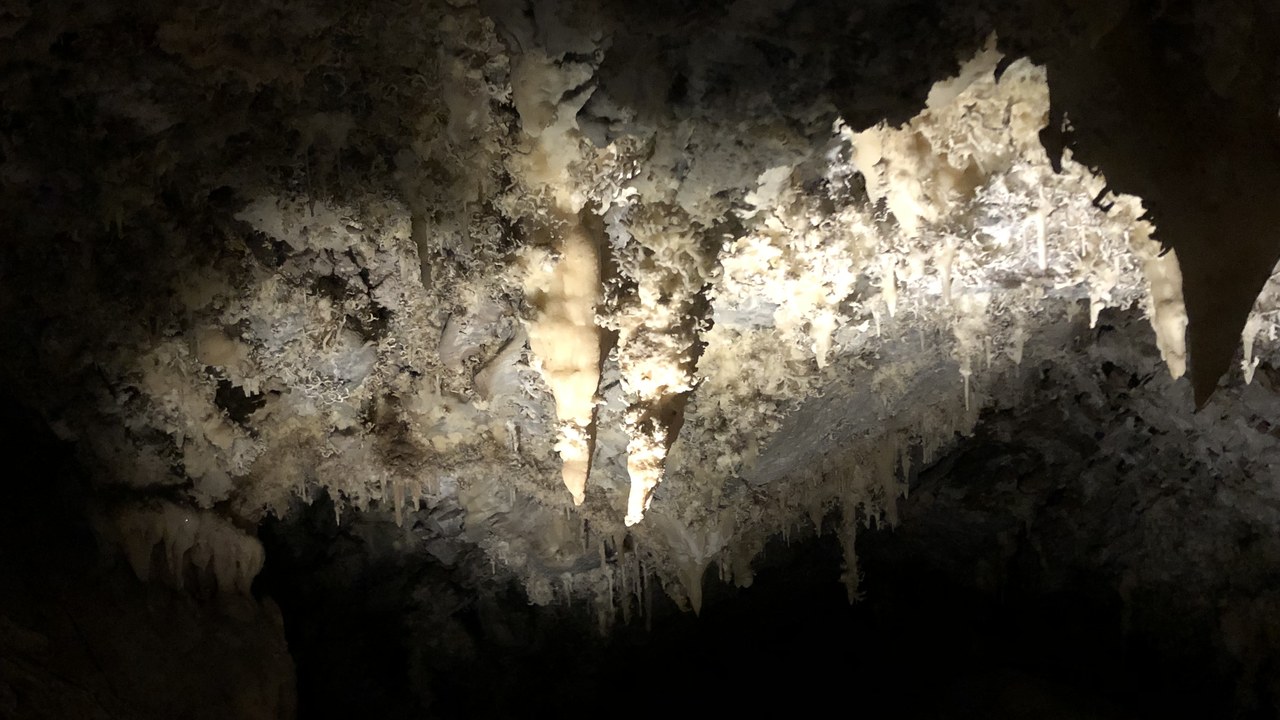
The only way into Timpanogos Cave is a strenuous 1.5-mile paved trail, and the paved trail rises 1,092 feet to an elevation of 6,730 feet above sea level. The Park Service stresses the effort involved, since the climb comes before any cave is seen.
The trail is paved but steep, so the visit is better suited to visitors prepared for a real uphill walk. The elevation figure of 6,730 feet also indicates that the cave sits well above the valley floor.
7. Lava Beds National Monument: Tubes on a Giant Volcano
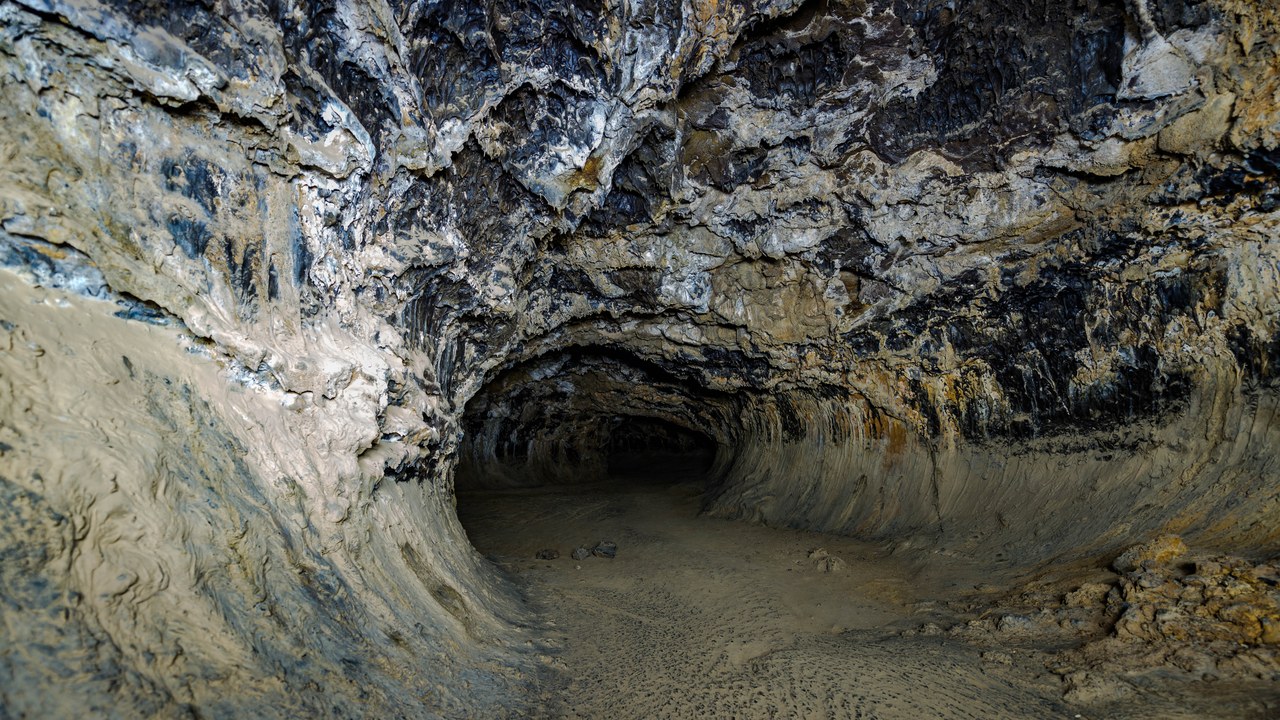
The walk-in lava tubes of Lava Beds National Monument sit on the Medicine Lake shield volcano, which is the largest volcano by volume in the Cascade Range at 144 cubic miles. The Park Service ties the caves directly to that volcano.
Unlike limestone caverns, these tubes formed from volcanic activity, so a visit offers a different kind of underground geology. The scale of a 144-cubic-mile volcano explains why the monument holds so many lava tubes that visitors can walk into.
8. Russell Cave: Two Tons of Artifacts
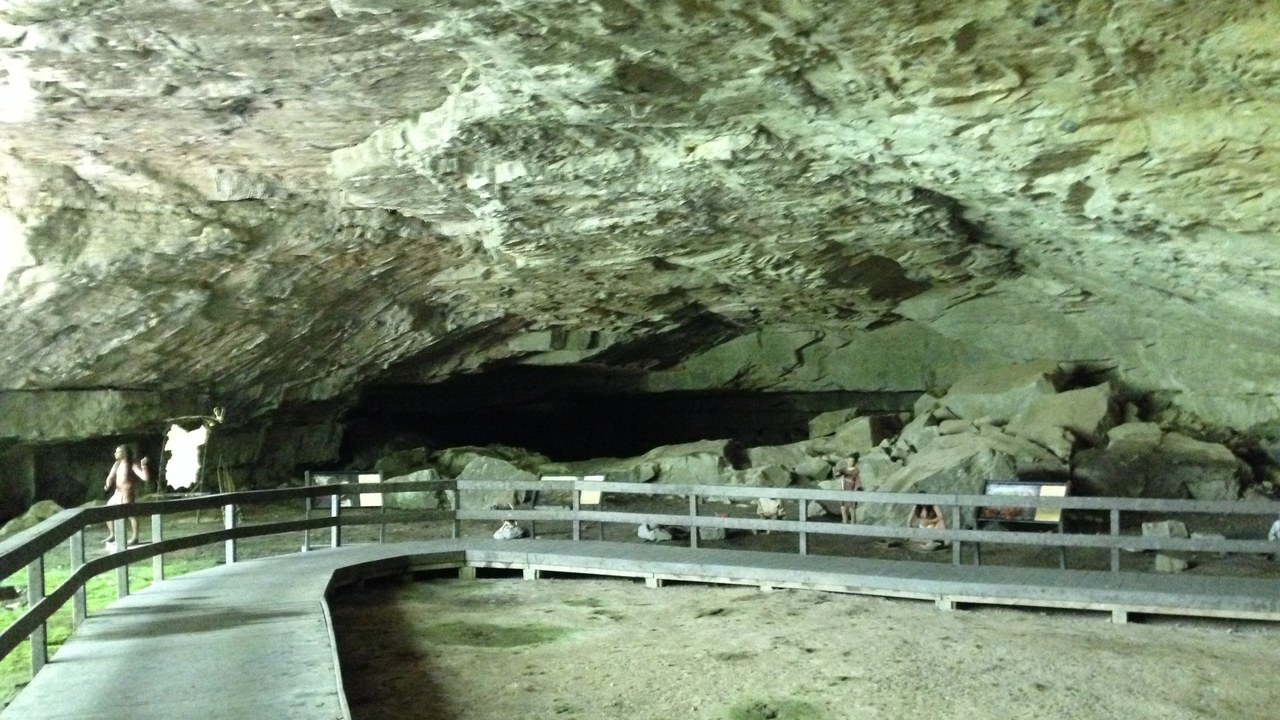
Excavators working from 1956 to 1958 dug down more than 32 feet into Russell Cave in Alabama and recovered over 2 tons of artifacts, according to the Park Service. The shelter’s long record of human use came out of that depth of digging.
The numbers show how much material a single cave shelter could hold. For visitors, Russell Cave is as much an archaeological site as a geological one, since the story told there rests on what was dug up over two years.
9. Oregon Caves: A Marble Cave
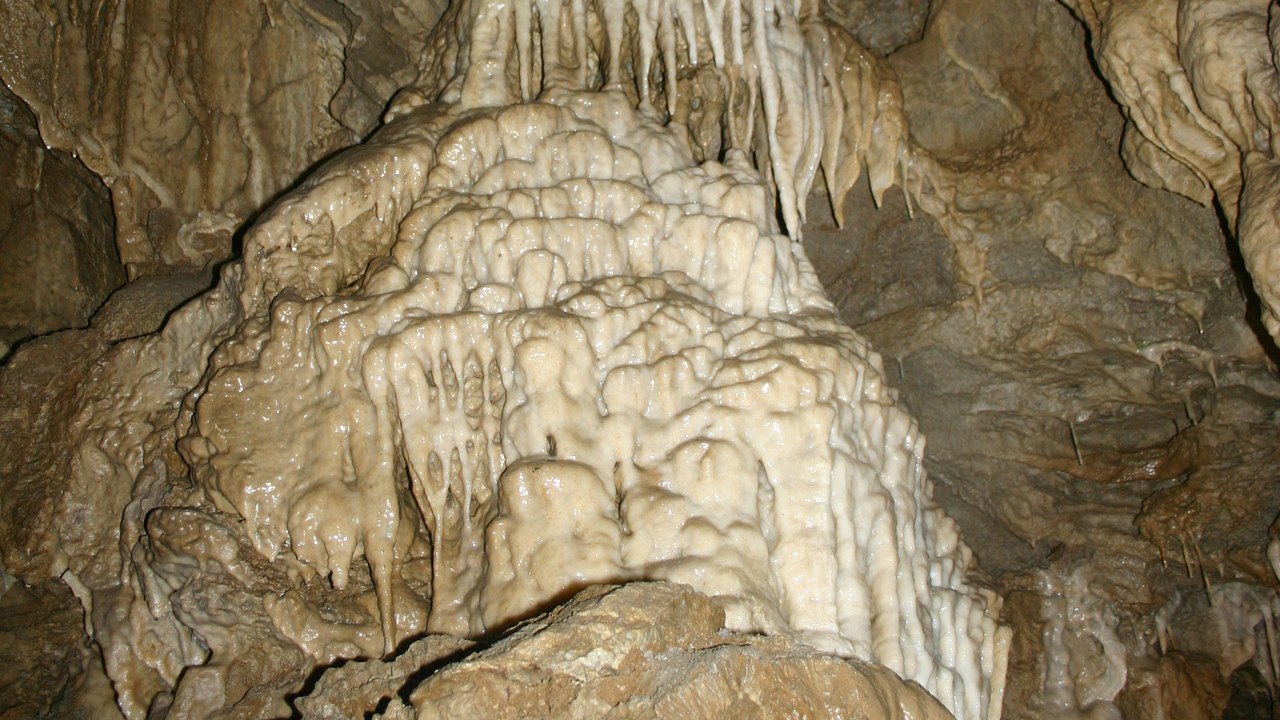
Oregon Caves is a marble cave inside a 4,554-acre park. Elijah Davidson, a resident of nearby Williams, discovered the cave in 1874, according to its Wikipedia entry.
Discovery in 1874 puts Oregon Caves four years ahead of Luray Caverns, found in 1878. The park’s 4,554 acres also mean there is more to the preserve than the cave alone, so a visit can include the surrounding grounds as well as the underground route.
10. Luray Caverns: The Stalacpipe Organ
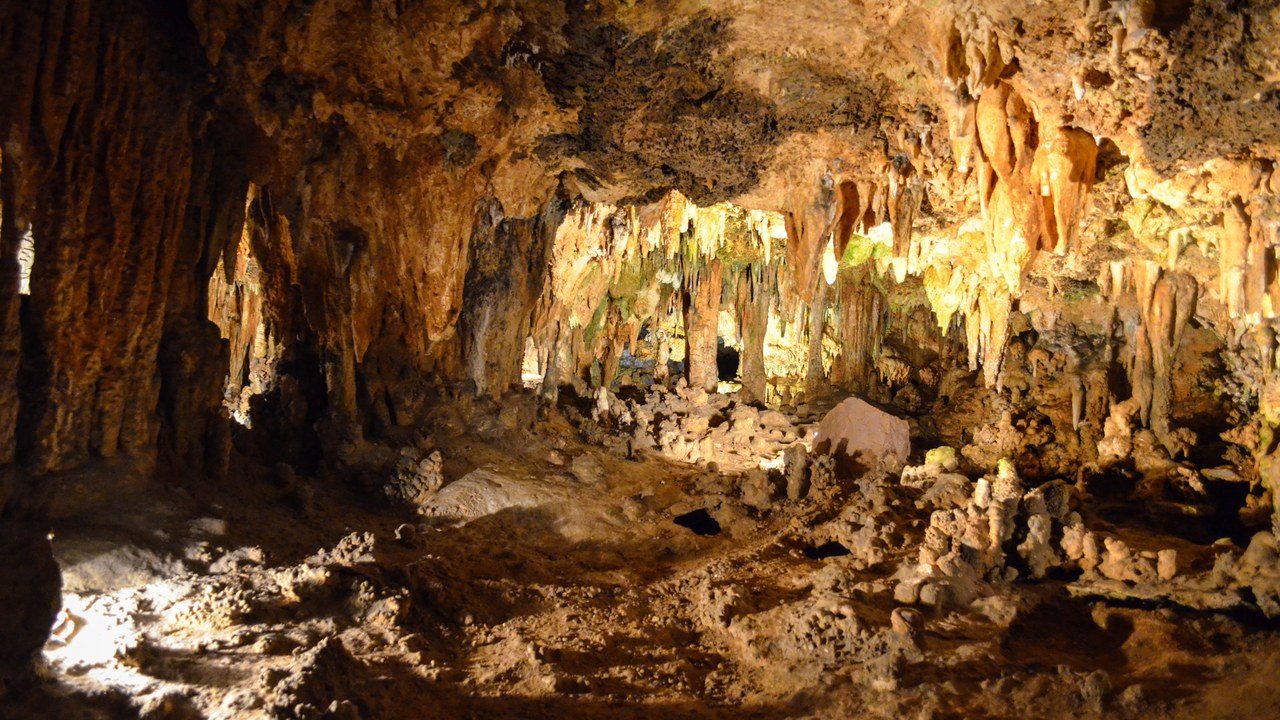
Luray Caverns has drawn many visitors since its discovery in 1878. The cave also holds the Great Stalacpipe Organ, an instrument that makes music by tapping stalactites.
The organ turns rock formations into the sound source itself, which gives the cavern an attraction beyond its scenery. A visit therefore combines the standard look at stalactites with an instrument that has been built into the cave rather than placed beside it, so the music comes from the formations themselves.
11. Kartchner Caverns: Kept Out of Sight
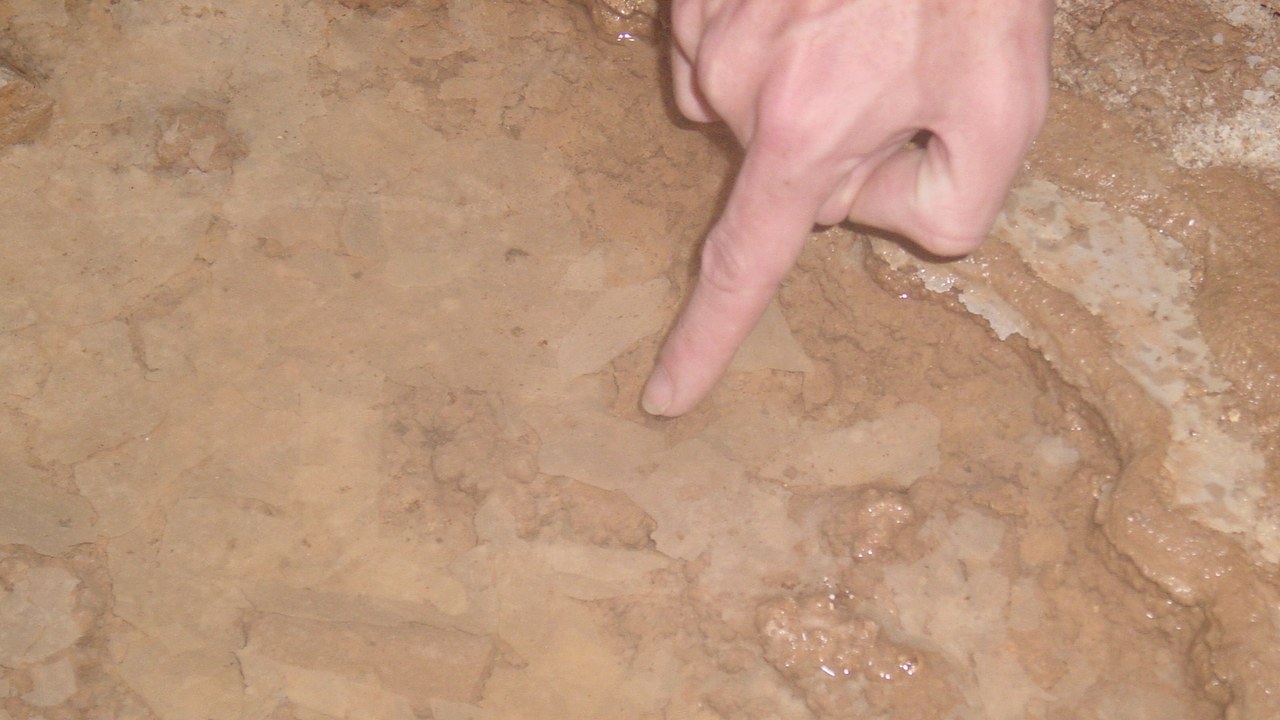
Local cavers found Kartchner Caverns in 1974, and the cave was kept out of sight until the state could protect it. The park features a show cave with 2.4 miles of passages.
The secrecy explains why the cave could be opened as a living show cave rather than a damaged one. For visitors, the 2.4 miles of passages represent a cave that was found by amateurs and then deliberately held back until protection was in place.
12. Natural Bridge Caverns: Beneath a Natural Bridge
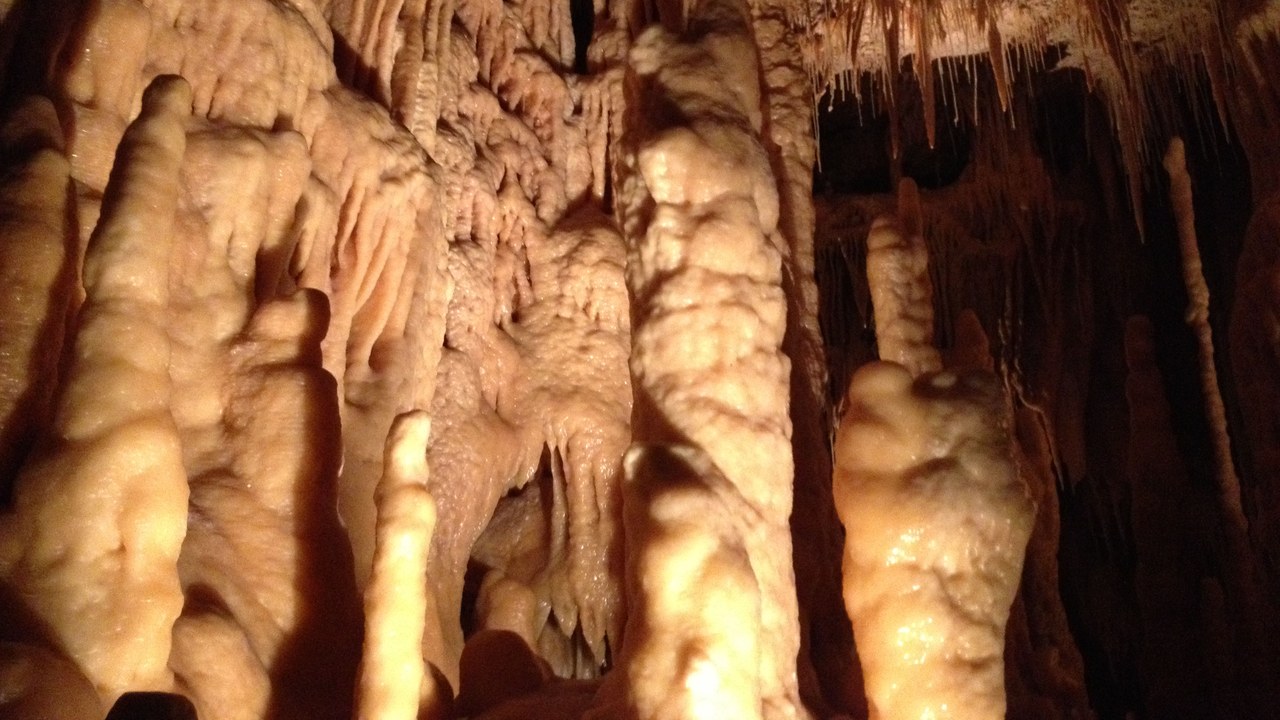
Natural Bridge Caverns are the largest commercial caverns in the state of Texas. The entrance lies beneath a 60-foot natural limestone slab that was left hanging when a sinkhole collapsed beneath it.
The slab gives the attraction its name and a recognizable landmark at the entrance. Its standing as the largest commercial caverns in Texas rests on a cave entered beneath that slab, which the collapse of the sinkhole left in place.
More from Morning Overview
- A recalled pill hid a stimulant dose linked to heart attacks and death
- Four U.S. startups fired up their first small nuclear reactors, aiming to power AI data centers on-site
- Card skimmers hidden on gas pumps and ATMs are draining accounts, and here’s the tell
- Doctors warn a silent liver disease now affects one in three American adults
