
No spacecraft will ever visit most of the places NASA’s great telescopes have photographed. Hubble and Webb have still brought dying stars, colliding galaxies and alien moons into sharp view from hundreds of millions of miles or light-years away. Here are eleven of their images of sights far beyond human reach, and what each one revealed.
Read next on Morning Overview: New FCC rules on how people can stop robocalls and texts take effect Nov. 25
1. Southern Ring Nebula: A Dying Star’s Hidden Partner
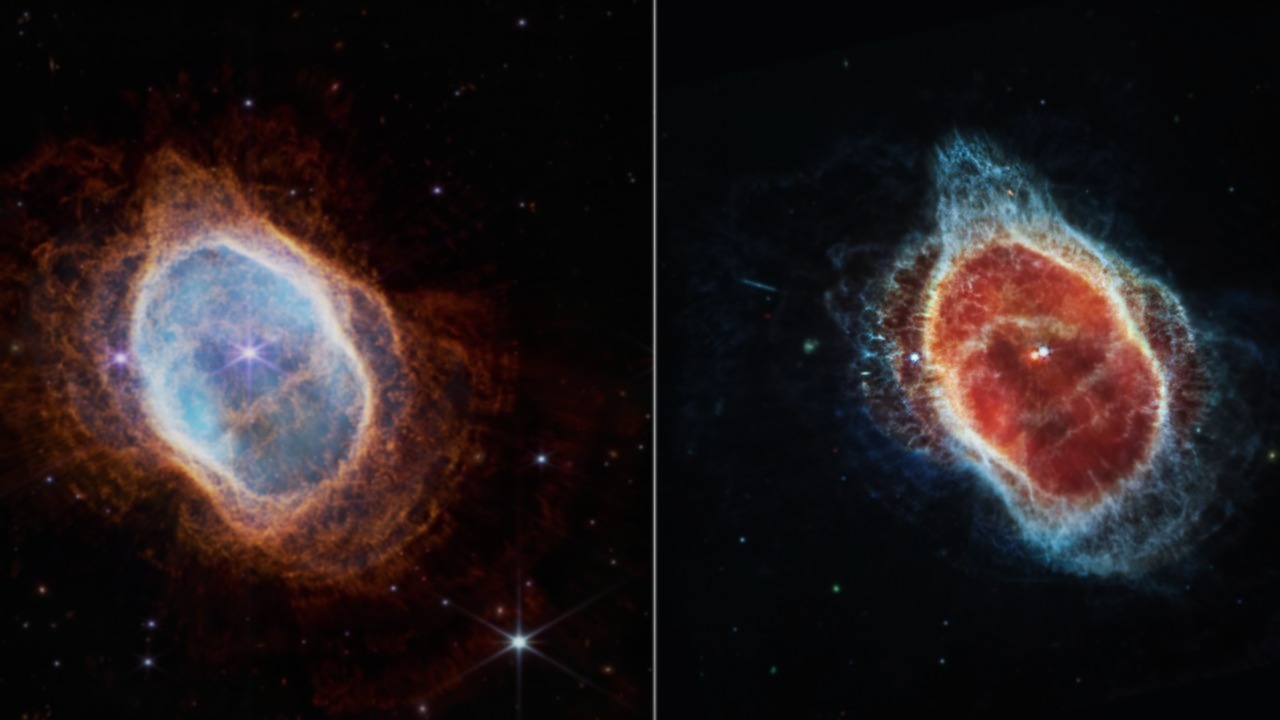
The Southern Ring Nebula is the shell of gas and dust thrown off by a dying star about 2,500 light-years away. NASA says Webb’s infrared view revealed for the first time that the dimmer star at its center is cloaked in dust, and brought the nebula’s second star into full view.
That central star has been sending out rings of gas and dust in all directions for thousands of years. Planetary nebulae like this one show what will eventually happen to stars like the Sun, and Webb’s detail lets astronomers trace how two stars together sculpted the shells.
2. Carina Nebula: Cosmic Cliffs of Star Birth
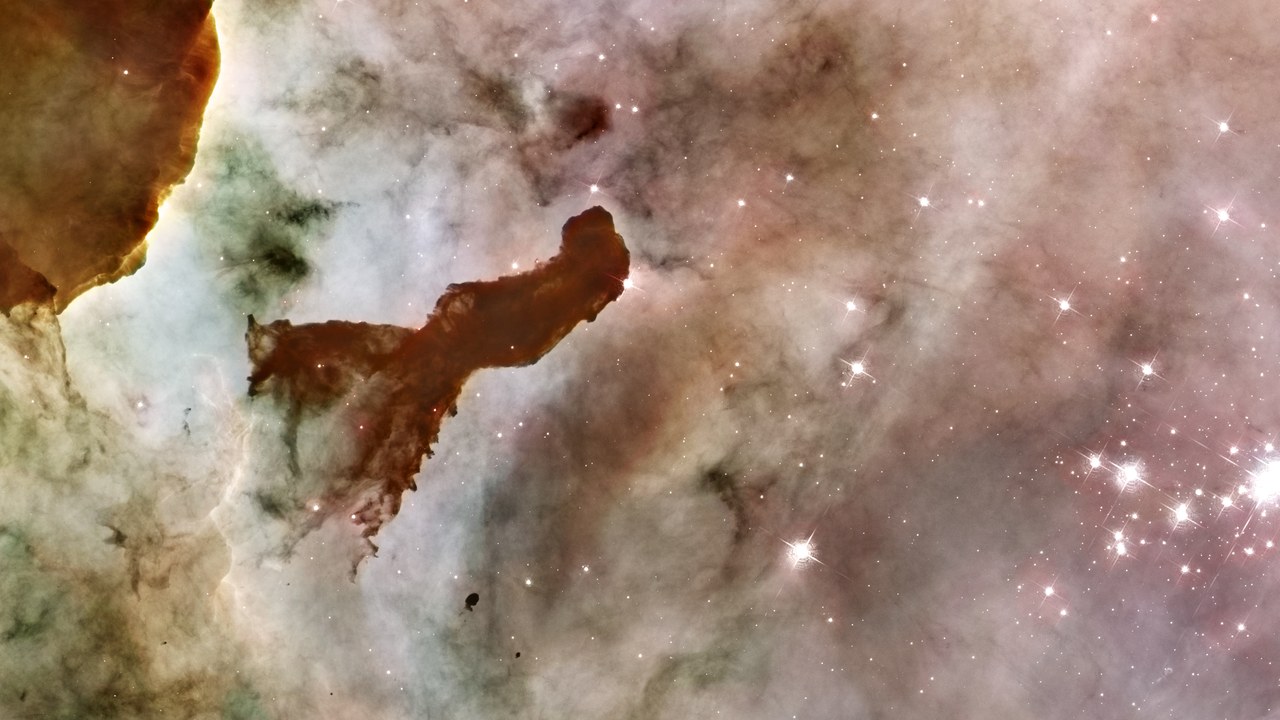
The Carina Nebula is a vast star-forming region in the southern sky. In one of Webb’s first images, released in July 2022, the telescope captured the edge of a young region called NGC 3324, a landscape of mountains and valleys speckled with glittering stars.
Webb’s infrared view revealed for the first time previously invisible areas of star birth, uncovering baby stars hidden behind the curtain of dust and gas in what NASA calls the Cosmic Cliffs. NASA released the image as part of the first full-color set meant to show what the new telescope could do.
3. Stephan’s Quintet: Five Galaxies in a Gravitational Dance
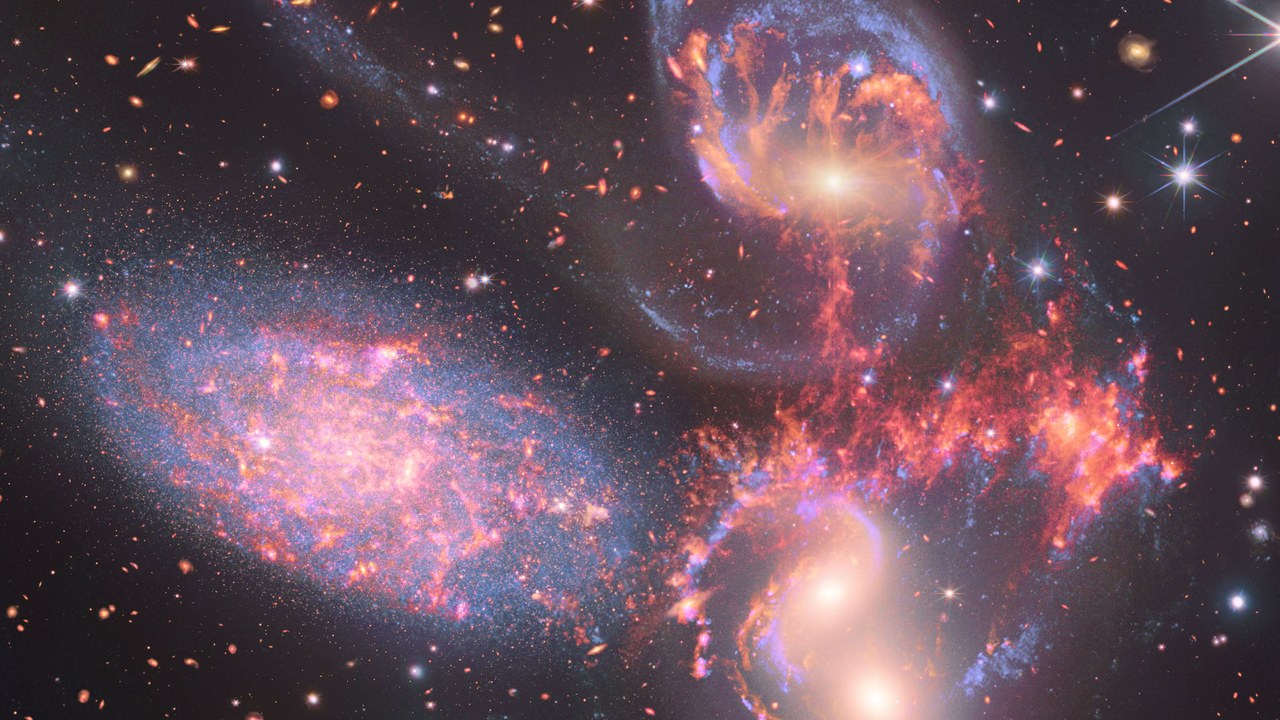
Stephan’s Quintet, a visual grouping of five galaxies, is best known for appearing in the film It’s a Wonderful Life. Webb’s mosaic of the group was its largest image at release, covering about one-fifth of the Moon’s diameter, with more than 150 million pixels built from almost 1,000 image files.
Four of the five galaxies are interacting, pulling and stretching each other in a gravitational dance, while the fifth is actually much closer to Earth than the rest. Webb’s view gives astronomers new insight into how colliding galaxies trigger star formation.
4. Pillars of Creation: The Picture That Became an Icon
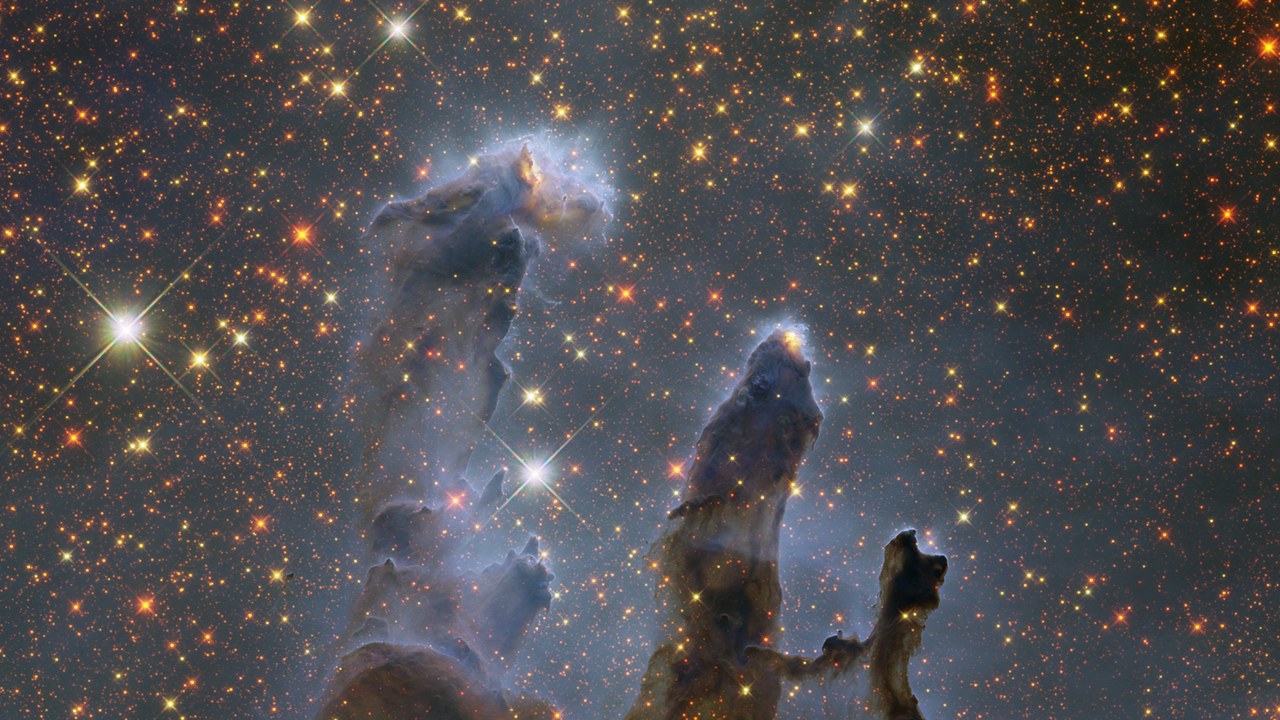
Hubble’s 1995 view of the Pillars of Creation in the Eagle Nebula is one of the most famous astronomy images ever taken. The towering columns of cold gas are about 5 light-years tall, lie about 6,500 light-years away and are bathed in ultraviolet light from young, massive stars.
The image has appeared in movies, on T-shirts and even on a postage stamp. When Hubble revisited the pillars in 2014, astronomers compared the two images and found a jet from a newly forming star had stretched another 60 billion miles in 19 years, moving at about 450,000 mph.
5. Crab Nebula: A Supernova Seen in 1054
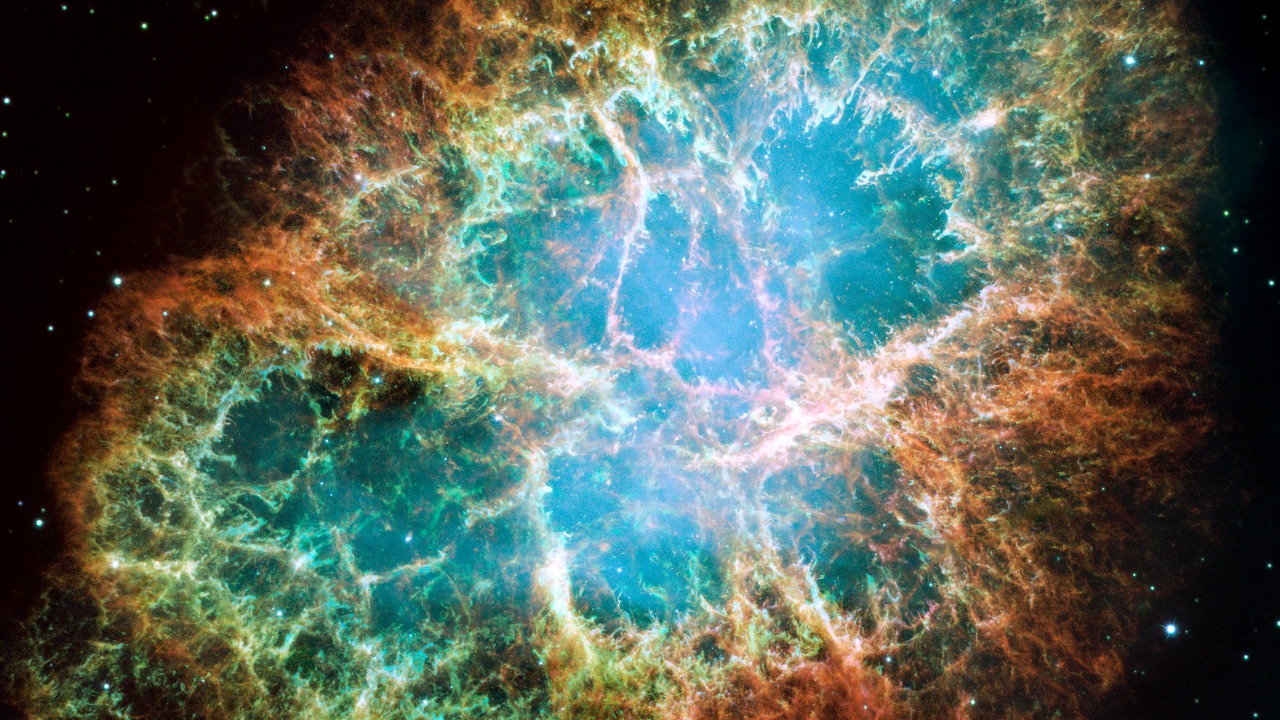
The Crab Nebula is the remains of a supernova recorded by astronomers in 1054 CE, and it sits 6,500 light-years away in the constellation Taurus. Webb’s infrared cameras revealed new details, including a cage-like structure of fluffy gas filaments and, for the first time, the dust in its central regions.
At the heart of the nebula is a pulsar, a rapidly spinning neutron star whose powerful magnetic field accelerates particles to extreme speeds. Webb traced the curvy wisps that outline that magnetic field, which sculpts and shapes the whole nebula.
6. Cassiopeia A: The Green Monster in Space
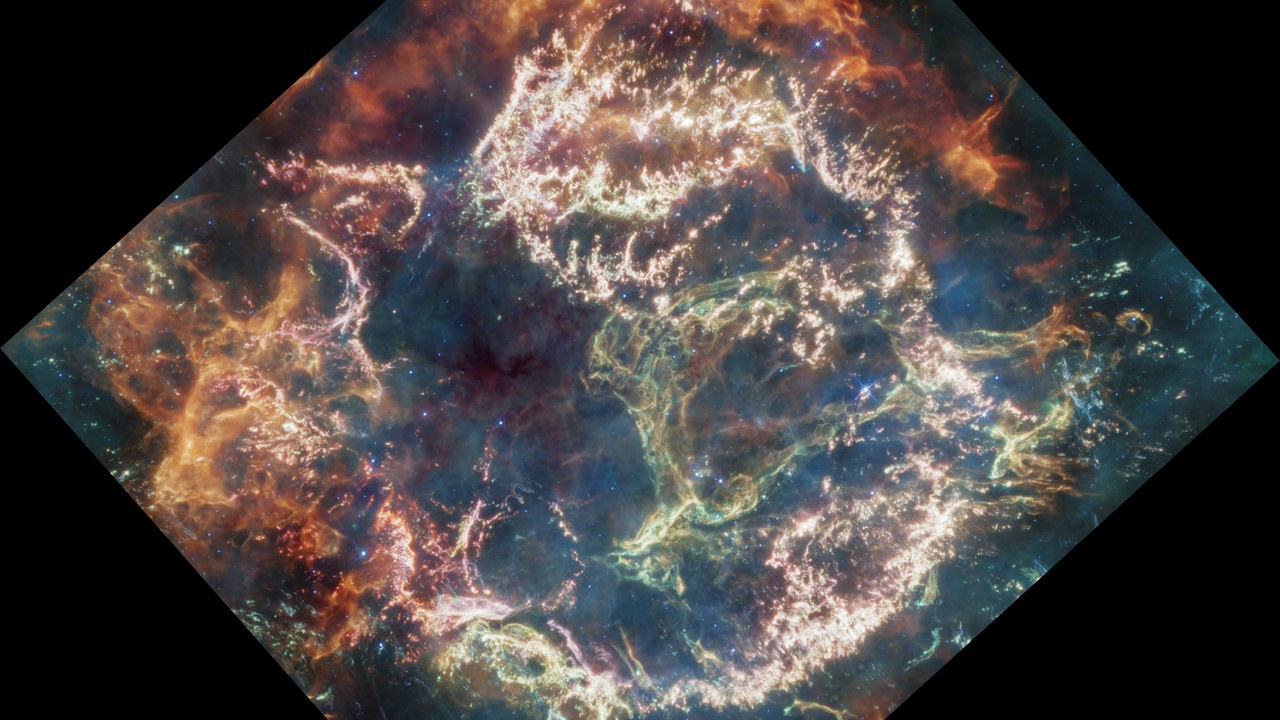
Cassiopeia A is the youngest known remnant of an exploding massive star in the Milky Way, created by a blast seen 340 years ago from Earth’s perspective. It lies about 11,000 light-years away and spans roughly 10 light-years, and Webb’s mid-infrared image shows it in new detail.
The most striking feature is a green loop across the remnant’s central cavity, which researchers nicknamed the Green Monster after the wall at Fenway Park. It is pockmarked with what look like mini-bubbles, a shape the lead researcher called unexpected and challenging to understand.
7. Webb’s First Deep Field: Thousands of Galaxies in a Grain of Sand
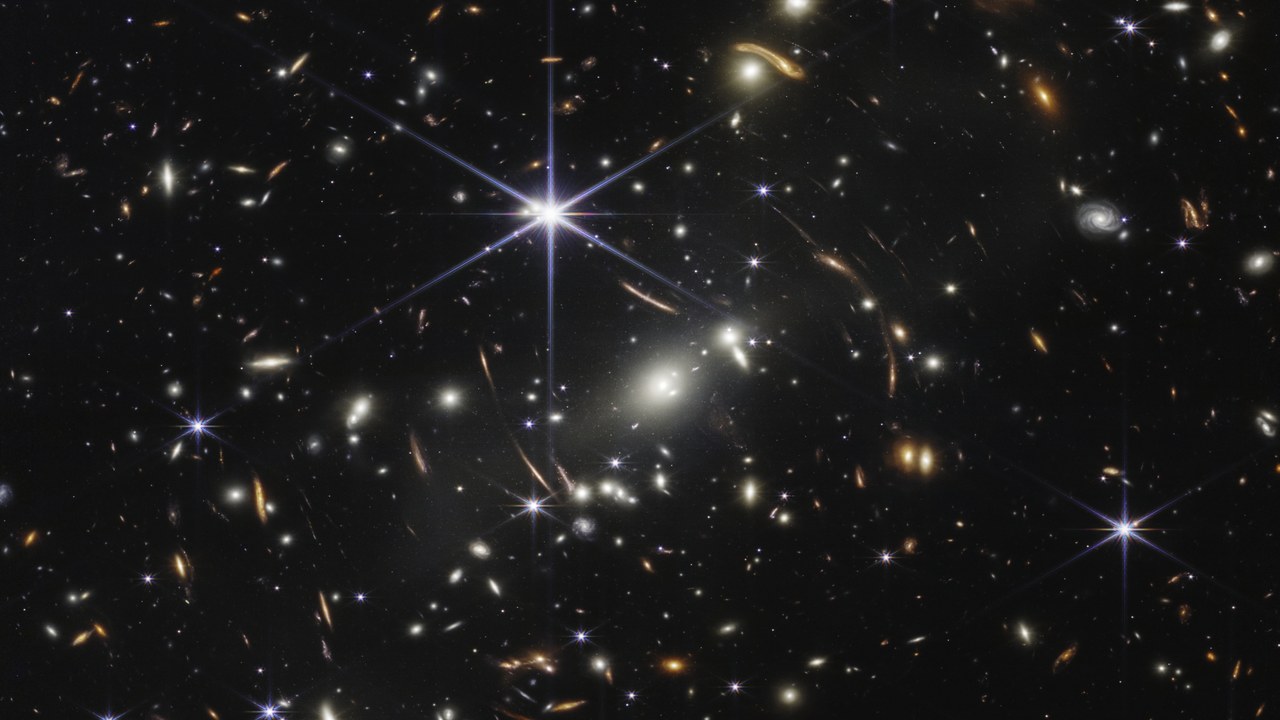
Webb’s First Deep Field, released with the telescope’s first images in July 2022, was the deepest and sharpest infrared image of the distant universe taken up to that time. It shows galaxy cluster SMACS 0723 teeming with thousands of galaxies, including the faintest objects ever observed in infrared light.
The whole scene covers a patch of sky roughly the size of a grain of sand held at arm’s length by someone on the ground. That tiny slice of the heavens holds so many galaxies that the image became one of the clearest demonstrations of how vast the universe really is.
8. Cartwheel Galaxy: A Galaxy Shaped Like a Wagon Wheel
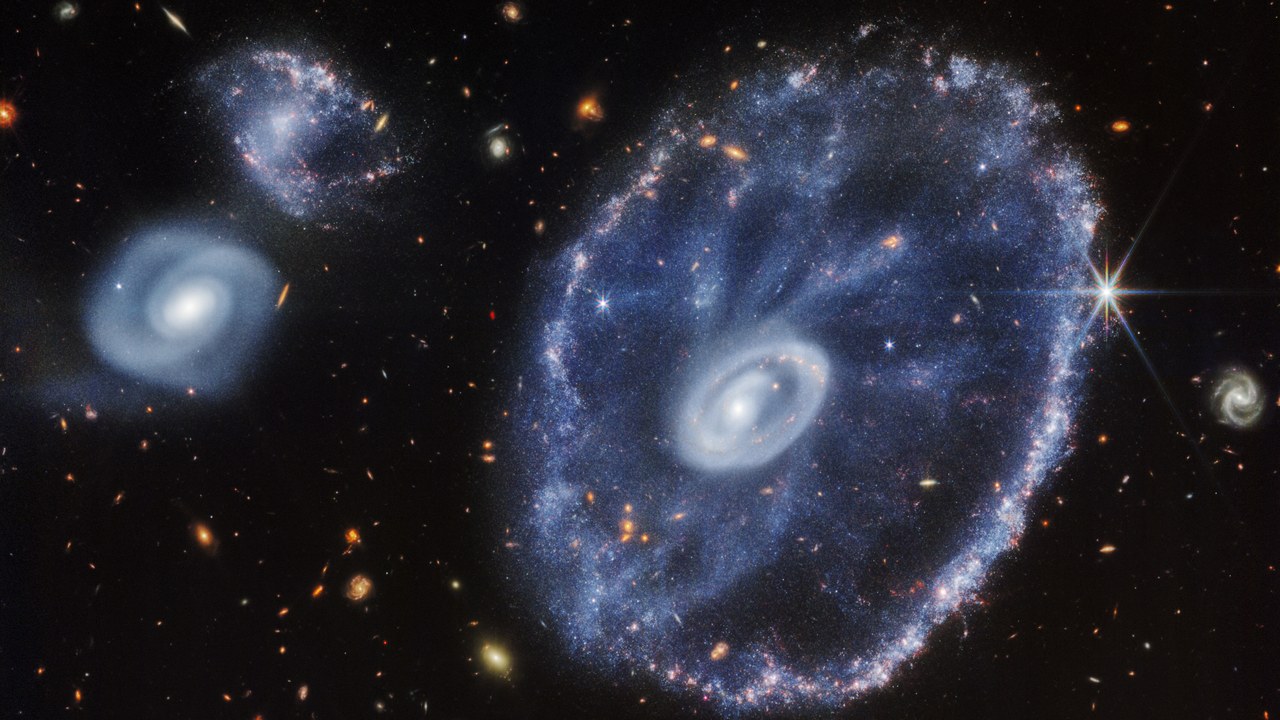
The Cartwheel Galaxy lies about 500 million light-years away in the constellation Sculptor. Webb’s image shows two rings around a bright core, the result of a high-speed collision between a large spiral galaxy and a smaller one, rippling outward like waves in a pond.
The bright core holds a huge amount of hot dust and gigantic young star clusters, while the outer ring, which has been expanding for about 440 million years, is dominated by star formation and supernovas. Ring galaxies like this are far less common than spirals such as the Milky Way.
9. Rho Ophiuchi cloud complex: The Closest Stellar Nursery
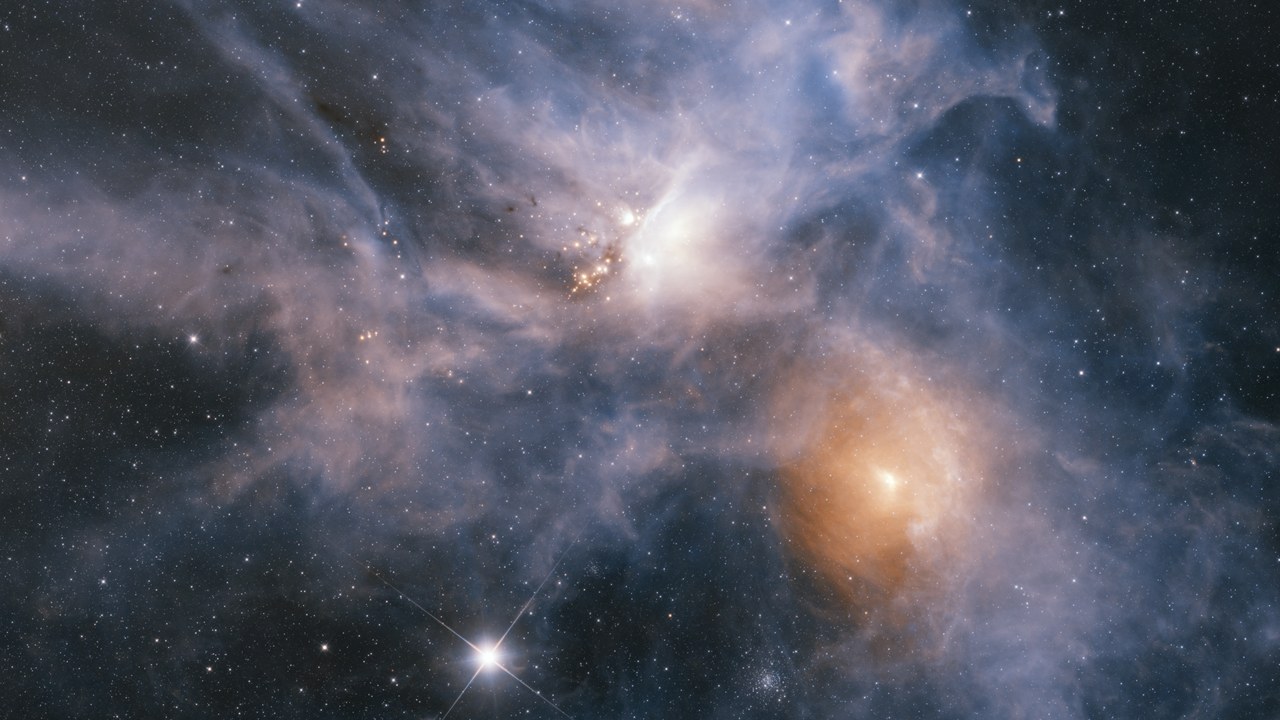
The Rho Ophiuchi cloud complex is the closest star-forming region to Earth, about 390 light-years away. To mark its first year of science, Webb released a close-up of the region showing roughly 50 young stars, all similar in mass to the Sun or smaller.
Because the region is so near, the image shows exceptional detail with no foreground stars in the way. The darkest areas are the densest, where thick dust cocoons still-forming protostars, and huge jets of molecular hydrogen burst out from newborn stars across the scene.
10. Ganymede: An Ocean Under the Ice
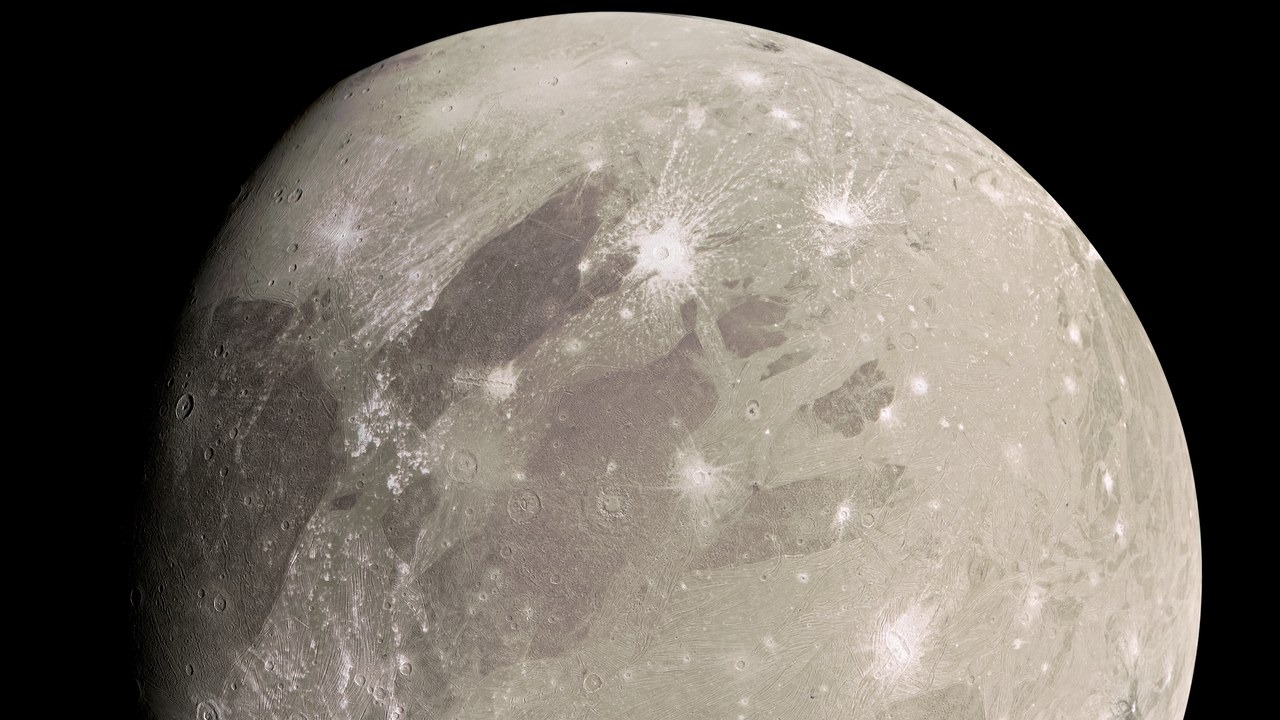
Ganymede is Jupiter’s largest moon, and it may hide a secret. By watching auroras on the moon, Hubble found the best evidence yet for an underground saltwater ocean, which is thought to hold more water than all the oceans on Earth’s surface.
Scientists estimate the ocean is about 60 miles thick, 10 times deeper than Earth’s oceans, and buried beneath a crust of mostly ice about 95 miles thick. Liquid water is a key ingredient in the search for habitable worlds beyond Earth.
11. Europa: A Plume Rising From an Icy Moon
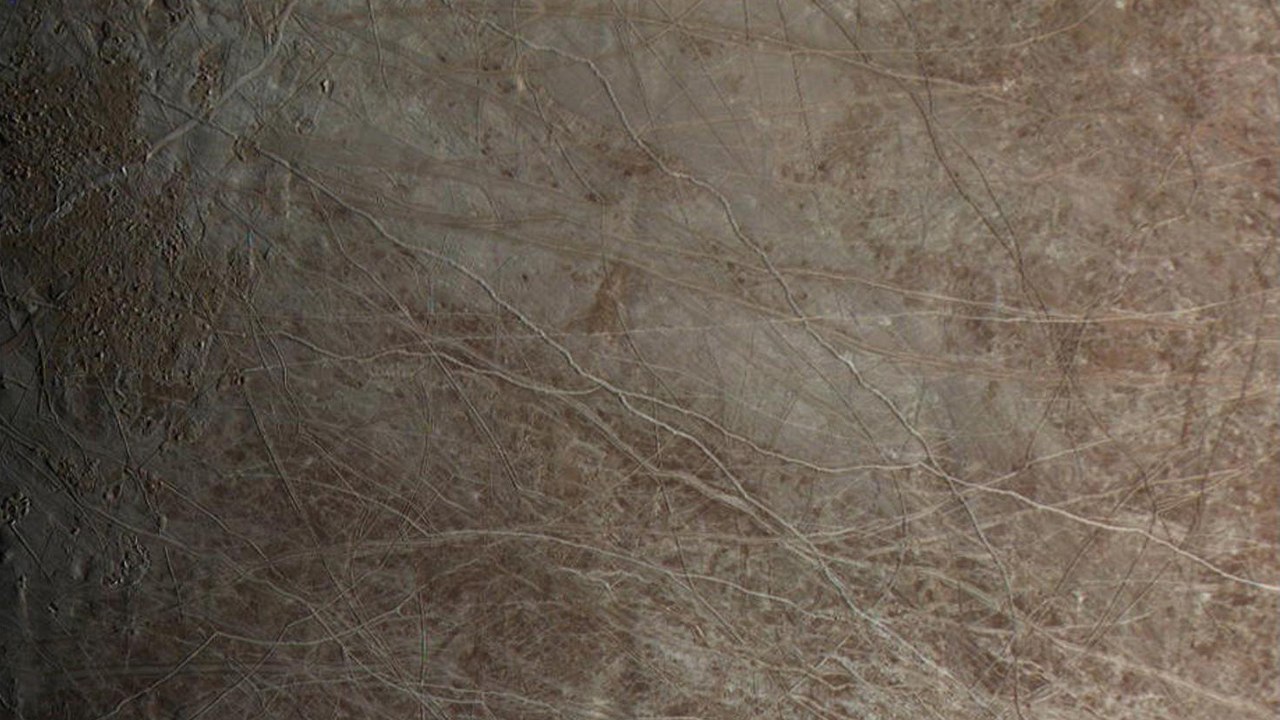
Hubble has caught signs of material erupting from Jupiter’s moon Europa. On Feb. 22, 2016, it spotted a probable plume rising about 62 miles above the surface, at the same location as a similar plume seen in 2014, silhouetted as Europa passed in front of Jupiter.
The plume site matches an unusually warm spot on Europa’s icy crust that NASA’s Galileo spacecraft mapped in the late 1990s. Researchers say that could hint at water erupting from beneath the surface, and the spot could be a prime target for a future spacecraft studying habitability.
More from Morning Overview
- Cadillac cut the price of its cheapest EV, which goes up to 317 miles on a charge
- Winter weather advisories cover I-80, I-70 and the Bighorns with up to 15 inches of snow
- Arizona’s governor declared a statewide emergency after Flagstaff logged its wettest Nov. 1 on record
- Zero Motorcycles unveiled an electric motorcycle targeted at under $8K and a street-legal dirt bike at EICMA
