
Most of the rocks that have struck Earth left scars that erosion, oceans and forests have long since erased. A handful of craters survive clearly enough to show the size of the impact and, sometimes, what kind of object caused it. Here are eight impact craters that show what hit Earth.
Read next on Morning Overview: Melting permafrost is setting off a newly identified kind of catastrophic landslide, scientists say
1. Manicouagan Reservoir: A Ring Visible From Space
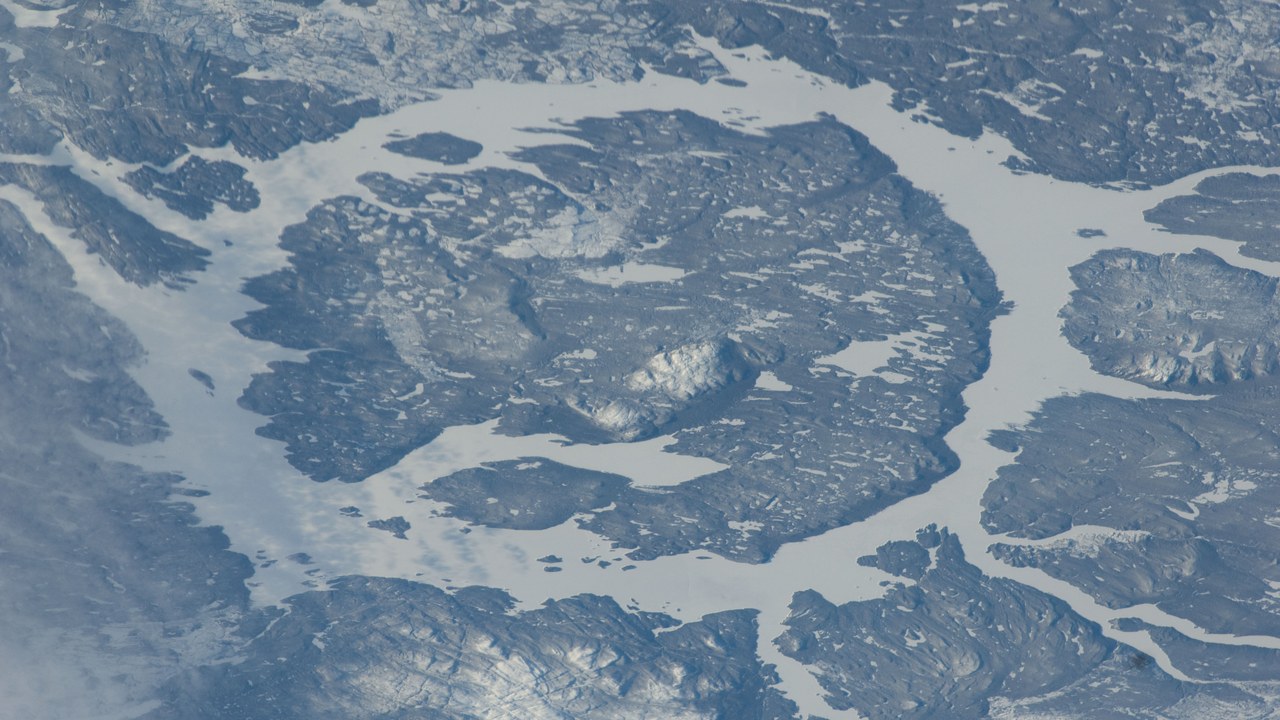
Quebec’s Manicouagan Reservoir fills a ring around a central uplift about 70 km across. According to NASA’s Earth Observatory, the original crater was about 100 km (60 miles) wide and was carved by an asteroid about 5 km in diameter.
The impact happened roughly 214 million years ago, and the crater has since been worn down by glaciers. A hydroelectric dam flooded the ring, creating the striking annular lake that astronauts photograph from orbit. It remains one of the largest impact structures still visible on Earth’s surface today. The view from orbit is spectacular.
2. Pingualuit Crater: A Lake With No Inlet
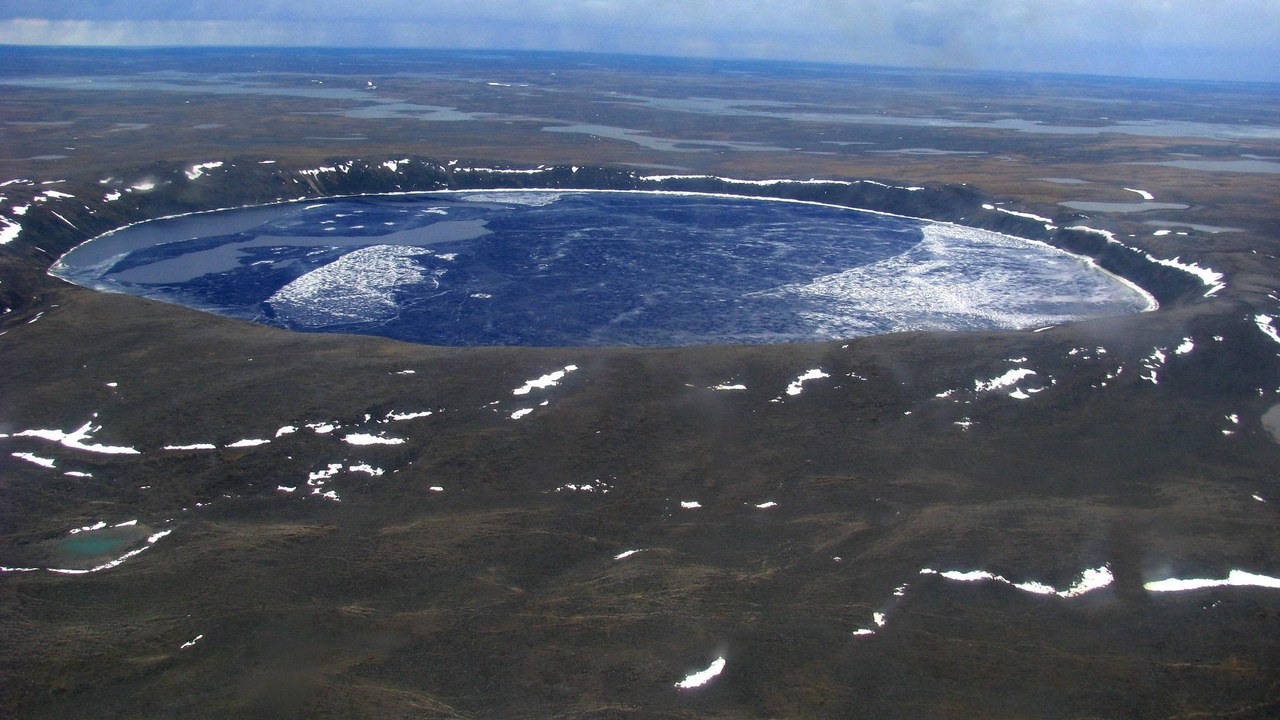
The Pingualuit Crater in northern Quebec is 3.44 km (2.14 miles) wide and holds a lake about 267 m (876 ft) deep. According to NASA’s Earth Observatory, the lake has no connection to any other body of water.
That isolation means the lake is filled only by rain and snow, which has made it one of the clearest lakes in the world. Its sediments also preserve a long climate record, which draws scientists to the remote site despite the difficulty of reaching it by air. Inuit communities nearby call it the Crystal Eye of Nunavik.
3. Wolfe Creek Crater: An Iron Meteorite in the Outback
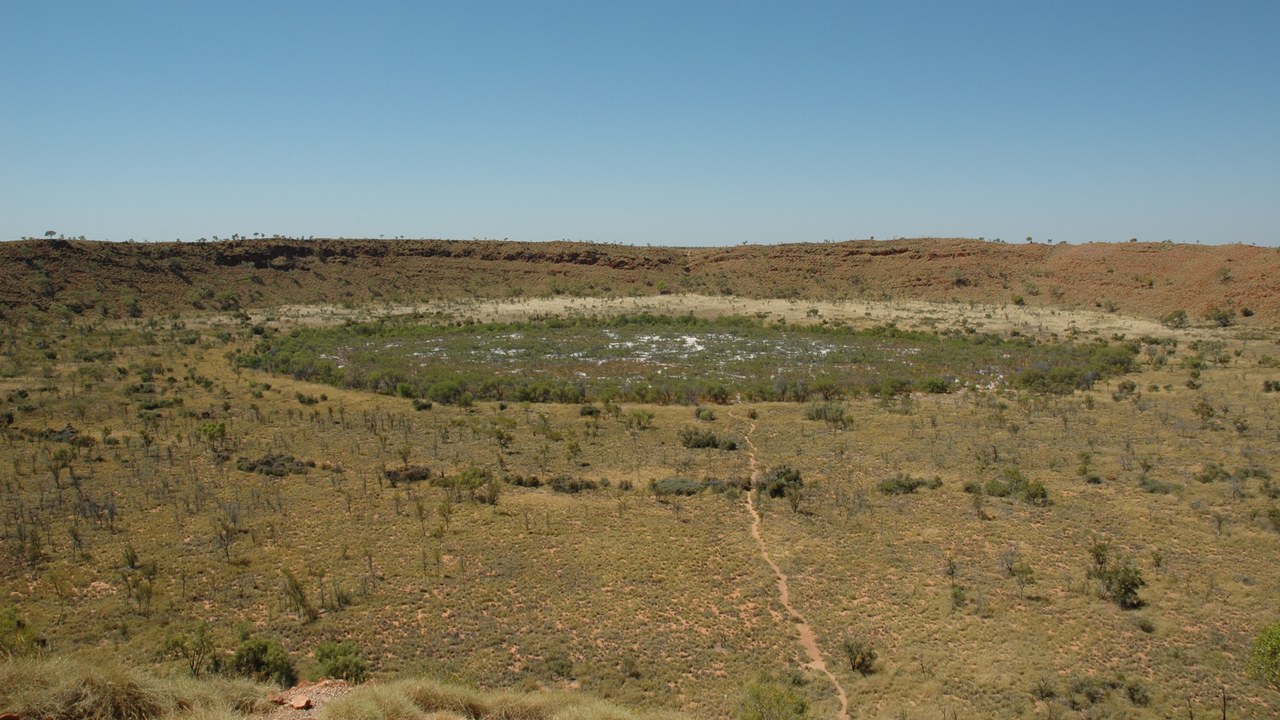
Wolfe Creek Crater in Western Australia is about 880 m (2,870 ft) wide. A guide to famous impact craters estimates that it was made by an iron meteorite weighing about 50,000 tons.
The crater’s walls rise sharply above the flat desert, and its floor is partly filled with wind-blown sand. Fragments of iron meteorite and iron-rich shale balls have been found around it, giving scientists direct evidence of what struck the ground. It is now protected inside a national park. The site lies on the edge of the Great Sandy Desert, far from any town.
4. Ries crater (Nordlinger Ries): A Town Built Inside a Crater
Germany’s Ries crater, known as the Nördlinger Ries, is about 15 miles across. The same crater guide says it was made by an impactor roughly 0.6 miles (1 km) wide.
The medieval town of Nördlingen sits inside the crater, and its church was built partly from suevite, a rock formed by the impact. Apollo astronauts trained in the Ries to learn how to recognize impact rocks before they went to the moon. The rim is still easy to trace from nearby hills. A museum in Nördlingen explains the impact to visitors.
5. Gosses Bluff: The Core of a Lost Crater
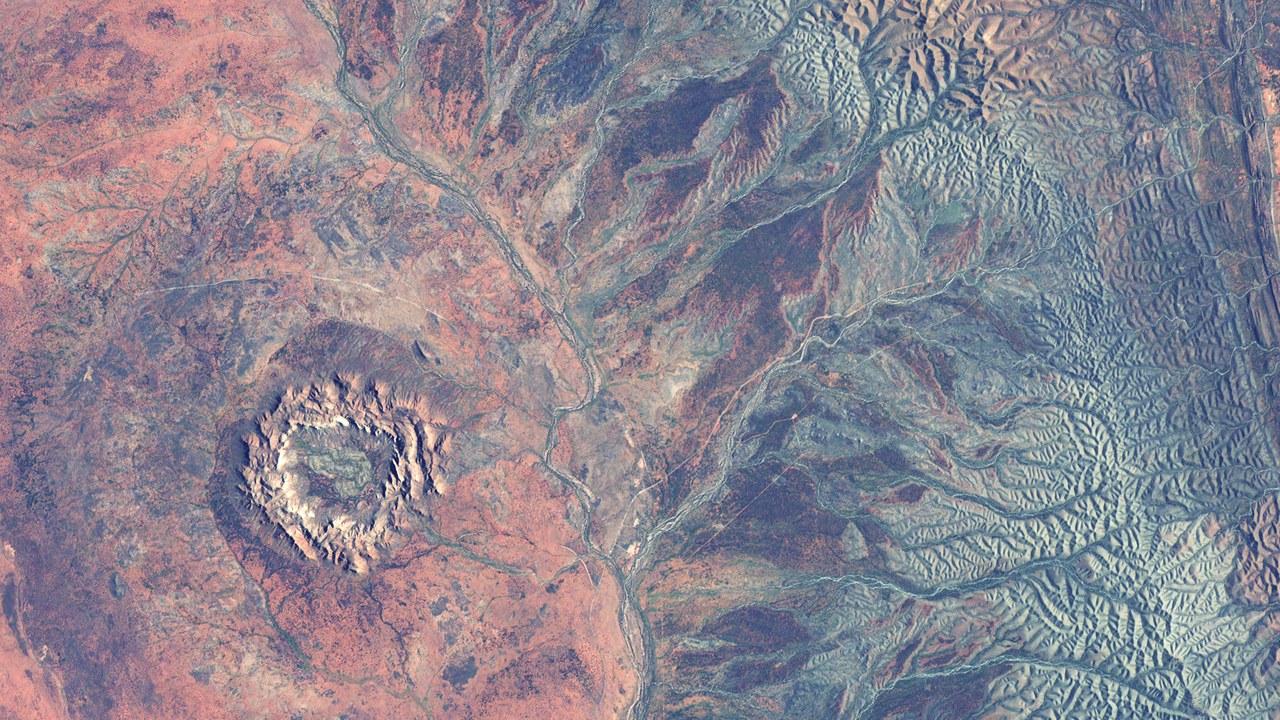
Gosses Bluff in Australia’s Northern Territory had an original diameter estimated at about 14 miles (22 km), according to a guide to famous impact craters. Today only about 5 km of it remains visible as a ring of hills.
What visitors see is the eroded central uplift, the rebound of rock that formed after the impact. The surrounding crater rim has worn away, so the structure looks like a lone ring of hills on the desert plain. It is a sacred site for the local Western Arrernte people. They call it Tnorala.
6. Aorounga crater: A Crater That Broke Apart
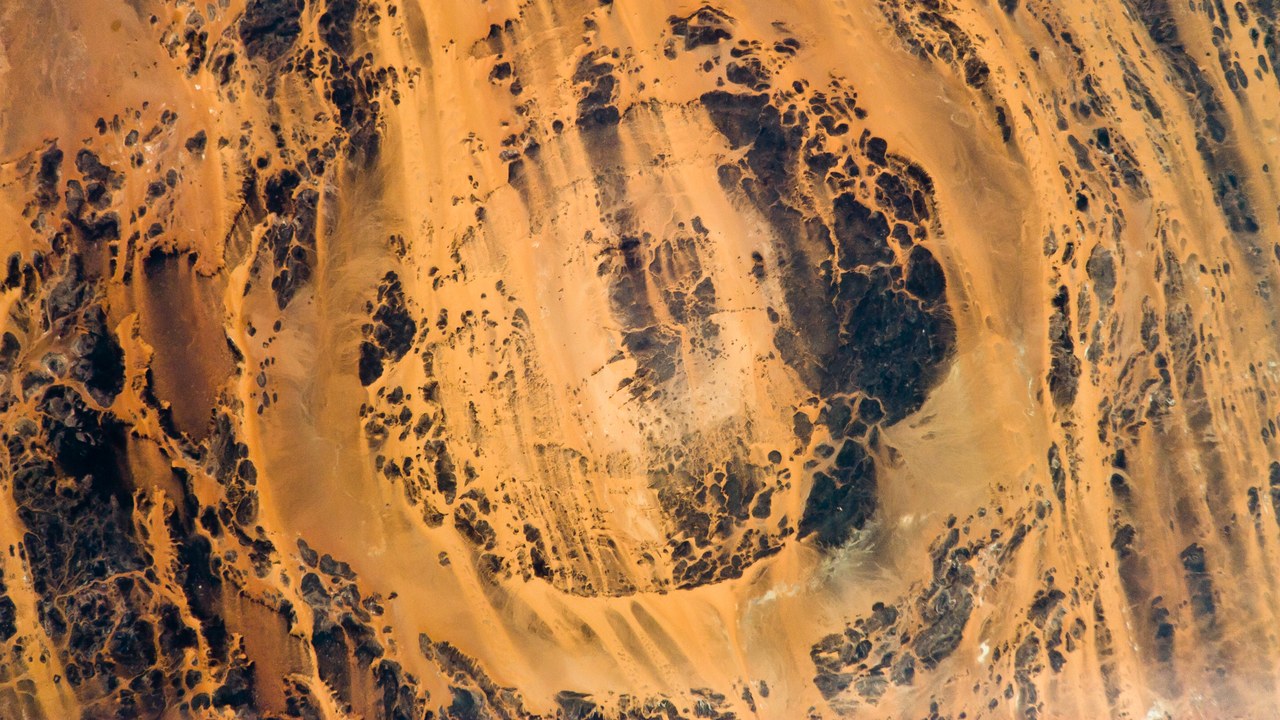
The Aorounga crater in Chad is about 17 km wide, and according to Universe Today’s survey of impact craters, it was made by an object 1 to 2 km across that broke apart before impact.
Wind-carved ridges of sandstone cross the crater, giving it a striped look in satellite images. Radar images have suggested there may be two more craters nearby, which would fit the idea that the incoming object split into pieces. Few places on Earth show such a clear chain. The region is extremely remote and hard to visit on the ground.
7. Kaali crater: Eight Craters in One Field
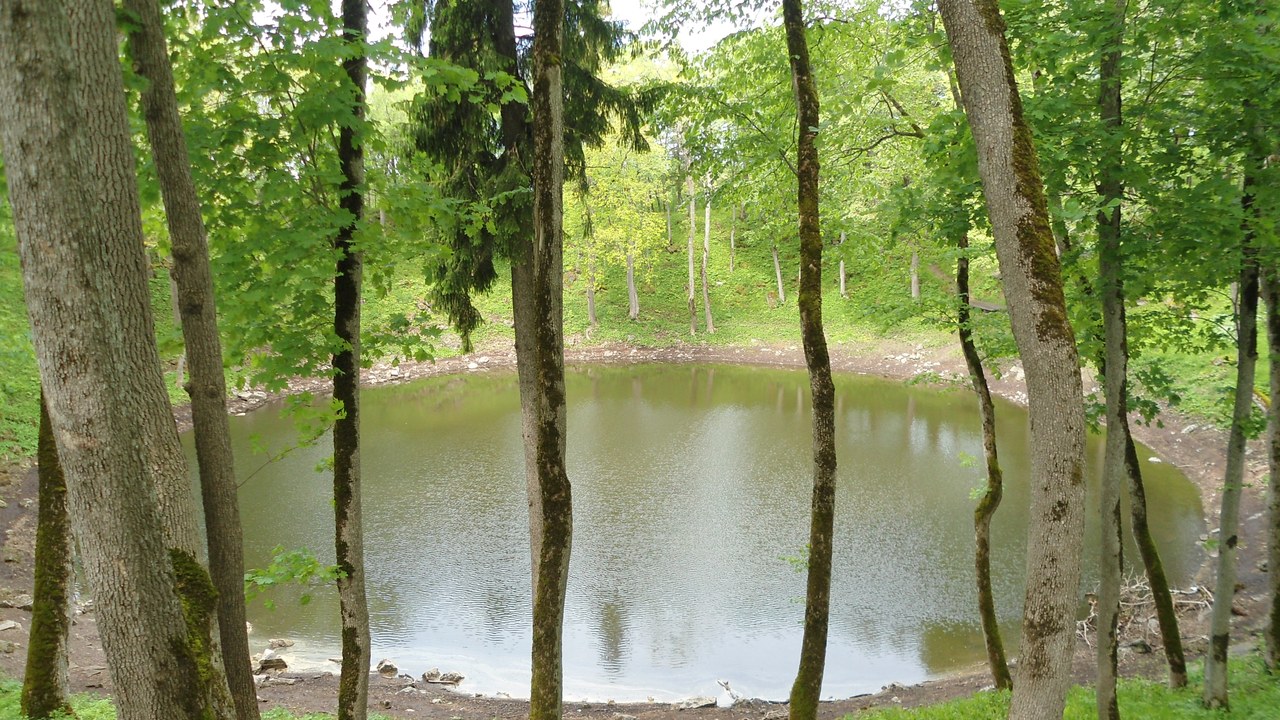
Kaali in Estonia is one of eight craters made in a single impact event. According to Britannica, the largest is 333 feet (110 m) across, and iron meteorite fragments have been found nearby.
The main crater now holds a small pond ringed by trees, and it is one of the few impact sites in Europe that people can walk around easily. Scientists think the impact happened within the last few thousand years, which may mean early inhabitants of the region witnessed it. A small museum near the site displays meteorite fragments.
8. Lonar Lake: A Crater in Volcanic Rock
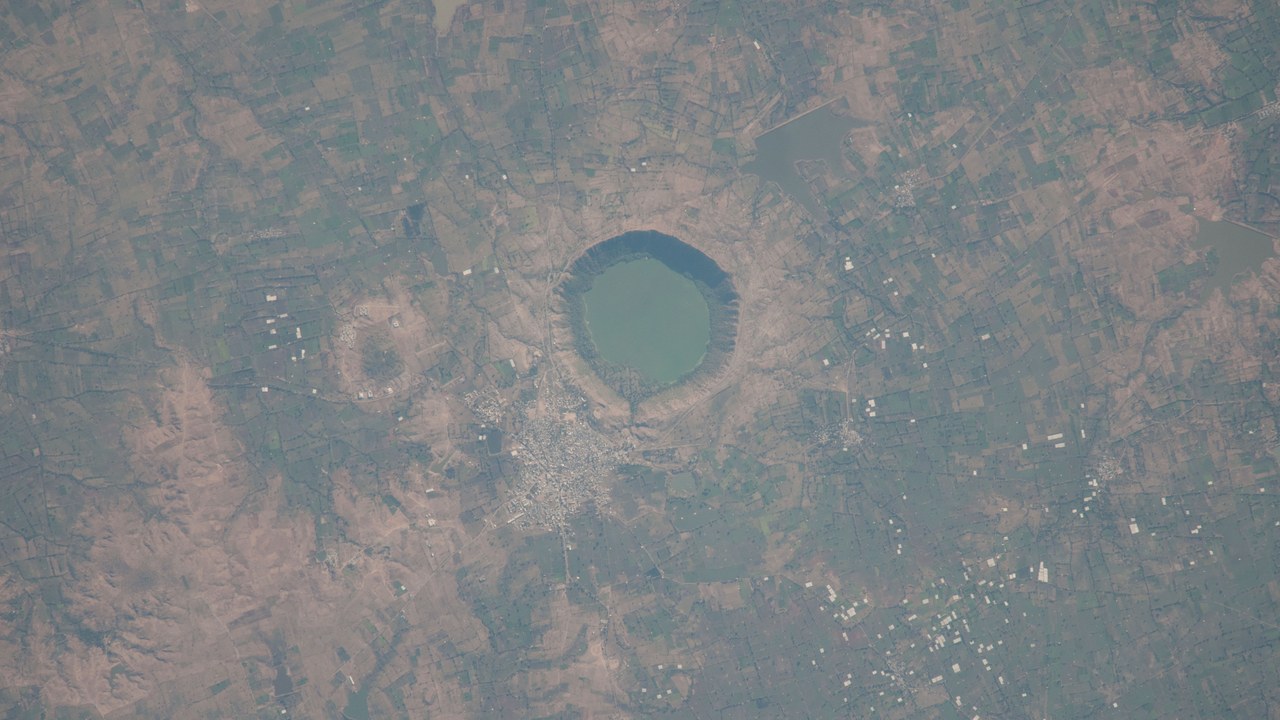
Lonar Lake in India is 1,800 m wide and, according to Wondermondo’s list of impressive impact craters, it is the only large impact crater in basalt on Earth with a soda lake in it.
Basalt is the same volcanic rock that covers much of the moon’s surface, so Lonar gives scientists a useful comparison for lunar craters. The lake’s salty, alkaline water supports unusual microbes and has occasionally turned pink, drawing curious visitors and researchers to the site. Ancient temples line its rim as well, adding history to the geology.
More from Morning Overview
- Over 20 trillion gallons of rain fell on the Four Corners states and Nevada in two weeks
- 11 engines built to run well past 200,000 miles
- Two Kentucky residents died when a small plane crashed at Missouri’s Lake of the Ozarks, and the NTSB is investigating
- A handful of car transmissions are so tough that mechanics say they almost never die
