
A small boat-shaped grave cut into the top of an eroded mushroom rock has drawn attention to a corner of central Türkiye. The find is unconfirmed, and its proposed Roman date rests on one researcher’s reading. This story follows the discovery, then the volcanic landscape and carved heritage around it.
Read next on Morning Overview: Older Teslas mostly keep their batteries, and here’s what wears out instead
Boat-shaped tomb: The Tomb Nobody Expected
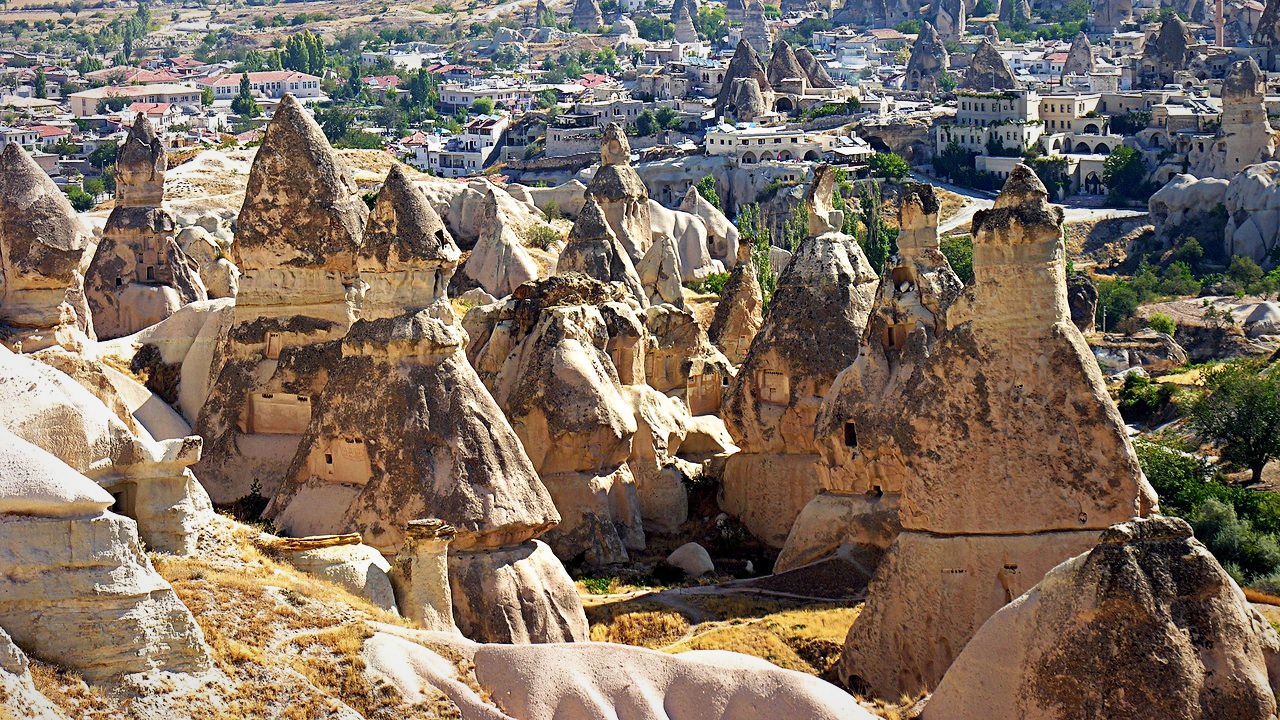
A boat-shaped tomb believed to date from the Roman period has been found cut into the top of a naturally eroded, mushroom-shaped rock in central Türkiye, according to a HeritageDaily report published on November 24, 2026. Erosion sculpted the rock first, and a grave was cut into its upper surface at some much later point. The photograph shows the kind of eroded Cappadocian rock the discovery sits within, not the tomb itself.
Local history researcher Nezir Ötegen believes the tomb is Roman and could be around 2,000 years old. That date is his own attribution. It has not been confirmed through archaeological investigation, so the story rests on a striking setting and a proposed age rather than on settled dating.
Fairy chimneys: Where the Mushroom Shape Comes From
The mushroom rock belongs to a landscape of fairy chimneys. According to the Cappadocia entry, the region’s soft volcanic deposits were laid down by ancient eruptions of Mount Erciyes, Mount Hasan and Göllüdağ. Over millions of years, wind and water erosion shaped those soft rocks into the characteristic fairy chimneys and other rock formations.
The shape comes from uneven resistance. Prominent formations such as Ortahisar and Uçhisar are made of harder volcanic layers that wore away more slowly than the softer deposits around them, so the harder caps remained elevated. HeritageDaily describes the Develi rock in similar terms, with its lower part eroded and a broader upper section left standing.
Develi district: Where It Was Spotted
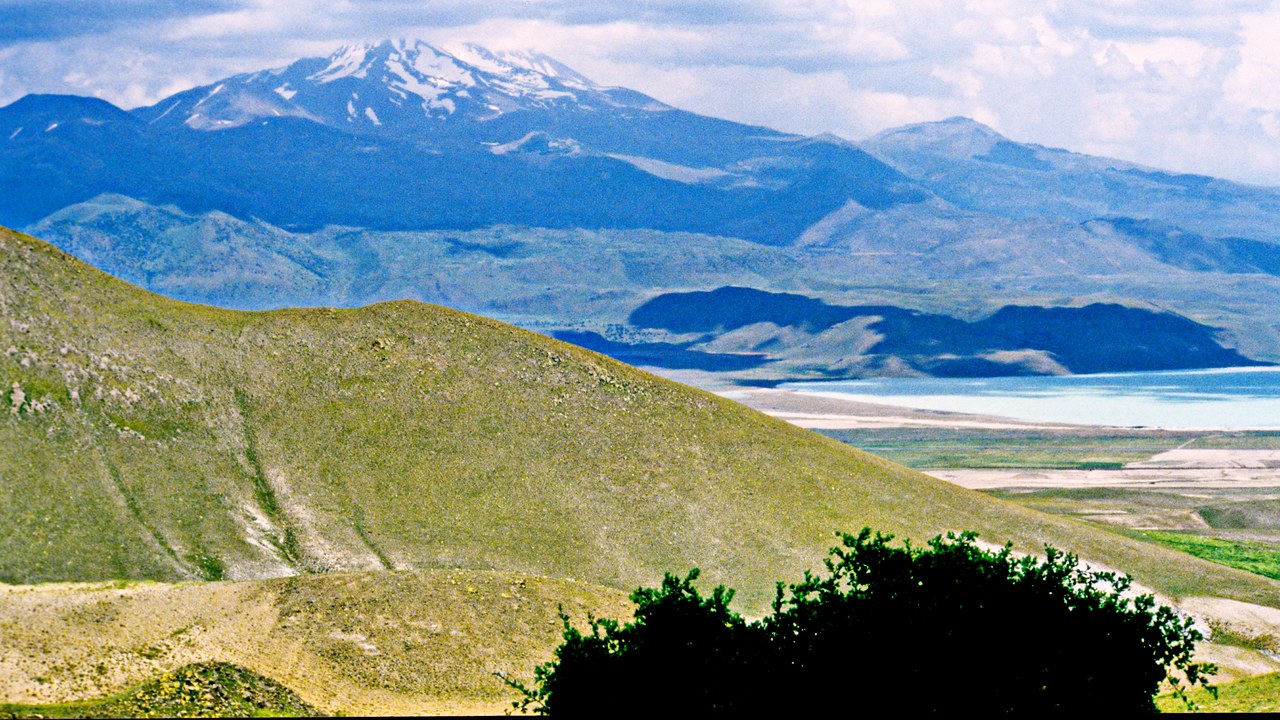
Ötegen spotted the tomb while surveying the countryside around the Gümüşören Dam and the Zamantı River in the Develi district of Kayseri Province, as HeritageDaily reports. The rock rises above the surrounding landscape near the neighbourhoods of Hüseyinli and Yenice, at an altitude of about 1,297 metres.
The area is already rich in archaeological remains. The Fıraktın Rock Monument, Çinçin Caves and Direkli Cave all lie in the wider area, while the Çukuryurt Rock Tombs occupy the opposite side of the valley. Ötegen points to other tombs along river valleys and on high ground in the region as possible parallels, and suggests the conspicuous rock would have been hard to miss.
Göreme National Park: Cappadocia’s Protected Core
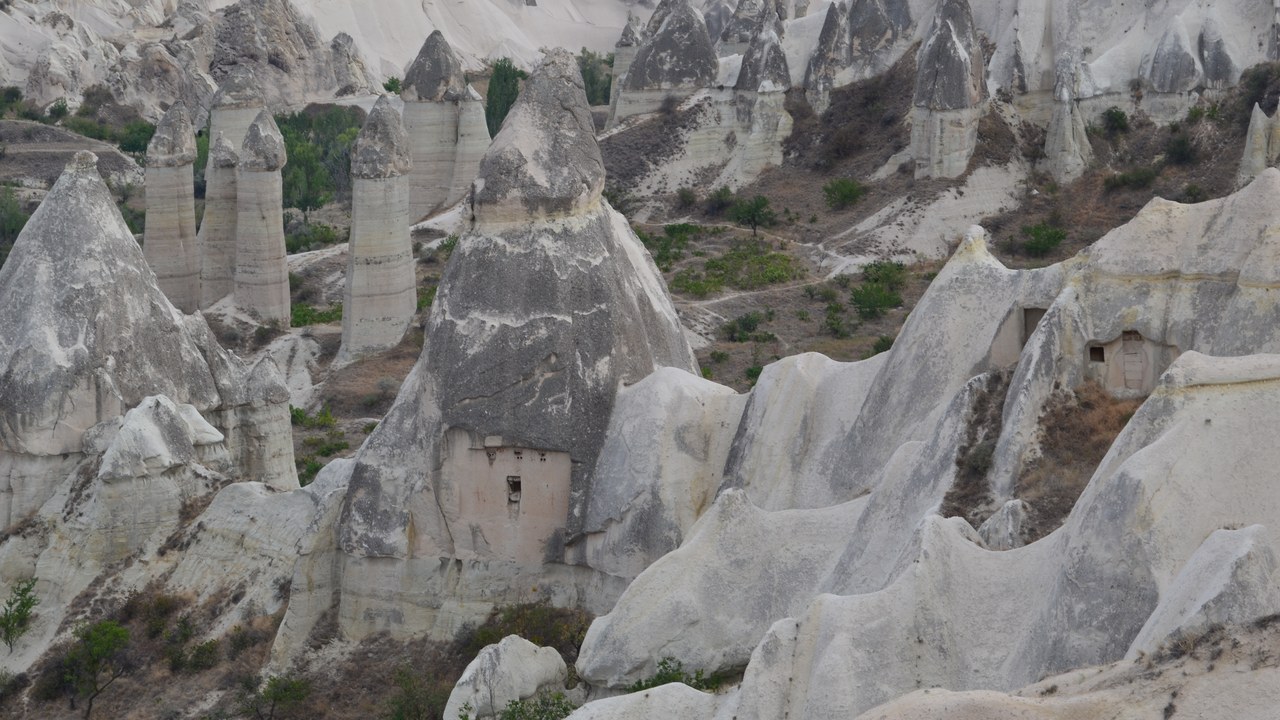
The wider landscape is one of Türkiye’s best-known protected places. World Heritage Outlook describes Göreme National Park and the Rock Sites of Cappadocia, inscribed in 1985, as a spectacular landscape entirely sculpted by erosion. Its tuff has been deeply eroded into a surreal landscape of hundreds of cones and lava-capped pillars.
The site’s current condition is a concern. The latest conservation outlook, finalised on October 11, 2025, rates it as significant concern, citing uncertainties in the legal framework, illegal construction and increasing tourism, with 2 to 4 million visitors reported annually. The Develi tomb lies in Kayseri Province and is not described as part of this protected site.
Rock-cut churches: Churches Cut Into the Rock
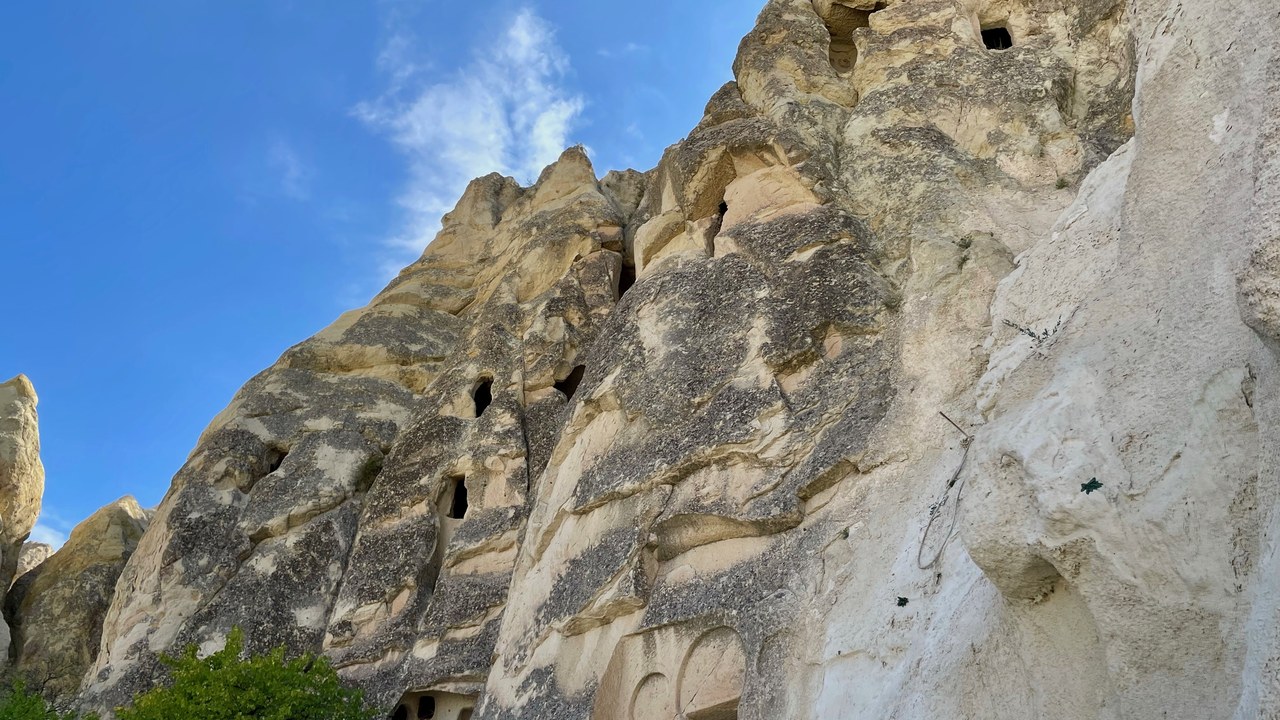
Cappadocia is known for religious architecture carved straight into stone. The Cappadocia article describes the region as a centre of early Christian learning, evidenced by hundreds of churches and monasteries, such as those of Göreme and Ihlara. Rock-cut work of this kind makes a boat-shaped grave in a rock summit part of a wider local habit of shaping stone.
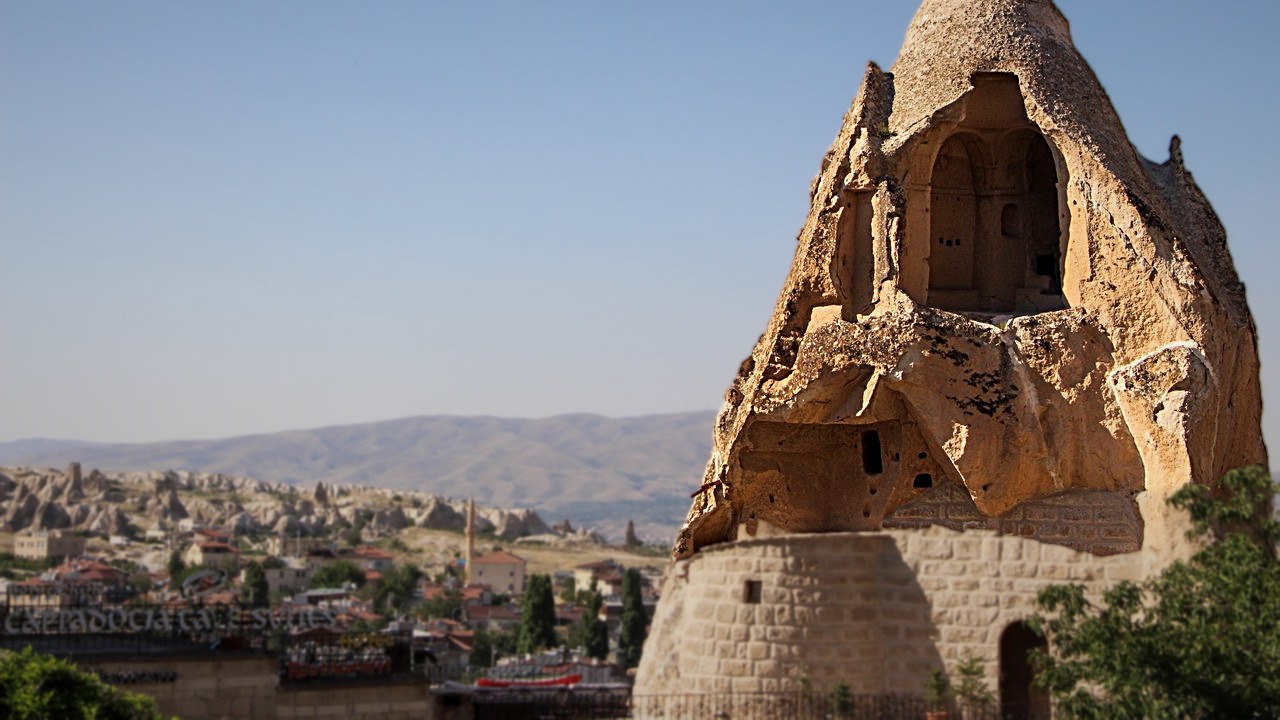
The Göreme Open Air Museum is described as the most visited site of the Christian monastic communities in Cappadocia. The pictured cliff with carved openings stands in the Göreme area. The tomb at Develi, by contrast, is undated and unstudied, so any link to the region’s carved religious sites remains speculation.
Underground towns: Cities Dug Downward
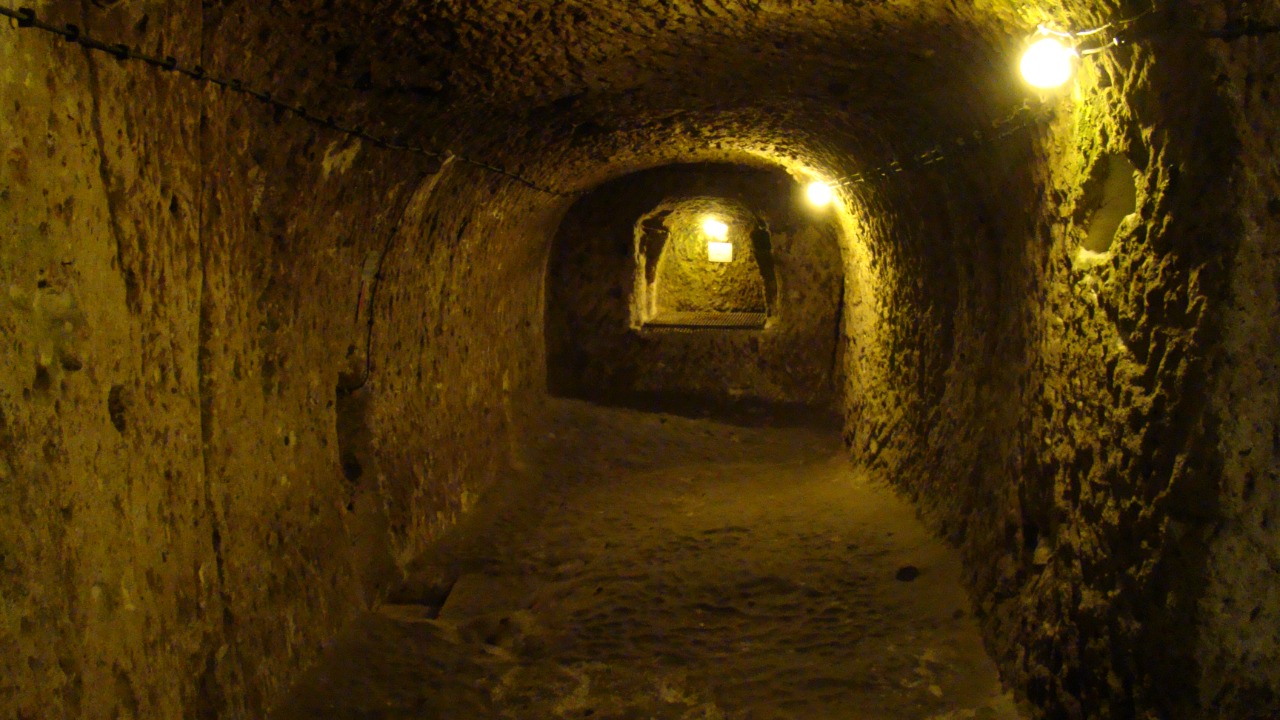
Cappadocia’s carving also went underground. IUCN notes that dwellings, troglodyte villages and underground towns are remains of a traditional human habitat dating back to the 4th century. The Cappadocia article adds that the underground cities were dug by Christians to provide protection during Arab raids and periods of persecution.
Among the most visited underground cities are Derinkuyu, Kaymaklı, Gaziemir and Özkonak, according to the same article. Those sites show how readily the soft volcanic rock could be excavated. They are separate from the Develi discovery, which is a single open grave cut into the top of a rock rather than a settlement.
Byzantine art: Byzantine Art in Stone
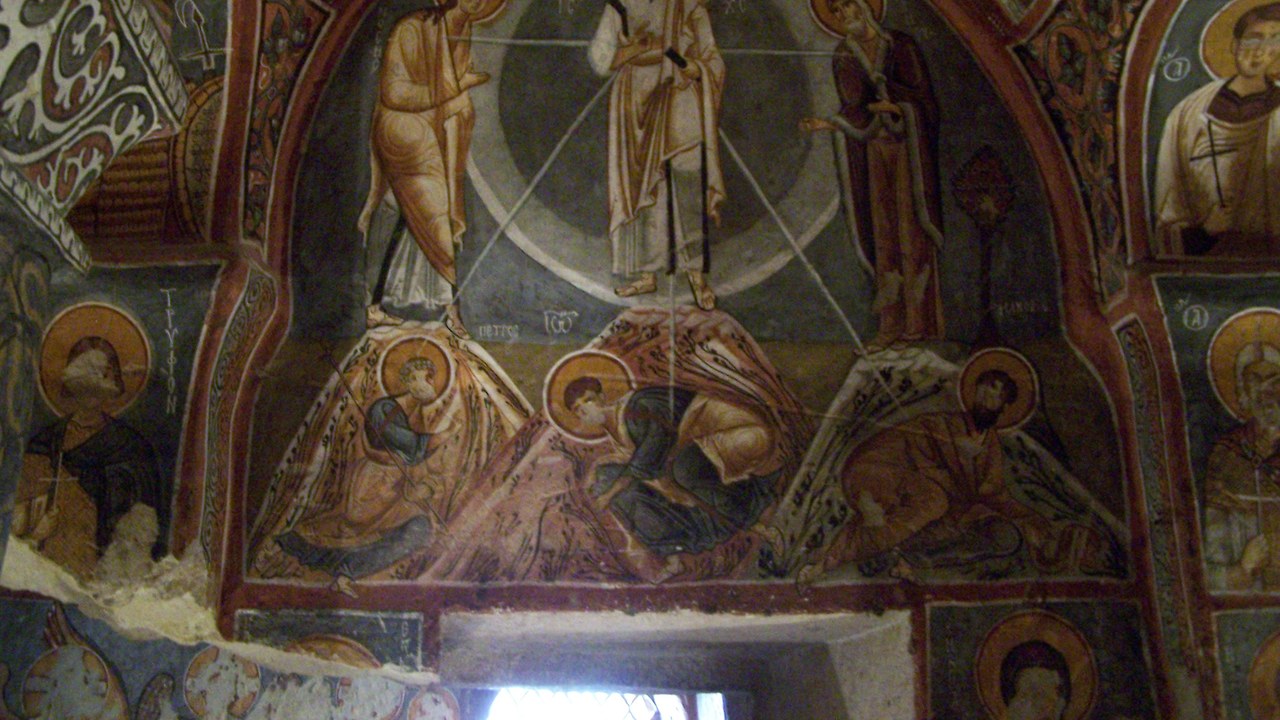
The rock-hewn sanctuaries of the Göreme valley hold fresco painting as well as architecture. UNESCO’s description, quoted by World Heritage Outlook, says they provide unique evidence of Byzantine art in the post-Iconoclastic period. The image shows frescoes in the Dark Church at Göreme.
The setting gives the Develi find historical context without answering the central question. A Roman attribution would place the tomb long before this Byzantine period, and no inscriptions or finds have been reported to tie it to either era. Archaeological study is expected to clarify what the grave belongs to.
Mount Erciyes: The Volcano Behind the Landscape
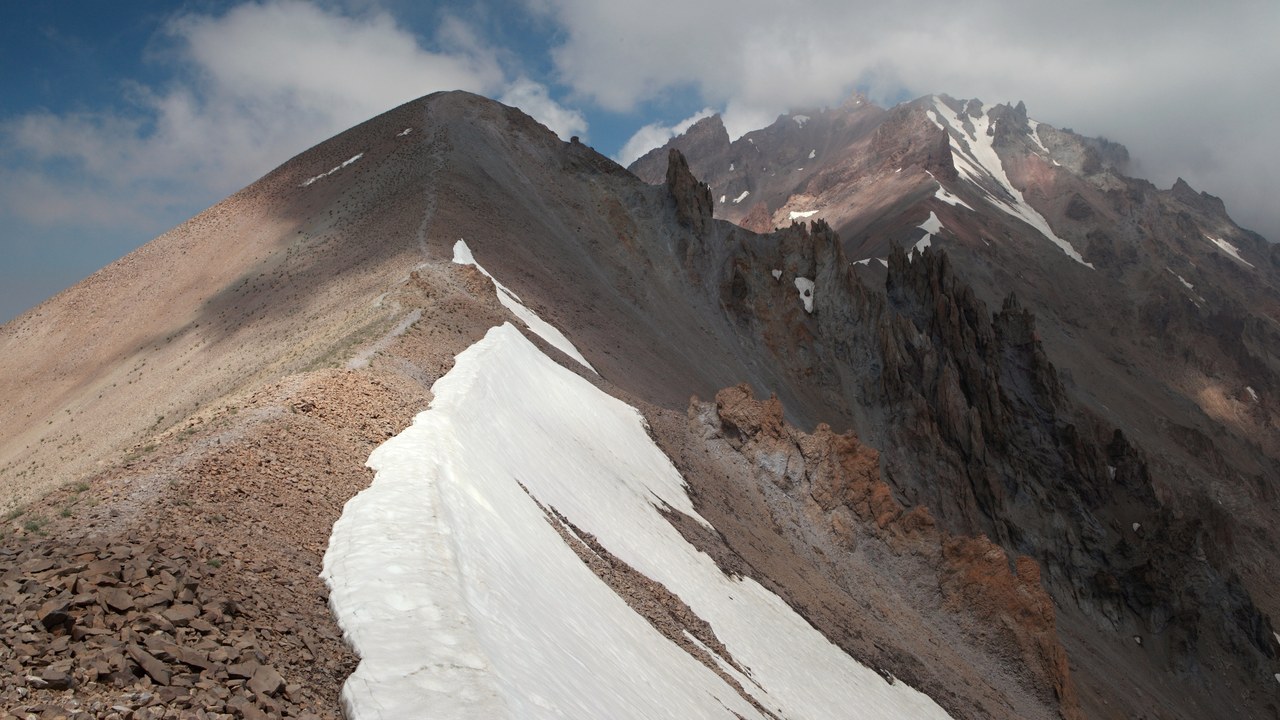
Mount Erciyes dominates the region. The Cappadocia article describes a high plateau over 1,000 metres in altitude pierced by volcanic peaks, with Mount Erciyes, ancient Argaeus, near Kayseri, ancient Caesarea, the tallest at 3,916 metres.
Ancient eruptions of Erciyes, together with Mount Hasan and Göllüdağ, created the volcanic deposits that later erosion turned into fairy chimneys. Kayseri Province, where the new tomb was found, sits beside that volcano. The geology is the older story, and it predates any burial cut into the rock by a very long margin.
Rock-cut tomb: What Happens Next
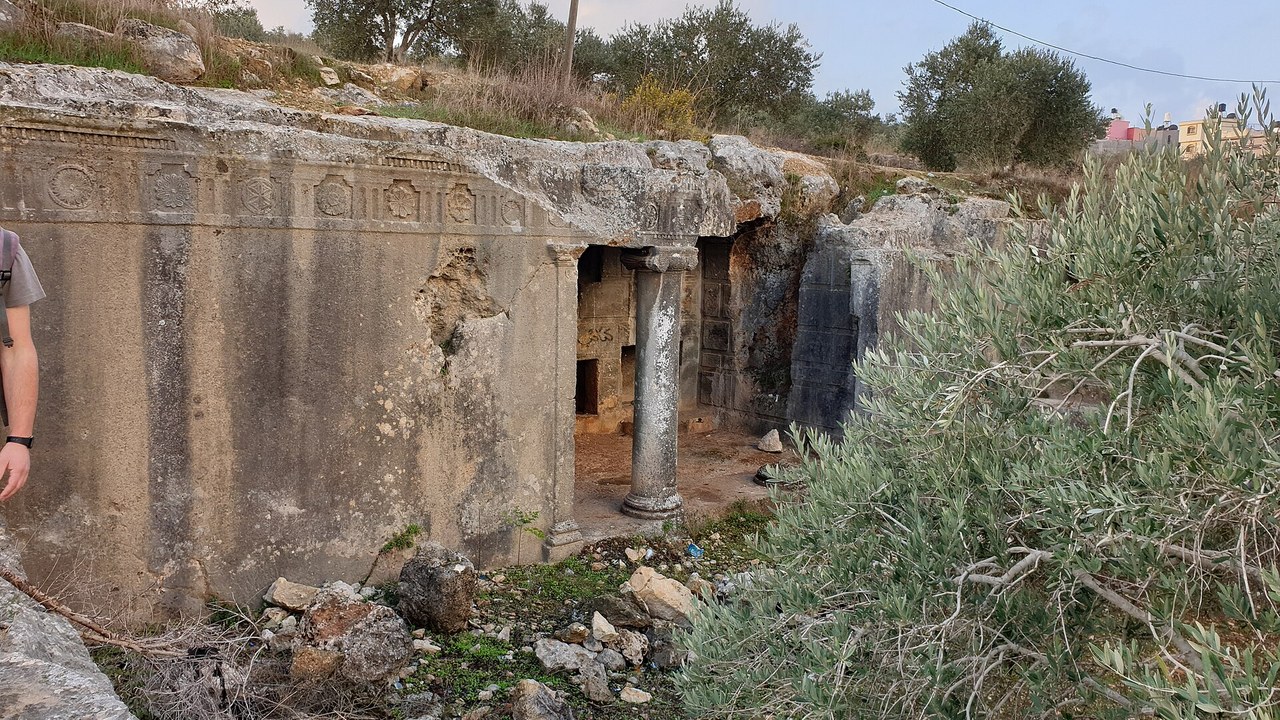
The attribution of the tomb has yet to be confirmed through archaeological investigation, HeritageDaily notes. The grave is already open, and no covering survives at the site, although Ötegen says comparable tombs would normally have been closed with a lid.
No human remains, inscriptions or grave goods have been reported that could independently establish its age. Ötegen has asked for the site to be recorded and protected, and the authorities have been notified and will investigate. Further research could determine when the grave was cut and how it fits into the wider archaeological landscape of the Zamantı River valley.
More from Morning Overview
- Hidden card skimmers on gas pumps and ATMs can be exposed with one quick shake
- Debris from the Greenacres Learjet crash landed on Florida rooftops, and the NTSB wants it
- Lockheed says its Valkyrie laser shot down a cruise missile stand-in with no tracking aids
- A Cirrus SR22 declared an emergency a minute after departure clearance, its parachute still bagged
