
A ruined Roman temple in southwest Türkiye has been reassembled, one stone at a time. Reports in November 2026 describe the restoration of the Temple of Zeus Lepsynos at Euromos, where about 900 blocks were examined and roughly 70 percent returned to their original places. The slides follow the temple from its Hadrian-era origins to the work that put it back together.
Read next on Morning Overview: Lockheed says its Valkyrie laser shot down a cruise missile stand-in with no tracking aids
Temple of Zeus Lepsynos: The Stones Go Back
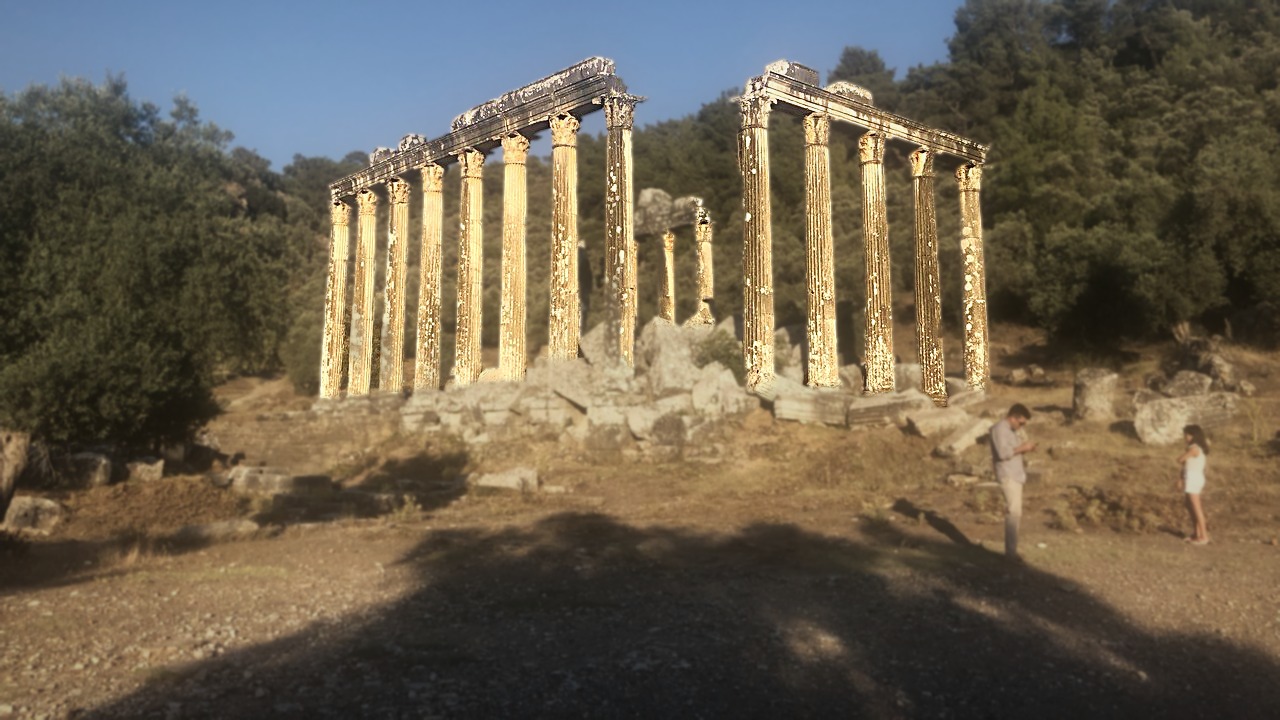
Restoration work on the Temple of Zeus Lepsynos at Euromos, in Muğla Province, has been reported complete in November 2026. According to Arkeonews reporting on the restoration, specialists examined approximately 900 architectural blocks and returned around 70 percent of them to their original locations.
The project, directed by Prof. Dr. Abuzer Kızıl, renewed the look of a monument whose surviving columns have stood for nearly two thousand years. The aim, the same report says, was not to build a new temple but to preserve and reassemble as much of the ancient one as possible.
Hadrian-era construction: A Hadrian-Era Sanctuary
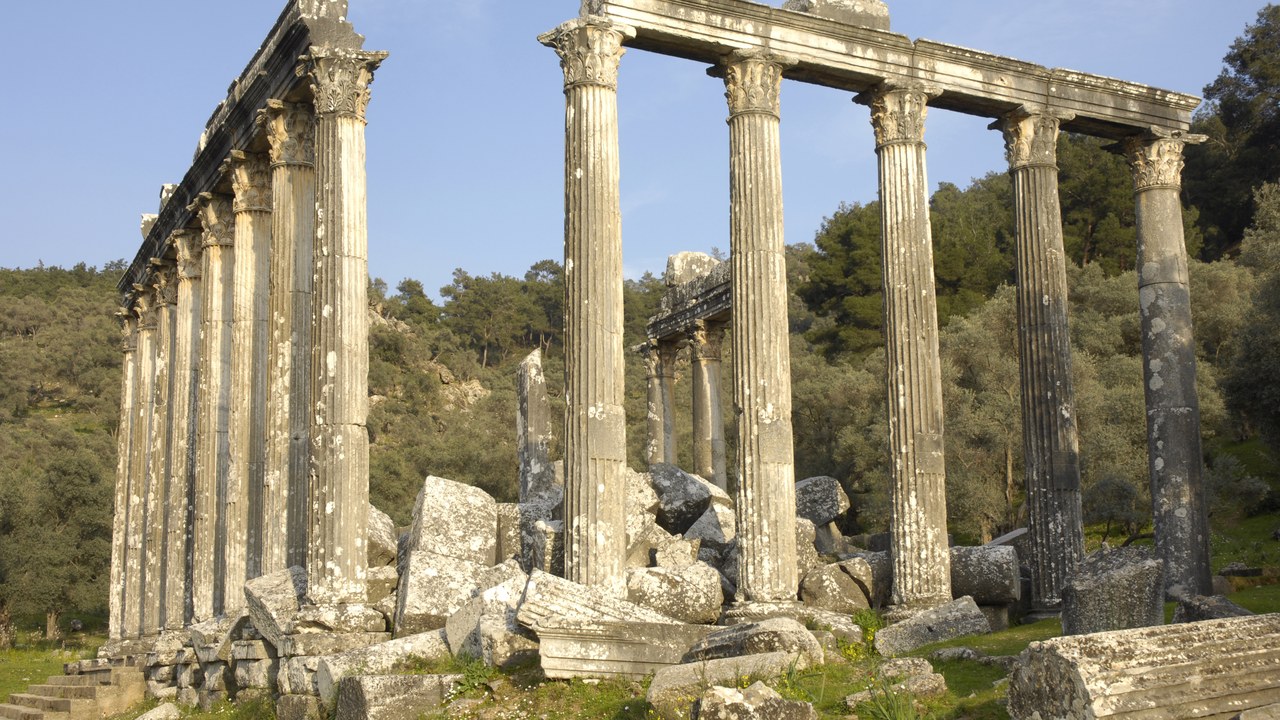
The temple is believed to have been built during the reign of Emperor Hadrian, according to Hurriyet Daily News. Arkeonews dates that reign to AD 117–138, which is the basis for the structure’s age of roughly 1,900 years.
Euromos itself is older than the temple. Archaeological evidence cited by Arkeonews indicates that the sanctuary of Zeus was established centuries before the surviving Roman building, and that earlier sacred buildings stood on the spot. The Hadrian-era temple is therefore the latest chapter of a long religious history at the site, not its beginning.
Corinthian columns: Six by Eleven
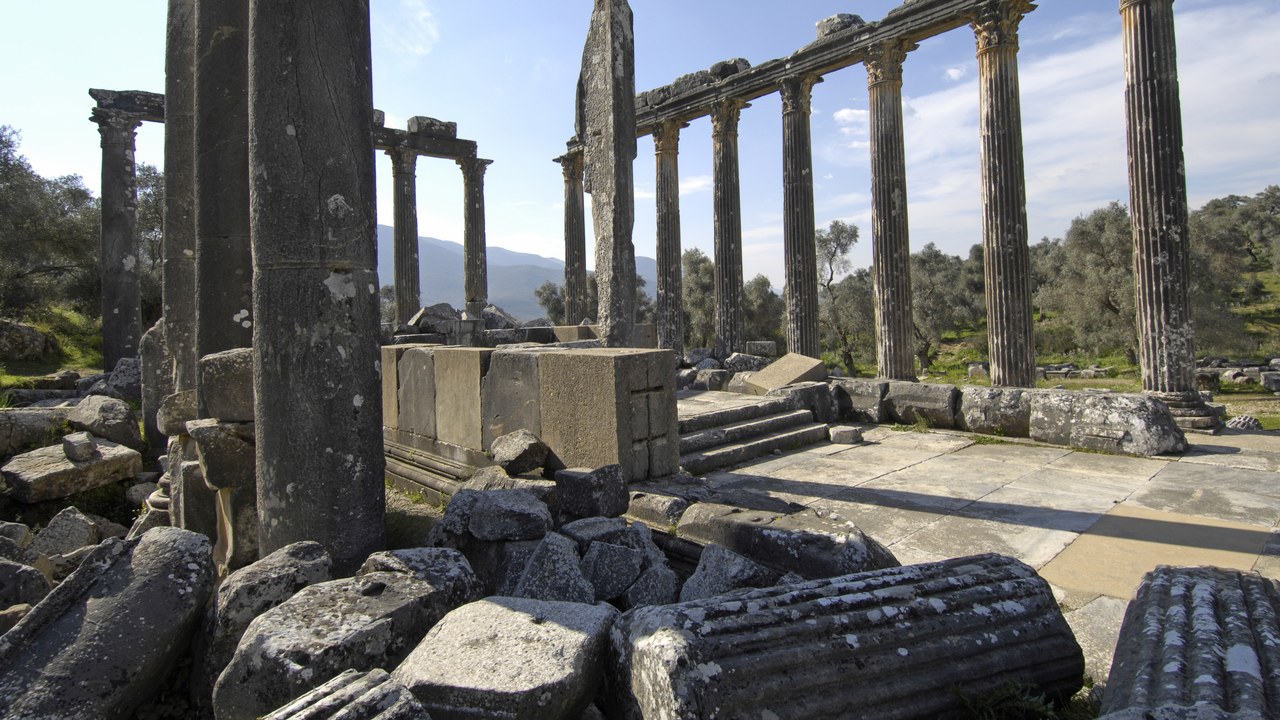
The Corinthian design of the building featured six columns across the front and eleven along each side, as Arkeonews describes it. That layout gave the temple an imposing colonnade, and a substantial portion of it survived the centuries.
Many ancient temples are left as scattered foundations, which is what makes this one unusual. The same report calls it one of the best-preserved ancient sanctuaries in Anatolia. Arkeonews places it as an example of Roman-period architecture in ancient Caria, in the southwest of present-day Türkiye.
Double axe (labrys): The Axe and the Ears
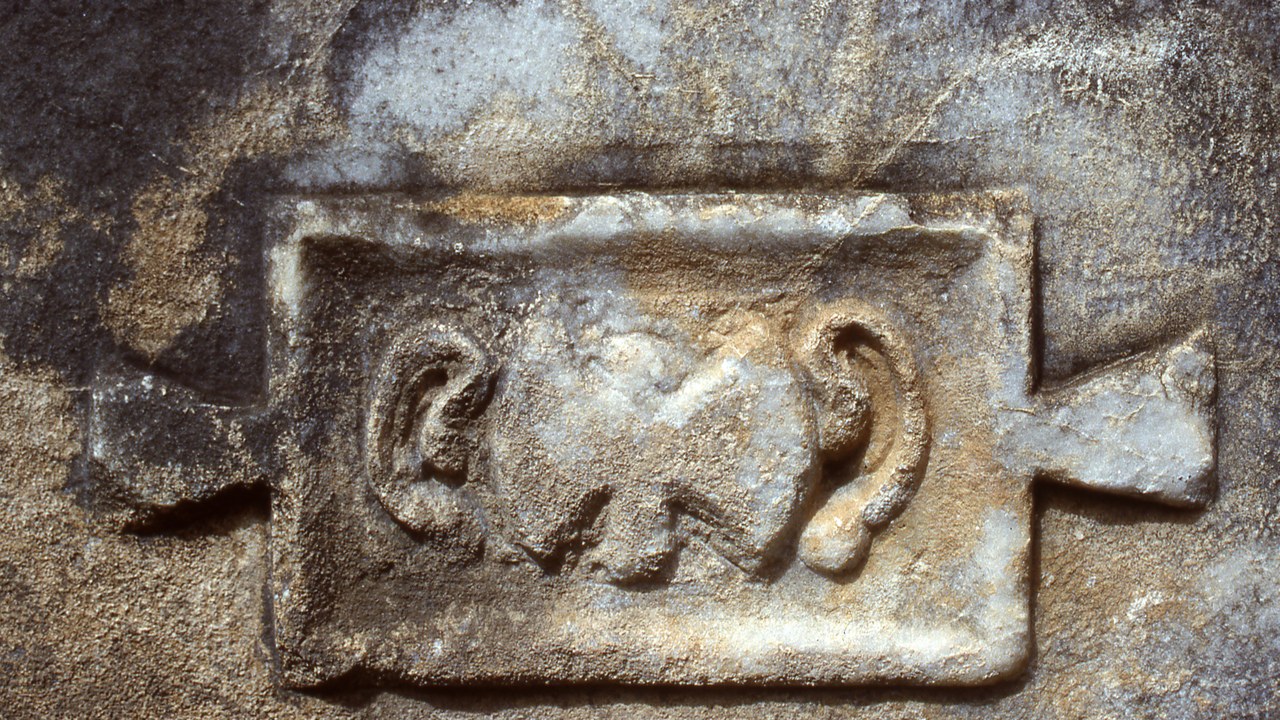
Among the temple’s more unusual features is a carved double-headed axe, known as a labrys, flanked by representations of human ears, according to Arkeonews. The relief marks the sanctuary and is described as an unusual religious symbol.
Researchers have examined whether the imagery reflects a belief that Zeus Lepsynos listened to the prayers and appeals of worshippers. The report stresses that this interpretation remains a subject of scholarly discussion. It also notes that the relief hints at religious traditions older than the surviving Roman temple.
Muğla Province ruins: Southwest Türkiye
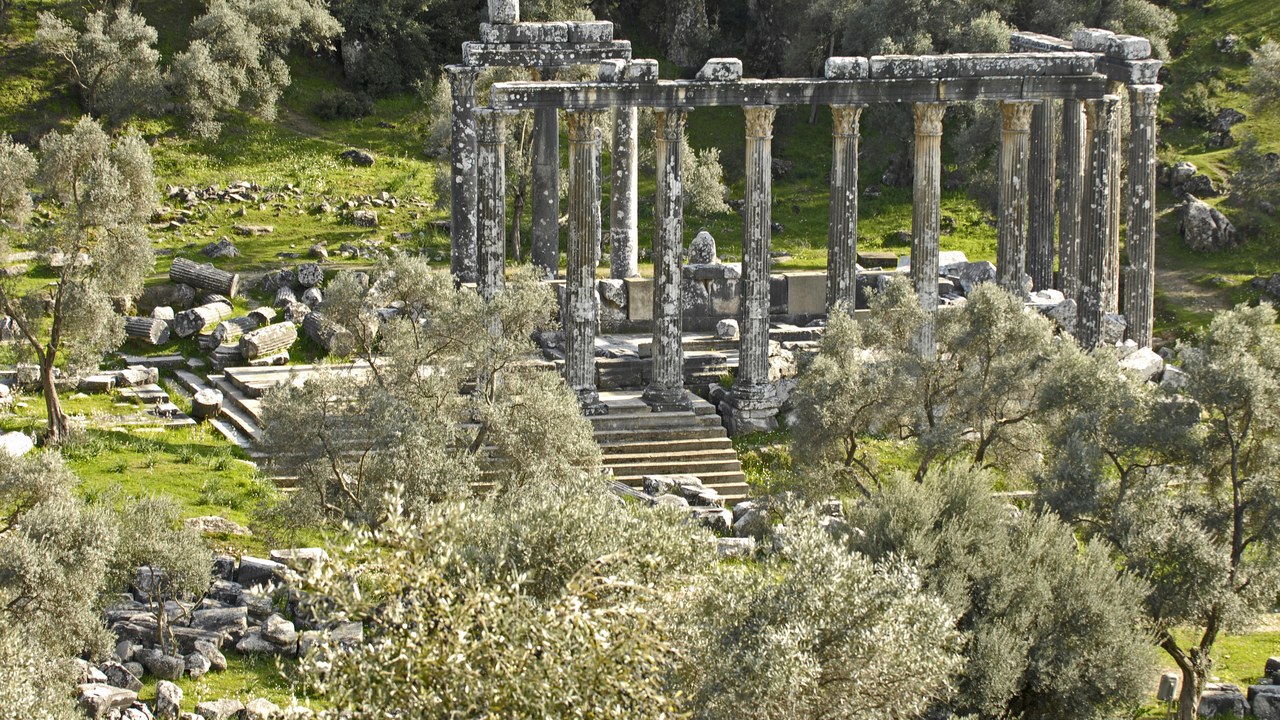
Euromos lies in Kızılcakuyu, in Muğla Province in southwest Türkiye, according to the Wikipedia entry on Euromus. The ruins sit about 4 kilometres southeast of Selimiye and 12 kilometres northwest of Milas, the ancient Mylasa.
Hurriyet Daily News places the site at the foothills of Mount Kızılbayır in Milas’ Selimiye neighborhood and calls it one of the most significant ancient settlements in the Caria region. Besides the temple, the site features the remains of an agora, theater, bathhouse, city walls, necropolises and a chapel, which makes the temple one part of a larger ancient city.
Putting blocks back: Numbered, Catalogued, Reset
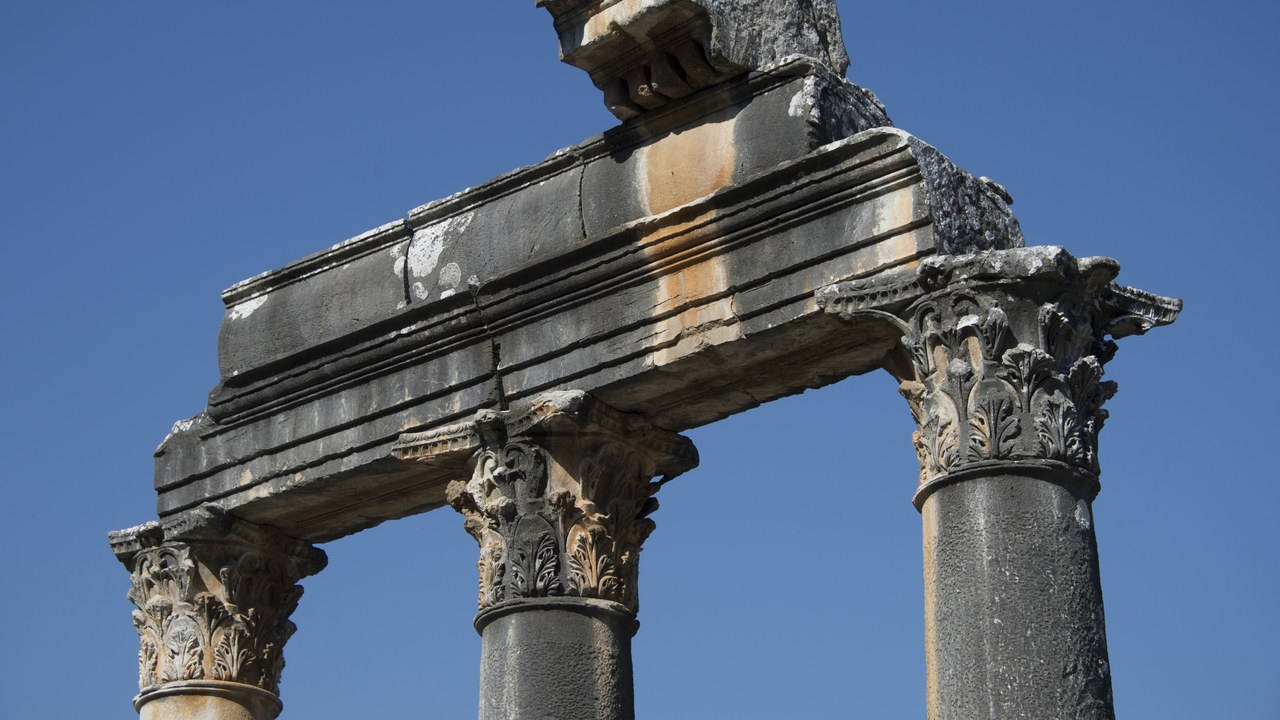
The method is the center of the story. According to Hurriyet Daily News, conservators evaluated nearly 900 fragments stone by stone and reinstated roughly 70 percent of them into the structure. Work began in 2015 with architectural surveys and the numbering and cataloguing of the blocks.
Arkeonews adds that specialists measured and catalogued the surviving stones before deciding where each belonged, and strengthened foundations and stabilized columns. Weathered pieces that could not be reused were replaced with newly quarried regional marble. The effort was led by Prof. Abuzer Kızıl.
Columns still standing: Sixteen Still Upright
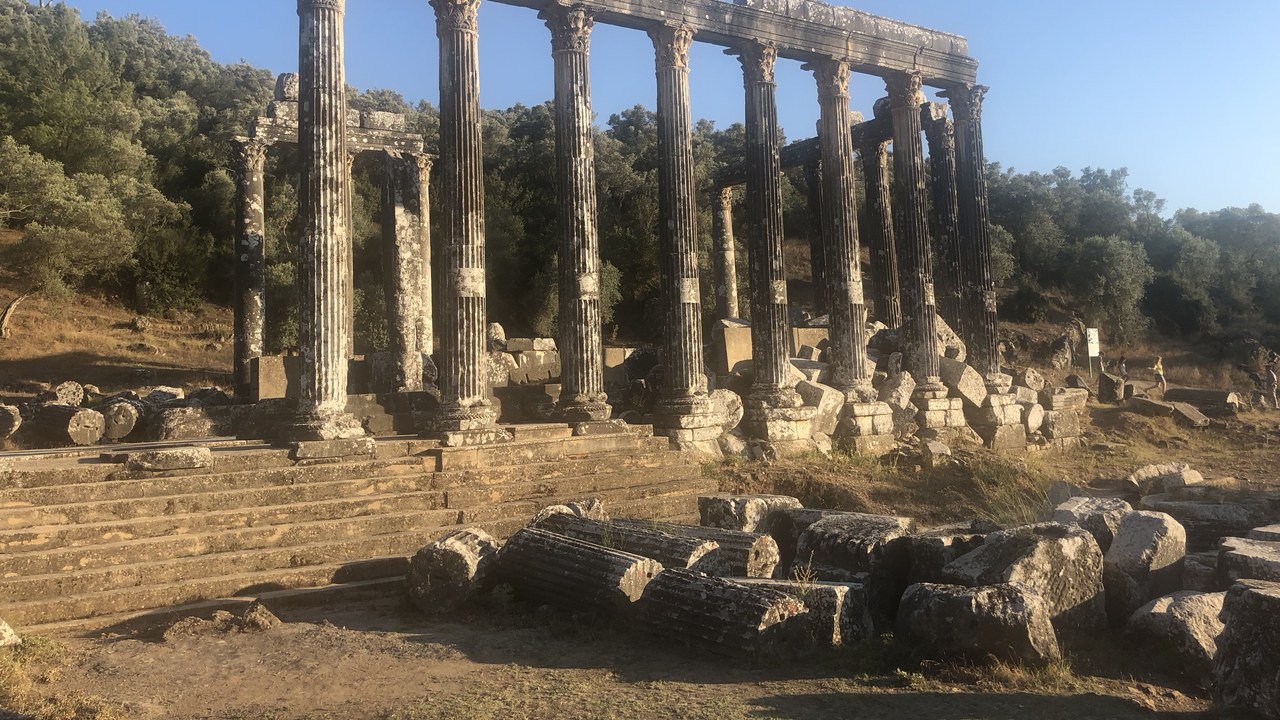
Even before the restoration, Euromos kept a large part of its colonnade. Wikipedia’s entry on the site counts sixteen columns still standing and calls the temple one of the best preserved classical temples in Turkey.
Most of the columns carry inscriptions honouring the citizen who commissioned them. Arkeonews describes the same pattern, saying that parts of the sanctuary were supported by local benefactors who commemorated their donations in stone rather than by a single ruler. The standing columns therefore record both the architecture and who paid for it.
Start of the work: Eleven Years of Work
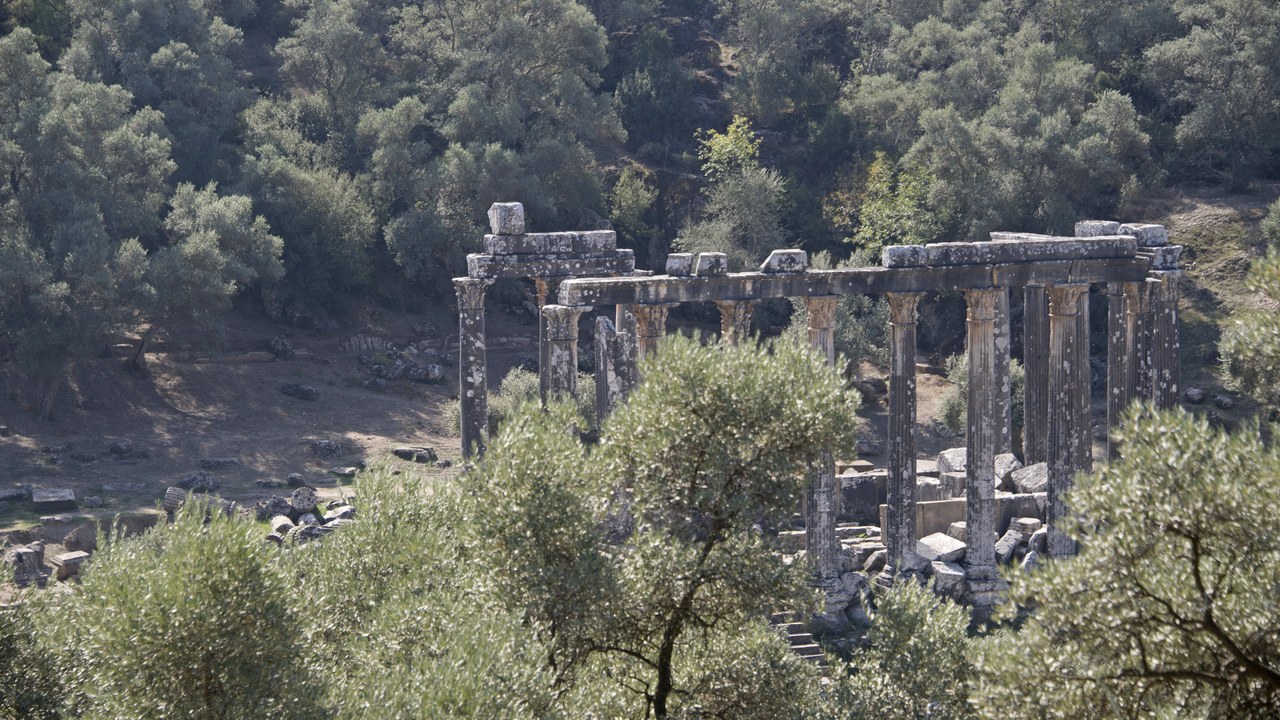
The project began in 2015 with architectural surveys, Hurriyet Daily News reports. Reporting from November 2026 describes the restoration as completed, which puts the span of the effort at about eleven years.
The restoration was carried out on behalf of Muğla Sıtkı Koçman University under Kızıl, with support from the Culture and Tourism Ministry’s General Directorate of Cultural Heritage and Museums, the Muğla Governor’s Office and the Turkish Historical Society. The paper says finishing the work helps protect the temple and is expected to raise the profile of Euromos and contribute to cultural tourism in Milas.
More from Morning Overview
- Thousands of bottles of a combination blood pressure pill are recalled nationwide
- GM’s big V8 trucks keep blowing engines after the recall fix, and NHTSA is digging deeper
- Hidden card skimmers on gas pumps and ATMs can be exposed with one quick shake
- Debris from the Greenacres Learjet crash landed on Florida rooftops, and the NTSB wants it
