
Homologation rules once forced automakers to sell a road-going version of anything they wanted to race, and the results became some of the most collectible cars in history. Turbocharged engines, all-wheel drive, and wings built for downforce landed in ordinary showrooms because rulebooks demanded a minimum production run. Here are nine cars built only so a manufacturer could go racing.
1. Lancia Delta Integrale: The Hatchback That Ruled Rally

Lancia sold the turbocharged, all-wheel-drive Delta HF Integrale to the public so the hatchback could compete in Group A rallying, where the works team won six straight World Rally Championship manufacturers’ titles between 1987 and 1992. The road car carried the same 2.0-liter turbo four and permanent four-wheel drive as the competition version, and the later Evoluzione model widened the arches to match the works bodywork.
Buyers got a boxy economy car with genuine rally pedigree rather than a styling exercise. That record still drives Integrale values decades after Lancia left rallying altogether.
2. Ford Sierra RS Cosworth: The Whale-Tail Homologation Sedan

Ford grafted a turbocharged Cosworth engine and an oversized rear wing onto the ordinary Sierra shell purely to satisfy the minimum production run touring-car rules demanded, building the required road cars before the racing version tore through Group A grids. The later RS500 evolution raised output further and became one of the most dominant touring cars of its era.
The wing was functional, not decoration, generating real downforce for a car built to race on Sunday. Insurers and thieves both noticed, and the Cosworth’s road career was defined as much by theft rates as lap times.
3. Toyota Celica GT-Four: A Coupe Built For Monte Carlo
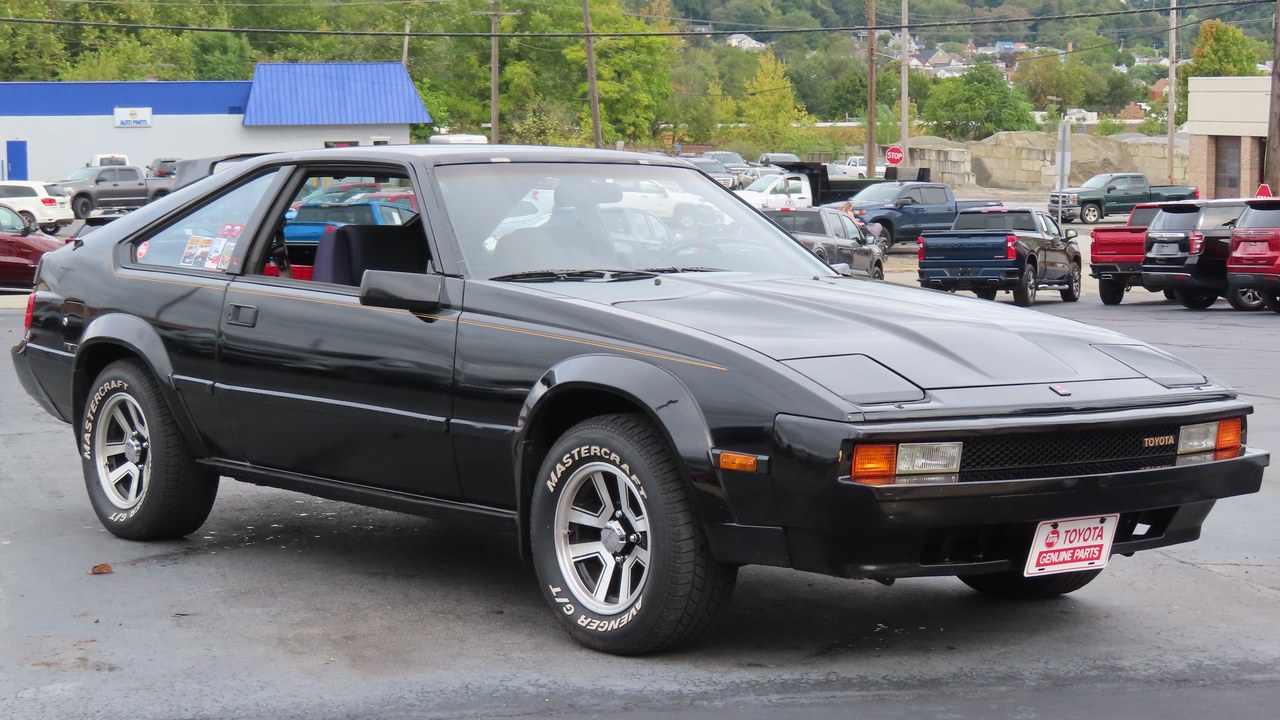
Toyota built the turbocharged, all-wheel-drive Celica GT-Four to legalize its Group A rally contender, and drivers piloting the works car took championship results on events from Monte Carlo to the Safari Rally in the early 1990s. The road version shared the competition car’s 3S-GTE turbo engine architecture and drivetrain layout across three Celica generations homologated for rallying.
A factory-backed scandal over an illegal turbo restrictor bypass eventually cost Toyota a season, a reminder of how seriously manufacturers took the rally program the GT-Four existed to support. The road car still carries that competition history into the collector market today.
4. Subaru Impreza 22B STI: The Anniversary Homologation Coupe

Subaru built the wide-body 22B STI as a two-door tribute to three consecutive World Rally Championship manufacturers’ titles, fitting a bored-out 2.2-liter turbocharged boxer engine under flared bodywork borrowed from the works rally car. Only a few hundred examples of the Impreza coupe were built, nearly all sold in Japan.
Because so few left the factory, the 22B became one of the rarest Imprezas Subaru ever sold rather than a volume model. Its rally-derived width and power still make it the benchmark against which later STI models get measured.
5. Mitsubishi Lancer Evolution: The Sedan Built To Feed A Rally Team
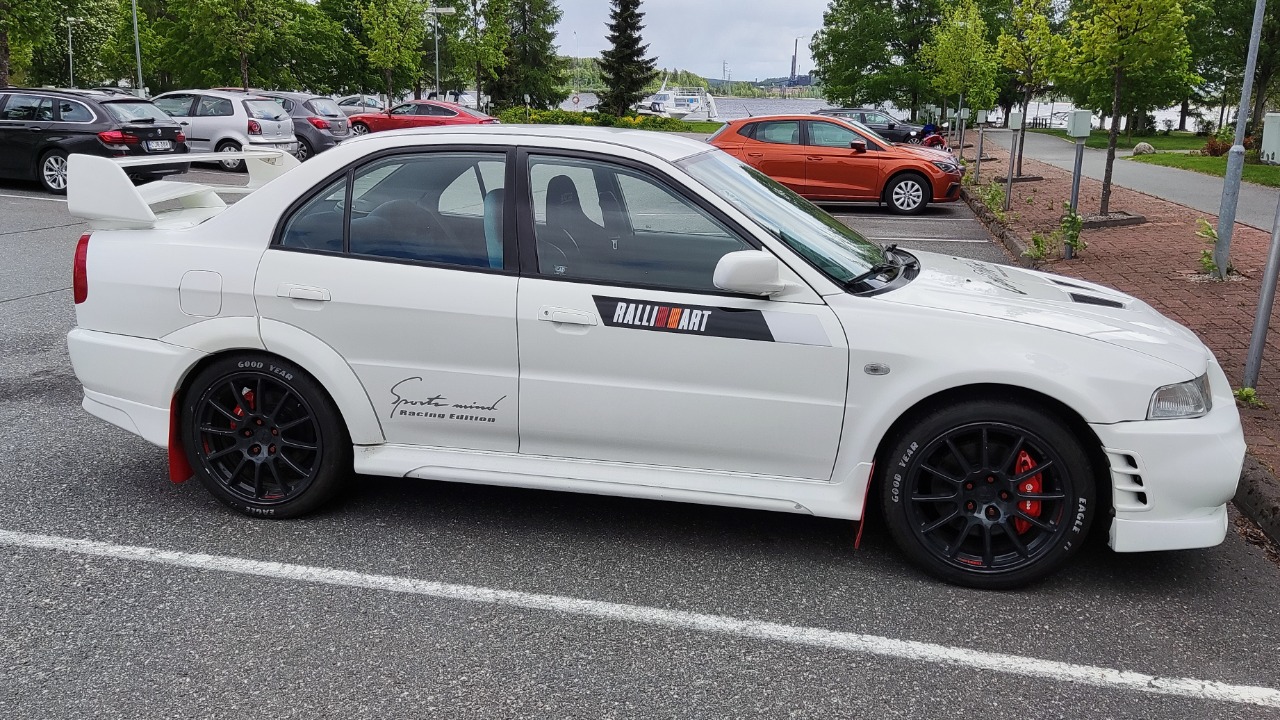
Mitsubishi turned an ordinary Lancer sedan into a turbocharged, all-wheel-drive homologation special so the automaker could field a competitive Group A rally car, and the resulting Evolution line carried a driver to four consecutive World Rally Championship drivers’ titles through the late 1990s. Ten generations of the Lancer Evolution followed the same turbocharged 4G63 formula for over a decade.
What began strictly as a homologation requirement outgrew its rally program, selling to enthusiasts long after Mitsubishi’s works effort wound down. The Evolution name became shorthand for a fast sedan built on a budget economy platform.
6. Audi Quattro: The Car That Introduced All-Wheel Drive To Rallying

Audi sold the turbocharged, permanent all-wheel-drive Quattro coupe to homologate a technology no rally car had used at that scale, and the works team used the advantage to win the manufacturers’ championship in 1982 and 1984. The road car kept the same 2.1-liter turbocharged inline-five and drivetrain layout that made the works Quattro nearly unbeatable in loose-surface conditions.
Rival manufacturers scrambled to copy the all-wheel-drive layout once its rally results proved the concept. The Quattro’s name went on to become Audi’s permanent badge for four-wheel-drive models across its entire lineup.
7. Lancia Stratos: Designed From Scratch To Win Rallies

Lancia built the wedge-shaped Stratos with no other purpose than rallying, pairing a mid-mounted Ferrari-derived V6 with a Bertone-designed shell and building the roughly 500 road cars Group 4 rules required for homologation. The car repaid the investment by winning the World Rally Championship three years running in the mid-1970s, a result its road-going counterpart made legal.
Unlike most entries on this list, the Stratos was never adapted from an existing production model, so its impractical mid-engine layout survived intact for street buyers. That purity is exactly why collectors treat it as the purest homologation special ever sold.
8. Ford RS200: A Group B Special Built From Nothing

Ford built the mid-engine, all-wheel-drive RS200 from a clean sheet solely to meet the roughly 200-unit minimum Group B homologation rules demanded, giving the automaker a purpose-built rally weapon rather than an adapted production car. The turbocharged RS200’s competition career stayed short before regulators banned the Group B category outright.
The car never got the results its engineering promised because Group B itself was shut down over safety concerns after a string of fatal accidents. What remained was a small run of road cars far more exotic than anything else Ford sold at the time.
9. Peugeot 205 Turbo 16: A Supermini Body Over A Racing Chassis

Peugeot wrapped a mid-engine, all-wheel-drive racing chassis in front sheet metal borrowed from the ordinary 205 supermini, building 200 road-going Turbo 16 examples to satisfy Group B homologation while the works version won back-to-back World Rally Championship titles in 1985 and 1986. Only the nose of the 205 hatchback carried over to the competition car underneath.
Buyers who parked a Turbo 16 next to a standard 205 owned a car that looked related but shared almost no mechanical parts with it. That disguise is part of what makes surviving examples so valuable among Group B collectors today.
More from Morning Overview
- Card skimmers hidden on gas pumps are draining accounts, and there’s a quick way to spot them
- The NSA warns one messaging setting can clone your texts to a stranger
- Security experts still urge phone owners to switch off one location-tracking setting
- Automakers are quietly dropping the stop-start feature many drivers love to hate
