
Keeping a road, runway or railroad open through a winter storm takes more than a single all-purpose truck. Engineers have spent more than a century building specialized machines, each shaped for a particular kind of snow, a particular surface or a particular failure point the others cannot reach, and none of them do quite the same job as the next. Here are nine machines built for that fight.
1. Snowplow: The Everyday Workhorse
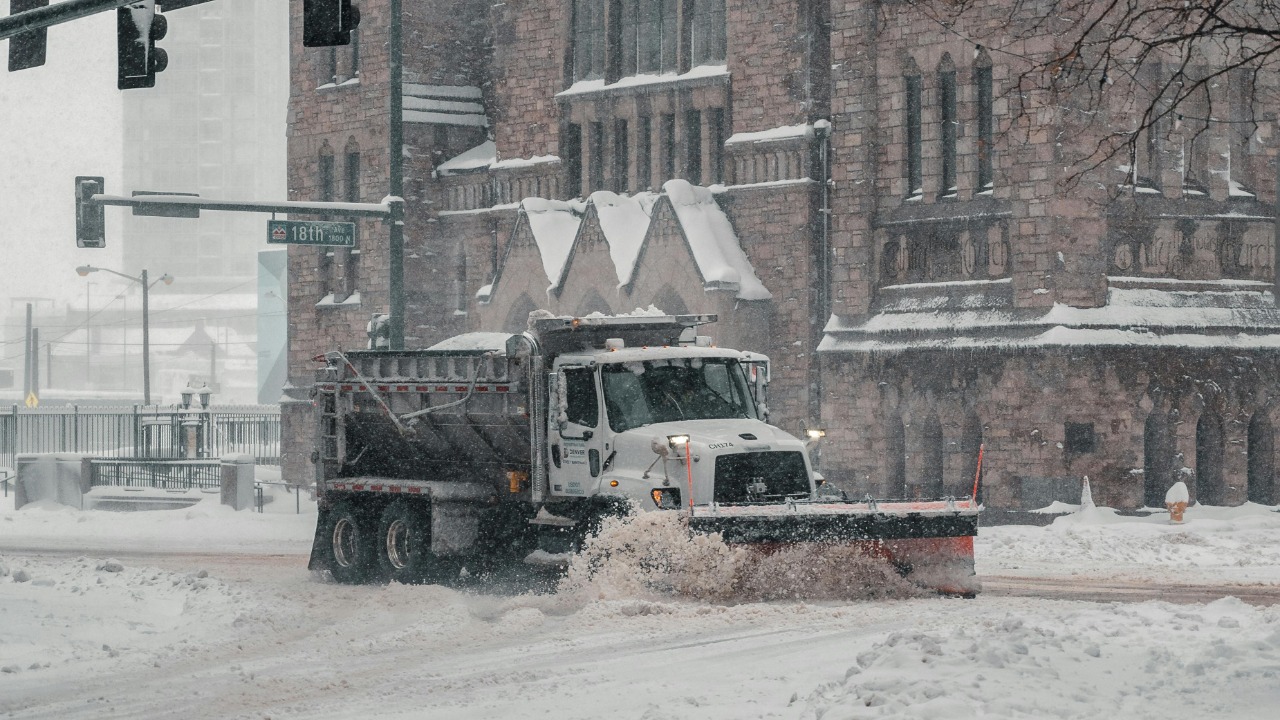
A steel blade bolted to the front of a truck or tractor rides low against the pavement, and forward motion alone does the work, shoving loose accumulation sideways off the travel lane and onto the shoulder in a single continuous pass down the street.
Municipalities run whole fleets of them because the design is cheap to build, simple to repair and mounts on trucks they already own for other seasons, but a plow blade only moves what sits loose on top of the surface; ice bonded directly to asphalt still needs salt brine or a scraper edge trailing behind it to break loose.
2. Rotary snowplow: The Drift Cutter
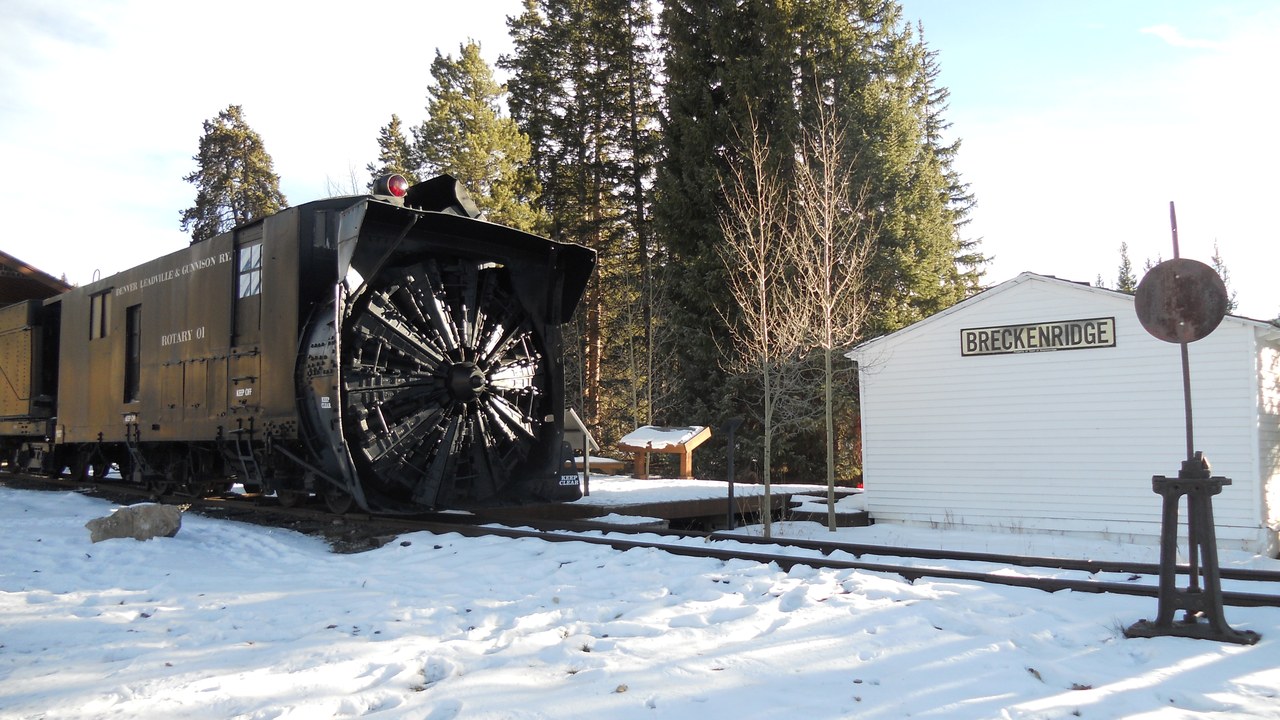
A dentist in Toronto named J. W. Elliott patented the idea in 1869: mount a spinning circular blade on the nose of a rail car, power it separately from the locomotive behind it, and let the wheel chew straight through a drift rather than merely pushing against it.
Where a fixed blade would simply stall, buckle or derail against a densely packed bank, the rotating cutter shreds the snow into pieces small enough to fling clear of the track through a chute, which is why mountain railroads in the American West and Canada still keep dedicated crews and machines on standby for the deepest passes.
3. Snow blower: The Auger-And-Impeller Machine
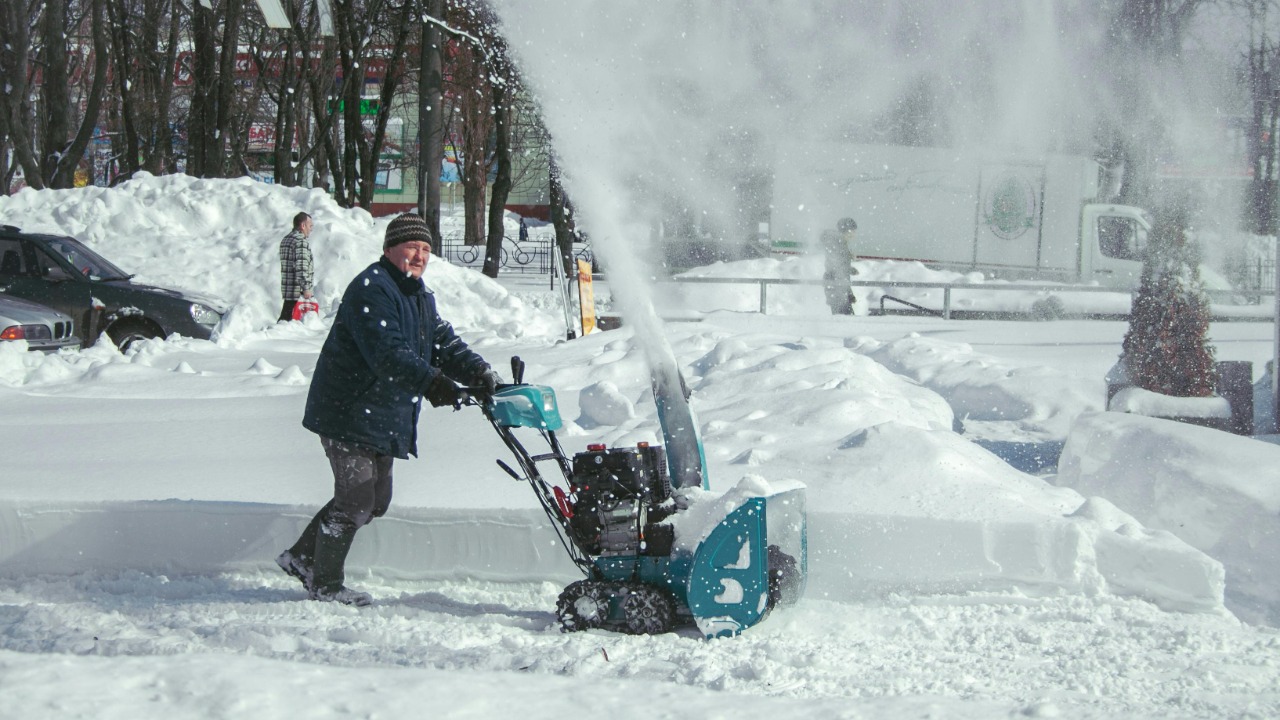
Arthur Sicard built the first practical version in 1925 for his native Quebec, pairing a rotating auger that gathers snow off the ground with an impeller fan that throws it through an aimable discharge chute well clear of the cleared strip.
That two-stage gathering-and-throwing action is what separates it from a simple plow: instead of banking snow into a ridge at the edge of a driveway, runway or track, the machine flings it a real distance away, so the same strip can be cleared storm after storm without the accumulated piles slowly closing back in on themselves.
4. Wedge plow: The Fixed V-Blade
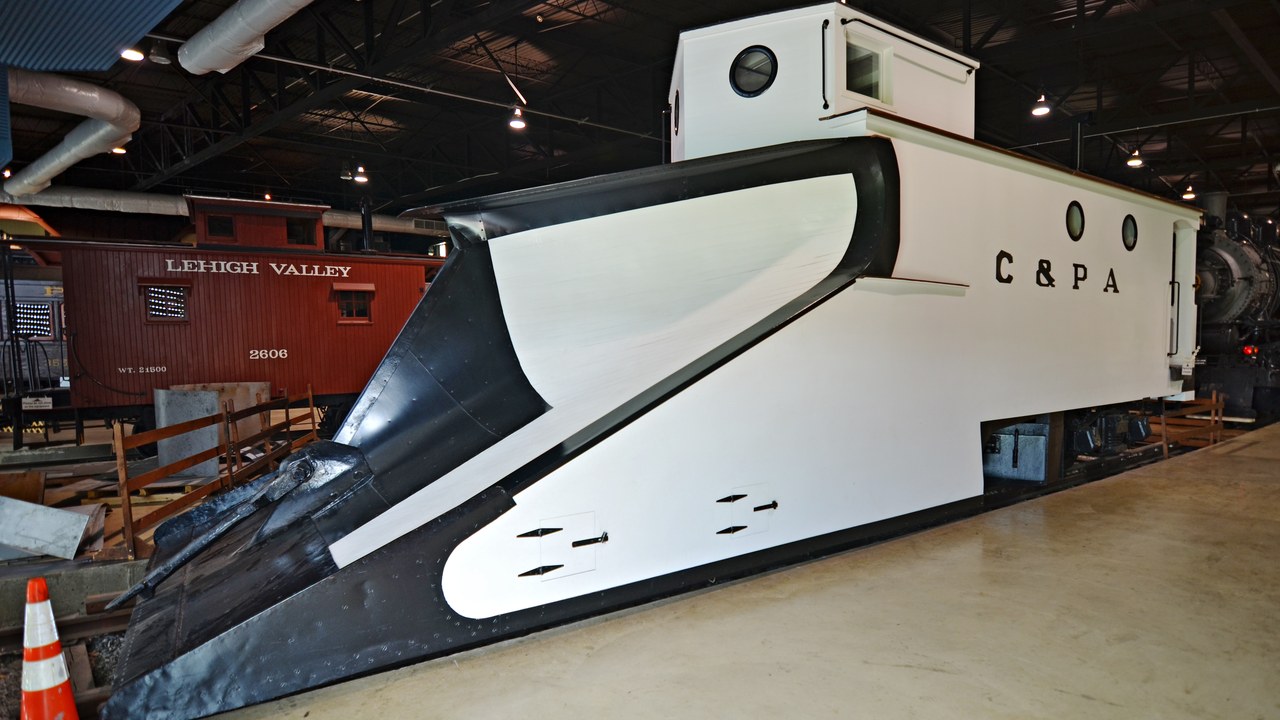
Bolted to the front of a locomotive, a rigid angled blade shaped like the letter V splits an oncoming snowbank down the middle and shoves the two halves off to either side of the rails, relying on nothing but the weight and speed of the train pushing it.
That mechanical simplicity, with no motor or moving cutting parts of its own, made it the standard railroad plow for generations of branch lines, but a wedge has a hard physical limit: once a drift grows too tall or too densely packed for the train to push through, the fixed blade stalls and the line needs a rotary plow instead.
5. Jordan spreader: The Multi-Tool Wing Car
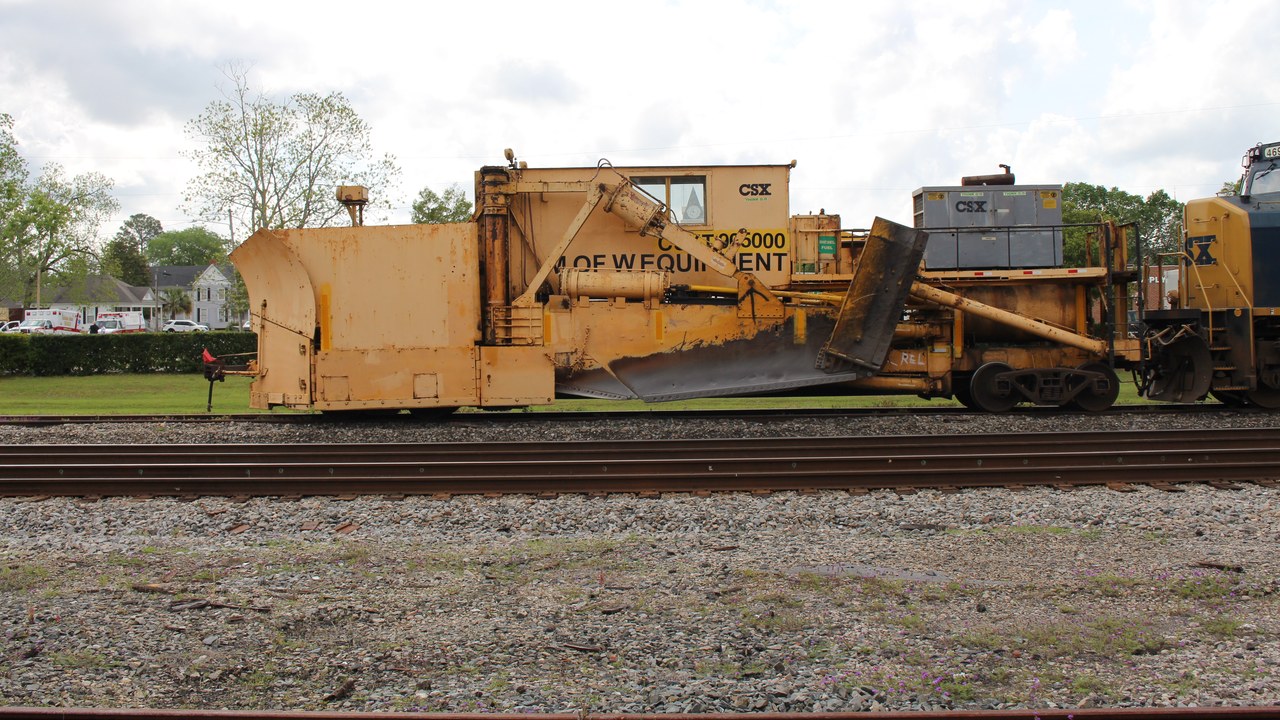
Unlike a plow built only to displace snow, this rail car carries adjustable wings and blades that fold out hydraulically to grade loose ballast, cut fresh drainage ditches and shape the banks running alongside the track, with snow clearing serving as just one of several jobs it performs.
Its versatility earned it induction into the North America Railway Hall of Fame in 2001 alongside the rotary plow, recognition of a machine that keeps a rail line usable and properly maintained year-round rather than sitting idle in a yard for nine months waiting on the next storm to arrive.
6. Snogo snowblower: The Self-Propelled Blower
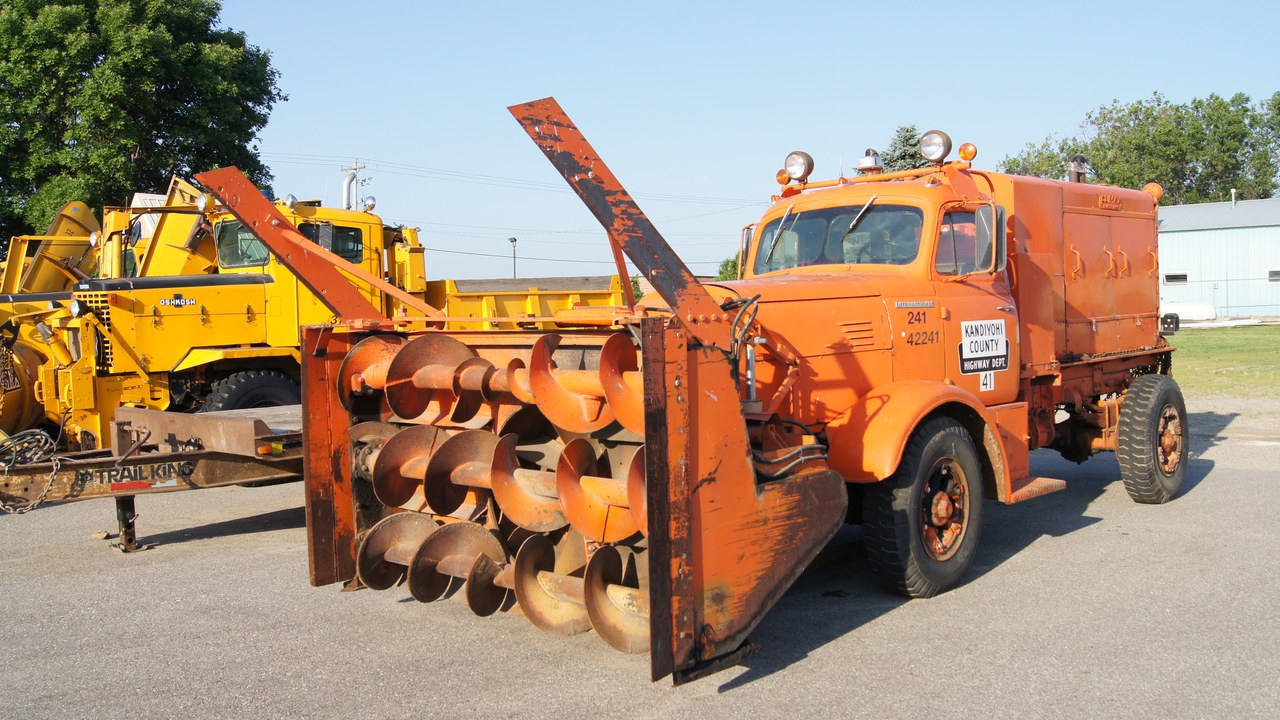
Sold under the Snogo name, this rotary blower is a complete, engine-powered, self-propelled vehicle in its own right rather than an attachment towed or pushed along by something else, letting a single operator steer, cut and redirect snow in one continuous pass.
That independence makes it especially suited to narrow rail sidings and tight airport aprons where hitching a plow to a much larger locomotive or truck would be impractical or simply would not fit, trading the raw pushing power of a bigger machine for tight maneuverability in genuinely cramped spaces.
7. Snow pusher: The Wingless Box Blade
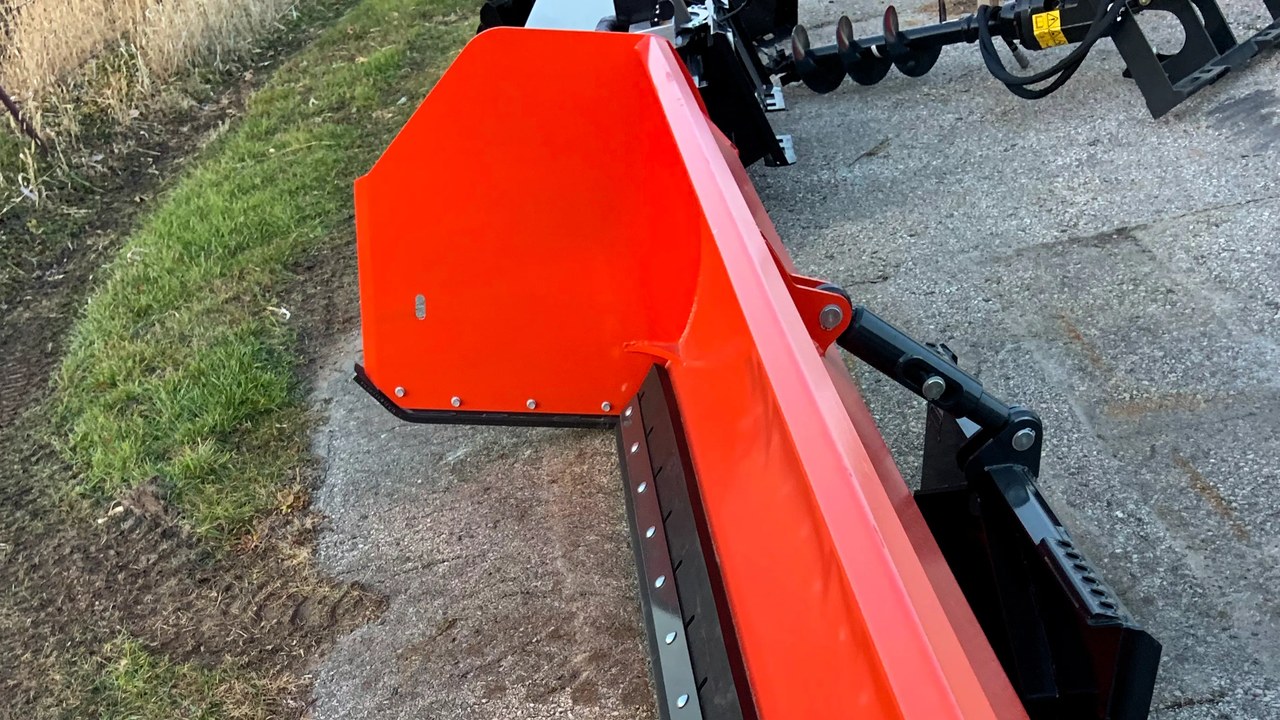
Mounted on the same loader or truck that would otherwise carry an angled plow blade, this wide, wingless box has no side wings to windrow snow into a ridge along the route; it simply shoves the entire accumulated volume straight ahead of it in one pass.
That makes it the tool of choice for parking lots and other open pavement, where operators would rather push everything to one collection point at the far end than leave long side-piles scattered across the middle of the lot, though it struggles badly on narrow lanes where there is nowhere left to push the load.
8. Flanger: The Between-The-Rails Scraper
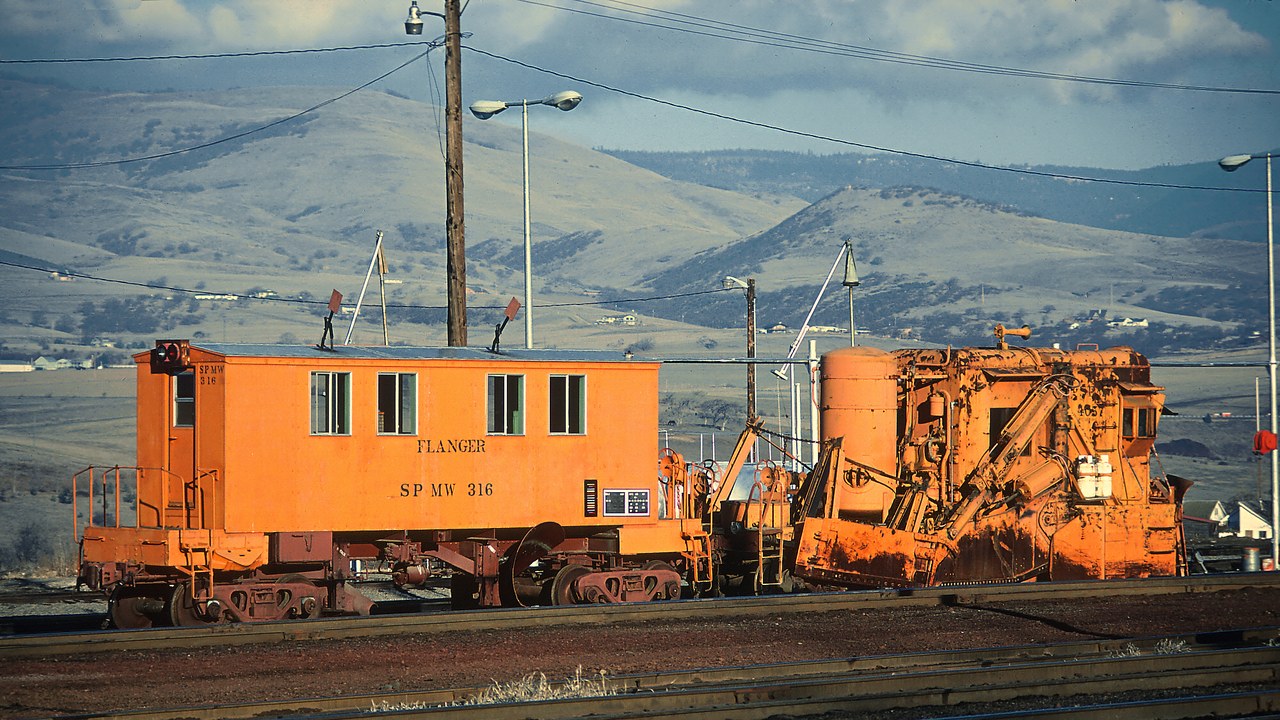
Lowered on hydraulics from beneath a rail car, a scraper blade digs down into the flangeway, the narrow channel running between the rail and the roadbed, clearing ice and packed snow from a gap that no plow riding above the level of the rail head can ever reach.
Crews have to raise the blade by hand at every switch, frog and grade crossing along the route to avoid tearing out track hardware, which makes running the equipment slow going, but it stays essential all the same, since a blocked flangeway can derail a wheel flange just as surely as an unplowed, buried rail.
9. Winter service vehicle: The Whole Fleet, One Name
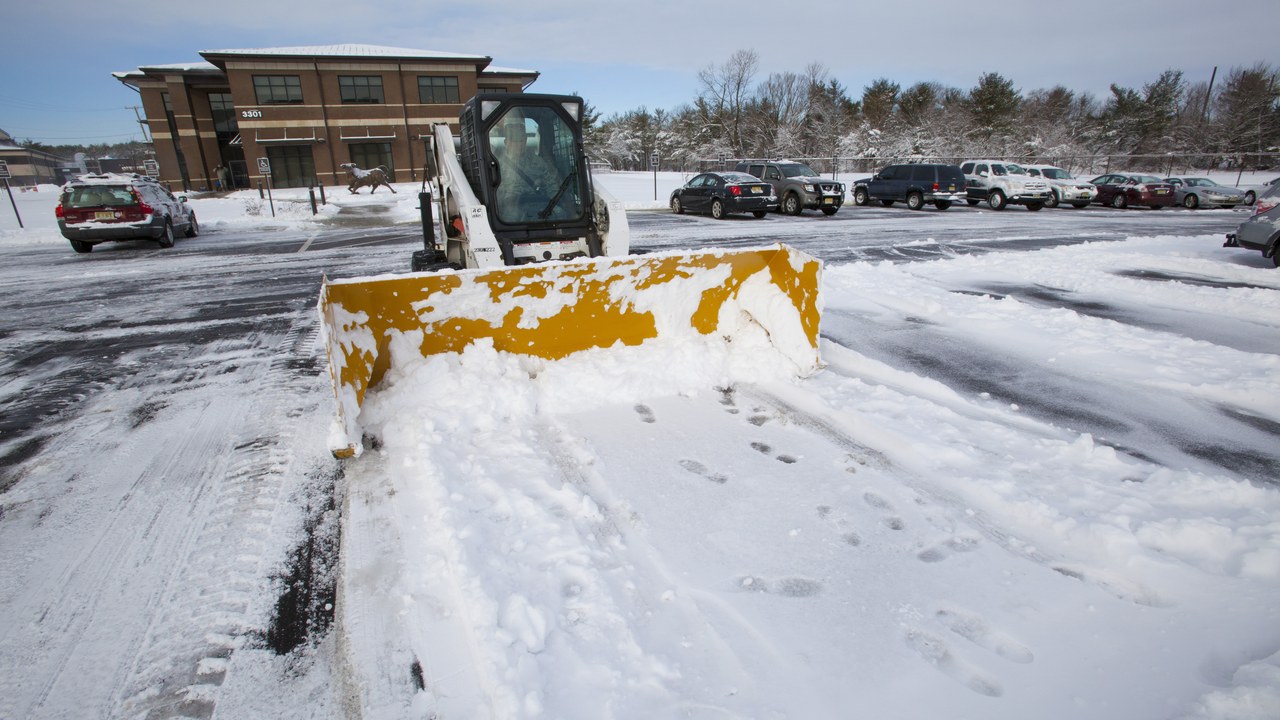
Highway departments and airport authorities classify their plows, spreaders, blowers and de-icing rigs together under this single umbrella term, covering everything from a pickup truck with a bolt-on blade to a multi-ton runway broom under one operating category.
Grouping such different machines this way lets an agency plan winter budgets, staffing rosters and maintenance schedules around an entire fleet rather than tracking individual machine types separately, a distinction that matters most when a single major snowstorm calls every vehicle in the category into service at the same time.
More from Morning Overview
- The FBI tells phone owners to delete these toll-payment texts draining accounts nationwide
- Herbal supplements are landing Americans in the hospital with liver damage, doctors warn
- Long-term use of common heartburn pills is linked to kidney and dementia risk
- 9 pickup trucks with a reputation for falling apart after 100,000 miles
