
Modern computing did not arrive fully formed with the smartphone. It was assembled machine by machine, in wartime huts, university basements and suburban garages, by engineers who rarely understood what they were starting. Each of the following machines solved a narrow problem and left behind an idea the whole industry later borrowed; here are eight early computers that quietly launched the digital age.
1. ENIAC: The Thirty-Ton Calculator
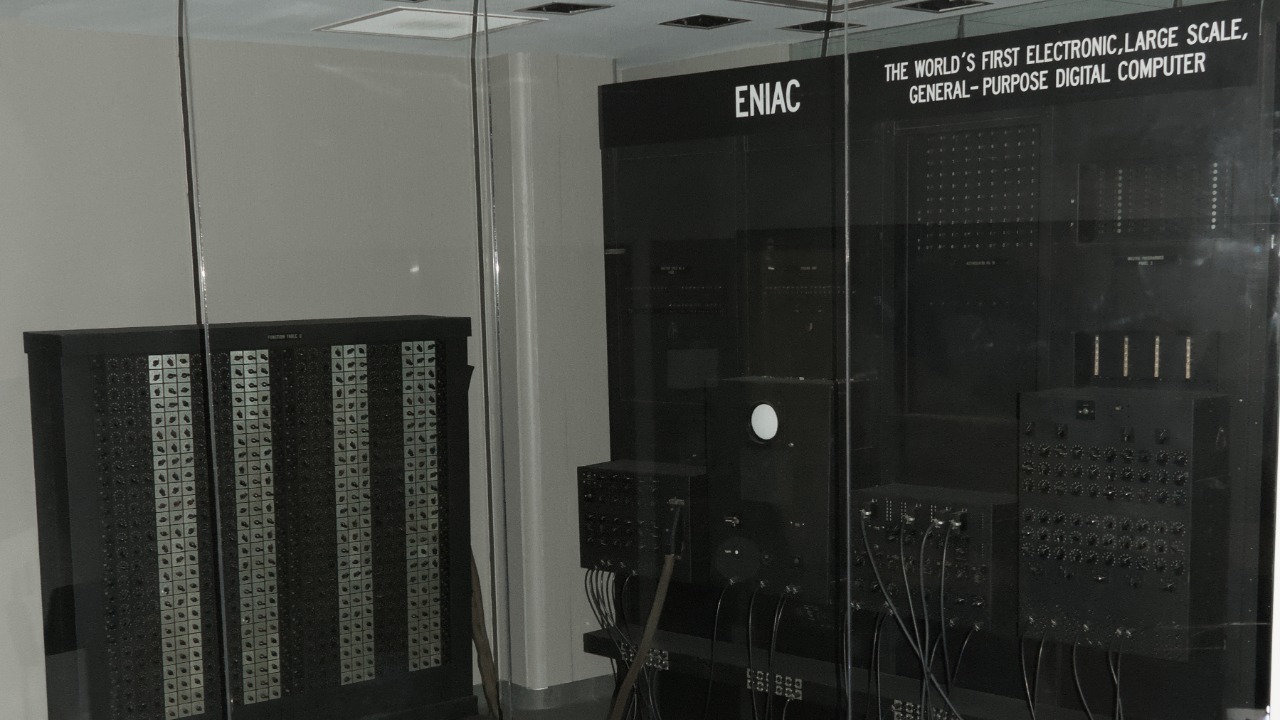
Unveiled at the University of Pennsylvania in February 1946, ENIAC filled a room with roughly 18,000 vacuum tubes, weighed about 30 tons and drew some 150 kilowatts of power. The Army had funded it to compute artillery firing tables, work that took human calculators days and that the machine finished in seconds. Panels from the original survive in the Smithsonian computing collections.
Its speed came at a cost in labor: programming meant physically rewiring plugboards and setting switches, a job done largely by six women mathematicians whose contribution went unnamed for decades. ENIAC ran until 1955, long enough to prove that a general-purpose electronic machine was practical rather than theoretical.
2. Colossus: The Secret Kept for Thirty Years
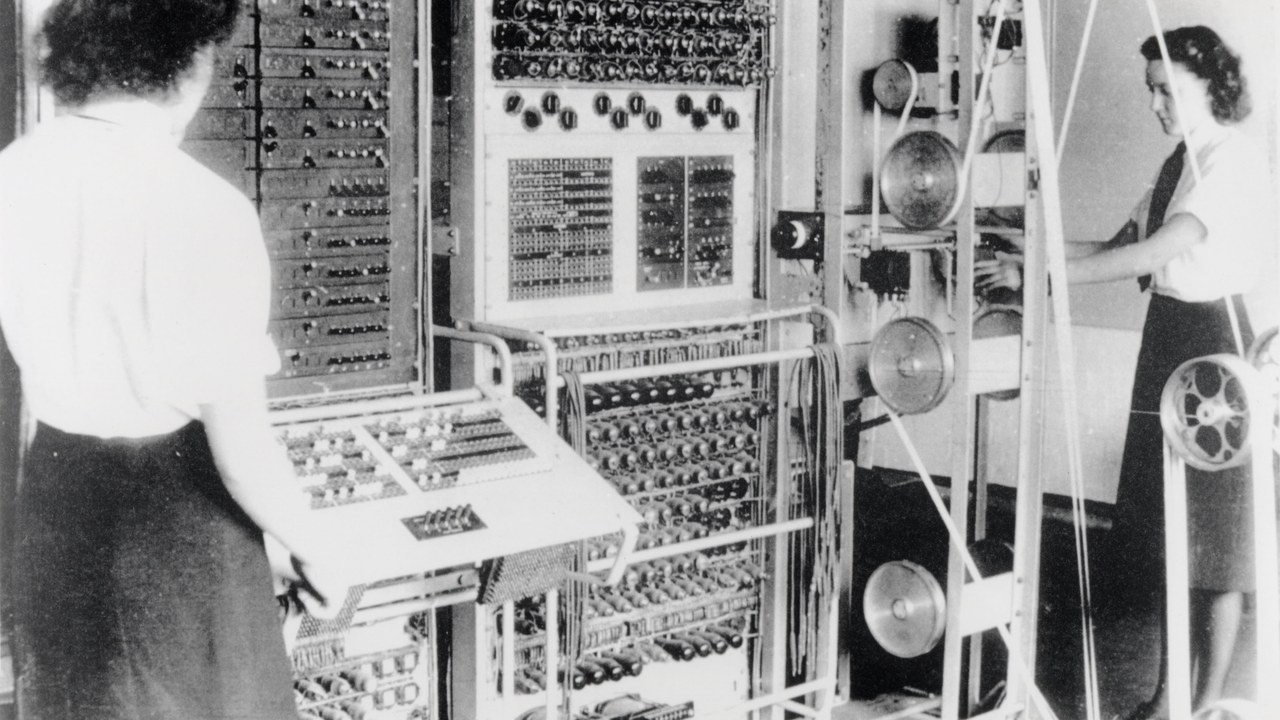
Built by Post Office engineer Tommy Flowers and running at Bletchley Park from early 1944, Colossus attacked the Lorenz cipher that carried Germany’s highest-level teleprinter traffic, not the better-known Enigma. The Mark 2 version, with around 2,400 valves, entered service on 1 June 1944, days before the Normandy landings, cutting wheel-setting work from weeks to hours. Ten of the wartime codebreaking machines were operating by 1945.
Secrecy then erased it. Most units were broken up on orders from Churchill, drawings were destroyed and operators stayed silent into the 1970s, so credit for early electronic computing went elsewhere for a generation. A working reconstruction was finally completed at Bletchley Park in 2007.
3. UNIVAC I: The Machine That Called an Election
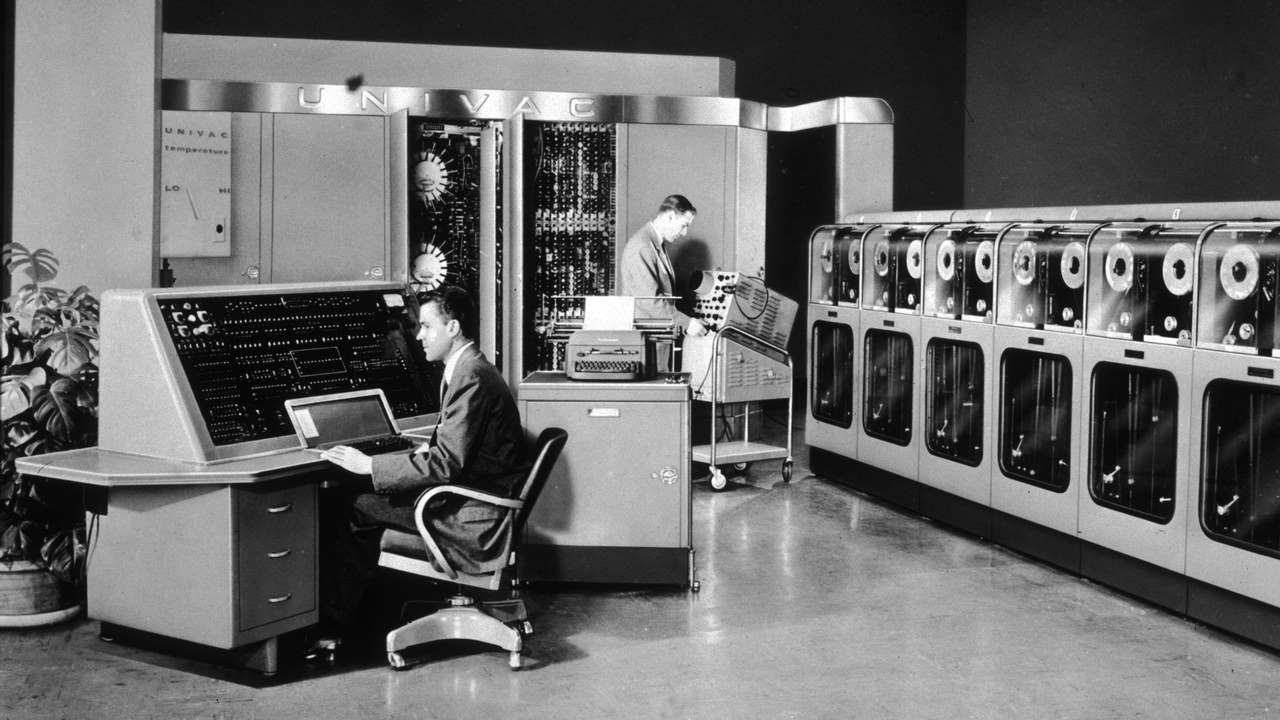
Delivered to the United States Census Bureau on 31 March 1951, UNIVAC I was the first computer built for sale rather than for a single laboratory, and Remington Rand eventually shipped 46 systems to agencies, insurers and manufacturers. Data moved on mercury delay lines and magnetic tape instead of punched cards, a shift detailed in the machine’s technical record.
Public fame arrived in November 1952, when the system used early returns to forecast an Eisenhower landslide on CBS and network staff, distrusting the result, held the prediction back. That broadcast did more for the word computer than any sales brochure, and Univac became shorthand for the entire category.
4. Altair 8800: The Kit That Started a Movement
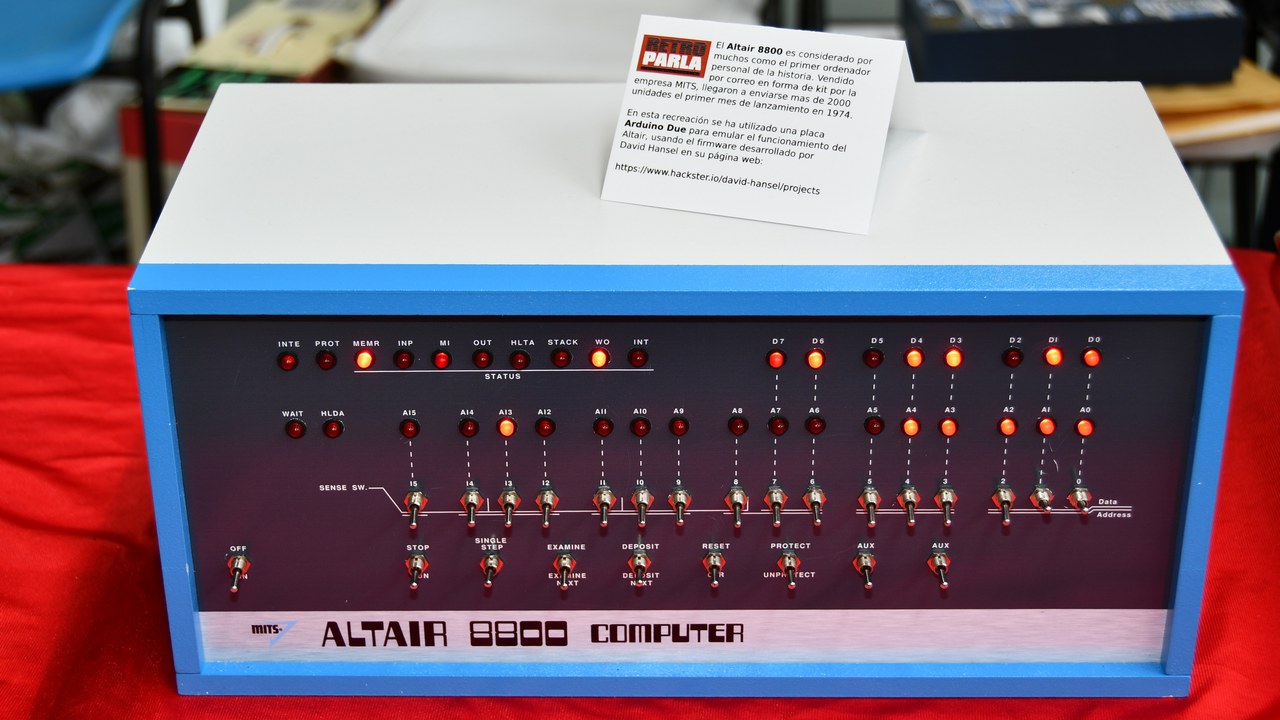
A January 1975 magazine cover put a blue box of switches and lamps in front of hobbyists, and MITS in Albuquerque was buried in orders for the Altair 8800 kit, which cost $439 unassembled and arrived with 256 bytes of memory. Programs went in through front-panel toggle switches, one binary word at a time, and results were read off a row of red lamps.
Two consequences followed fast. Bill Gates and Paul Allen wrote a BASIC interpreter for the machine, the first product of the company that became Microsoft, and its expansion bus was copied so widely that it hardened into the S-100 industry standard.
5. Apple I: A Bare Board Priced at $666.66
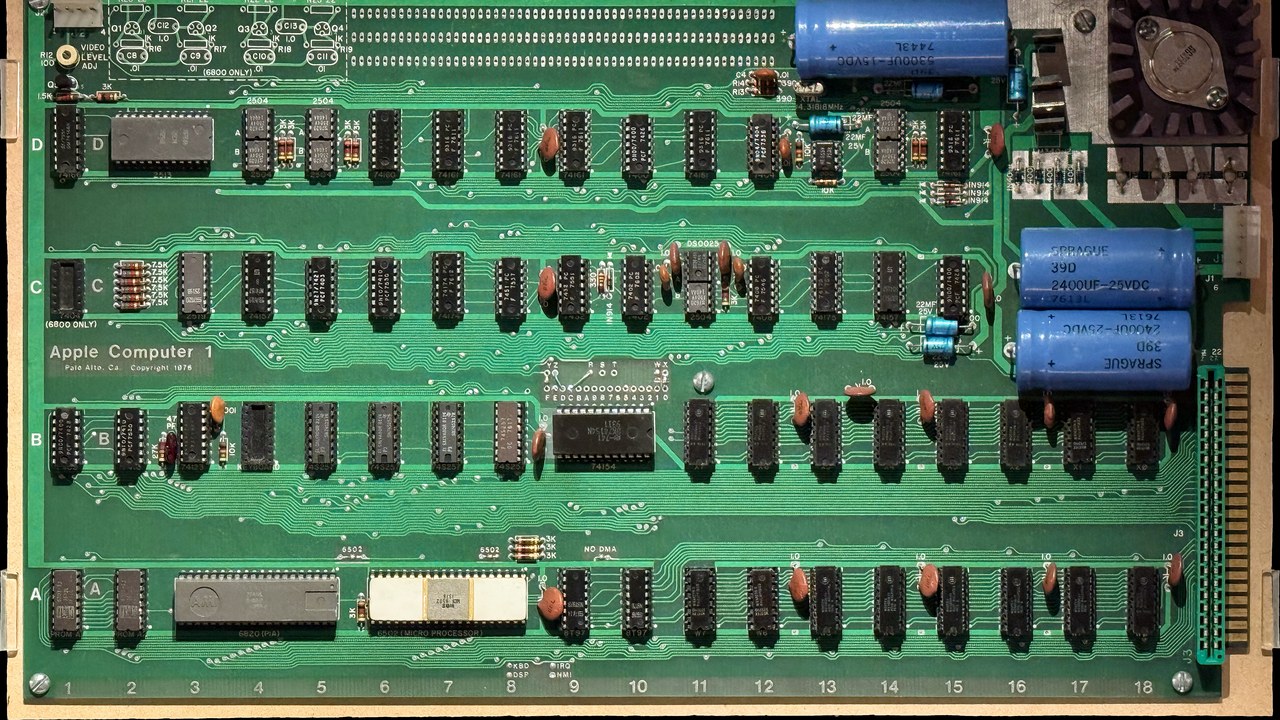
Steve Wozniak designed the Apple I in 1976 as a single assembled circuit board, sold without a case, keyboard, power supply or display and priced at $666.66. Its real novelty was a built-in terminal circuit that let an owner type on a keyboard and read characters on a television, replacing the switches and lamps rivals still relied on. Roughly 200 of the hand-built boards were made.
The first serious order came from Paul Terrell of the Byte Shop in Mountain View, who wanted 50 assembled units and pushed the founders into running a business rather than a hobby. Production ended in 1977 once the Apple II arrived, which is why surviving examples now command six-figure auction prices.
6. IBM Personal Computer: The Standard Everyone Copied
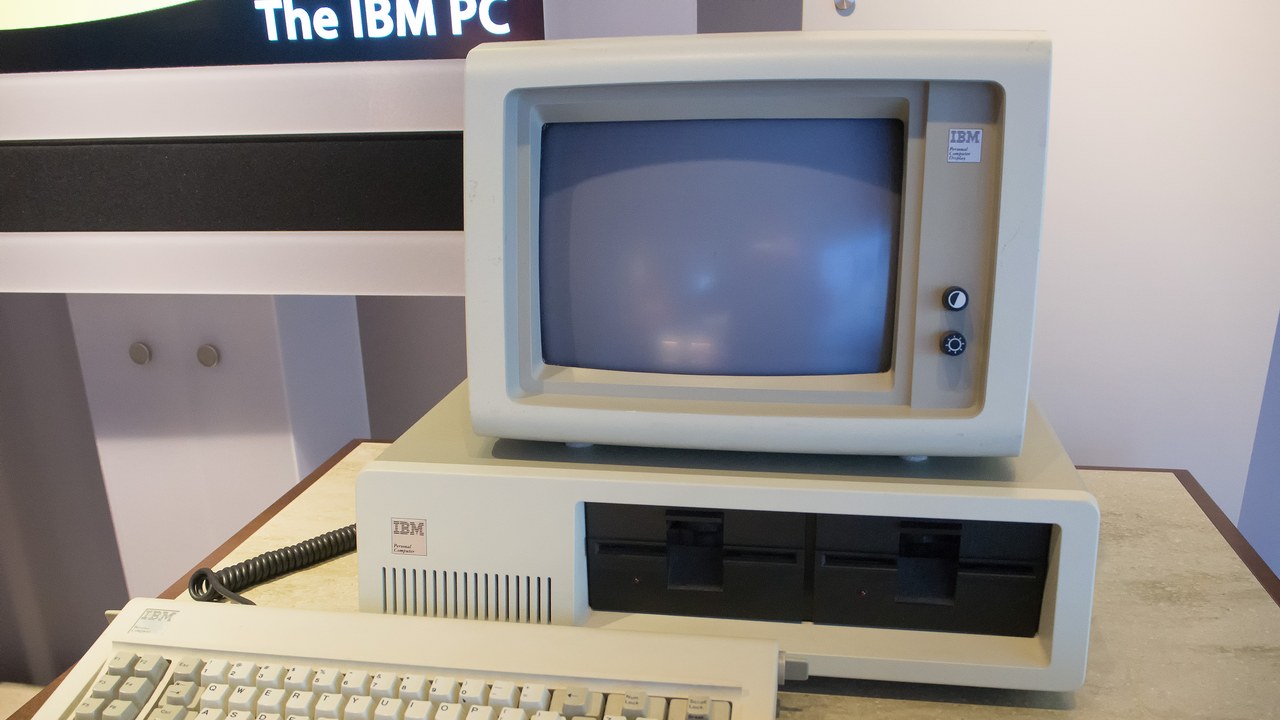
IBM announced the model 5150 on 12 August 1981 with an Intel 8088 running at 4.77 MHz, 16 KB of memory in the base configuration and a starting price near $1,565. To ship within a year the team used off-the-shelf parts and published a technical reference that included the BIOS listing, a decision recorded in the IBM Personal Computer history.
That openness handed the market away. Compaq and others legally reverse-engineered the BIOS, built compatible machines and turned one IBM product into the generic PC platform, while the operating system contract went to Microsoft rather than staying in-house. The architecture outlived IBM’s dominance by decades.
7. Commodore PET: One Box, Everything Included
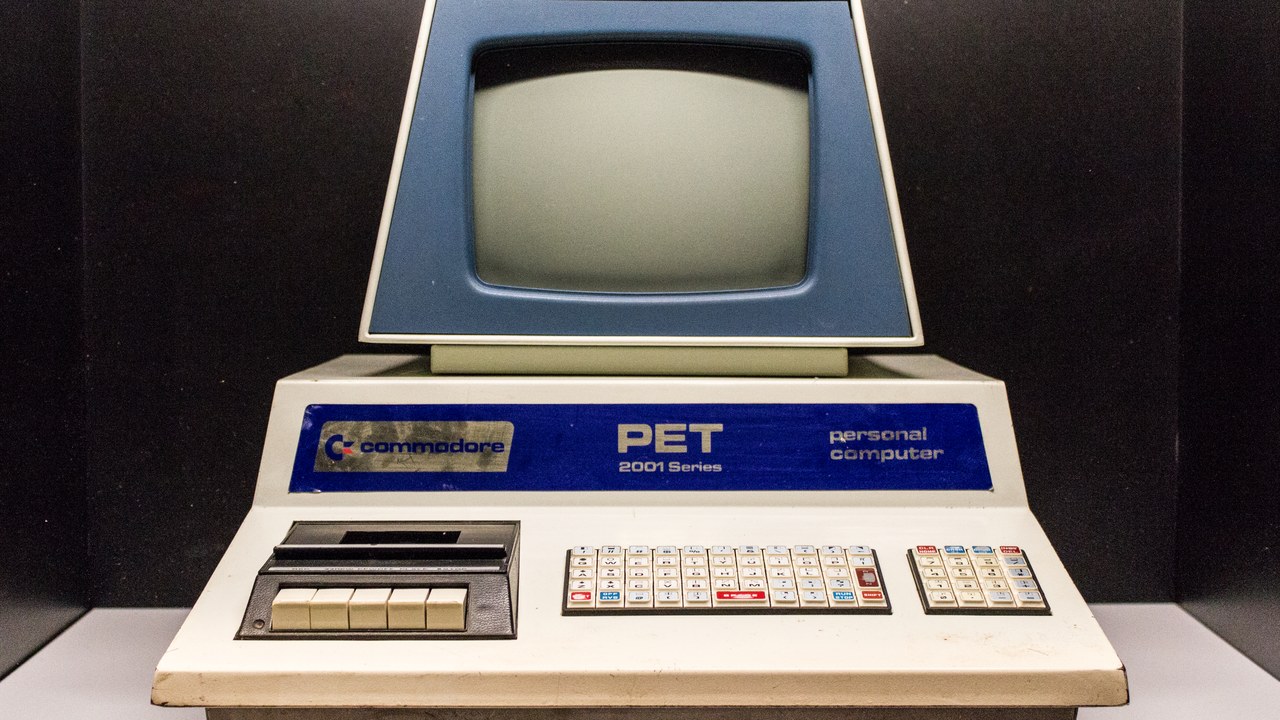
Shown at the Consumer Electronics Show in January 1977 and shipping later that year, the Commodore PET 2001 packed a MOS 6502 processor, a monochrome monitor, a keyboard and a cassette drive into one welded metal case, so nothing else had to be bought. Early units carried 4 or 8 KB of memory and a cramped calculator-style keyboard that the PET product line later replaced with full-travel keys.
Being self-contained made it a fixture in classrooms across Canada, Britain and West Germany, where a machine that survived being carried between rooms mattered more than raw speed. Alongside the Apple II and the TRS-80, it made 1977 the year the home computer stopped being a kit.
8. Xerox Alto: The Desktop Before the Desktop
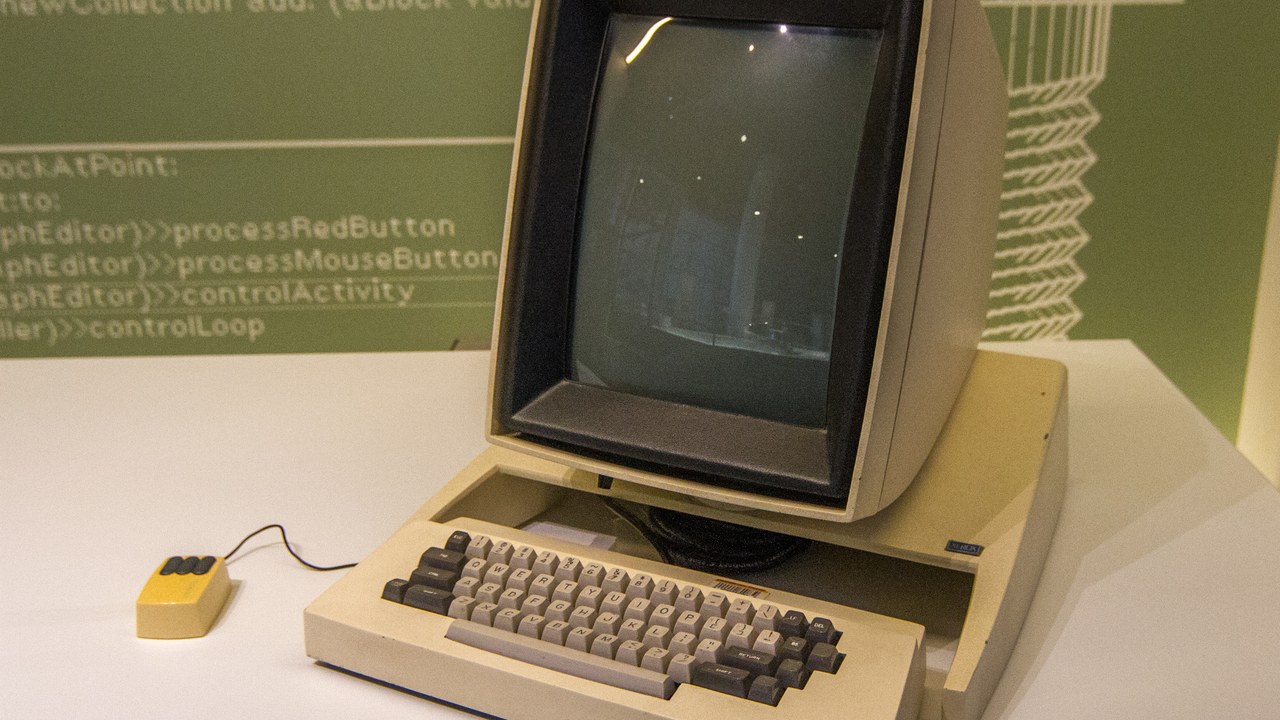
First running at Xerox PARC in March 1973, the Alto combined a tall bitmapped screen, a three-button mouse, overlapping windows and Ethernet networking years before any of it reached a shop. Xerox never sold the machine; about 2,000 were built for internal use and for universities, which is why the Alto research program is remembered for its ideas rather than its revenue.
Visitors carried those ideas out. A 1979 demonstration for a group from Apple fed directly into the Lisa and the Macintosh, and the window-and-pointer conventions the Alto established still govern the interface on nearly every screen sold today.
More from Morning Overview
- A Colorado wildfire has exploded past 87,000 acres with no containment
- A wildfire near Ouray swelled past 18,000 acres, putting Colorado towns on alert
- The Pentagon’s newest UFO files describe a fish-scaled, potato-shaped object on camera
- Scientists spotted a rare tusked whale alive at sea for the first time, then fired a crossbow at it.
