
UNESCO has designated a handful of American landscapes as World Heritage sites for natural rather than cultural value, a recognition earned through geology, ecology or scale found nowhere else. The list spans canyons cut by rivers, cave systems still being mapped and volcanic islands still growing. Here are nine natural wonders that earned that designation.
1. Grand Canyon: A Mile-Deep Timeline

The Grand Canyon National Park exposes nearly two billion years of geologic history in rock layers stacked more than a mile deep, carved by the Colorado River over roughly six million years. The canyon stretches 277 miles long and up to 18 miles wide, with exposed strata that read like a stacked timeline of the planet’s past.
UNESCO listed the canyon as a World Heritage site for its scale and its near-complete geologic record, one rarely visible anywhere else on the surface of the earth. For visitors, the layered walls turn a single overlook into a lesson spanning nearly half of Earth’s entire history.
2. Yellowstone: A Supervolcano Full Of Geysers
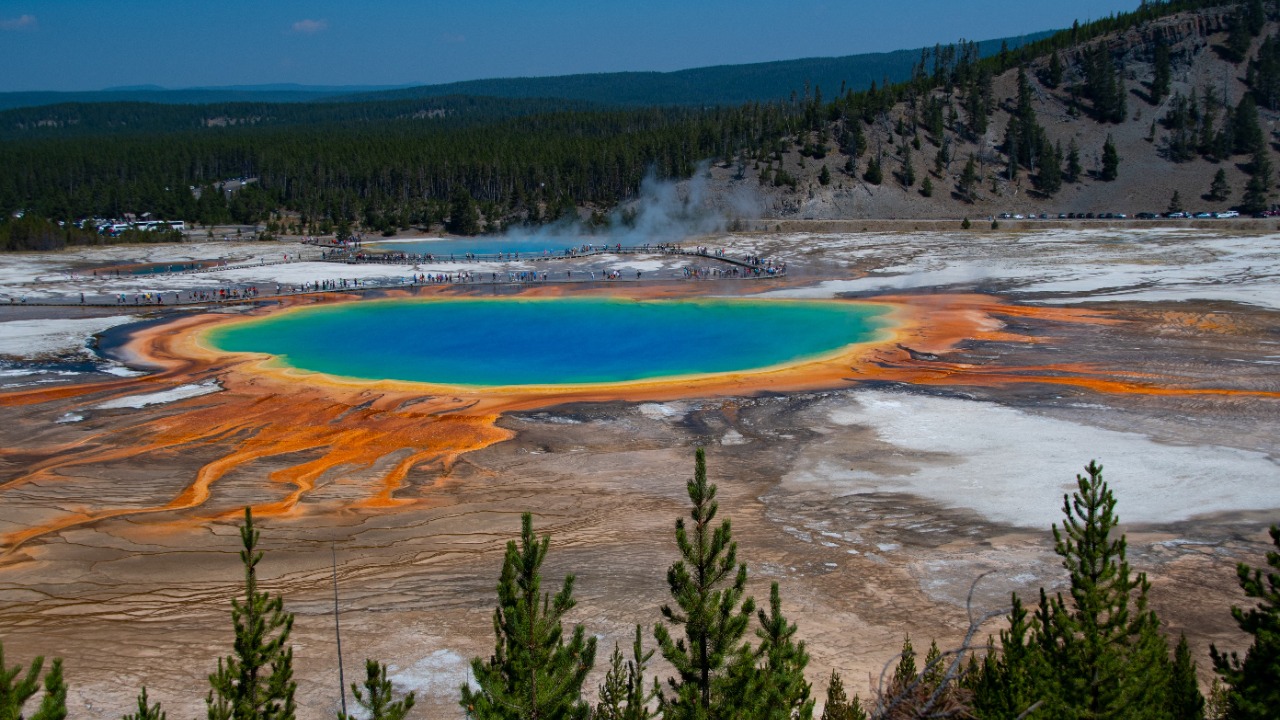
The Yellowstone caldera sits atop a supervolcano capable of eruptions thousands of times larger than a typical volcanic blast, and its heat drives more than 10,000 hydrothermal features, including roughly 500 geysers, the largest concentration on the planet. Old Faithful alone erupts every 60 to 110 minutes, a rhythm scientists have tracked for over a century.
Established in 1872 as the first national park in the world, Yellowstone earned its UNESCO listing for a combination unmatched elsewhere: an active volcanic system, thermal features, and a nearly intact temperate ecosystem. The result is a landscape where the ground itself remains visibly, audibly alive.
3. Everglades: A River Of Grass

The Everglades is a slow-moving river of sawgrass marsh, not a swamp, spreading water across roughly 1.5 million acres of South Florida at a pace historically measured in inches per day. It is the only subtropical wilderness of its kind in North America, home to alligators, crocodiles and manatees living side by side.
UNESCO recognized the Everglades for a mix of rare and endangered species found together nowhere else, though decades of drainage and development have already reduced the original wetland by roughly half. Restoration work continues, but the ecosystem remains fragile compared with its historic scale.
4. Redwood forests: Home To The Tallest Trees On Earth

Redwood National and State Parks protect nearly 40,000 acres of old-growth coast redwood, including individual trees over 350 feet tall, taller than a 30-story building, and some more than 2,000 years old. The parks hold roughly 45 percent of the world’s remaining old-growth coast redwood forest.
Logging removed about 95 percent of the original redwood range before the parks were established, which is part of why UNESCO listed the surviving groves as globally significant rather than simply scenic. What remains is one of the last places where trees of that age and height still stand together.
5. Mammoth Cave: The Longest Cave System Known

Mammoth Cave National Park contains more than 420 mapped miles of passageways, making it by far the longest known cave system on Earth, more than twice the length of the next-longest system anywhere in the world. Surveyors continue to find new passages nearly every year, and the true extent remains unmeasured.
The cave formed over millions of years as groundwater dissolved layers of limestone beneath a sandstone cap that protected the tunnels from collapse. UNESCO cited that combination of scale and continuous geologic formation when it added the park to the World Heritage list.
6. Olympic National Park: Rainforest, Coast And Glaciers Together

Olympic National Park packs three distinct ecosystems into one boundary: glacier-capped peaks over 7,000 feet, one of the wettest temperate rainforests in the continental United States, and roughly 70 miles of wild Pacific coastline. Annual rainfall in the Hoh Rain Forest can top 140 inches, feeding moss-draped canopies found almost nowhere else in the country.
UNESCO designated the park for holding that many distinct habitats within a single, largely undeveloped landscape, an unusual pairing found in few other places worldwide. Wildlife ranges from Roosevelt elk in the lowland forests to mountain goats on the alpine ridges above.
7. Yosemite: Granite Domes And Towering Waterfalls
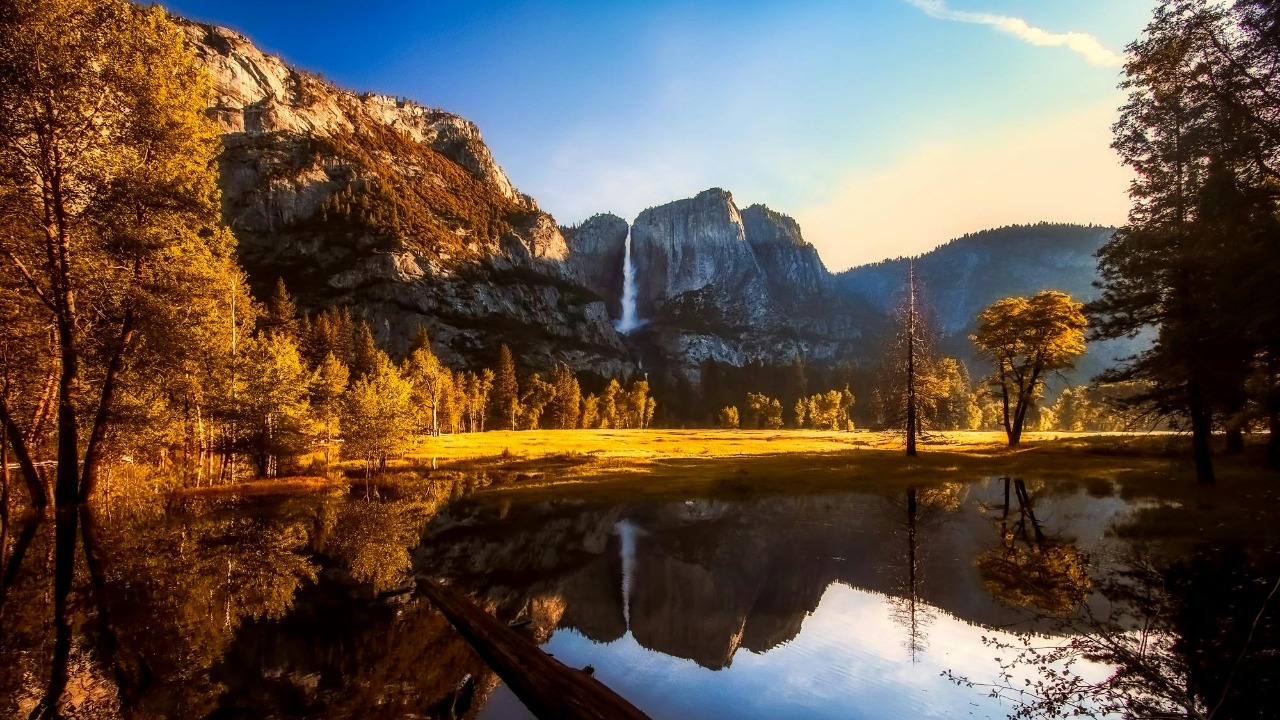
Yosemite National Park is defined by sheer granite formations like El Capitan and Half Dome, carved by glaciers and exposed as the ice retreated roughly 10,000 years ago. Yosemite Falls drops 2,425 feet in three tiers, making it one of the tallest waterfalls in North America, and the park’s glacially carved valley remains a rare, largely intact example of that landscape type.
UNESCO listed Yosemite for its geology and its role in shaping the American conservation movement, since the valley’s protection in the 1860s helped establish the template for national parks. The granite walls draw climbers from around the world for routes found in few other places.
8. Carlsbad Caverns: An Underground Chamber Of Formations
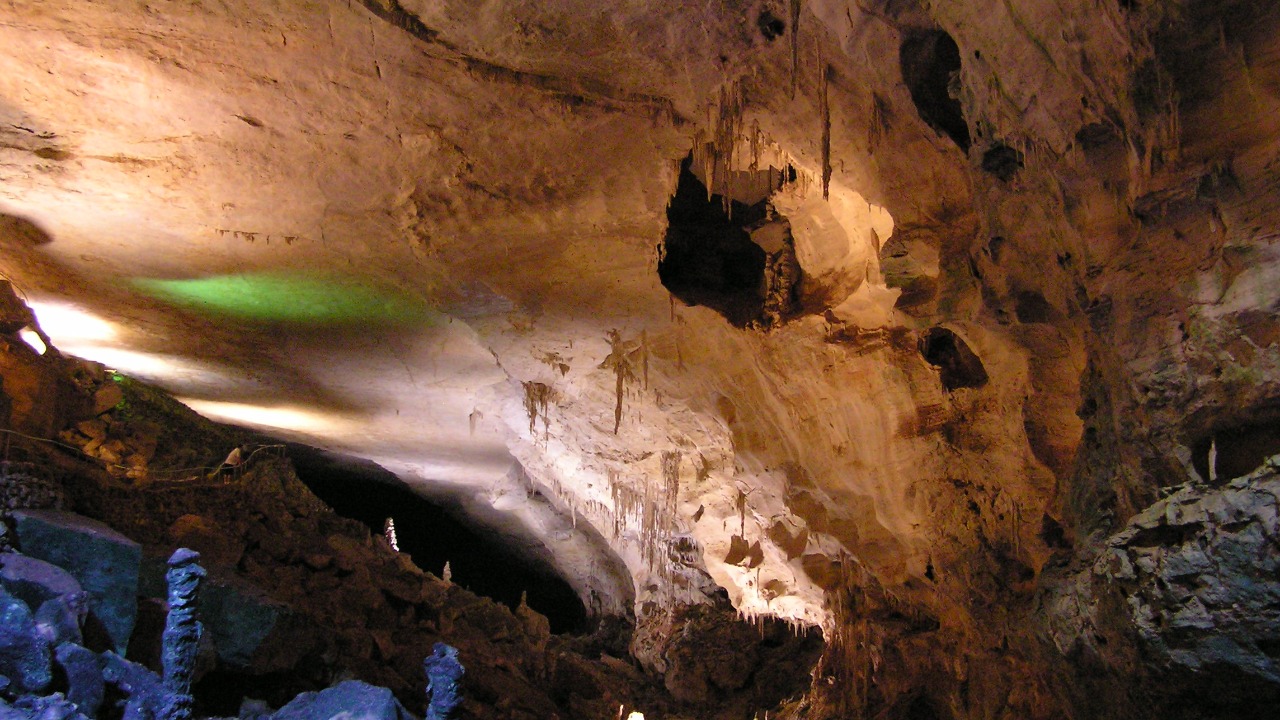
Carlsbad Caverns National Park holds more than 119 known caves formed as sulfuric acid dissolved an ancient reef, leaving chambers like the Big Room, a single cavern nearly 4,000 feet long, wide enough to hold several football fields. Formations there include soda straws, draperies and columns built up drop by drop over hundreds of thousands of years.
UNESCO recognized the park for the size and complexity of its cave systems, a formation process distinct from the more common limestone caves found elsewhere. Each summer, hundreds of thousands of Mexican free-tailed bats emerge from the cave mouth at dusk, a spectacle tied directly to the cavern below.
9. Hawaii Volcanoes: Active Lava Shaping New Land

Hawaii Volcanoes National Park sits atop two of the most active volcanoes on Earth, Kilauea and Mauna Loa, where eruptions have added new land to the coastline within living memory. The park spans from sea level to 13,677 feet at Mauna Loa’s summit, crossing multiple climate zones in a single drive.
UNESCO listed the park for volcanic activity that remains ongoing rather than historic, letting visitors witness the same processes that built the entire island chain. Lava flows have repeatedly reshaped trails and roads, so the landscape itself is still a work in progress.
More from Morning Overview
- A second Maya city, hidden 2,500 years, has surfaced from Campeche’s forest on LiDAR maps
- Doctors are rethinking who actually benefits from a daily low-dose aspirin
- Older Teslas are wearing out in ways early owners never saw coming
- Stanford doctors flag five risks that make cannabis dangerous after 65
