Image Credit: Craig Dietrich - CC BY 2.0/Wiki Commons
Concentrating solar power takes a different path from the photovoltaic panels that dominate rooftops, using fields of tracking mirrors to focus sunlight on a single receiver. The heat that collects there boils water or melts salt, driving a conventional steam turbine long after sunset at some sites. Here are eight solar-thermal towers burning bright across the world’s deserts.
1. Ivanpah Solar Power Facility: Three Towers in the Mojave
Image Credit: Craig Dietrich – CC BY 2.0/Wiki Commons
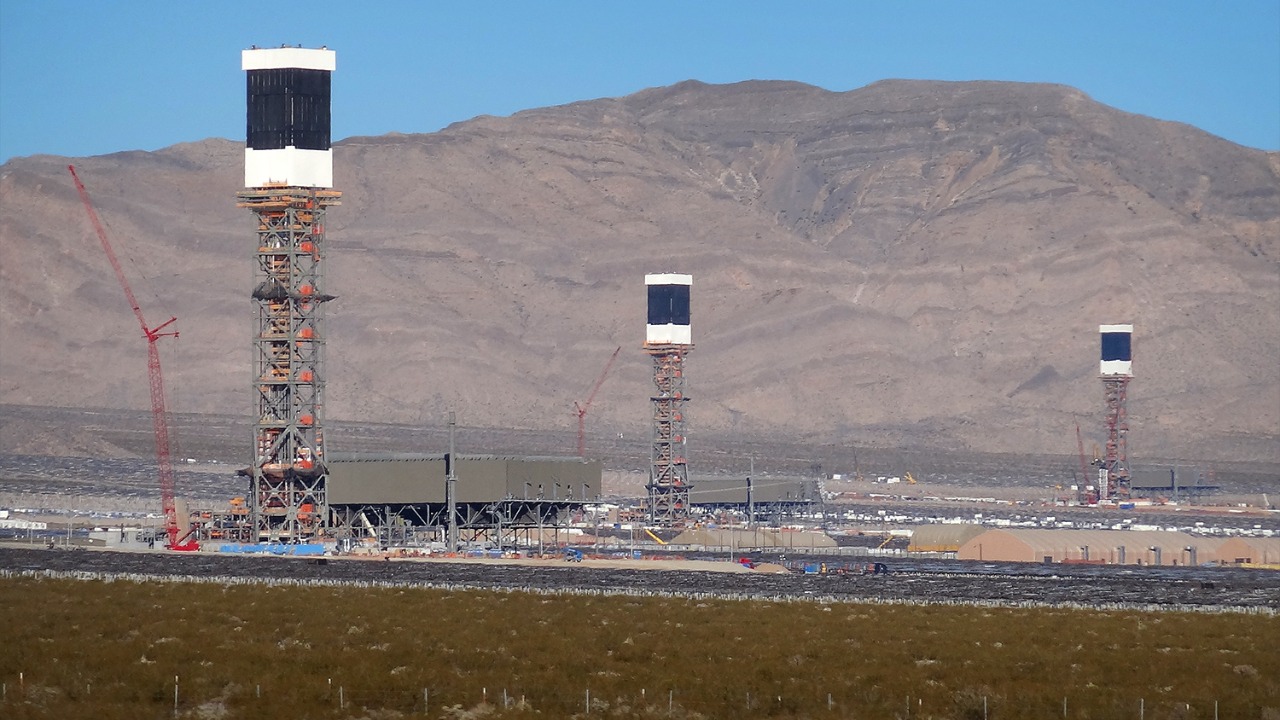
Ivanpah spreads across the Mojave Desert near the California-Nevada border, where roughly 173,500 computer-guided heliostats surround three receiver towers. Each heliostat carries a pair of mirrors that track the sun and throw its light onto a boiler at the top of a tower, flashing water straight into high-pressure steam. That arrangement is the power tower design catalogued by the Department of Energy among concentrating solar-thermal technologies, and Ivanpah’s version is rated at 392 megawatts gross.
Direct steam generation keeps the plant mechanically simple, yet it leaves no reservoir of heat to draw on. Output rises and falls with the sun and stalls when clouds cross the basin, a constraint that pushed later tower projects toward molten salt.
2. Crescent Dunes Solar Energy Project: Ten Hours of Molten Salt
Image Credit: Bureau of Land Management Nevada – Public domain/Wiki Commons
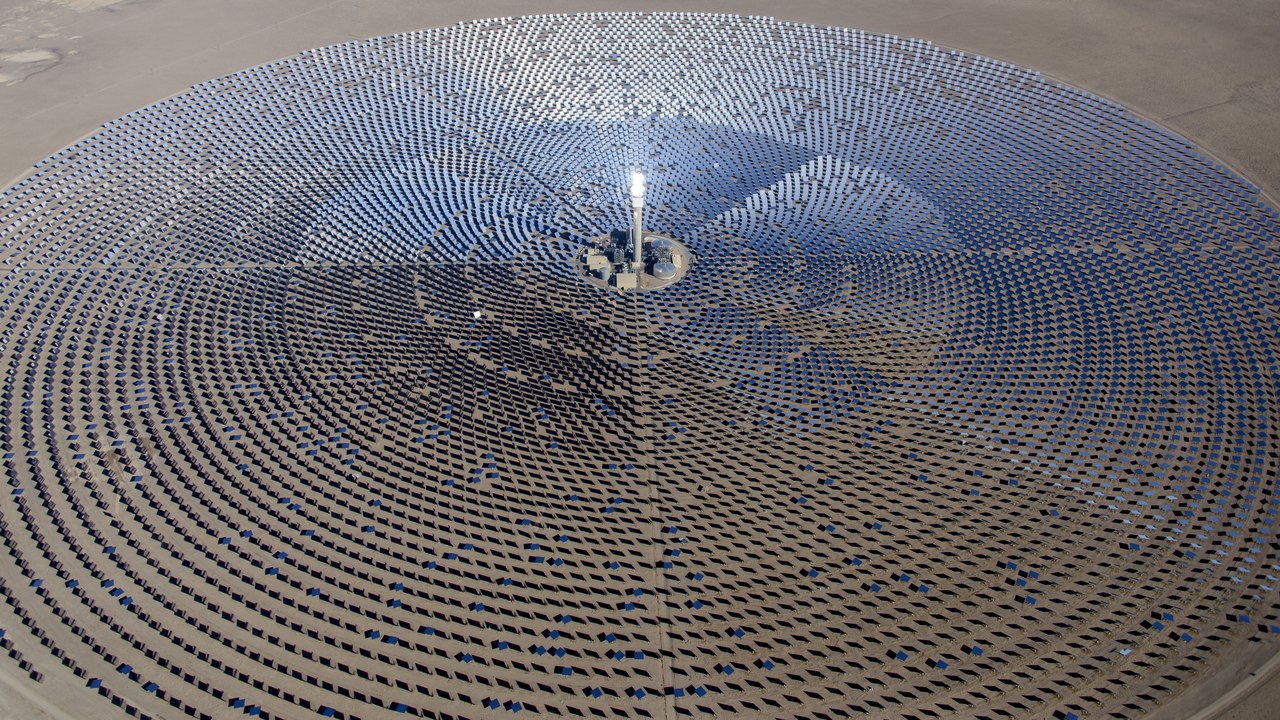
Near Tonopah, Nevada, a 640-foot tower stands at the center of more than 10,000 heliostats arranged in concentric rings across roughly 1,600 acres. Rather than boil water, the receiver heats molten nitrate salt to temperatures above 500 degrees Celsius, and the fluid is pumped into insulated tanks. The 110-megawatt Nevada plant was built to hold about ten hours of that heat, enough to run its steam turbine deep into the night.
Storage proved easier to describe than to operate. A leak in the hot salt tank took the project offline for months in 2016, a power-purchase contract was terminated in 2019, and the plant sat idle before returning to service under new ownership.
3. Noor Ouarzazate: Morocco’s Desert Megacomplex
Image Credit: Marc Lacoste – CC BY-SA 4.0/Wiki Commons
On a plateau outside Ouarzazate, on the edge of the Sahara, Morocco assembled its concentrated-solar capacity in stages: two parabolic-trough fields, a central tower, and a photovoltaic block. The tower stage, Noor III, rates 150 megawatts and lifts its receiver about 250 metres above the desert floor, ringed by thousands of heliostats. Counting every phase, the Ouarzazate complex reaches roughly 580 megawatts.
The mix was deliberate. Troughs delivered proven bulk generation while the tower added higher temperatures and salt storage, letting the site push power into the evening peak when Moroccan demand climbs and photovoltaic panels have already gone dark.
4. PS10 solar power tower: Europe’s First Commercial Tower
Image Credit: kallerna – CC BY-SA 4.0/Wiki Commons
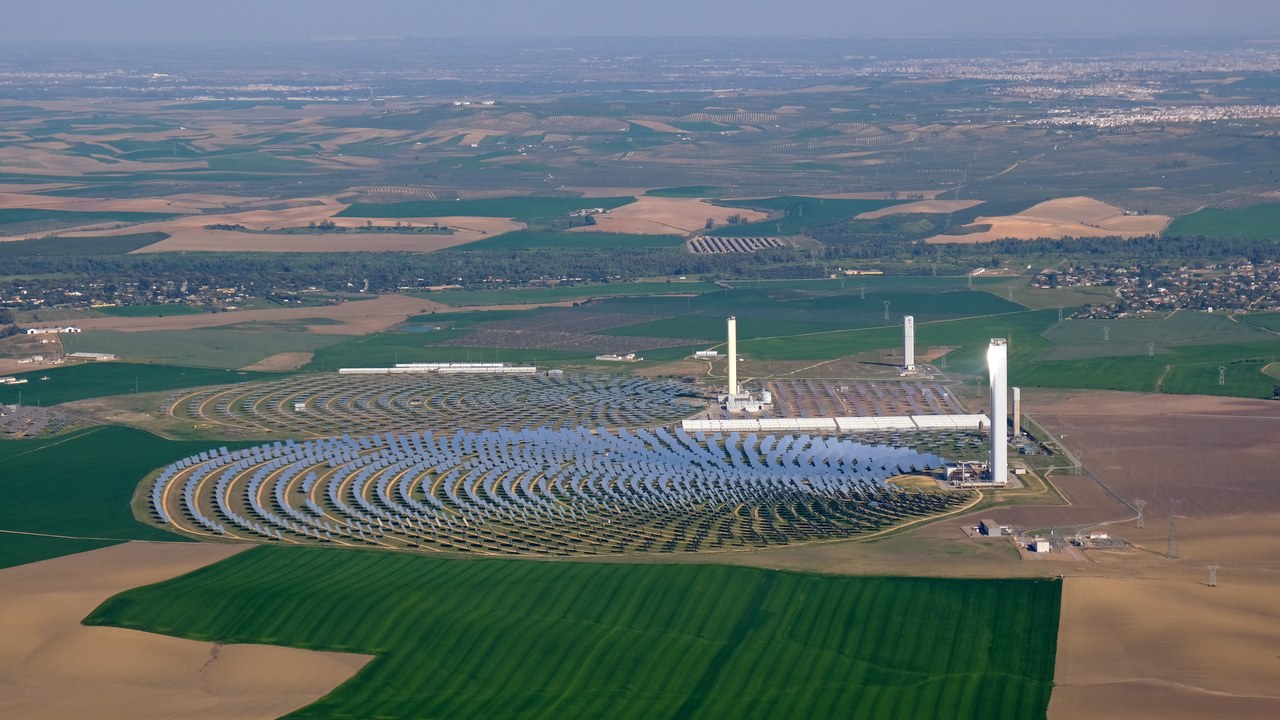
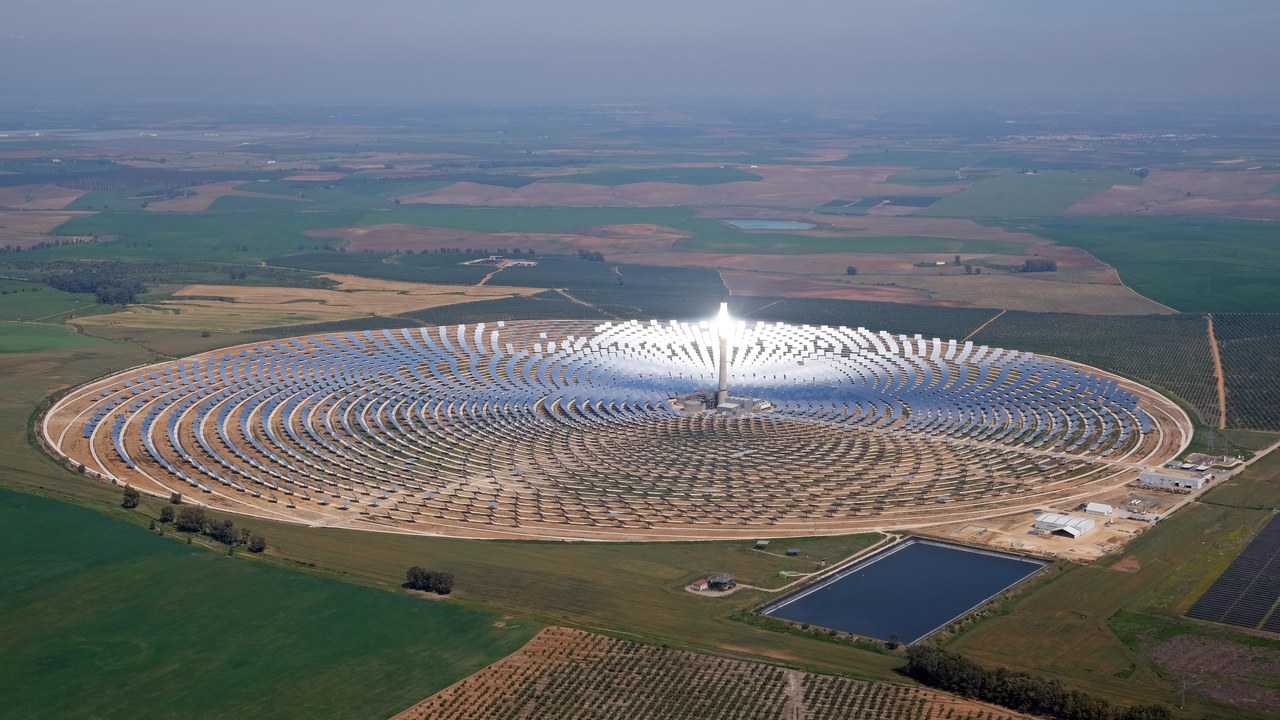
Sanlúcar la Mayor, west of Seville, hosts the plant that opened the commercial era for tower technology in Europe. Completed in 2007, the PS10 tower focuses 624 movable mirrors of about 120 square metres each onto a receiver mounted 115 metres up a concrete shaft. Saturated steam leaves that receiver at roughly 250 degrees Celsius and drives a turbine rated at 11 megawatts, modest by later standards but the first of its kind on the continent.
Small scale was the point. The project ran as a demonstration for Abengoa alongside the larger PS20 built next door, proving the optics, the tracking software and the receiver metallurgy that every later European tower borrowed.
5. Gemasolar: Power Through the Night
Image Credit: kallerna – CC BY-SA 4.0/Wiki Commons
A ring of 2,650 heliostats sweeps across roughly 185 hectares at Fuentes de Andalucía, in Seville province, all of it aimed at a 140-metre tower serving a 19.9-megawatt turbine. Molten salt in the receiver reaches about 565 degrees Celsius and drains into tanks sized for roughly 15 hours of storage. In 2011 Gemasolar’s operators reported the first full 24-hour run of uninterrupted electricity from a commercial solar plant.
Continuous output changes what a solar plant is worth to a grid operator. Rather than a daytime surplus that must be absorbed or curtailed, the tower behaves closer to a dispatchable generator, though its capital cost per megawatt remains far above a comparable photovoltaic field.
6. Khi Solar One: A Tower Over the Northern Cape
Image Credit: Jaro Nemčok – CC BY-SA 4.0/Wiki Commons
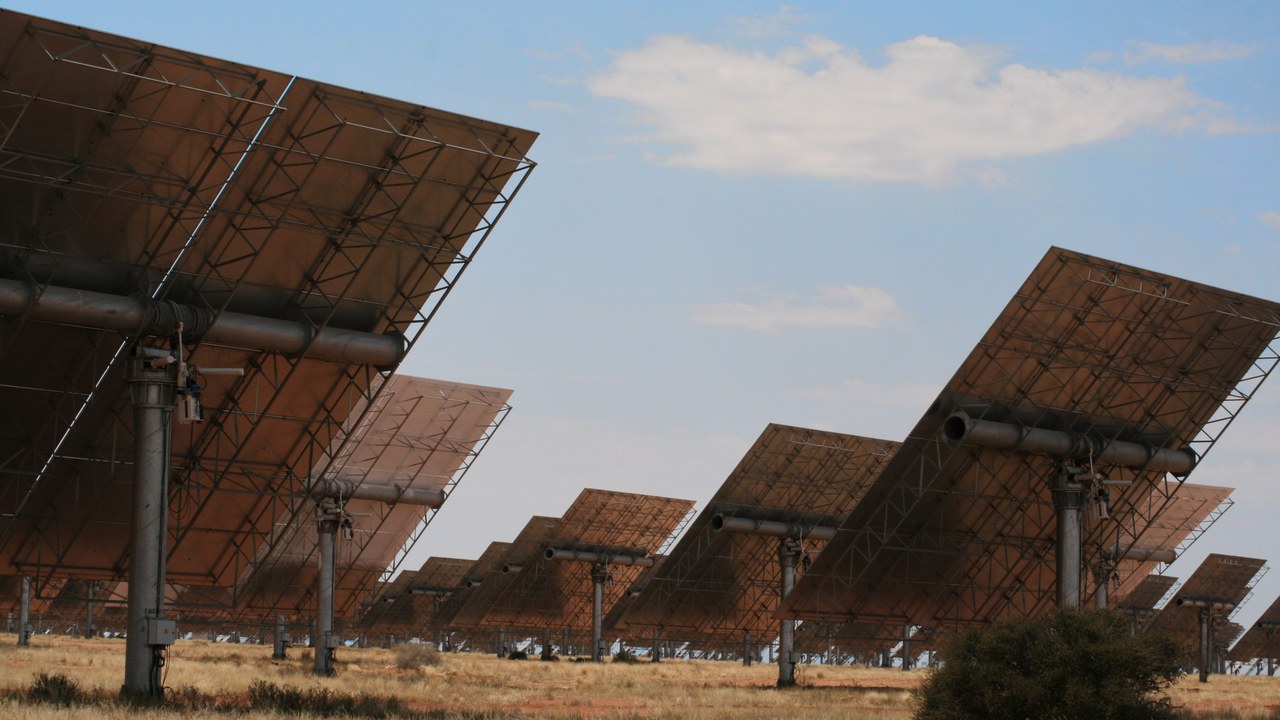
Outside Upington in South Africa’s Northern Cape, a receiver sits about 205 metres above the scrub, tall enough to rank among the country’s most conspicuous power structures. Thousands of heliostats concentrate sunlight onto it to raise superheated steam directly, without a salt loop, feeding a 50-megawatt turbine. Khi Solar One entered commercial operation in February 2016 under a South African renewable-energy procurement programme.
Two hours of thermal buffering, small next to Gemasolar’s fifteen, was enough to smooth passing cloud and stretch generation past sunset. The design traded storage depth for a lower build cost, a compromise that suited a grid whose evening demand spike is short but severe.
7. Ashalim Power Station: The Negev’s Glowing Spire
Image Credit: Mussi Katz – CC0/Wiki Commons
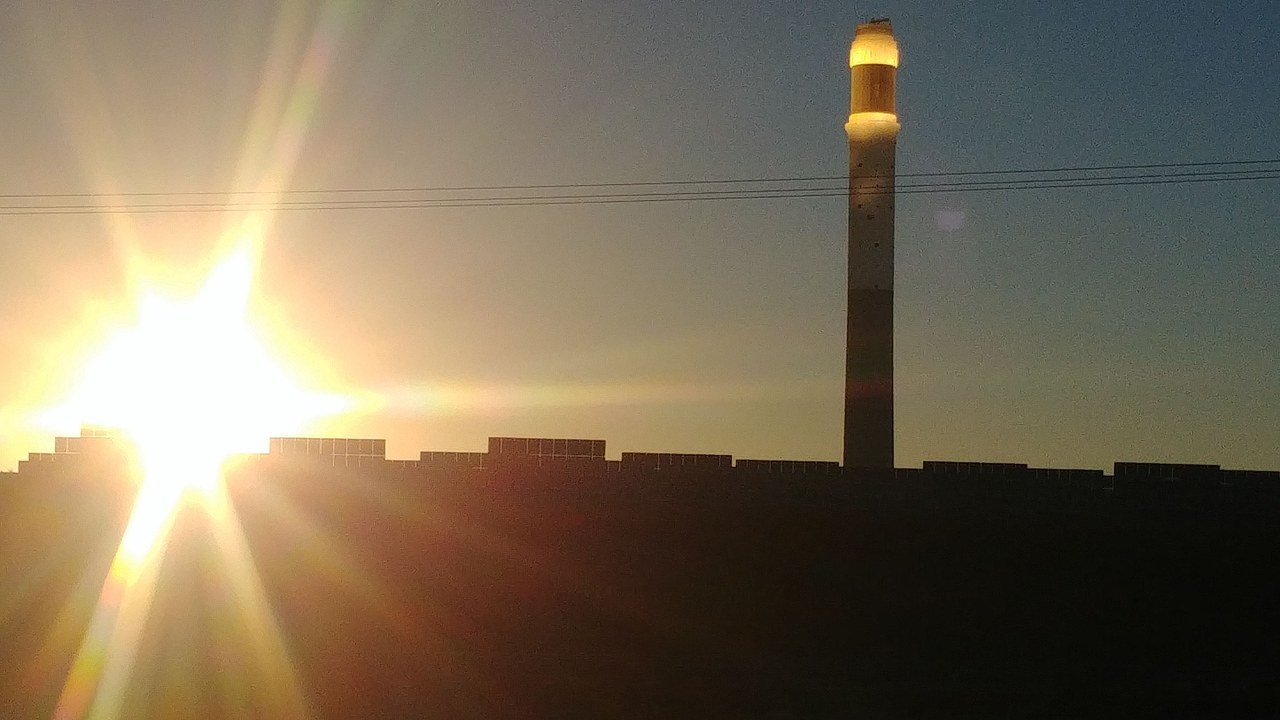
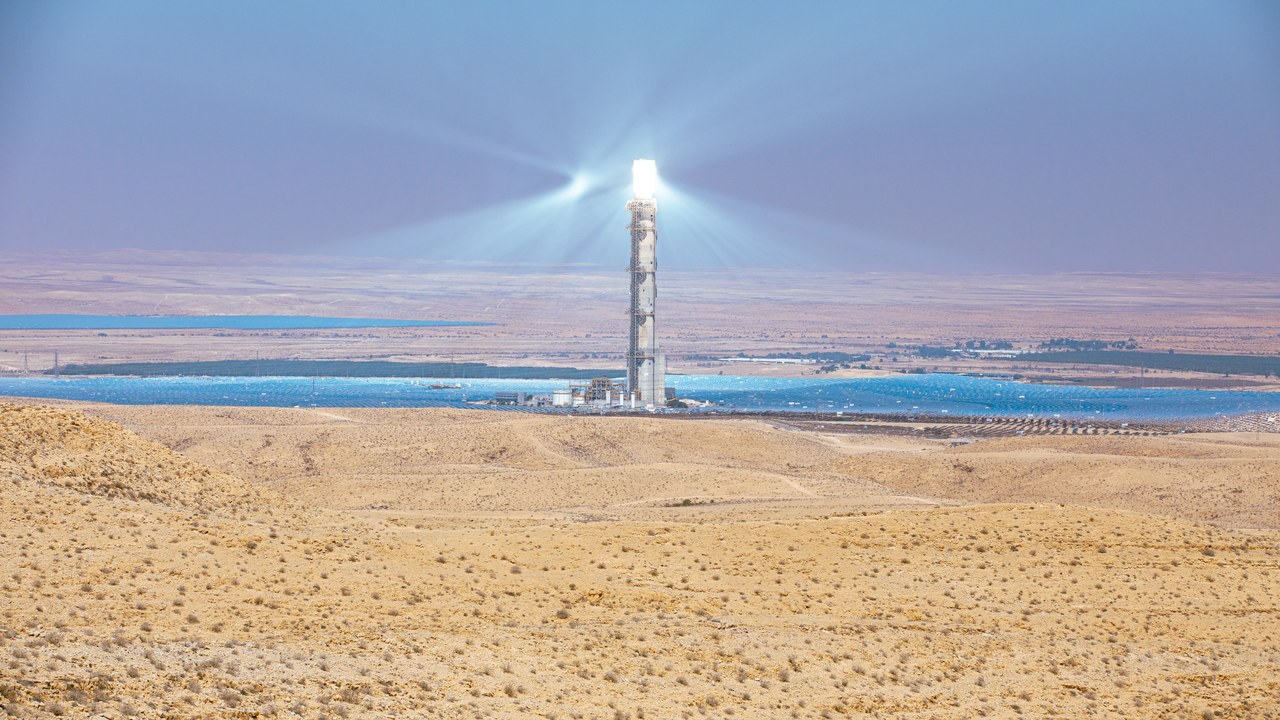
In Israel’s Negev desert, the Ashalim tower rises roughly 250 metres, making the receiver visible from far across the arid plain. Some 50,000 heliostats spread over about three square kilometres focus sunlight on the boiler, which drives a 121-megawatt steam turbine. The Negev tower plot began commercial operation in 2019 as one component of a site that also includes a trough field and a photovoltaic array.
Height buys optical efficiency: a taller receiver sees more of the mirror field at a shallower angle, cutting the losses that plague sprawling low towers. It also creates a hazard for birds crossing the concentrated beam, a problem operators of every large tower plant have had to monitor.
8. Cerro Dominador: South America’s First Solar Tower
Image Credit: Ministerio Bienes Nacionales – CC BY 2.0/Wiki Commons
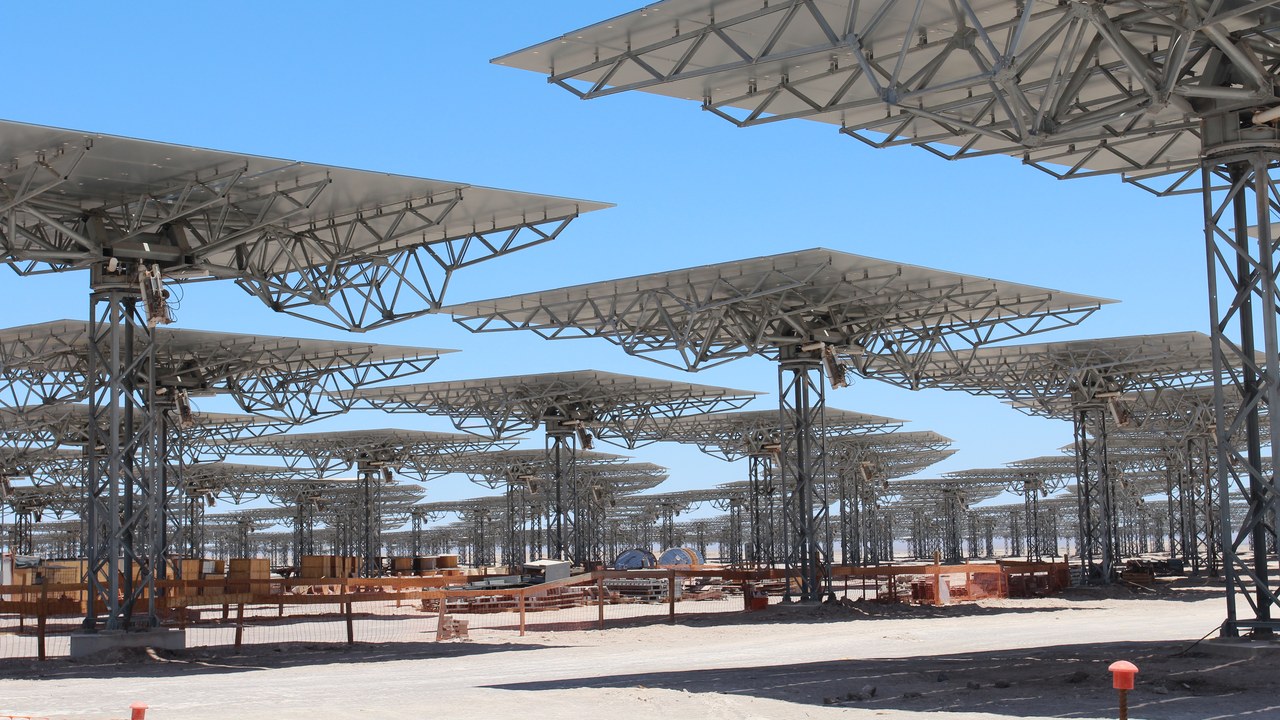
Cerro Dominador stands in Chile’s Atacama Desert, where thousands of tracking mirrors surround a central receiver tower. Molten salt heated at the top of that tower stores thermal energy for hours, letting the plant’s steam turbine keep running after dark. The Atacama tower plant is rated at roughly 110 megawatts and entered service in the early 2020s as the first solar-thermal tower project in South America.
Placement matters as much as hardware. Direct sunlight in the Atacama is among the most intense measured anywhere, giving a concentrating plant more usable hours than most desert sites. The stored heat then pushes generation into the evening, beside the photovoltaic capacity built on the same ground.
More from Morning Overview