
Every long span begins as an argument about what is possible. The teams behind these crossings worked against skeptical financiers, brutal weather and geology that refused to cooperate, and in several cases workers died before the deck was closed. Here are eight structures that broke records anyway, each hauling a difficult idea into daylight.
1. Golden Gate Bridge: Orange Steel Across a Hostile Strait
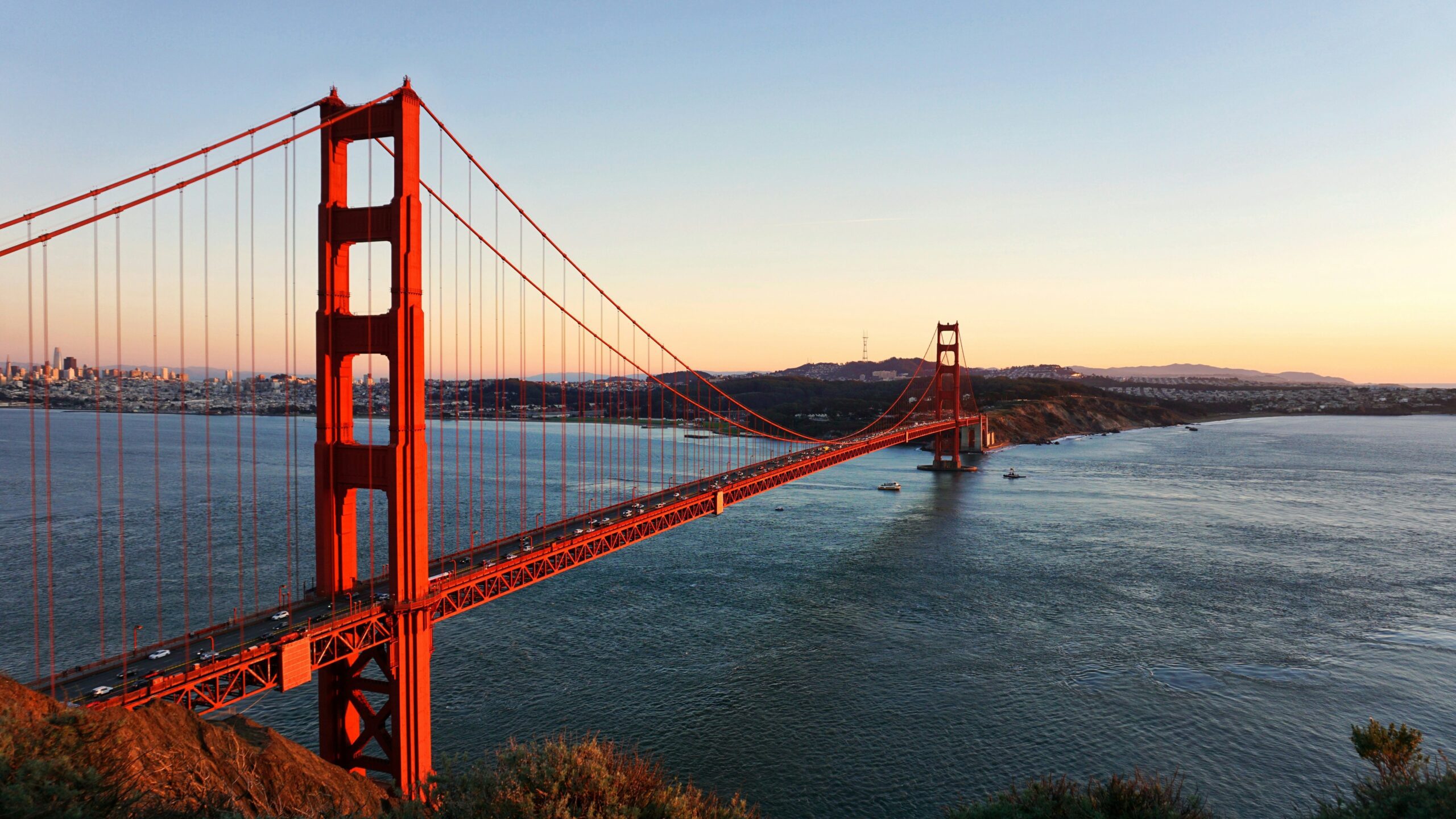
Construction began in January 1933 across a strait swept by seven-knot tides, dense summer fog and gusts that regularly topped 60 miles per hour, conditions critics said made a crossing impossible. The finished span opened in May 1937 with 4,200 feet between its towers, a distance that stood as the longest suspension span anywhere until 1964.
Joseph Strauss ordered a safety net strung beneath the deck, a first on a project of that scale; it caught 19 men who became known as the Halfway to Hell Club, while 11 workers still died. The color, International Orange, was chosen by consulting architect Irving Morrow for visibility in fog rather than for looks.
2. Akashi Kaikyo Bridge: The Span an Earthquake Stretched
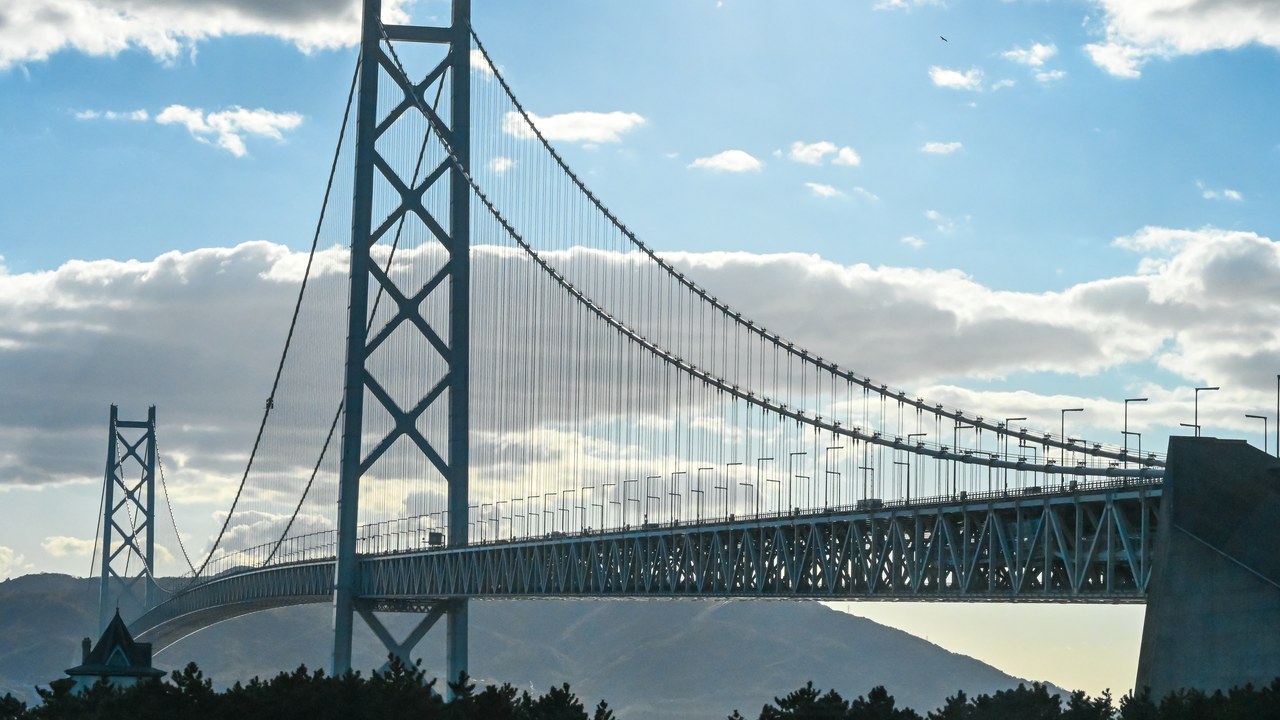
Work on the crossing between Kobe and Awaji Island was well advanced in January 1995 when the Great Hanshin earthquake struck, shifting the two completed towers roughly a meter farther apart. Engineers redrew the deck to suit: the finished central span measures 1,991 meters instead of the planned 1,990, and the bridge opened in April 1998.
Its design assumes hostility. Tuned mass dampers inside the 297-meter towers absorb sway, and the structure is rated to survive gusts of 286 kilometers per hour and a magnitude-8.5 earthquake in the strait beneath it. The span held the world suspension record for 24 years, until Turkey’s 1915 Canakkale Bridge opened in 2022.
3. Millau Viaduct: Taller Than the Eiffel Tower
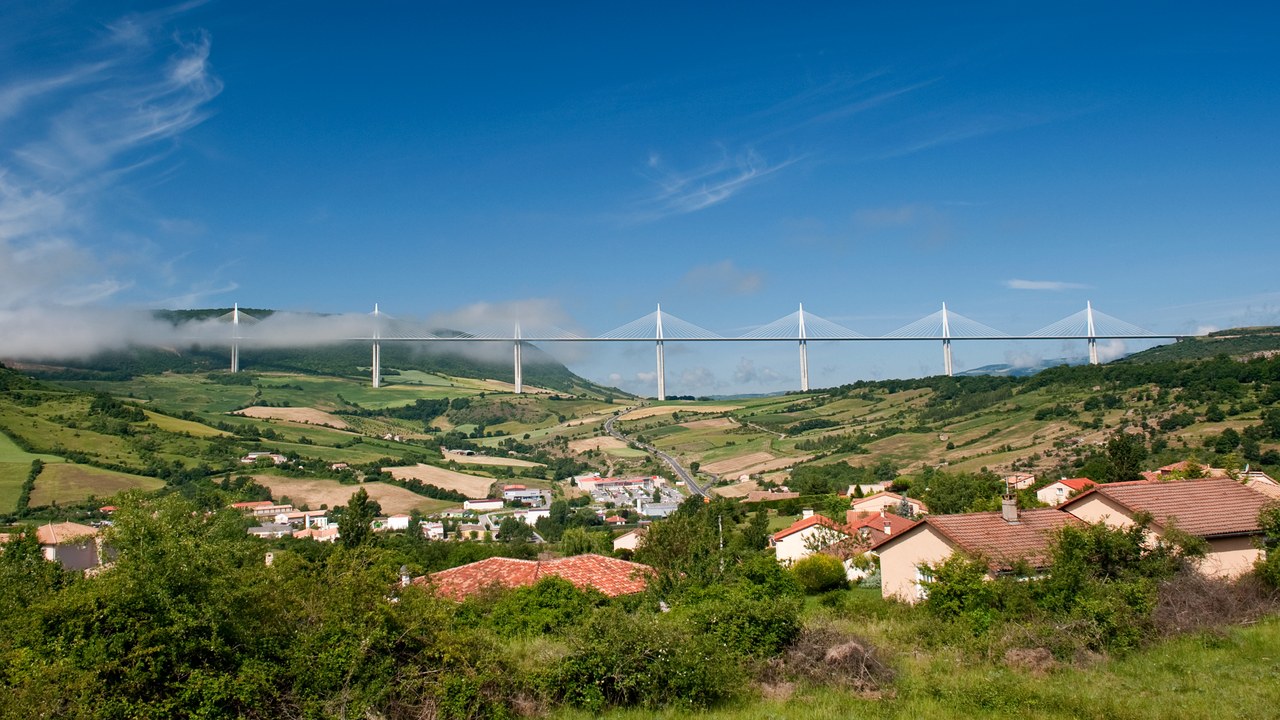
Rather than descend into the Tarn valley, the A75 motorway crosses it on seven concrete piers, the tallest rising about 245 meters from the valley floor. With its mast added, the structure’s highest point reaches 343 meters, some 13 meters above the tip of the Eiffel Tower, making it the tallest bridge in the world when it opened in December 2004.
The 2,460-meter deck was not lifted into place but pushed. Hydraulic jacks slid it out from both plateaus in stages, guided by satellite positioning onto temporary steel piers, a method chosen because cranes could not work at that height. Engineer Michel Virlogeux and architect Norman Foster shared the design.
4. Danyang-Kunshan Grand Bridge: One Hundred Miles of Viaduct
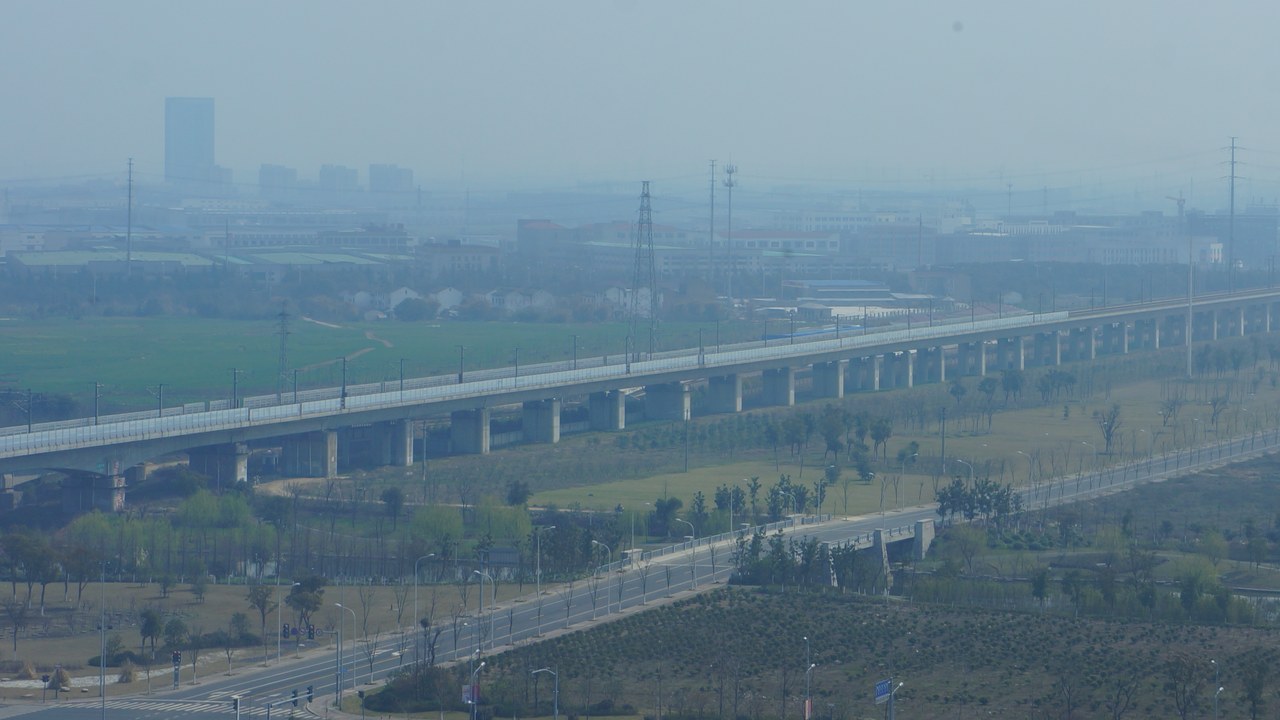
Carrying the Beijing-Shanghai high-speed railway across the Yangtze Delta, the viaduct runs 164.8 kilometers, about 102 miles, and has been recognized as the longest bridge on Earth since it opened in June 2011. Roughly nine kilometers of it crosses open water on Yangcheng Lake, the rest threading above paddies, canals, roads and towns.
Elevating the line was a soil problem rather than a water problem: the delta’s soft, waterlogged ground would have settled unevenly beneath a conventional embankment, and uneven settlement is intolerable for trains running at 300 kilometers per hour. About 10,000 workers built it in four years at a reported cost near $8.5 billion.
5. Tower Bridge: Victorian Machinery Still Working
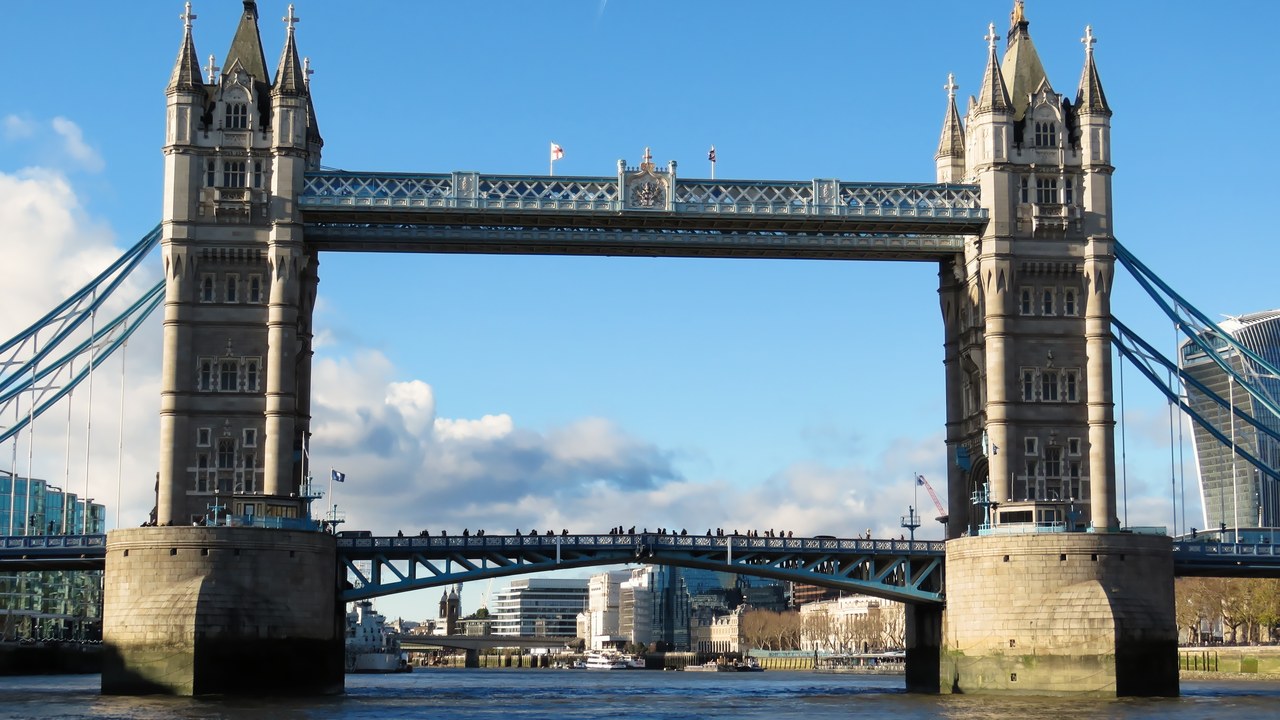
Ships still had to reach the Pool of London when the bridge opened in June 1894, so its two 1,000-ton bascules were designed to swing up to about 86 degrees in roughly a minute. The Gothic towers are steel frames clad in Cornish granite and Portland stone, a facade added to appease critics who thought bare metal would insult the Tower of London next door.
The original hydraulic system stored pressurized water in accumulators charged by coal-fired steam engines; oil and electricity replaced it in 1976, though the Victorian pumping engines survive as an exhibit. Lifts remain free and still happen roughly 800 times a year, with vessels required to give 24 hours of notice.
6. Oresund Bridge: Half Bridge, Half Tunnel
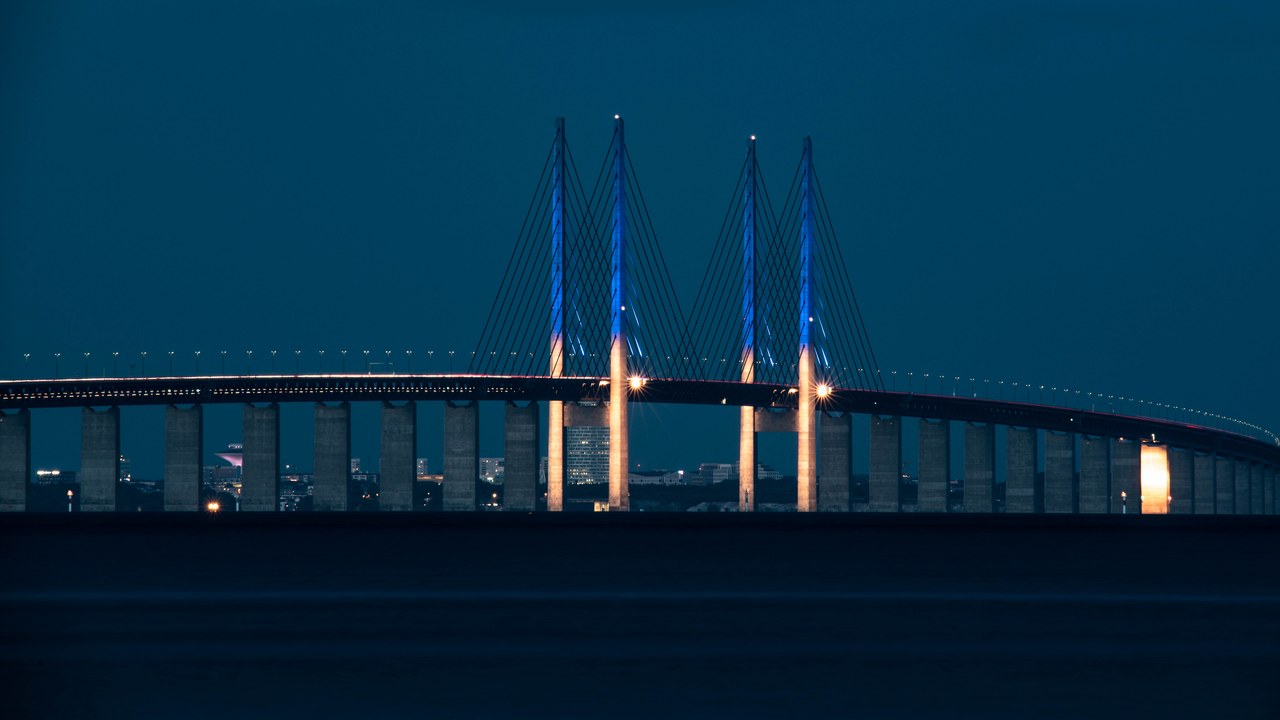
The Copenhagen-Malmo link does not stay above water for its whole length. A 7.8-kilometer cable-stayed bridge carries road and rail from Sweden to the artificial island of Peberholm, where the route dives into the 4-kilometer Drogden Tunnel, a detour forced by the approach path to Copenhagen Airport and by the need to keep a shipping channel clear.
Peberholm was raised from dredged seabed and deliberately left to colonize itself; botanists now catalog hundreds of plant species on it. The bridge section opened in July 2000 with a 490-meter main span hung from 204-meter pylons, carrying a motorway on its upper deck and twin railway tracks below, one of the longest combined road-and-rail cable-stayed spans anywhere.
7. Sydney Harbour Bridge: The Coathanger’s Six Million Rivets
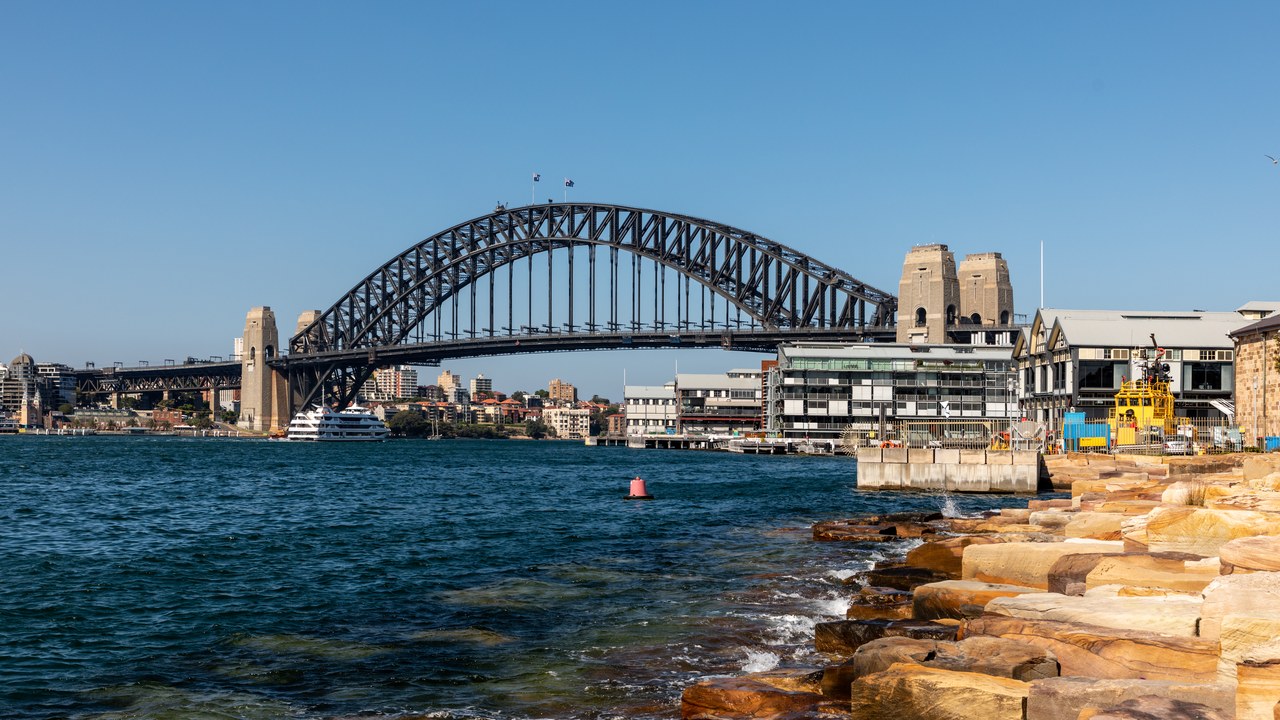
Two half-arches grew outward from Dawes Point and Milsons Point, restrained by steel cables anchored in the sandstone, until they met over the harbor in August 1930. The completed steel arch spans 503 meters and rises 134 meters above the water, and the local nickname, the Coathanger, stuck long before the March 1932 opening.
Around 52,800 tonnes of steel went into it, most fabricated in Middlesbrough by Dorman Long and joined with roughly six million rivets driven by hand. Sixteen workers died during construction. The opening ceremony was hijacked when Francis de Groot rode forward on horseback and slashed the ribbon before the state premier could cut it.
8. Beipanjiang Bridge: A Deck 565 Meters Above the River
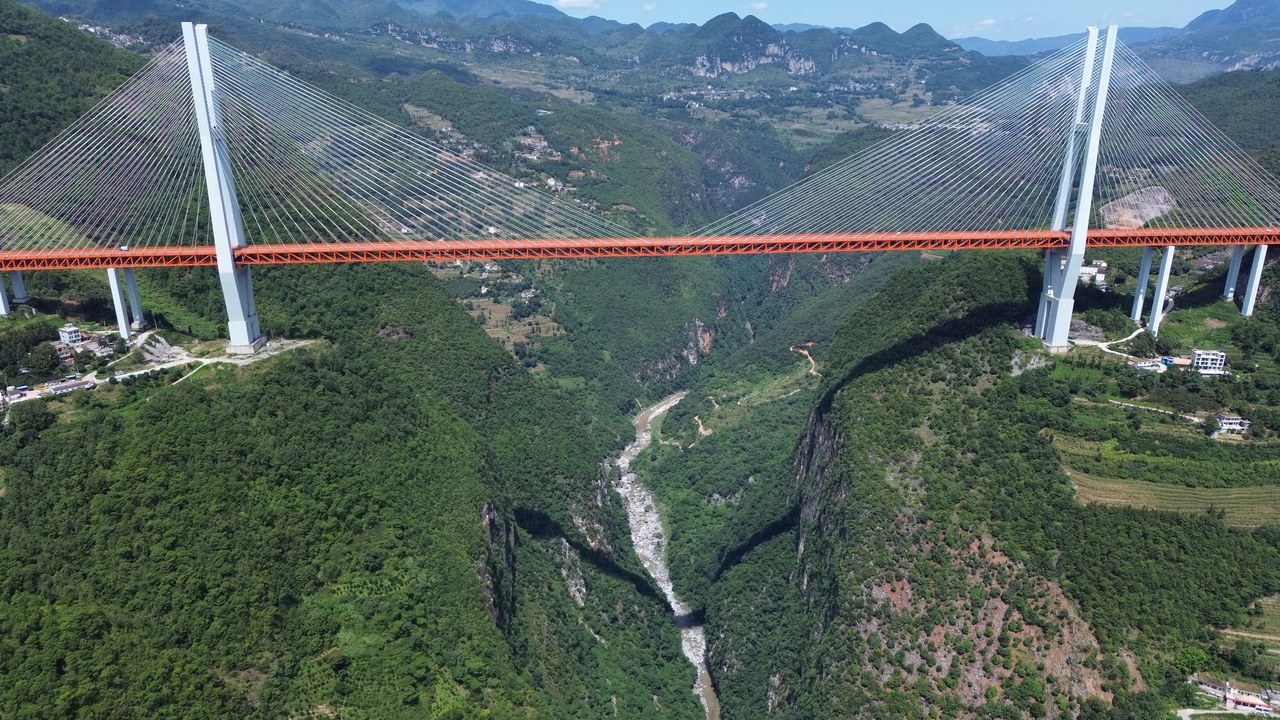
Linking Yunnan and Guizhou provinces across the Beipan River gorge, the cable-stayed crossing opened in December 2016 with its roadway 565 meters (about 1,854 feet) above the water, making it the highest bridge deck in the world at the time. Its main span measures 720 meters, and the towers rise from opposing cliff faces.
The gorge had forced traffic onto switchbacks that took about four hours to cover a distance the bridge reduced to roughly one. Guizhou’s karst terrain of sinkholes and deep ravines is why the province has become the densest concentration of very high bridges anywhere, with dozens of the world’s tallest spans inside its borders.
More from Morning Overview
- A wildfire near Ouray swelled past 18,000 acres, putting Colorado towns on alert
- The Pentagon’s newest UFO files describe a fish-scaled, potato-shaped object on camera
- Scientists spotted a rare tusked whale alive at sea for the first time, then fired a crossbow at it.
- A Colorado wildfire forced level-three ‘leave now’ orders across Ouray County
