
Photography’s biggest leaps rarely came from better film alone; they came from machines that changed who could take a picture and how quickly. A dollar box of cardboard, a palm-sized 35mm body and a floppy-disk prototype each moved the craft somewhere new. Here are eight cameras that reshaped how the world records itself.
1. Kodak Brownie: The One-Dollar Box
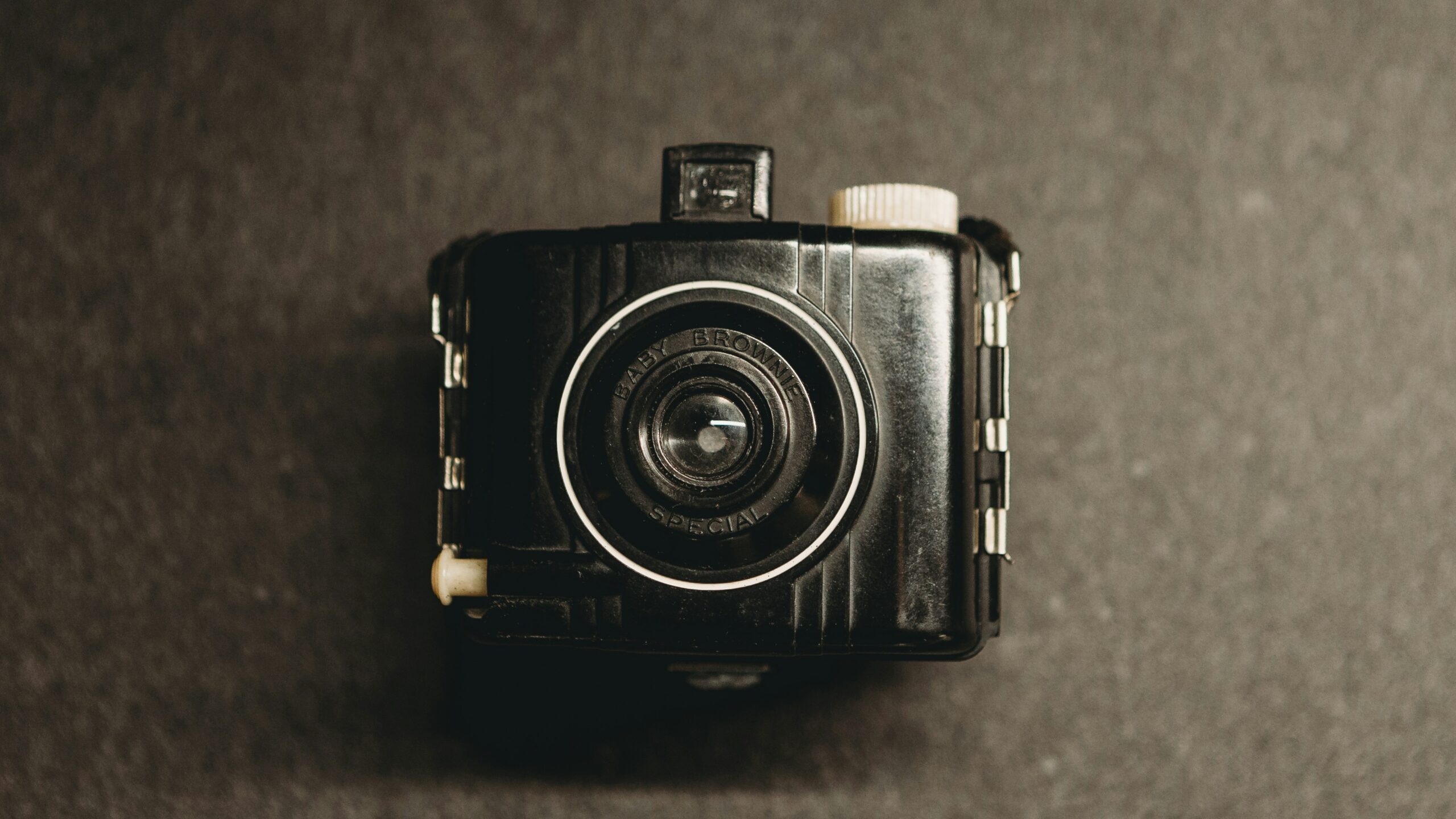
Eastman Kodak put the Brownie on sale in February 1900 for a single dollar, with a roll of film costing fifteen cents. Designed by Frank Brownell, it amounted to a cardboard box with a simple meniscus lens and a rotary shutter, and it was advertised at children rather than at professionals. Surviving examples are held in the Smithsonian’s national collections, filed beside the ordinary snapshots the camera produced.
Its significance was economic rather than optical. At that price photography stopped being a specialist expense and became a household habit, and the casual family picture became a genre of its own. Kodak kept the Brownie name in production, across dozens of models, for more than six decades.
2. Leica I: The Format That Stuck
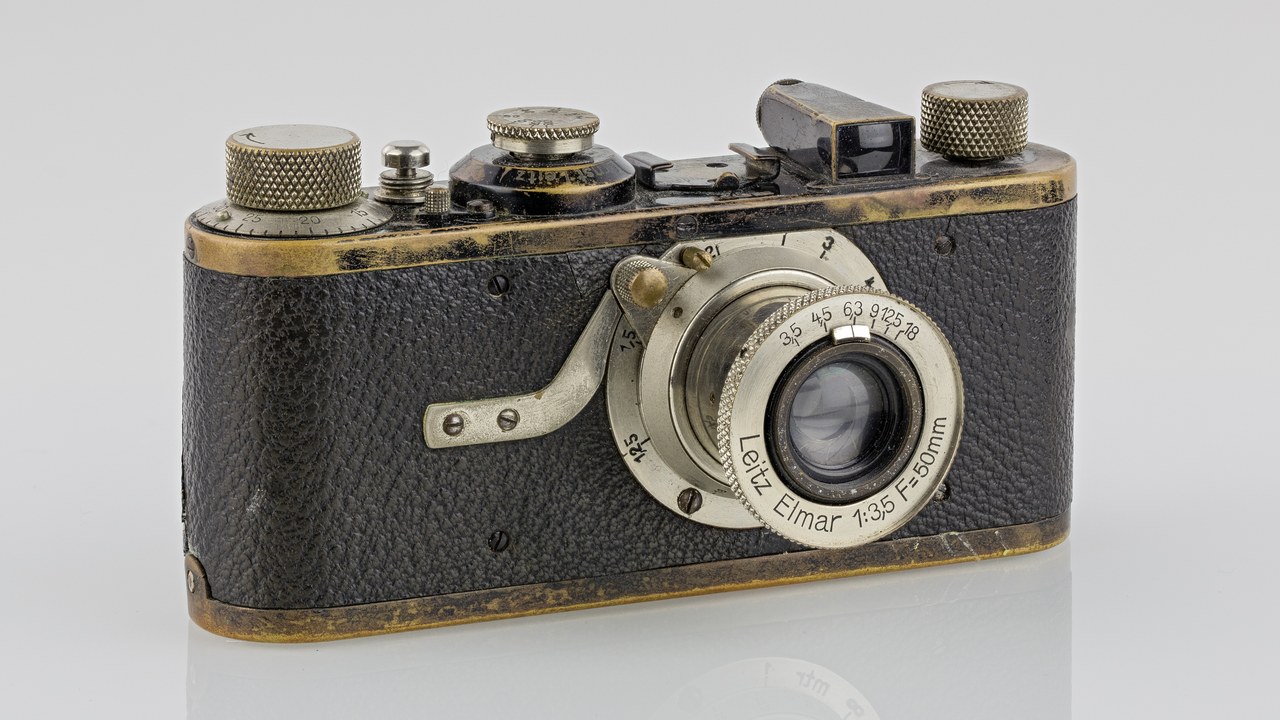
Sold from 1925, the Leica I grew out of Oskar Barnack’s experiments with motion-picture stock and settled the 24-by-36-millimetre frame that the industry still calls full frame. It carried a fixed 50mm Elmar lens on a body light enough to hang from a shoulder all day, so no tripod, plate holder or darkcloth was required. Cheap cine film became a serious photographic medium in the Wetzlar company’s 35mm system.
The consequence was social as much as technical. A camera that fits in a coat pocket can be raised without ceremony or permission, and the candid documentary style associated with photographers such as Henri Cartier-Bresson grew directly out of that portability.
3. Nikon F: The Photojournalist’s Workhorse
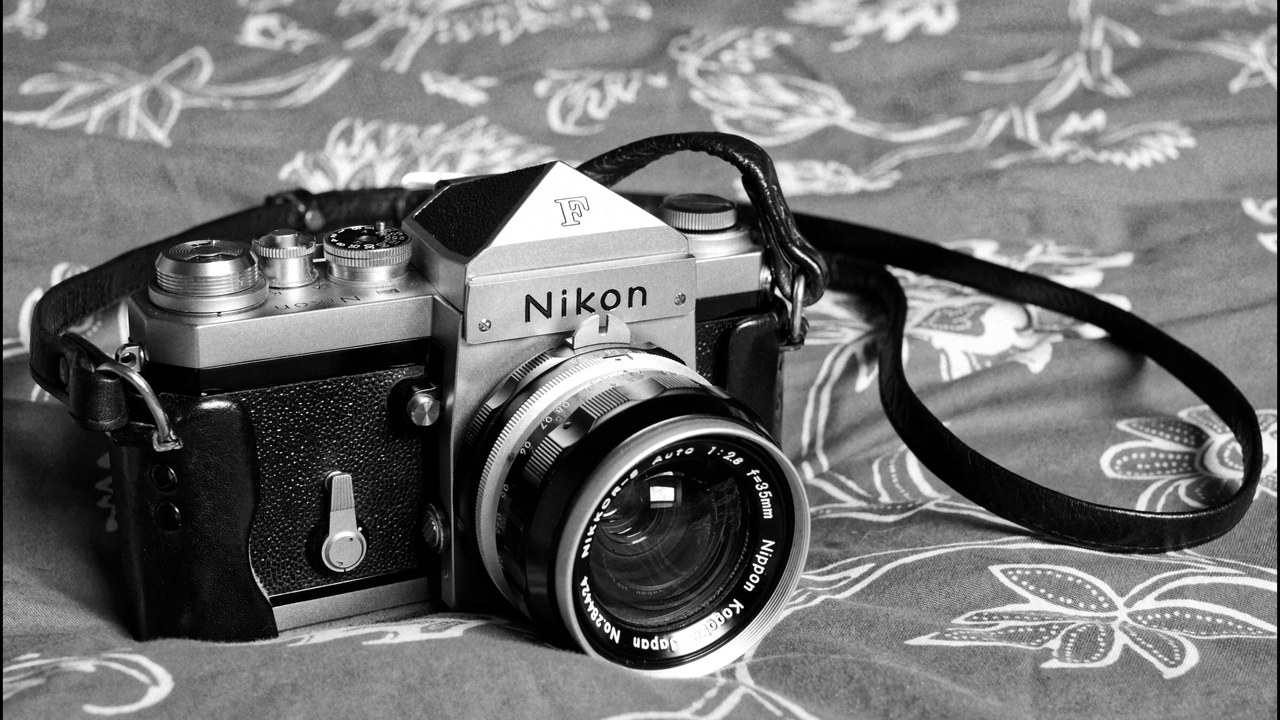
Introduced in 1959 by Nippon Kogaku, the Nikon F was less a camera than a kit: interchangeable prisms, focusing screens, motor drives and the bayonet F-mount that the company then kept alive for decades. Its finder showed close to the whole frame, and the body developed a reputation for working after treatment that disabled lighter cameras. Production ran until 1973.
That durability made it standard issue in newsrooms, and a large share of the photographic record of the 1960s, Vietnam included, was exposed through Nikon bodies. The cost was bulk and price: this was a professional instrument, built and sold as one.
4. Polaroid SX-70: The Print That Developed Itself
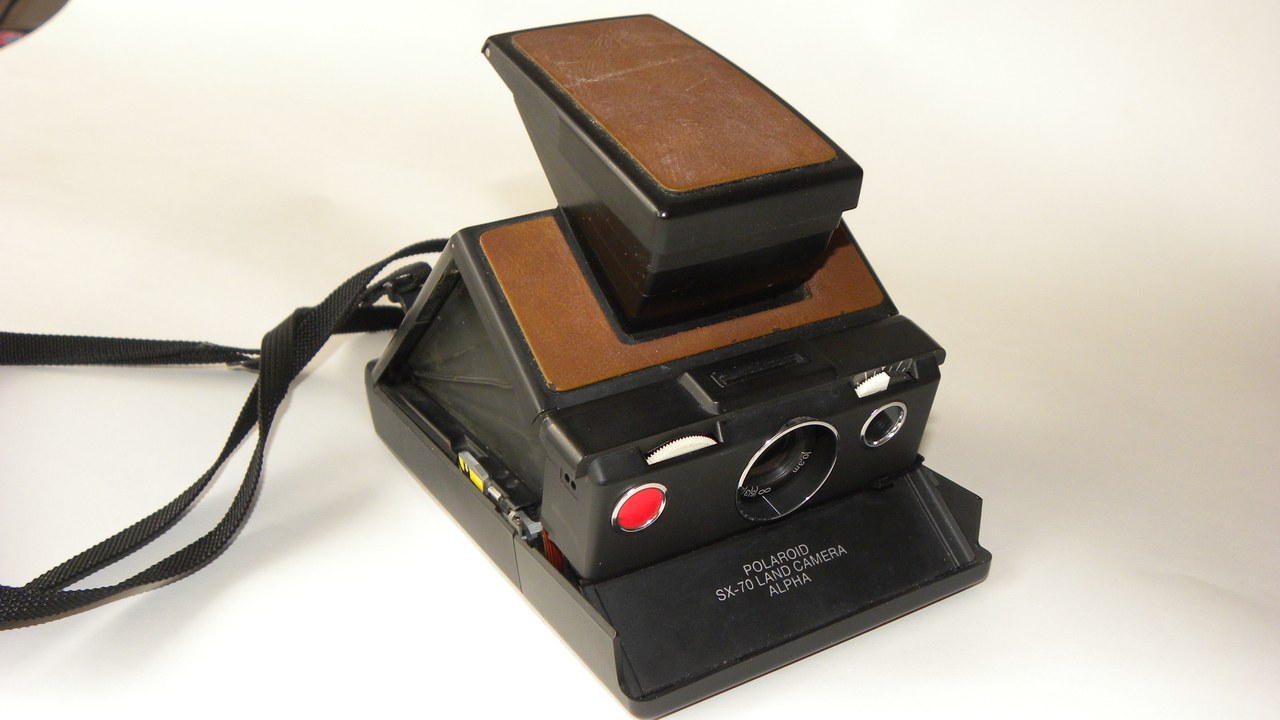
Polaroid launched the SX-70 in 1972 as a folding single-lens reflex that collapsed almost flat. The advance sat in the film rather than the body: Polaroid’s integral instant film developed in ordinary daylight, with no negative to peel and no timing left to the photographer, and a motor pushed each print out of the camera immediately after exposure.
Edwin Land’s pack sealed battery, chemistry and ten exposures into one unit, which made misloading nearly impossible. Each frame still cost far more than a strip of processed negative film, so the camera sold on immediacy rather than economy, the same bargain instant photography runs on today.
5. Canon AE-1: The Million-Seller SLR
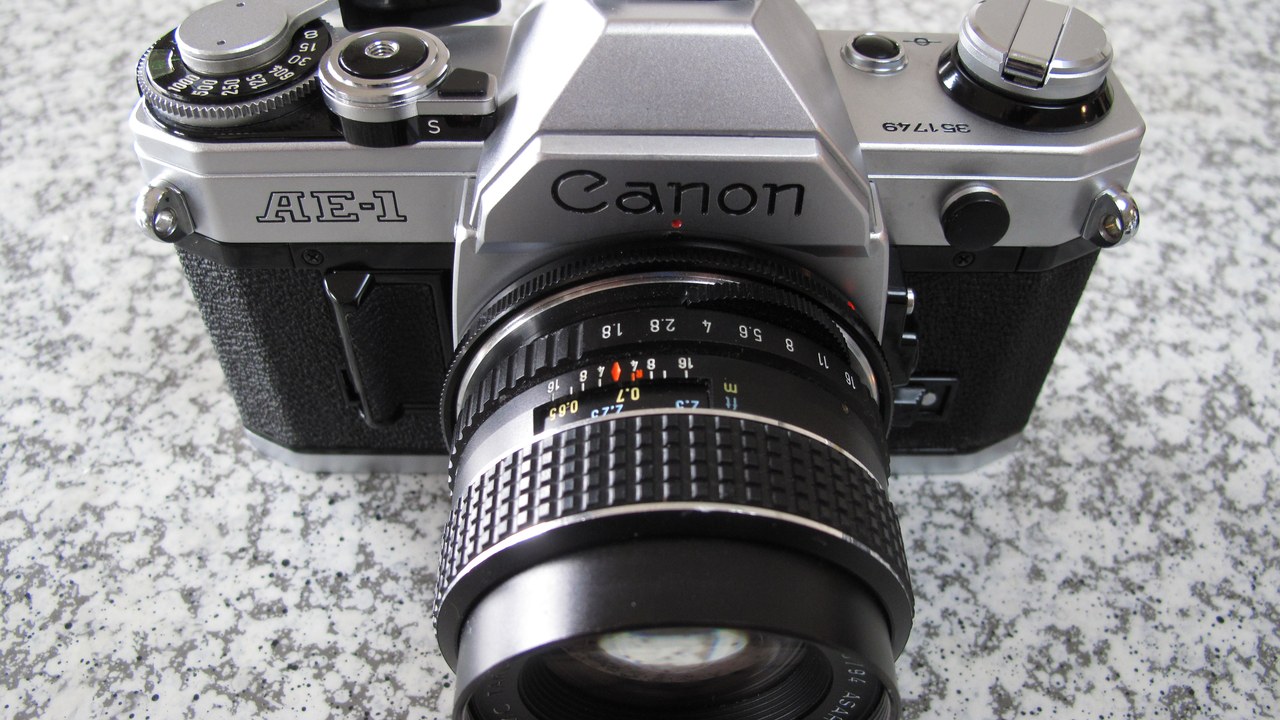
A microprocessor ran the exposure system of the AE-1, which Canon released in 1976 as the first 35mm SLR built that way. Shutter-priority automation chose the aperture, and the model’s electronic architecture replaced clusters of mechanical linkages, cutting the part count and with it the manufacturing cost of a camera that had to sell in volume.
Sales passed a million units on the back of heavy television advertising, pulling buyers who would otherwise have bought a fixed-lens compact into the interchangeable-lens market. That widening of the amateur SLR audience, rather than any single feature, is why used examples remain common.
6. Hasselblad 500C: The Square Negative System
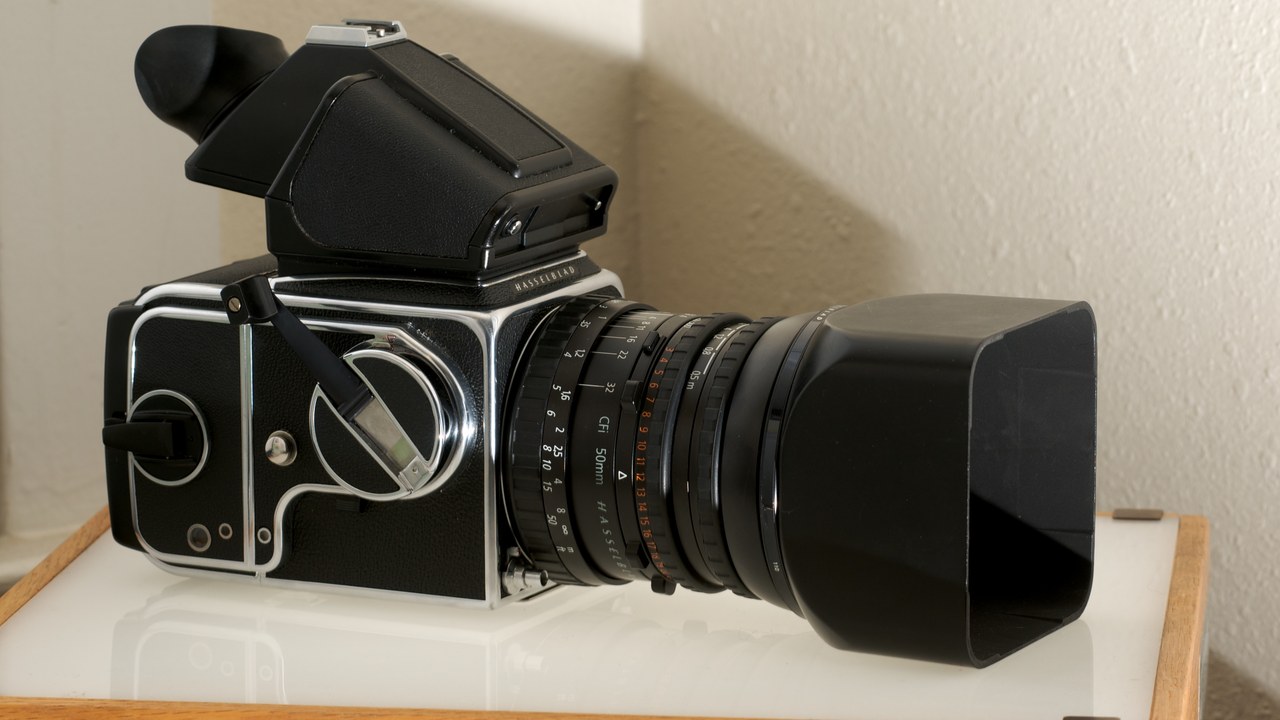
Arriving in 1957, the 500C moved the shutter out of the body and into each Zeiss lens, and added detachable magazines so film stock could be changed mid-roll. Its 6-by-6-centimetre square negative held detail no 35mm frame could match, and the Swedish firm’s V-system stayed in production, updated but recognisable, for close to half a century.
NASA began flying modified Hasselblads in 1962, and electric derivatives of this same system exposed the still photographs made on the lunar surface. The 500C was the civilian ancestor of those cameras rather than the model that went to the Moon, a distinction the marketing has rarely laboured.
7. Sony Mavica: Pictures Without Film
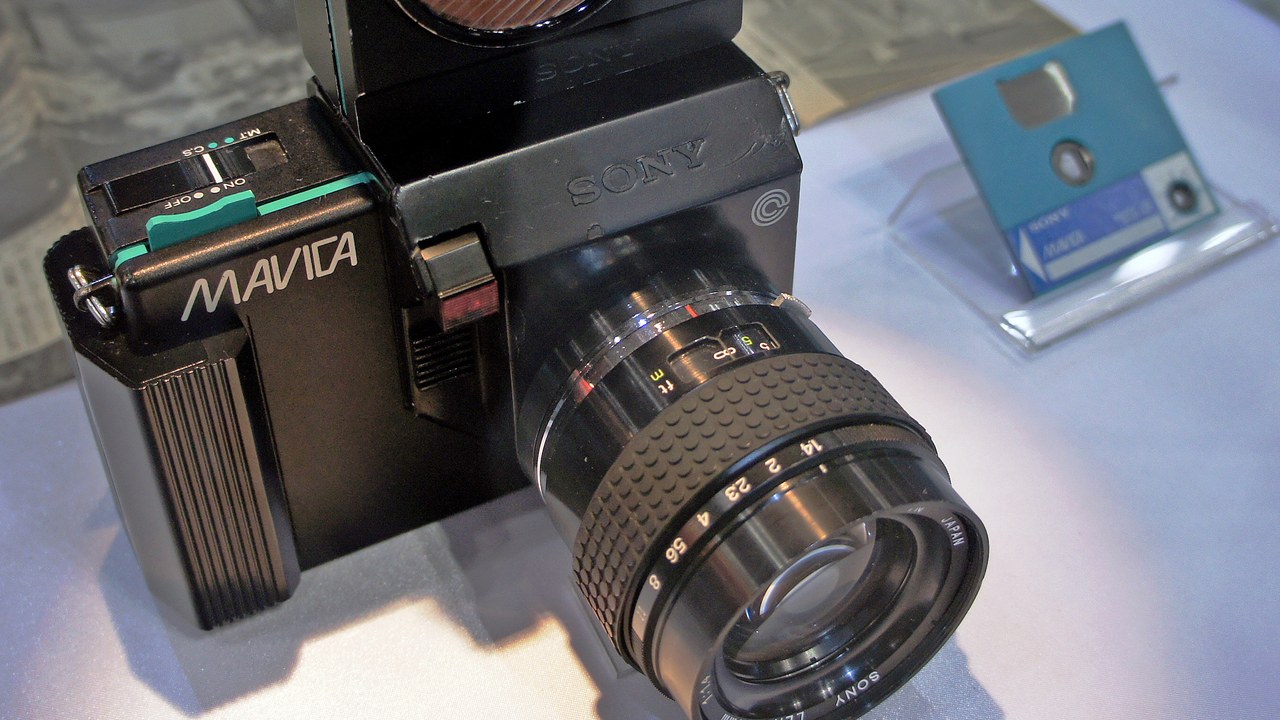
No film ran through the Mavica that Sony demonstrated in 1981. Images landed on an image sensor and were written to a two-inch magnetic disk holding fifty frames, then viewed on a television screen. Recording stayed analogue, because the prototype’s still-video design stored video signals rather than digital files, which makes it a still-video camera rather than a true digital one.
Commercial success came later, when Digital Mavica models of the late 1990s wrote JPEG files straight onto ordinary 3.5-inch floppy disks. That solved the problem nobody had a cable for yet, moving pictures into a computer, and made the line briefly standard in schools and offices.
8. Apple QuickTake: Apple’s Forgotten Camera
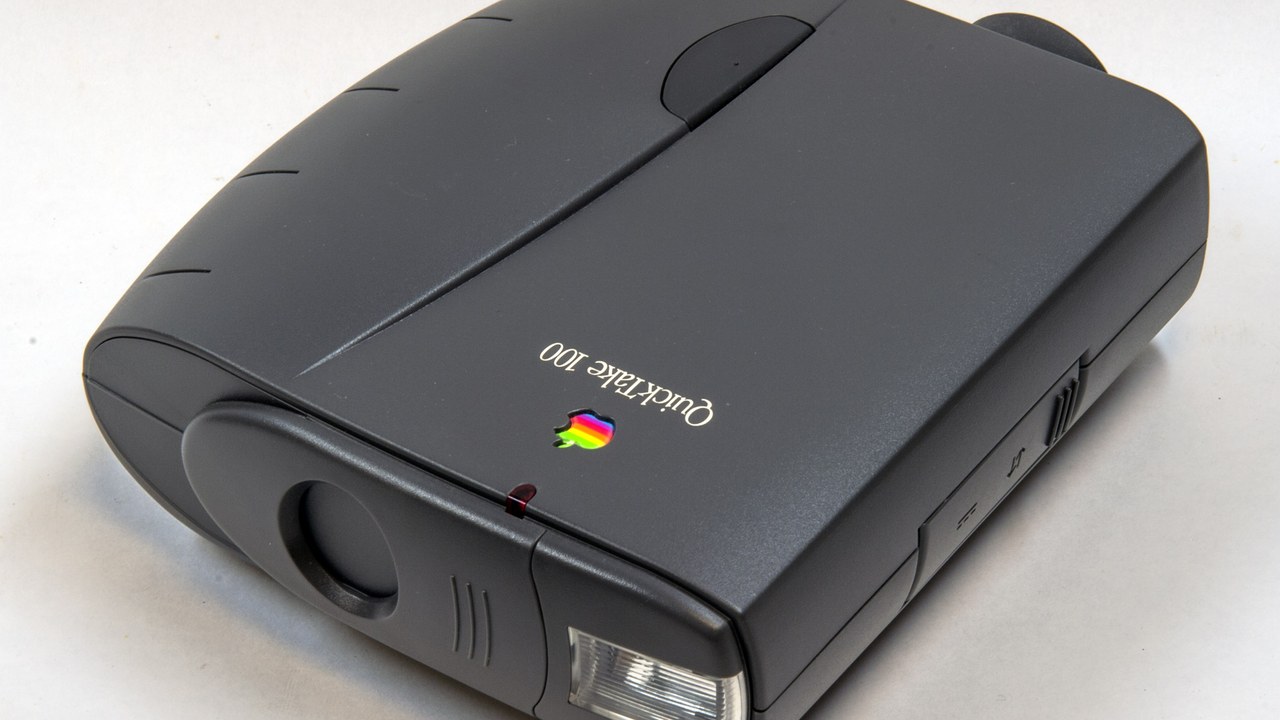
Priced at $749 in 1994 and built in partnership with Kodak, the QuickTake 100 stored eight pictures at 640 by 480 pixels in internal memory. There was no removable card, no zoom and no focusing control, and filling the memory meant connecting the camera to a Macintosh before another shot could be taken. Apple ended the line in 1997.
Limited as it was, the QuickTake ranked among the first colour digital cameras aimed at consumers instead of laboratories or newsrooms. It also set the template the industry followed: fixed optics, a computer connection, and a photograph that exists as a file until somebody chooses to print it.
More from Morning Overview
- Two Ford recalls now carry a rare “do not drive” warning, so owners should check their VIN.
- A Colorado wildfire has exploded past 87,000 acres with no containment
- A wildfire near Ouray swelled past 18,000 acres, putting Colorado towns on alert
- The Pentagon’s newest UFO files describe a fish-scaled, potato-shaped object on camera
