
Astronomy no longer depends on a single flagship instrument. A fleet of telescopes now works across the spectrum, from X-rays and infrared light to millimeter waves, some parked far beyond the Moon and others perched on Chilean mountaintops. Here are eight of the observatories shaping what astronomers can see, in space and on the ground.
1. James Webb Space Telescope: The Infrared Flagship
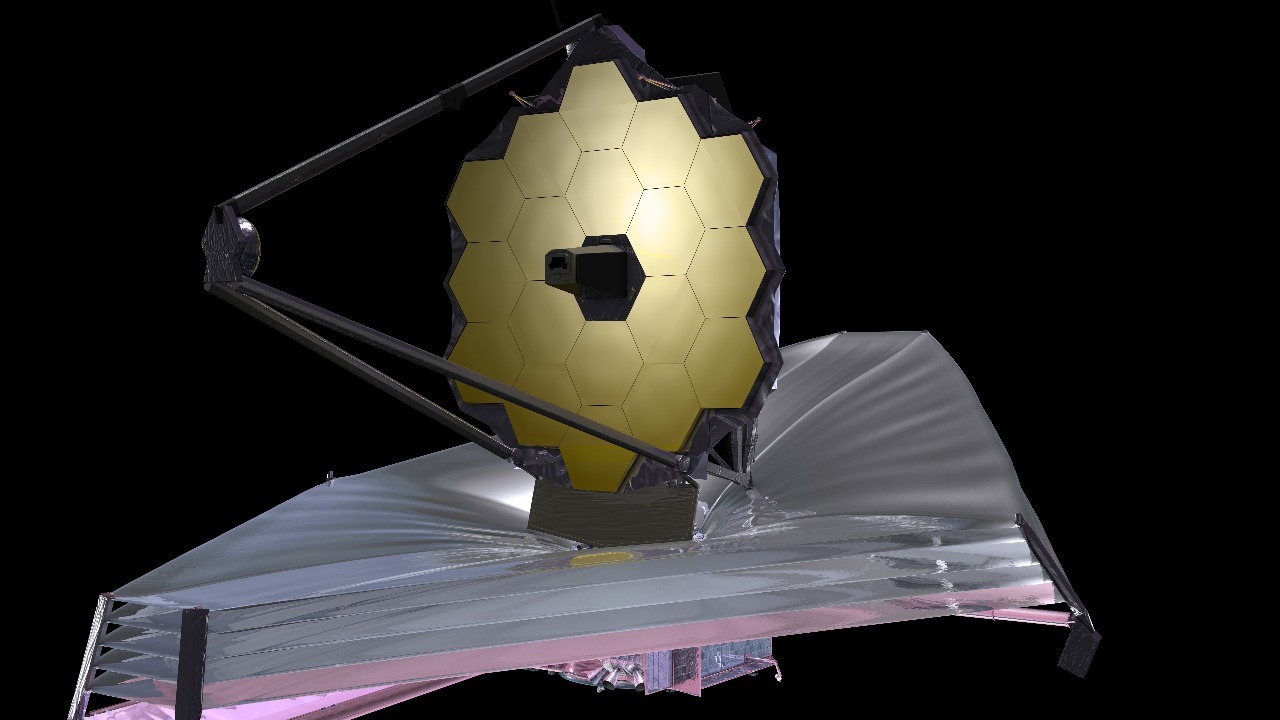
Eighteen gold-coated beryllium hexagons form the largest optical telescope in space, a 6.5-meter primary that unfolded after launch on December 25, 2021. Webb observes in the infrared, where light from the earliest galaxies has been stretched by cosmic expansion, and it flies in a halo orbit around the Sun-Earth L2 point about 1.5 million kilometers from Earth. Routine science began in July 2022.
That distance is the trade. No astronaut can service Webb the way shuttle crews serviced Hubble, so every deployment had to work the first time, and the observatory’s lifetime is set largely by its remaining propellant. The fuel margin left after an efficient launch is expected to support well over a decade of operations.
2. Hubble Space Telescope: Thirty-Five Years And Counting
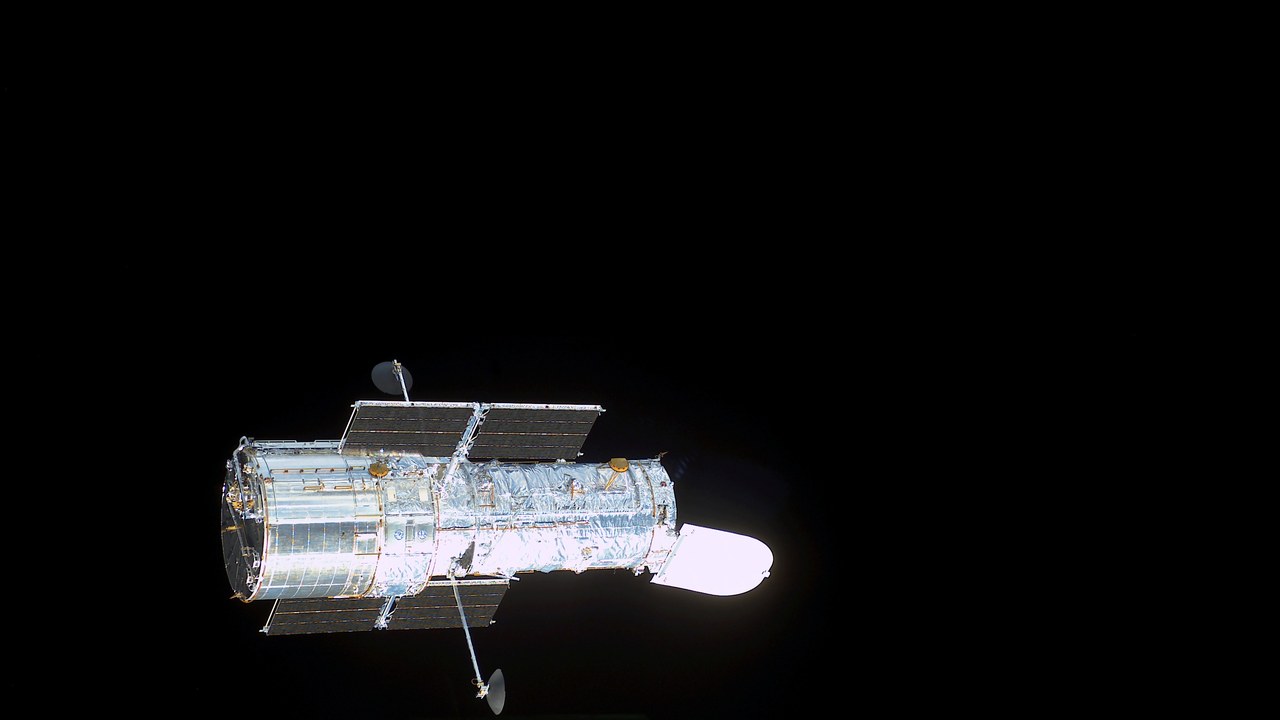
Launched aboard the shuttle Discovery on April 24, 1990, Hubble carries a 2.4-meter mirror and observes ultraviolet, visible and near-infrared light from low Earth orbit, roughly 515 kilometers up. Five servicing missions between 1993 and 2009 corrected its famously flawed optics and replaced instruments, gyroscopes and solar arrays, an upgrade path no other space telescope has had.
The last servicing mission ended in 2009, so everything since has been managed from the ground. NASA switched Hubble to a single-gyroscope pointing mode in 2024 to stretch the remaining hardware, which slows target changes and trims the amount of sky available at any moment, yet the telescope continues to deliver observations more than three decades after launch.
3. Chandra X-ray Observatory: The Hot, Violent Universe
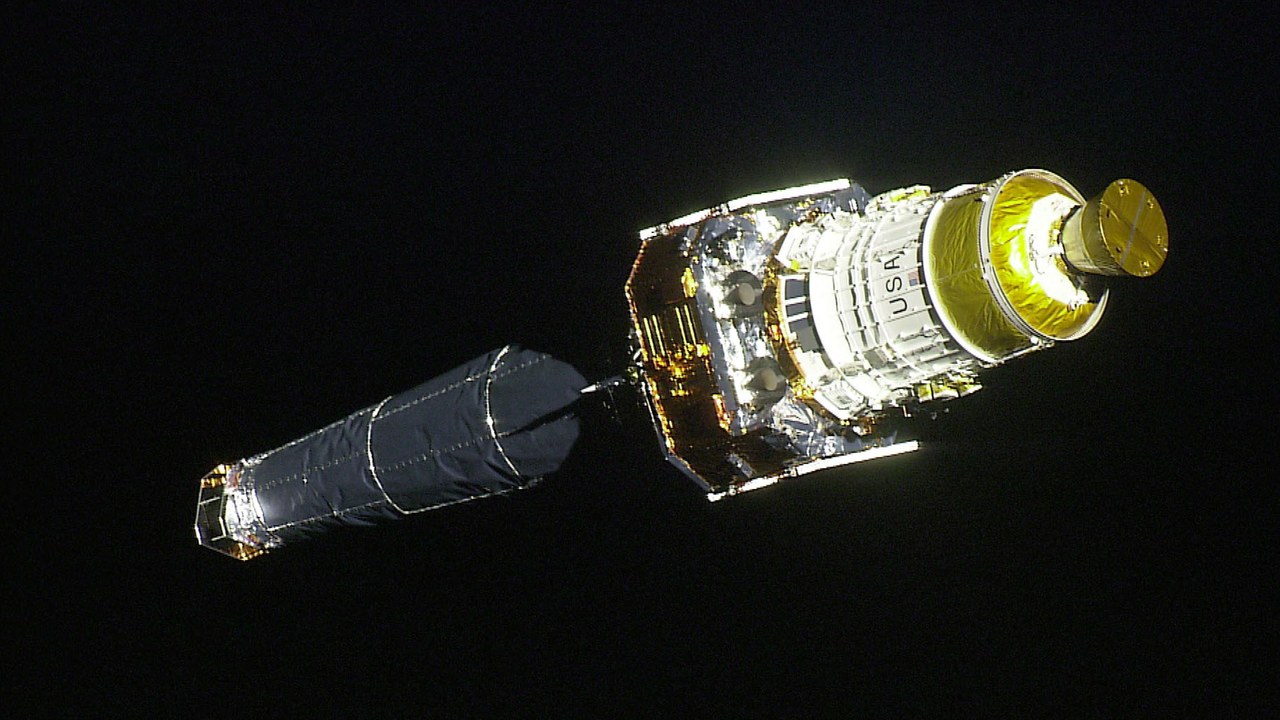
X-rays do not reflect off ordinary mirrors, so Chandra focuses them with nested iridium-coated cylinders that skim incoming photons at grazing angles. Deployed from the shuttle Columbia on July 23, 1999, it resolves detail at about half an arcsecond, sharp enough to separate individual sources inside distant galaxy clusters and to trace the debris of supernovae.
Its orbit is unusual: a long ellipse reaching roughly a third of the way to the Moon, which carries the spacecraft above Earth’s radiation belts for most of each 64-hour circuit and allows uninterrupted exposures lasting many hours. Instruments this old are increasingly fragile, and the observatory now runs under tighter thermal limits than it did at launch.
4. Vera C. Rubin Observatory: The Whole Sky, Over And Over
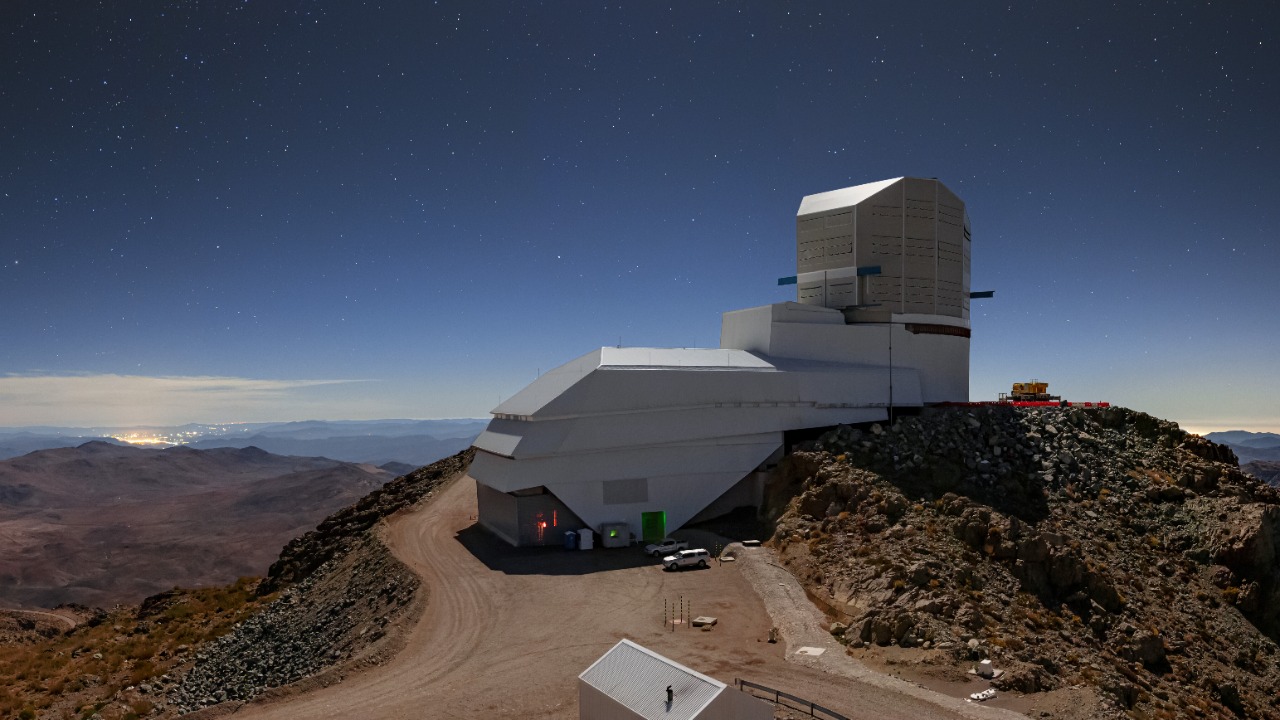
Perched on Cerro Pachon in Chile, Rubin pairs an 8.4-meter mirror with a 3,200-megapixel camera, the largest digital camera ever built for astronomy. The design trades depth in a single pointing for coverage: the telescope can shift position in seconds, letting it sweep the southern sky repeatedly. First-look images were released in June 2025, ahead of the ten-year Legacy Survey of Space and Time.
Repetition is the point. Comparing images of the same field taken nights apart exposes anything that moves or changes brightness, from asteroids and variable stars to supernovae, and the survey is expected to generate alerts on millions of such events each night, a data volume that required its own processing pipeline.
5. Euclid: Mapping The Dark Universe
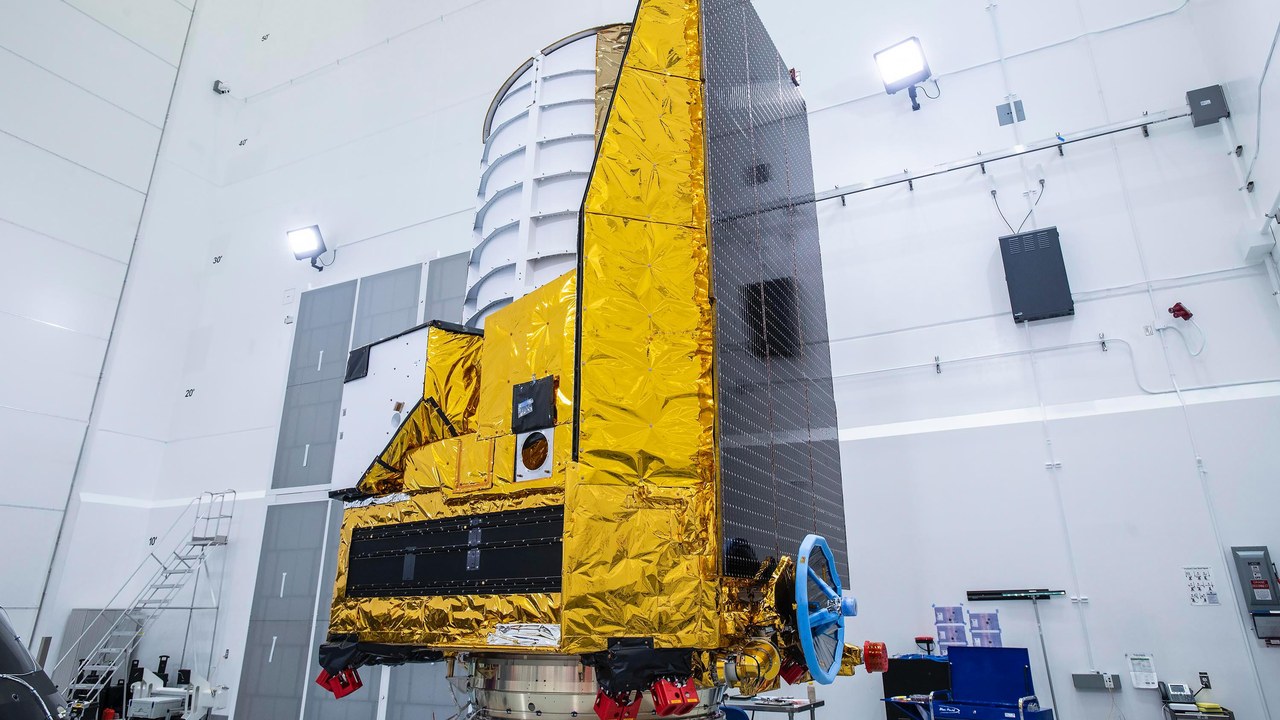
Euclid lifted off on July 1, 2023, aboard a Falcon 9 from Cape Canaveral and now works from the same Sun-Earth L2 region as Webb, about 1.5 million kilometers from Earth. A 1.2-meter primary mirror feeds two instruments, a visible-light camera and a near-infrared spectrometer and photometer, and the European dark universe mission is surveying roughly a third of the sky over six years.
Breadth, not depth, is the design choice. Recording the shapes and distances of billions of galaxies out to about 10 billion light-years lets astronomers measure how gravity has pulled matter into structure over cosmic time, the most direct handle available on dark matter and dark energy. First images arrived in November 2023, and the routine survey began the following year.
6. W. M. Keck Observatory: Twin Ten-Meter Mirrors
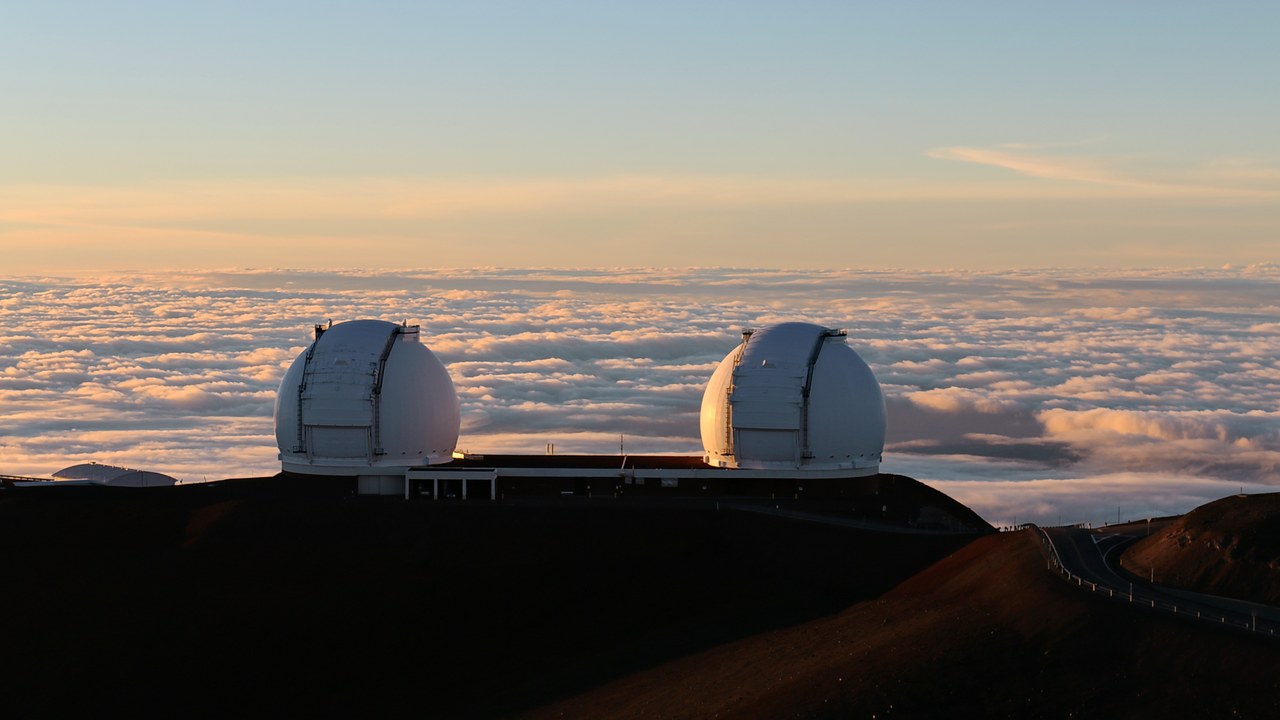
Keck I and Keck II stand side by side near the 4,145-meter summit of Maunakea in Hawaii, each carrying a 10-meter primary assembled from 36 hexagonal segments that computer-controlled actuators hold in alignment thousands of times a second. That segmented approach, proven when the first Keck telescope reached its full complement of segments in 1992, is the template later giant telescopes copied.
Both domes run laser guide star adaptive optics, firing a sodium beam into the upper atmosphere to create an artificial reference star and cancel the blur the air adds. Behind that correction sit high-resolution spectrographs tuned to detect the small stellar wobbles caused by orbiting planets, part of why the site has stayed in front-line use since the 1990s.
7. Atacama Large Millimeter Array: Sixty-Six Dishes On A High Plateau
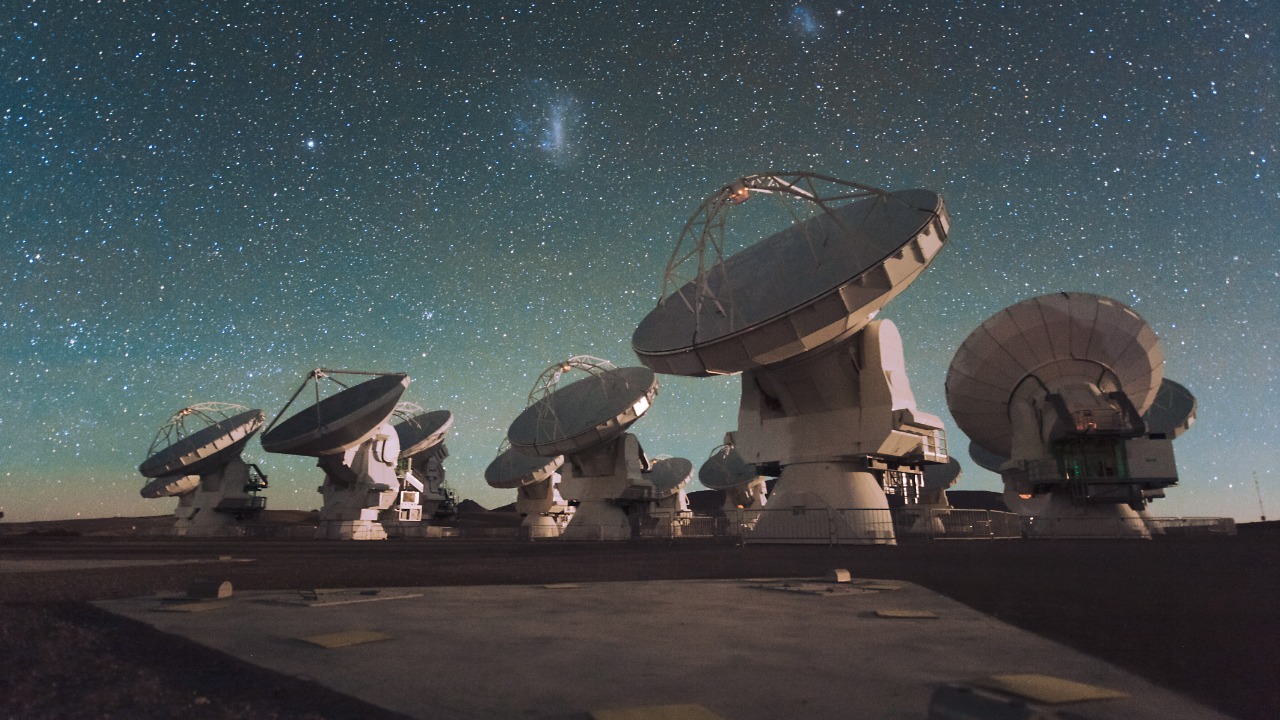
ALMA spreads 66 antennas across the Chajnantor plateau in northern Chile at about 5,000 meters, an altitude dry enough that millimeter and submillimeter waves reach the ground. The dishes work as one instrument, and moving them apart or together changes the resolution: at their widest spacing the baselines stretch roughly 16 kilometers, delivering images sharper than Hubble’s at those wavelengths.
Cold material is what those wavelengths reveal. Dust lanes, protoplanetary disks and the molecular gas that forms stars are nearly invisible to optical telescopes, and ALMA’s images of concentric gaps carved into young disks around infant stars supplied some of the clearest evidence yet of planets assembling.
8. Very Large Telescope: Four Telescopes Acting As One
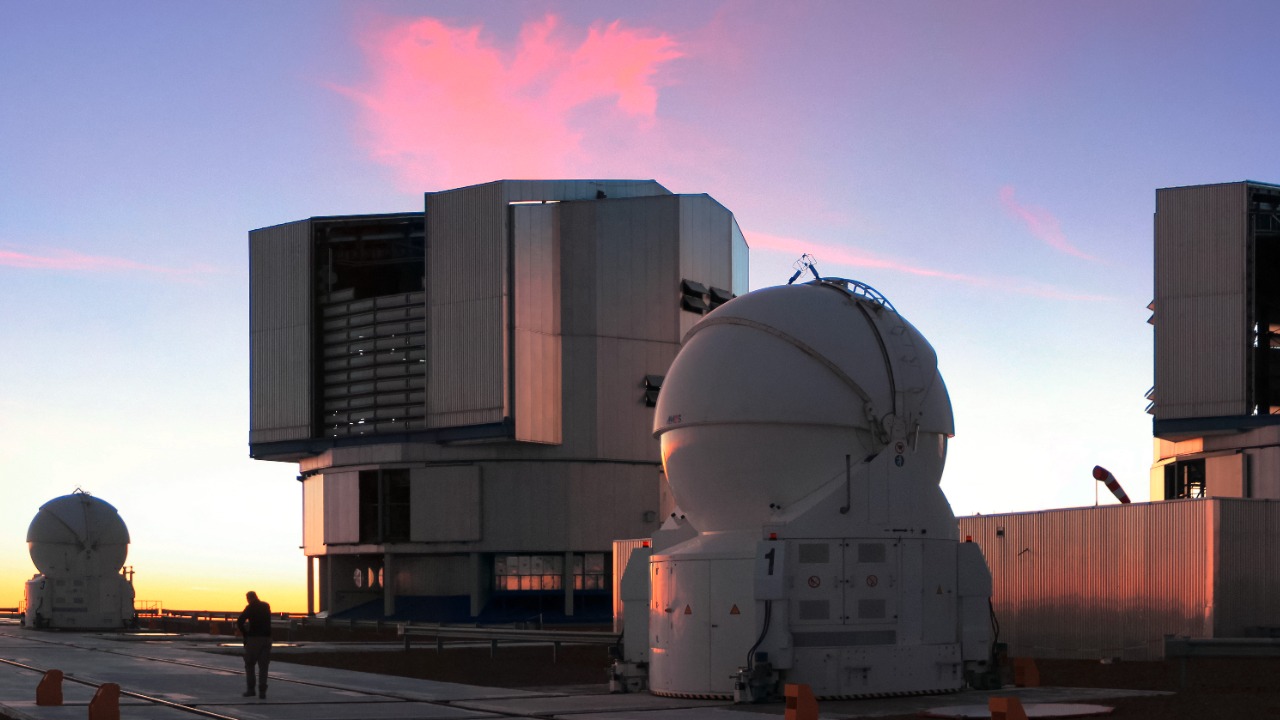
Four 8.2-meter Unit Telescopes stand on Cerro Paranal in Chile at 2,635 meters, joined by four movable 1.8-meter Auxiliary Telescopes. Each can work alone, but their light can also be combined underground in the VLT Interferometer, which mimics the resolving power of a far larger aperture and produced the observations tracking stars orbiting the black hole at the galactic center.
Operations began in 1998, and the site has stayed productive because its instruments are replaced rather than its telescopes: spectrographs and imagers rotate through the foci as detector technology improves. Paranal also anchors one of the driest, darkest skies in use, a reason ESO chose a neighboring peak for its next giant telescope.
More from Morning Overview
