
Some of the world’s largest works of art were made not on walls or canvas but on the ground itself, carved into deserts and chalk hillsides. Many are so large that they only make sense when seen from a plane or a hilltop far away. Here are eight giant drawings on the land that are clearest from the air.
Read next on Morning Overview: Arizona’s governor declared a statewide emergency after Flagstaff logged its wettest Nov. 1 on record
1. Nazca Lines: Figures Etched Into the Desert
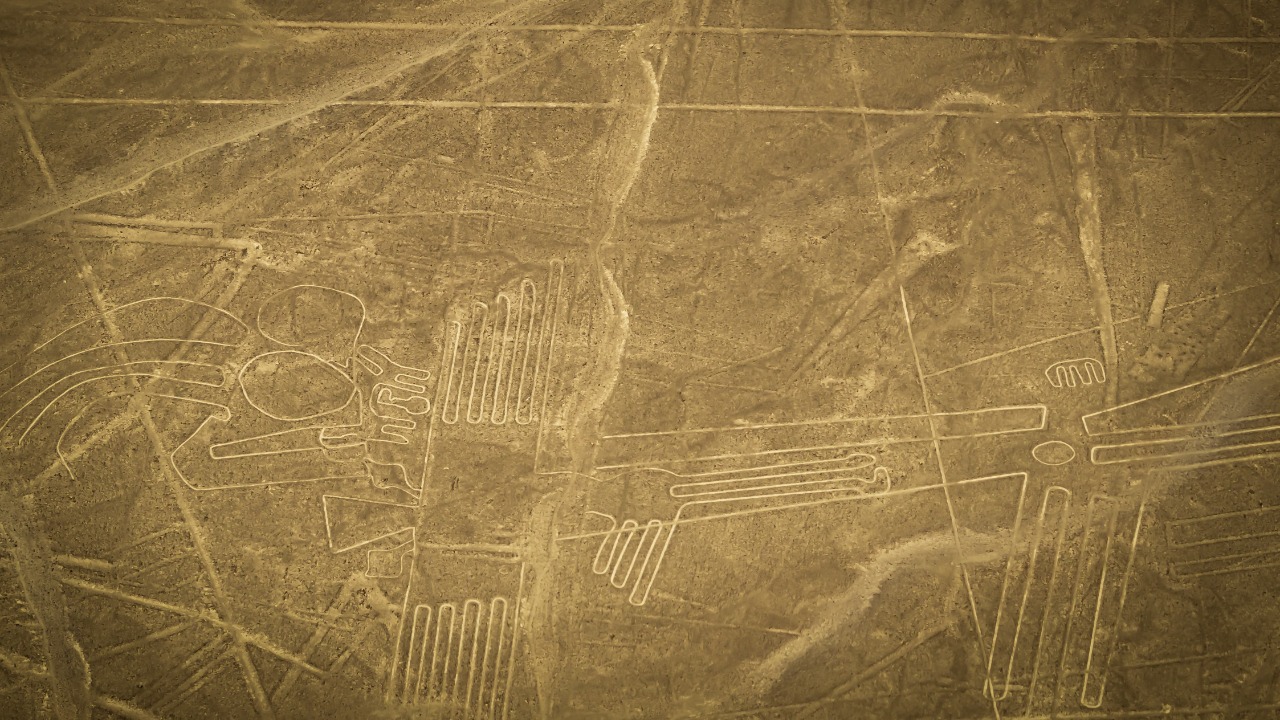
Peru’s Nazca Lines cover about 450 square kilometers and were made between about 500 B.C. and A.D. 500 by removing surface gravel to expose lighter ground beneath, according to UNESCO’s World Heritage listing. The figures include animals, birds and insects, and some lines run for several kilometers.
The dry, windless climate of the Nazca plateau has preserved the shallow lines for roughly two thousand years. Researchers still debate their purpose, with theories ranging from ritual pathways to markers linked to water sources, and new figures continue to be found with drones and artificial intelligence.
2. Blythe Intaglios: Too Large to See From the Ground
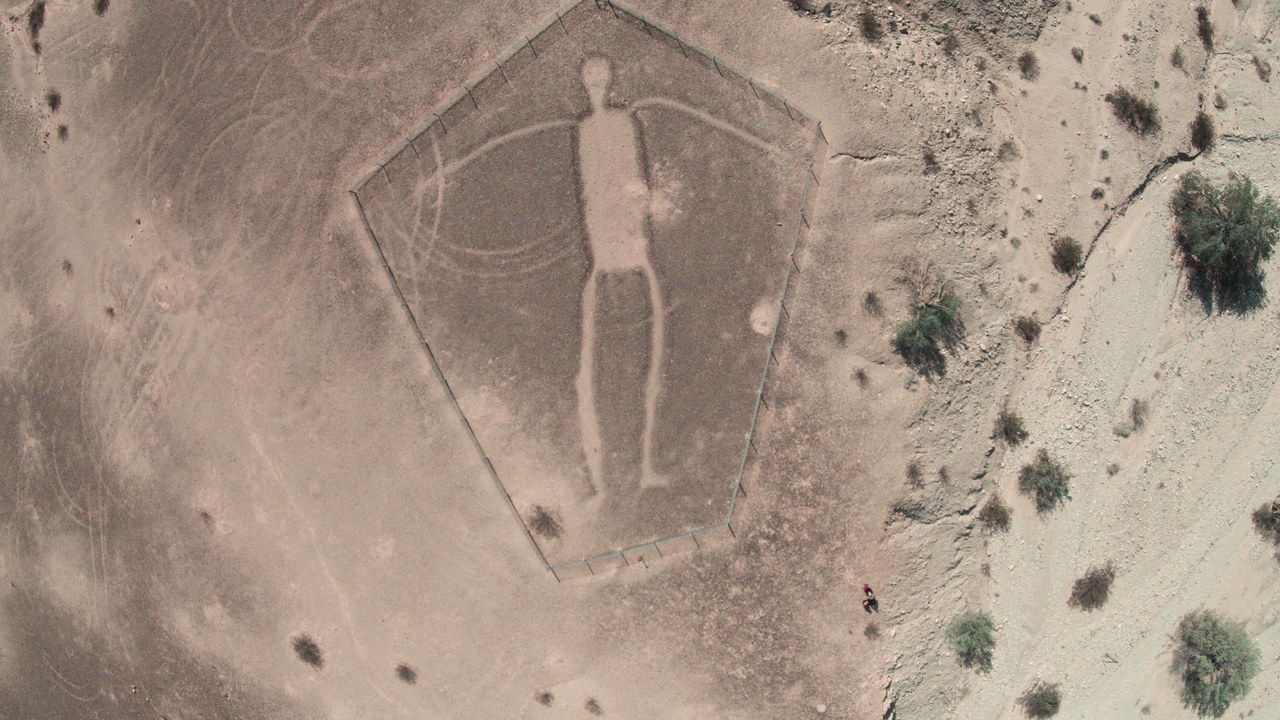
The Blythe Intaglios are six figures scraped into California’s Colorado Desert, the largest 171 feet long. According to Atlas Obscura’s survey of geoglyphs, they are too large to be visible from the ground and were rediscovered in 1932 by a pilot flying overhead.
The figures include human shapes and an animal that may represent a horse or mountain lion. Native American tribes of the lower Colorado River consider them sacred, and fences now protect them from off-road vehicles that once damaged parts of the designs. They lie near the town of Blythe.
3. Great Serpent Mound: A Serpent Uncoiling in Ohio
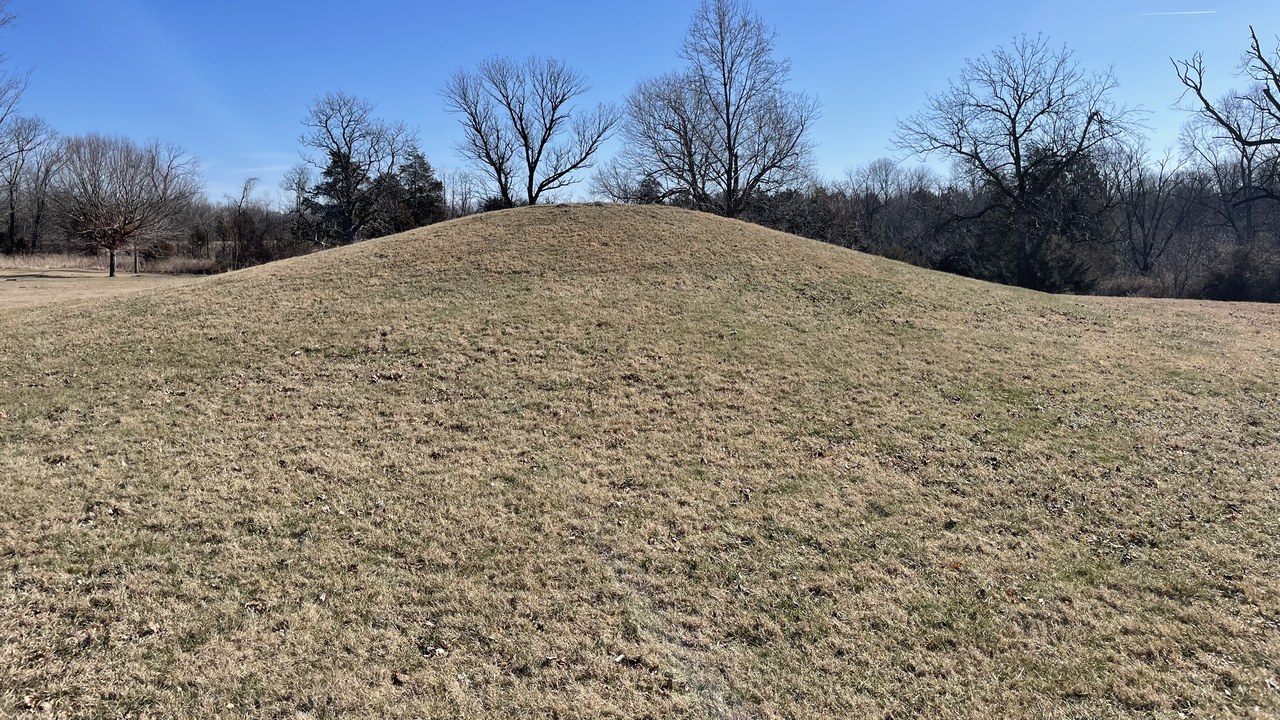
The Great Serpent Mound in Adams County, Ohio, stretches more than 1,300 feet. According to the Metropolitan Museum of Art, archaeologists disagree on whether it dates to between 1000 and 100 B.C. or to between 1000 and 1200 A.D.
The earthwork shows a snake with a curling tail and an open mouth that appears to hold an oval shape. Some researchers link its head to the summer solstice sunset. Seen from the ground it looks like a low grassy ridge, so its full shape is best appreciated from above. It is a state memorial.
4. Uffington White Horse: A Bronze Age Horse in Chalk
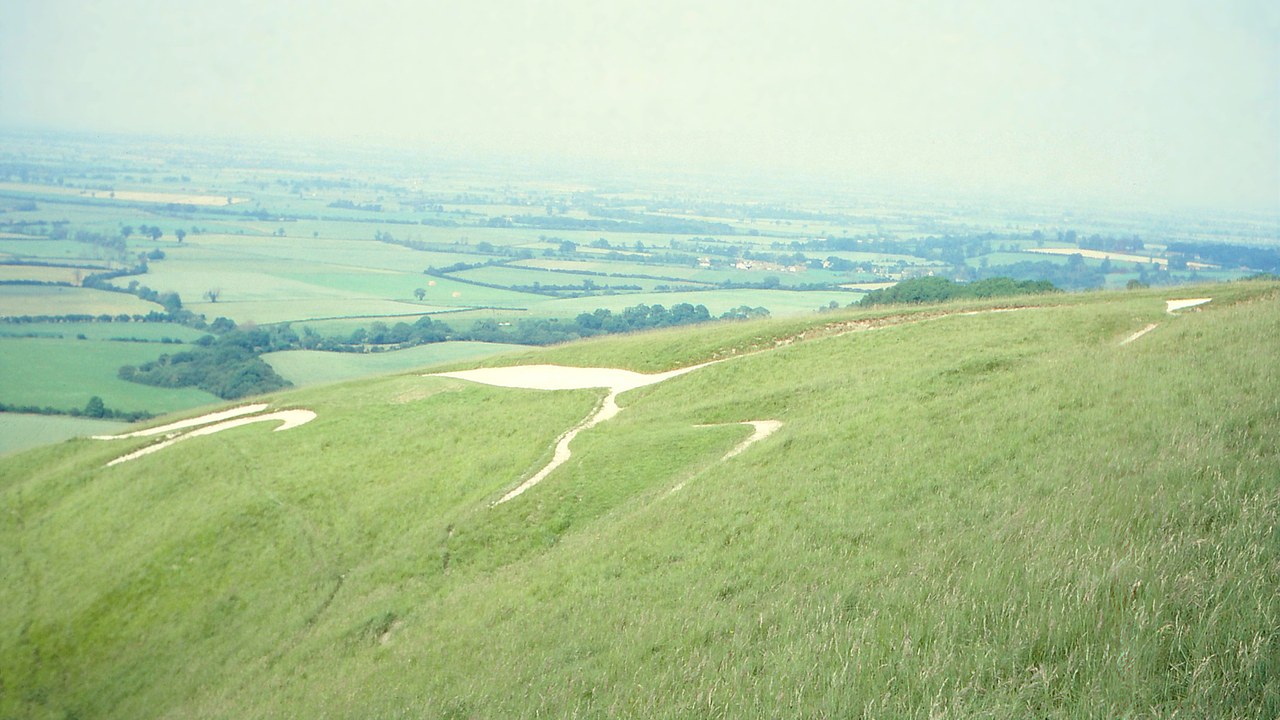
The Uffington White Horse measures 111 meters from the tip of its tail to its ear, and English Heritage says luminescence dating places it between 1380 and 550 B.C. Local people have kept it clear for generations.
Without that care, grass would have swallowed the chalk lines centuries ago. The horse’s sleek, abstract shape looks modern to many visitors, yet it is the oldest known chalk hill figure in Britain, and its best views are from the air or the hills across the valley. It sits near the Ridgeway trail.
5. Cerne Abbas Giant: A Giant With Unclear Origins
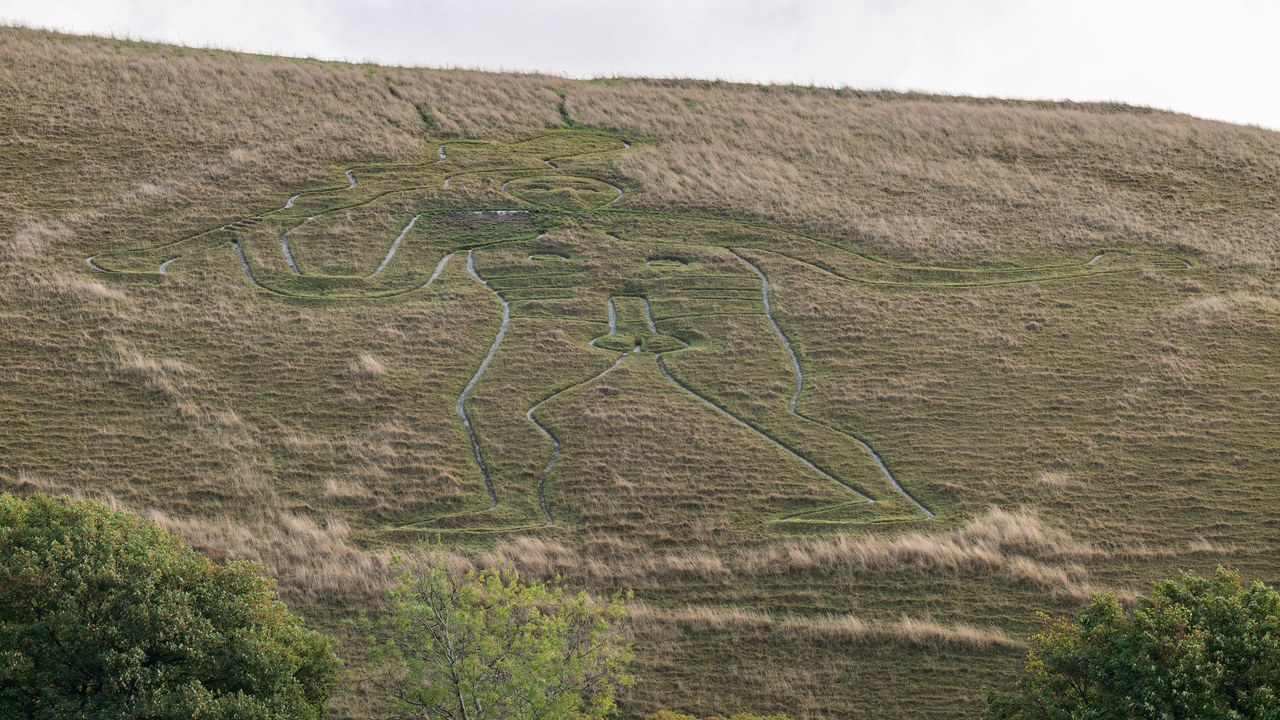
The Cerne Abbas Giant is a chalk figure cut into a Dorset hillside in England, and according to Atlas Obscura, its origins are not clear. The earliest written mention of it comes from the 17th century.
Theories about its age have ranged from Roman times to the 1600s, and the lack of earlier records has kept the argument going. The National Trust now cares for the figure, which is periodically re-chalked by volunteers so its outline stays visible from a viewing area in the valley below. It stands 180 feet tall.
6. Paracas Candelabra: A Candelabra Facing the Sea
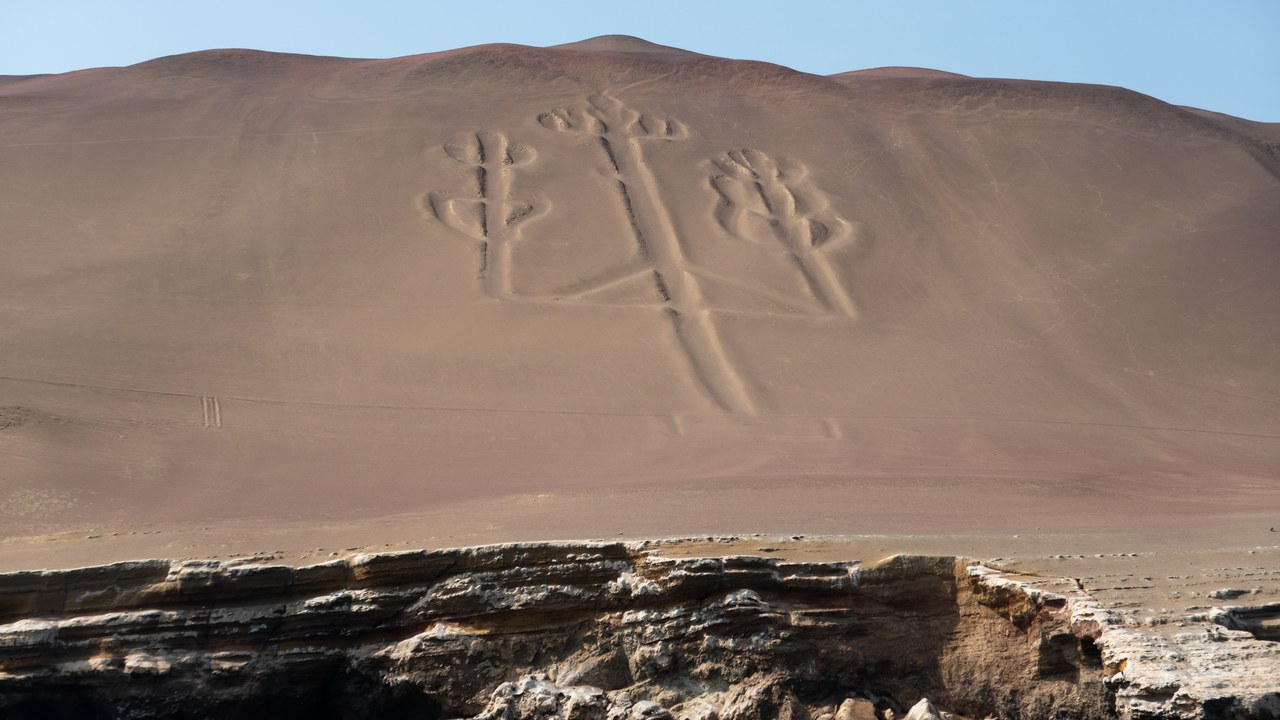
The Paracas Candelabra on Peru’s Paracas Peninsula is nearly 600 feet long. Pottery found nearby carbon-dates to about 200 B.C., but according to WorldAtlas, the age of the carving itself is unknown.
Unlike the Nazca Lines, the Candelabra is cut into a sloping hillside facing the Pacific Ocean, so it is best seen from boats approaching the coast. Theories about its purpose range from a navigation marker for sailors to a symbol linked to local plants or beliefs. Boat tours from the nearby town of Paracas pass it daily. Few visitors forget it.
7. Long Man of Wilmington: A Figure Holding Two Staves
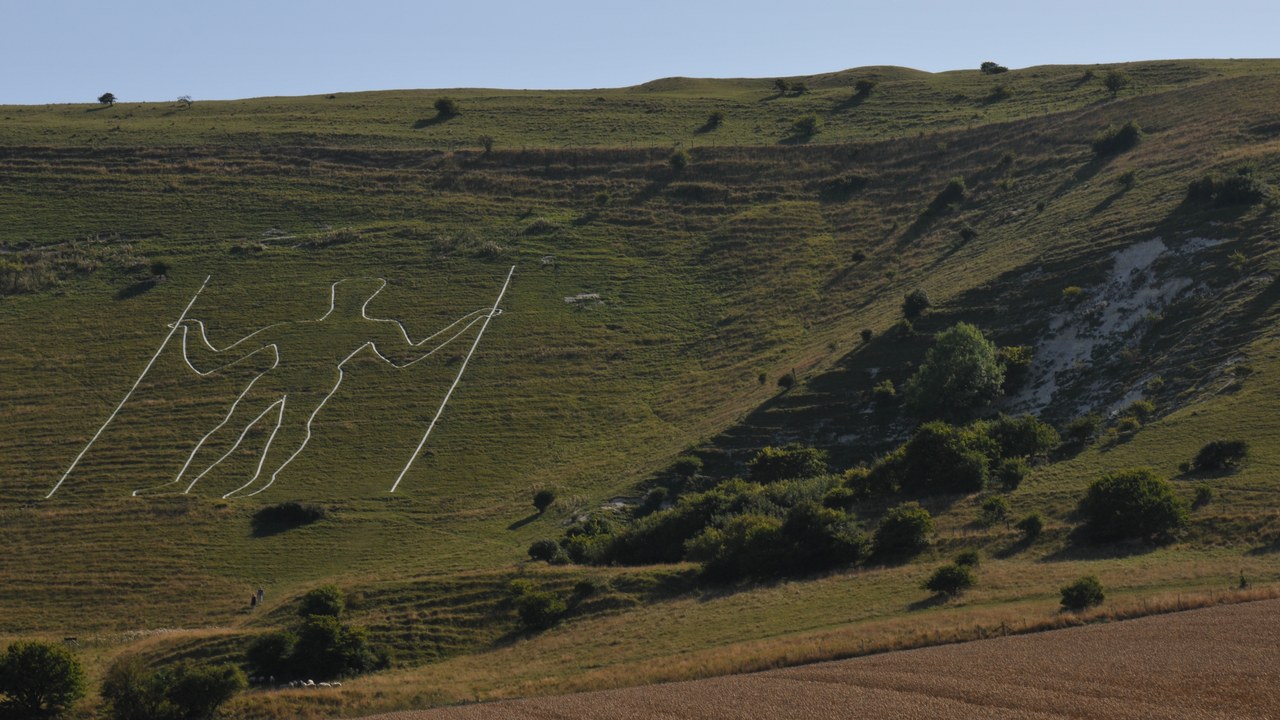
The Long Man of Wilmington is a 235-foot figure on Windover Hill in Sussex. According to The Past magazine, who it represents and why it was cut are still open questions, though recent research points to a Tudor date.
The figure holds a long staff in each hand and is one of the largest representations of a human in Europe. Its outline is now marked with painted blocks instead of exposed chalk, which keeps it visible in all seasons for walkers on the South Downs. It is owned by the Sussex Archaeological Society.
8. Westbury White Horse: The Oldest of Wiltshire’s Horses
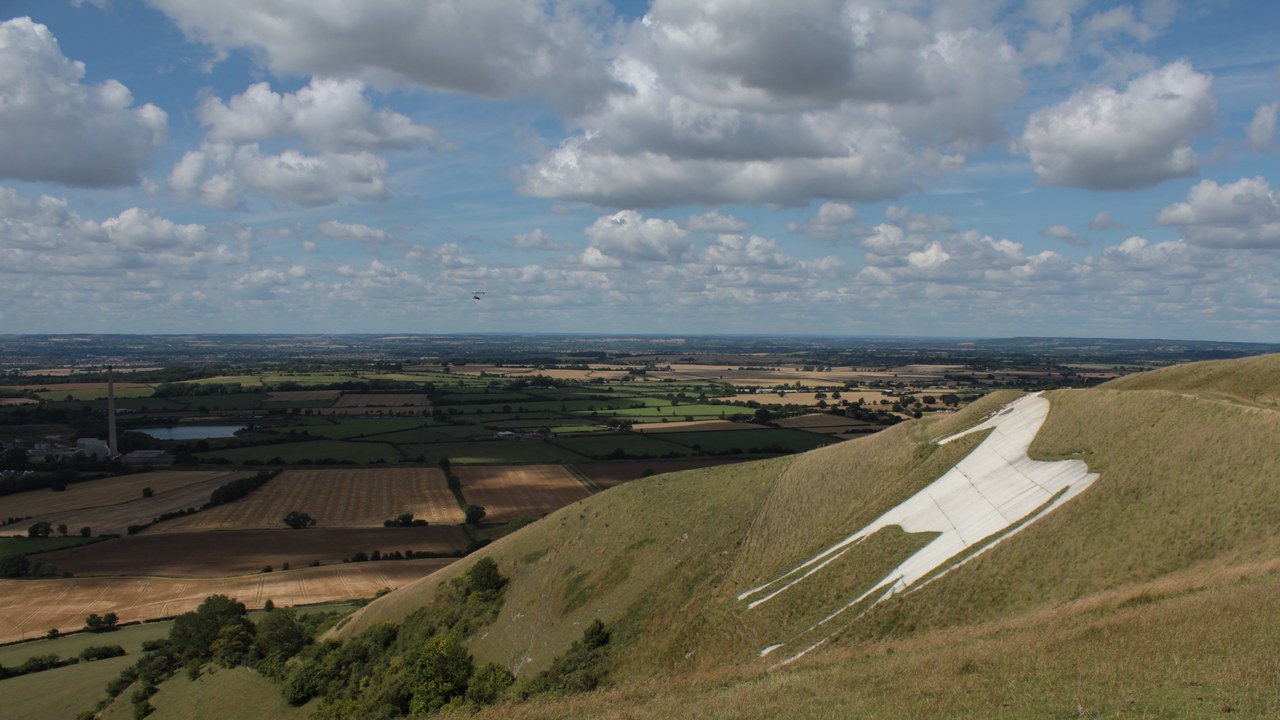
The Westbury White Horse is the oldest of Wiltshire’s chalk horses. According to the Wiltshire White Horses guide, the earliest mention suggests it was cut in the late 1600s, possibly as a mock-Saxon folly, and it was re-cut in 1778.
That re-cutting changed its shape, and the horse seen today looks different from the original. In the 1950s the figure was covered in concrete and painted white to reduce maintenance, a practical choice that remains controversial among people who prefer the traditional chalk. It is visible from miles away. Trains pass below it.
More from Morning Overview
- A handful of car transmissions are so tough that mechanics say they almost never die
- Melting permafrost is setting off a newly identified kind of catastrophic landslide, scientists say
- Cadillac cut the price of its cheapest EV, which goes up to 317 miles on a charge
- Winter weather advisories cover I-80, I-70 and the Bighorns with up to 15 inches of snow
