
The limits of ordinary computing become obvious when a problem spans climate systems, nuclear physics, drug discovery, or immense data sets. Supercomputers attack those problems by coordinating vast numbers of processors, trading desktop convenience for extraordinary scale, speed, and specialized architecture. These five machines show how engineers turned difficult scientific and national questions into calculations that could actually be attempted.
1. Frontier: Crossing the Exaflop Frontier
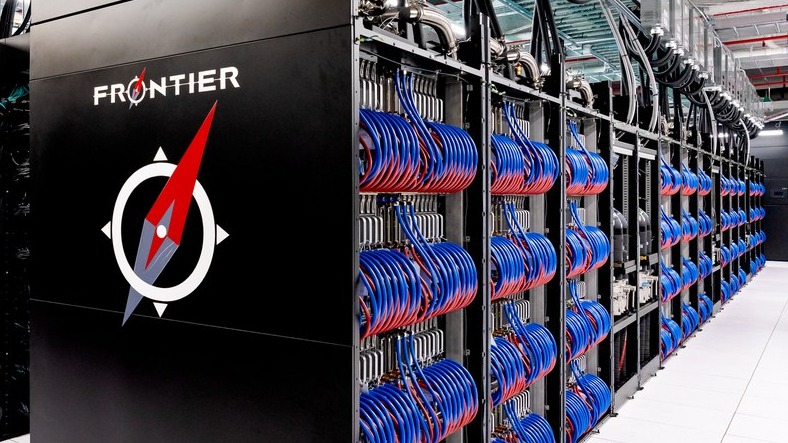
Frontier’s defining capability is computational scale: the Oak Ridge machine can exceed an exaflop while serving open scientific research. An exaflop is more than a quintillion floating-point operations each second, a rate far beyond the work a conventional desktop can sustain. That enormous budget lets scientists construct numerical experiments with more variables, finer detail, and repeated runs instead of relying on a single simplified calculation.
The payoff is not simply a faster answer to a familiar spreadsheet. Frontier can divide a vast simulation across many computing elements, allowing researchers to study interactions that become meaningful only at scale. Climate behavior, materials, energy systems, and molecular processes all contain linked effects that can overwhelm a small machine. Results still depend on sound models and careful interpretation, but the system makes previously impractical questions available for serious testing rather than educated approximation alone.
2. Summit: A Mountain of Scientific Work
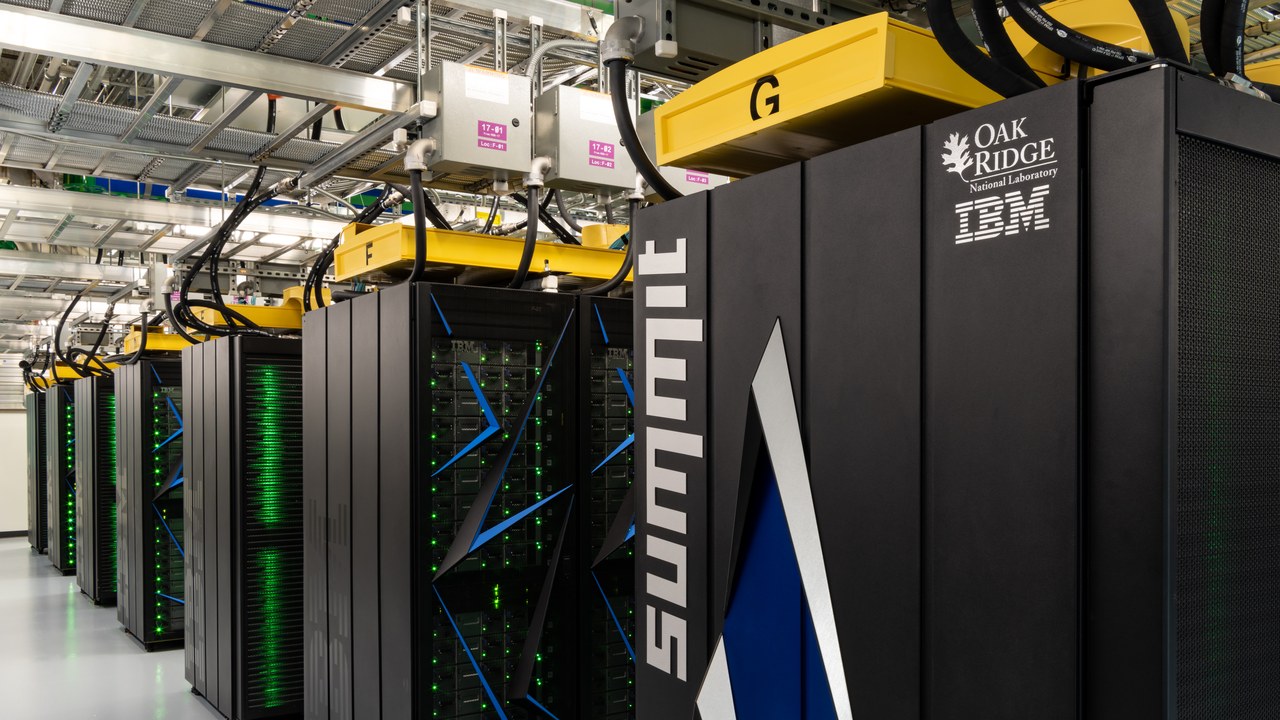
Summit gave Oak Ridge researchers a system designed for scientific workloads far beyond desktop scale. The official Summit system profile documents a large machine whose hardware was assembled to move demanding calculations through many computing elements at once. That parallel structure lets a research team split an immense problem into manageable pieces, calculate them together, and reunite the outputs without forcing a conventional workstation to process every step in sequence.
The result matters when a scientific model contains too many interactions, states, or data points for ordinary hardware. More capacity allows finer detail, larger ensembles, and repeated comparisons that show whether a finding remains stable under changed assumptions. Summit also illustrates why a supercomputer is more than a room full of processors: memory, data movement, software, and scheduling must function as one system. Its value comes from turning theoretical capacity into completed experiments researchers can inspect, challenge, and refine.
3. Aurora: Merging Simulation With AI
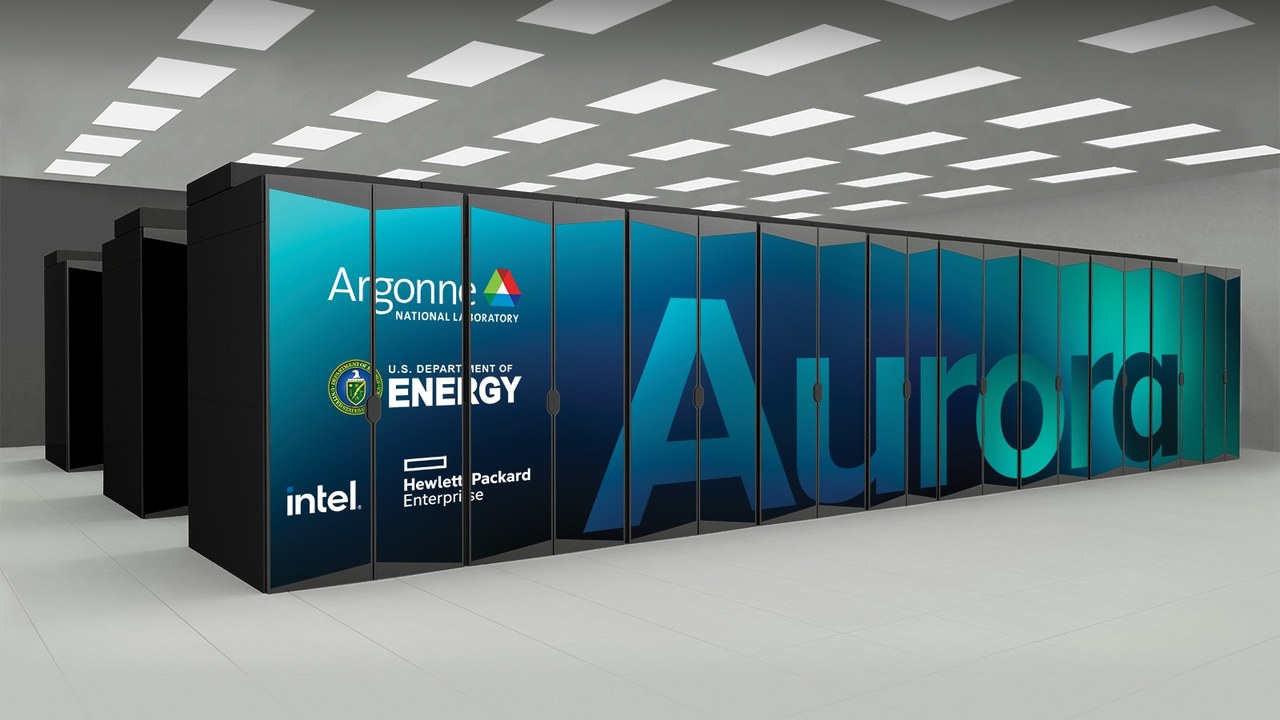
Aurora was built at Argonne for scientific workloads in which raw calculation and enormous data sets meet. The laboratory positions the Aurora computing system around data-intensive science and artificial intelligence, not merely traditional equation solving. That combination matters because modern research can produce observations and simulations too large for a desktop to process efficiently, especially when a model must identify subtle patterns across many variables or compare results from repeated runs.
Artificial intelligence at this scale can help researchers classify outputs, build surrogate models, and decide which parts of a problem deserve closer calculation. Conventional simulation and machine learning become complementary tools: one expresses physical rules, while the other searches complex results for structure. Aurora is less about making consumer software feel instant than keeping discovery pipelines moving when both the mathematics and resulting data are immense. Its scale opens a practical route from computation to interpretation.
4. Fugaku: Japan’s World-Ranking Powerhouse
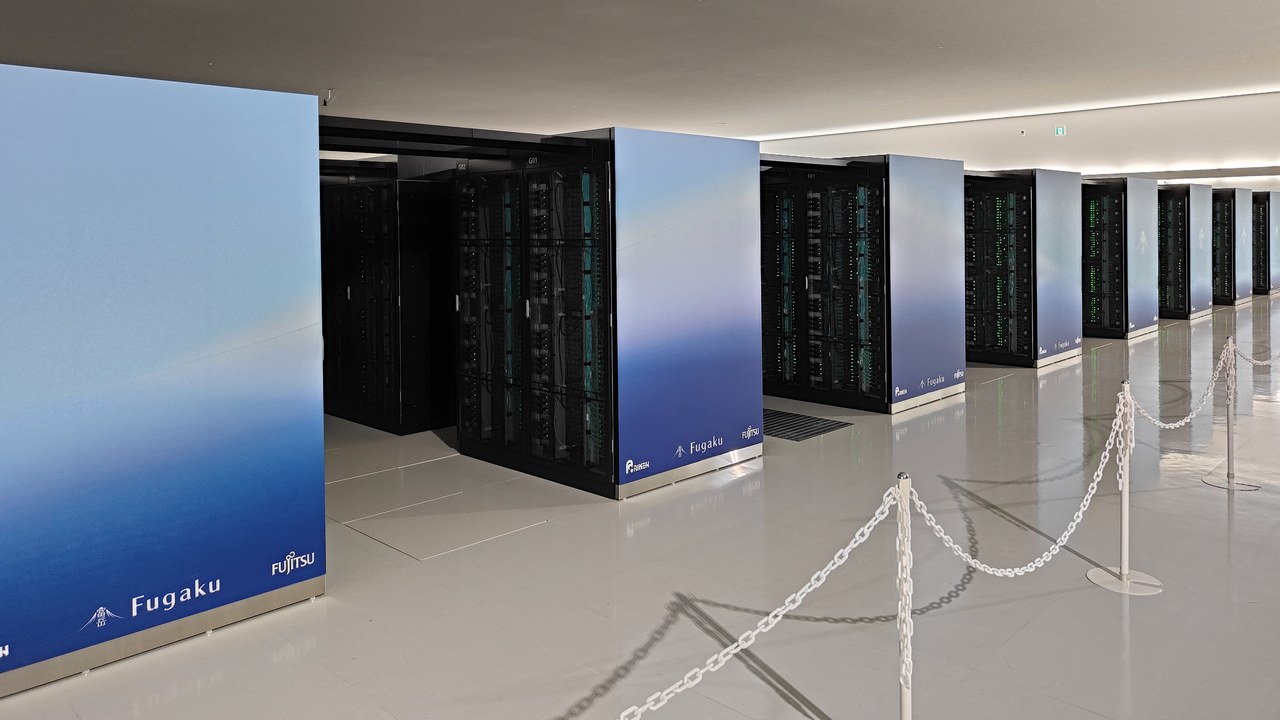
Fugaku demonstrated that supercomputing leadership could support a broad scientific program rather than a single showcase calculation. Built in Japan, the machine topped world rankings and became a visible benchmark for national computing capacity. Its design brought enormous parallel processing power to research questions that demand both speed and scale, from physical simulation to data analysis, while giving Japanese institutions a shared platform for work too demanding for ordinary computers.
Rankings capture only part of Fugaku’s significance. A top score is a standardized snapshot, whereas useful science depends on whether software can translate the hardware into reliable results. Large machines must move data, coordinate many tasks, and keep thousands of calculations working together without wasting their theoretical power. Fugaku’s place in the field reflects that complete systems challenge. It represents the infrastructure required to turn a difficult model into a tractable campaign of runs, comparisons, refinements, and independently examined conclusions.
5. Cray-1: The Curve That Defined an Era
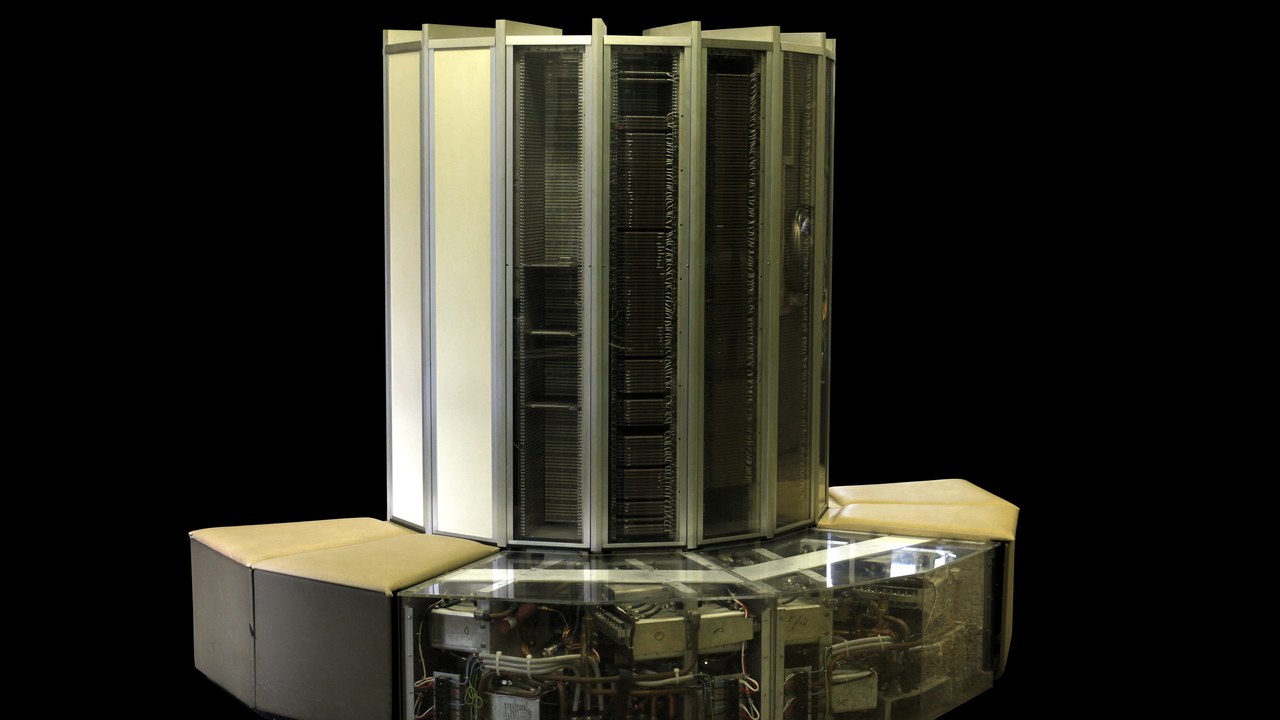
The Cray-1 made supercomputing visually unmistakable. Its curved 1970s cabinet became an icon of the field, but the memorable shape served an engineering age in which physical distance inside a computer affected speed. The landmark Cray-1 design concentrated high-performance components and emphasized vector processing, handling streams of related numerical operations more efficiently than machines built for ordinary business tasks. It defined what a purpose-built scientific computer could look like and do.
By modern standards, its performance is tiny, yet that comparison misses the historical breakthrough. Cray-1 gave laboratories a machine organized around intense research rather than office use, influencing architecture and high-performance computing culture. The padded benches around the cabinet became part of its legend, while the hardware helped scientists tackle models beyond contemporary mainframes. Its legacy survives in the principle guiding current exascale systems: difficult questions sometimes require a computer designed around the problem, not a larger desktop.
This article was produced with the assistance of AI and reviewed by Morning Overview editors prior to publication.
More from Morning Overview
- A Colorado wildfire has exploded past 87,000 acres with no containment
- A wildfire near Ouray swelled past 18,000 acres, putting Colorado towns on alert
- The Pentagon’s newest UFO files describe a fish-scaled, potato-shaped object on camera
- Scientists spotted a rare tusked whale alive at sea for the first time, then fired a crossbow at it.
More from Morning Overview
- The largest genetic study of fibromyalgia found new risk factors rooted in the nervous system
- Toyota grabbed six of the ten spots on Consumer Reports’ most-reliable-cars list
- Evacuations spread as the Gann Fire chews through 10,000 acres of California’s Gold Country
- A common childhood virus is now tied to multiple sclerosis years later
