
Long before horsepower wars became marketing slogans, Dodge was building fast cars for drivers who wanted more than basic transportation. From the 1950s through the early 1970s, the brand turned Hemi engines and Scat Pack bravado into a legend. These fourteen Dodges defined that golden era of American performance.
Read next on Morning Overview: A dangerous unpatched Windows exploit is now public and can hand attackers full control
1. 1956 Dodge Royal Lancer: The D-500 Flagship
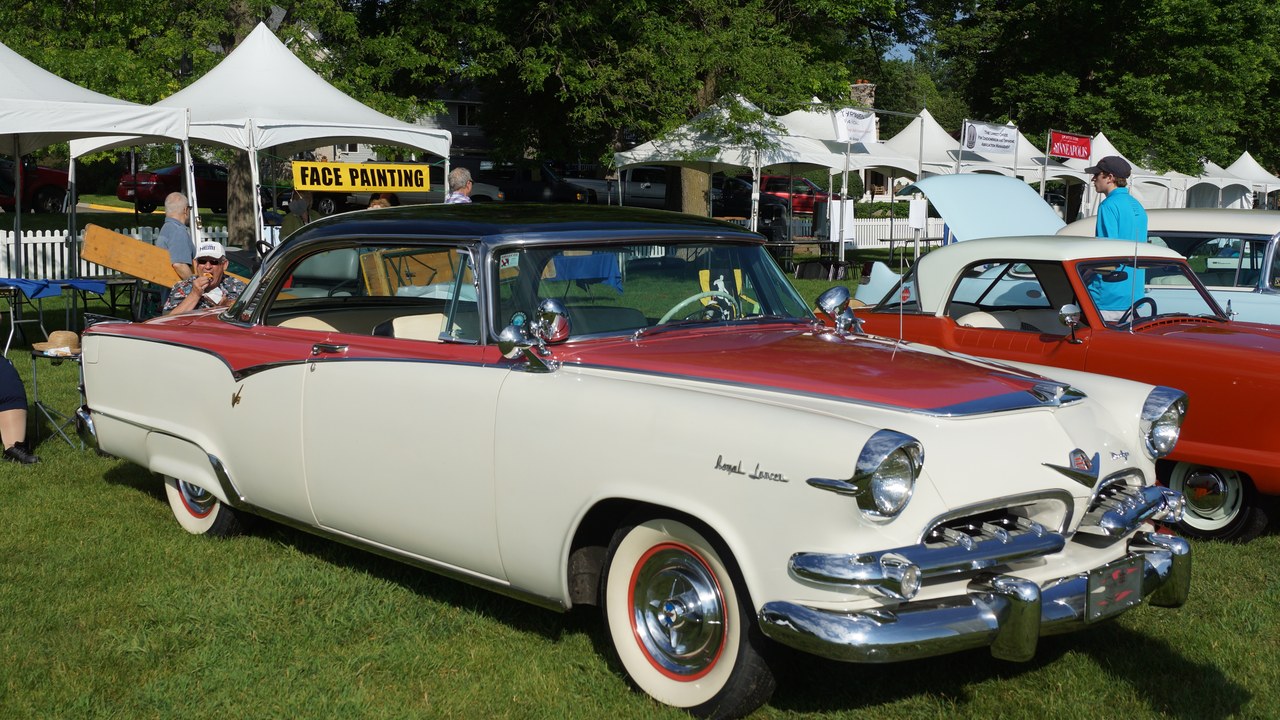
The 1956 Dodge Royal Lancer sat at the top of Dodge’s model range, and Motoring Research notes it could still be ordered with the D-500 package. That option brought a special 315 cubic-inch V8.
The D-500 engine used unique pistons, lifters and rockers along with a special cam. A four-barrel carburetor lifted peak output to 260 horsepower, serious power for a luxury cruiser in the mid-1950s. It was an early sign that Dodge was willing to put real performance in its showroom cars.
2. 1961 Dodge Dart Phoenix: A Record Player on the Dash
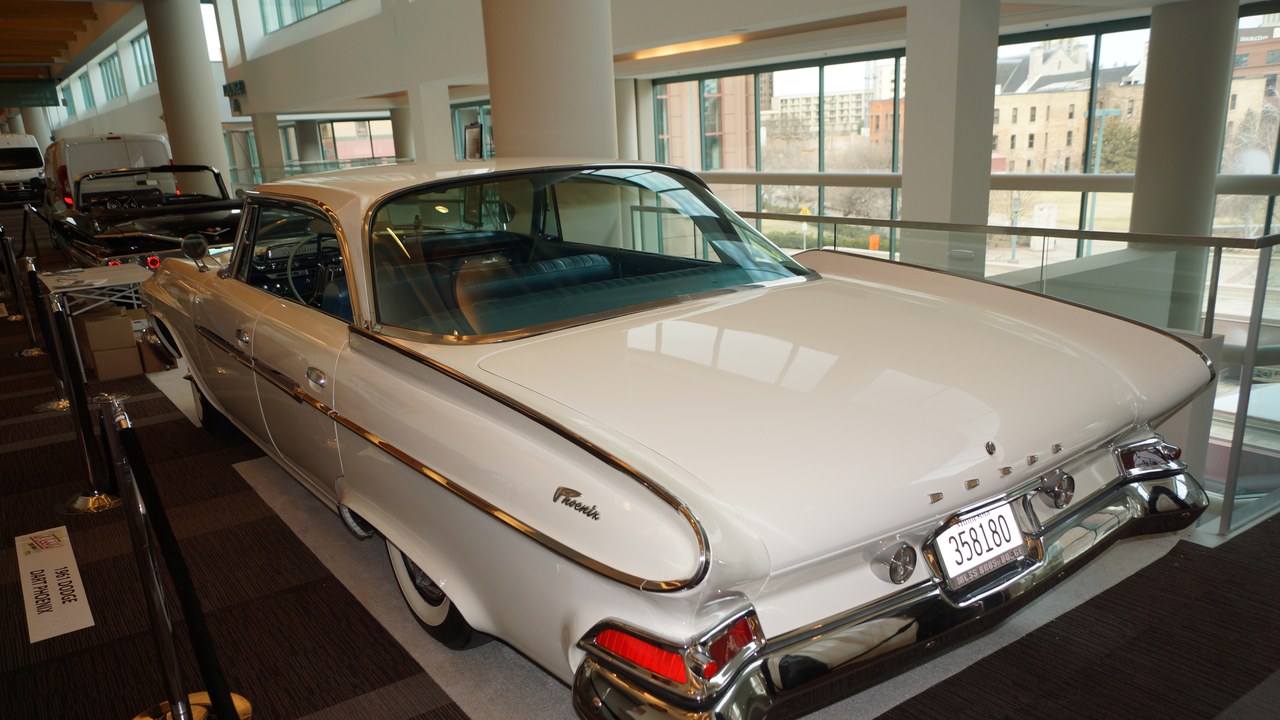
The Dart was Dodge’s smallest offering in 1961, and the luxurious Phoenix sat at the top of its trim ladder. According to Motoring Research, options included seats that swiveled to make getting out easier.
Buyers could also add the Highway Hi-Fi, an RCA record player mounted in a shock-proof cabinet under the dash. For 1961, a 383 cubic-inch V8 joined the options list, making 330 horsepower with twin four-barrel carburetors on a cross-ram intake. It was a strange mix of comfort and muscle that only that era could produce.
3. 1962 Dodge Polara: Lighter and Faster
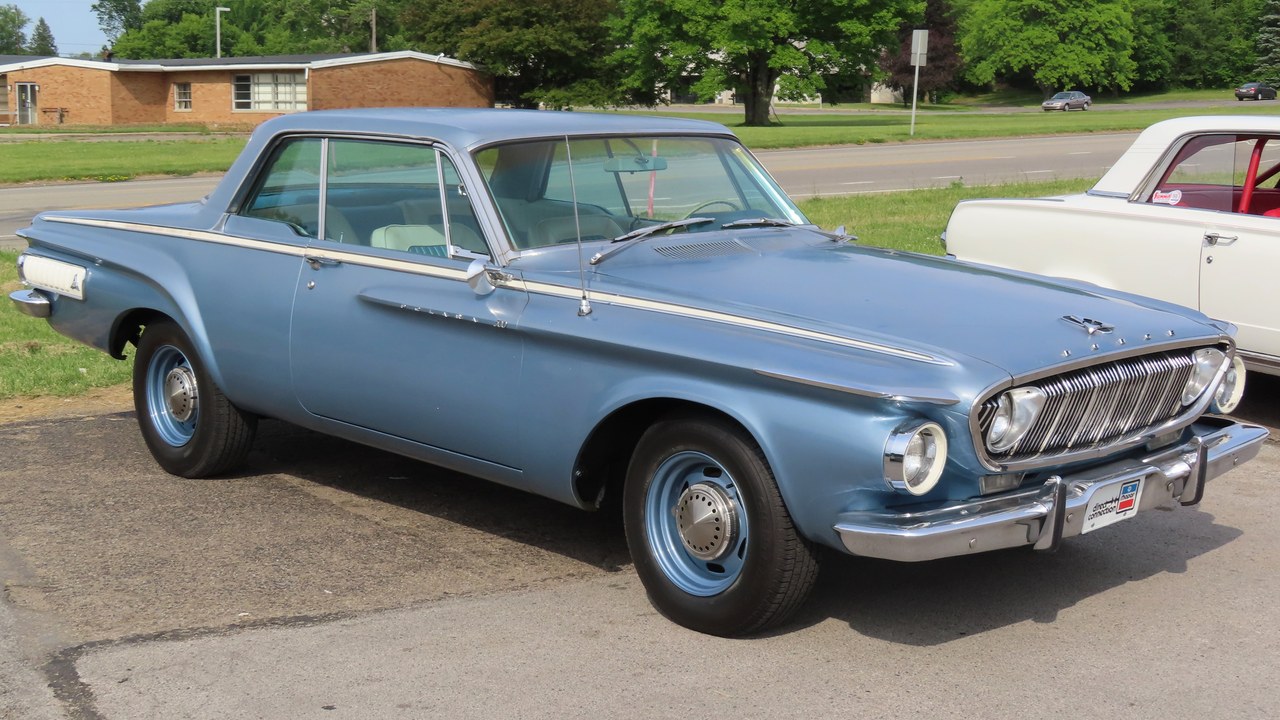
Dodge pared down every car for 1962. As Motoring Research tells it, legend says management downsized the line after hearing Chevrolet would offer smaller cars that year.
The result was a Polara about 300 pounds lighter than its predecessor. Dodge offered a 413 Max Wedge V8 rated at 415 horsepower, creating a blindingly fast car loved by racers and police alike. Pairing that lighter body with such a big engine set the template for the Dodge muscle cars that followed later in the decade.
4. 1967 Dodge Coronet R/T: Road and Track
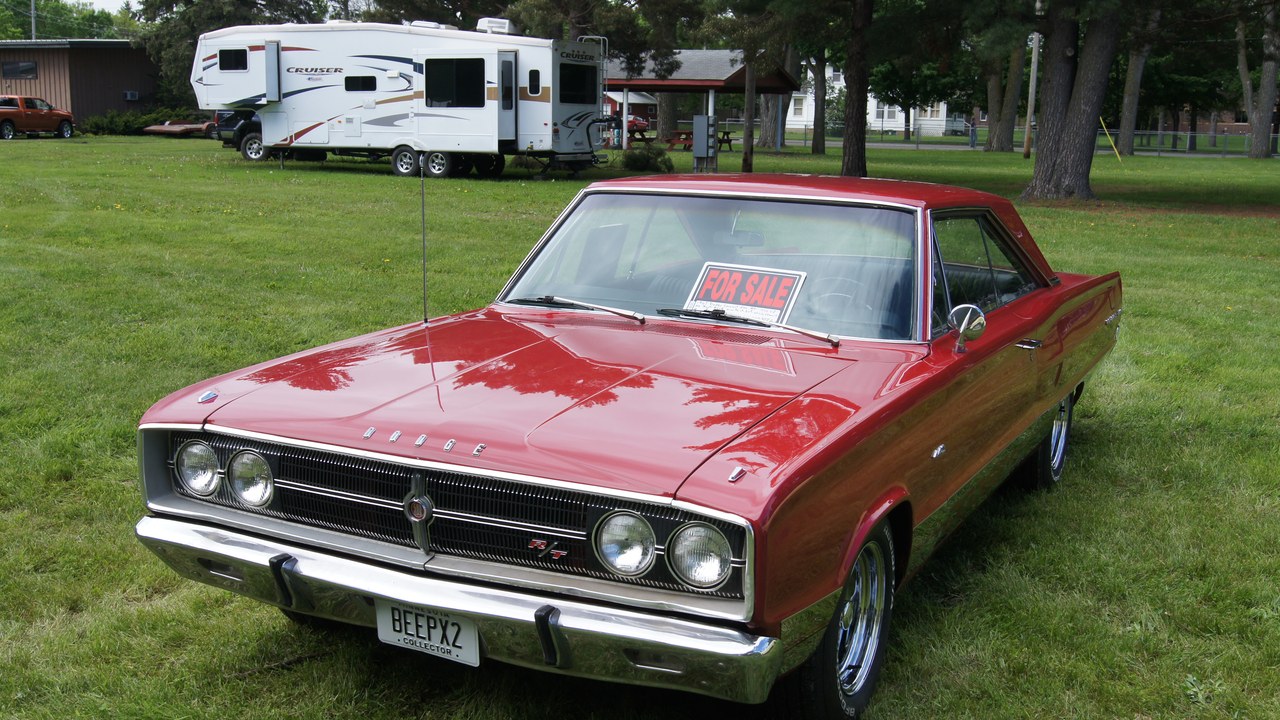
Many street muscle cars of the era doubled as weekend dragsters. According to Old Cars Weekly, Dodge added the Coronet R/T, for road and track, in 1967 to play up that street-and-strip image.
A 375-horsepower 440 Magnum V8 came standard. Motor Trend summed it up as a Dodge with a set of mag wheels, wide oval tires and a bumblebee stripe on its rear end. The R/T badge went on to become one of the most recognizable performance labels Dodge ever used.
5. 1967 Dodge Charger: Rarer Than the First Year
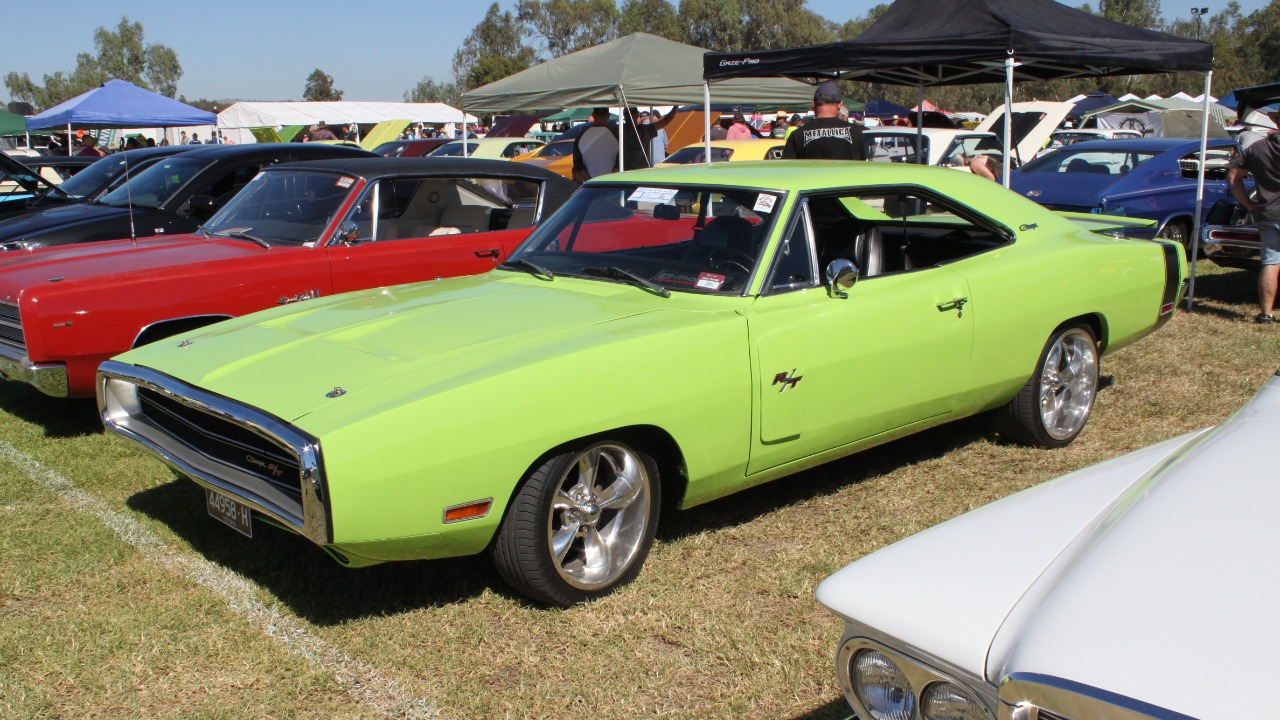
The 1967 Charger was far rarer than the 1966 car. Old Cars Weekly reports only 15,788 were built, including just 118 with a Hemi.
The top engine was the 426, rated at 425 horsepower, and it ran from zero to 60 mph in 7.6 seconds with a quarter-mile of 14.4 seconds at 100 mph. The 440 Magnum was a step below, good for a 15.5-second quarter. The price of that Hemi power showed at the pump: about 11.7 mpg in the city.
6. 1968 Dodge Super Bee: Scat Pack’s New Member
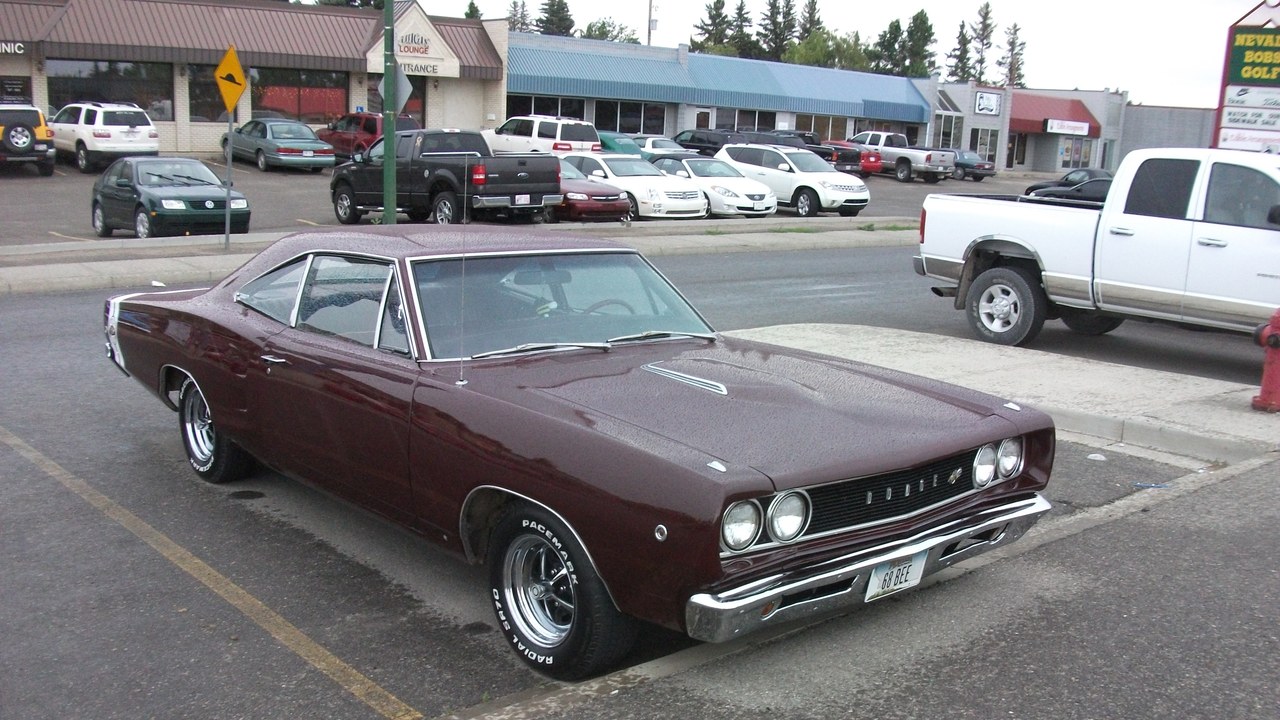
The Super Bee joined the 1968 Scat Pack midyear on a Coronet body. As Motoring Research explains, its standard engine was a 335-horsepower, 383 cubic-inch V8 shared with its cousin, the Plymouth Road Runner.
The 426 Hemi could be ordered, but it raised the car’s price by nearly one third. Heavy-duty suspension was standard, along with bigger brakes and a four-speed manual with a Hurst shifter. The Super Bee gave buyers a no-frills way into Dodge’s performance lineup.
7. 1969 Dodge Coronet R/T: Hemi Only in the Hot Trims
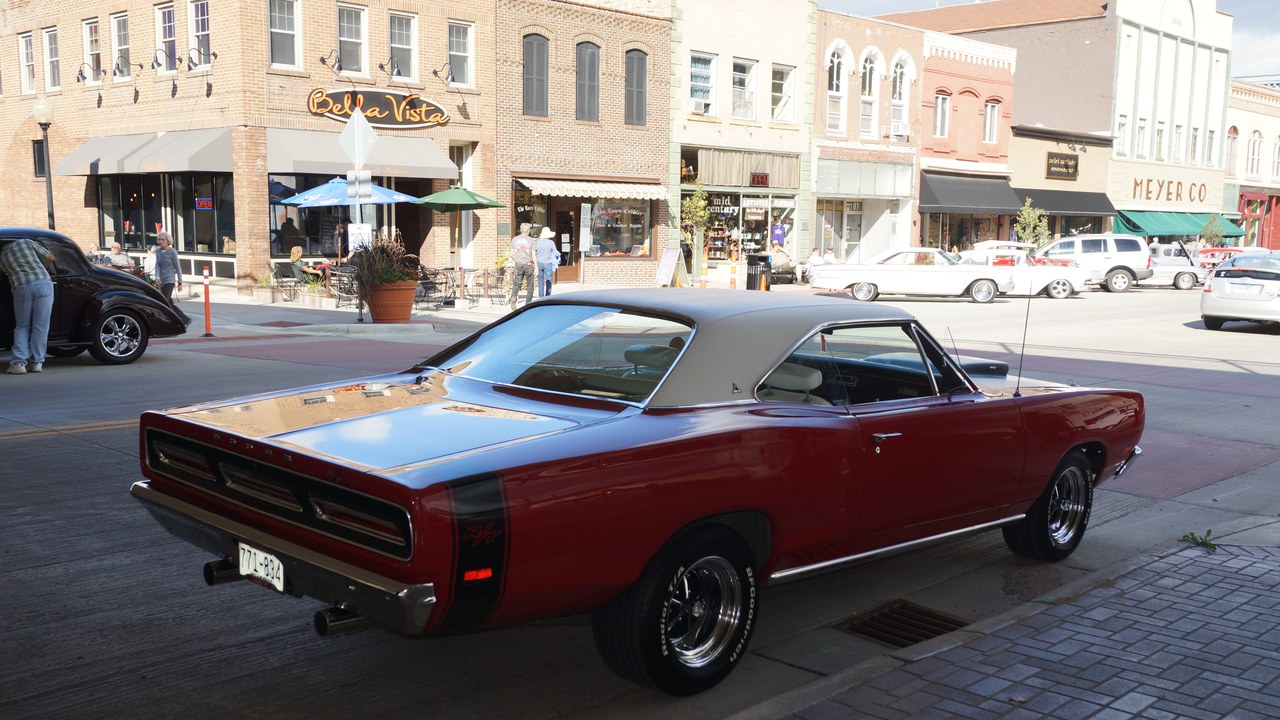
For the refreshed 1968 to 1970 Coronet, Dodge offered the 426 Hemi only in the R/T and Super Bee trims, according to Jalopnik. The sharper front end and chiseled sides gave the car a much more muscular look.
The R/T also brought Dodge’s Special Handling suspension, with heavy-duty shocks, larger torsion bars and sway bars, plus an extra leaf in the right rear spring to cope with the torque. The Hemi option, tuned to 425 horsepower, sat at the top of the range for buyers who wanted the most.
8. 1968 Dodge Charger R/T: The Coke-Bottle Legend
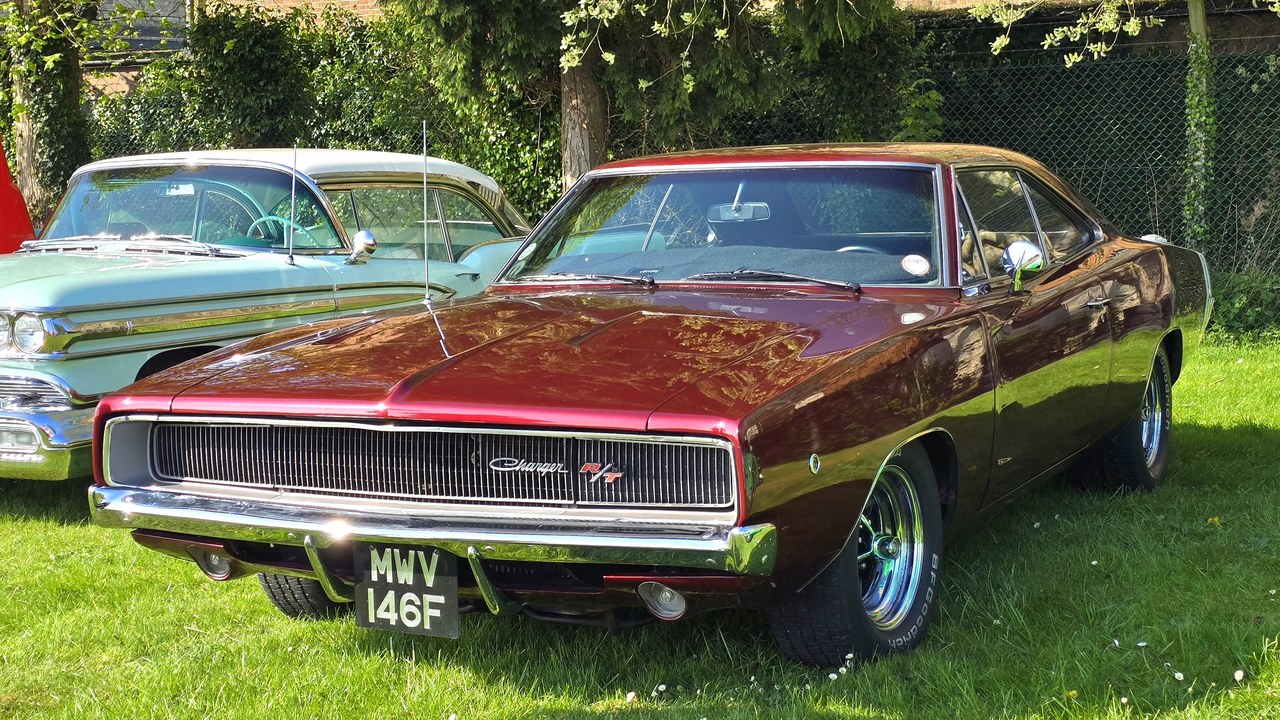
For most fans, the second-generation Charger is where the Charger story truly begins. Jalopnik credits its famous Coke-bottle profile with giving the car a predatory stance.
The hidden headlights stayed, and the R/T, with its rear bumblebee stripes and Red Streak tires, was the best-looking of the bunch. The 440 Magnum V8 came standard, and the 426 Hemi was optional. Inside, bucket seats held the driver in place through corners.
9. 1969 Dodge Charger 500: Built for NASCAR
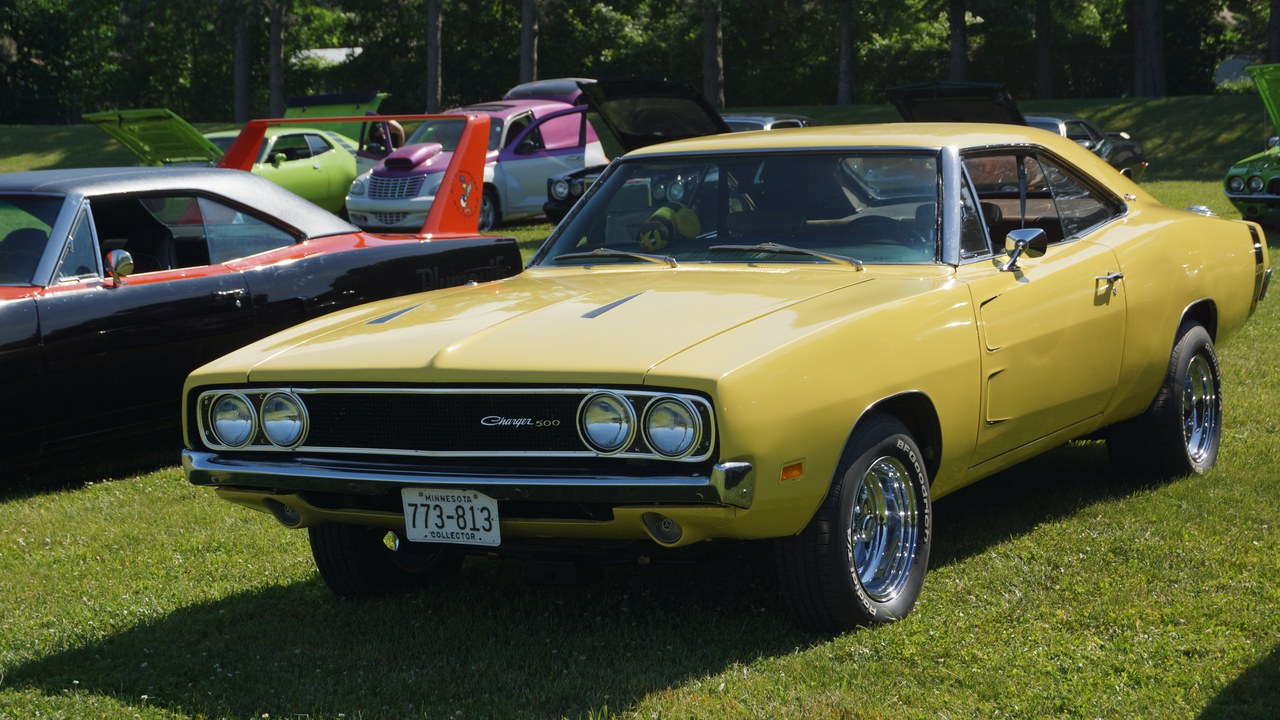
The 1969 Charger 500 was a limited-edition car built to compete in NASCAR. According to Muscle Cars Illustrated, just 393 were built.
Its NASCAR efforts fell short. The Charger 500 failed to win, and that disappointment helped push Dodge toward an even more radical aerodynamic car later the same year: the winged Charger Daytona. Today, the tiny production run makes the 500 one of the rarest Chargers of the era and a prized find for collectors.
10. 1969 Dodge Charger Daytona: The 200-mph Winged Warrior
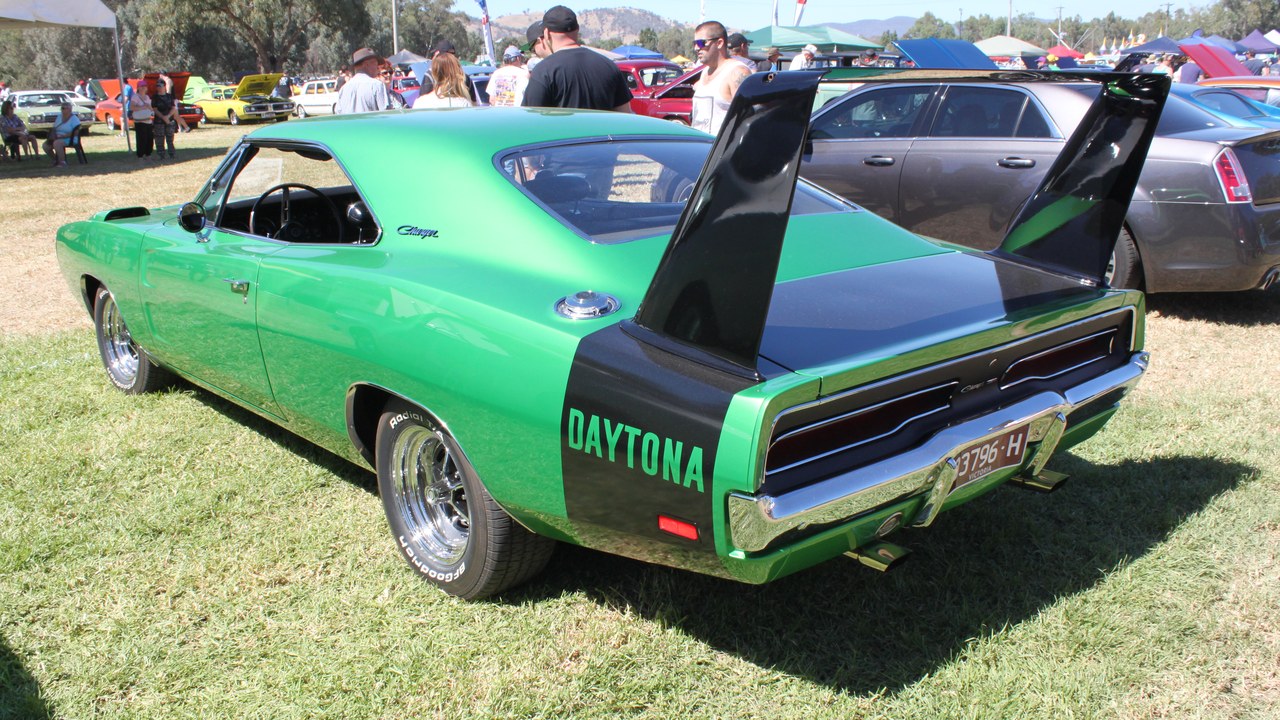
The 1969 Charger Daytona existed for one reason: to win at NASCAR after Ford beat Dodge in 1968. As Jalopnik explains, Dodge focused on aerodynamics rather than more power.
A pointy new front end raised top speed by 5 mph, while a rear-deck stabilizer with two fins and a massive spoiler kept the back end stable. The result was the first NASCAR racer to reach 200 mph, and its towering wing remains one of the most recognizable sights in American car culture.
11. 1969 Dodge Dart Swinger 340: Muscle on a Budget
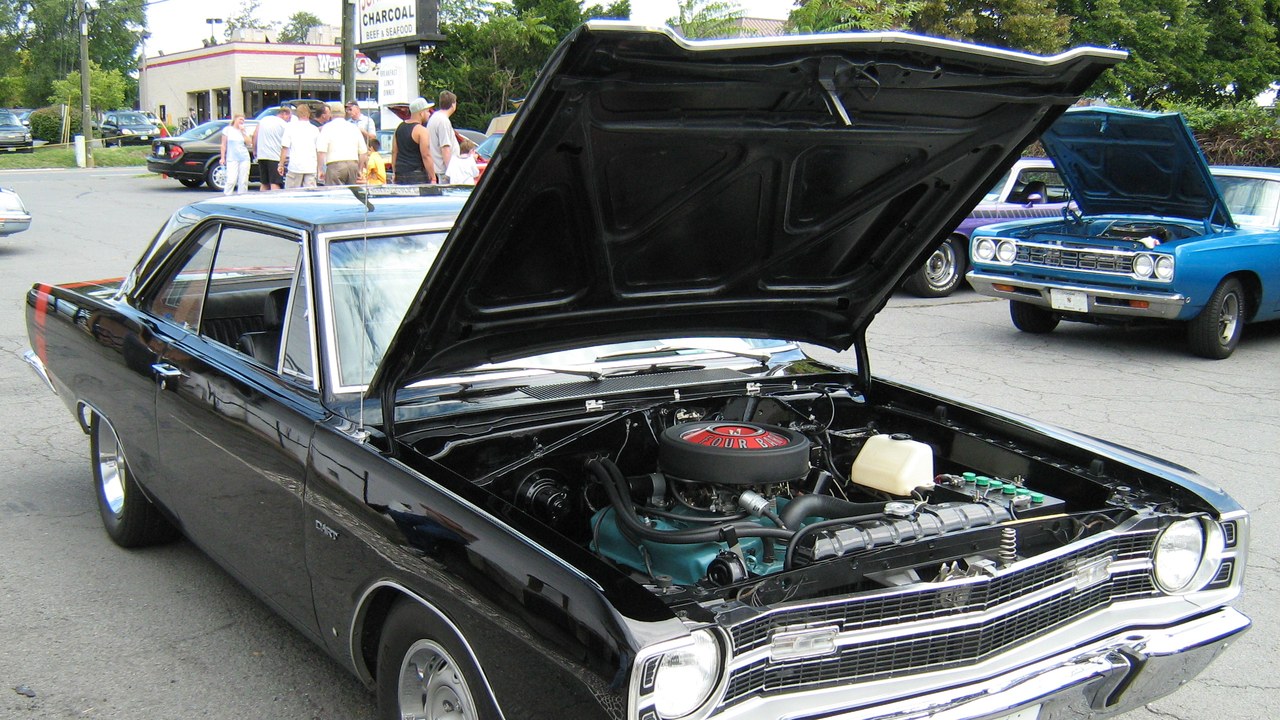
The Dart GTS carried the Dart’s performance flag from 1967, but it was not cheap. In 1969, Motoring Research notes, Dodge offered an alternative that still promised performance: the Swinger 340.
It was the base hardtop coupe dressed with flashy stripes and a not-so-subtle hood bulge. Dual exhausts peeked out from under the rear bumper, and a heavy-duty limited-slip differential kept power going to the ground. Under the hood sat a 340 V8 with an aggressive cam and a forged crank.
12. 1970 Dodge Challenger R/T: A Movie Star
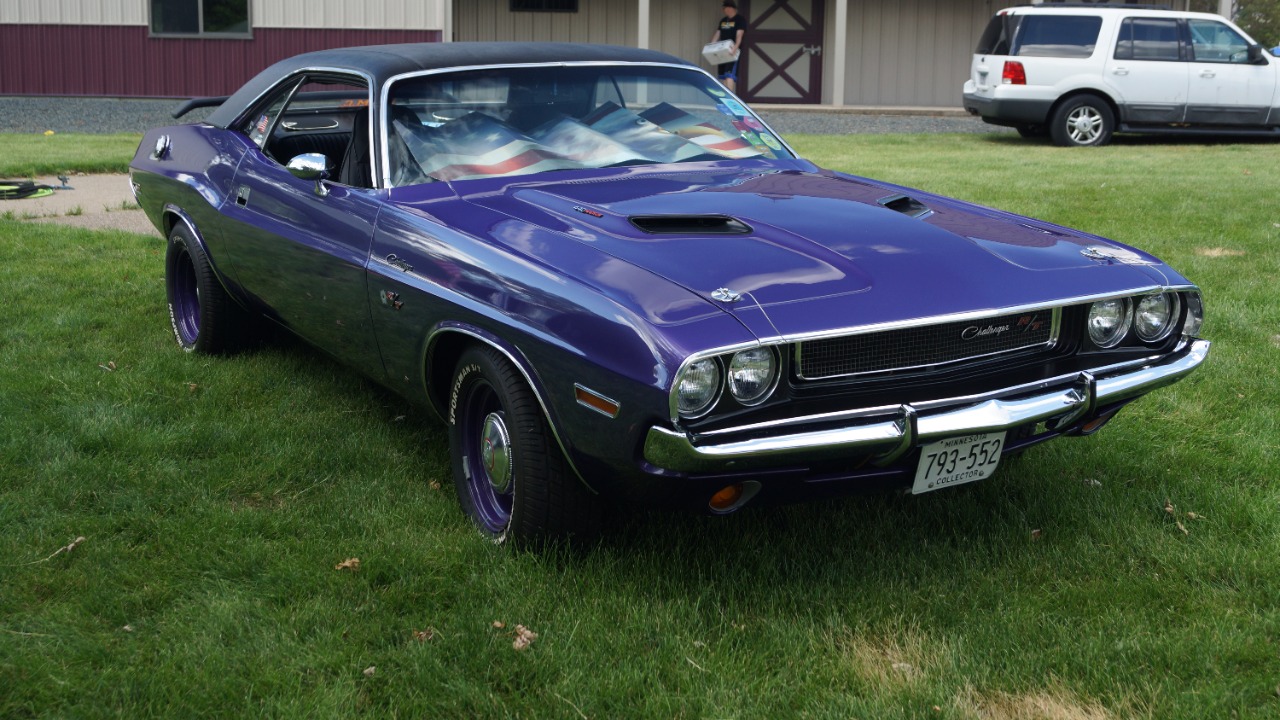
The first-year 1970 Challenger R/T sold 18,359 copies, according to Muscle Cars Illustrated. Dodge introduced the Challenger in the fall of 1969 to face pony cars like the Mercury Cougar and Pontiac Firebird.
A 1970 Challenger R/T also made its mark on screen as the star car of the 1971 film Vanishing Point. Engine choices for the R/T reached all the way up to the 426 Hemi,, and the long-hood E-body design still draws crowds at car shows more than five decades later.
13. 1970 Dodge Challenger T/A: Built to Go Racing
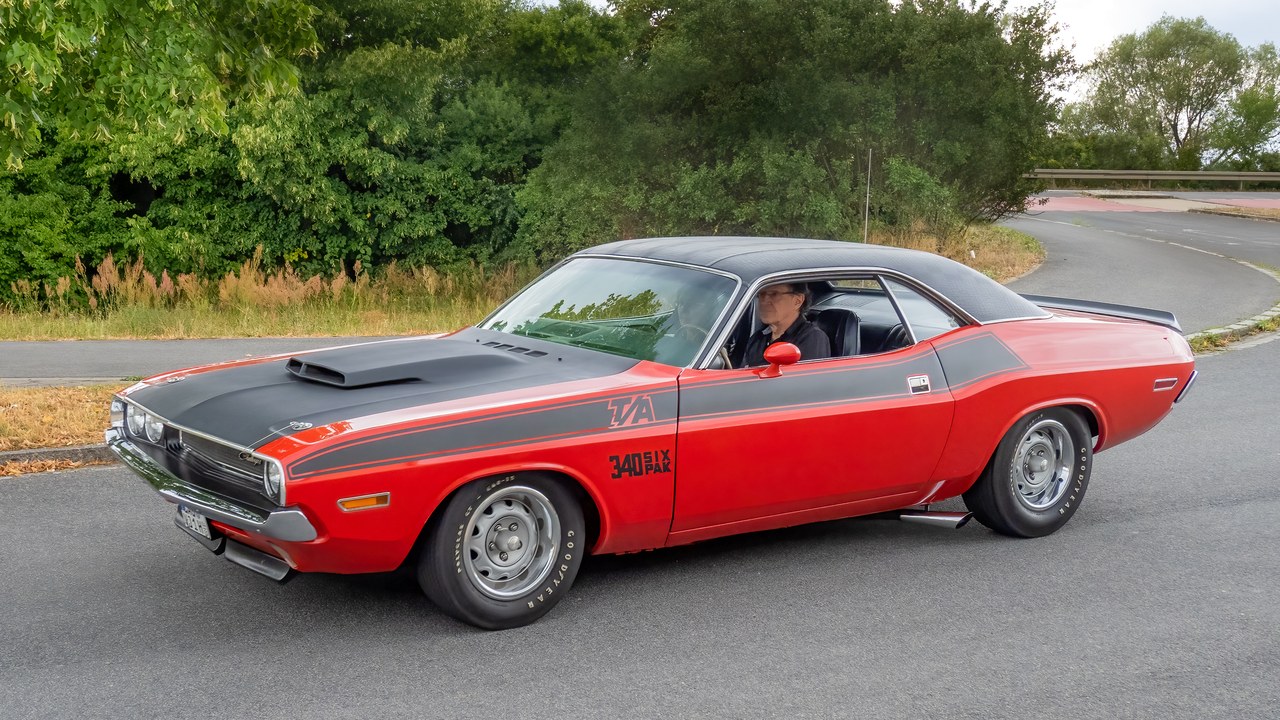
The 1970 Challenger T/A was a one-year-only model with a 340 Six Pack engine. As Muscle Cars Illustrated explains, it existed to homologate Dodge for Trans Am racing.
Homologation meant building street versions of the race car, and production reached about 2,400. Its small-block 340 was fed by three two-barrel carburetors, the Six Pack setup, giving the T/A a different character from the big-block Challengers. Its single year of production makes it highly prized today.
14. 1971 Dodge Charger R/T: The Last Hemi Dance
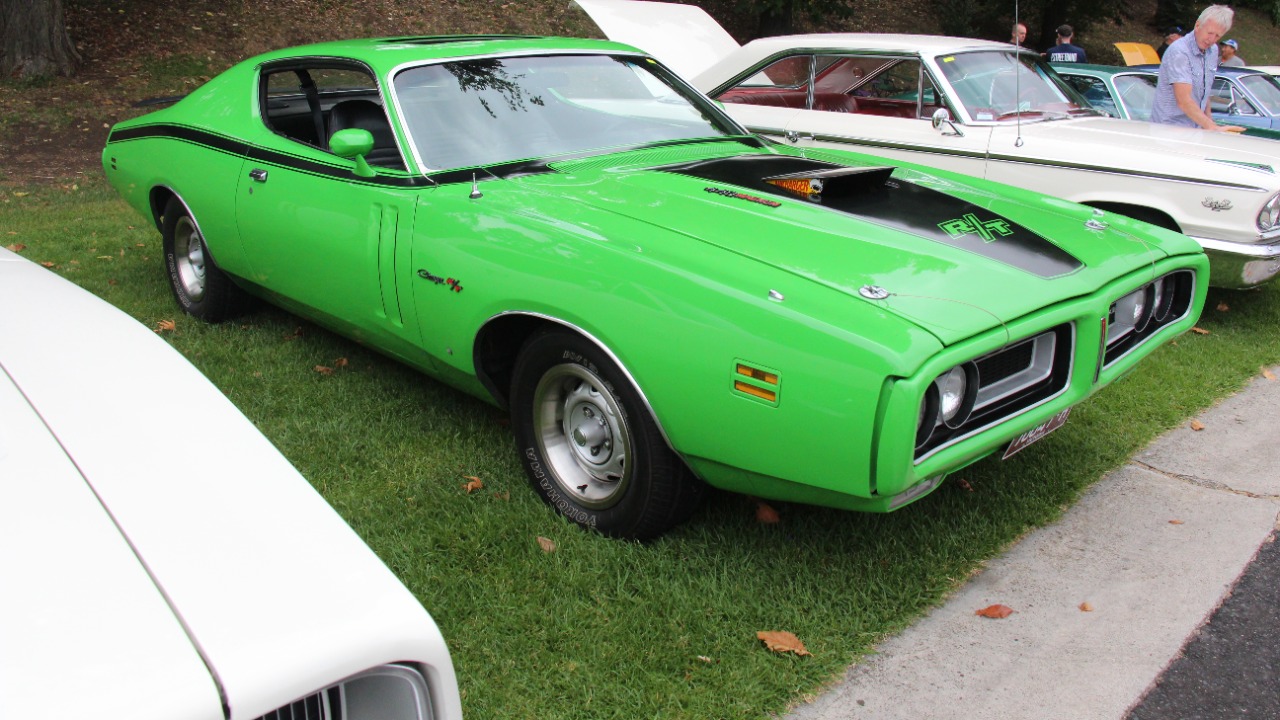
Dodge gave the Charger one last Hemi dance in 1971, according to Jalopnik. The third-generation car toned down the Coke-bottle look for a bulkier fuselage body.
The new body was not to everyone’s taste, but it rode on a much wider track, 3.2 inches wider at the rear and 2.5 inches at the front. The Hemi remained an option on the R/T, while the base 440 made 370 horsepower and a Six Pack version made 385. After 1971, the Street Hemi era was over.
More from Morning Overview
- Ukraine says drones hit a Kalibr missile ship in Russia’s Baltic Fleet
- The Honda Pilot has quietly overtaken every model in blown-engine complaints
- The FCC cut eight phone companies off the network for ignoring robocall traces
- Three atmospheric rivers are lining up to drench the Pacific Northwest this week
