
Pilotless aircraft have become arguably the most significant technological development of modern conflict, in the words of one survey of the Ukraine war. The list below spans American, Turkish, Russian, Iranian, Israeli and Chinese airframes, from hand-launched scouts to long-range surveillance and strike aircraft. Here are thirteen drones that are rewriting how wars are fought.
Read next on Morning Overview: Google is shutting down the Nest app, and unmigrated accounts risk deletion
1. MQ-9 Reaper: The Air Force Armed Workhorse
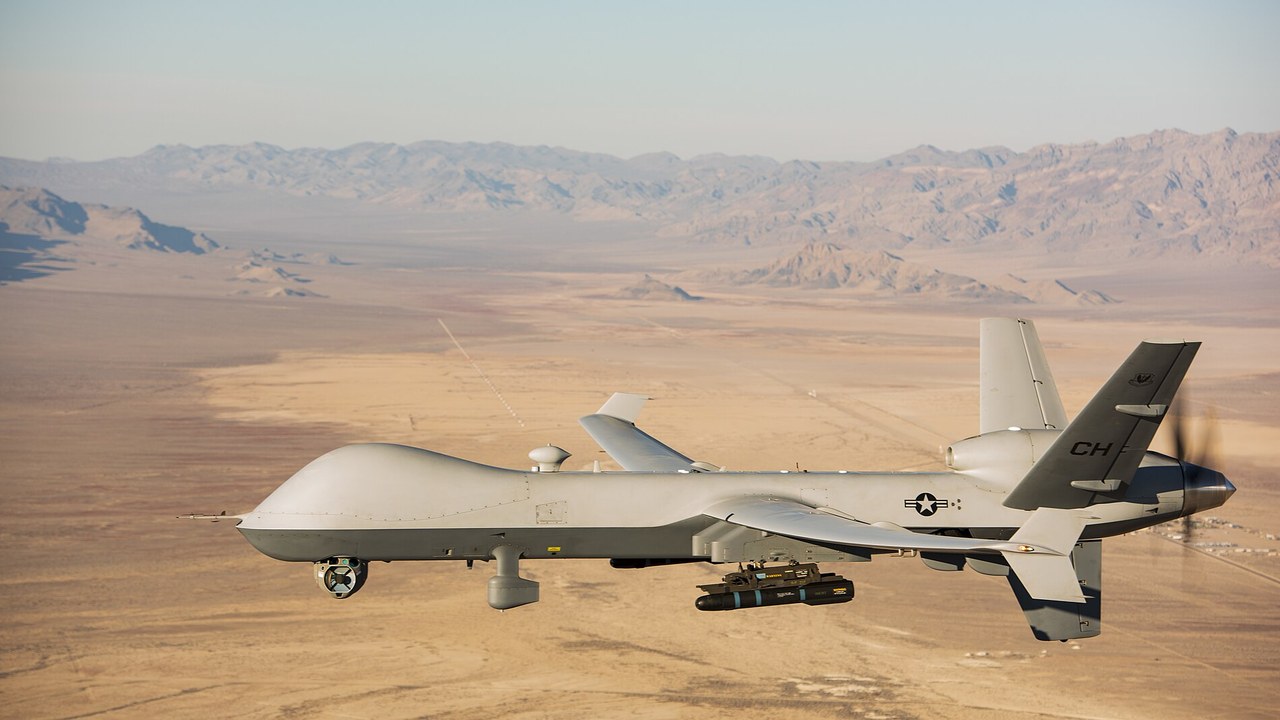
The MQ-9 Reaper is the Air Force’s armed drone, and its Air Force fact sheet lists a 66-foot wingspan (20.1 meters), a 3,750-pound payload and a unit cost of $56.5 million. A 24/7 Wall St. survey repeats the $56.5 million figure and names General Atomics, L3Harris and Raytheon as manufacturers.
The aircraft drew wide attention in March 2023, when Russia sent a Sukhoi Su-30 fighter to intercept a Reaper over the Black Sea to keep it out of Russian airspace over Crimea. A Missile Defense Advocacy comparison puts the Reaper at 11 meters long with a quoted range of 1,850 kilometers.
2. MQ-1 Predator: The Strike Drone Pioneer
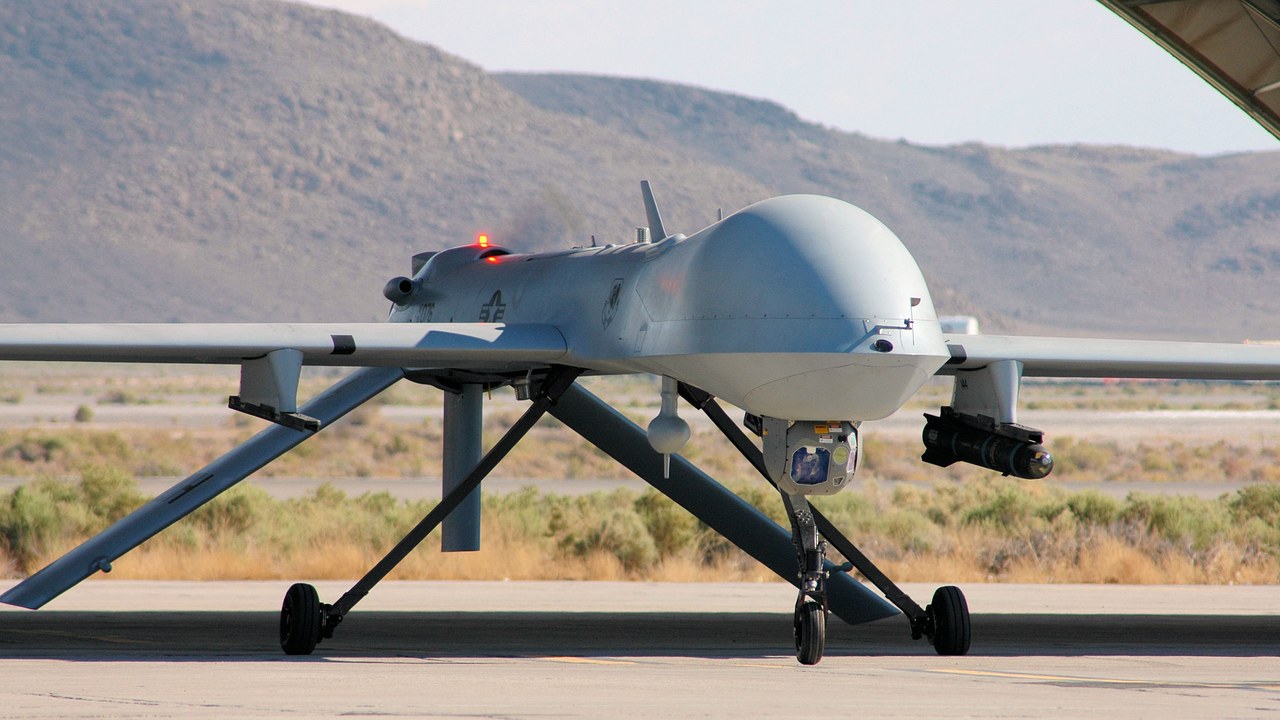
The armed Predator pioneered strike drones, and a 24/7 Wall St. survey of U.S. military drones describes the MQ-1B Predator as an armed reconnaissance aircraft used for airborne surveillance and target acquisition. It lists a cost of $20 million and a wingspan of 55 feet, with General Atomics as the manufacturer.
That wingspan is 11 feet shorter than the Reaper’s 66 feet, and the price is roughly a third of the Reaper’s $56.5 million on the same list. General Atomics builds five of the 23 U.S. models counted, with costs between $10 million and $60 million, so the Predator sits in the lower half of that company’s range.
3. RQ-4 Global Hawk: High Altitude, Higher Price
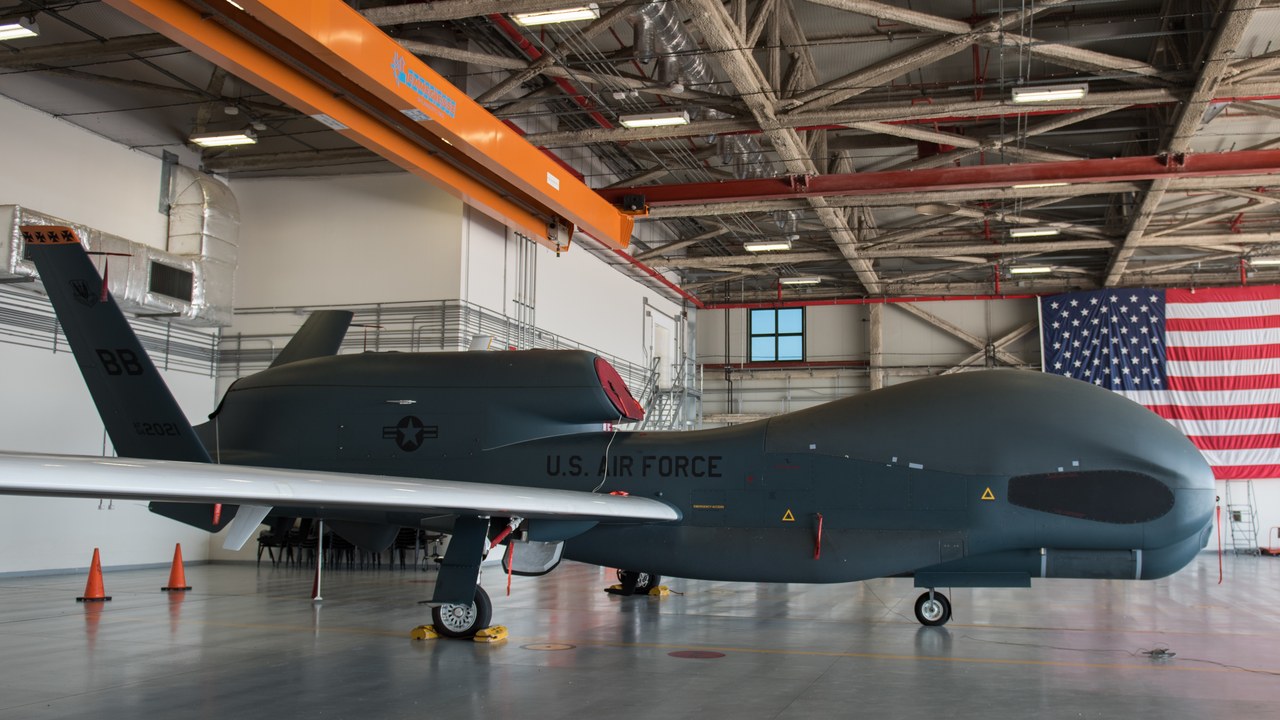
Built for height and endurance, the RQ-4 Global Hawk is listed by 24/7 Wall St. for high-altitude, long-endurance intelligence, surveillance and reconnaissance, at a cost of $130 million and a wingspan of 130.9 feet. Northrop Grumman, Raytheon and L3Harris are named as its manufacturers.
A Missile Defense Advocacy table adds figures that help explain the price: a quoted range of 22,800 kilometers, 34 hours of endurance and a 1,360-kilogram payload on a 39.8-meter wingspan. At 357 kilometers per hour it is not fast, but its range is the longest quoted anywhere in that table.
4. MQ-4C Triton: The Priciest in the Fleet
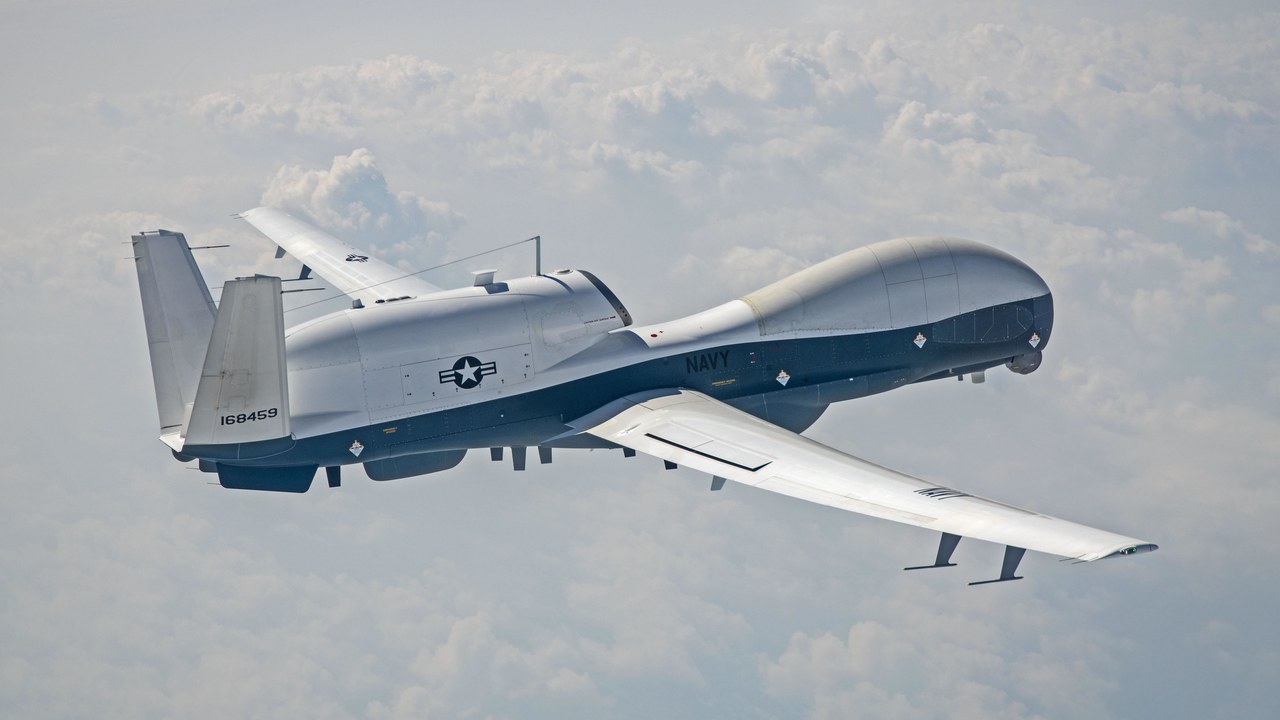
Priciest in the U.S. fleet, the MQ-4C Triton costs $180 million according to a 24/7 Wall St. survey of American military drones. The Navy commissioned it in 2018 for persistent maritime intelligence, surveillance and reconnaissance, and Northrop Grumman builds it.
The Triton shares its 130.9-foot wingspan with the Global Hawk, and the two are the only drones on that list costing more than $100 million. Northrop Grumman produces five of the 23 models counted, which makes the company the maker of both the most expensive drone in the fleet and its nearest rival in price.
5. RQ-7 Shadow: The Army’s Scout
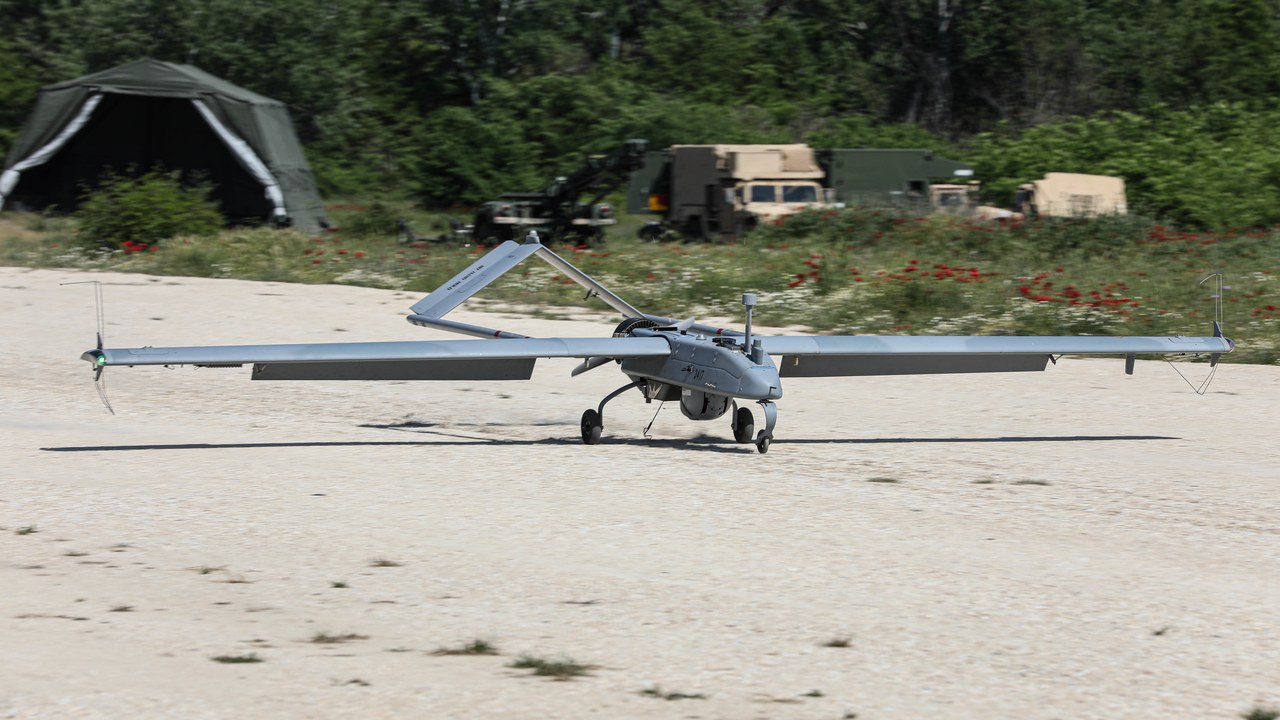
At a listed cost of $632,500, the RQ-7 Shadow is the Army’s workhorse scout drone, with a 20-foot wingspan and AAI Corporation as manufacturer. The 24/7 Wall St. survey describes its uses as reconnaissance, surveillance, target acquisition and force protection.
The listed cost is under one percent of the Triton’s $180 million, a reminder of how far prices range across the American inventory. Its listed missions of target acquisition and force protection mark a tactical role, far from the strategic reach of the Global Hawk, and its 20-foot wingspan is about a seventh of the Triton’s 130.9 feet.
6. RQ-11 Raven: Thrown Into the Air
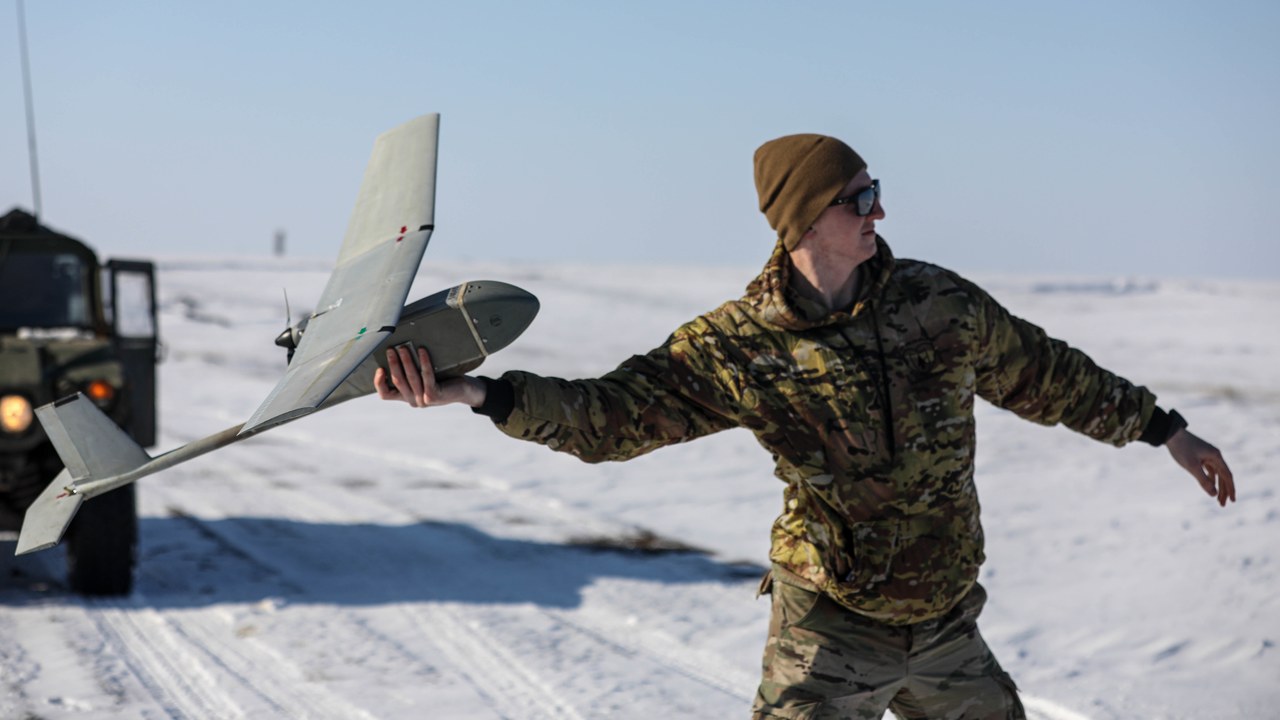
Small enough to be launched by hand, the RQ-11 Raven is a 4.5-foot scout drone that costs about $260,000, according to a 24/7 Wall St. survey. AeroVironment manufactures it for low-altitude intelligence, surveillance and reconnaissance.
AeroVironment supplies five of the 23 U.S. military drones on that list, all relatively inexpensive: the RQ-12 Wasp is listed at $49,000 with a 2.4-foot wingspan, and the RQ-20 Puma at $250,000 with a 9.2-foot wingspan. The Raven sits at the small end of an inventory that stretches to aircraft larger than many commercial aircraft.
7. Switchblade: A Drone in a Backpack
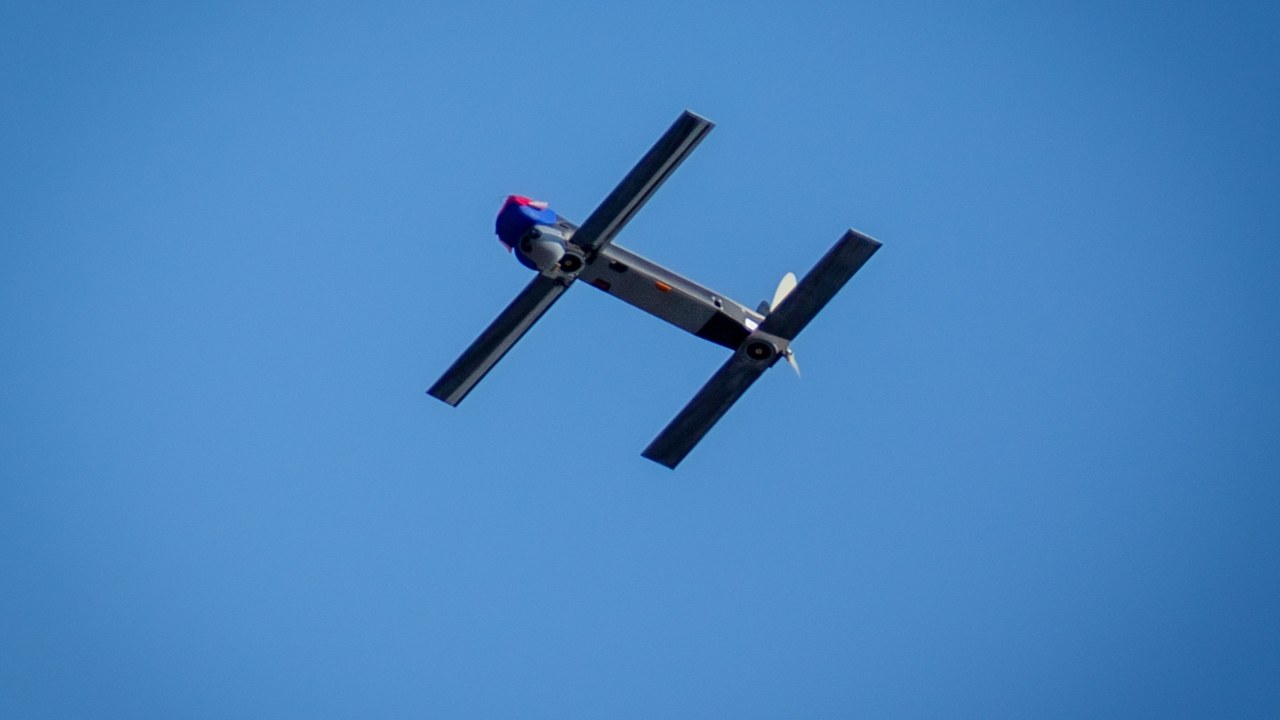
A backpack-sized loitering munition, the American-made Switchblade 300 weighs 2.5 kilograms, and RFE/RL’s Ukraine drone survey notes that the entire system can be carried in a backpack. It deploys from a mortar-like tube that pops it into the air before its wings flick into place and its propeller starts.
Operators use a live video feed to zero in on targets up to 10 kilometers away at speeds up to 160 kilometers per hour, and the warhead is grenade-sized, according to the November 2022 report. Iran revealed what appears to be a direct copy that October. A 24/7 Wall St. list prices the Switchblade 300 at about $6,000.
8. Bayraktar TB2: From Game-Changer to Target
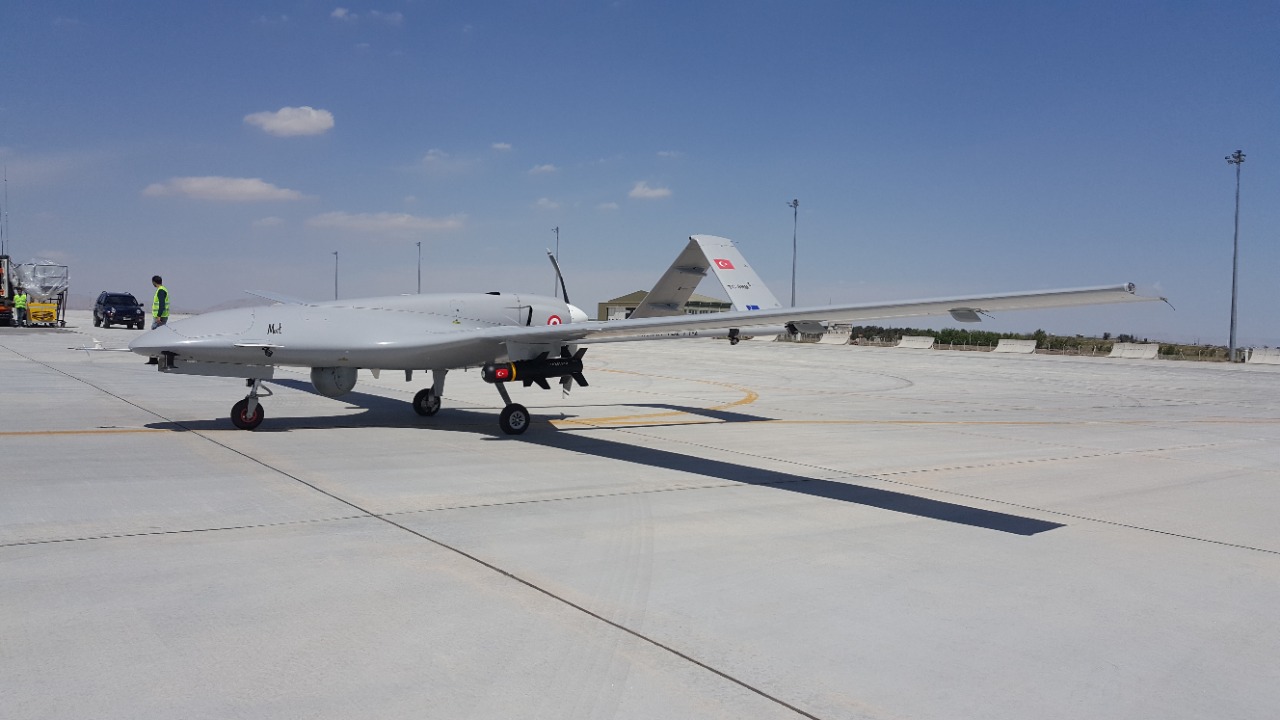
Turkish-made and Cessna-sized, the Bayraktar TB2 was initially seen as a game-changer for Ukraine, RFE/RL reported, when videos from the chaotic first days of the Russian invasion showed it destroying valuable Russian hardware with baseball-bat-sized micromunitions. A song about the drones became a popular tune for buskers in Ukraine.
The reputation shifted as the invasion slowed and layers of air defenses were set up in occupied areas, since the noisy aircraft are easily spotted by radar and slow enough to be vulnerable to antiaircraft weapons. By June 2022 Ukrainian fighter pilots were calling them almost useless, and they were reported to be used mostly for long-distance reconnaissance.
9. Orlan-10: The Artillery Spotter
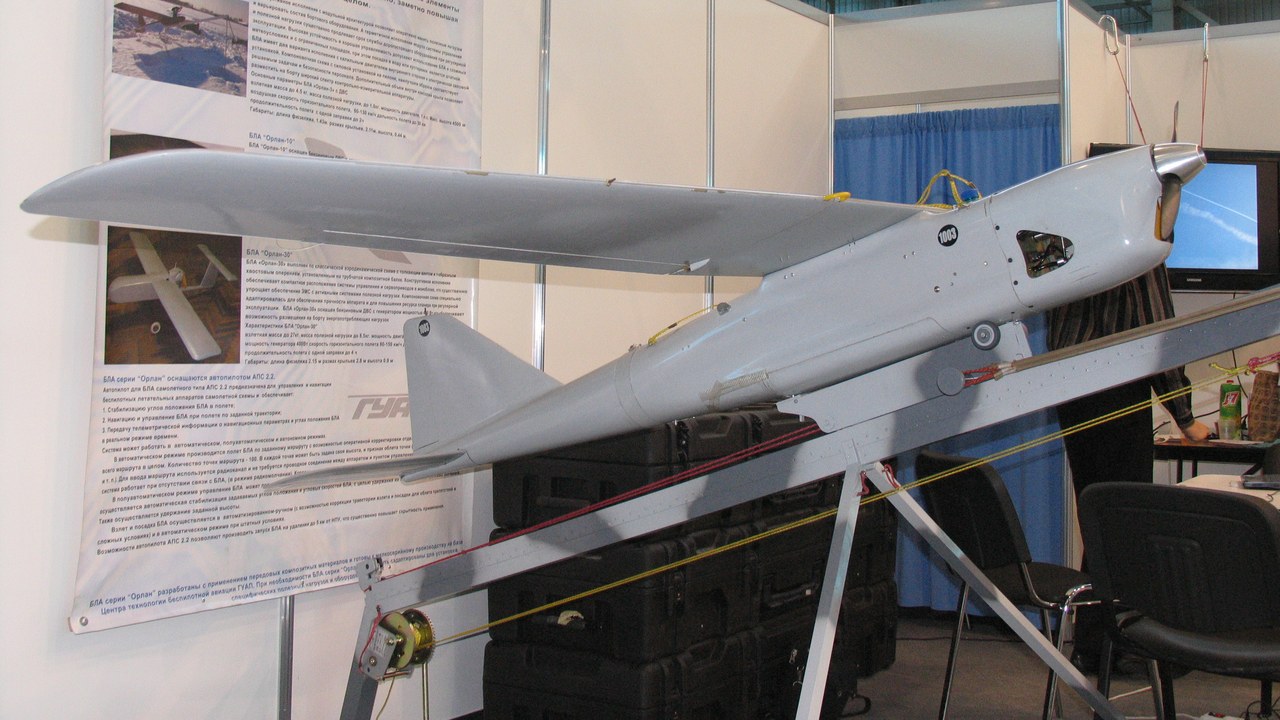
Russia’s airplane-shaped Orlan-10 is catapulted into flight and kept aloft for up to 16 hours by a noisy, fuel-powered engine, according to RFE/RL’s drone report. Its cameras and sensors are used mostly to correct artillery barrages and watch for enemy movement.
The same report says Orlans have been documented dropping multiple bomblets from pods beneath their wings. They are also reportedly capable of jamming local cell-phone towers and sending text messages to enemy troops, a practice that since 2014 has seen frontline Ukrainian soldiers receive messages warning them to lay down their arms.
10. Shahed-136: Cheap, Long-Range, Delta-Wing
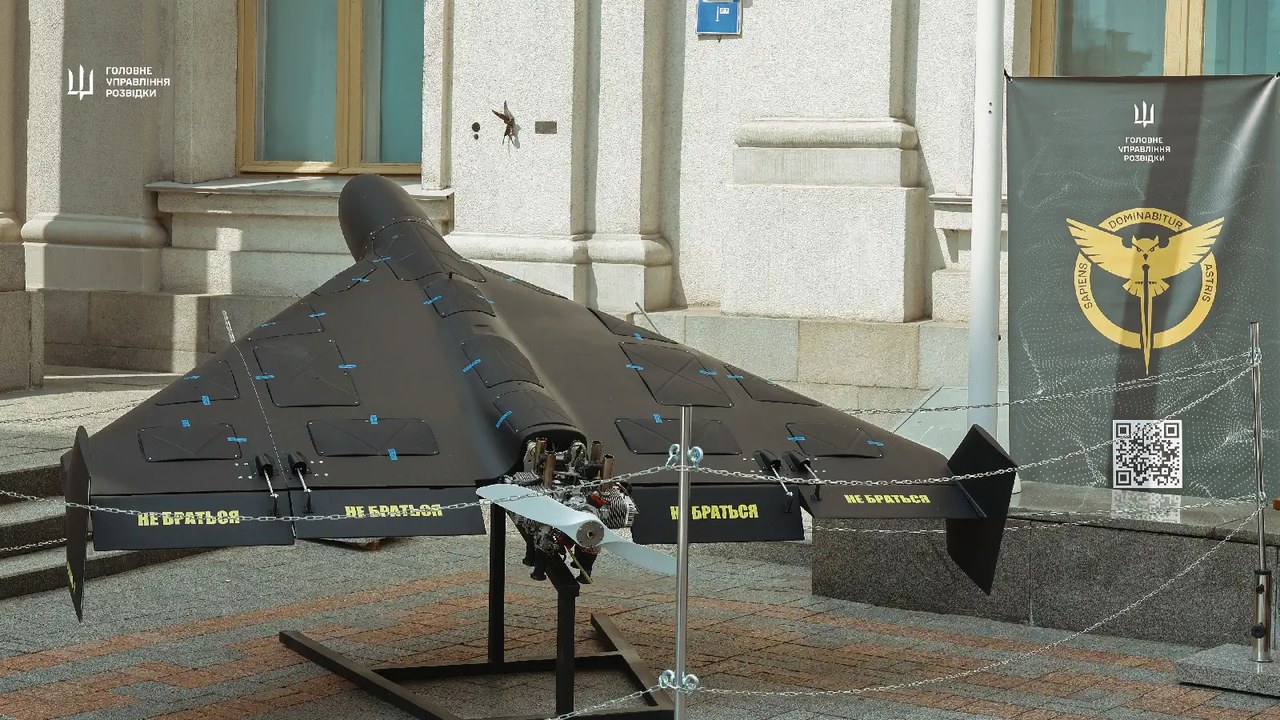
Iran’s Shahed 136 is a cheap delta-wing attack drone, and a world drone comparison table from Missile Defense Advocacy lists it at 3.5 meters long with a 2.5-meter wingspan, a quoted 2,000-kilometer range, a speed of 185 kilometers per hour and a 50-kilogram payload.
Russia has used the type under the name Geran-2. RFE/RL describes the Iranian-made, Russian-branded drones as launched in small swarms of five or more, enough to overwhelm some air defenses, and reports that their arrival over Kyiv in mid-October 2022 came in full view of international journalists. Soon afterward, Ukraine received advanced Western air-defense missile systems.
11. Heron: Forty-Five Hours Aloft
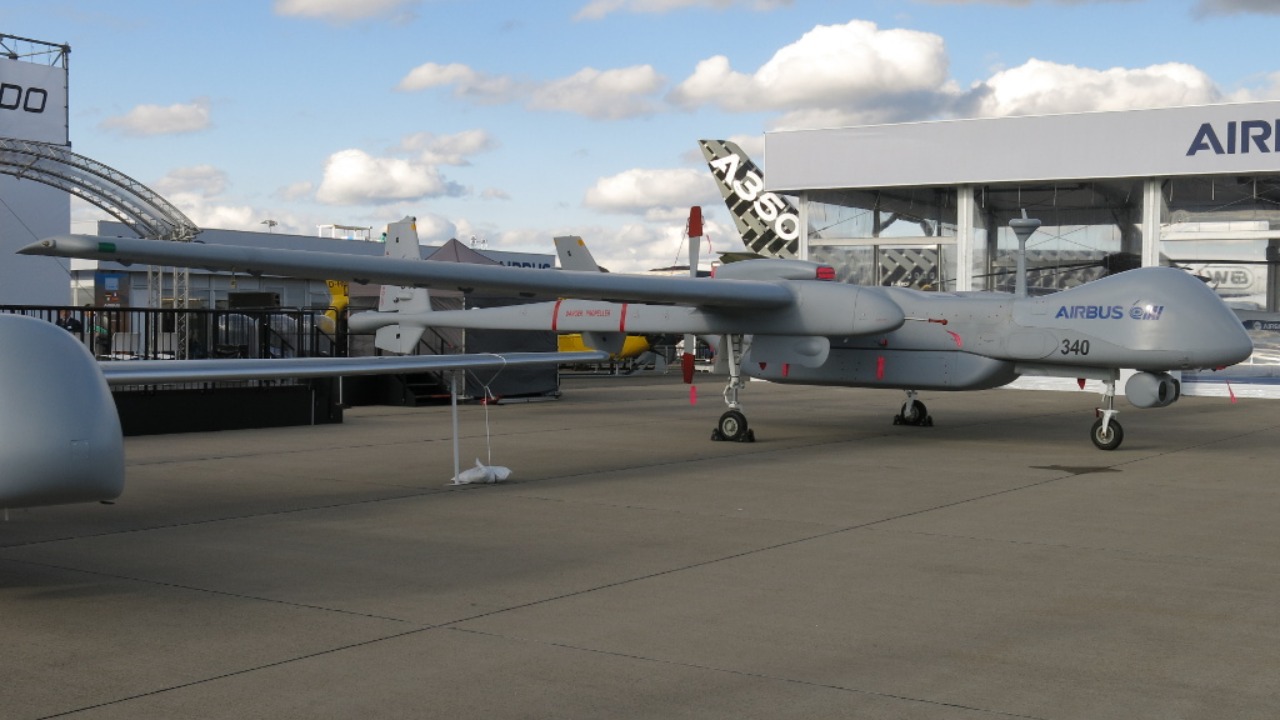
Endurance is the headline number for Israel’s Heron: Missile Defense Advocacy’s drone table credits the aircraft with 45 hours aloft and a 470-kilogram payload. The same entry lists a length of 8.5 meters, a 16.6-meter wingspan, a quoted range of 1,000 kilometers and a speed of 111 to 148 kilometers per hour.
Those speeds are modest, so the long hours in the air come from patience rather than pace. The table also lists the larger Heron TP with a 26-meter wingspan, a 2,700-kilogram payload and 30 hours of endurance, which suggests the bigger aircraft trades some endurance for carrying capacity.
12. Bayraktar Akinci: Turkey’s Heavy Hitter
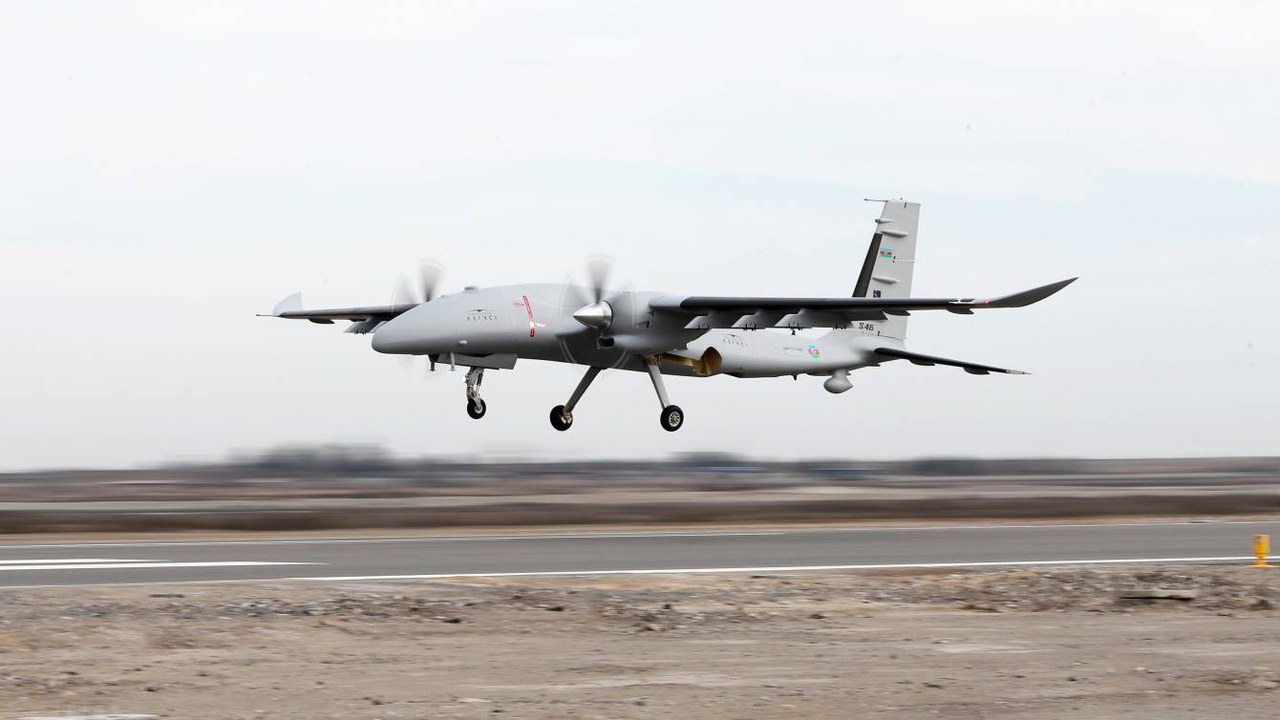
Turkey’s heavy drone is the Bayraktar Akinci, which Missile Defense Advocacy’s Turkish listing gives a 12.2-meter length, a 20-meter wingspan, a quoted 7,500-kilometer range and a payload of up to 1,500 kilograms.
At 360 kilometers per hour it is faster than the Bayraktar TB2’s 222, though its 24 hours of endurance trails the TB2’s 27, and its payload is ten times the TB2’s 150 kilograms. The same list includes the TB3, with a 14-meter wingspan and 280-kilogram payload, and the Aksungur, with a 24-meter wingspan and 50 hours of endurance, showing a Turkish family of drones that keeps growing in size.
13. Wing Loong II: China’s Reaper Rival
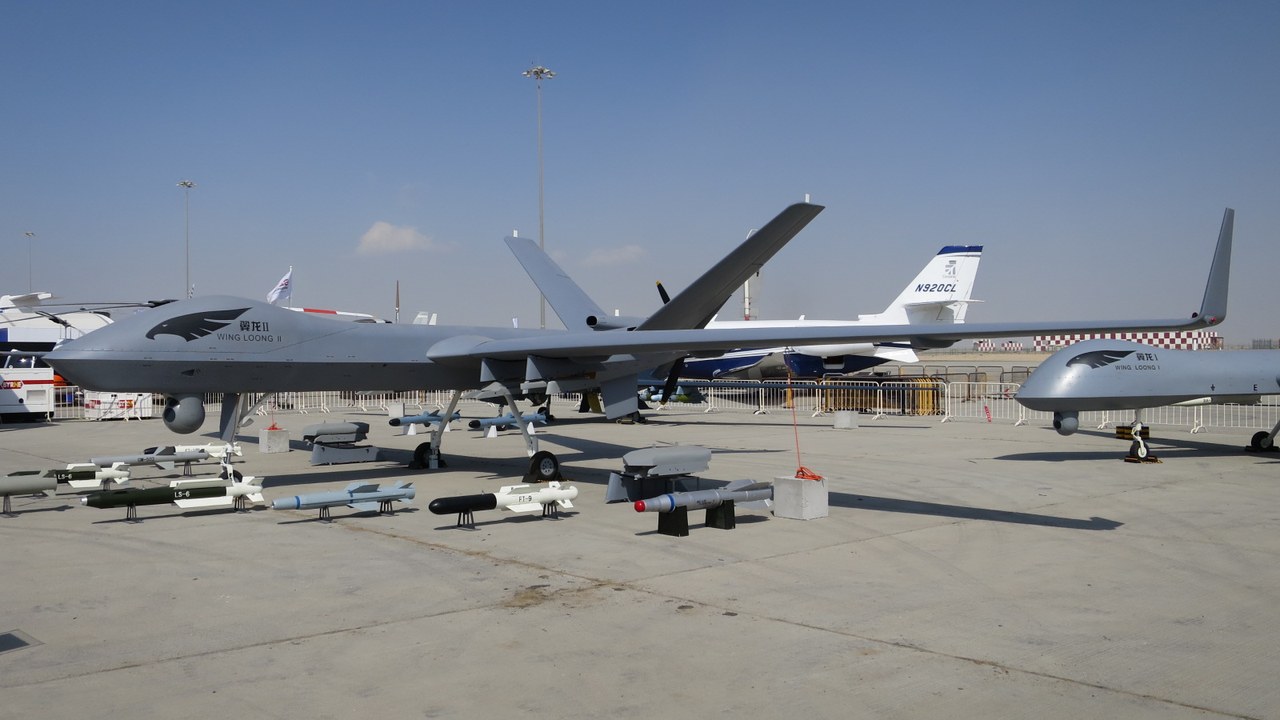
Cast as China’s Reaper rival, the Wing Loong II has a 20.5-meter wingspan and a 480-kilogram payload in Missile Defense Advocacy’s China listing, alongside an 11-meter length, a quoted 4,000-kilometer range, a speed of 370 kilometers per hour and 20 hours of endurance.
Next to the Reaper’s 20.1-meter wingspan, the two are close in size, but the table credits the American aircraft with a payload of 1,701 kilograms, more than three times the Wing Loong II’s. The earlier Wing Loong-1 is listed at 14 meters of wingspan and 200 kilograms, and the Wing Loong-3 at 24 meters and 2,300 kilograms.
More from Morning Overview
- A 2,000-year-old nomad tomb in Mongolia held a glass cup that may have traveled from Rome
- Jeep’s new Recon sold just 19 units in 45 days, the fewest of any model on CarEdge’s worst-sellers list
- Up to 5 feet of snow is burying Donner Pass, and forecasters warn against Sierra travel
- Southern California cities built towering sand berms to fend off Thanksgiving tides
