
Governments, universities and private foundations have spent decades building shelters meant to survive war, flood, solar storms and the slow decay of digital memory. Some guard seeds and data, others guard nuclear waste or the chain of military command, and a few exist purely as messages to a distant future. Here are ten vaults and archives engineered to keep working long after the people who built them are gone.
1. Svalbard Global Seed Vault: The World’s Seed Backup
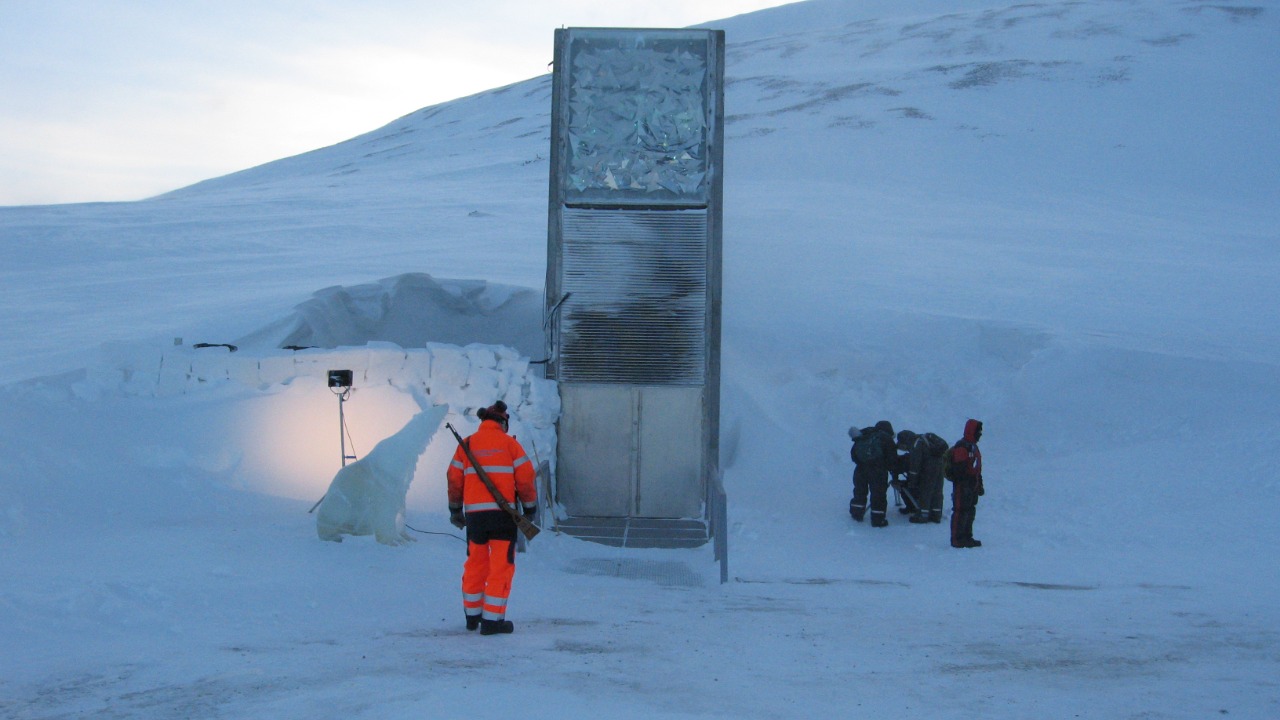
Cut into permafrost on the Norwegian Arctic island of Spitsbergen, the Svalbard Global Seed Vault serves as the backup copy of the world’s crop diversity. Overseen through the global seed vault programme, it stores duplicate samples shipped in from gene banks on every continent, with capacity built for as many as 4.5 million distinct varieties.
Deep freezing from the surrounding rock keeps the chamber cold even without mechanical cooling, insulating the collection against war, funding shortfalls and the kind of disasters that have already wiped out national seed banks in Iraq and the Philippines. The samples themselves stay untouched, ready to be regrown if the original source is ever lost.
2. Arctic World Archive: Data Etched On Film

Housed in a decommissioned coal mine on Svalbard, the Arctic World Archive stores national archives, source code and artworks that governments and companies want preserved outside any single country’s control. Material arrives written onto photosensitive piqlFilm, an offline analog medium chosen because it needs no server, no software update and no electricity to stay readable.
Norway’s cold, stable geology and political neutrality make the former mine an attractive long-term host, with depositors ranging from national governments to museums and technology firms depositing digital backups. The film is expected to last hundreds of years, far outlasting the hard drives and servers most institutions still rely on.
3. Cheyenne Mountain Complex: Nuclear-Proof Command Post
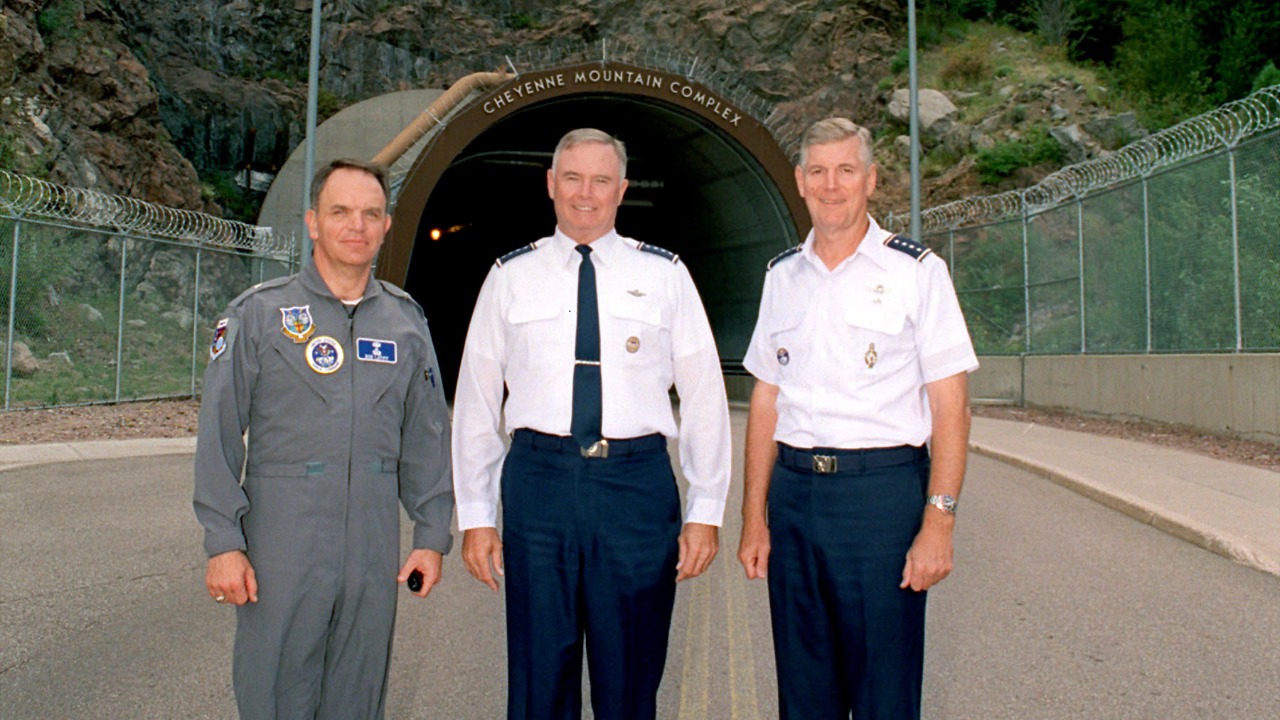
Buried under roughly 600 metres of Colorado granite, the Cheyenne Mountain Complex was carved out at the height of the Cold War to keep North American air-defence command running through a nuclear exchange. Fifteen steel buildings sit on giant springs inside the mountain, and 25-tonne blast doors seal the tunnel entrance against blast, radiation and fallout.
The complex tracked Soviet bombers and missiles for decades and still monitors North American airspace today, though most routine operations have since shifted to a nearby above-ground base. Springs beneath each building are meant to absorb the shock of a nearby nuclear strike, keeping equipment and personnel functioning while the outside world goes dark.
4. Vatican Apostolic Archive: A Bunker Beneath The Vatican

Beneath the Cortile della Pigna at the Vatican, the Vatican Apostolic Archive houses roughly 85 linear kilometres of shelving inside a two-storey reinforced underground bunker built to protect the Holy See’s records rather than display them. The bunker opened under Pope John Paul II to give twelve centuries of documents the same bunker-like protection as a hardened command post.
Access to the underground stacks stays tightly restricted, and scholars typically work from indexed selections rather than browsing the shelves directly. Unlike a seed vault built against catastrophe, this bunker exists for permanent custody: correspondence, papal bulls and diplomatic records the Church has judged too significant to risk losing to fire, flood or simple decay.
5. Greenbrier bunker at White Sulphur Springs: Congress’s Secret Hideout
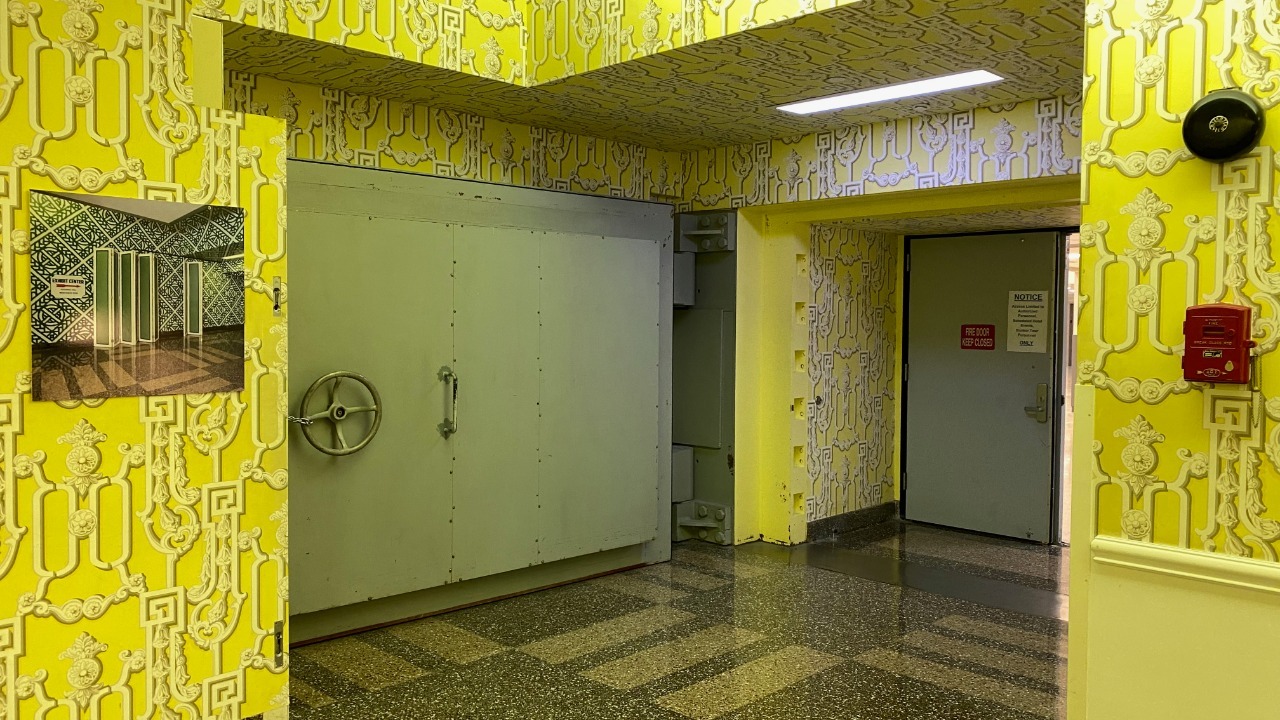
Hidden beneath a wing of a West Virginia luxury resort, the Greenbrier bunker was built to shelter Congress during a nuclear war. Behind a disguised door, it held dormitories, a cafeteria, medical facilities and separate chambers where the House and Senate could meet and keep the government functioning.
Staff kept the facility secret from resort guests for more than three decades, disguising blast doors as ordinary walls and running a fake television repair shop as cover for maintenance crews. A 1992 newspaper report exposed the site, and it was decommissioned soon after and eventually opened for public tours.
6. Millennium Seed Bank: Insurance For Wild Plants

Run by Kew Gardens at its Wakehurst estate, the Millennium Seed Bank dries and freezes seeds from wild plant species and stores them in underground chambers behind a flint-and-glass building. Unlike crop-focused vaults such as Svalbard, it targets wild and often obscure species that no agricultural gene bank has reason to keep.
Partner institutions around the world have already banked seed from tens of thousands of species, with a stated ambition to secure a quarter of the planet’s wild plant diversity. Drying and freezing can keep many seeds viable for centuries, giving conservationists a fallback if wild populations collapse from habitat loss or climate change.
7. Memory of Mankind: Words Fired Into Ceramic

Inside a working salt mine at Hallstatt, Austria, the Memory of Mankind project fires text and images onto ceramic tablets instead of storing them digitally. Glazed stoneware was chosen because it survives water, fire and centuries of neglect without needing any machine to read it back.
Contributors, from scientists to ordinary families, pay to have a chosen text or image etched onto a tablet and stored in the mine’s stable, dry chambers. Organisers expect the archive to remain legible for thousands of years, long after digital formats, software and the hardware needed to open them have become unreadable.
8. Onkalo spent nuclear fuel repository: A Tomb For Nuclear Fuel

Run by the Finnish company Posiva, the Onkalo repository at Olkiluoto tunnels more than 400 metres into ancient bedrock to bury the country’s spent nuclear fuel. Copper canisters holding the fuel are packed in bentonite clay and lowered into deposition holes bored into the tunnel floor.
Once a section fills, engineers plan to seal it completely and let the surrounding rock and clay do the rest of the work with no maintenance and no human oversight. The project is designed to isolate the waste for at least 100,000 years, a timescale intended to outlast any government or company that might otherwise be relied on to keep watch.
9. Waste Isolation Pilot Plant: Salt That Swallows Waste

The US Department of Energy buries defence-related transuranic waste at the Waste Isolation Pilot Plant, cut into a salt bed roughly 250 million years old, 2,150 feet under the New Mexico desert. Drums of radioactive debris ride an elevator down and are stacked in mined-out rooms carved from the salt formation.
Because salt is plastic rather than rigid, the surrounding rock slowly creeps inward and eventually entombs the waste in a solid mass with no need for containers to last forever. The site has operated since 1999 and remains the only deep geologic repository of its kind actually running in the United States.
10. Crypt of Civilization: Not To Open Until 8113

Sealed in 1940 inside a swimming-pool-sized chamber at Oglethorpe University, the Crypt of Civilization was closed behind a stainless steel door welded shut against the outside world. Organisers packed it with everyday twentieth-century objects, from household goods to recorded voices, meant to show a distant future exactly how ordinary people once lived.
The crypt is not scheduled to be opened until the year 8113, a date chosen to mark roughly as many years into the future as recorded history stretches into the past. University staff keep the seal intact and have made no public plans to open it early, leaving the wait itself part of the experiment.
More from Morning Overview
- A handful of car transmissions are so tough that mechanics say they almost never die
- Card skimmers hidden on gas pumps are draining accounts, and there’s a quick way to spot them
- The NSA warns one messaging setting can clone your texts to a stranger
- Security experts still urge phone owners to switch off one location-tracking setting
