
Some aircraft are famous enough that the real thing is worth a trip to see. Museums preserve planes tied to rescues, presidents, record flights and engineering leaps that changed the way people travel. Here are ten of them that visitors can still stand next to.
1. US Airways Flight 1549: The Miracle on the Hudson
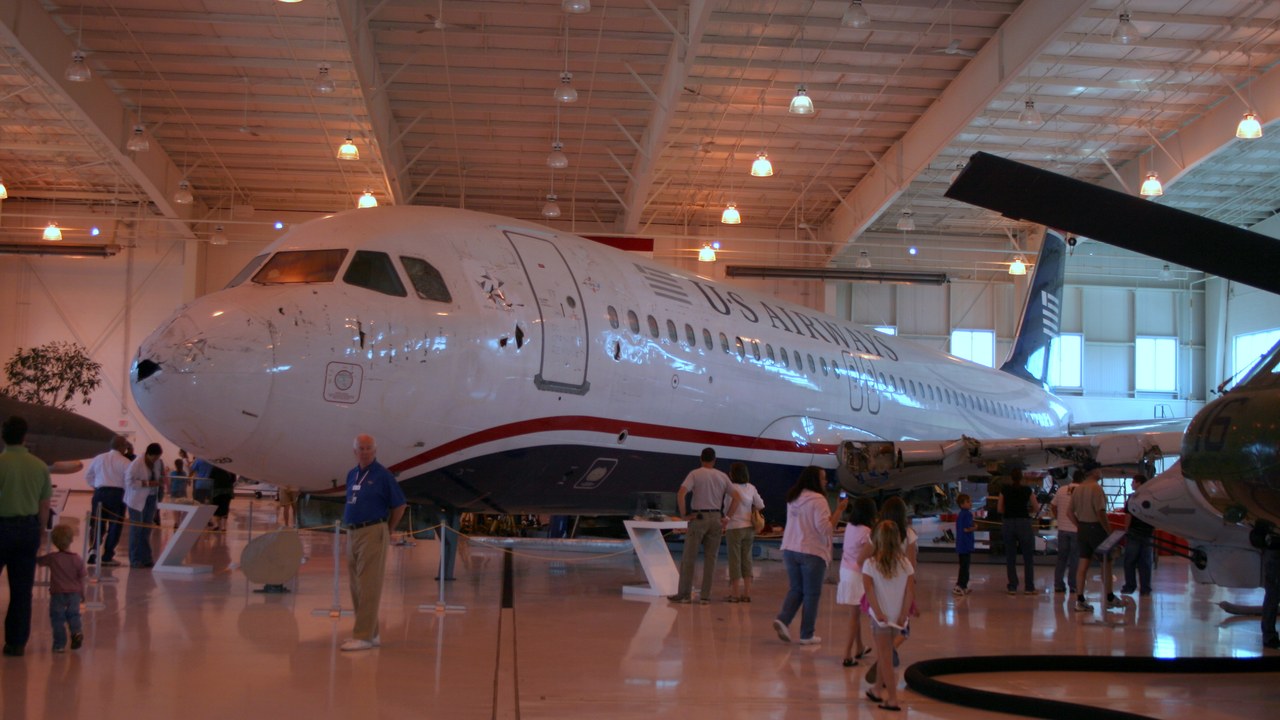
The Airbus A320 struck a flock of Canada geese shortly after leaving LaGuardia on January 15, 2009, lost both engines and ditched in the Hudson River. The museum’s Flight 1549 exhibit centers on the aircraft itself.
Seeing the actual airliner turns a familiar news story into something physical. The exhibit puts visitors face to face with the jet at the heart of one of aviation’s best-known emergency landings, which is why it earns a place on this list. Few exhibits offer a closer look at a rescue that many Americans remember well.
2. SAM 26000: Air Force One in History
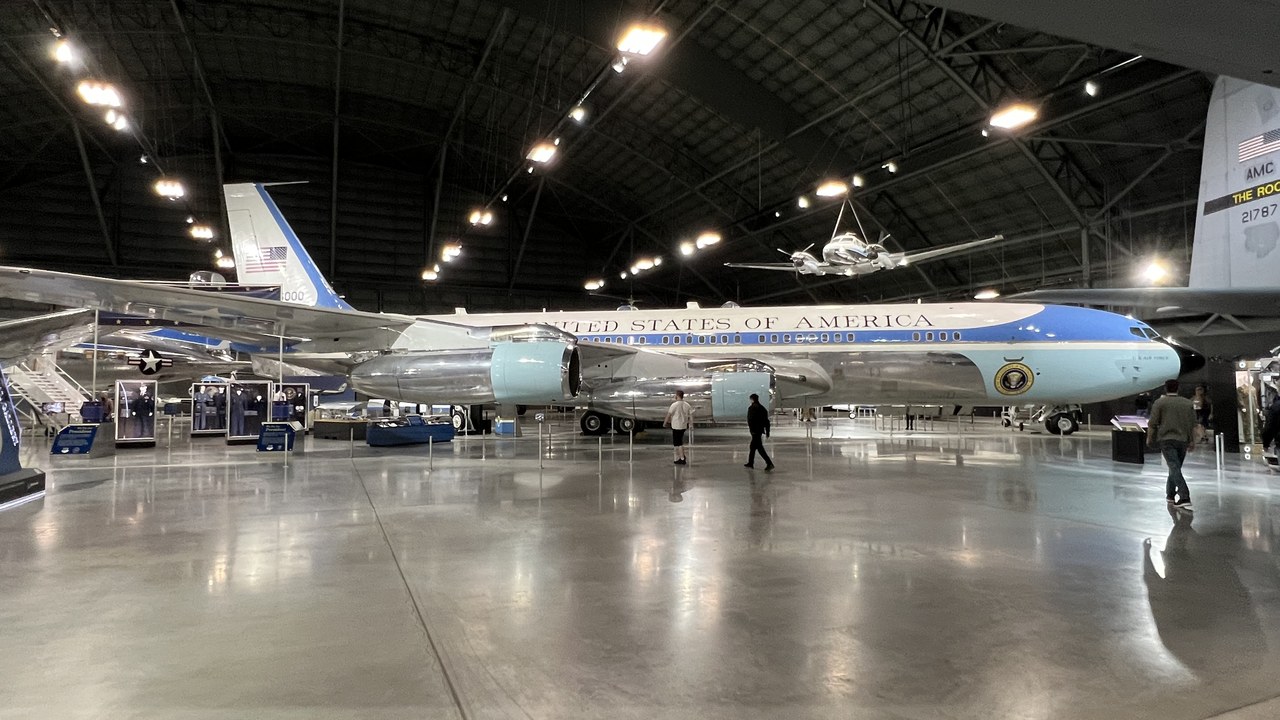
This Air Force One carried eight presidents, from Kennedy through Clinton. It flew Kennedy’s body back to Washington after his assassination on Nov. 22, 1963, and Lyndon Johnson was sworn in aboard it, according to the Air Force museum fact sheet.
Few aircraft have sat so close to so many turning points. Walking through the story of that day, visitors can see the plane where one presidency ended and another began. The plane’s long service across eight administrations makes it a rare object that links so many presidencies.
3. Space Shuttle Discovery: Shuttle Takes Its Place
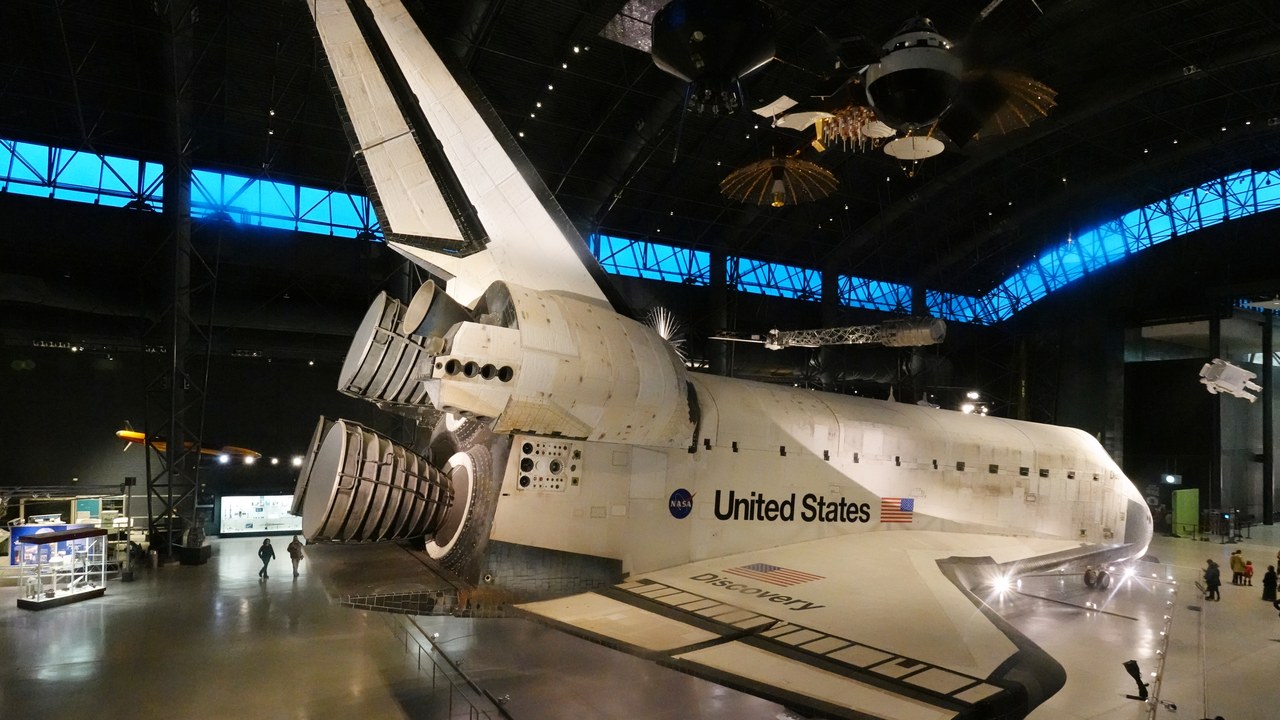
Discovery went on public display in the James S. McDonnell Space Hangar on April 19, 2012, replacing the atmospheric test vehicle Enterprise, per the Udvar-Hazy Center entry.
The swap put a shuttle that flew in space where a test vehicle had stood. For visitors, that means the orbiter on view is a veteran of real missions, displayed at a museum hangar built to give spacecraft this size room to be seen. A shuttle is a vehicle most people only ever saw on television, and standing beneath one gives a sense of its scale.
4. Air France Concorde F-BVFA: Supersonic Airliner
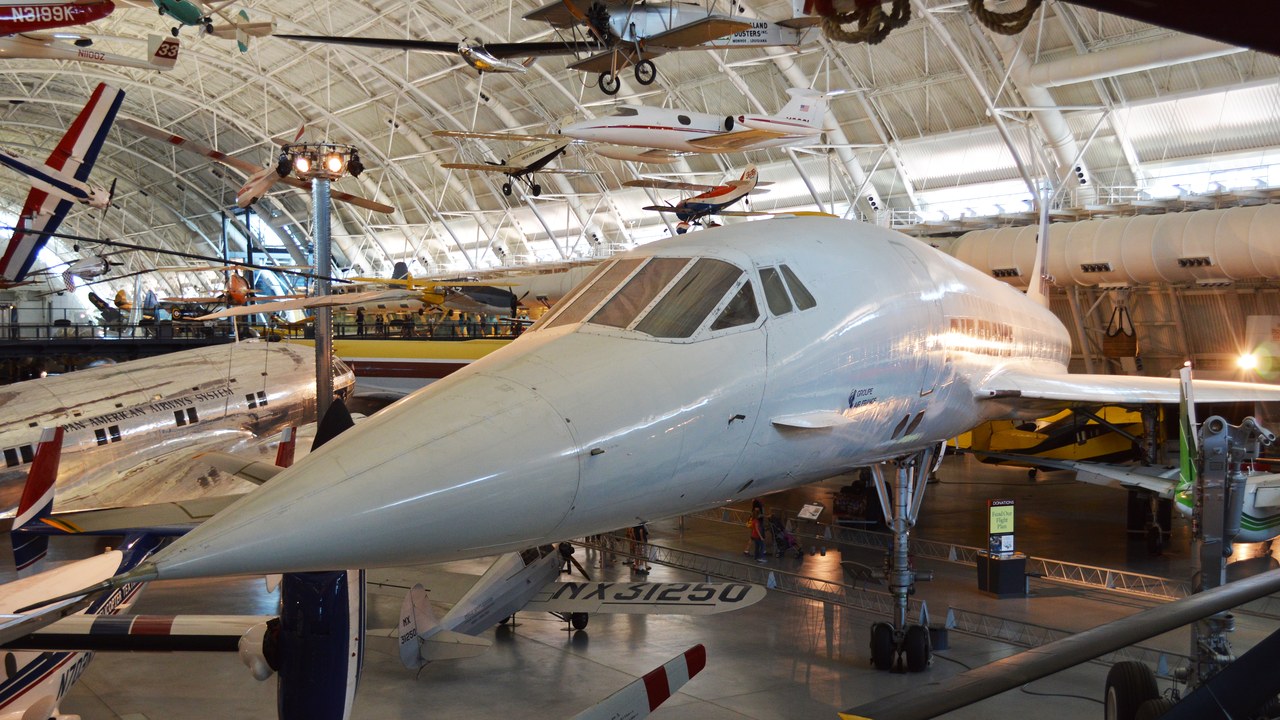
An Air France Concorde supersonic airliner is displayed at the Udvar-Hazy Center, according to the center’s Wikipedia entry. The aircraft carries the designation F-BVFA.
Concorde remains the aircraft most associated with supersonic passenger travel, and its slender shape still looks futuristic beside conventional airliners. Seeing one up close makes the case that ordinary travelers once crossed oceans faster than sound. Its airframe is a rare survivor of a type that no airline flies today. Museum visitors can compare its needle-like profile with the airliners of today.
5. Boeing 367-80: The Dash 80
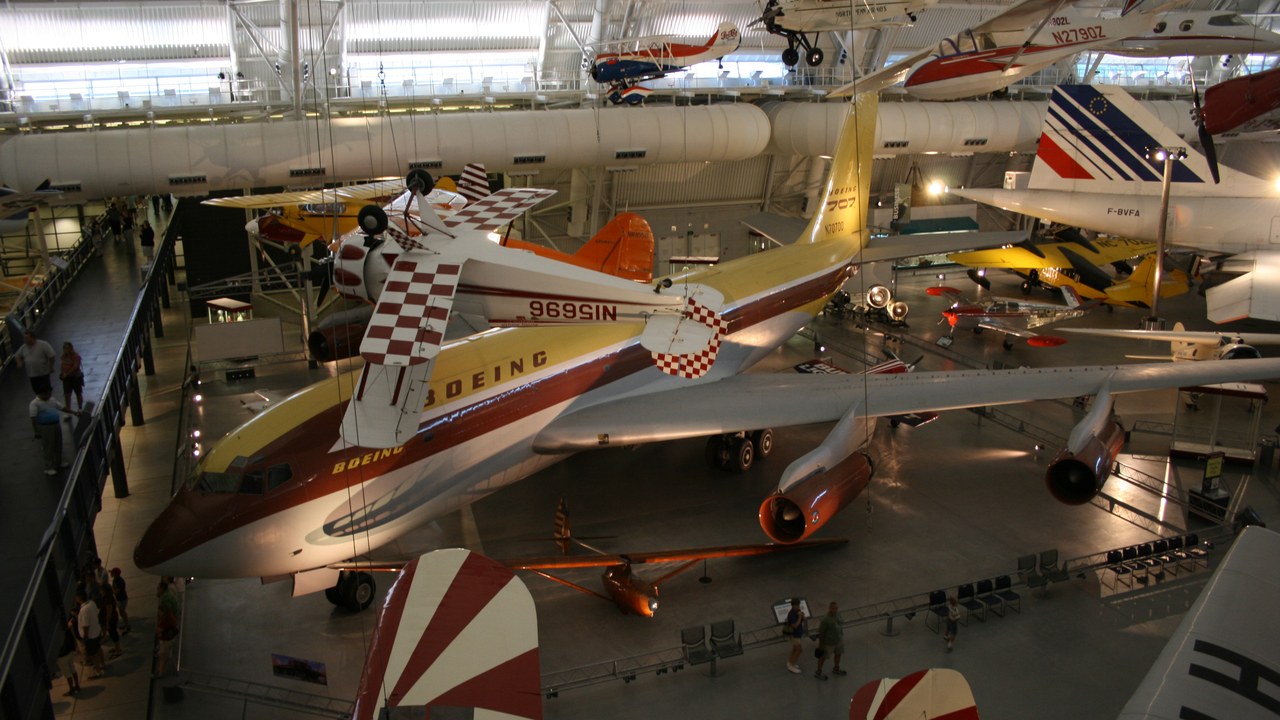
Known as the Dash 80, this jet transport was the prototype for both the KC-135 tanker and the Boeing 707 airliner, and the Udvar-Hazy Center listing places it on display there.
Its descendants shaped military refueling and the jet age of passenger travel, so a single airframe stands behind two very different fleets. Aviation buffs treat it as an ancestor well worth paying respects to. A visit lets aviation fans see where two major fleets began. Few aircraft on display can claim a family tree so far reaching.
6. SR-71 Blackbird: Blackbird on View
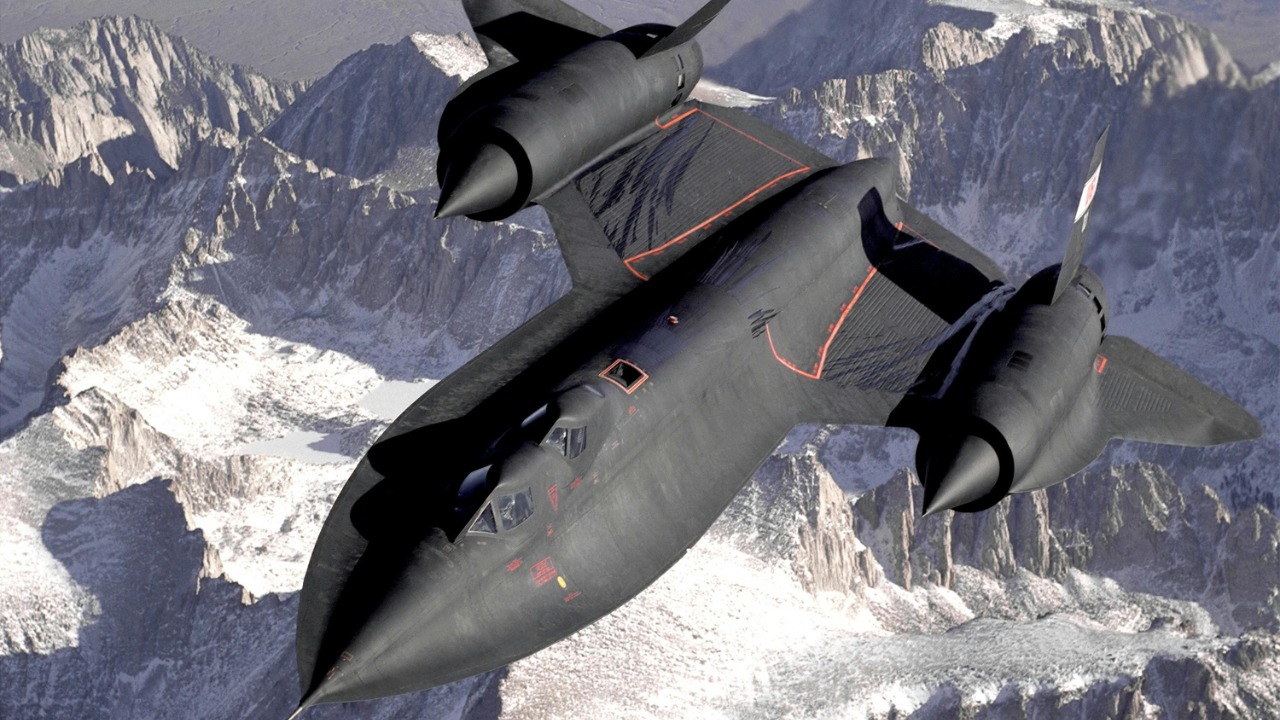
A Lockheed SR-71 Blackbird reconnaissance aircraft is on display at the Udvar-Hazy Center, as the center’s museum overview notes alongside the other major aircraft in its collection.
The Blackbird’s sleek, dark shape is among the most recognizable in aviation, and its role as a reconnaissance jet gives it a Cold War mystique. Standing beside one lets visitors judge its size and lines for themselves. Its presence at the museum lets visitors see in person a shape that photographs only hint at. Few reconnaissance aircraft carry such a reputation for looking the part.
7. Spirit of St. Louis: Lindbergh’s Crossing
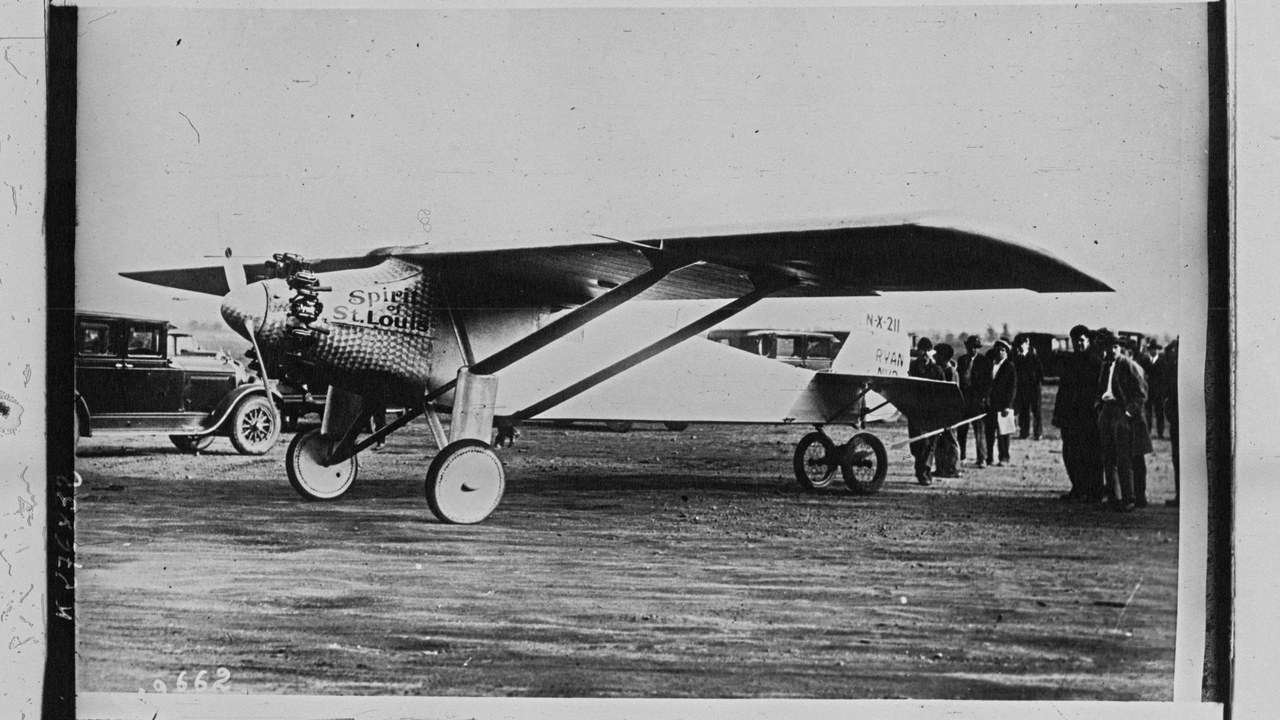
After 33 hours, 30 minutes and 3,610 miles, Charles Lindbergh landed safely at Le Bourget Field near Paris, according to the Smithsonian collection record. The airplane is on display at the National Air and Space Museum.
A solo crossing of that length was an extraordinary ask of both pilot and machine. Up close, the plane looks strikingly modest, which makes the achievement seem even larger. Lindbergh’s landing near Paris made the plane a symbol of what one determined pilot could do, and it remains among the most treasured objects in aviation history.
8. Bell X-1 Glamorous Glennis: Breaking the Barrier
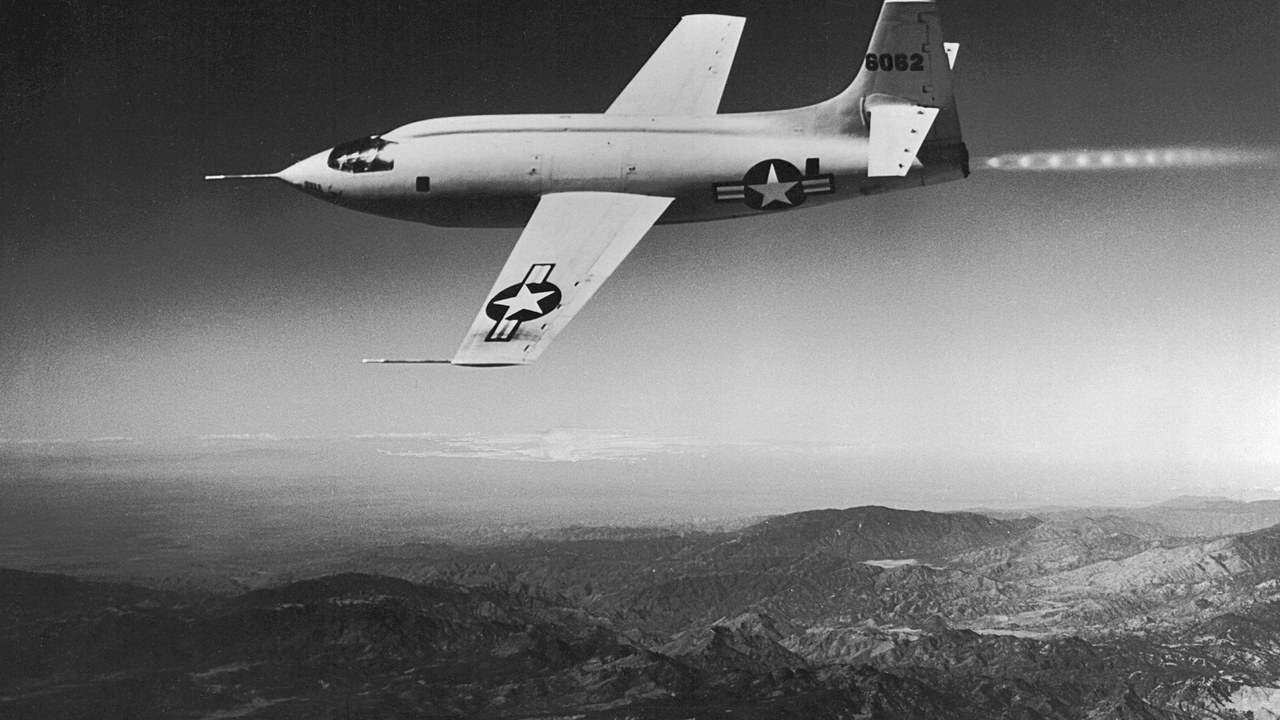
Chuck Yeager flew it to Mach 1.06, or 700 mph, at 43,000 feet on October 14, 1947, the first supersonic flight, per the Smithsonian’s X-1 record. Yeager named the plane for his wife Glennis.
The flight settled a question that had long worried aviators, and the airplane’s name adds a personal touch to a landmark of engineering. Few museum pieces connect so directly to a single, precisely dated moment. Anyone interested in how flight changed after the war will find few better objects to study.
9. Amelia Earhart’s Lockheed Vega 5B: Earhart’s Atlantic Solo
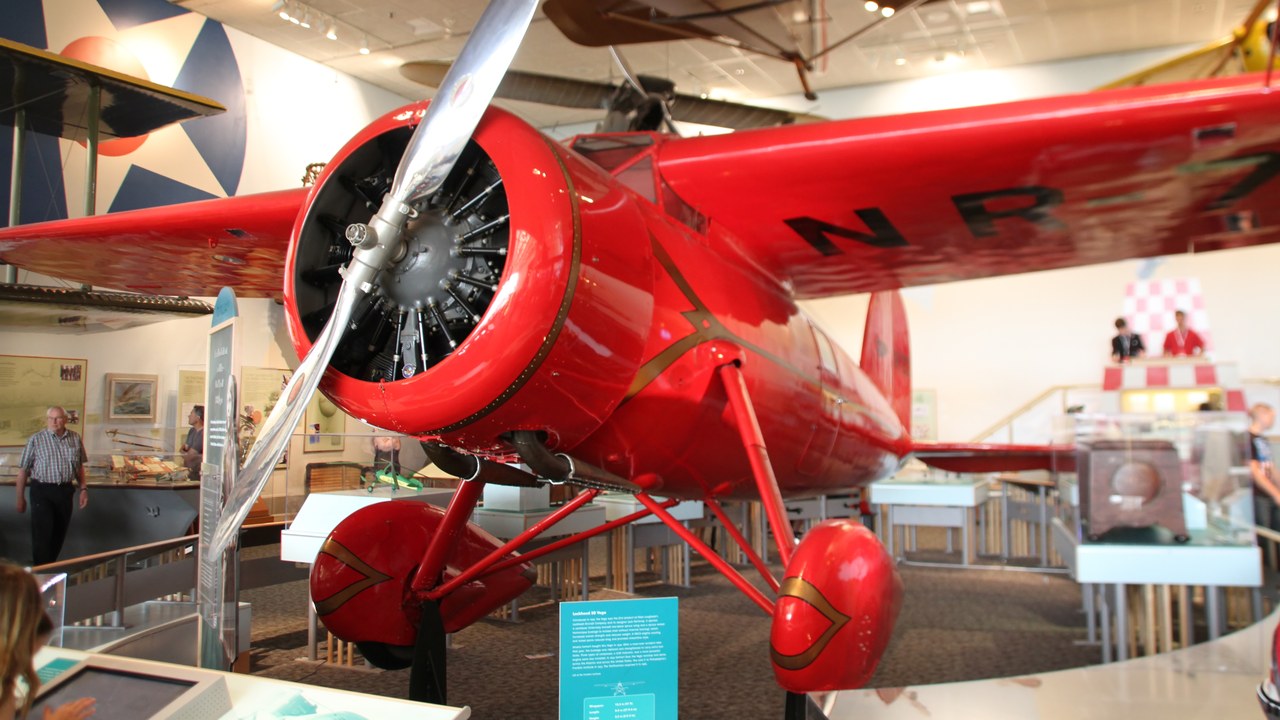
In this red Lockheed Vega 5B, Amelia Earhart became the first woman to fly nonstop and alone across the Atlantic on May 20-21, 1932. The Smithsonian record adds that she is the only person since Charles Lindbergh to make that solo nonstop crossing.
The crossing put Earhart in rare company, and the airplane preserves the achievement in physical form. Visitors see the actual machine that carried her, not a replica. The airplane also gives a face to a chapter of flying history that continues to inspire.
10. Hughes H-4 Hercules (Spruce Goose): The Spruce Goose
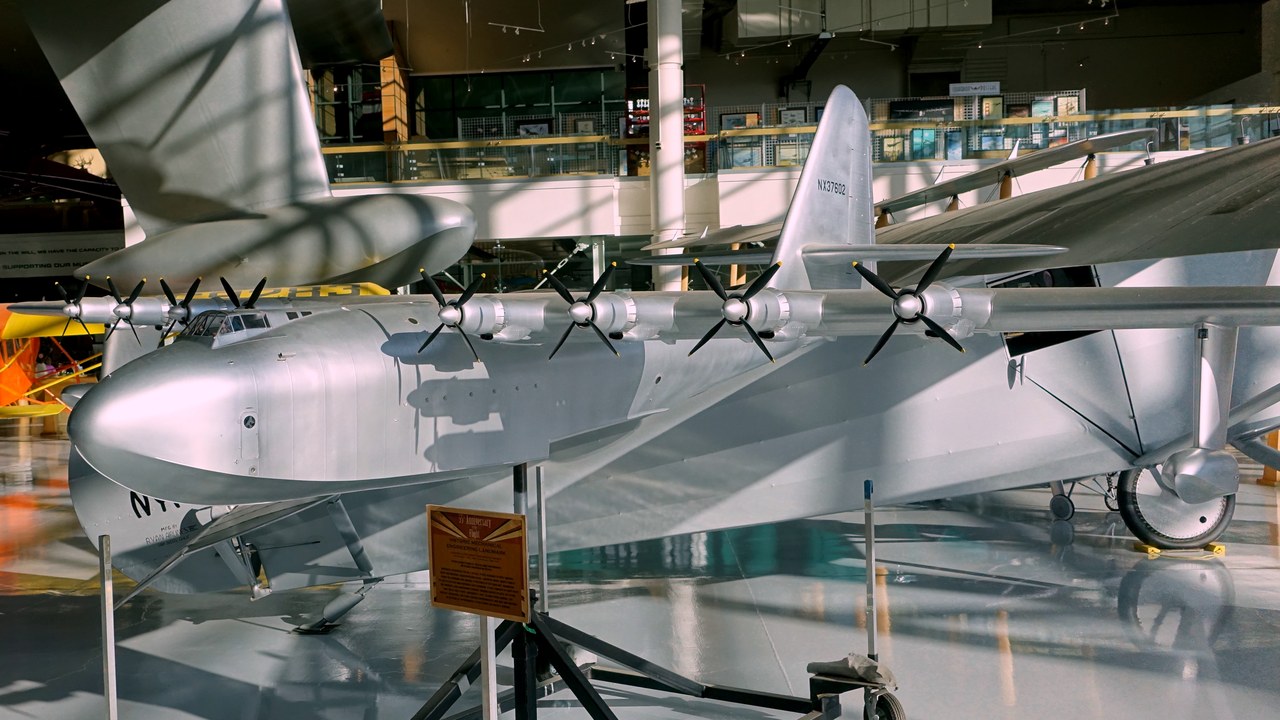
Built almost entirely of wood, the Hughes H-4 Hercules has a wingspan of 319 feet 11 inches. It flew once, on Nov. 2, 1947, for about 30 seconds at 25 feet above the harbor, covering just under half a mile, according to the Evergreen museum exhibit.
The giant now sits in McMinnville, Oregon, at the museum now called the North American Aerospace Museum. A single brief hop is all the flying it ever did, which only adds to its pull as a curiosity.
More from Morning Overview
- A handful of car engines are so tough mechanics say they almost never wear out
- The NSA is again telling phone owners to switch off one location setting
- Supplements now rank as the fifth-leading cause of death from liver disease.
- Herbal supplements are landing Americans in the hospital with liver damage, doctors warn
