
When the hulk of USS Enterprise left Newport News on 2 November 2026, it closed a story that began with the first nuclear-powered aircraft carrier. Her career ran from the space race and the Cuban blockade through Vietnam, a deadly flight deck fire and the years after 2001. The slides below follow that history from the tow back to the carrier’s namesake successor.
Read next on Morning Overview: Apple quietly pushed security fixes to nearly every iPhone, even ones stuck on iOS 18
USS Enterprise (CVN-65): The Hulk Leaves the Pier
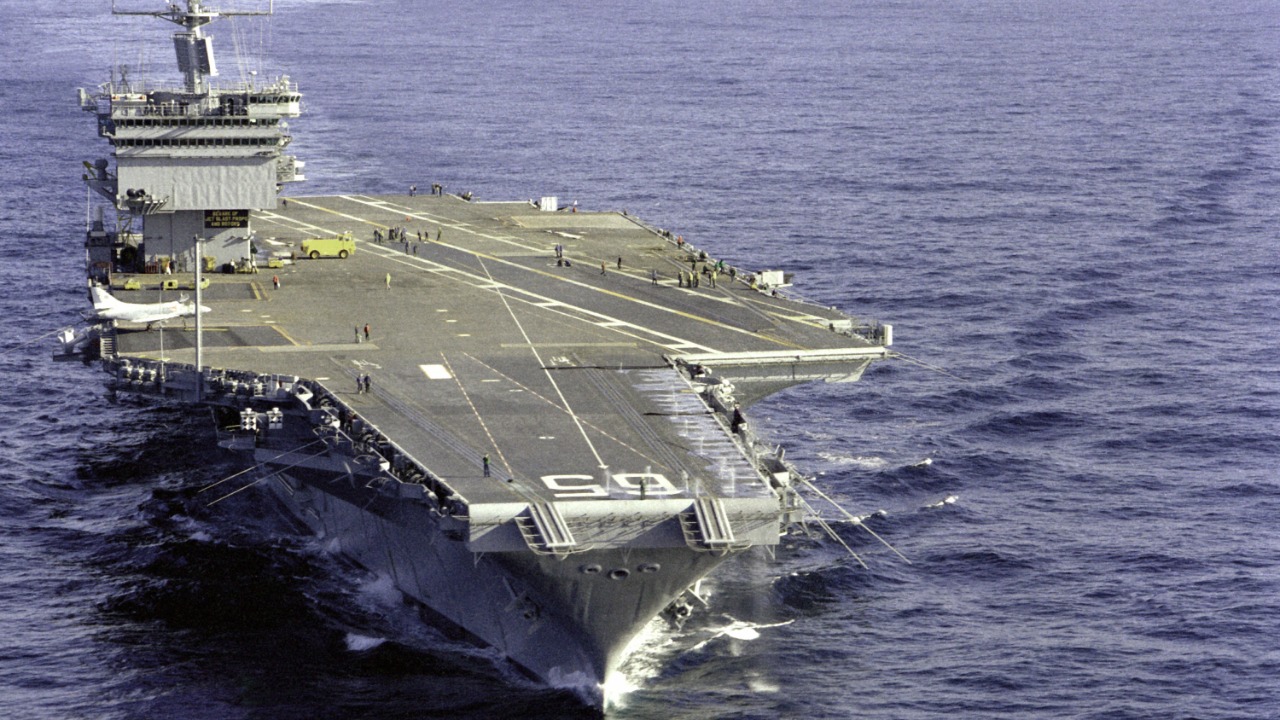
On 2 November 2026 the hulk of the former carrier was towed from a pier at Newport News Shipbuilding, almost fifteen years after the carrier’s final deployment, as USNI News reported. The ship that left was no longer a warship but a retired vessel bound for the breakers. It was the world’s first nuclear-powered aircraft carrier.
Commissioned in 1961 and nicknamed the Big E, she served more than five decades before inactivation in December 2012 and decommissioning in February 2017. The tow marks the start of the last chapter, a dismantling the Navy has planned for years because her eight reactors make her unlike any other carrier.
Newport News Shipbuilding: Where the Big E Was Built
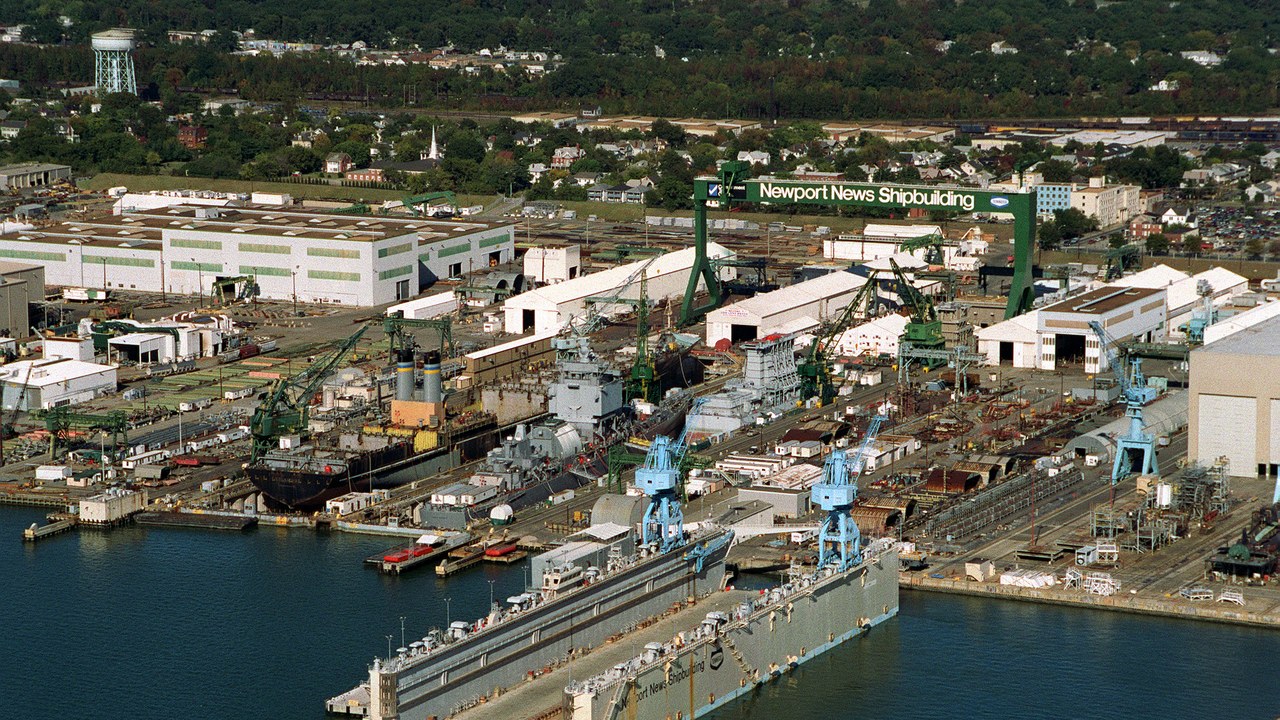
Enterprise was built at Newport News, where her keel was laid in February 1958 and where she was launched in September 1960 and commissioned on 25 November 1961. The same yard returned to her in later life. According to the USNI report, HII handled the initial inactivation and defueling of the carrier there.
The shipyard also carried out her major overhauls, including the refuelling and refit of the 1990s. After being towed from Norfolk in 2013 for defueling, she spent years alongside at Newport News. Her final reactor was defueled in December 2016, so the November 2026 tow ended a relationship with the yard that began more than six decades earlier.
Mobile, Alabama: A Long Tow to the Gulf Coast
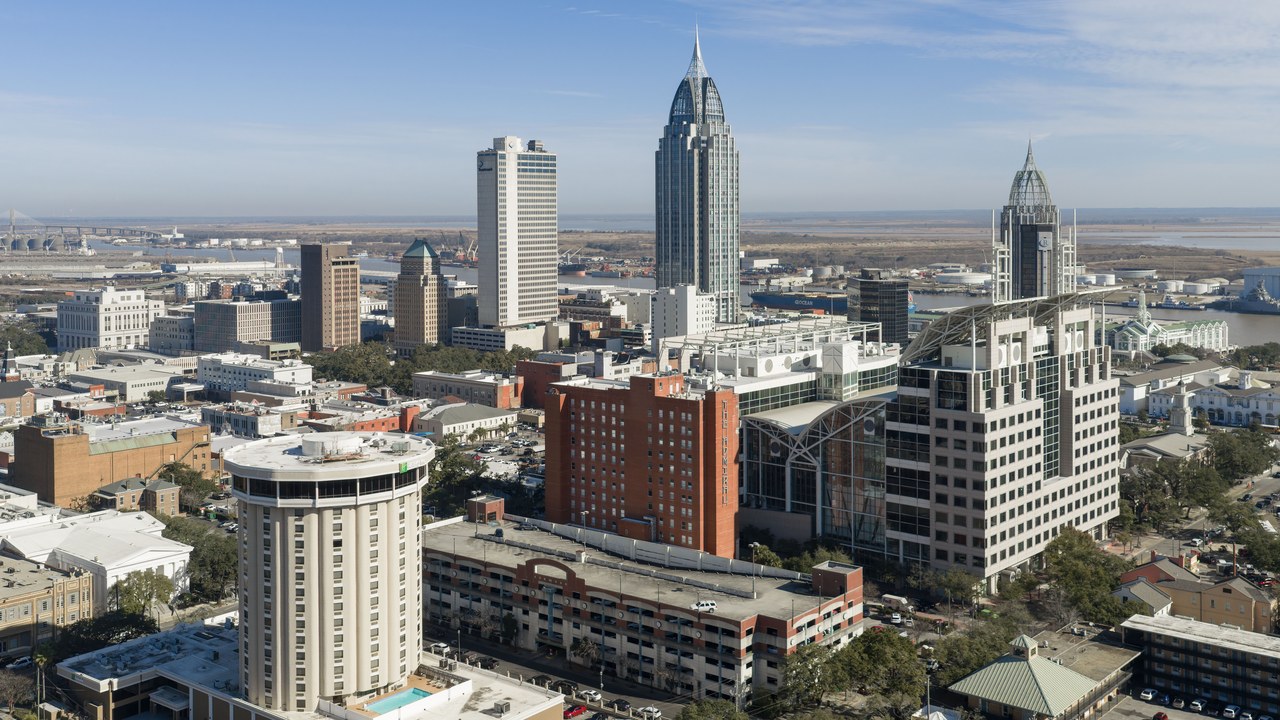
The destination is Mobile, Alabama, where, as USNI News reports, PAE Maritime says the hulk will be dismantled. The trip from Virginia takes the former carrier from the yard that built her to a Gulf Coast port chosen for the breakup.
The disposal plan is slow and complicated. Reactor-contaminated compartments meant the ship could not be sunk as a target, so the Navy opted for a commercial facility. Scrapping was expected to take about five years, with the carrier gone completely by 2030, and the job has been estimated to cost more than one billion dollars.
USS Gerald R. Ford (CVN-78): Two Reactors Where Enterprise Needed Eight
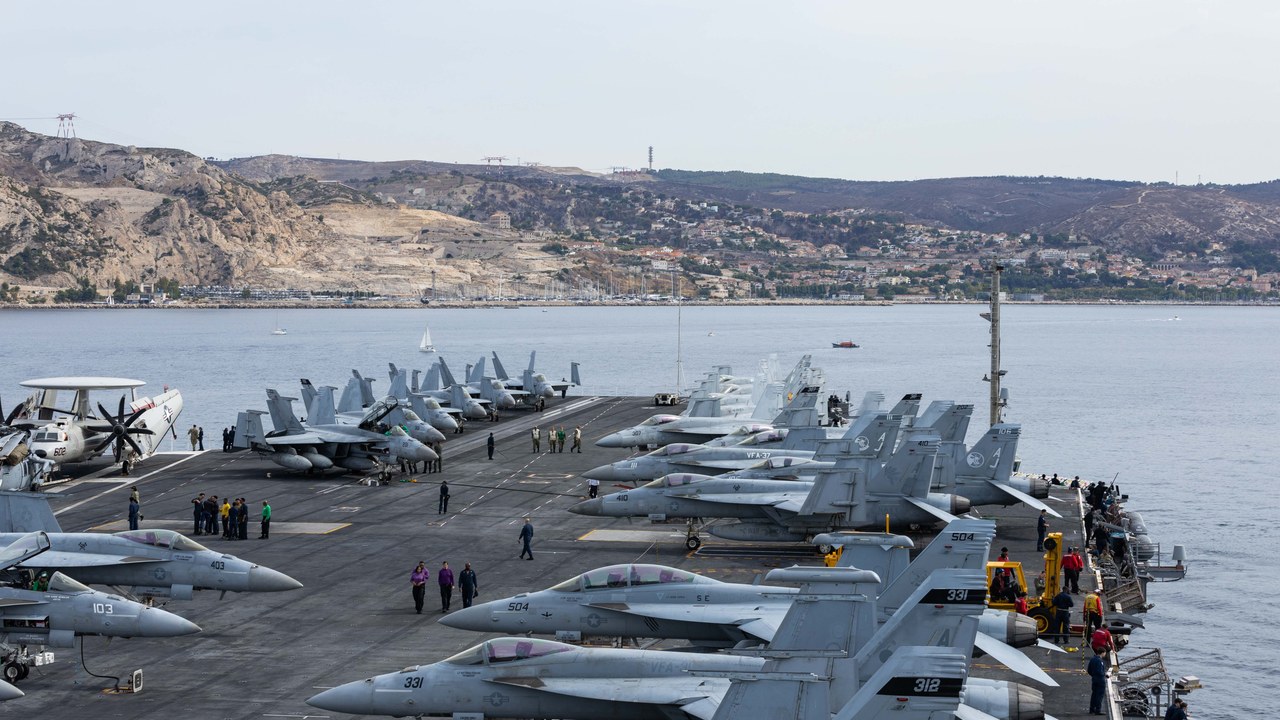
The reactor count explains much of the difficulty. USNI notes that Enterprise has eight reactors, compared with two each on the Nimitz and Ford classes. The newer USS Gerald R. Ford carries a pair, which makes Enterprise a very different job from retiring a modern carrier.
Enterprise was the first nuclear carrier, built when nuclear propulsion for surface ships was new. Her reactors have been defueled, but the compartments that housed them remain part of what the dismantling crews must handle. A photograph from the Newport News yard in July 2018 shows the old carrier moored alongside Ford, old and new together.
Friendship 7: Tracking John Glenn
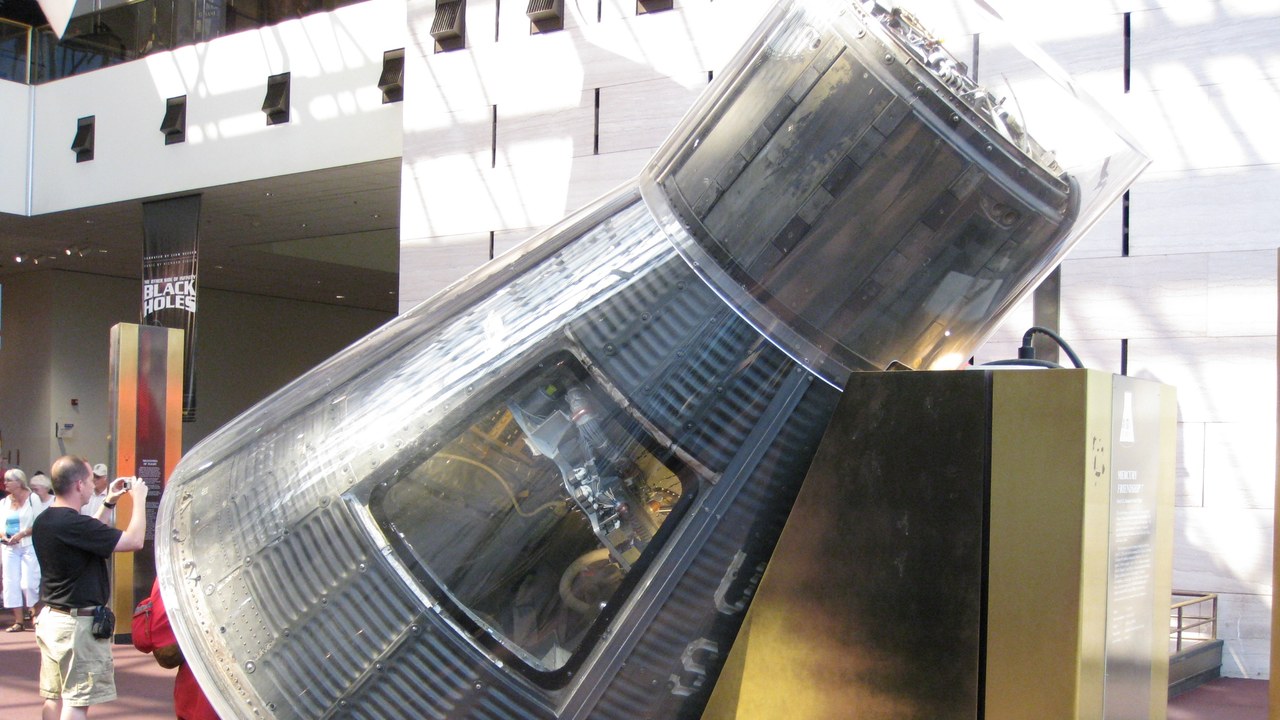
The carrier’s early career was tied to the space race. According to the Naval History and Heritage Command timeline, in February 1962 Enterprise was assigned to support Project Mercury and tracked the flight of Friendship 7, the capsule that carried John Glenn.
The assignment came only a few months after she was commissioned in November 1961. It gave the new nuclear carrier a role in one of the most visible events of the era, well before the operations that would define her longer record. The photograph shows a Mercury capsule on museum display.
Cuban Missile Crisis: Her First Crisis
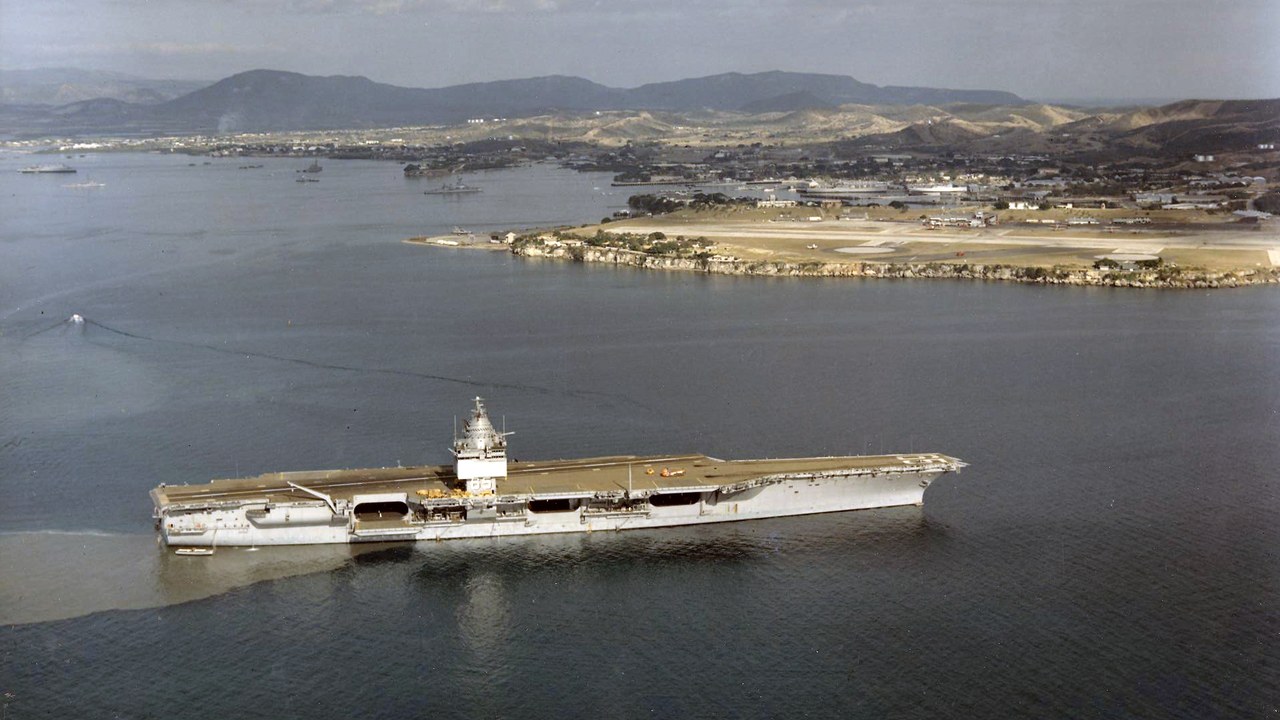
Enterprise faced her first international test in October 1962. The Navy history timeline records that she took part in the blockade of Cuba during the Cuban Missile Crisis. The crisis followed revelations that the Soviet Union was building nuclear missile launch sites on the island.
President John F. Kennedy ordered a large military buildup, and the Atlantic Fleet readied many of its ships. Enterprise was among the ships readied. The photograph shows the ship in Caribbean waters in 1962, the same theatre in which the confrontation played out that October.
Operation Sea Orbit: Around the World Without Refuelling
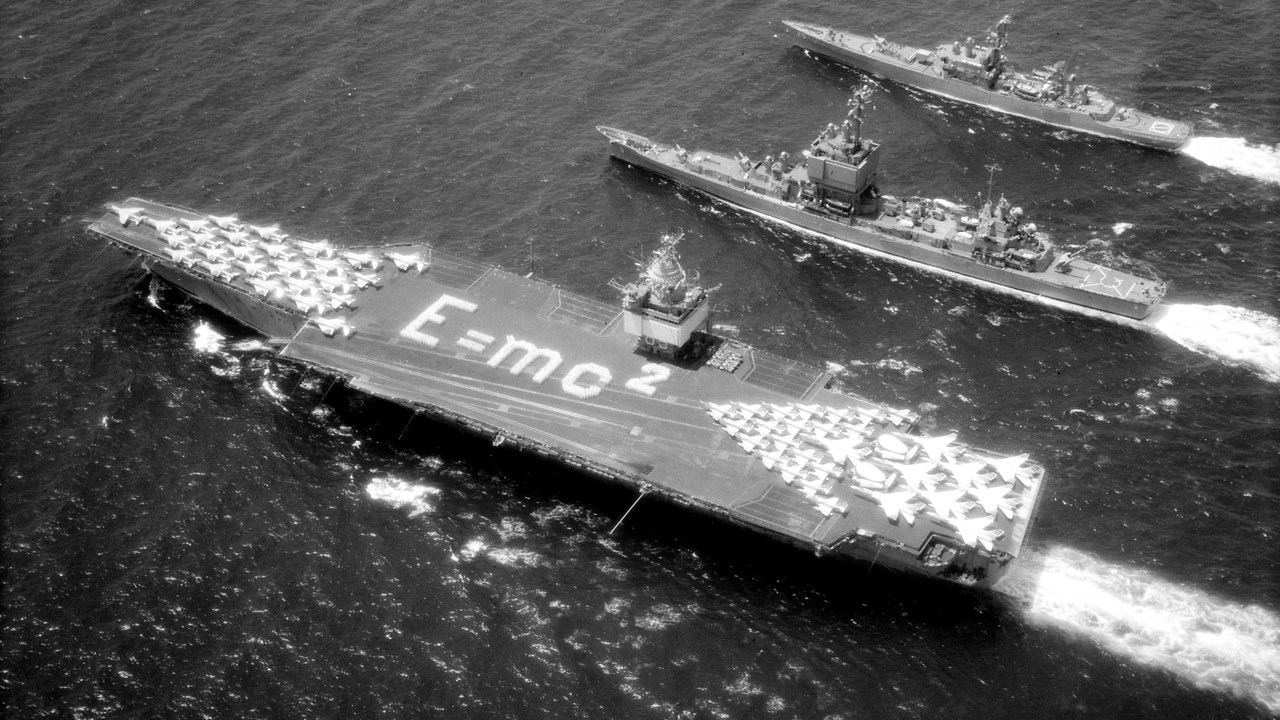
In 1964 the carrier joined Operation Sea Orbit, a nuclear-powered task force that circled the globe without refuelling, according to the Navy history account. Enterprise sailed with the cruisers Long Beach and Bainbridge, making the group the first all-nuclear task force.
The voyage tested what nuclear power could do for a fleet. For the Mediterranean photograph taken in June 1964, crewmen spelled out Einstein’s equation E=mc2 on the flight deck, a stunt that made the point about atomic power in a single image.
Operation Frequent Wind: Evacuating Saigon
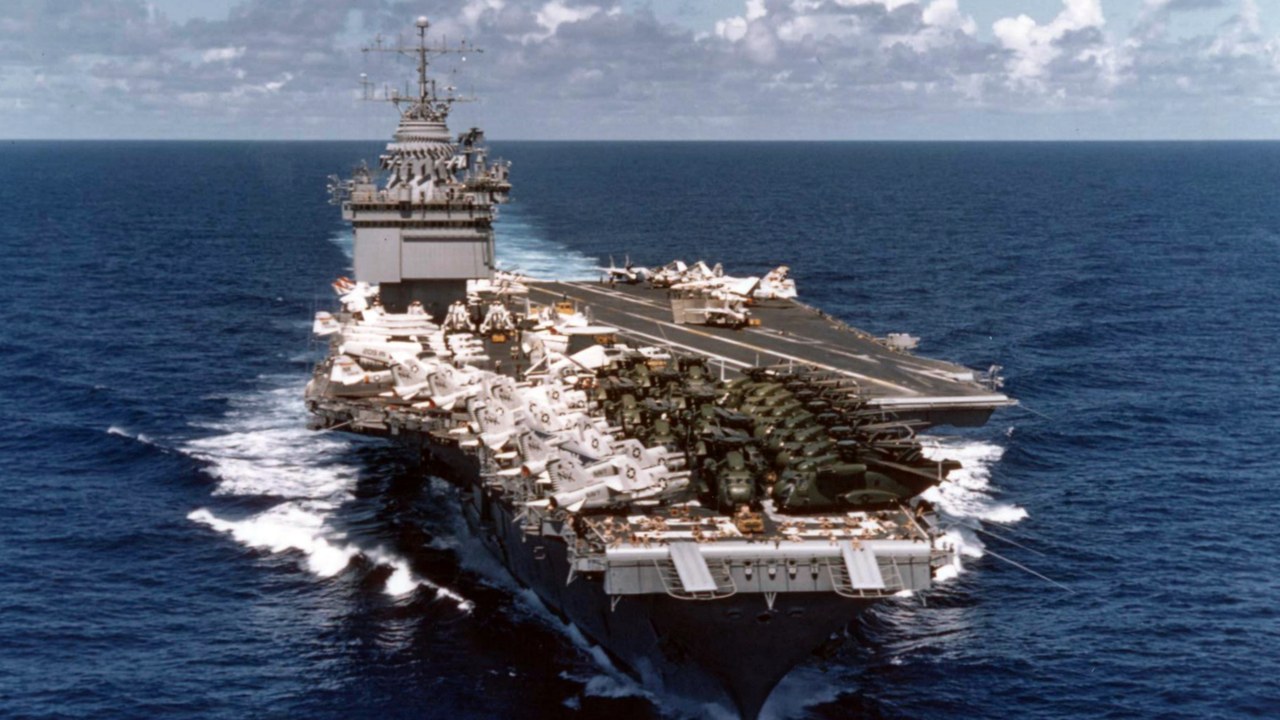
In April 1975 Enterprise was among the carriers off South Vietnam when North Vietnamese forces launched their final invasion. The Navy history record shows that she supported Operation Frequent Wind, the evacuation of Saigon. Midway, Coral Sea, Hancock and Okinawa were deployed alongside her.
On 29 April, Navy and Marine Corps helicopters flew out Americans and South Vietnamese from the US Embassy and the Defense Attache Office compound, with carrier aircraft providing fighter cover. The last helicopter lifted off the embassy roof at 7:53 am on 30 April. The photograph shows Enterprise returning from the operation.
Biên Hòa: First Nuclear Ship in Combat
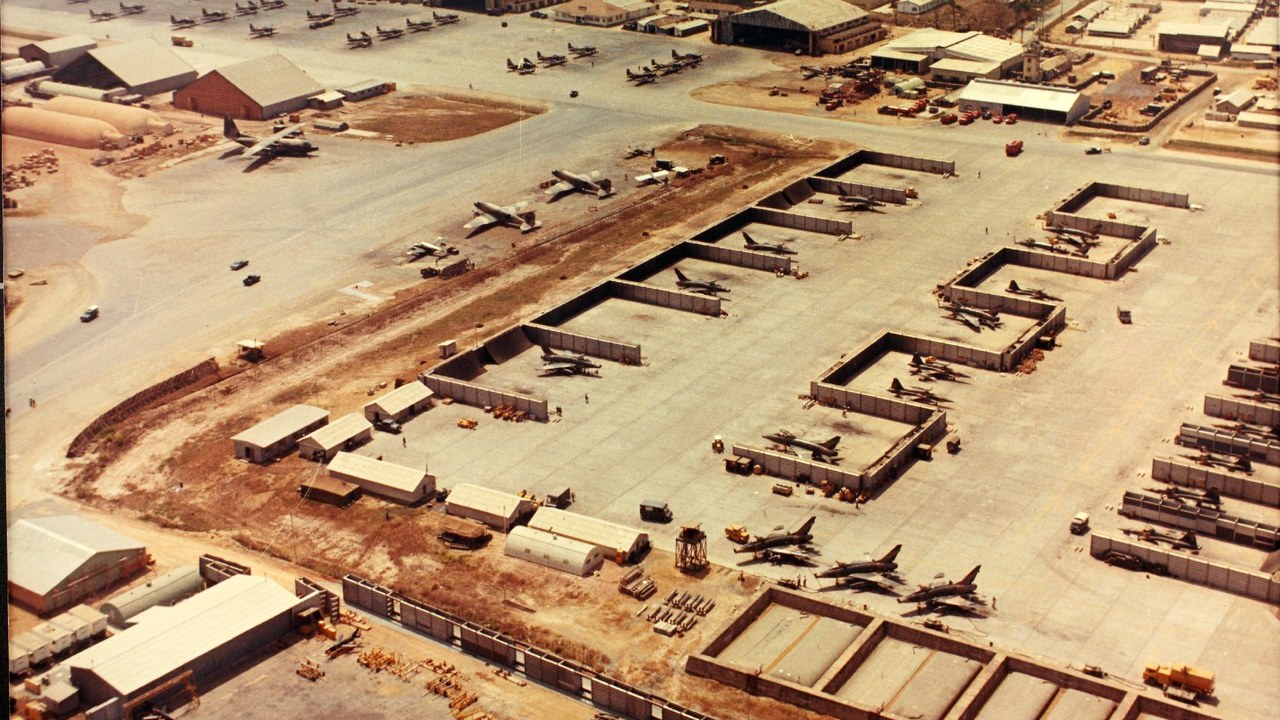
In November 1965 Enterprise moved to the Seventh Fleet and her new home port at Alameda, California. On 2 December she became the first nuclear-powered ship to engage in combat, when she launched aircraft against the Viet Cong near Bien Hoa City.
The carrier led Carrier Division Three on that deployment, with a full air wing embarked. Bien Hoa was also the site of an air base used during the war, and the photograph shows the base’s aircraft revetments. The strike gave Enterprise a distinction that no other nuclear-powered warship could claim at the time.
1969 USS Enterprise fire: The Flight Deck Fire of 1969
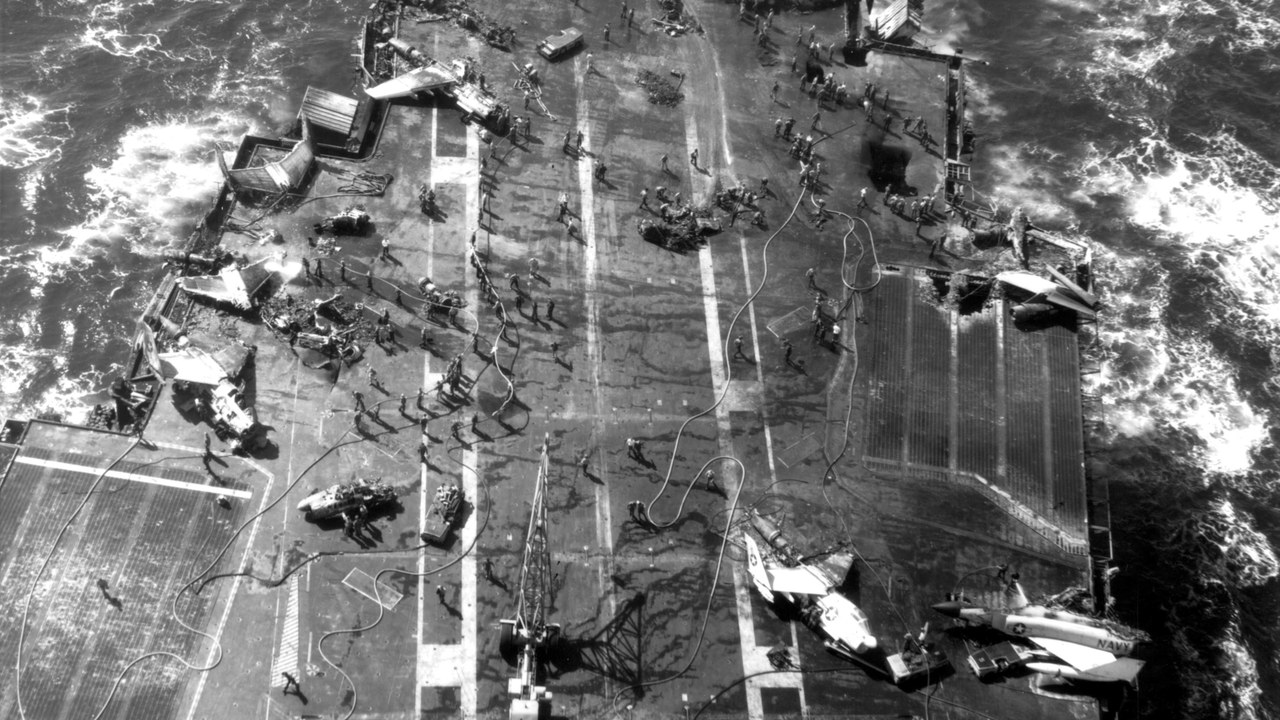
The worst day of her career came on 14 January 1969. A Zuni rocket on a parked F-4 Phantom exploded after being overheated by an aircraft start unit, as the ship’s Wikipedia entry describes. The blast set off fires and further explosions across the flight deck.
The fires were brought under control relatively quickly compared with earlier carrier fires, but 27 sailors were killed and 314 were injured. Fifteen aircraft were destroyed. The destroyers Benjamin Stoddert and Rogers were escorting her, and sailors from Rogers helped fight the flames. The aerial photograph shows the damaged flight deck afterwards.
Pearl Harbor: Repairs at Pearl Harbor
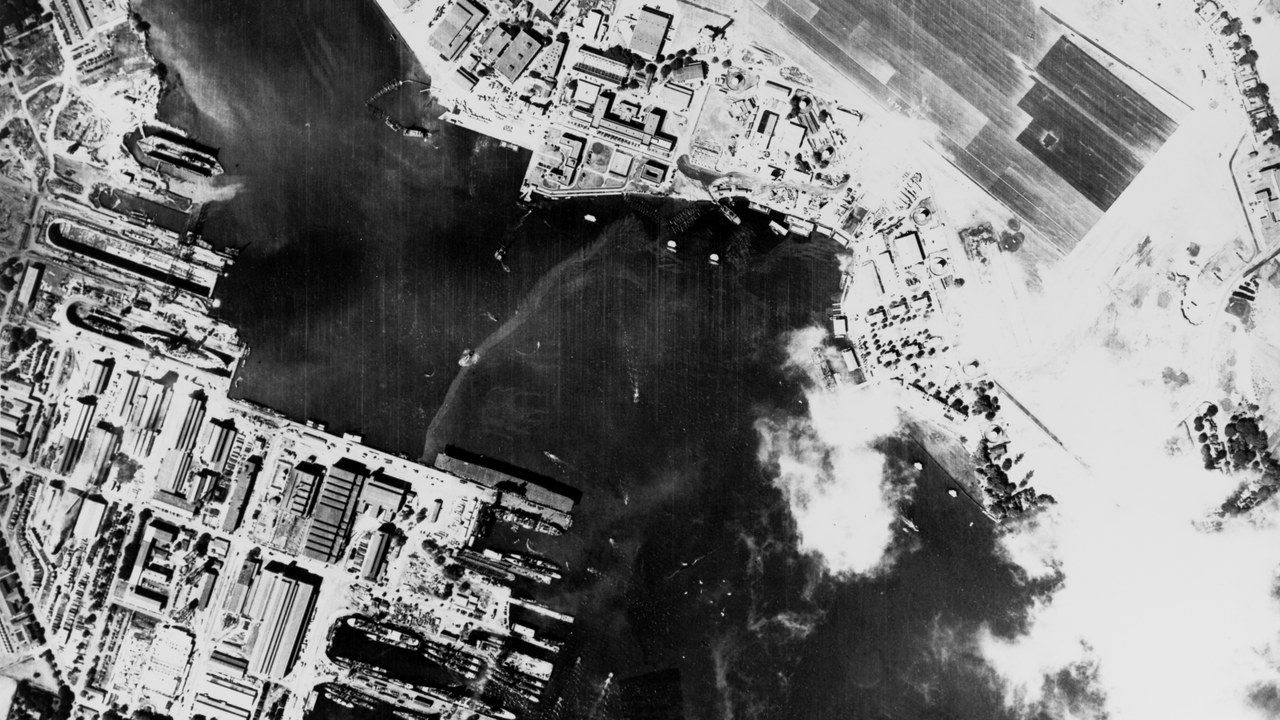
The damage from the 1969 fire forced Enterprise into Pearl Harbor Naval Shipyard, mainly to repair the flight deck’s armored plating, and repairs were finished on 1 March 1969. The harbor returned to her story in December 2001, when President George W. Bush addressed her sailors from the flight deck on Pearl Harbor Day.
That deployment began just before the September 2001 attacks, and she returned to waters off Southwest Asia without orders. Her legacy continues in name. At the 2012 inactivation ceremony the Navy announced the next Ford-class carrier, CVN-80, would be named Enterprise, and steel from the old ship is to be recycled into her.
More from Morning Overview
- Jeep’s new Recon sold just 19 units in 45 days, the fewest of any model on CarEdge’s worst-sellers list
- Washington is forcing coal plants from Colorado to Washington state to keep running
- New York picked its finalists to build a big new nuclear plant upstate
- Florida’s St. Johns River just topped its worst flood on record near Cocoa
