
In November 2026, NASA scientists reported that dust collected from Earth’s stratosphere carries evidence of an ancient reservoir of ice in the Kuiper Belt. The grains were caught by a high-flying research aircraft and analyzed in Houston and Los Angeles. This gallery follows the trail from the plane to Neptune, Pluto and the distant worlds beyond.
Read next on Morning Overview: A Cirrus SR22 declared an emergency a minute after departure clearance, its parachute still bagged
Lockheed ER-2: The Plane That Caught the Dust
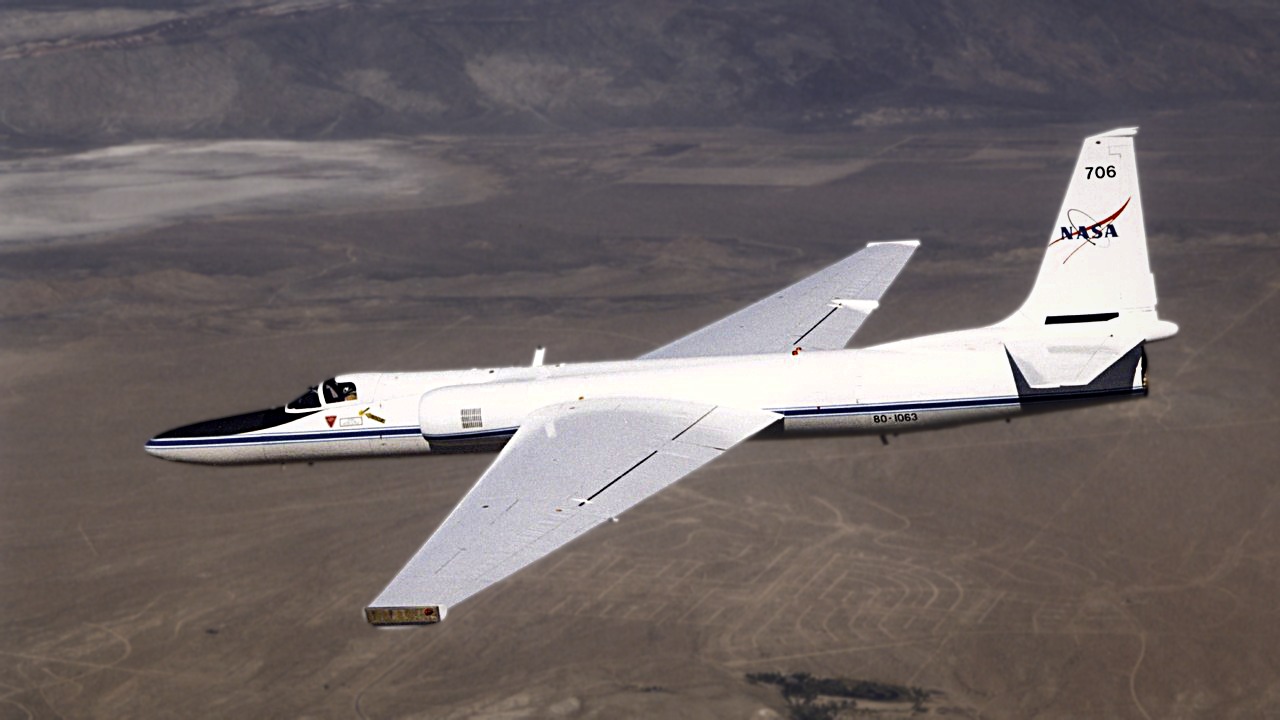
The story starts about 20 kilometers up, where a NASA ER-2 high-altitude research aircraft gathered grains of dust from Earth’s stratosphere. In a NASA science news post dated Nov. 18, 2026, the agency said researchers analyzed 12 of those particles. Each one is tiny, yet the set became the basis for a claim about the outer solar system.
High concentrations of solar energetic particle tracks in the grains helped scientists trace their origins to the Kuiper Belt. That trail of evidence turns an ordinary atmospheric sampling flight into a way of touching material that formed far beyond Neptune.
Triton: A Moon That May Have Come From the Belt
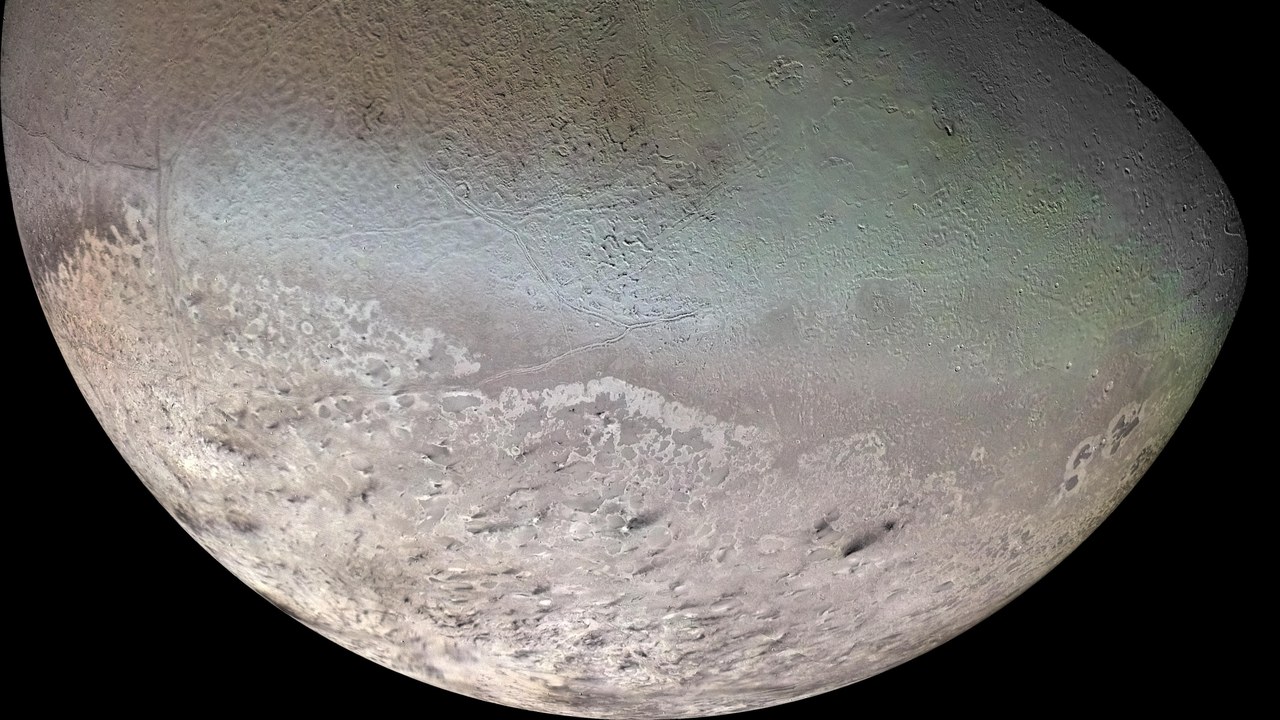
The Kuiper Belt itself cannot be photographed as a single scene, but a moon thought to share its origins can. NASA’s 10 things about the Kuiper Belt notes that Voyager 2 visited Neptune’s moon Triton in 1989. The agency says Triton could be a world that originally came from the Kuiper Belt and escaped.
The belt is described there as a vast, puffed-up disk of icy remnants from the formation of the solar system. Triton offers a rare close-up look at the kind of icy world that dust from the region may have originated in, as seen by a spacecraft.
Johnson Space Center: Where the Grains Were Analyzed

The analysis was led from Houston. According to NASA, researchers at Johnson Space Center examined the 12 stratospheric particles, using advanced electron microscopy at NASA and working with colleagues at the University of California, Los Angeles.
The team identified minerals that formed when water interacted with dust early in the solar system’s history. An ion microprobe at UCLA measured their oxygen isotopic compositions, and the chemical signatures indicated that the ancient water was enriched with heavier oxygen isotopes. NASA said the findings help scientists understand how materials from different regions of the solar system contributed to planet formation.
Neptune: The Edge of the Belt
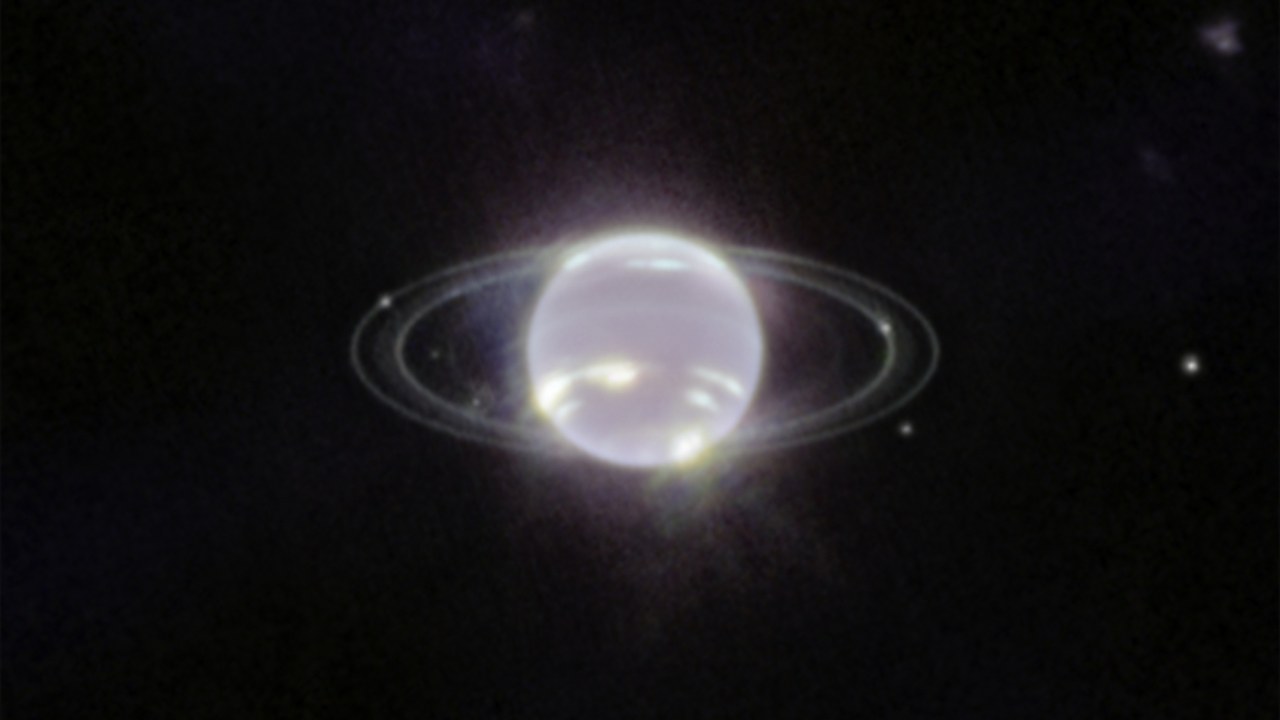
Neptune marks where the story’s source region begins. NASA’s Kuiper Belt overview says the belt’s inner edge starts at the orbit of Neptune, at about 30 AU from the Sun, where 1 AU is the distance from Earth to the Sun. The main region ends at around 50 AU.
The planet also shaped what lies beyond it. NASA describes the belt as a region of small icy objects that might have formed a planet, except that Neptune’s gravity stirred them up so much that they could not coalesce. Its gravity also nudges collision fragments toward the inner solar system as comets.
Pluto: The First Object Found
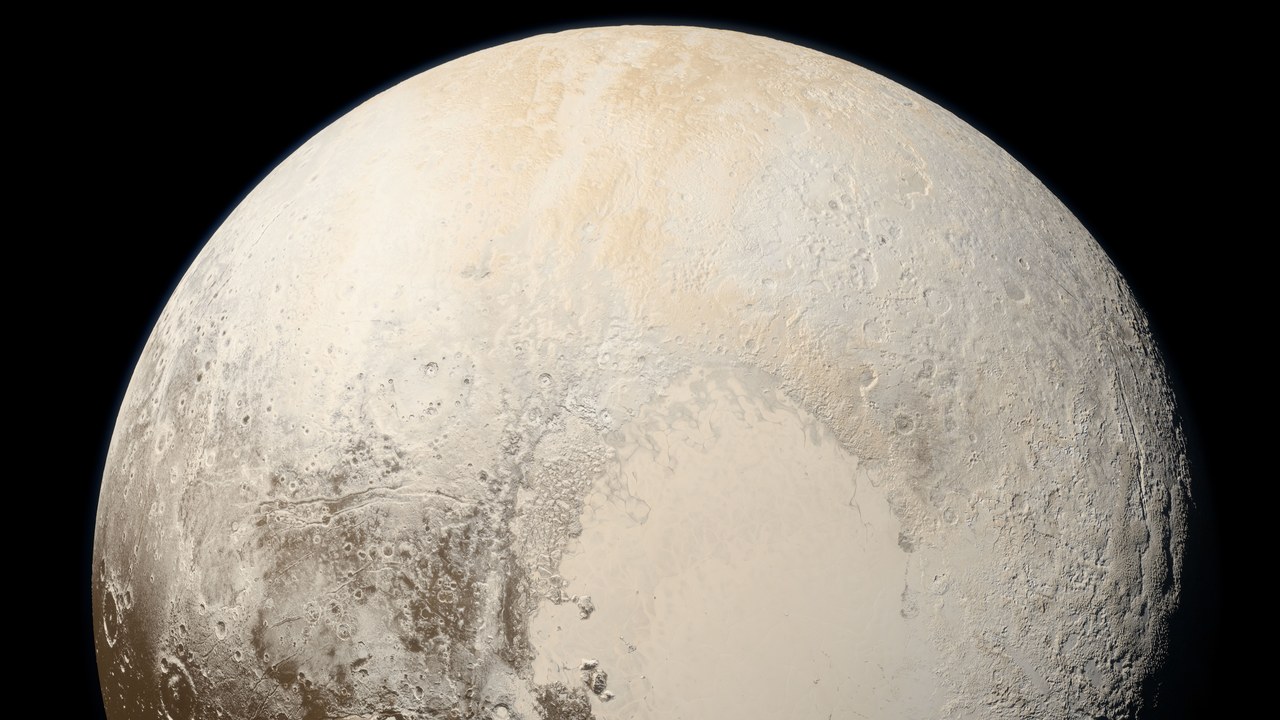
Pluto, discovered in 1930, was the first Kuiper Belt object found, according to NASA’s Kuiper Belt guide. At the time astronomers had no reason to expect a crowd of icy worlds beyond Neptune, so it was reasonable to think of Pluto as a lone planet despite its elliptical, tilted orbit.
It took another 62 years for a second Kuiper Belt object to be found, in 1992. That discovery led to the recognition that Pluto is far from alone out there. More than 2,000 such objects have since been cataloged, a small fraction of what scientists think exists.
New Horizons: The Spacecraft That Went to Look
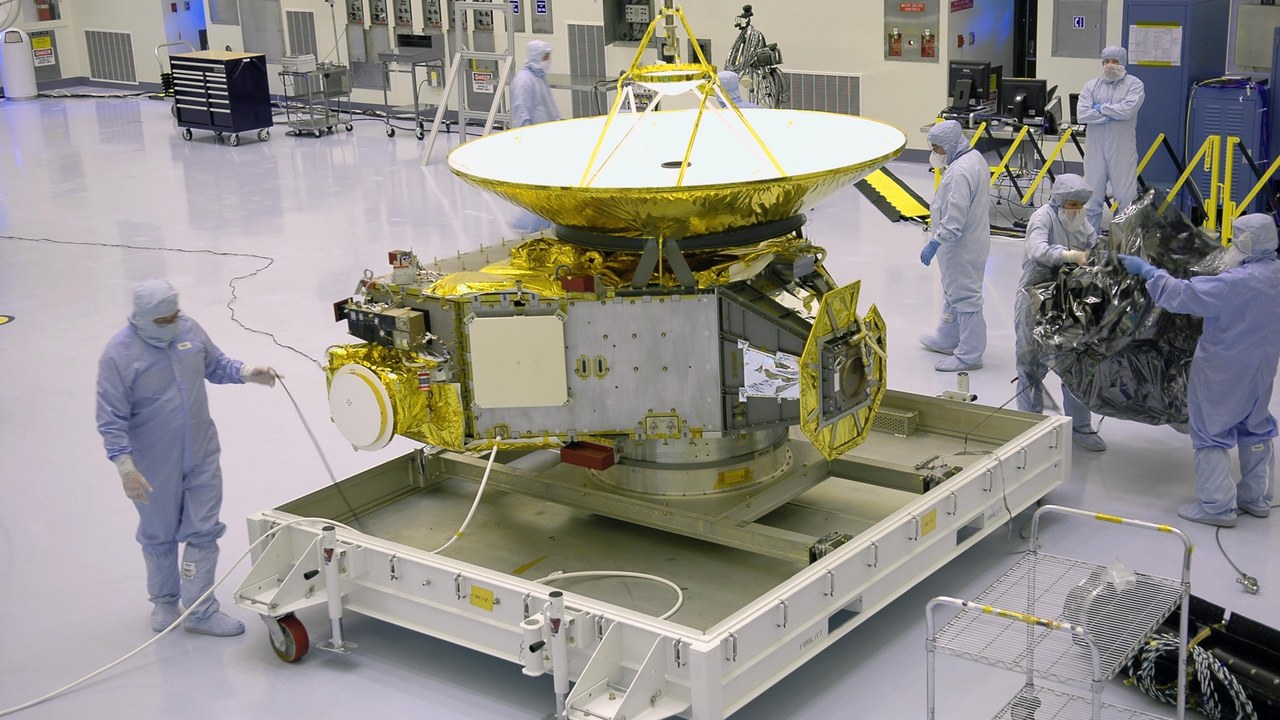
The only spacecraft to explore the belt up close is New Horizons. Facts compiled by the New Horizons mission team give its launch date as Jan. 19, 2006, at 36,400 miles per hour. It flew by Pluto and its moons in July 2015.
NASA’s Kuiper Belt guide calls it the first spacecraft to actually visit an object in the belt. The photograph shows the probe in a clean room before launch, a reminder that the images of the distant region all trace back to a single carefully built machine.
Arrokoth: The Snowman at the Far End
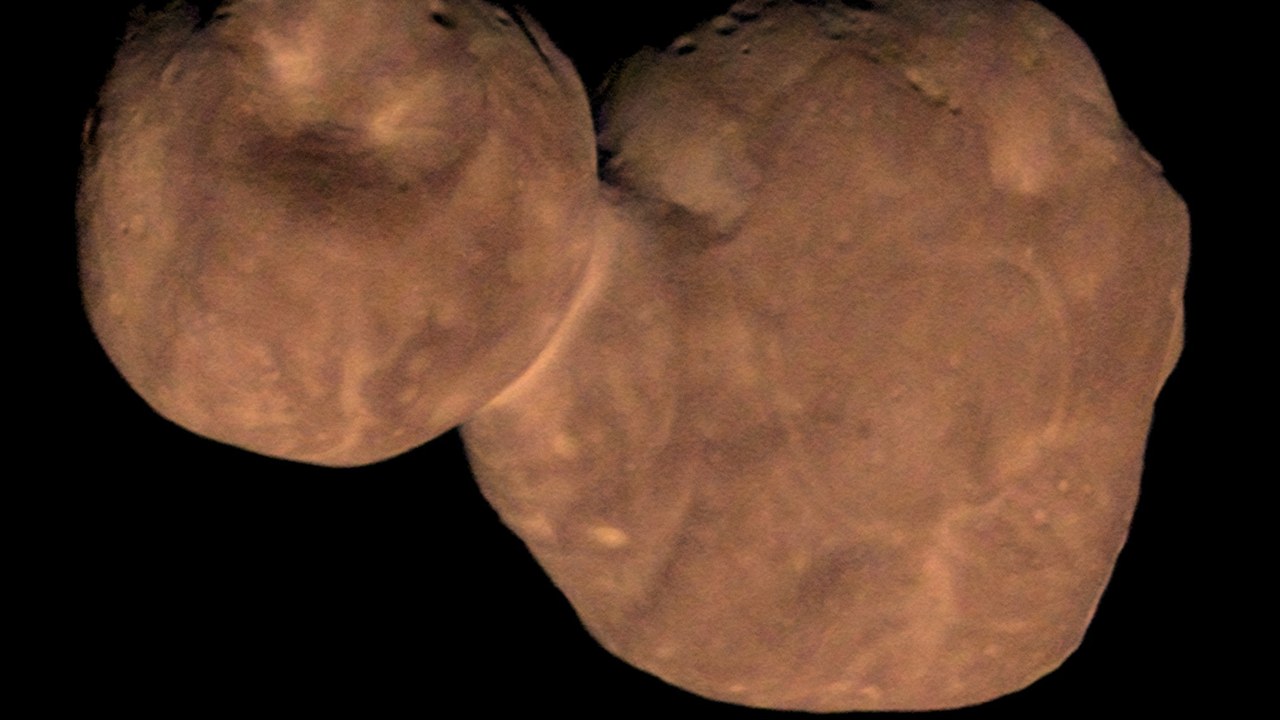
After Pluto, New Horizons went on to a second target. Its Jan. 1, 2019 encounter with Arrokoth was described by the mission fact sheet as the farthest flyby ever, some 4.1 billion miles from Earth.
NASA’s Kuiper Belt guide says the images showed a very reddish, double-lobed object that looked like a partially flattened snowman. Its shape was unlike any ever seen. Arrokoth is a rare direct look at a small, icy body from the belt, the same region the dust grains are thought to come from.
Phoebe: Another Possible Escapee
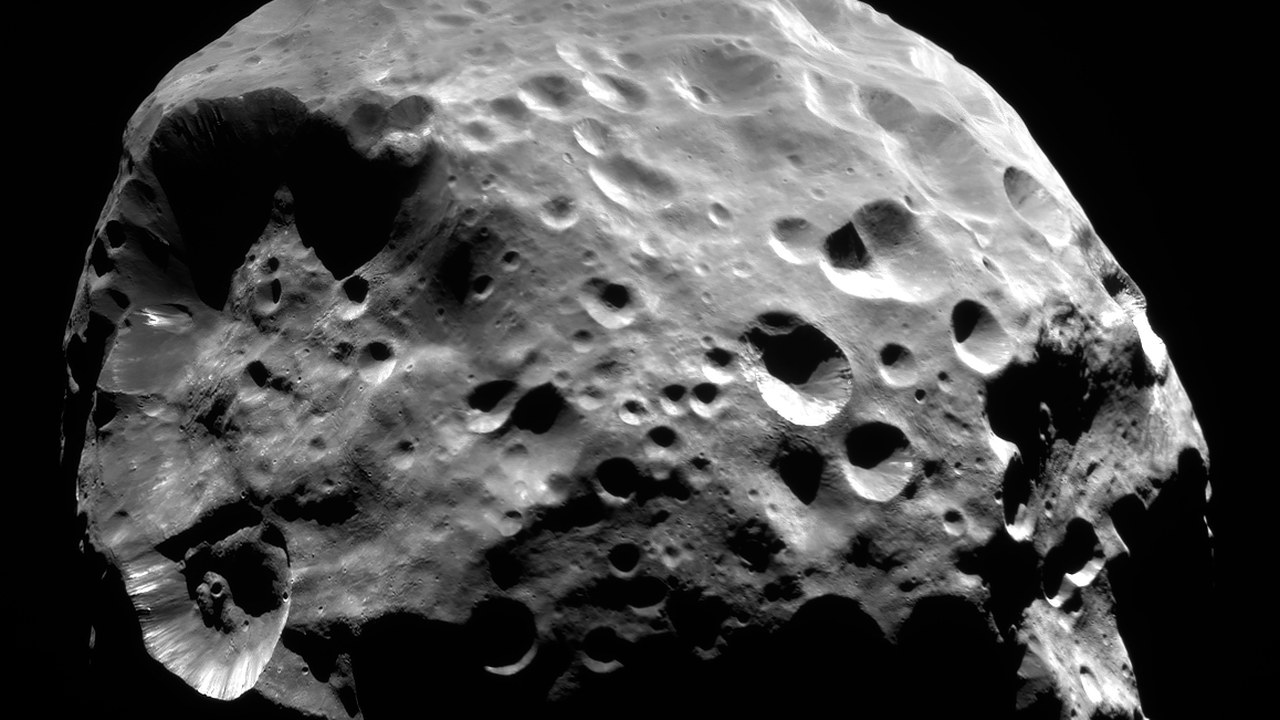
Triton is not the only moon with a possible Kuiper Belt past. NASA’s 10 things guide notes that Cassini visited Saturn’s moon Phoebe in 2004.
The agency says Phoebe, like Neptune’s Triton, could be a world originally from the Kuiper Belt that has escaped. The heavily cratered surface in the Cassini image shows how an icy body from the outer solar system looks when seen up close. Both moons were visited by NASA spacecraft, Voyager 2 in 1989 and Cassini in 2004, which is why they can be compared with objects still in the belt, such as Pluto.
Jupiter: The Shortcut Home
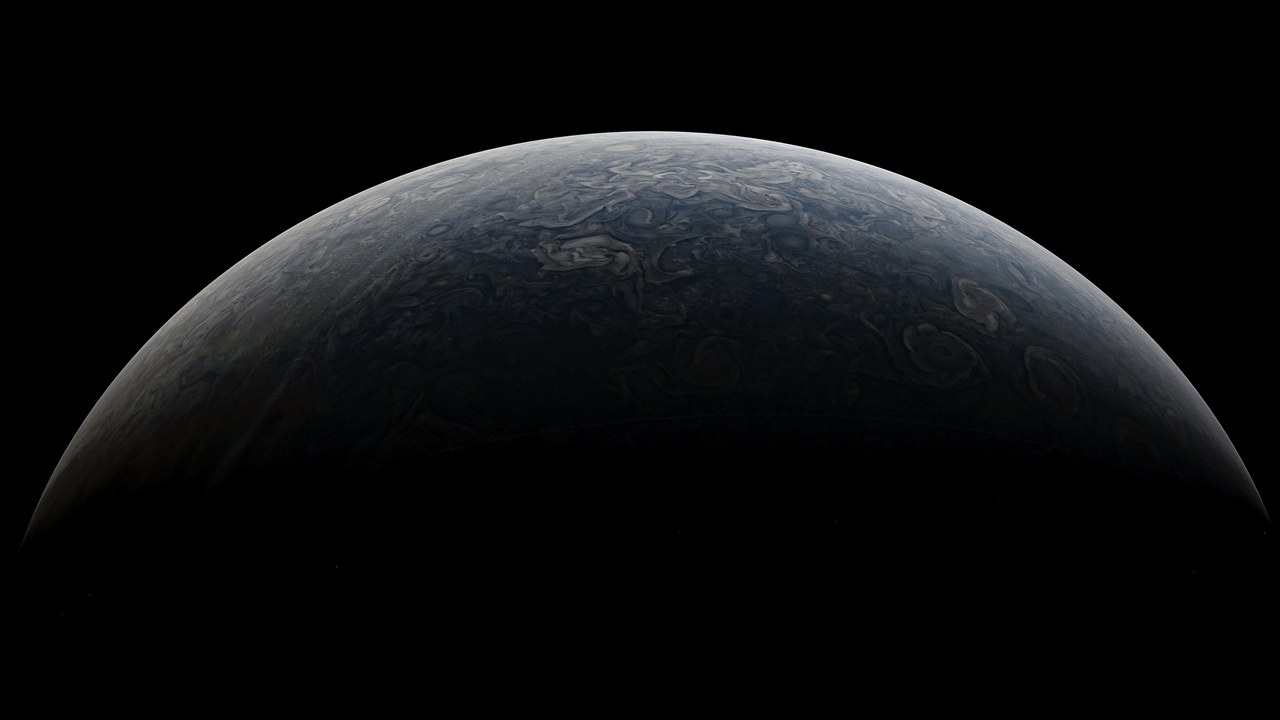
New Horizons did not fly straight to the Kuiper Belt. The mission facts page lists a Jupiter flyby in February 2007, which used the giant planet’s gravity to cut roughly three years off the trip to Pluto.
The detour is part of how humanity reached the belt at all. It took until July 2015 for the spacecraft to arrive at Pluto, and the dust from the same region that NASA’s ER-2 collected in the stratosphere offers a very different, much closer kind of sample.
More from Morning Overview
- Up to 5 feet of snow is burying Donner Pass, and forecasters warn against Sierra travel
- A flight school faces a $2,388,500 FAA fine for flying an unairworthy plane
- Hidden wear was found inside a New Jersey nuclear reactor during its outage
- Operational F-15EX jets now fly with extra fuel tanks the Air Force never planned for
