
Some 3,400 years ago, Egyptians pierced and burned papyrus drawings of a serpent to help the sun god survive his nightly voyage. Forty charred scraps from a rubbish deposit in Thebes, described in a study published on 5 November 2026, show the curse was far more common than long believed. These nine slides follow the serpent, the ritual and the temples around the dig.
Read next on Morning Overview: A Cirrus SR22 declared an emergency a minute after departure clearance, its parachute still bagged
Temple of Thutmose III: Where the Scraps Turned Up
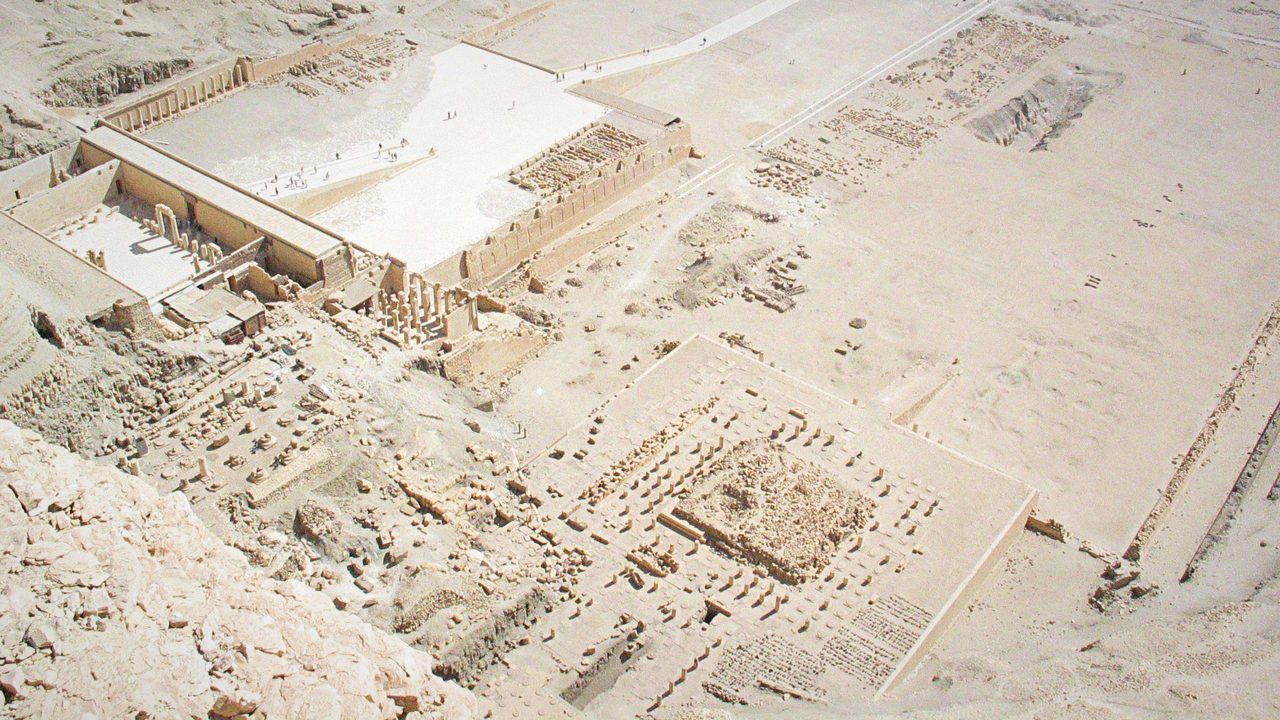
Forty charred and pierced papyrus fragments came out of a rubbish deposit at the mortuary temple of Thutmose III in Thebes. Fredrik Hagen, a professor of Egyptology at the University of Copenhagen, and his colleagues excavated them. The pieces are about 3,400 years old, and each is no larger than half a postage stamp.
The fragments turned out to be mass-produced copies of drawings and texts that were burned during the Apophis ritual. The study describing them, published on 5 November 2026 in a German Egyptology journal, calls them the earliest physical evidence that the rite was actually carried out. Other papyrus scraps from the same area belong to the temple’s administrative archive.
Apep: The Enemy of Ra
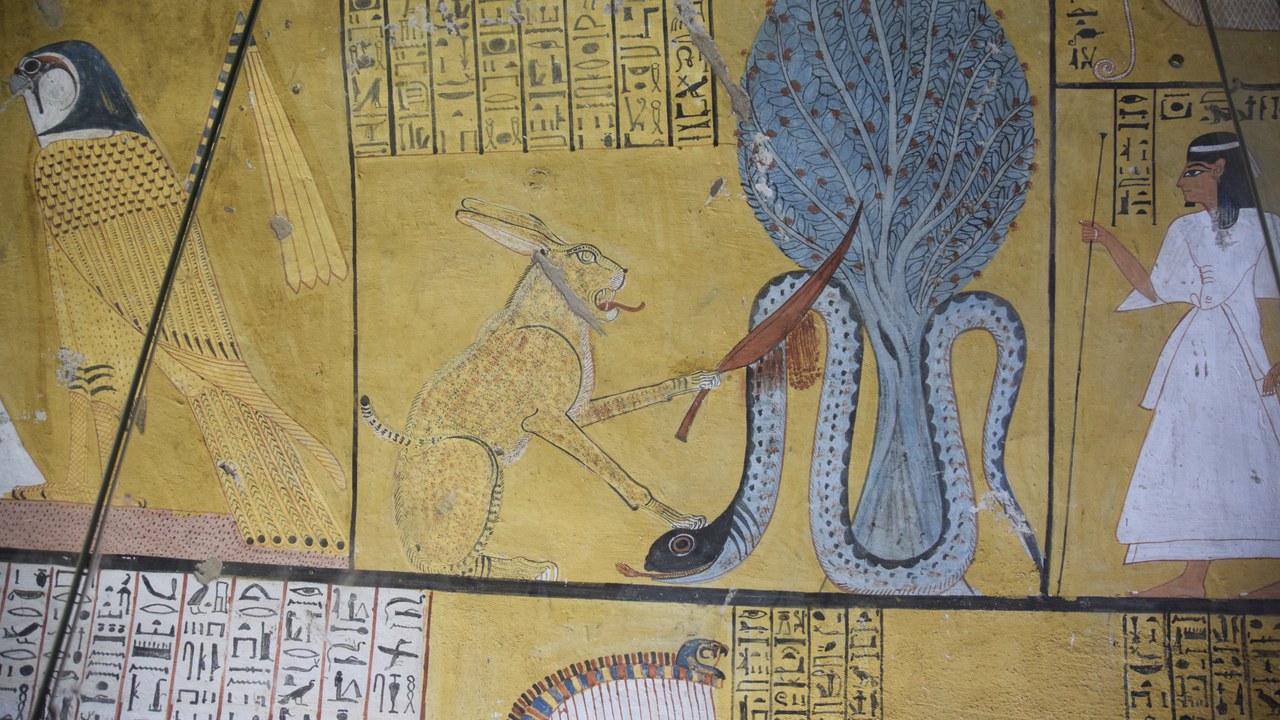
Apophis, also written Apep, was the ancient Egyptian deity of chaos, darkness and fire, usually depicted as a giant snake. Because the sun god Ra was the bringer of light and upholder of Maat, Apophis was viewed as his greatest enemy. His titles included Enemy of Ra and Lord of Chaos.
Tales of the battles between the two were elaborated during the New Kingdom. In one account Ra himself defeats the serpent in the form of a cat, a scene shown here in a tomb painting where the cat-form god stabs a coiled snake with a knife. Ra was also assisted by defenders who travelled with him, including Set.
Solar barque: The Nightly Voyage
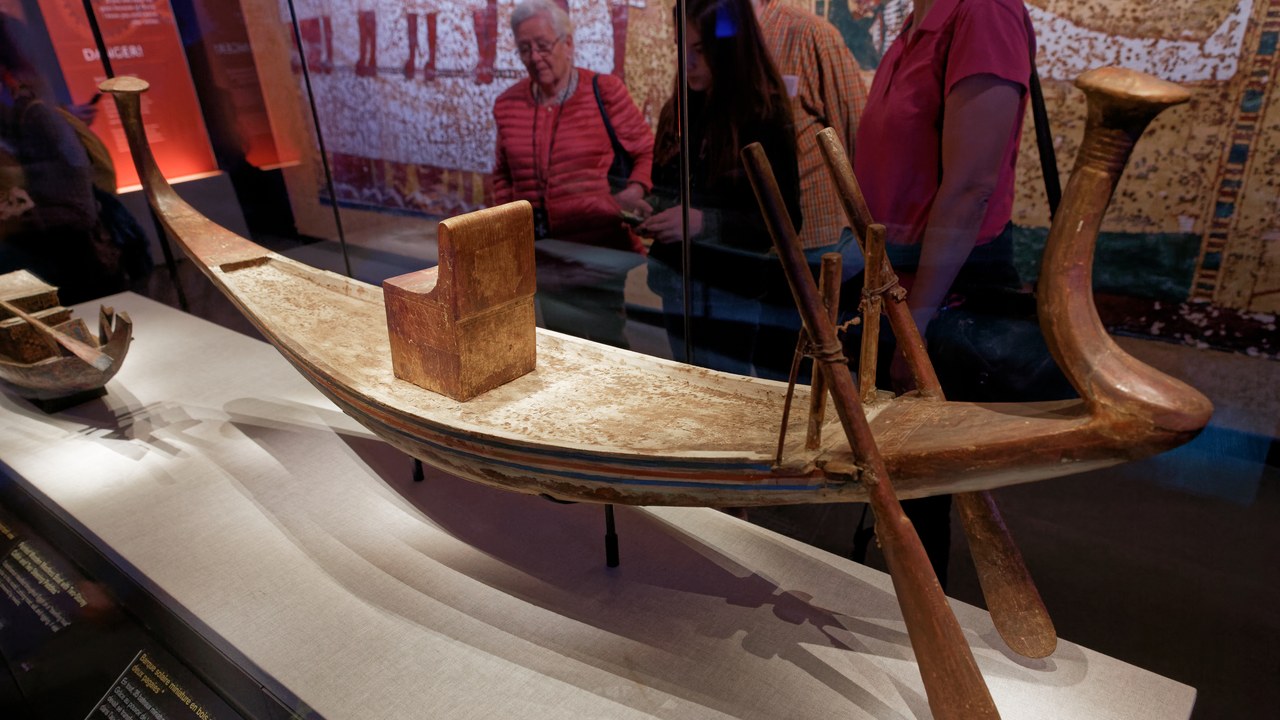
Each night, as the sun god’s barge crossed the underworld, Apophis attacked it. The gods killed the serpent, but he would regenerate and attack again the following night. The myth made darkness a battle that had to be won again every evening.
The University of Copenhagen release describes the same cycle: Ra had to fight off the serpent in the underworld in order to reemerge in the morning. To protect the order of the world, Egyptians, typically priests, performed rituals meant to destroy Apophis symbolically and so help the sun on its way.
Execration texts: Curses on Clay and Papyrus
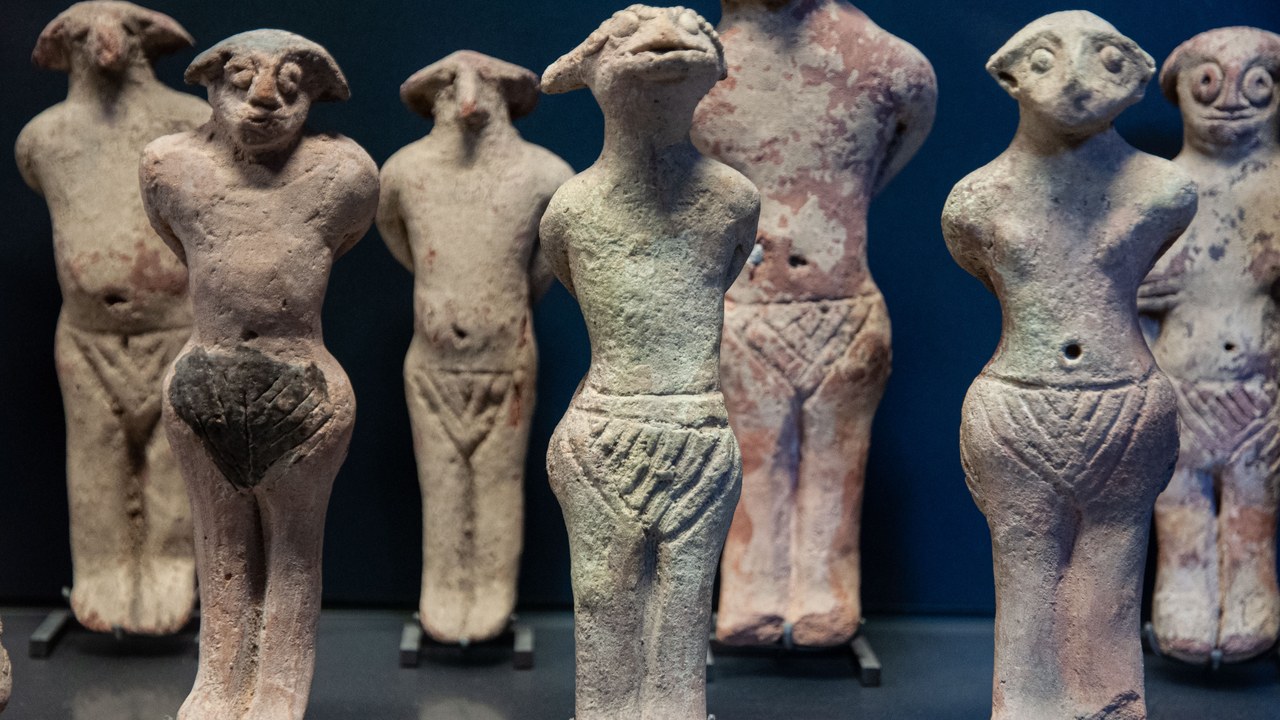
Egyptologists have excavated over one thousand execration texts, ranging from the Old Kingdom through Roman Egypt. Against that background, a curse aimed at a cosmic serpent looks like one branch of a very long tradition of ritual cursing rather than an oddity.
In the Apophis version, the serpent was drawn as a snake with his name in red ink on papyrus, or represented as a wax figure. The papyrus or figures were then pierced with knives and burned while spells were recited. The rite was also adapted to other purposes, including cursing the pharaoh’s enemies, poison and bad weather. Execration figurines of the kind pictured belong to the same wider practice.
Deir el-Bahari: The Valley Under the Cliffs
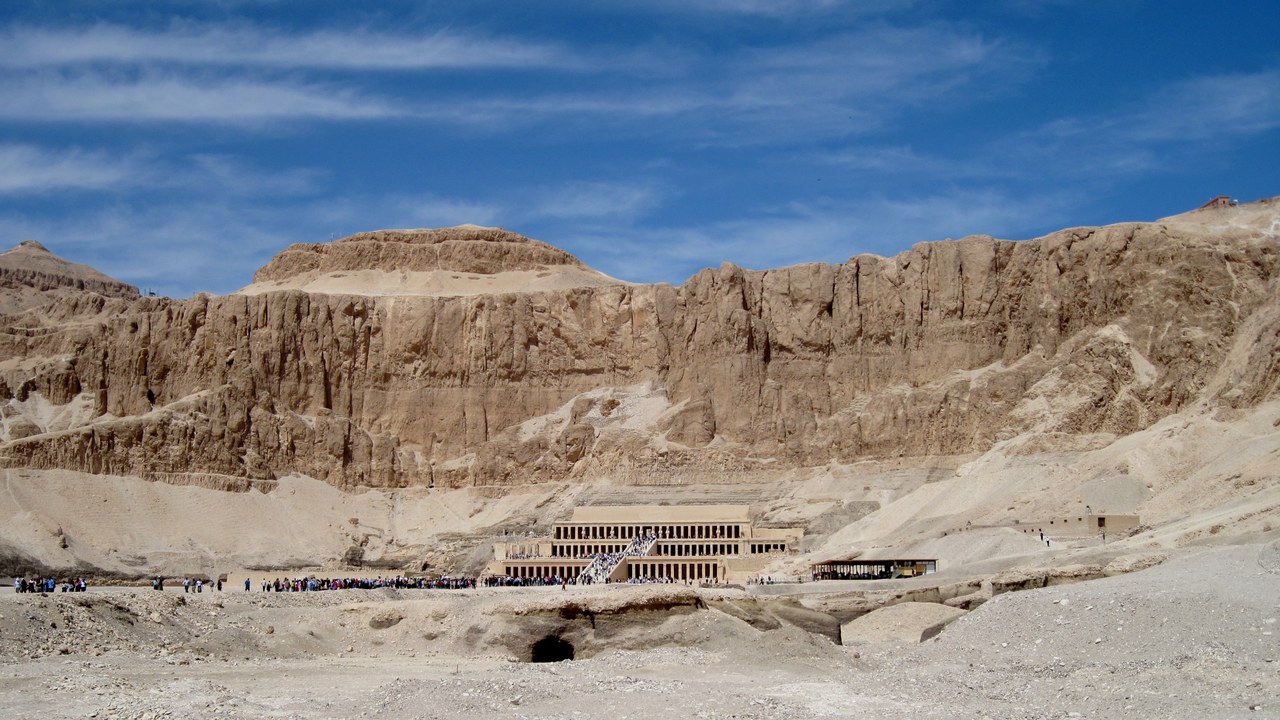
The temple sits in the central Deir el-Bahari valley, on a rocky platform that dominates the earlier mortuary temples of Hatshepsut and Mentuhotep Nebhepetre. It was built in the last decade of Thutmose III’s rule, about 1435 to 1425 BC, and was called Djeser-akhet, meaning Holy of Horizon.
Small by the standards of its neighbours, at roughly 40 by 45 metres, the temple was destroyed, probably by an earthquake, at the beginning of the Twenty-first Dynasty. Its remains were uncovered between 1962 and 1967 by the Polish Centre of Mediterranean Archaeology, an excavation started by Kazimierz Michalowski.
Mortuary Temple of Hatshepsut: Squeezed In Beside a Queen
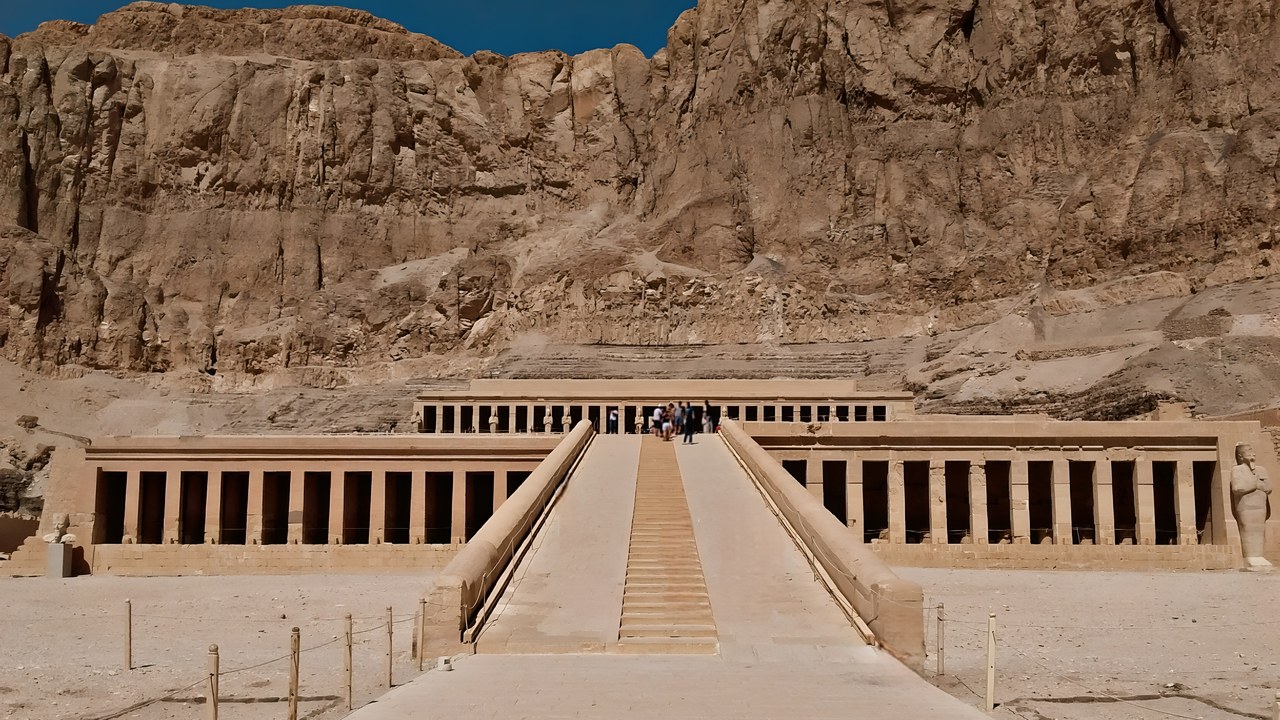
The Thutmose III temple was positioned tightly between the older temple of Mentuhotep II and the temple of Hatshepsut, which lies immediately to the north-east. Most of the building rests above the level of Hatshepsut’s upper terrace, on a roughly square platform partly cut from the rock and partly built of loose stones.
Construction was supervised by the vizier Rekhmire. Limestone ostraka show that work began in regnal year 43, and the temple was probably unfinished when Thutmose III died in year 54. His successor Amenhotep II likely completed it in the early years of his reign. The temple was dedicated primarily to the god Amun.
Mortuary Temple of Mentuhotep II: The Older Neighbour
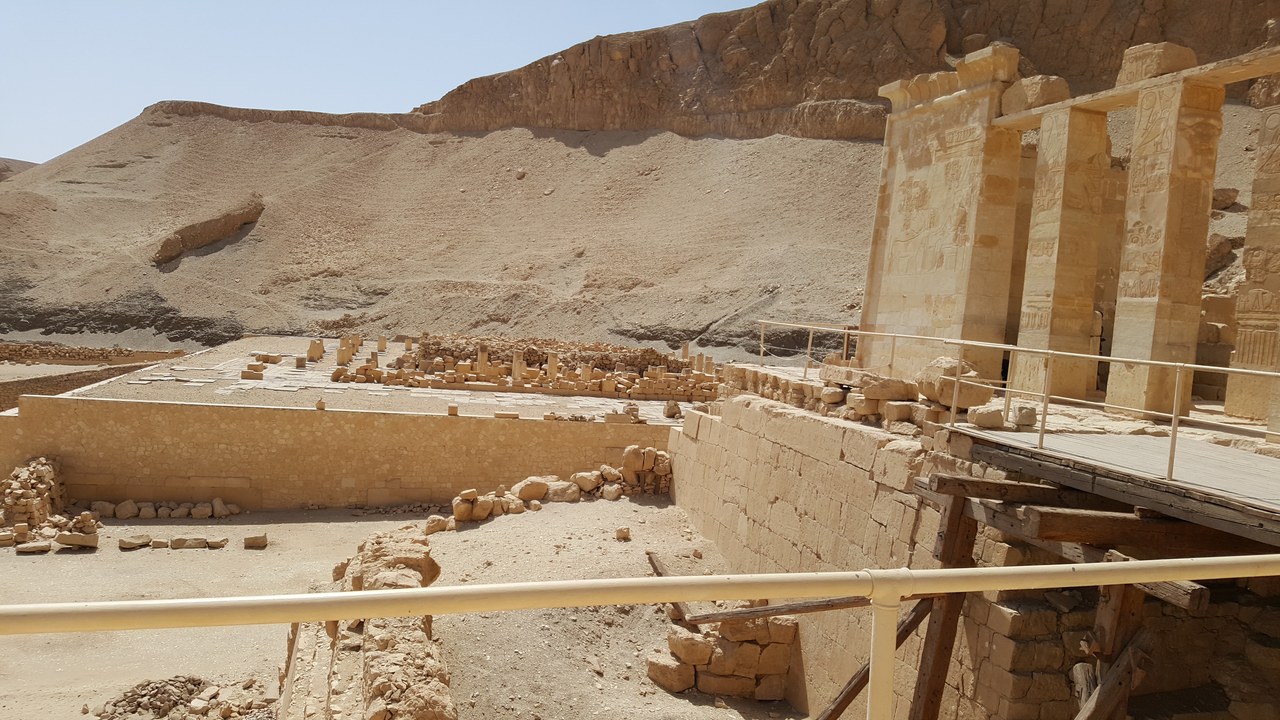
The Thutmose III temple stands on a small elevated terrace just north-west of the funerary temple of Mentuhotep II, a monument of the Eleventh Dynasty. The newer building was crowded onto the slope above, with no evidence of earlier construction on its site.
A rock fall from the high cliffs hid the temple until the 1960s, and the building was later stripped of sandstone blocks for other projects. Part of its platform eventually collapsed, sending the south-eastern corner onto the Mentuhotep temple below. Relief fragments from Djeser-akhet were found in that rubble by Egypt Exploration Society excavators, foreshadowing the rediscovery.
Narmer Palette: An Older Curse?
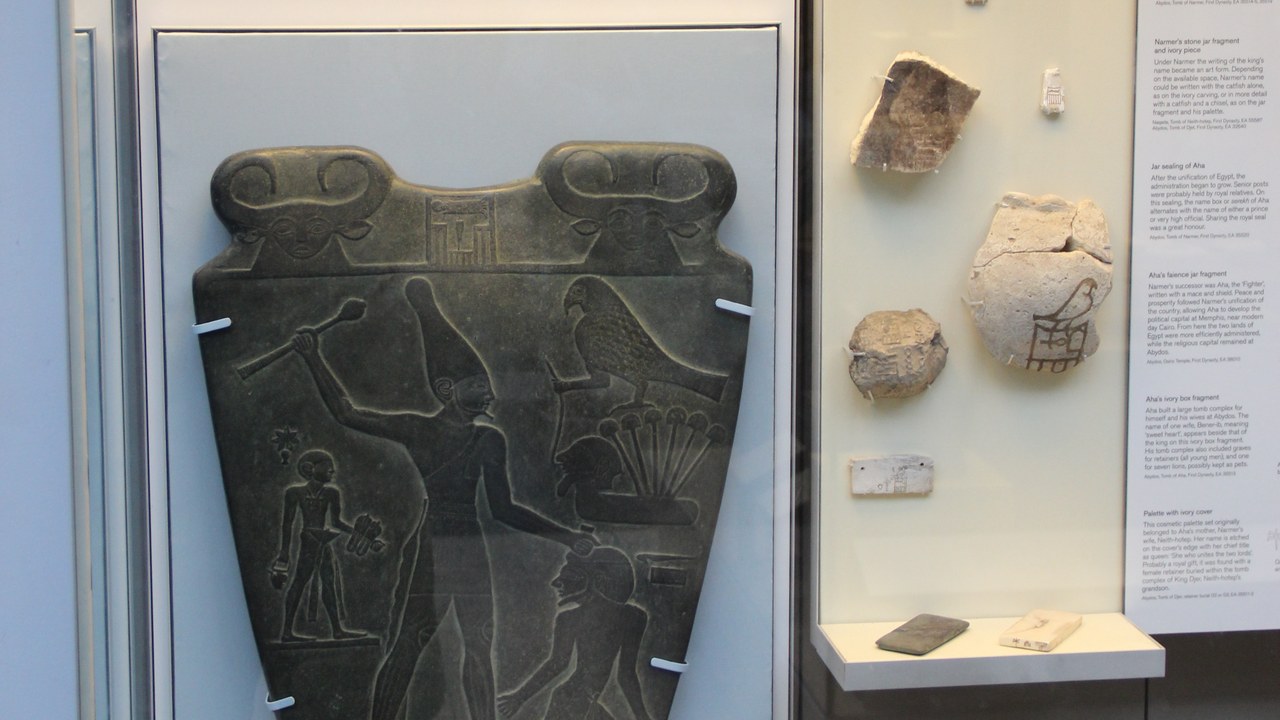
Some scholars read the Narmer Palette, dated to about 3150 BCE, as evidence of an early execration ritual. In that interpretation, ritual destruction of enemies already existed at the dawn of Egyptian kingship, roughly 1,700 years before the Thutmose III temple was built.
The reading remains an interpretation, not a settled fact. What the Thebes papyri add is different: physical traces of a ritual in use. The Copenhagen team says the fragments push back the dating of the Apophis ritual by 1,000 years compared with the one surviving manual, from the late fourth century BC.
Thebes, Egypt: A Widespread Ritual
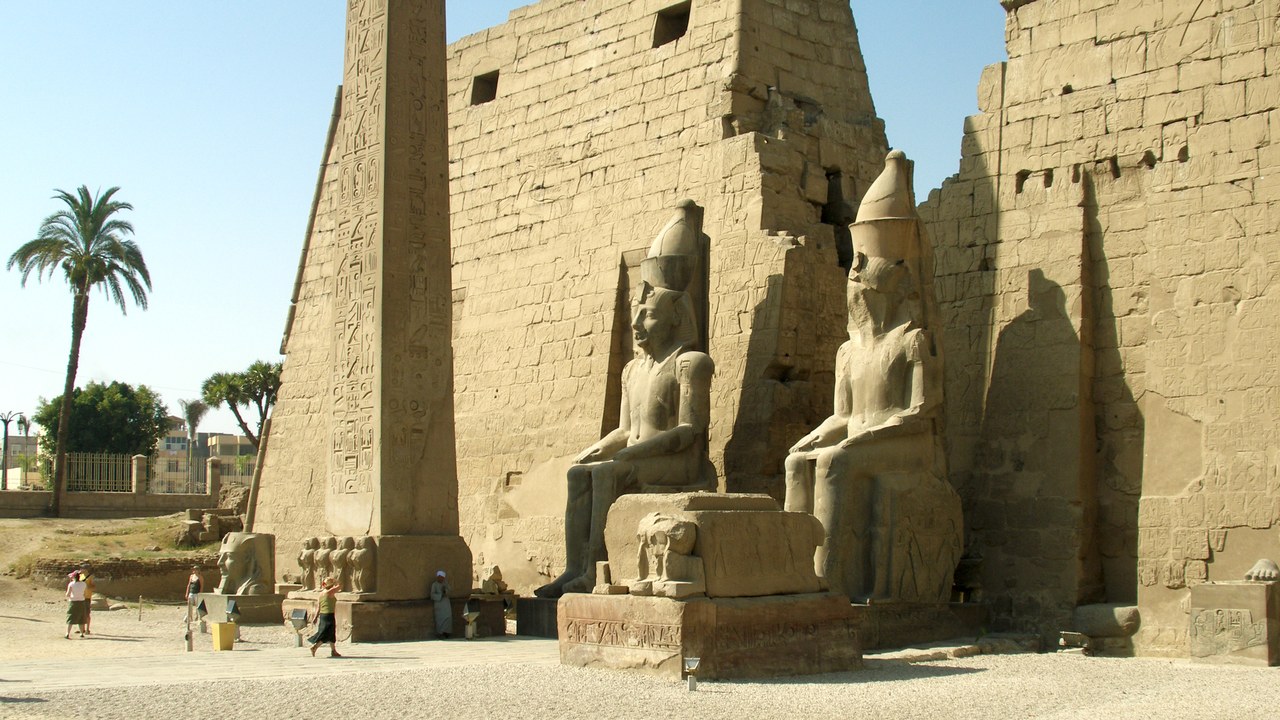
Signs of mass-produced copies among the papyri suggest the Apophis ritual was widespread. Hagen says the finds confirm that it was a regular part of temple life, and that references elsewhere show it was also used outside temples and was a common feature of Egyptian culture.
Literate people who were not priests, he notes, had access to magical rituals and worked as magicians and healers, and people approached scribes for help with both protective and hostile magic. Hagen argues that rubbish dumps outside temples, long overlooked, can reveal how ordinary Thebans and their priests lived, and further excavation there is expected to add more.
More from Morning Overview
- Up to 5 feet of snow is burying Donner Pass, and forecasters warn against Sierra travel
- A flight school faces a $2,388,500 FAA fine for flying an unairworthy plane
- Hidden wear was found inside a New Jersey nuclear reactor during its outage
- Operational F-15EX jets now fly with extra fuel tanks the Air Force never planned for
