
Paddle wheels once powered the commerce of American rivers, and a handful of boats still turn them for passengers or visitors. Some run on steam, some on diesel, and a few sit on display. Here are nine paddle-wheel boats worth knowing, led by a New Orleans steamer with an unbeaten racing record.
The tech news worth your time: 400,000+ professionals from Google, Apple and OpenAI read Techpresso, a free daily email with the most interesting tech news and insights.
Subscribe to Techpresso free →
We may earn a commission if you sign up.
1. Steamboat Natchez (New Orleans): Unbeaten on the Mississippi
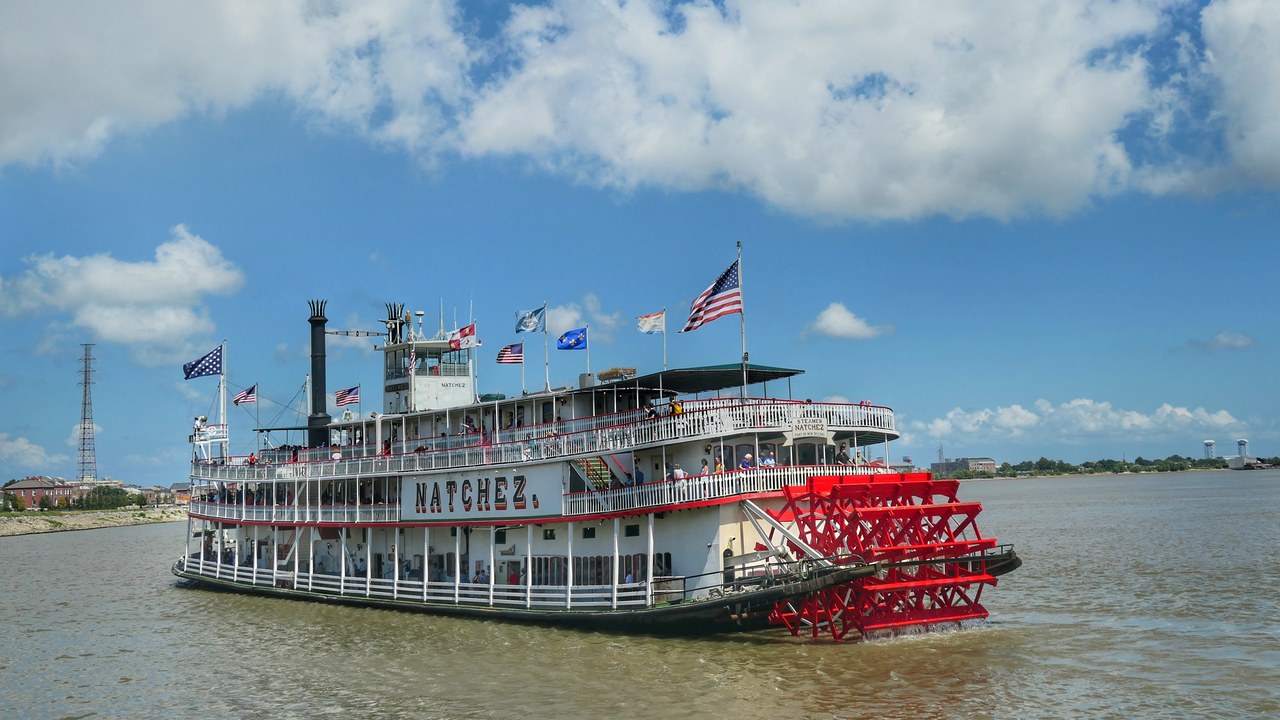
Built in 1975 and billed as the only true steam-powered vessel on the Mississippi today, the Steamboat Natchez in New Orleans is an honest 16-mph boat that has never lost a race.
That race record belongs to the current 1975 boat, not to the 1870 Natchez of the same name. For visitors, the appeal is the genuine steam power, a rare thing on the river now, and a claim to speed that few other paddle-wheelers can match. A steamboat whose reputation rests on never losing gives New Orleans visitors a lively story to tell as the river slides by.
2. Belle of Louisville: From Idlewild to Belle
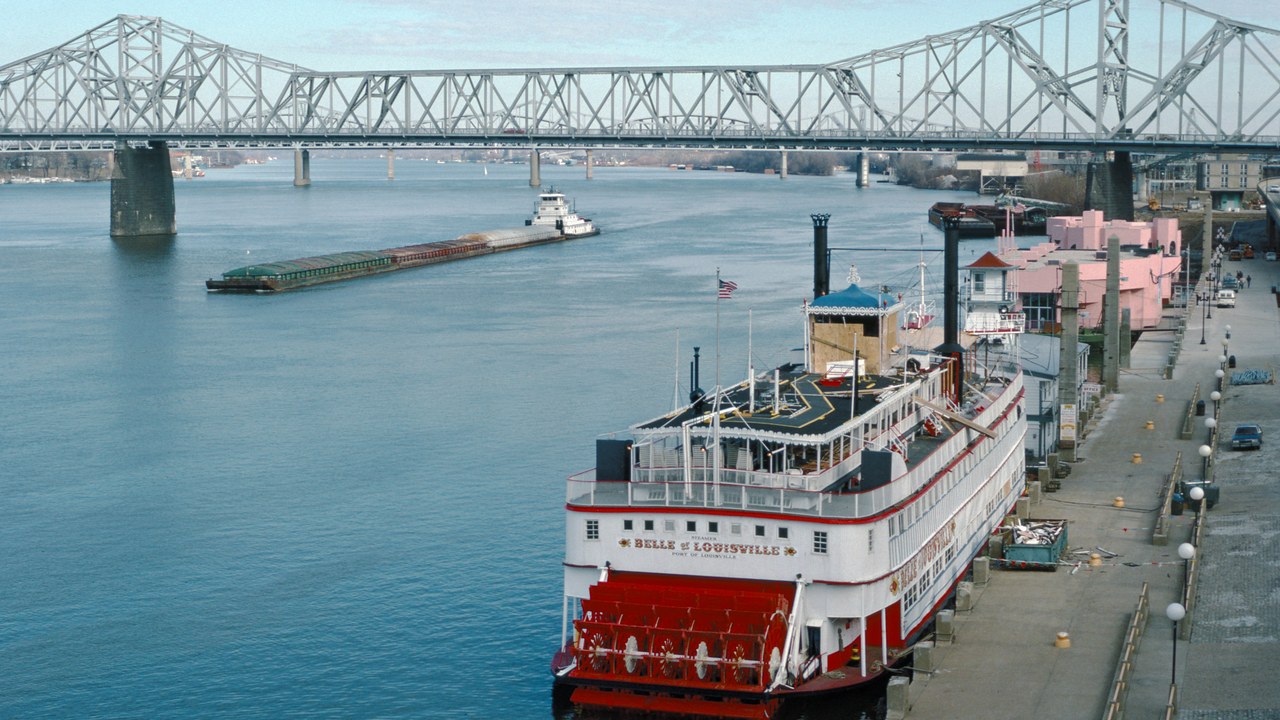
The Belle of Louisville was built as the Idlewild in 1914 by James Rees & Sons of Pittsburgh and left for Memphis on January 9, 1915.
The boat carries an earlier name in its history, which shows how long it has been around under one hull. Anyone interested in surviving steamboats can use the Idlewild origin to place the Belle in the early twentieth century, long before her current identity. Her story links Pittsburgh shipbuilding, a journey south and a long working life that has outlasted most boats of her age.
3. Belle of Cincinnati: Race Winner on Diesel
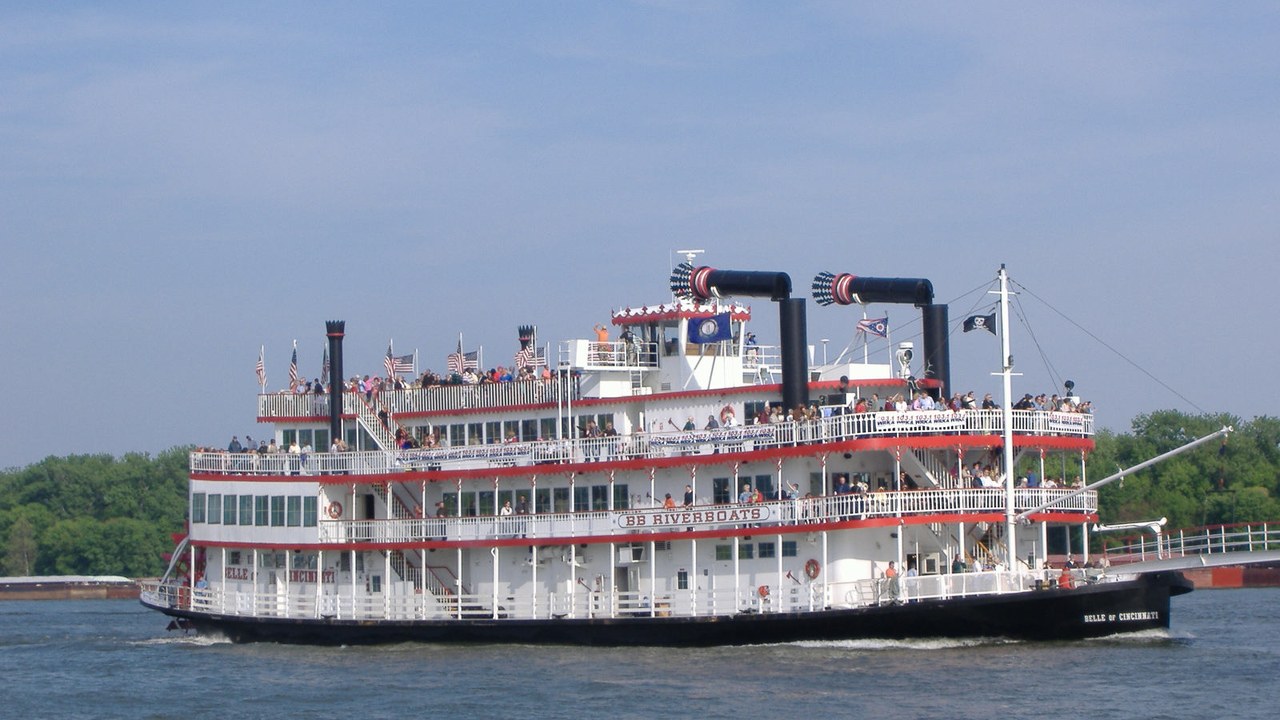
The diesel-powered Belle of Cincinnati has won the Ohio River’s Great Steamboat Race five times, in 2010, 2013, 2016, 2017 and 2024.
Winning on diesel power sets this boat apart from the steam entries it competes against. The five victories across more than a decade make a strong case for the Belle of Cincinnati as a regular contender in the annual contest on the Ohio River. Spectators watching the race can see that victory does not always go to the traditional steam-powered boats, which adds some friendly rivalry to the event.
4. Mark Twain Riverboat (Disneyland): Theme Park Sternwheeler
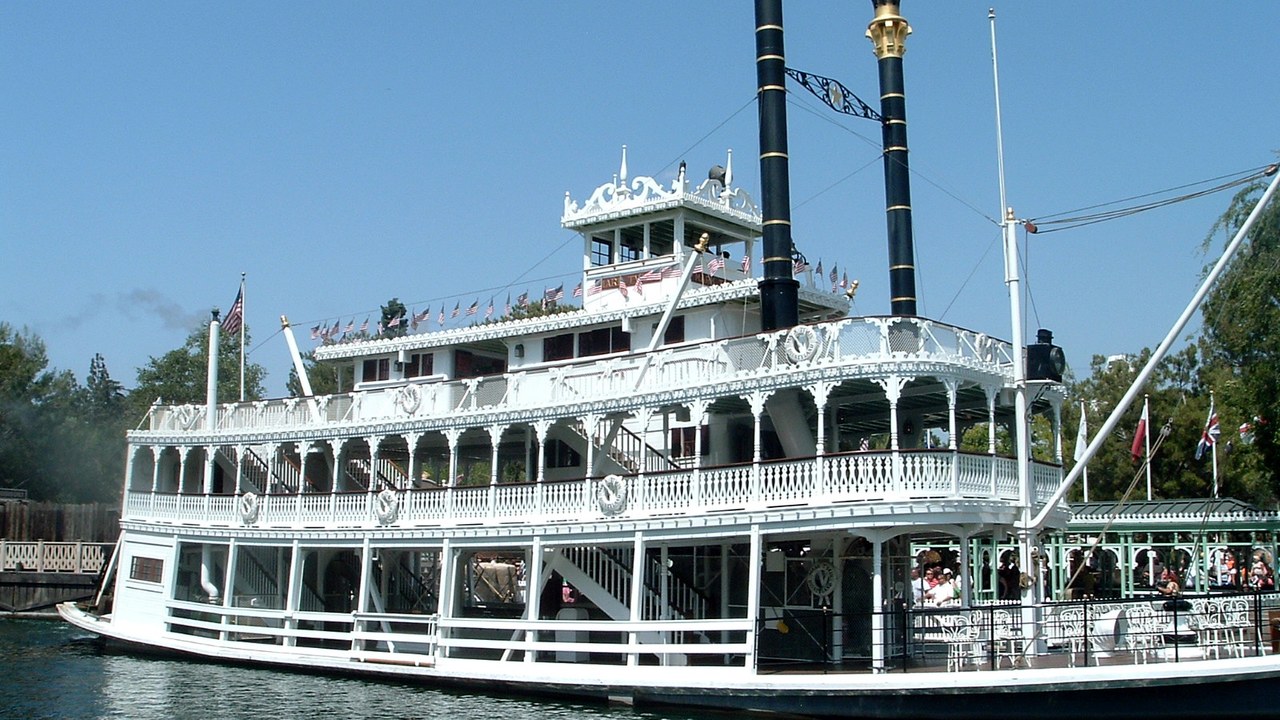
Disneyland’s 105-foot Mark Twain, a 5/8-scale sternwheeler, opened July 17, 1955, and was the first functional steamboat built in the U.S. in 50 years. It carries up to 300 passengers.
A working steamboat built for a theme park is a different kind of survivor from a river veteran. Visitors can still ride it in the Disneyland setting, and its scale and capacity make it a handy introduction to how sternwheelers looked and moved. The 1955 date places it among the early attractions of the park, and its scale lets families experience a river trip in a compact form.
5. Ticonderoga: Steamer on Dry Land
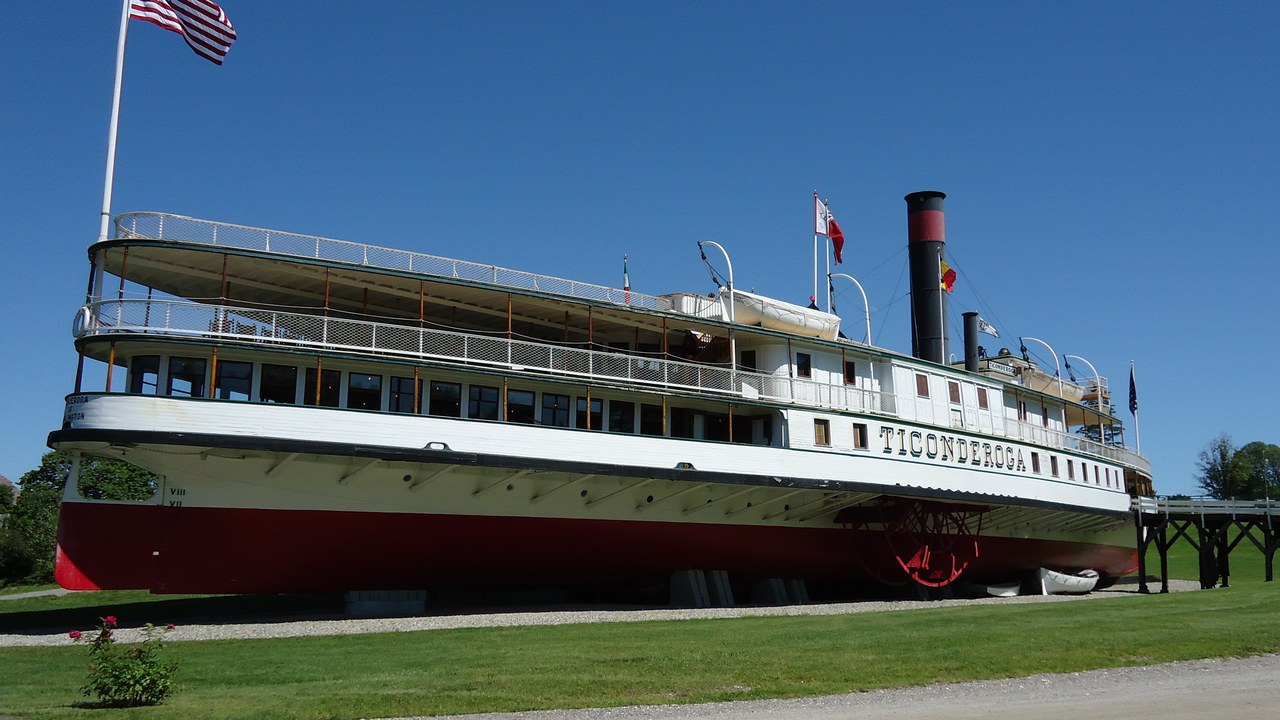
Now on land at Vermont’s Shelburne Museum, the Ticonderoga is a side-paddle passenger steamboat with a vertical beam engine that once hauled freight and passengers.
The boat no longer floats, but the museum setting lets visitors walk around a preserved example. A vertical beam engine is a distinctive piece of machinery, and seeing it up close shows how steam propulsion shaped travel in earlier decades. Anyone visiting Vermont can combine it with the rest of the museum’s collection for a fuller picture of the region’s past.
6. Delta King: Million Dollar Twin
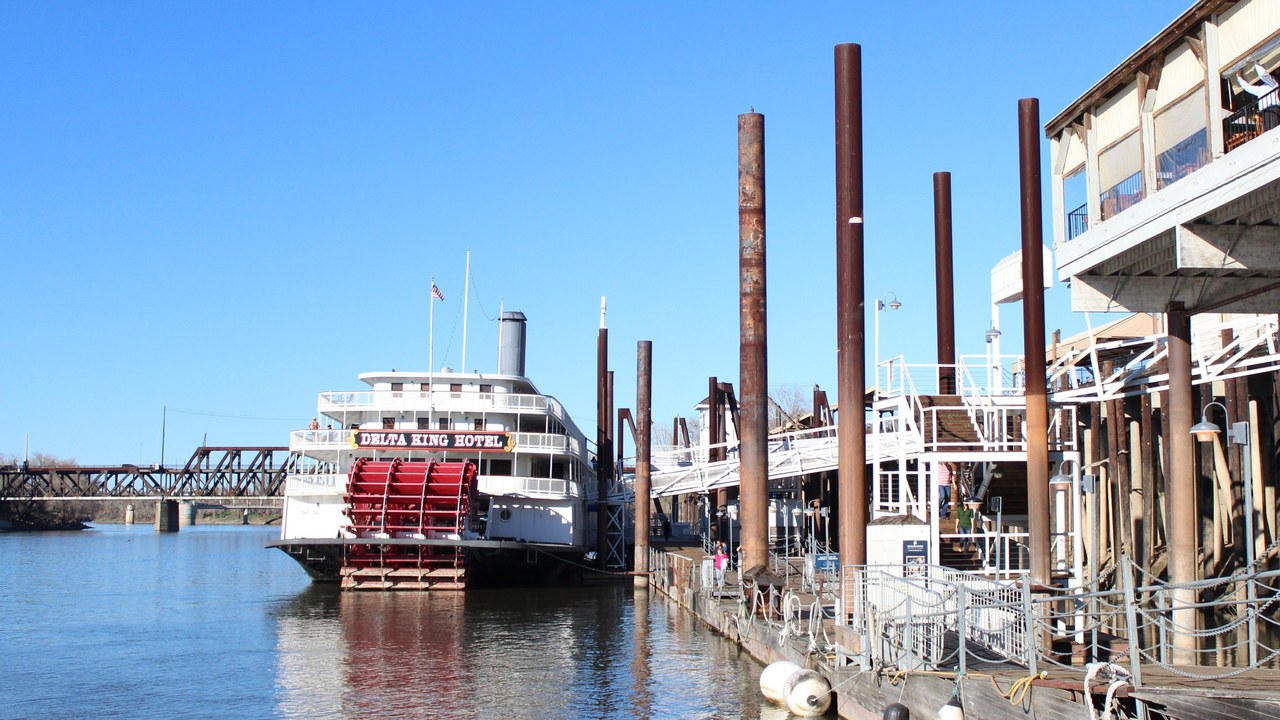
Sacramento’s Delta King, built between 1924 and 1927, was one of the “million dollar boats” alongside her identical twin, the Delta Queen.
The label reflects how lavish these riverboats were considered in their time. Pairing her with the Delta Queen gives the Delta King a family story, and travelers curious about California’s river history can see a ship that belonged to an ambitious era of boat building. Her years of construction, 1924 to 1927, mark a period when comfort and scale were selling points for river travel.
7. Eureka (ferryboat): Wooden Giant
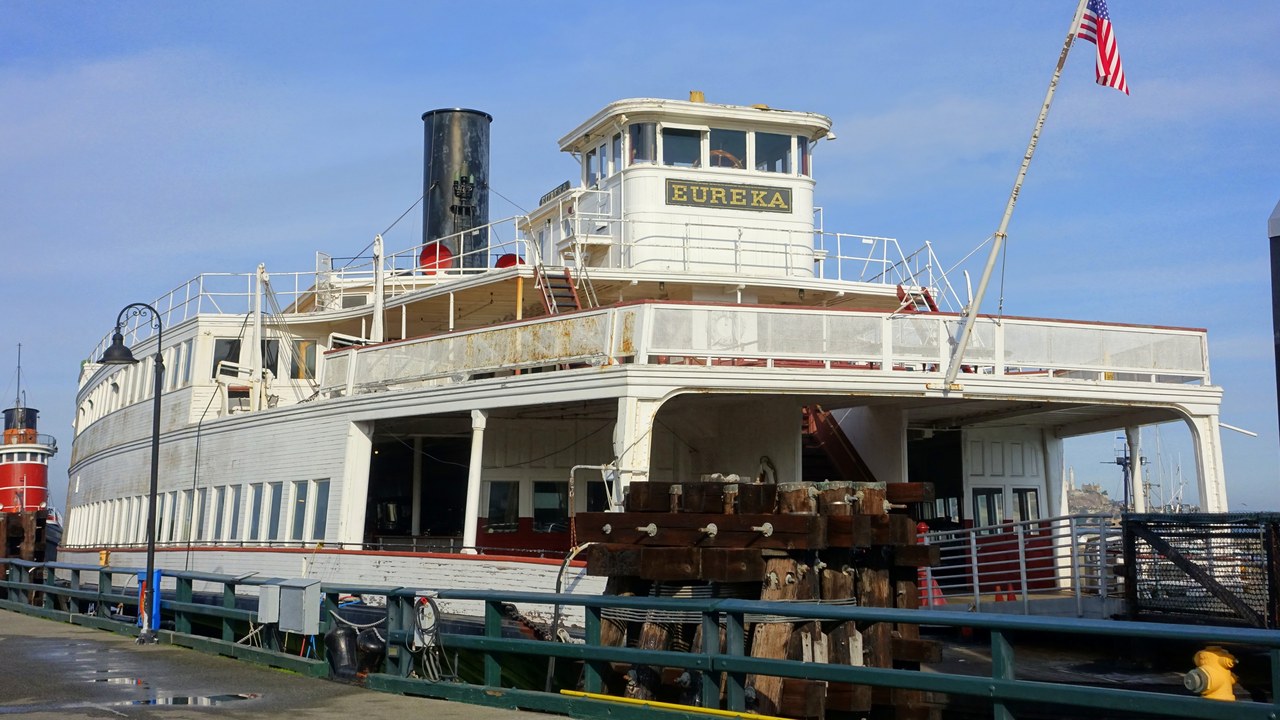
Afloat as a museum ship at San Francisco Maritime National Historical Park, the paddle ferry Eureka is called the largest existing wooden ship in the world.
As a ferry rather than a riverboat, the Eureka represents a different corner of paddle-wheel history. Visitors to San Francisco can step aboard a vessel that is described in superlatives, and the claim gives the museum ship real weight among historic craft. Because she is afloat, the experience is closer to boarding a working vessel than viewing an exhibit behind glass.
8. Willamette Queen: Salem’s Twin Wheels
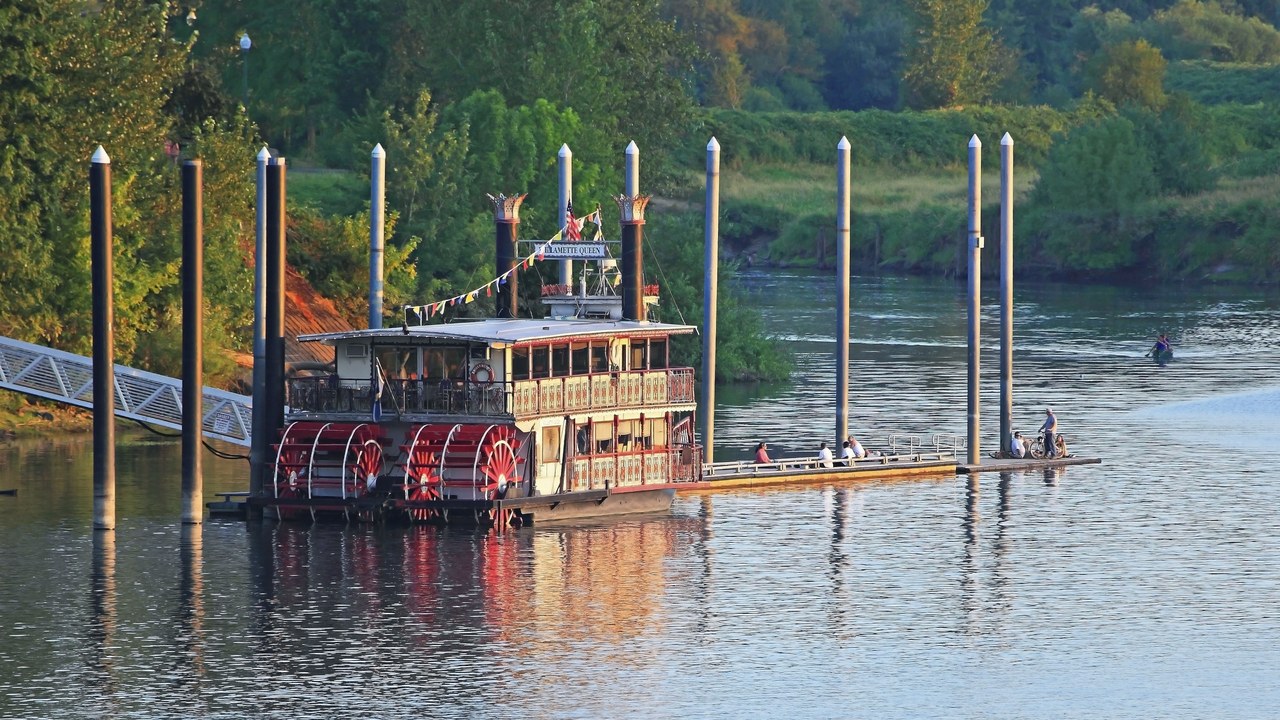
Based at Salem’s Riverfront Park and running year-round, the 87-foot Willamette Queen turns twin paddle wheels and holds 90 passengers.
The smaller size makes it approachable for an afternoon outing on the Willamette. Running all year sets it apart from seasonal excursion boats, so anyone living near Salem or passing through can expect the Queen to be available most months of the calendar, rain or shine. Twin paddle wheels also give her a look quite different from the single large stern wheel of many better-known riverboats.
9. Queen of the West: Columbia and Snake Cruiser
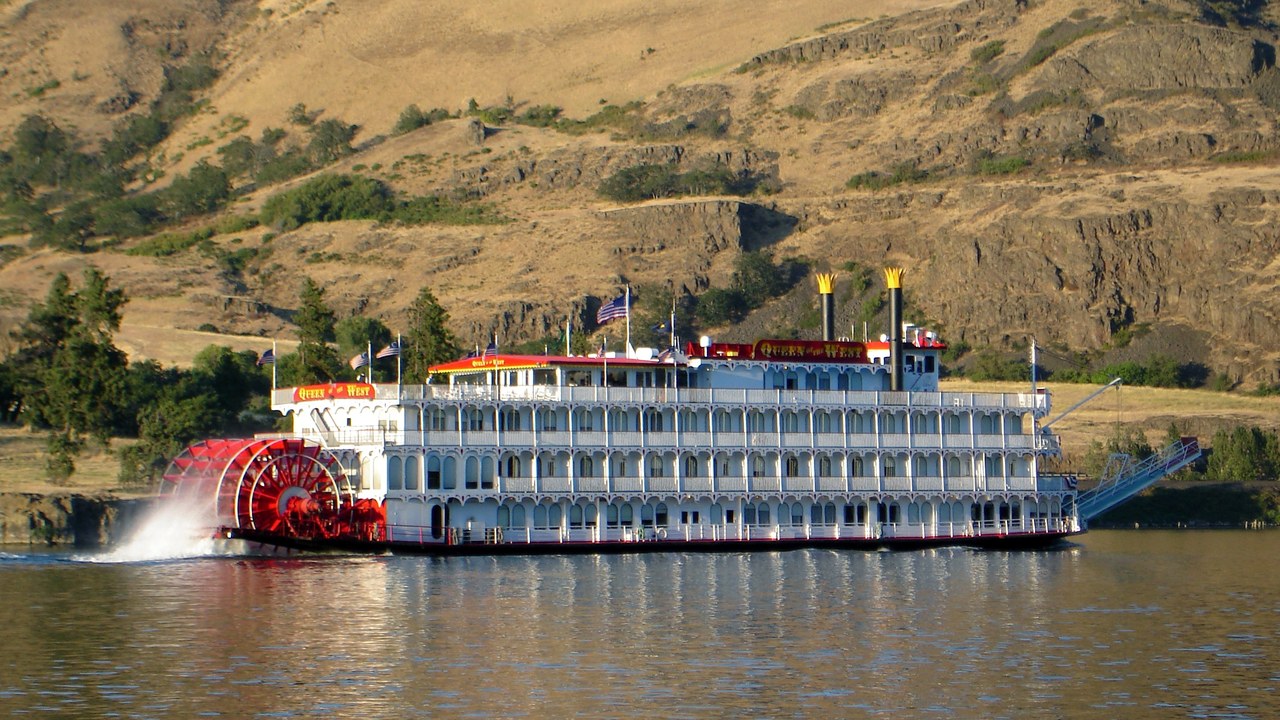
The 230-foot Queen of the West, built in 1995, cruises the Columbia and Snake rivers and was acquired by American Cruise Lines in 2009.
At 230 feet, the Queen of the West shows that paddle-wheel design still works for extended cruising. Travelers wanting an overnight river trip in the Pacific Northwest can look to this sternwheeler as a modern example. Her 1995 construction makes her far newer than most boats here, and her 2009 purchase by American Cruise Lines ties her to a current operator.
More from Morning Overview
- Common allergy, bladder and sleep pills tied to sharply higher dementia odds
- NOAA now gives this winter a 75% chance of the strongest El Nino since 1950
- Doctors warn a silent liver disease now affects one in three American adults
- The FBI told the rest of ShinyHunters to surrender after a 24-year-old was arrested
